📍Karnak Temple is one of the largest and most significant religious sites ever built in ancient Egypt. Built gradually over 1,500 years, from the Middle Kingdom to the Greco-Roman period, it once formed the heart of the ancient Egyptian capital of Thebes (now modern-day Luxor).
Today, this UNESCO World Heritage Site is one of the most popular historical attractions in Egypt, and features some of the most impressive works of architecture from antiquity. If you’re planning a visit to Luxor (which you definitely should), Karnak Temple is a must.
In this guide, you’ll find all the information you need to plan a visit to Karnak Temple, including what to see, how to get there, ticket info and more.
Best Karnak Temple Tours
I’ve done the research so you don’t have to. Here are the top Karnak Temple tours depending on what you’re looking for…
⭐ Karnak Temple + Luxor Temple
⭐ Karnak Temple + Luxor Temple, Valley of the Kings & Hatshepsut Temple
Contents
History of Karnak Temple
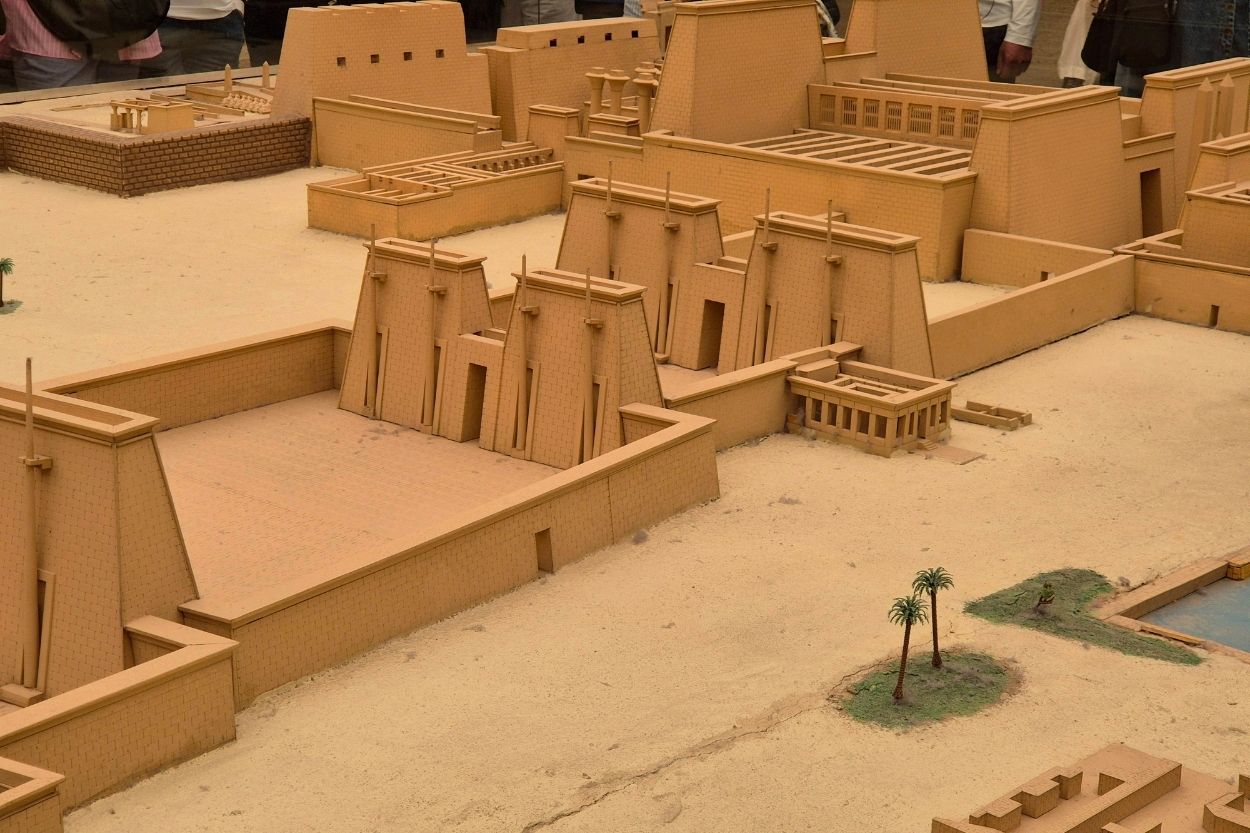
The history of Karnak Temple stretches back nearly 4,000 years. Although the sprawling complex seen today is largely a product of the New Kingdom, its origins can be traced to Egypt’s Middle Kingdom, around 2000 BCE.
To put this into context, this was around 500 years after Egypt’s iconic pyramids were built, like those at Giza, Dahshur and Saqqara.
Throughout this time, Egypt’s capital had long resided at 📍Memphis, near modern-day Cairo. But after foreign invasions and political upheaval, the centre of power shifted south to Thebes (now modern-day 📍Luxor).
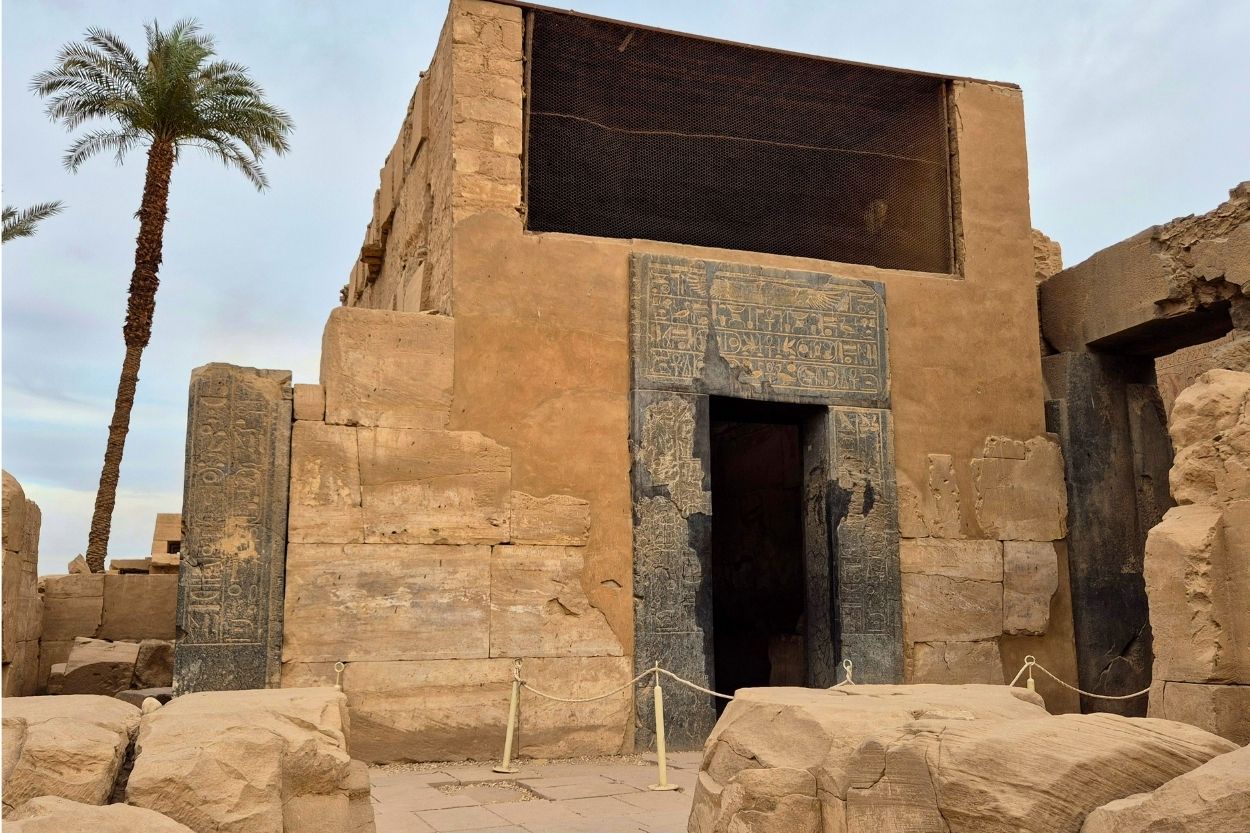
Before Thebes became Egypt’s capital, there is believed to have been a small shrine dedicated to Amun on the site of modern-day Karnak Temple. Following Thebes’ ascension, the area became an increasingly important religious site. The details of this early period are a little vague, as there is limited written and archaeological evidence. What is known is that throughout the Middle Kingdom, several small shrines and temples were constructed here.
Come the beginning of the New Kingdom around 1550 BCE, and construction of the complex really took off.
Successive rulers each added their own pieces to the site. One built a new pylon, another erected an obelisk, while others added walls, shrines or statues of themselves. Over the course of the New Kingdom, Karnak gradually became the sprawling complex we know today.
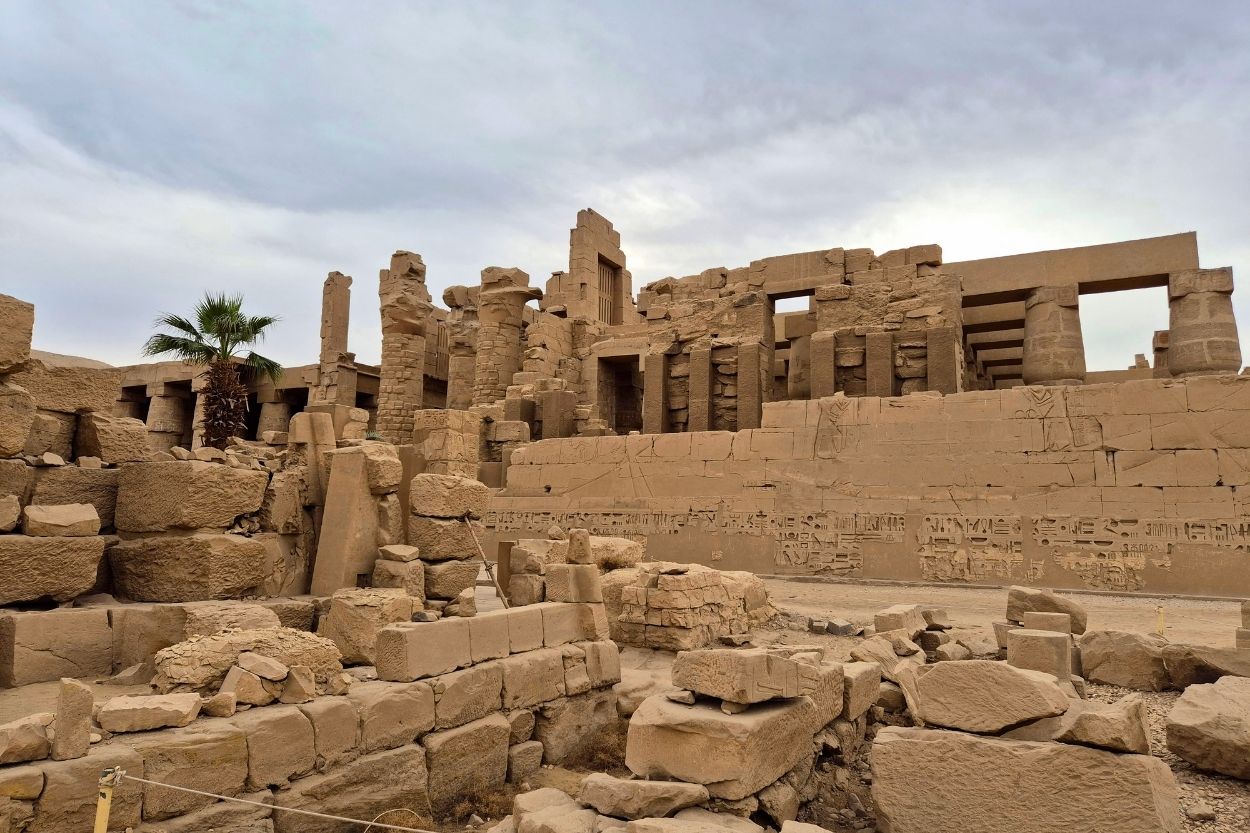
At its peak, Karnak contained four separate enclosed temple complexes, known as precincts, located near one another. The site that tourists today call Karnak Temple is actually the Precinct of Amun-Ra, the central and largest of the four, and the only one fully accessible to visitors.
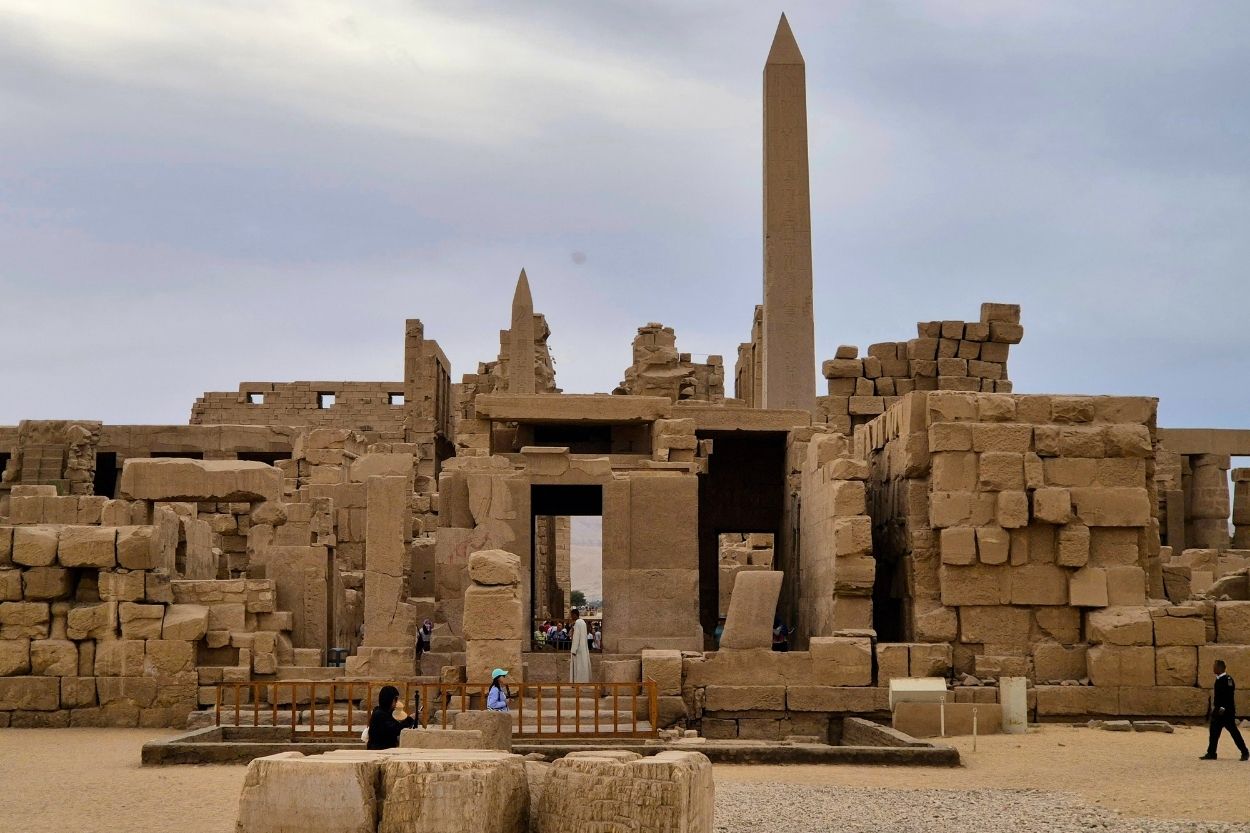
Karnak Temple continued to be used long after the fall of the New Kingdom, with small additions built well into the Greco-Roman period. By the late Roman period, however, the temple was already falling into disrepair. The rise of Christianity ultimately put the final nail in the coffin, bringing an end to the traditional Egyptian religion that the temple was built for.
Beginning in the early 20th century, Karnak caught the attention of Western archaeologists, who began the long process of excavating and restoring the temple to the state in which it is seen today.
These days, Karnak Temple is one of the most visited historical sites in Egypt, second only to the pyramids of Giza.
Things to See at Karnak Temple
Karnak Temple is a sprawling complex with lots of things to see. Here are some of the highlights you can expect…
Avenue of Sphinxes
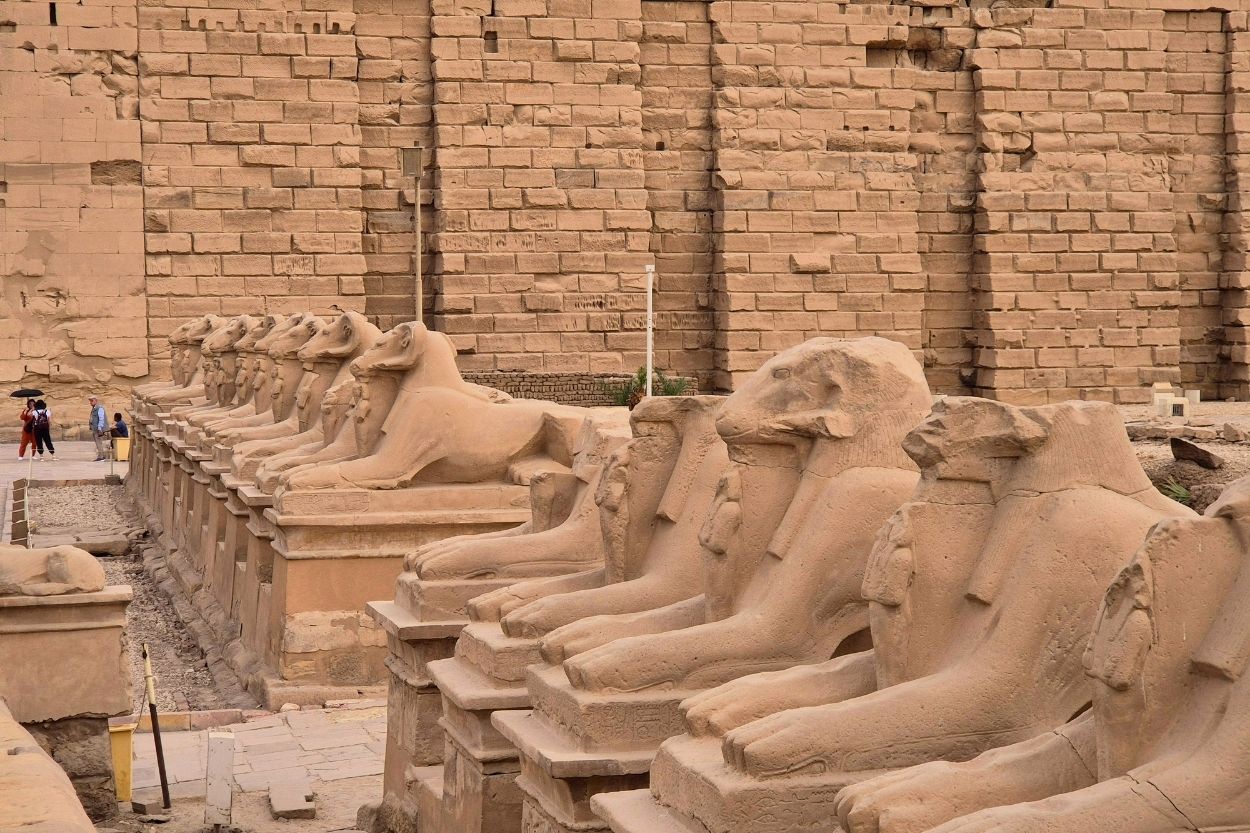
As you approach Karnak Temple, you’ll pass by the Avenue of Sphinxes.
You’ll notice that the row of sphinx and ram-headed statues extends off into the distance. It leads all the way to Luxor Temple, the other great ancient Egyptian temple in Luxor.
This 2.7km processional road contains more than 1,000 statues and once connected the two main temples of ancient Thebes. It likely played an important role during the 27-day Opet Festival, in which sacred barques (boats) and divine statues were ceremoniously moved between the temples in celebration of the Nile.
First Pylon
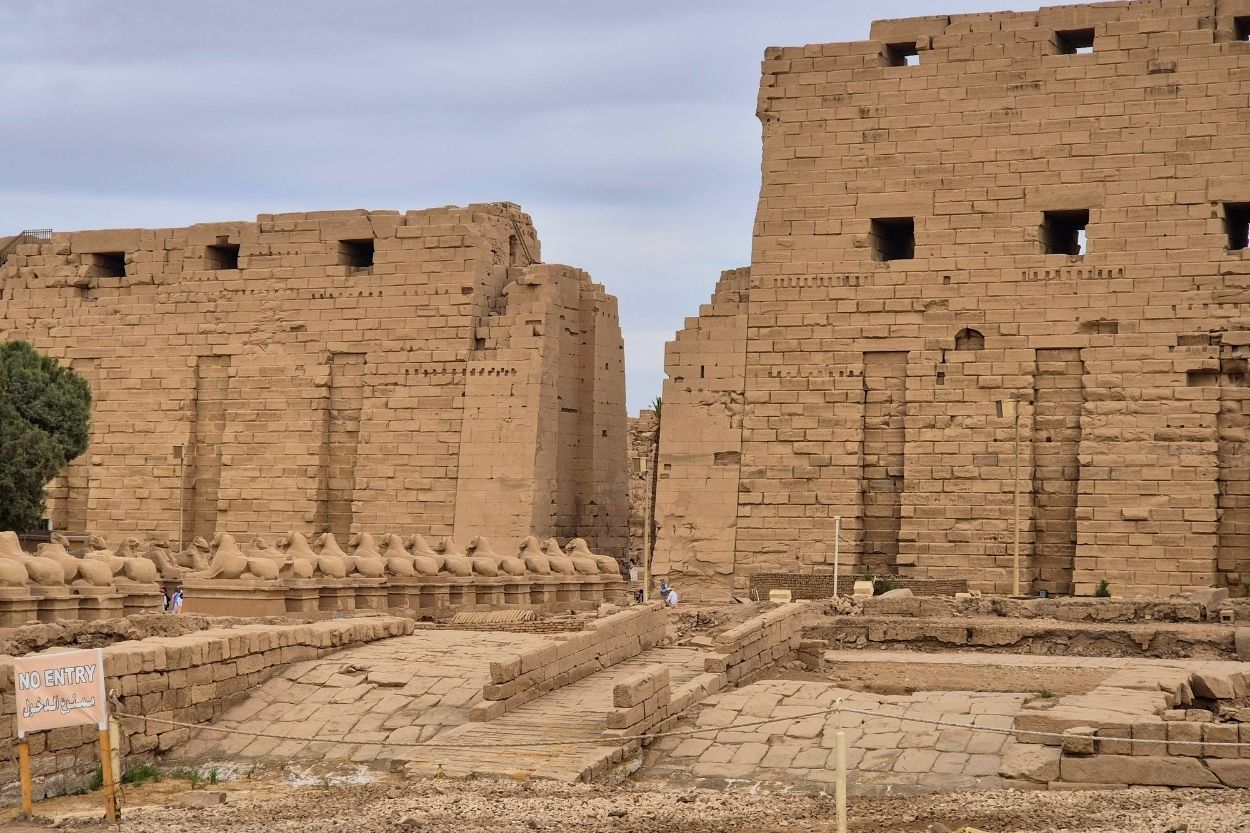
The Avenue of Sphinxes leads directly to Karnak’s First Pylon.
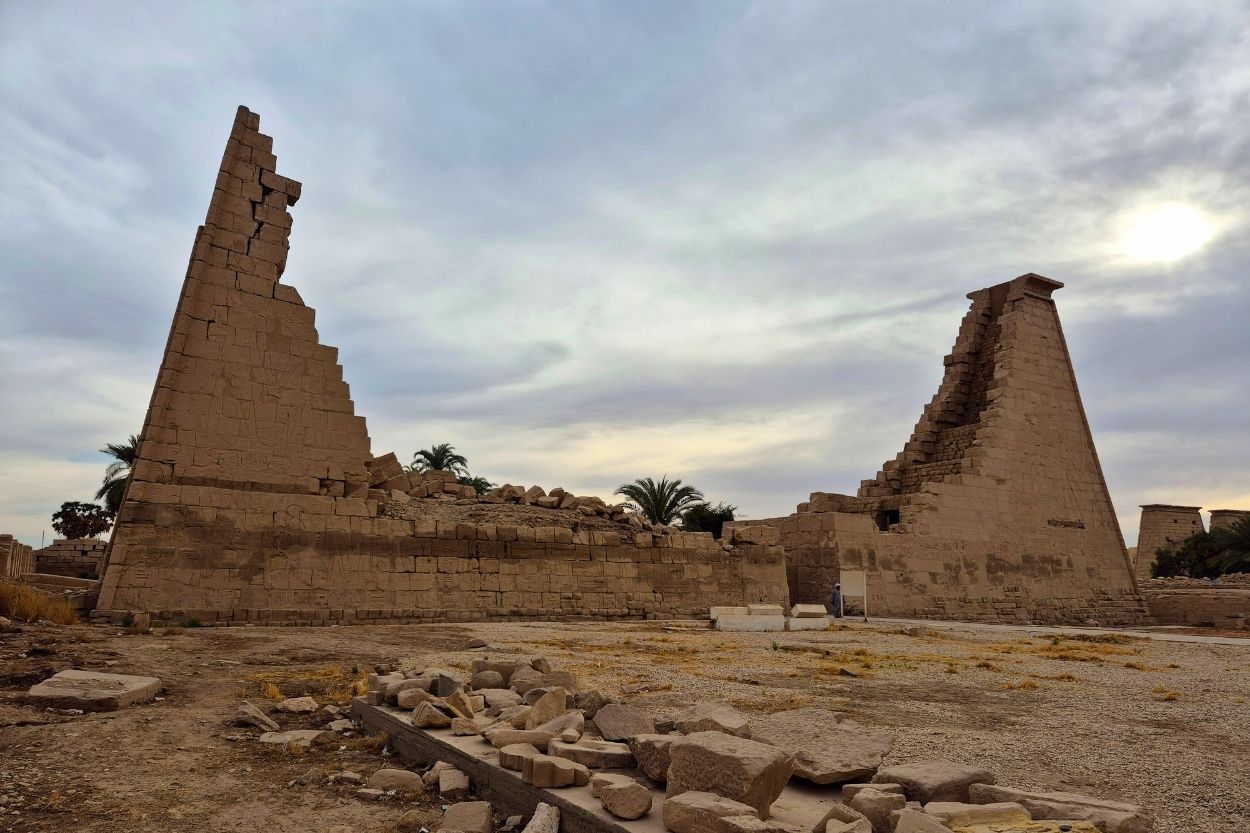
A pylon is generally the first thing you pass through in any ancient Egyptian temple, and the one at Karnak is more impressive than any other. Standing at around 43m high, it is the largest pylon of any in Egypt.
Construction began around 360 BCE, although the structure was never fully completed. In fact, on the back side of one of the towers you can still see the remains of the mudbrick construction ramp that was used to carry stone blocks to the top, something I personally found fascinating as it offers a rare visual insight into how these incredible structures were actually built.
Great Court
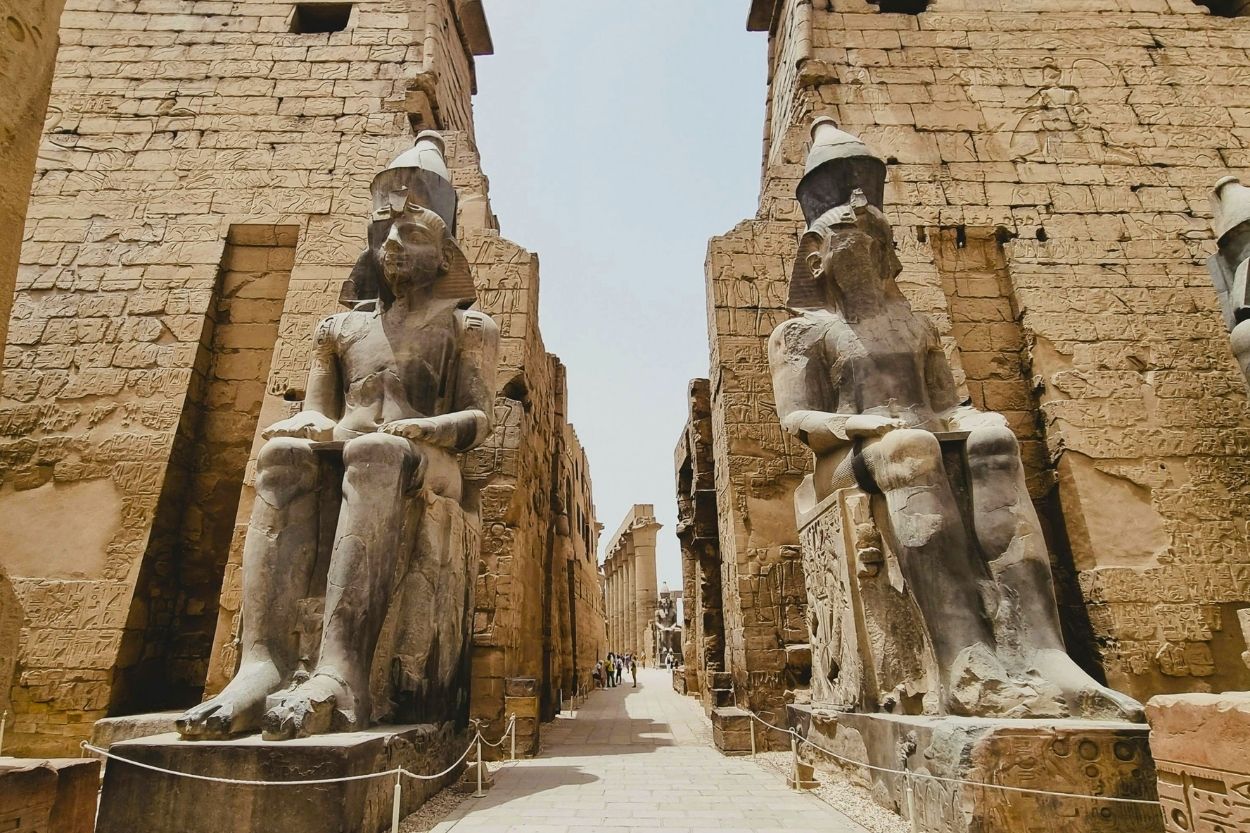
After passing through the First Pylon, you’ll find yourself in the Great Court, a large open courtyard that served as the grand entrance area before moving into the more sacred parts of the temple.
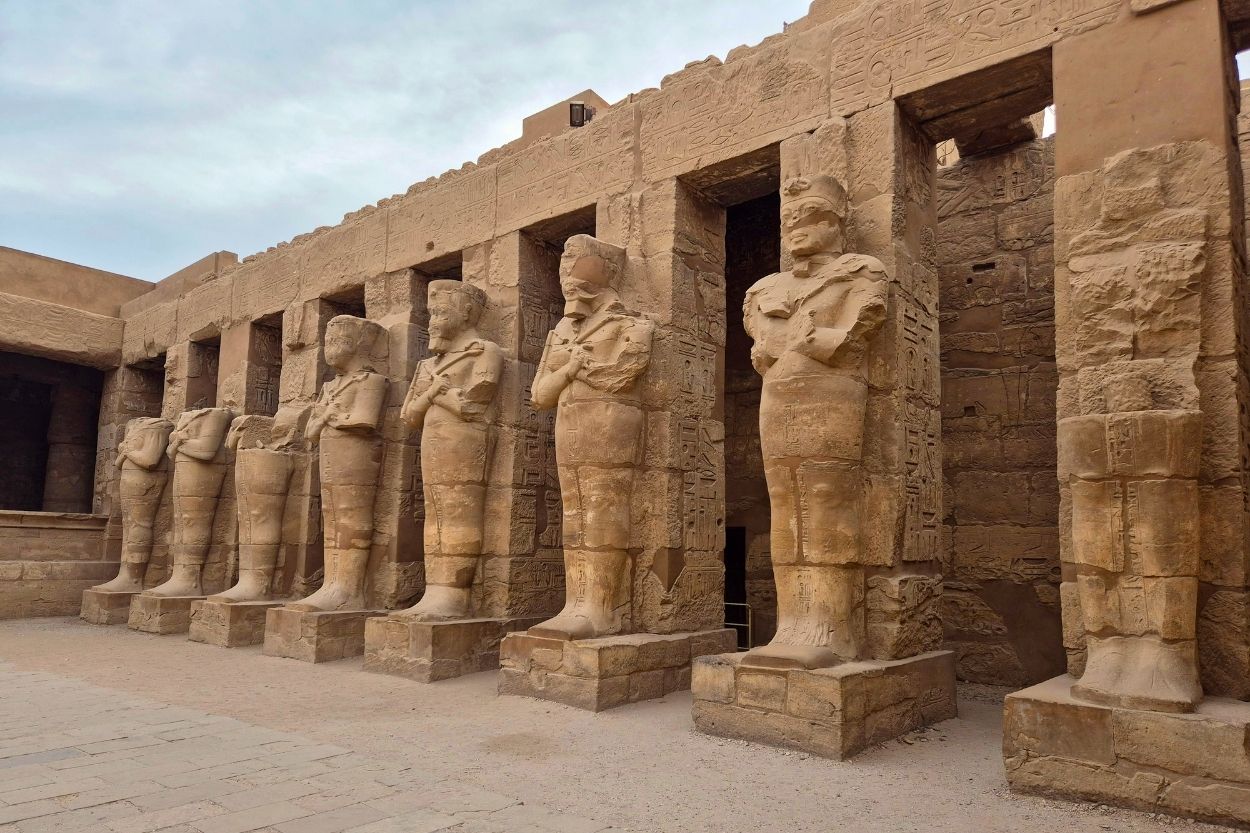
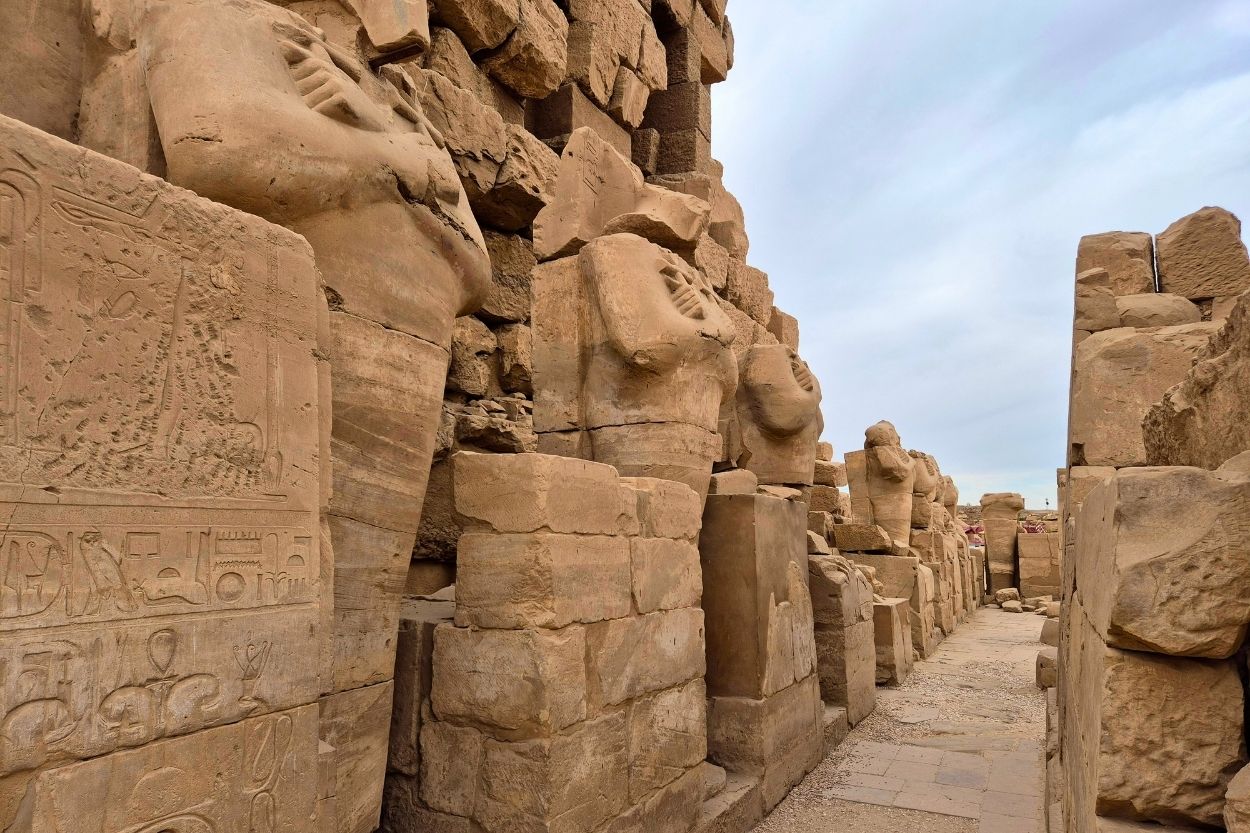
If you turn right after entering the court, you can visit the Temple of Ramses III, a small but beautifully preserved shrine lined with statues of the man himself, and containing several small sanctuaries.
The main attraction, however, lies directly ahead: the Second Pylon. This gateway, which leads into the Great Hypostyle Hall, was once the original entrance to Karnak Temple and is around 1,000 years older than the First Pylon.
Flanking it are 2 massive seated statues of Ramesses II, the most renowned ruler from Egypt’s New Kingdom.
Passing through the Second Pylon, you enter what is arguably the most impressive part of the temple…
Great Hypostyle Hall
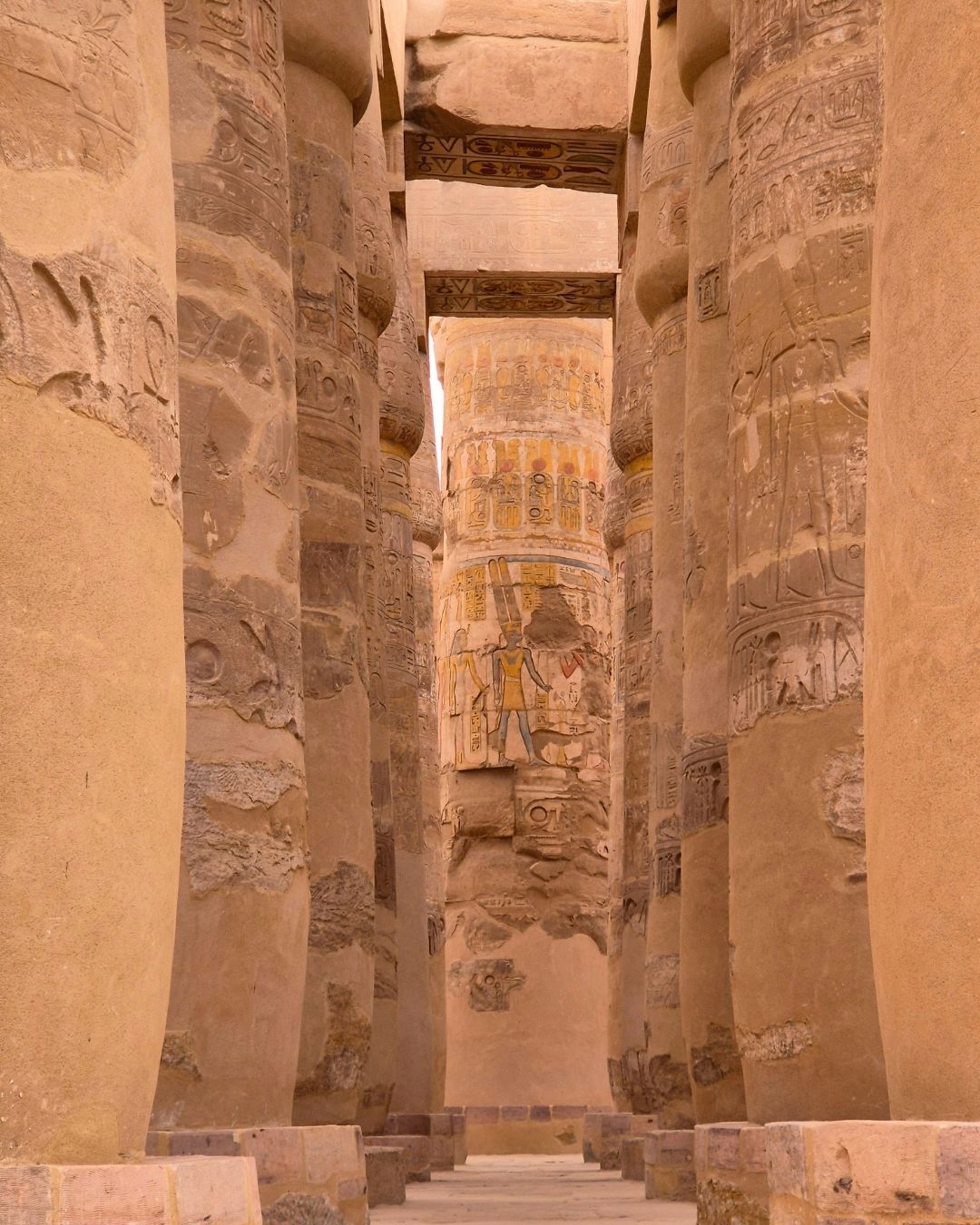
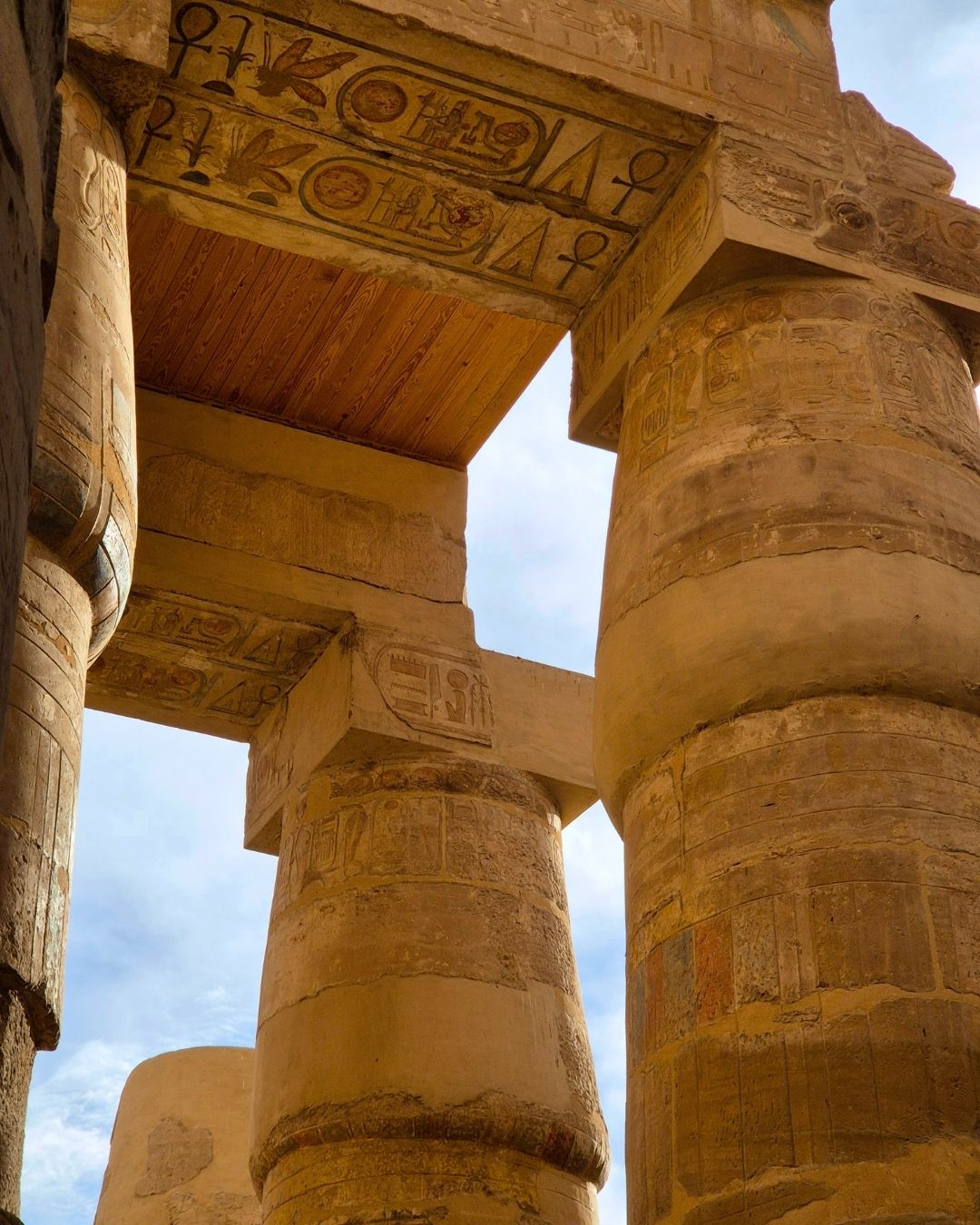
Undoubtedly the most impressive feature of Karnak Temple is the Great Hypostyle Hall.
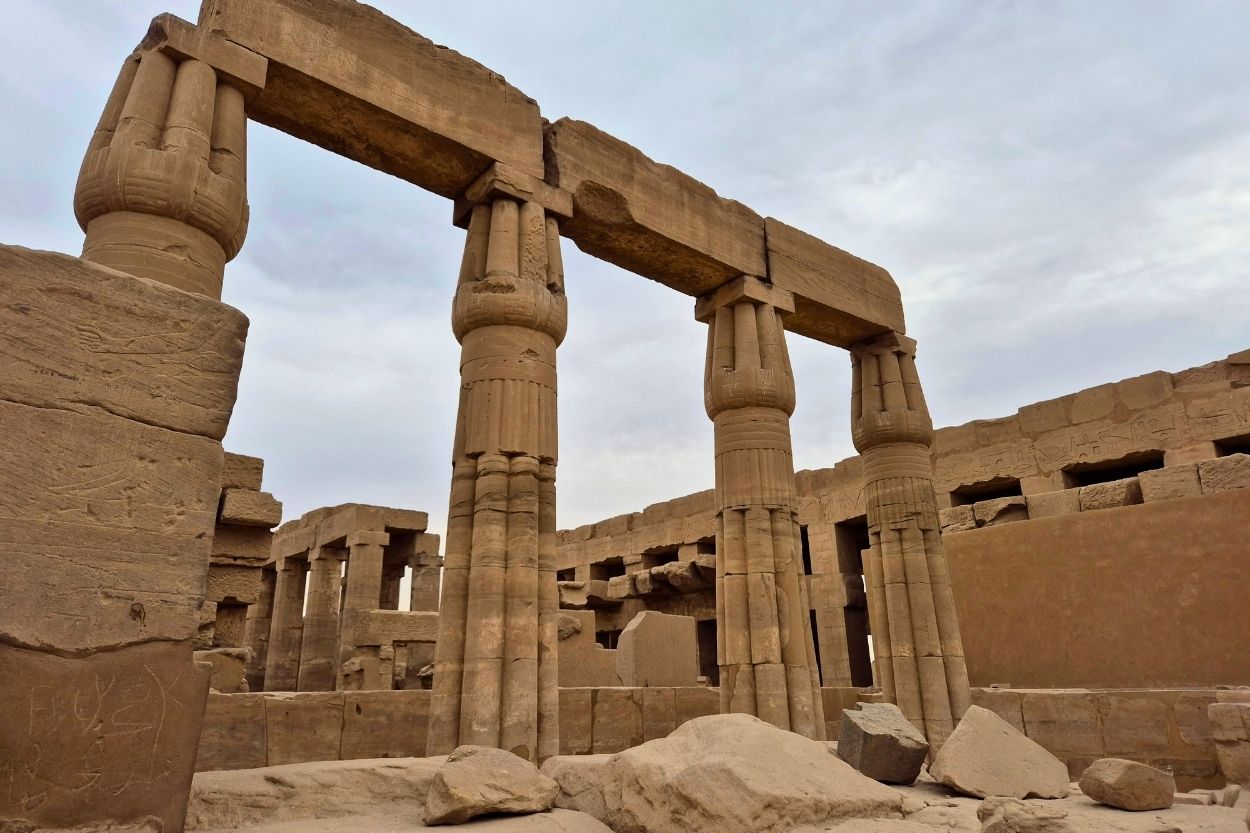
A hypostyle hall is a typical feature of ancient Egyptian temples. It was the towering pillared hall that visitors passed through on their way towards the inner sanctuary. At Karnak it is specifically referred to as the Great Hypostyle Hall, and that extra word is well deserved.
The hall contains 134 massive stone columns, some reaching 23m high and nearly 3m in diameter.
High above are stone slabs that once formed part of the ceiling. How the ancient Egyptians managed to lift these enormous blocks into place remains a mystery.
The Great Hypostyle Hall is considered one of the largest rooms of any religious complex in the world and one of the greatest architectural marvels from Egypt’s New Kingdom.
The Scarab
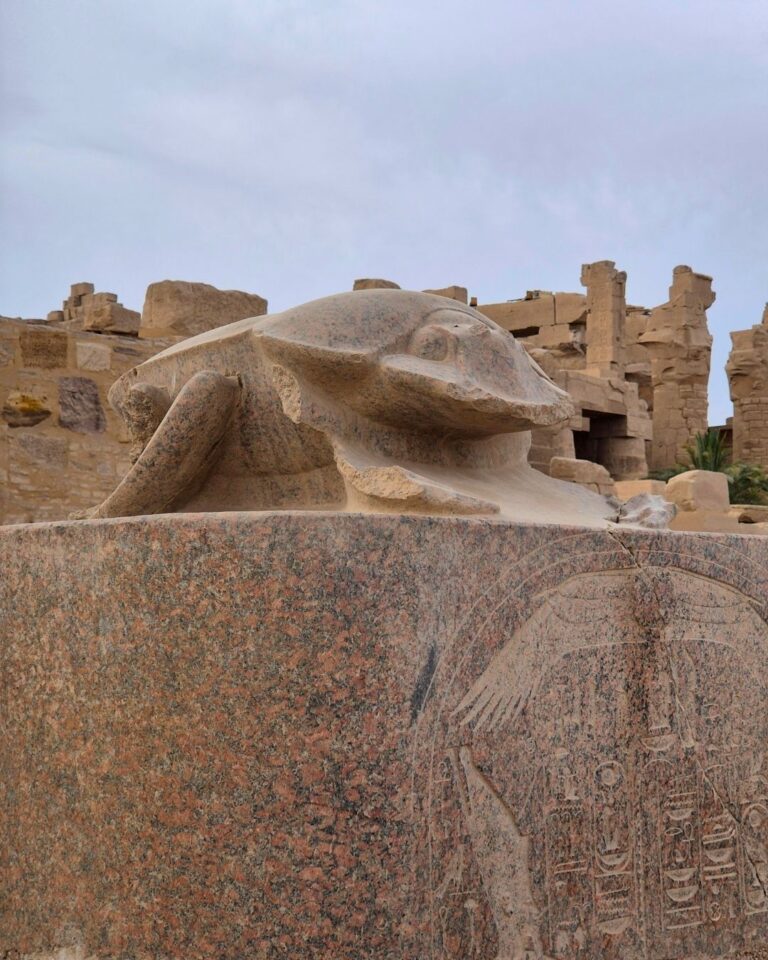
Located beside the Sacred Lake, beyond the Great Hypostyle Hall, you’ll find a small statue with big significance.
This granite sculpture of a dung beetle was created later in the temple’s history, likely during the Greek or Roman period, and represents the deity Khepri, the god of creation and rebirth. The Egyptians associated the dung beetle rolling its ball of dung with the sun moving across the sky each day.
This little statue is popular among visitors because of a modern tradition that says if you circle the statue 7 times, it will bring you good luck.
There doesn’t seem to be any evidence that this custom dates back to ancient Egypt. It may just be some creative storytelling by the local tour guides, but hey, it’s worth a shot.
The Obelisks
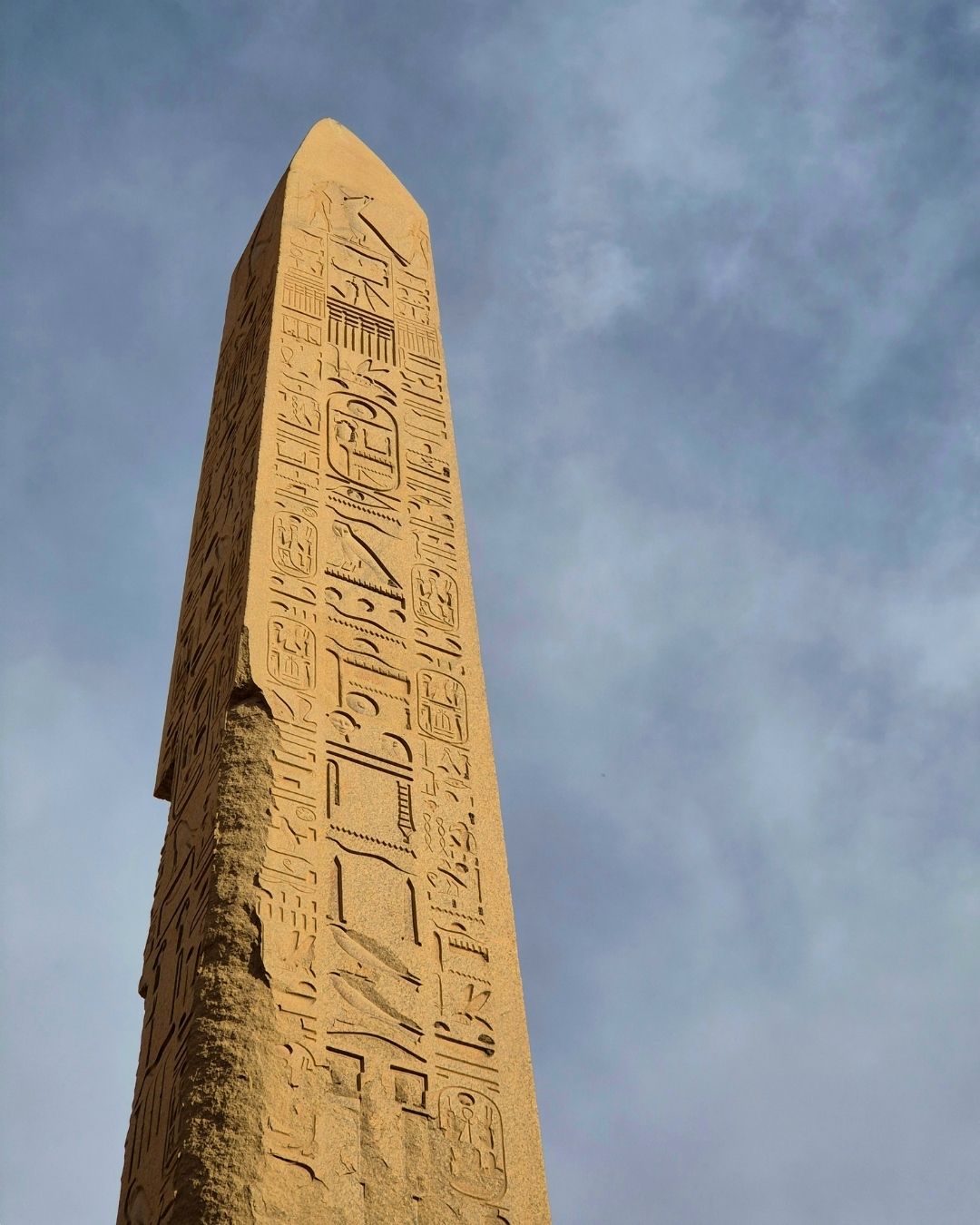
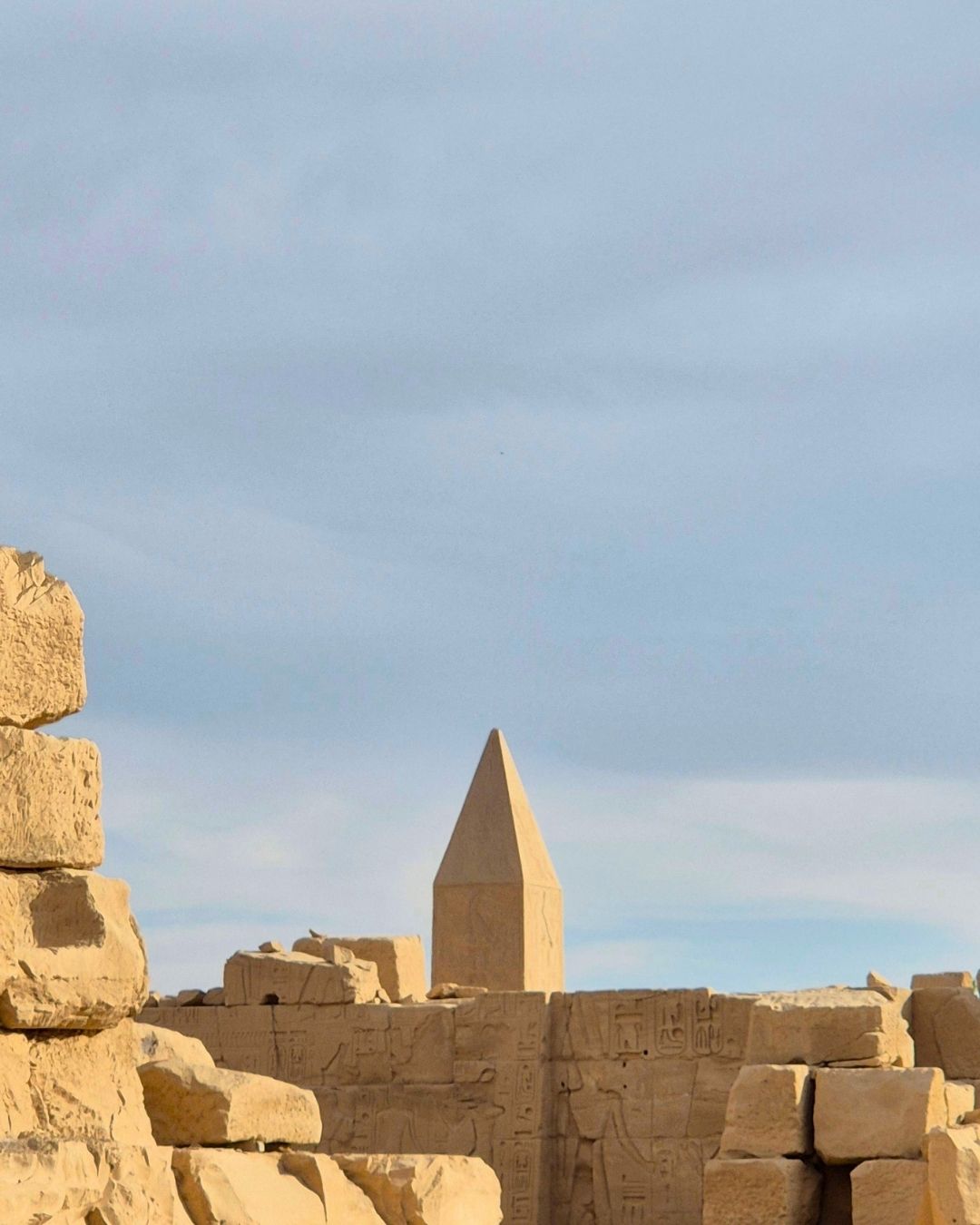
Obelisks were a classic architectural feature of ancient Egypt, usually honouring sun deities and the connection between earth and sky.
There were once around 20 obelisks at Karnak Temple, commissioned by various pharaohs over the centuries. Today, only two remain standing and intact.
The first is the Obelisk of Thutmose I, built in the early 15th century BCE and standing around 21m tall.
The second is the famous Obelisk of Hatshepsut, erected around 1470 BCE and rising to almost 30m, making it the tallest surviving obelisk still standing in Egypt.
Even more interesting is the fact that both were carved from single blocks of granite in quarries in far away Aswan before being transported to Karnak.
Festival Hall
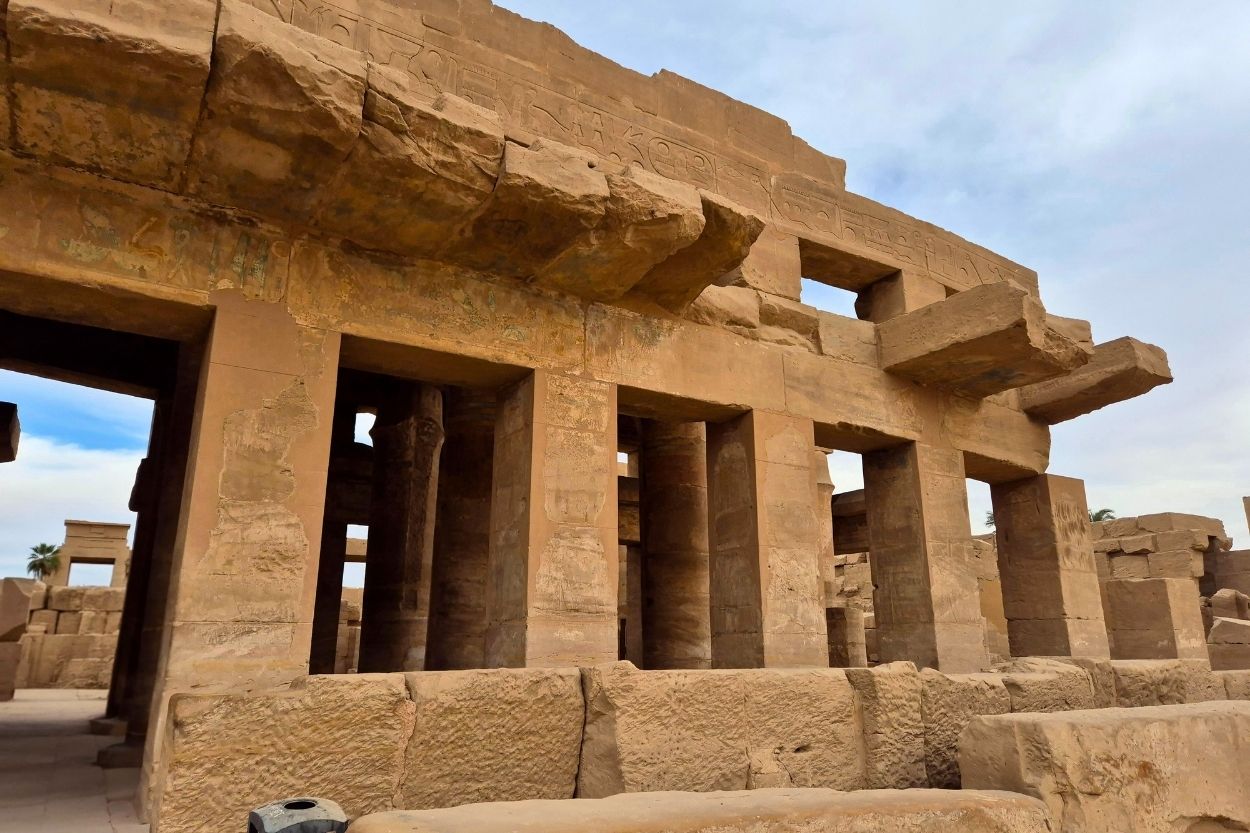
Located beyond the Great Hypostyle Hall, near the far end of the complex, is the Festival Hall of Thutmose III.
This long rectangular hall is believed to have been built to celebrate Sed Festival for Thutmose, a ceremony that honours a pharaoh’s long rule, typically after 30 years of reign.
Later in its history, the building was likely used for other religious festivals and ceremonies.
The Festival Hall may not seem like much after passing through the Great Hypostyle Hall, but it’s usually one of the less crowded parts of the complex and offers an insight into a different side of the temple’s history.
Light & Sound Show
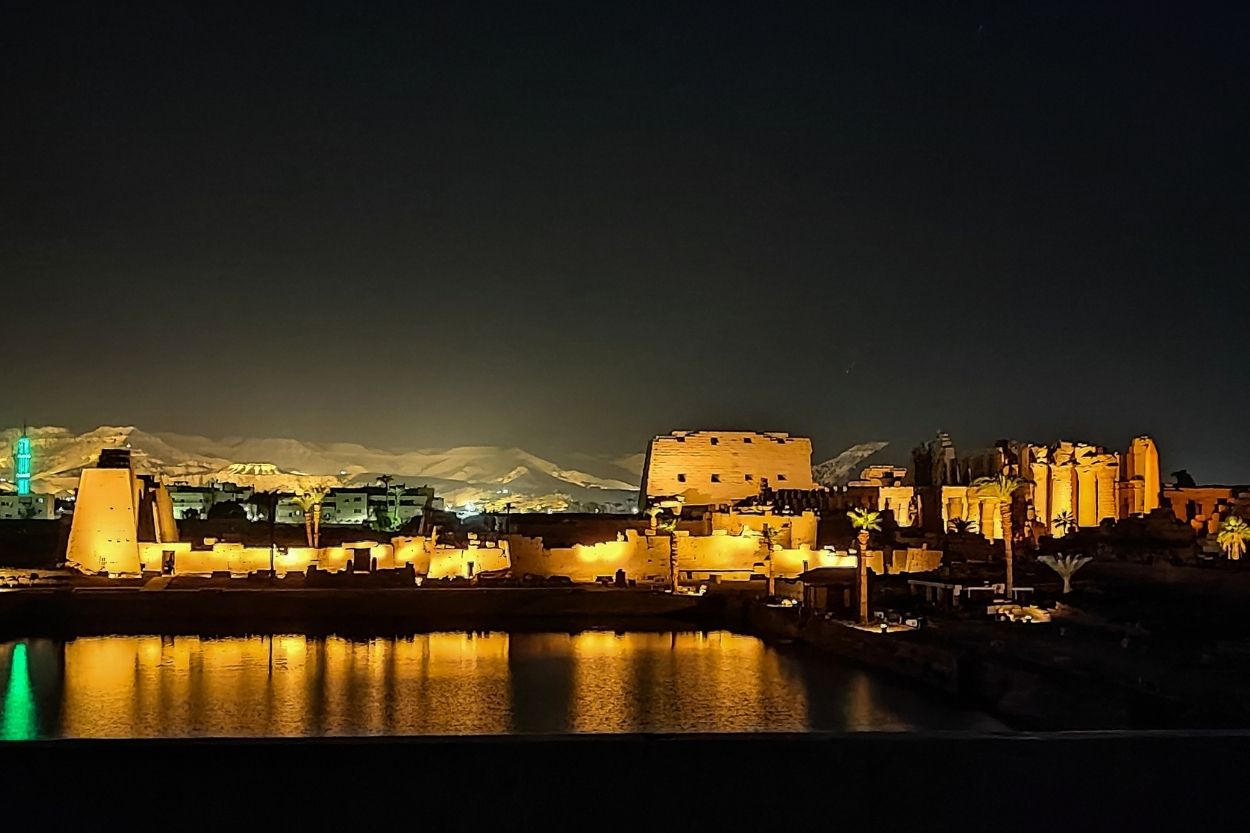
Like many of Egypt’s major sites, you can return to Karnak Temple at night for the Light & Sound Show. During this show, the temple is illuminated while music and narration tell the story of its long history and the pharaohs who built it.
Reviews of the show are generally mixed. Some visitors love it, while others feel the presentation is a little dated. Still, it’s an interesting way to spend an evening in Luxor and is an interesting way to learn the temple’s history.
There are 2 shows every evening except Tuesdays and Wednesdays. The language changes depending on the evening so be sure to check the schedule before booking.
You can check the schedule and purchase your ticket for the Karnak Light & Sound show from this website.
Is Karnak Temple worth visiting?
With so many other historical sites across the country, you might be wondering whether Karnak Temple is worth including in your Egypt itinerary.
If you’re visiting Egypt, Luxor should absolutely be on your itinerary. Outside of Cairo, it is the country’s number one historical destination, home to a greater concentration of ancient Egyptian monuments than anywhere else in the country.
And among those many sites, Karnak Temple is considered one of the very best.
For more than 1,500 years, the complex served as the religious and cultural heart of the ancient Egyptian capital of Thebes. It is the largest religious complex ever constructed in ancient Egypt, and its Great Hypostyle Hall ranks among the greatest architectural achievements of the New Kingdom.
Karnak Temple is one of the top historical attractions in a country overflowing with incredible history. So yes, Karnak Temple is absolutely worth adding to your itinerary.
Where is Karnak Temple?
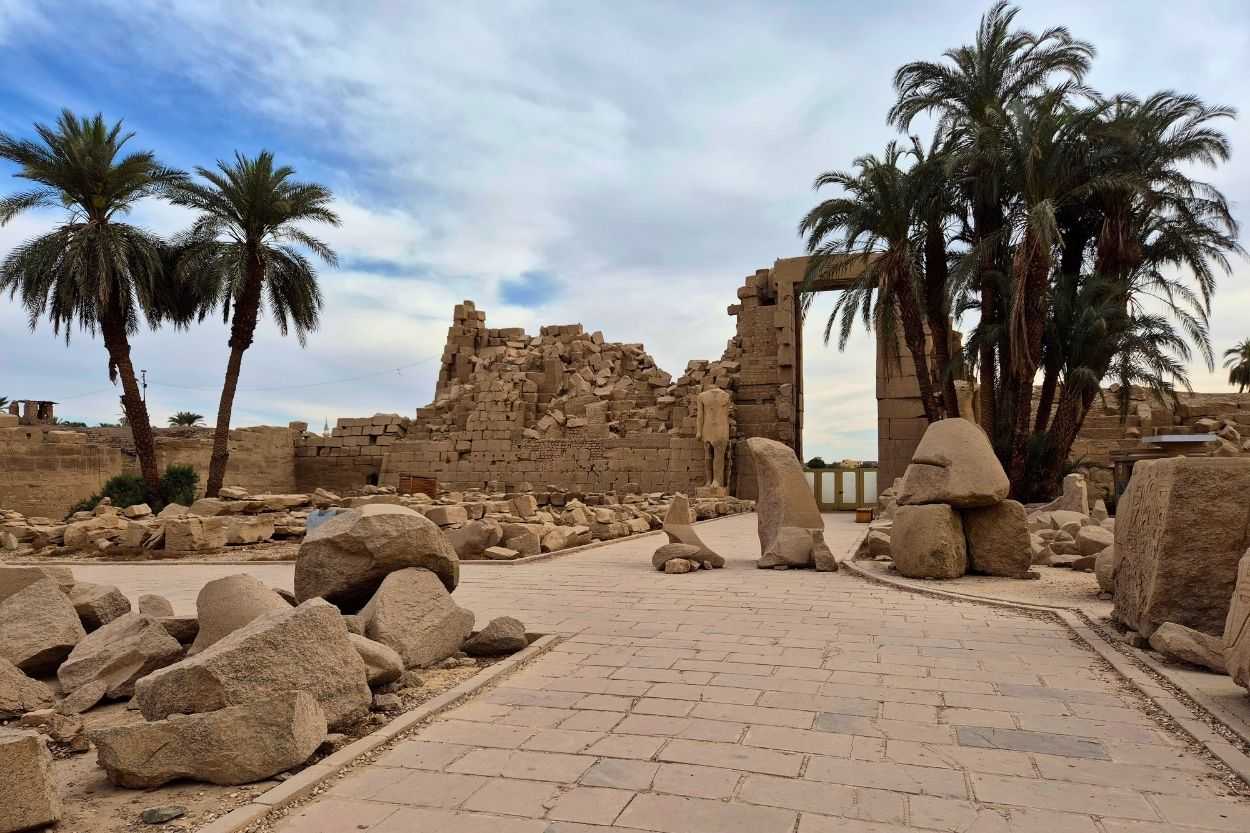
📍Karnak Temple is located on the east bank of the Nile River in the city of 📍Luxor, in southern Egypt.
The temple sits within what was once the heart of the ancient Egyptian capital of Thebes, although today it lies on the northern outskirts of modern Luxor.
How to get to Karnak Temple
Option 1: By Taxi
Depending on where you’re staying in Luxor, the simplest way to reach Karnak Temple is likely by taxi.
Taxis are widely available across the city and take about 10 – 15min from central Luxor to the temple entrance.
The exact price will depend on where you’re coming from and your haggling skills, but expect to pay about 80 to 100 EGP one way.
Option 2: By Guided Tour
If you want transport and all the other logistics handled for you, I recommend booking a guided tour to Karnak Temple.
Luxor has many local tour operators offering trips to Karnak, as it is one of the city’s most visited attractions. Many tours combine Karnak with Luxor Temple (like this one), while others offer full day tours that also include top historical sites on the West Bank (like the Valley of the Kings and Hatshepsut Temple).
You can explore Karnak Temple tours and prices on Get Your Guide.
Option 3: By Nile Cruise
Another popular way to visit Karnak Temple is as part of a Nile cruise.
These cruises are one of the most popular things to do in Egypt and a great way to tick off a bunch of the country’s top historical sites in a short amount of time. Cruises typically run between Luxor and Aswan, and include all the top sites in and between the cities (including Karnak Temple).
A cruise usually covers transport, accommodation, entry tickets and provide you with an experienced guide to show you around. In between tours, you’ll get to sit back and relax on the boat, which typically features a rooftop pool, lounge, bar and buffet.
Cruises vary in length, typically ranging from 3 to 10 nights. You can browse available Nile cruise options and pricing on Get Your Guide or Viator.
Best Karnak Temple Tours
I’ve done the research so you don’t have to. Here are the top Karnak Temple tours depending on what you’re looking for…
⭐ Karnak Temple + Luxor Temple
⭐ Karnak Temple + Luxor Temple, Valley of the Kings & Hatshepsut Temple
Karnak Temple Opening Hours
Karnak Temple is open from 6am to 4pm daily, including during Ramadan.
Karnak Temple Ticket Info
Ticket prices for Karnak Temple are:
- EGP 600 – Adults
- EGP 300 – Students
You can purchase your ticket at the front entrance, or online in advance from the official ticket website.
Karnak Temple is also included in the Luxor Pass, a single ticket that grants access to most of the historical sites across Luxor, including the Valley of the Kings, Hatshepsut Temple, Luxor Temple, Medinet Habu, the Tombs of the Nobles, and more.
The Luxor Pass costs around $100 USD and remains valid for 5 days. The pass can’t be purchased online, but fortunately Karnak Temple ticket office is one of the 2 places you can get it (the other being the Valley of the Kings).
How long does it take to visit Karnak Temple?
How long it takes to visit Karnak Temple depends on how deeply you want to explore the complex:
- 1 to 1.5 hours – Quick visit. Just the highlights.
- 2 – 3 hours – Standard visit. Allows time to explore all areas of the complex
- 3 – 4 hours – Deep visit. For those who want to explore everything the complex has to offer and read every plaque.
More historical sites in Luxor
As the site of the New Kingdom capital of Thebes, Luxor is one of the top destinations in Egypt. Here are some other top sites you may want to include in your itinerary:
For more travel guides to Egypt’s historical sites, check out our Egypt home page.