There are ancient pyramids all over the world – in Mexico, Peru, Cambodia, China – and across Egypt. But none are older than the Step Pyramid of Djoser at the Saqqara Necropolis.
Located less than an hour’s drive outside of Cairo, the Saqqara Necropolis is Egypt’s oldest burial ground, and served as the final resting place for Egypt’s first pharaohs.
The Saqqara Necropolis is a sprawling complex, stretching almost 8km adjacent to the Nile. It’s full of countless ancient tombs (mastabas) and pyramids. The main feature, however, is the 4,700-year-old Step Pyramid.
With so many ancient tombs and monuments to explore, Saqqara has a lot to offer and makes for a great day trip from Cairo. In this guide, you’ll find everything you need to know to plan your visit to Saqqara Necropolis.
Best Saqqara Tours
I’ve done the research so you don’t have to. Here are the top Saqqara tours depending on what you’re looking for…
Contents
A Brief History of Saqqara Necropolis
Somewhere far back in Egypt’s ancient history the people noticed that bodies left in the desert would remain preserved for a long time. Over time, the idea of preservation became central to their religion.
It also became common practice to bury the dead with valuable items, believed to accompany the deceased into the afterlife. This, however, made graves prime targets for robbers.
And so, in an attempt to make graves more difficult to rob, the ancient Egyptians began building increasingly elaborate tombs. Large tombs covered in massive stone slabs, known as ‘mastabas’, became not only a form of protection against would-be robbers, but also a symbol of wealth and status.
Come the beginning of Egypt’s Old Kingdom around 3100 BCE, these mastabas had become quite elaborate. The Saqqara Necropolis, lying just west of Egypt’s first capital Memphis, became the main cemetery for Egypt’s earliest kings and other important people in society.
During the reign of the pharaoh Djoser (pronounced ‘joss-er’), renowned architect Imhotep led the construction of a new style of tomb to reflect the grandeur of the pharaoh. It involved stacking 6 mastabas on top of each other, creating a stepped, pyramid-shaped monument.
Completed in the 27th century BCE, it became the world’s first pyramid: the Step Pyramid of Djoser.
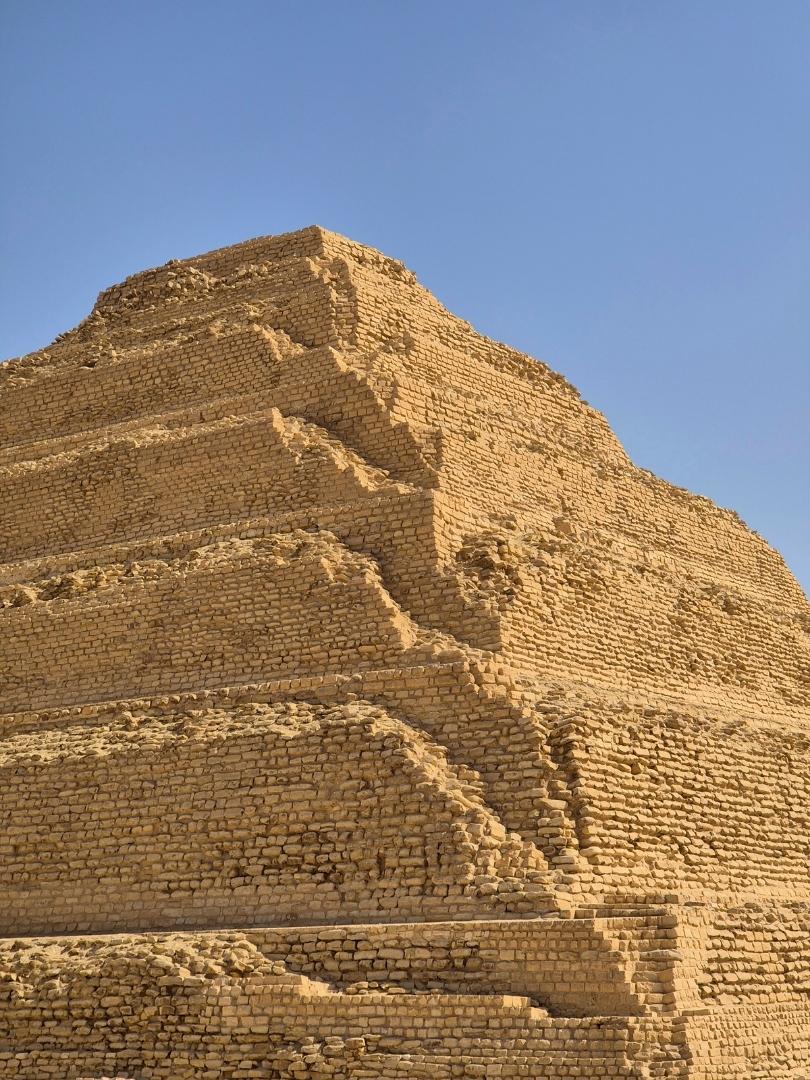
Like most pyramids in Egypt, it was originally clad in a layer of white marble, rather than the exposed bricks you see today. Standing 62m tall, it was the largest man-made structure ever built, and must have been an incredible site to those living 4700 years ago.
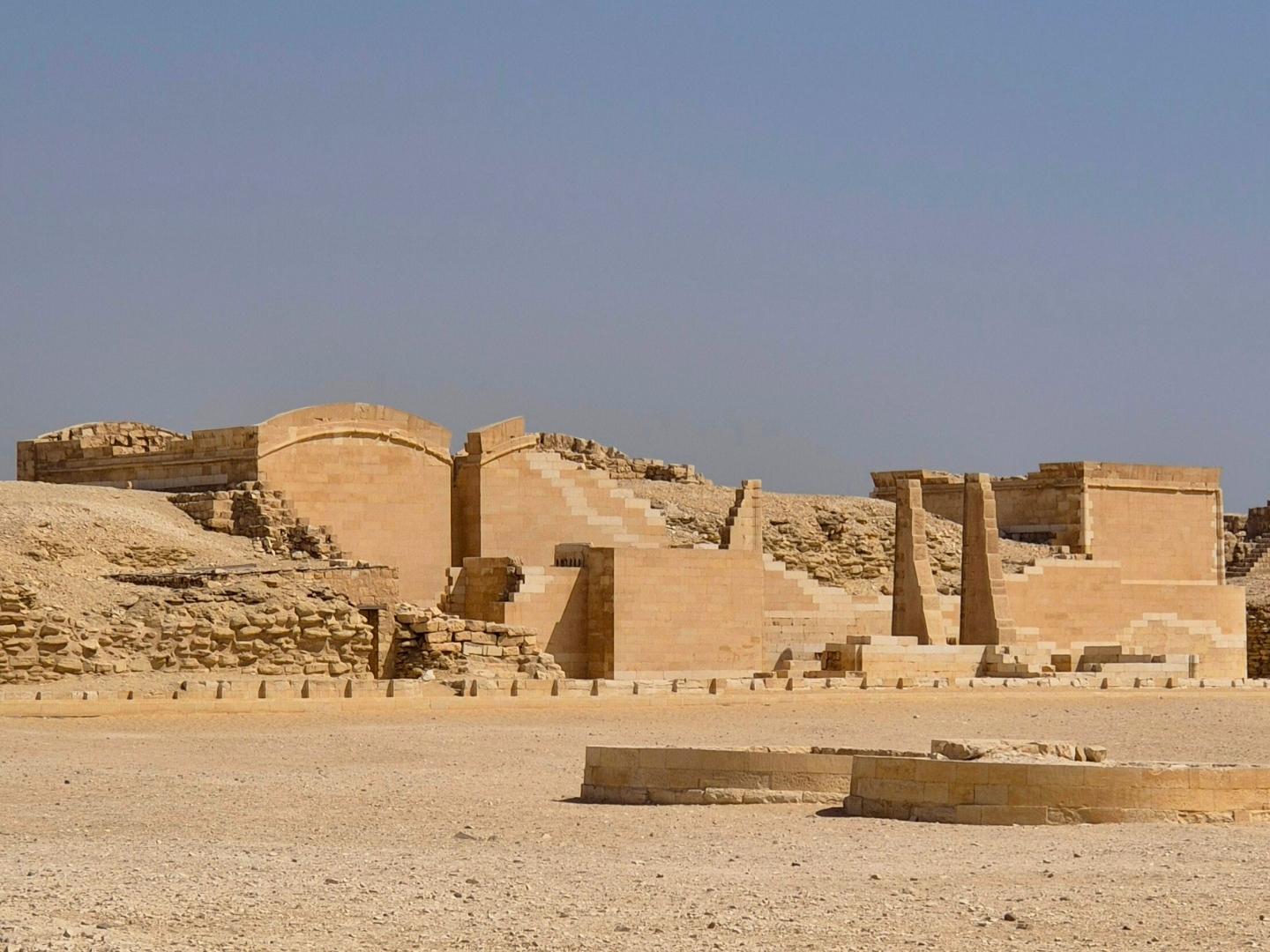
The stepped pyramid became the centrepiece of a large mortuary complex made specifically for Djoser, surrounded by an open courtyard, and complemented by many smaller monuments.
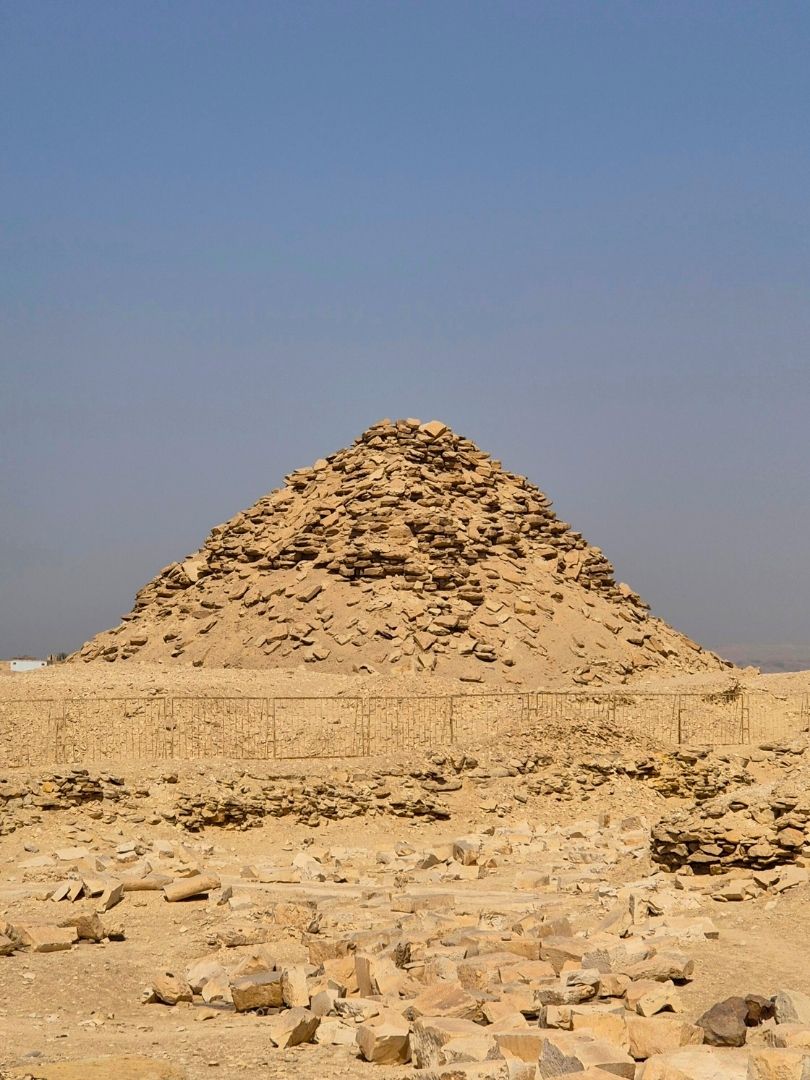
Djoser’s pyramid set a precedent for future pharaohs. Over time, up to 16 pyramids were built at Saqqara, and many more across Egypt, with later pyramids adopting a ‘smooth-sided’ design.
While Egypt’s Old Kingdom ended and the capital moved elsewhere, the Saqqara Necropolis continued to be used as a burial ground for another 3000 years. Nobles, priests, and sacred animals (such as the Apis bulls – more on them later) were buried at Saqqara well into Egypt’s Greek and Roman periods.
Today, excavations are still uncovering new tombs at Saqqara. The site was registered as a UNESCO World Heritage Site in 1979, and welcomes hundreds of thousands of visitors each year.
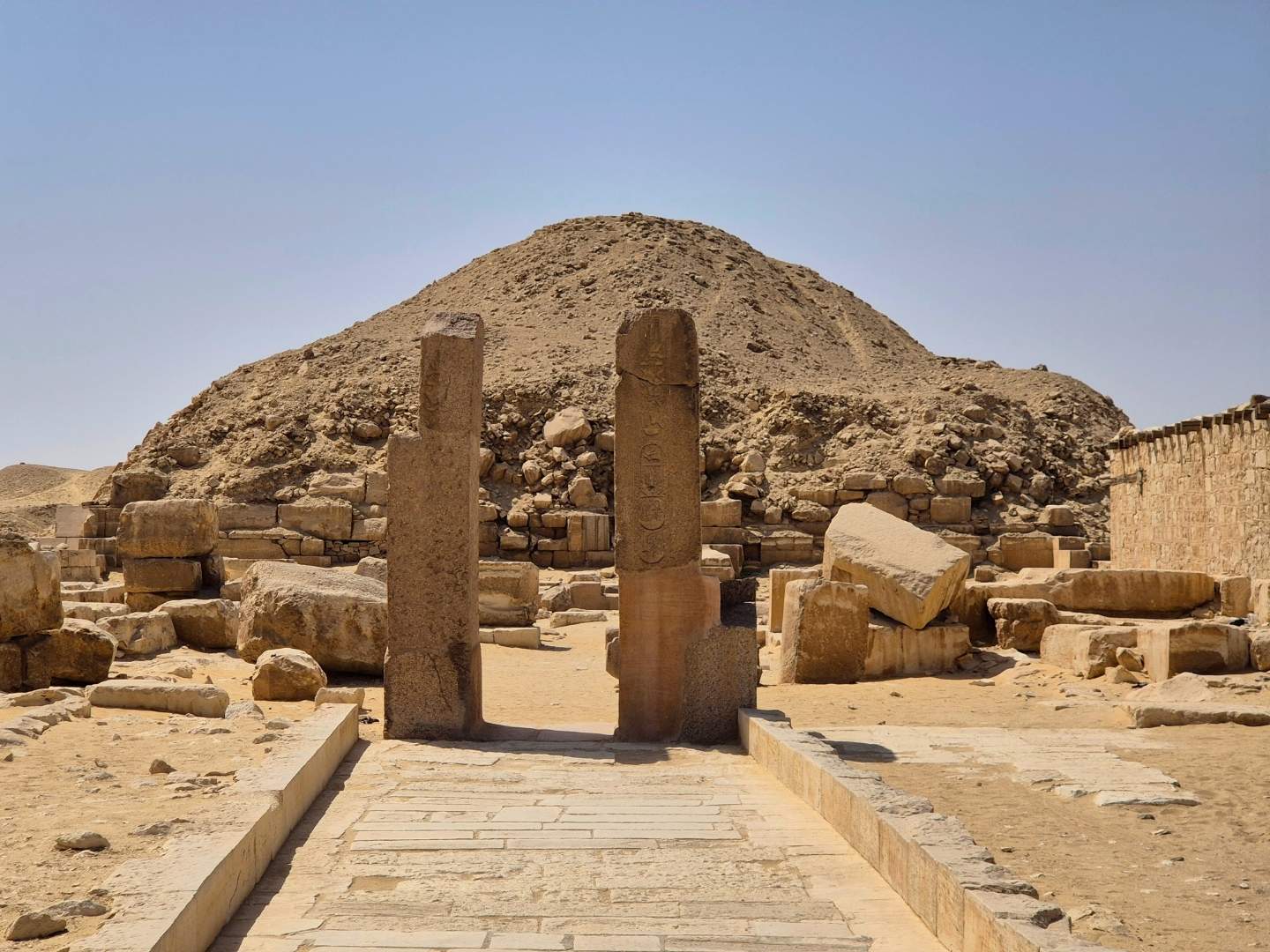
Things to see at Saqqara Necropolis
The Saqqara Necropolis is the largest archeological site in Egypt, with thousands of years of history to see. So naturally, there’s a lot to explore here and the sprawling complex stretches for almost 8kms adjacent to the Nile.
Thankfully however, most of the main monuments are clustered around the Step Pyramid of Djoser, so you won’t have to do too much trekking or driving around the complex.
There’s a lot to see at the Saqqara Necropolis, too much to list everything here, but here are the main sights included with the various ticket options:
1 | Imhotep Museum
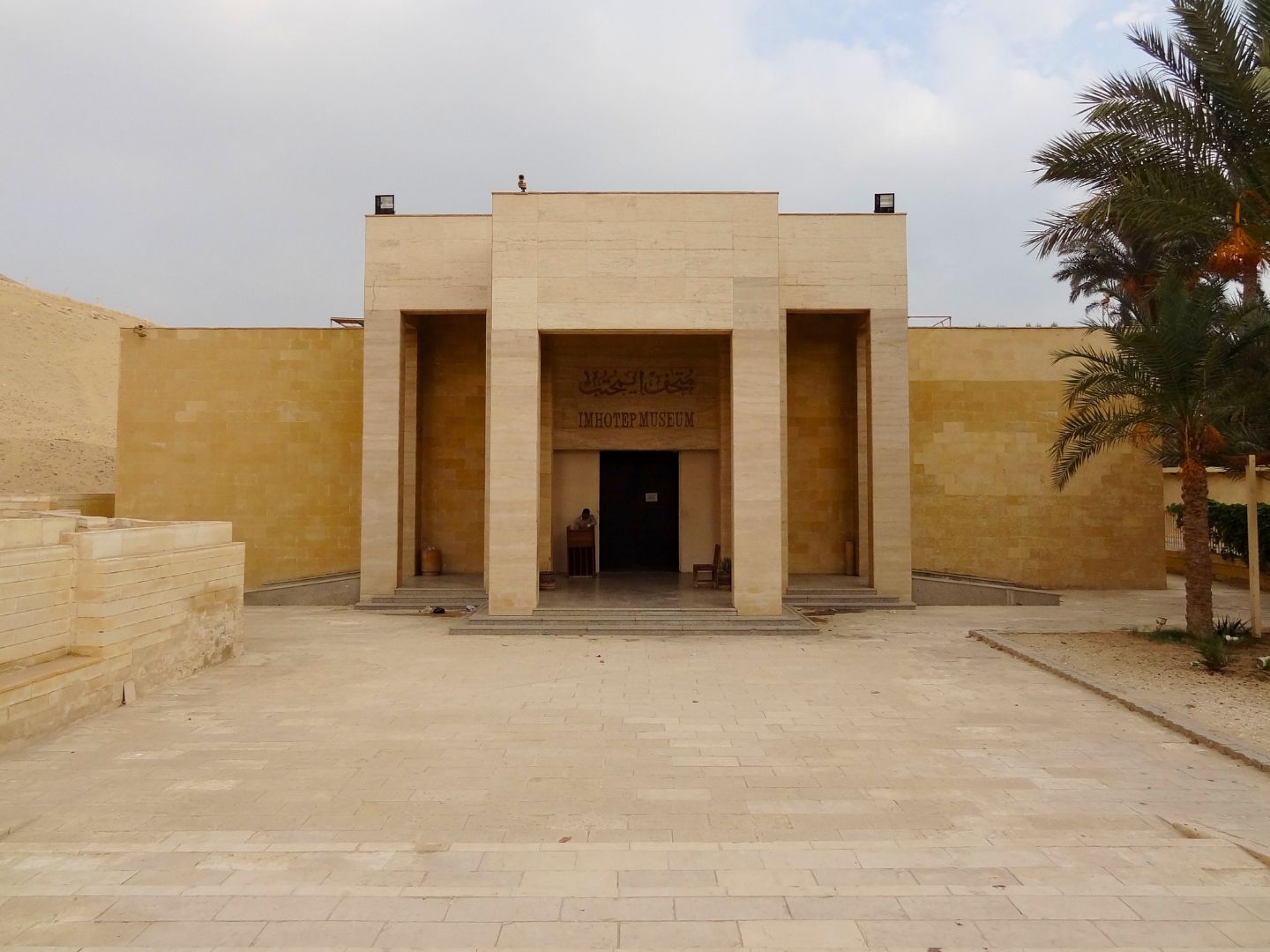
A great way to begin your visit to Saqqara Necropolis is at the Imhotep Museum, which will give you a better understanding of the ruins you’re about to explore, and give you an idea of what it might have looked like thousands of years ago.
The Imhotep Museum is the first stop after passing through the entrance, located just off the road leading up to the Necropolis. Inside you’ll find a collection of fascinating artefacts uncovered at Saqqara over the past two centuries, including mummies, sarcophagi, stelae, statues, and even the tools used to build the monuments.
Entry to the museum is included with the standard Saqqara ticket (more on that below), and is well worth a visit. Spending a little time at the museum at the start of your visit will definitely enhance the experience.
2 | The Colonnade
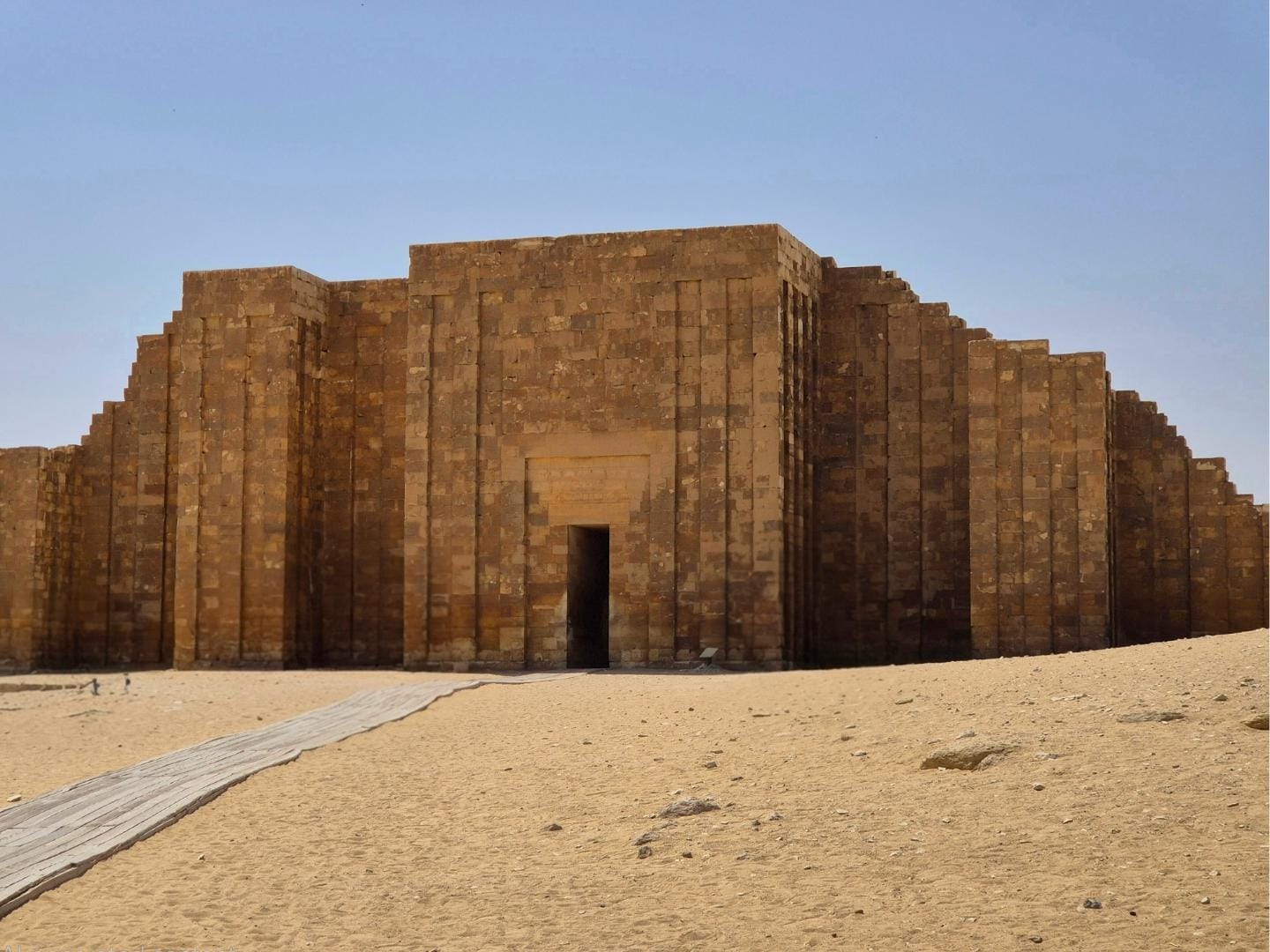
You’ll begin your visit to the Saqqara Necropolis much the same way people did thousands of years ago – by passing through the Colonnade Entrance, also known as the Hypostyle Hall.
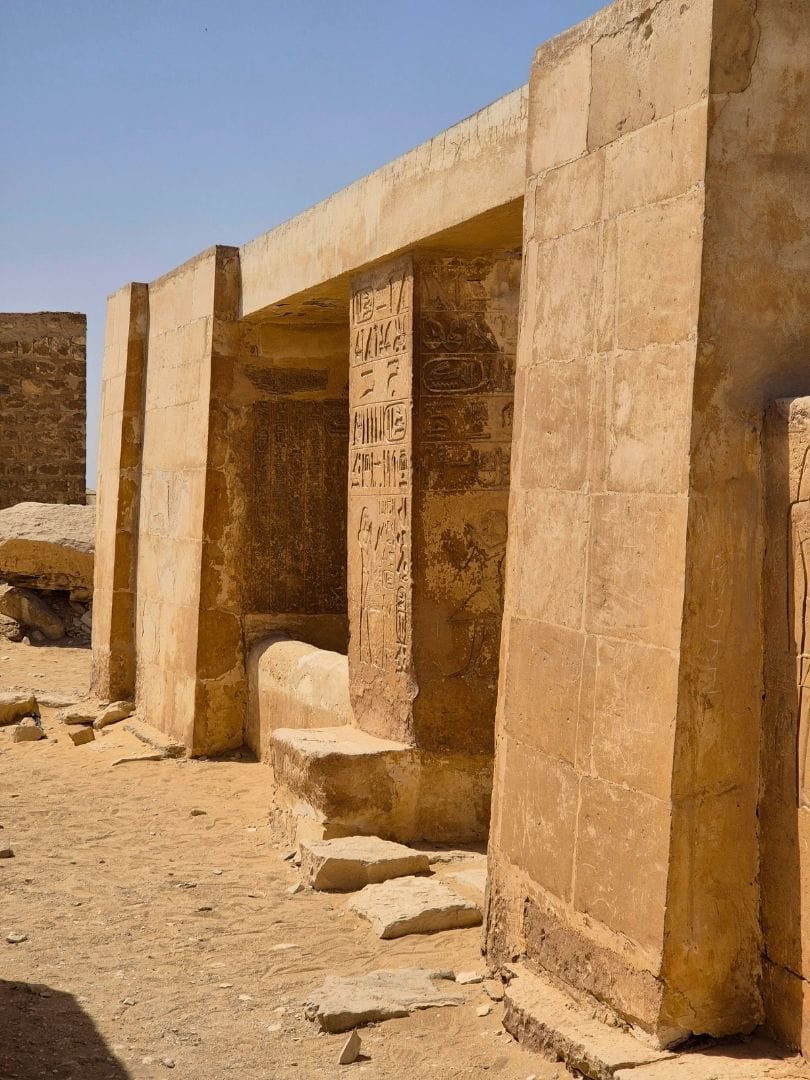
When Djoser’s funerary complex was built, the entire site was enclosed by a large stone wall. While most of that wall has crumbled away over the millennia, this entrance remains the most intact section still standing.
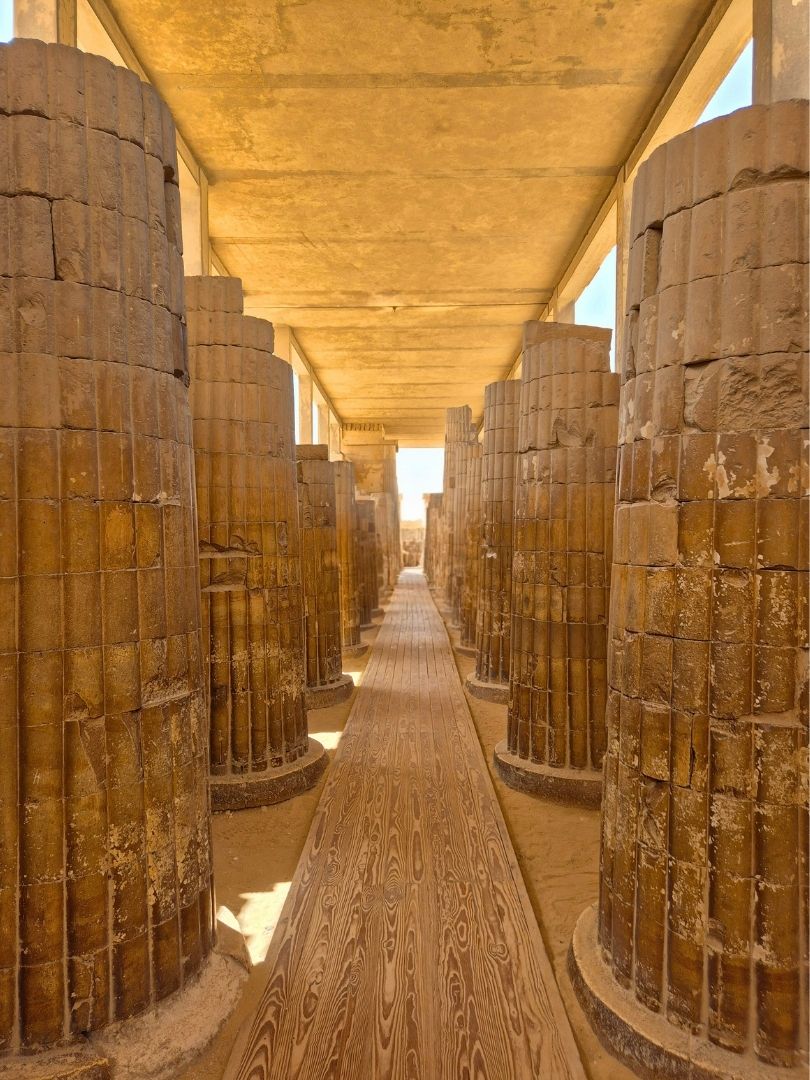
After stepping through what remains of the wall, you’ll walk down a long colonnaded hall, its stone pillars carved to resemble rows of palm trees, with numerous small chambers off to the sides.
After passing through the colonnade, you’ll find yourself in the main courtyard of Djoser’s funerary complex, and greeted with a grand view of the Step Pyramid.
3 | Pyramid of Djoser
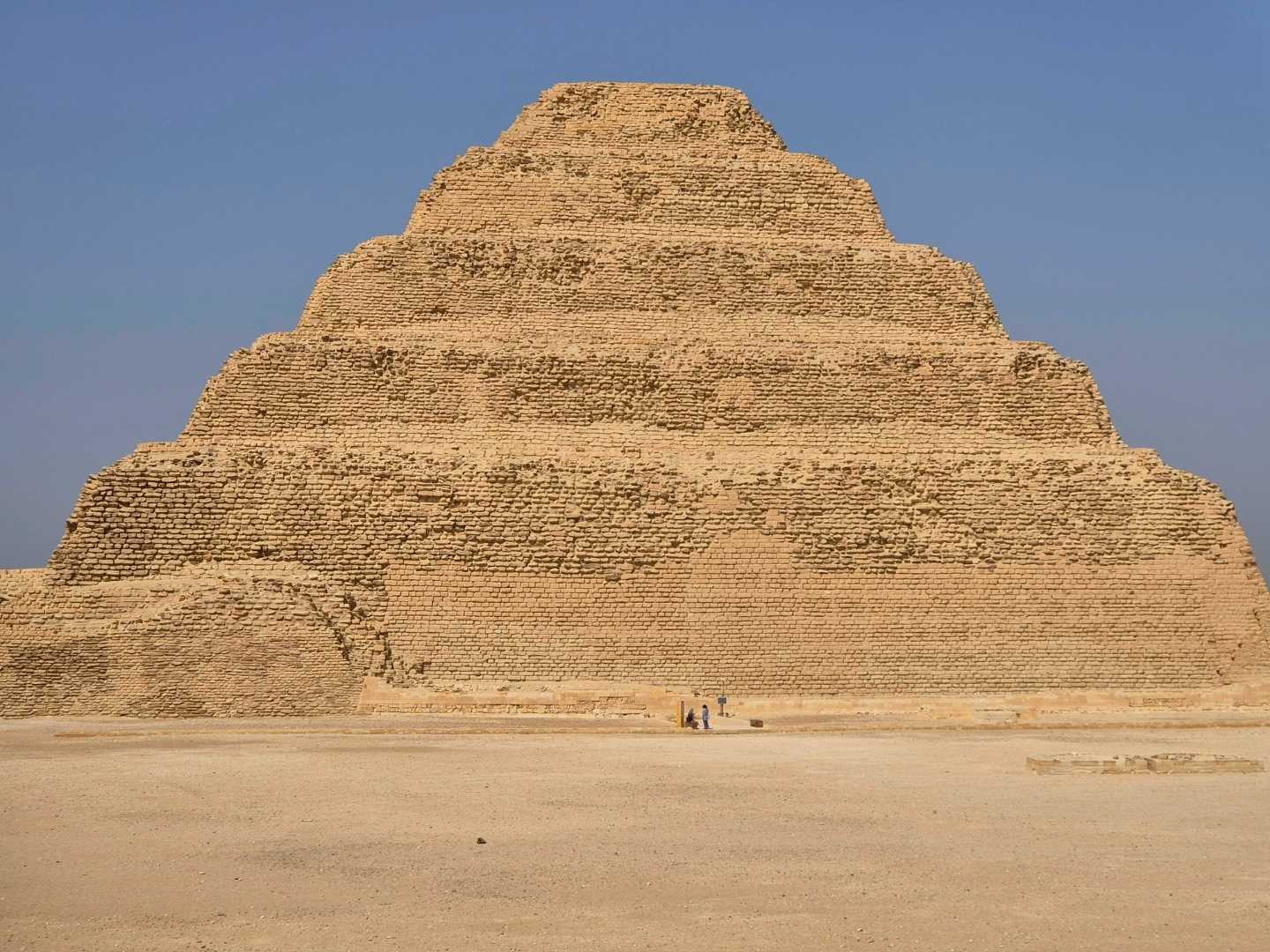
The main attraction at Saqqara – the star of the show – is the Step Pyramid of Djoser, the oldest pyramid in the world. Built in the 27th century BCE during the reign of King Djoser, it’s the central feature of his massive funerary complex.
At the time of its completion, the Step Pyramid was the largest structure ever built by human hands. Its design, overseen by renowned architect Imhotep, involved stacking 6 mastabas (traditional rectangular tombs) on top of each other.
This new type of monument was revolutionary and set a precedent for all future pharaohs, with the stepped structure later giving way for the smooth-side pyramids like those at Giza.
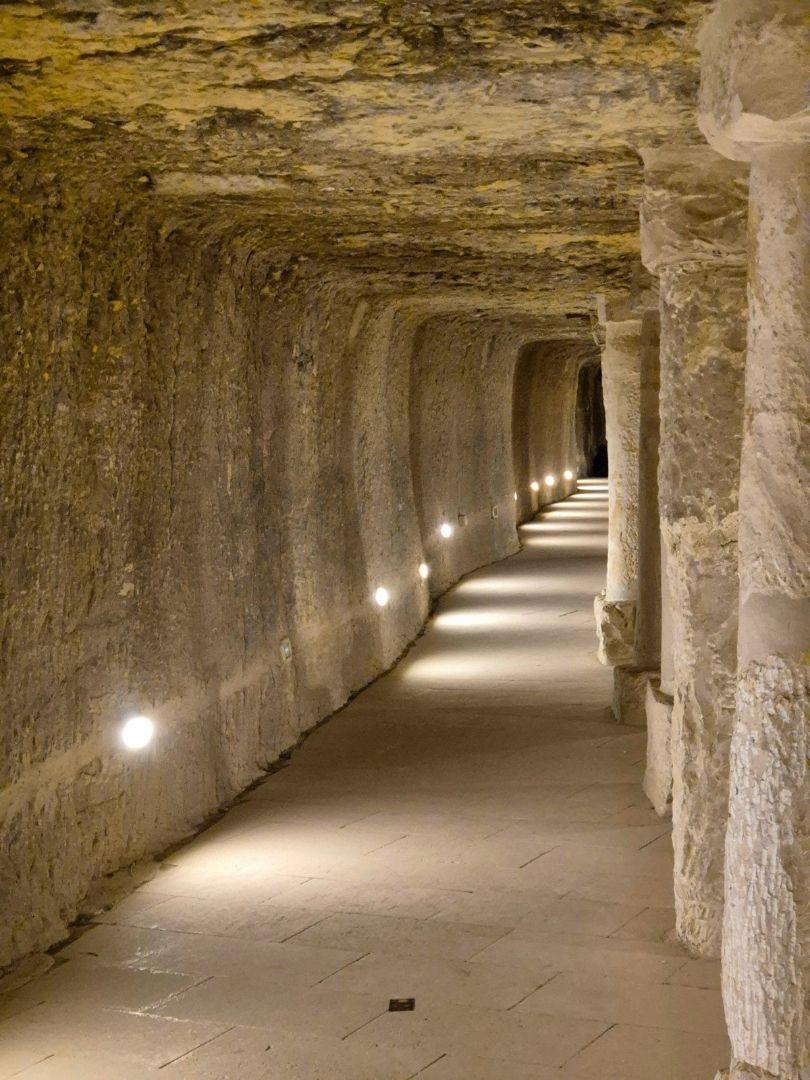
Like most pyramids, Djoser’s Step Pyramid contains a series of underground tunnels and chambers. There are 2 tunnels leading inside the structure, both converging at a massive central shaft 28m deep, with Djoser’s stone sarcophagus at the bottom.
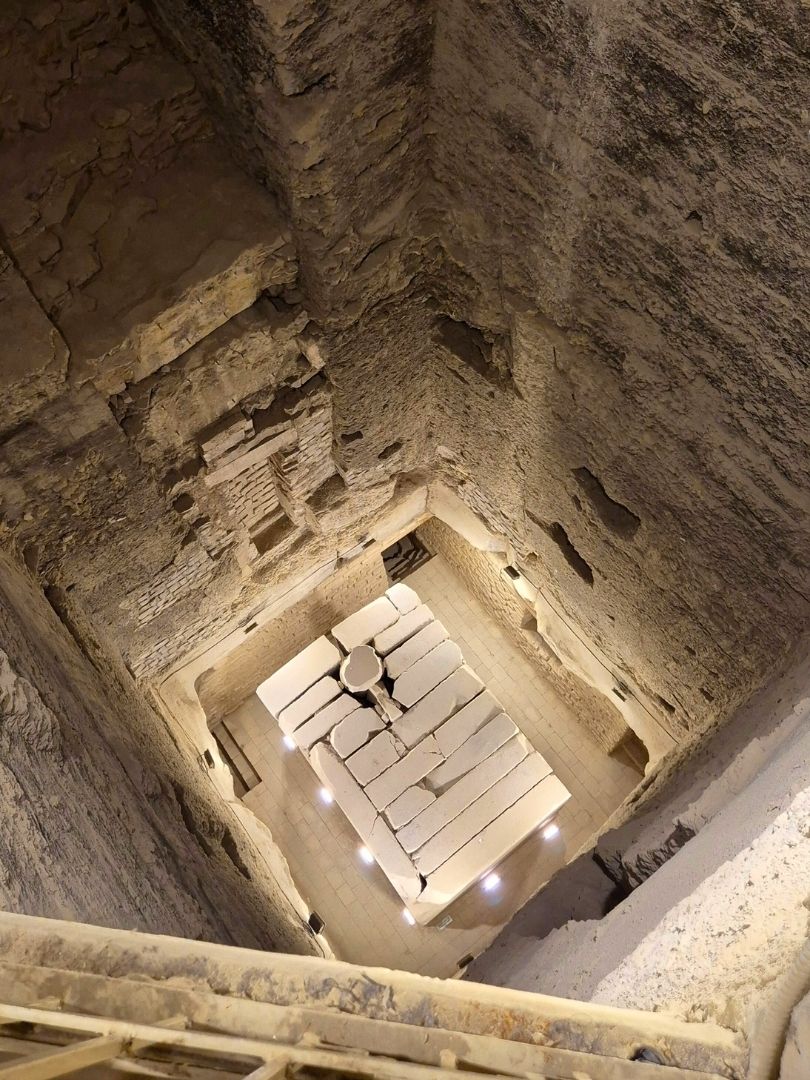
The northern passage into the pyramid is closed off to visitors, but with an additional ticket you can enter through the southern entrance. Unlike most pyramids, this passage doesn’t require you to crawl through a confined tunnel – good news for any claustrophobic visitors.
Instead, the accessible southern passage is tall enough for a medium-sized adult to stand upright, and leads to a viewing platform where you can look down the 28m shaft and catch a glimpse of Djoser’s sarcophagus.
4 | The Serapeum
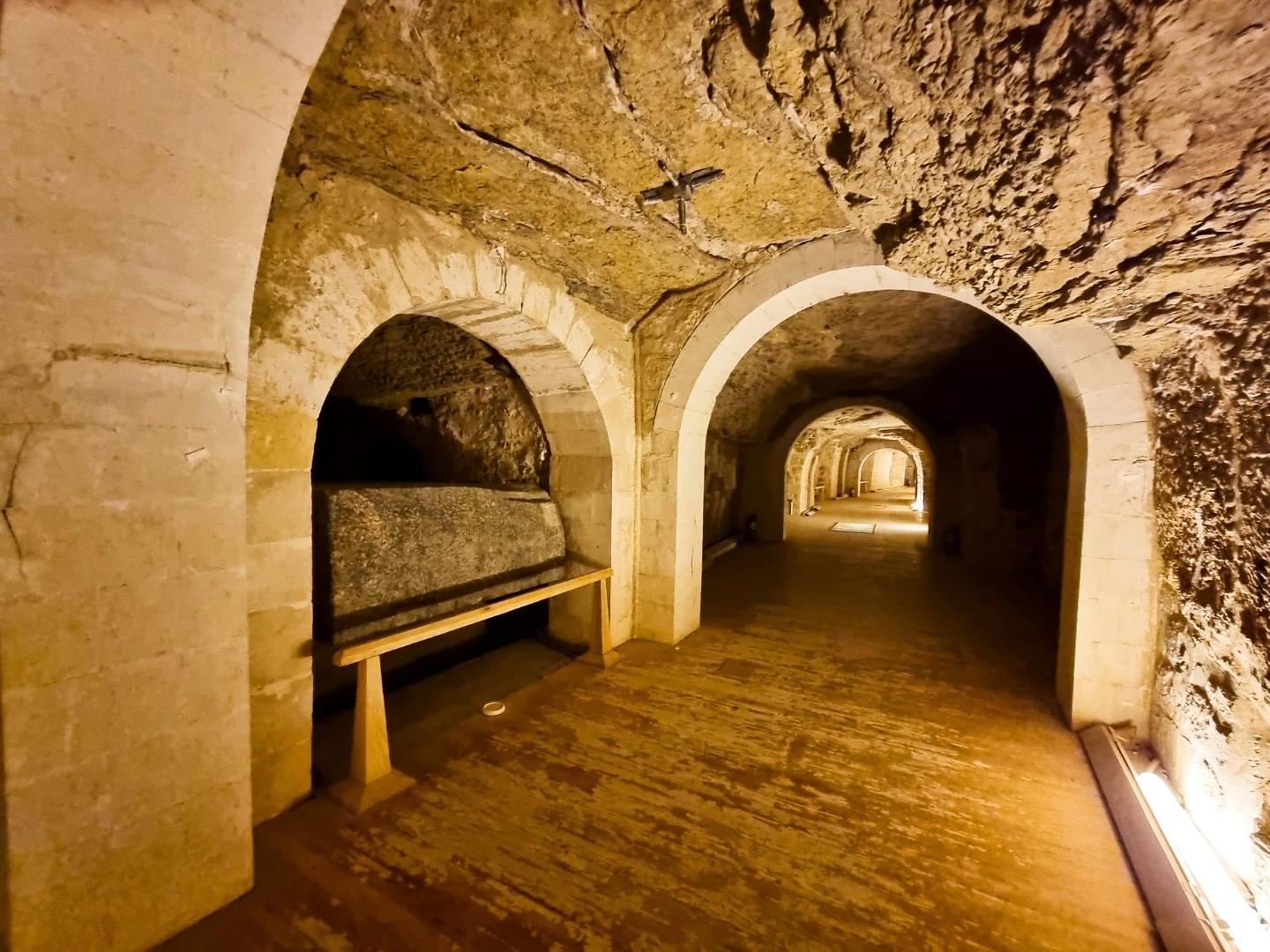
The extinct ancient Egyptian religions were very animalistic, with numerous members of its pantheon being dedicated to specific animals. A fascinating example of this is the Apis Cult, which worshipped sacred bulls believed to be reincarnations of the deity Ptah.
These divine bovines were so revered that when they died, they were buried in ceremonies and tombs worthy of a pharaoh, and one of the most renowned examples of this can be found right here at Saqqara, at the Serapeum.
Built sometime in the 14th century BCE, the Serapeum tombs are located beneath what used to be an Apis Cult temple. Below are tunnels and chambers where up to 64 Apis bulls were entombed, with burials continuing until the start of the Roman period around 30 BCE.
The Serapeum is located north-west of the Step Pyramid, in a separate area of the Necropolis. Here, you can walk down the long central tunnel and view dozens of ancient Apis bull sarcophagi, some of which weigh up to 25 tonnes.
The Serapeum is one of the best tombs at Saqqara, and well worth the additional ticket.
5 | Mereruka’s Tomb
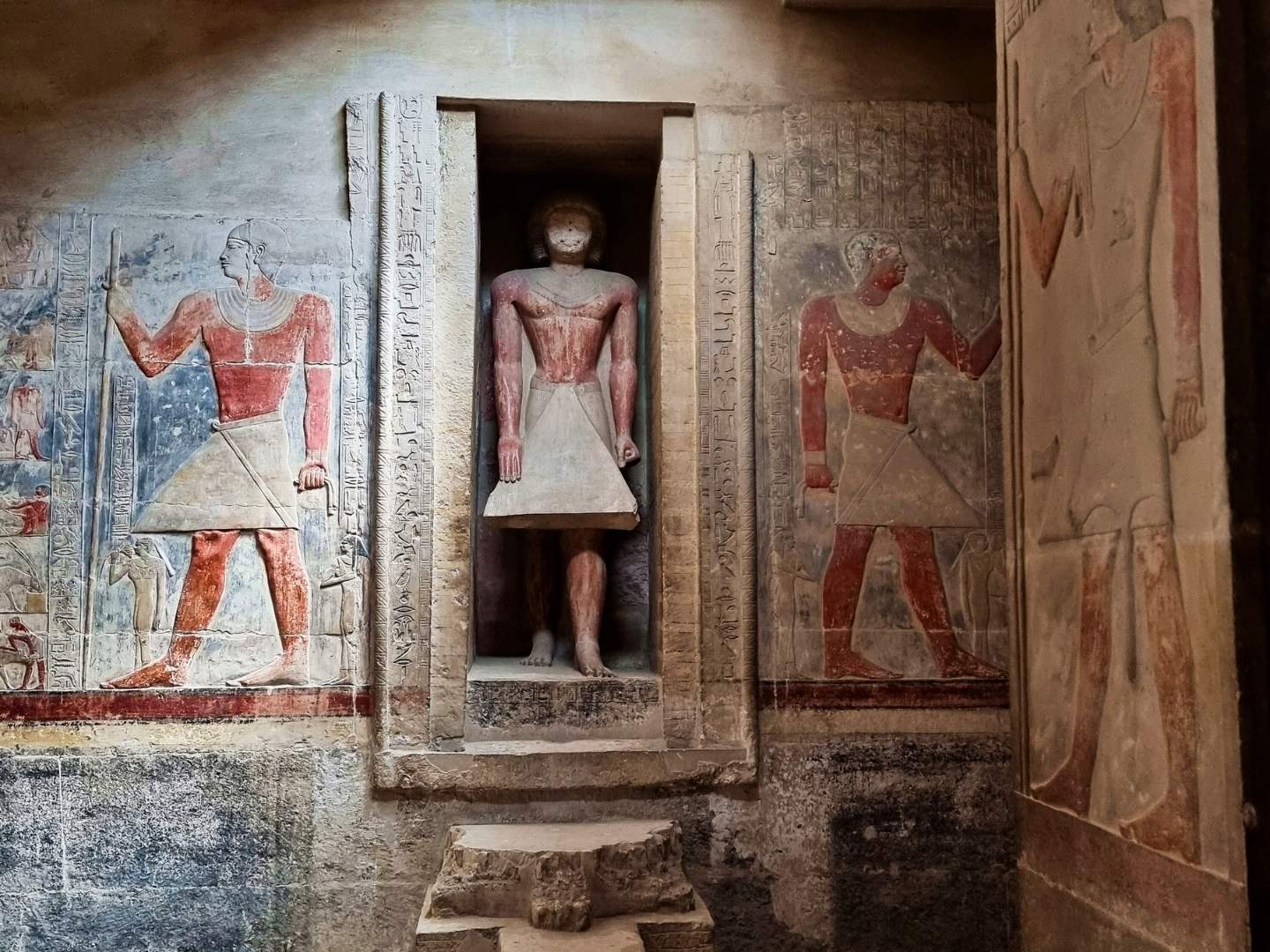
Throughout ancient Egypt, the highest-ranking public official was the Vizier, second only to the pharaoh. They were essentially prime ministers, overseeing the administration and logistics of the kingdom on behalf of the pharaoh.
Perhaps the most renowned and powerful of them all was Mereruka, who served in the 24th century BCE under King Teti of the 6th Dynasty. So revered was Mereruka that he was granted his own massive tomb, right beside his pharaoh’s pyramid. It’s the largest non-pharaoh tomb at Saqqara, and one of the most that you can visit.
Located north-east of the Step Pyramid, just beyond Teti’s ruined pyramid, Mereruka’s tomb contains 33 chambers, some dedicated to his wife and son. Inside, the tomb is famous for its vivid and well-preserved reliefs depicting various aspects of ancient Egyptian life, such as hunting, fishing, building and religious practices. Other reliefs seem to depict the Vizier himself.
For visitors, it’s one of the best tombs you can visit at Saqqara. If you only plan on visiting one tomb beyond the Step Pyramid, make sure it’s Mereruka’s tomb.
6 | New Kingdom Tombs
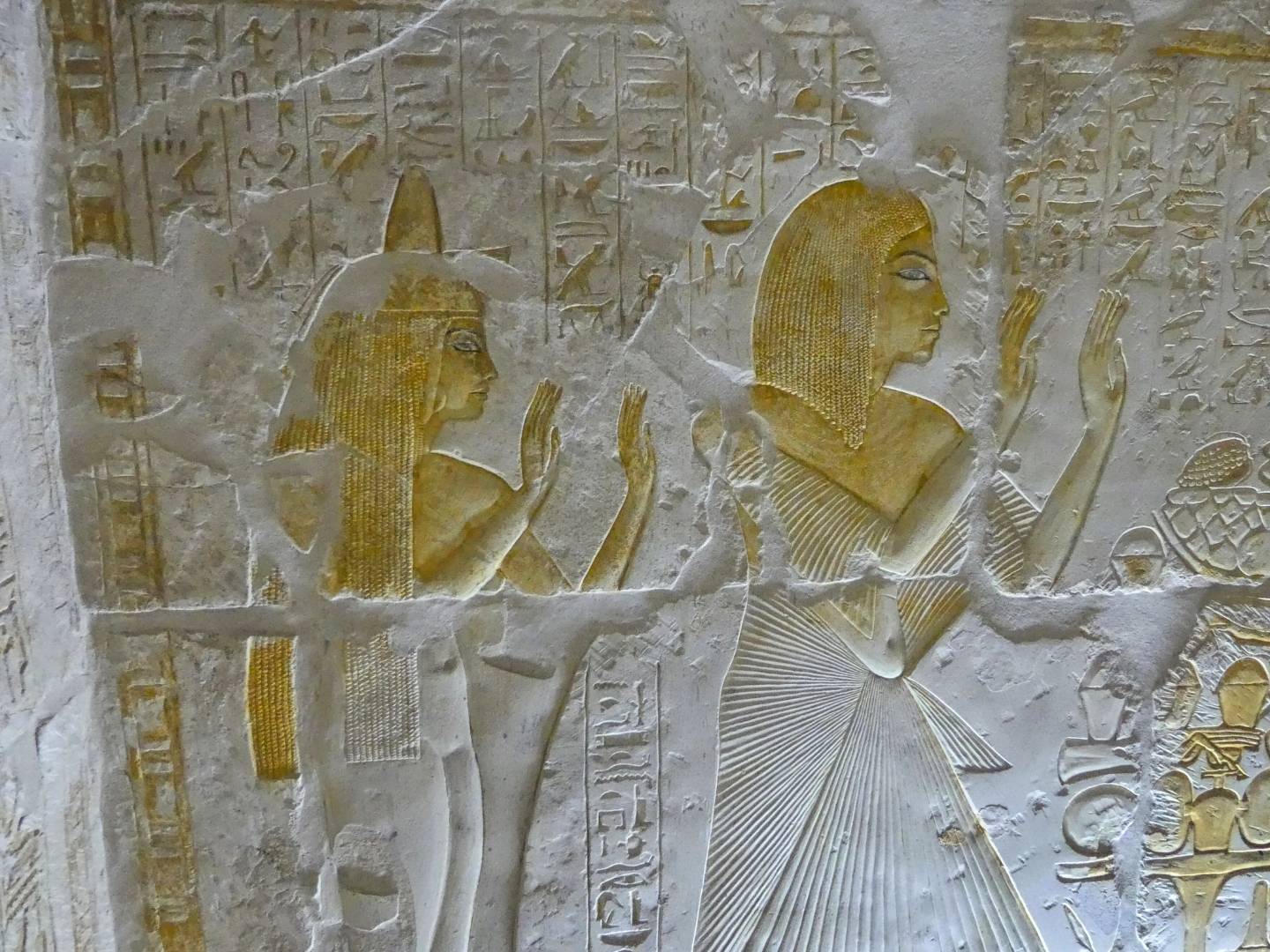
If you purchase the ‘New Tombs’ additional ticket, it can be a little unclear what exactly this ticket gets you access to, and there’s few signs or other info to help you figure it out. So allow me to explain…
The New Kingdom ticket grants you access to various tombs from Egypt’s New Kingdom period (16th century BC and the 11th century BC), along with some from the later Greek and Roman periods. The tombs are located in different places around the Necropolis, and require a bit of walking to and from.
These include the tombs of Maya, Meryneith, and Horemheb, which are all clustered together south of the Step Pyramid. The ticket also includes various tombs at the Bubasteion, located to the north-east of the Step Pyramid and south-east of the Pyramid of Teti.
Each of these tombs offer something a little different. The tomb of Maya contains scenes of religious offerings and rituals. Heremheb’s tomb features military processions. Meryneith’s tomb has well preserved hieroglyphic inscriptions, while the Bubasteion tombs are known for their cat murals and mummies.
7 | South Tomb
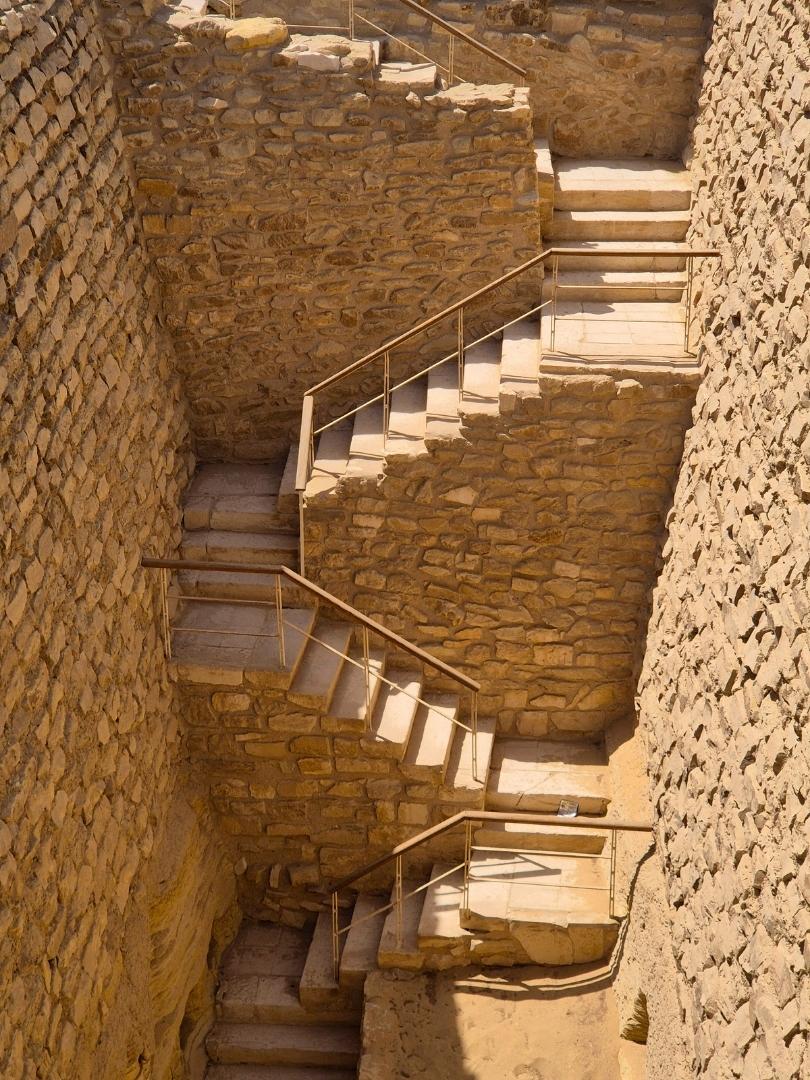
The South Tomb, sometimes referred to in the plural as the “Southern Tombs,” lies at the southwest corner of Djoser’s funerary complex.
Built in the 27th century BCE, its exact purpose is still a mystery. Some archaeologists believe it may have been constructed just before the Step Pyramid, possibly as Djoser’s original burial place before plans shifted to the Step Pyramid. Another theory suggests that the tomb was built solely to house Djoser’s organs, which were removed from his body during the mummification process.
The South Tomb is accessible via a steep staircase from atop the remains of the old wall that enclosed Djoer’s complex. Visitors then follow a long descending passageway, stopping by an adjacent chamber, before reaching a massive vertical 28m shaft with a sarcophagus at the bottom, very similar to the design of the Step Pyramid chambers.
Beyond the shaft are a series of smaller chambers, though these are off-limits to visitors as of my visit in early 2025.
Though it’s probably not worth buying the South Tomb ticket alone, if you purchased the all inclusive ticket it’s worth a quick stop to view its ceramic-lined passageways and the massive central shaft chamber.
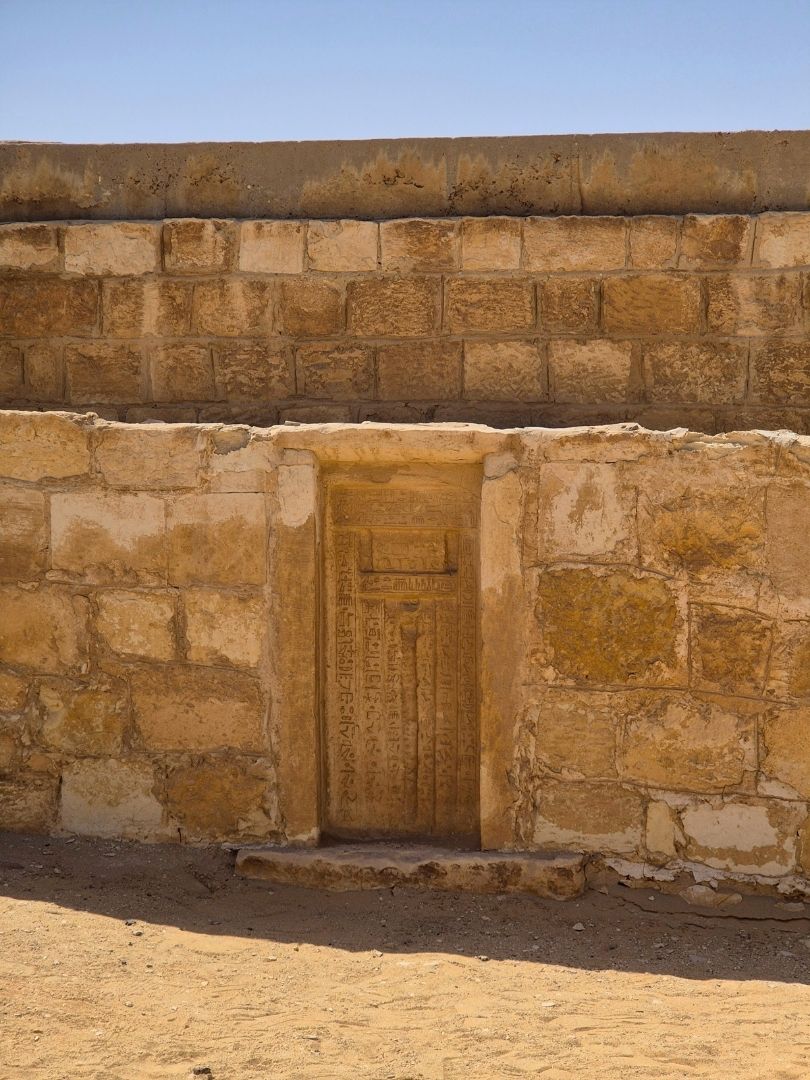
Where is Saqqara Necropolis?
The 📍Saqqara Necropolis is located on the west bank of the Nile River, about 30km south of central Cairo.
From central Cairo, thats about a 45 – 60min drive. From Giza, its closer to 30 – 40min.
How to get to Saqqara Necropolis
The Saqqara Necropolis lies about 30 km south of Cairo, near Egypt’s first ancient capital at Memphis.
From Giza, the drive takes roughly 40 minutes. From downtown Cairo, allow about 1 hour, while from Cairo Airport, which is on the opposite side of the city, expect at least 90 minutes to reach Saqqara.
In terms of transportation, you’ve got a few options:
Guided Tour
The most convenient way to reach Saqqara is by booking a guided tour with a local company. You’ll find plenty of options on Get Your Guide. Some visit Saqqara alone, while many others also include nearby sights like Dahshur (the Red Pyramid and Bent Pyramid) and a quick stop at the Memphis open-air museum.
You can check out the best Saqqara Necropolis tours on Get Your Guide.
Private Driver
If you’re simply looking for someone to drive you to and from, while you explore the site on your own, consider hiring a private driver.
Most hotels can arrange a car and driver for you. This is the option I went with during my 2025 visit. Our driver picked us up from the hotel, took us to Saqqara and a few other sites, waited while we explored, and then drove us back. A convenient option if you just want the transportation only.
Uber/Rideshare
Alternatively, Uber is available in Egypt, though it’s notoriously unreliable.
Drivers will often accept rides, only to request a higher price than what’s stated in the app, and cancel the ride if you refuse.
Even if you do manage to book an Uber all the way out to Saqqara, make sure you arrange for the driver to wait for you, because booking a new Uber to take you back will be virtually impossible. But at that point, you may as well just pay the extra cost of hiring a private driver.
So yes, Uber is an option, but not recommended.
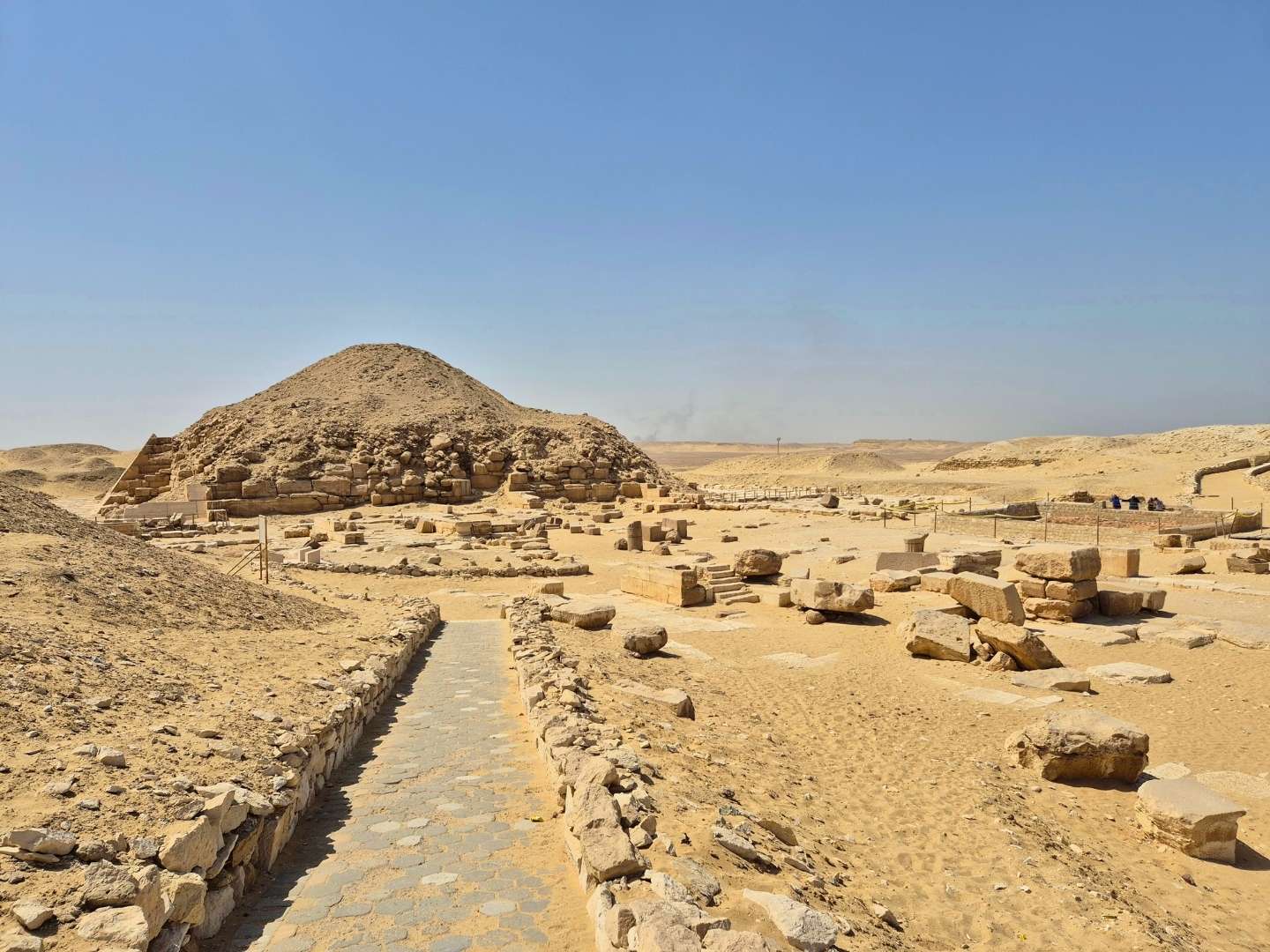
Saqqara Necropolis Tickets in 2025
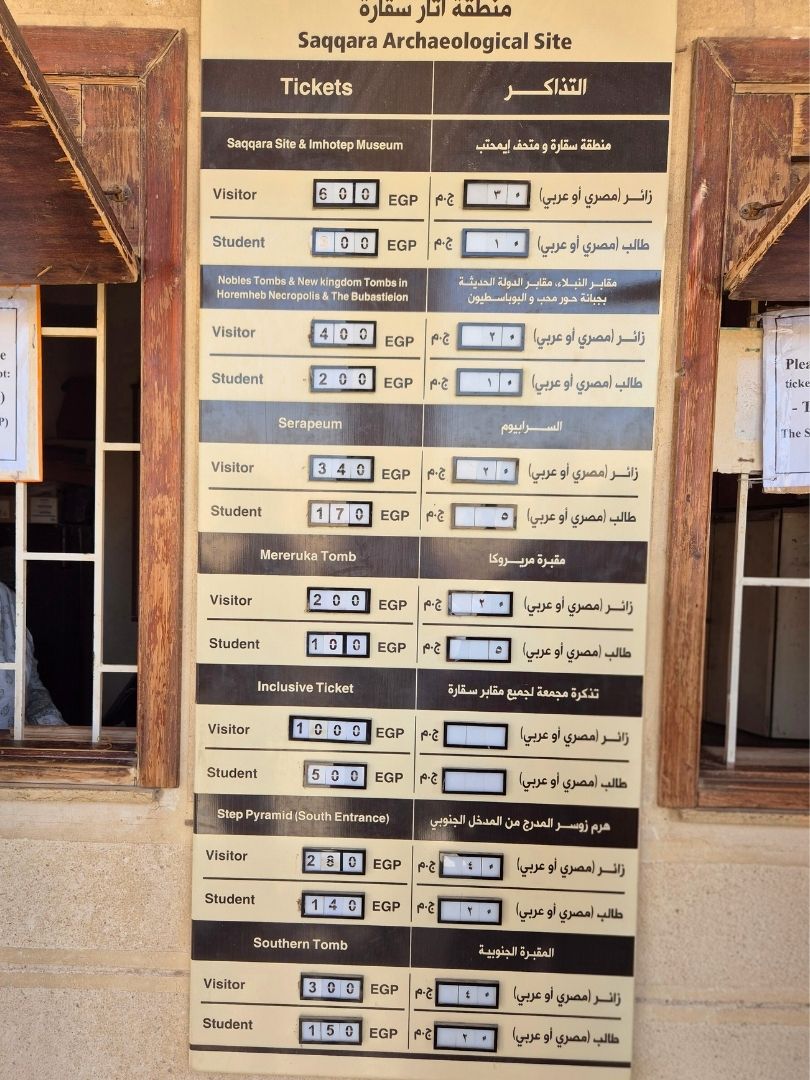
Now that you know the highlights of the Saqqara Necropolis, let’s dive into what tickets you need to visit them. There are several ticket types, and the sign at the ticket booth doesn’t explain it very clearly – so let’s break it down simply:
Mandatory Entry Ticket
- 600 EGP – Saqqara Site & Imhotep Museum
This base ticket is required for all visitors and includes general access to the necropolis grounds and the Imhotep Museum. Every other ticket is an add-on.
Add-Ons
- 280 EGP – Pyramid of Djoser
- 200 EGP – Mereruka Tomb
- 400 EGP – New Tombs (includes nobles’ tombs, New Kingdom tombs like Horemheb’s, and tombs in the Bubasteion)
- 340 EGP – Serapeum Tomb
- 300 EGP – South Tomb
All-Inclusive Ticket
- 1000 EGP – Covers all of the above add-ons.
Tickets can be purchased from the ticket booth upon entry to the Necropolis, or online in advance from the Egypt Monuments website.
Which tickets should you buy?
With all these ticket options, how do you know which are worth buying?
First off, the 600 EGP entry ticket, which grants you access to most of the grounds and the Imhotep Museum, is mandatory.
But you probably didn’t make the trip all the way out to Saqqara if you weren’t interested in the world’s oldest pyramid, so I’d consider the Pyramid of Djoser add-on a must. You can still walk around the pyramid without this extra ticket, but considering the tunnel is one of the most accessible of any pyramid in Egypt, it’s do-able for almost anyone.
From here, it depends on your interests:
- For the essentials: stick with the Entry Ticket + Pyramid of Djoser.
- For one extra highlight: add the Mereruka Tomb (200 EGP), which is the most impressive non-pharaoh tomb at Saqqara.
- For the full experience: go all-in with the All-Inclusive Ticket (1,000 EGP). Just ensure you have at least 3 to 4 hours if you plan to see it all in a single visit.
Best Saqqara Tours
I’ve done the research so you don’t have to. Here are the top Saqqara tours depending on what you’re looking for…
Further reading on Egypt
Here are more guides on Egypt to help you plan your trip:
⬤ If you’re going to Egypt, you’re probably interested in visiting some pyramids, so check out my Travel Guide to Pyramids in Egypt.
⬤ For a guide to the last ancient wonder of the world, check out my Giza Pyramids Travel Guide.
⬤ To see the world’s first ‘true’ pyramids, check out my guide to the Red and Bent Pyramids of Dahshur.
⬤ To explore a different side to Egypt, check out: 10 Best Historical Sites in Cairo (that aren’t the pyramids).
⬤ Plan to visit one of Egypt’s many great museums? Check out my guide comparing the Grand Egyptian Museum vs the Egyptian Museum: Which is Better?
⬤ For more travel guides, visit my Destinations page.
Disclosure: This post may contain affiliate links.