Beneath the towering cliffs of Deir el-Bahari, in the heart of the vast Theban Necropolis on Luxor’s west bank, you’ll find an incredible temple dedicated to one of the few women to rule as pharaoh in ancient Egypt.
Hatshepsut ruled Egypt during the New Kingdom over 3,500 years ago. Following the death of her husband, the pharaoh Thutmose II, she declared herself the ruler alongside the child heir. Despite attempts to remove her controversial reign from the history books, her legacy is one of prosperity, ambitious building projects and flourishing trade. Today, a stunning terraced temple remains in her honour and is now one of Luxor’s top historical attractions.
This quick guide gives you everything you need to visit Hatshepsut’s temple, including its history, what to see, how to get there, ticket info and more.
Best Hatshepsut Temple Tours
I’ve done the research so you don’t have to. Here are the top Hatshepsut Temple tours depending on what you’re looking for…
⭐ Hatshepsut Temple + Valley of the Kings
⭐ Hatshepsut Temple + Valley of the Kings, Karnak Temple & Luxor Temple
Contents
History of Hatshepsut Temple
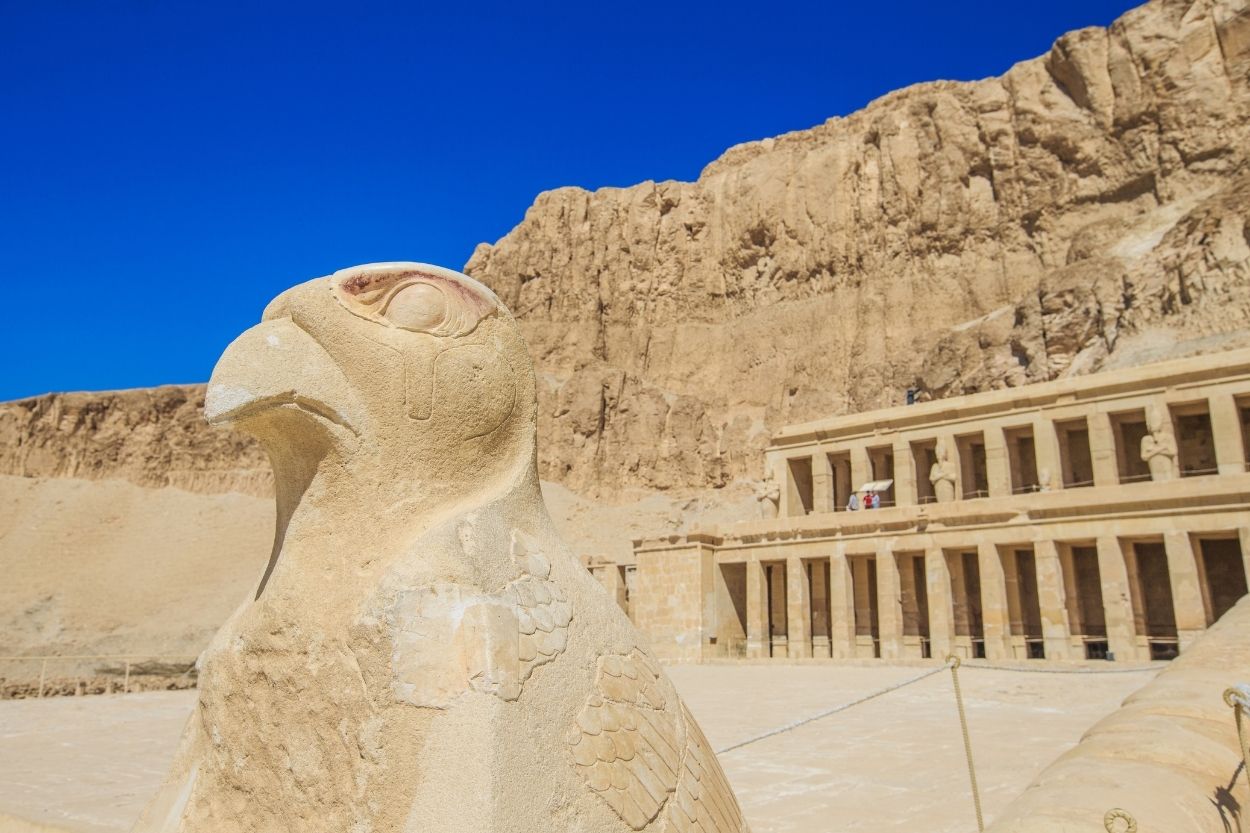
Hatshepsut is one of the most renowned rulers in Egypt’s long history. Born around 1505 BCE, she was the daughter of the Pharaoh Thutmose I, and later married her half-brother Thutmose II (incest was typical of ancient Egyptian royalty), who became pharaoh after their father’s death.
When Thutmose II died, his heir (Thutmose III) was still a child. Hatshepsut initially ruled as regent on his behalf, but after several years she took the controversial step of declaring herself pharaoh alongside the actual heir, becoming one of the few female rulers in Egypt’s long history.
For around 20 years, Hatshepsut and Thutmose III officially ruled side-by-side, though historians believe Hatshepsut held the real power. Her reign is remembered as a peaceful and prosperous period, marked by flourishing trade and ambitious building projects.
Like most Egyptian pharaohs, Hatshepsut commissioned a royal tomb and mortuary complex to be constructed during her lifetime. Construction of the temple began around 1473 BCE in the necropolis on the west bank of the Nile opposite the New Kingdom capital of Thebes (modern-day Luxor).
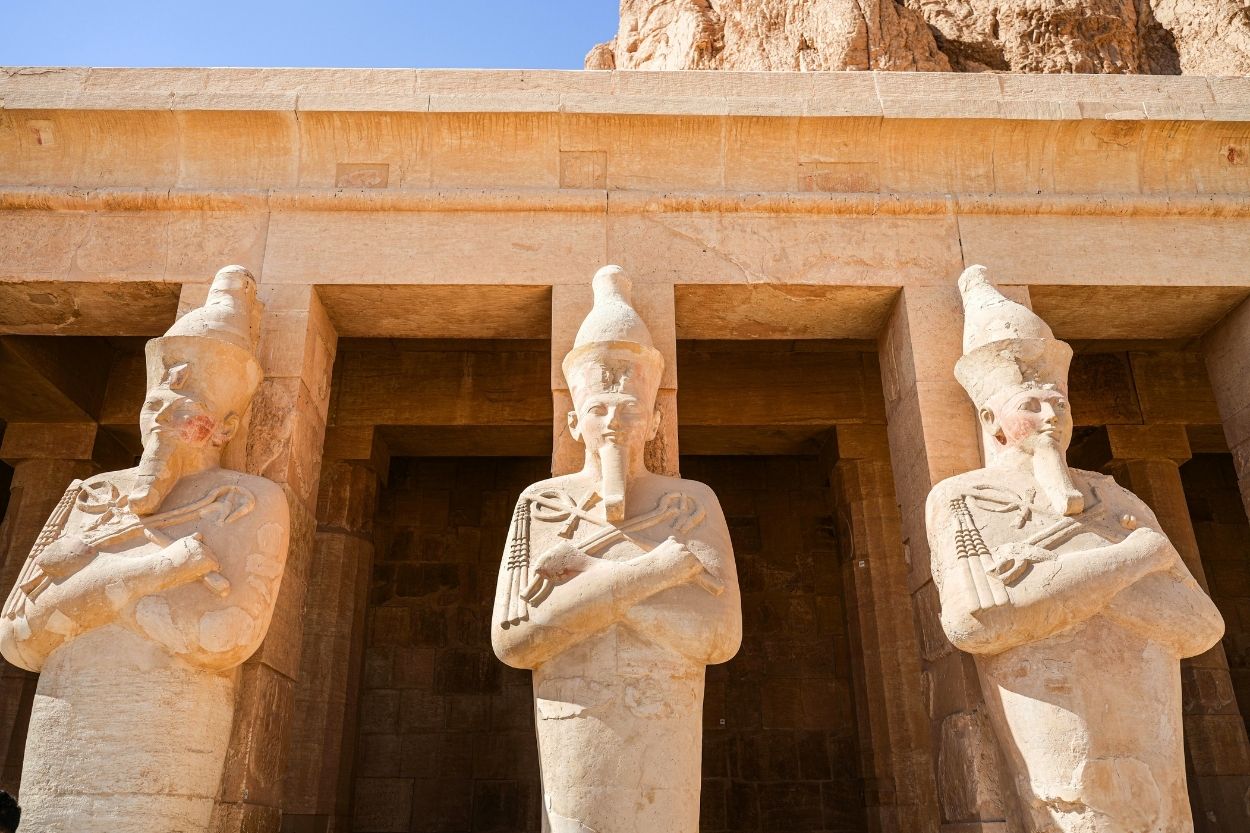
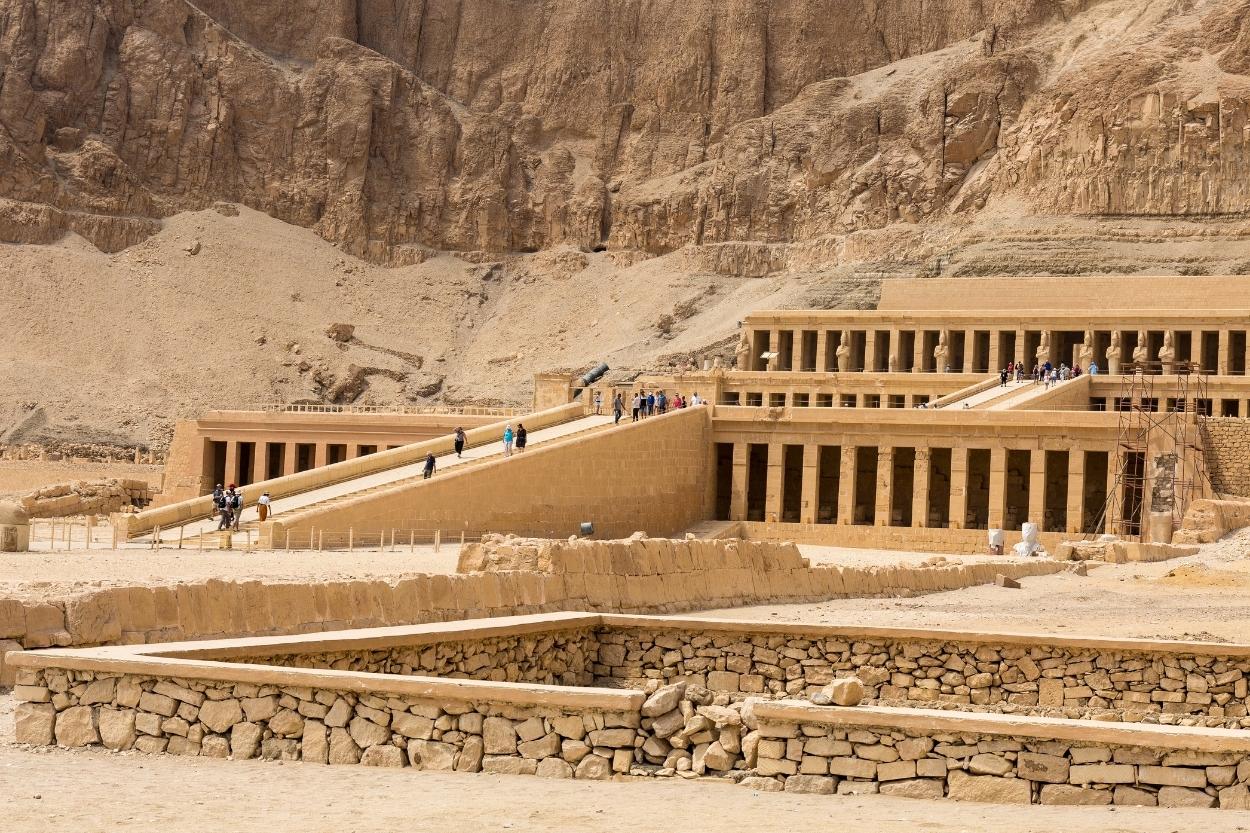
Believed to take around 15 years to build, her temple has one of the most unique designs in ancient Egypt, vastly different from any other ancient temple you’ll find in the country. Instead of pylons and hypostyle halls, it features 3 large terraces with rows of colonnades, all connected by a central ramp that leads to the main structure. Here, you’ll find shrines dedicated to Hatshepsut and Egyptian deities, with walls covered in reliefs depicting her reign, such as the expedition to the Land of Punt.
Despite it being a mortuary temple, the queen herself was buried on the other side of the rocky hills in the Valley of the Kings, where most New Kingdom rulers rest. Instead, her temple was used to make daily offerings and perform rituals believed to sustain the spirit in the afterlife.
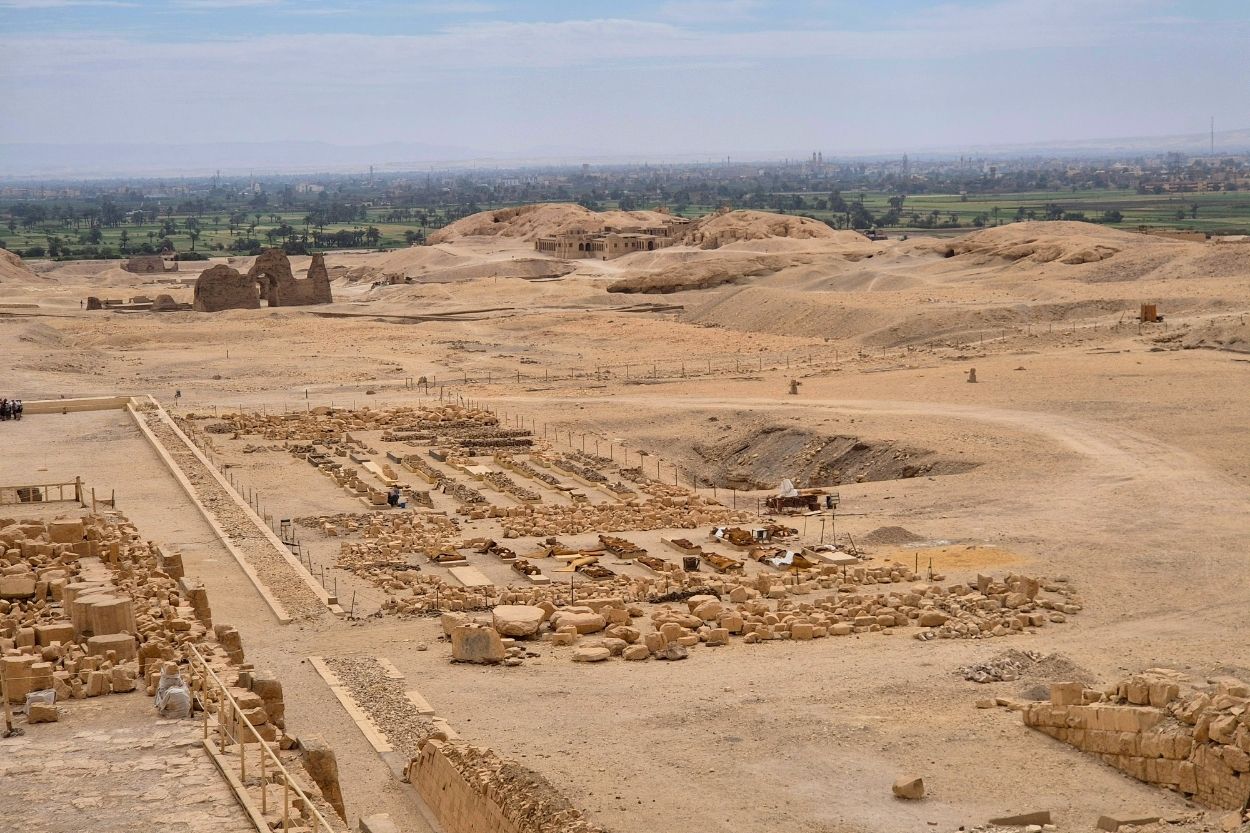
A few decades after Hatshepsut’s death, there was a deliberate effort to erase the queen from the history books. It’s believed to have been ordered by her co-ruler, Thutmose III, in an attempt to destroy her legacy, which was likely controversial both on account of her being female, and her having such a successful legacy despite not being the actual heir.
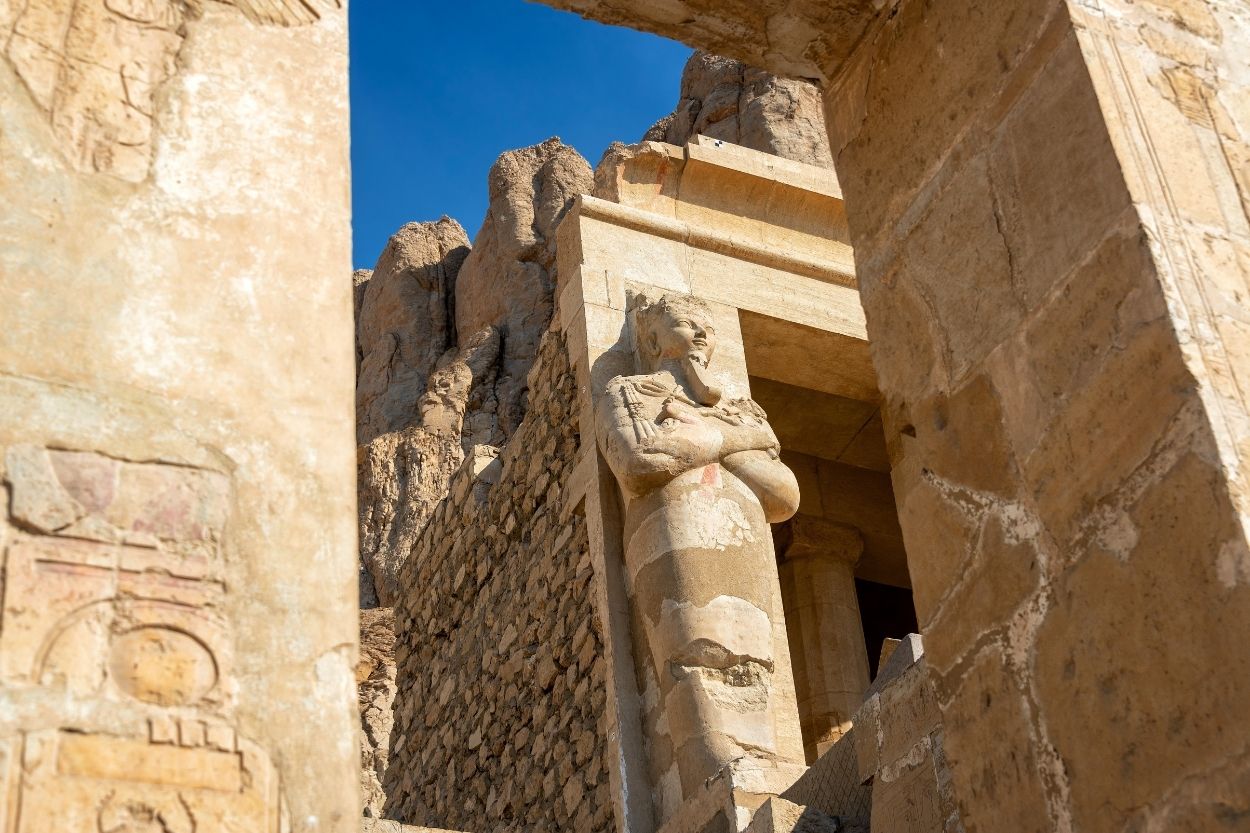
At her mortuary complex, her name was chiselled from monuments, her image defaced from statues, and reliefs carved off walls. Despite this attempt, her legacy is still very much alive and well-known today.
Things to see at Hatshepsut Temple
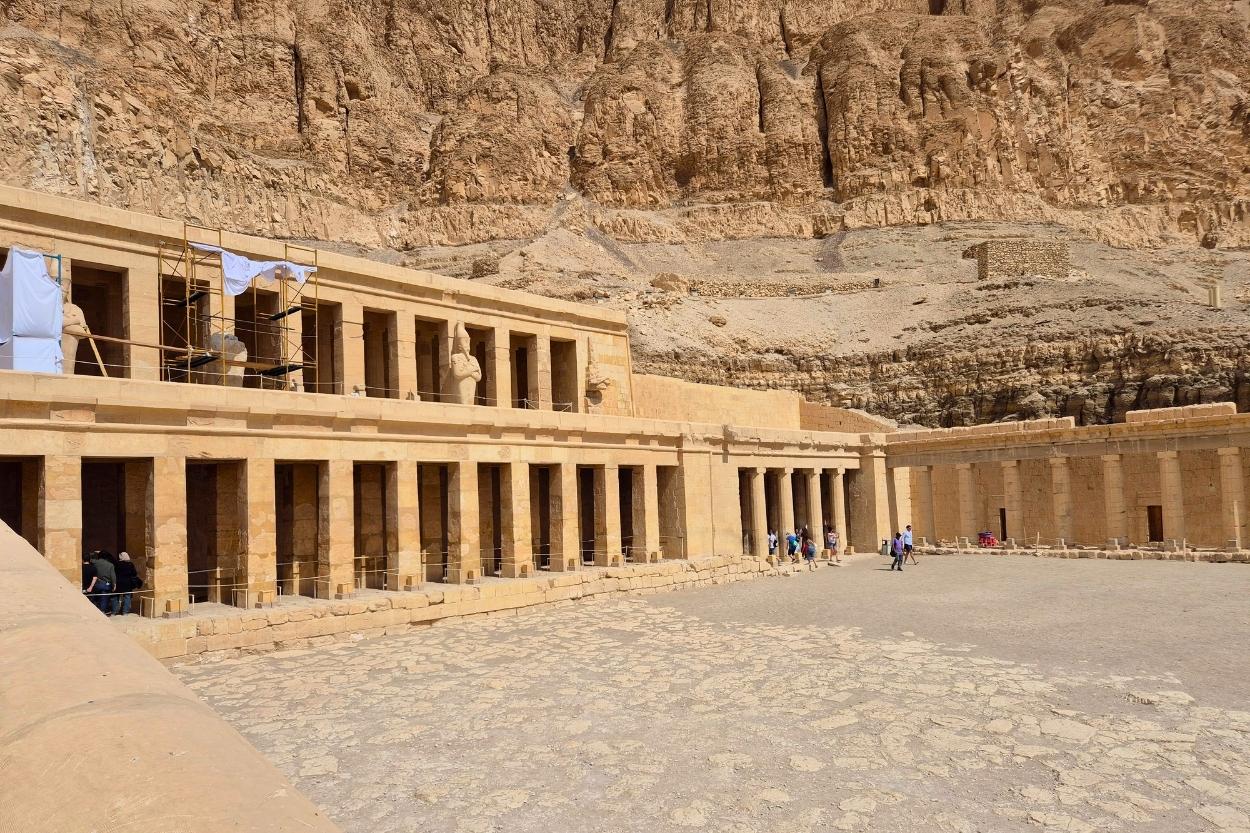
Terraces & Colonnades
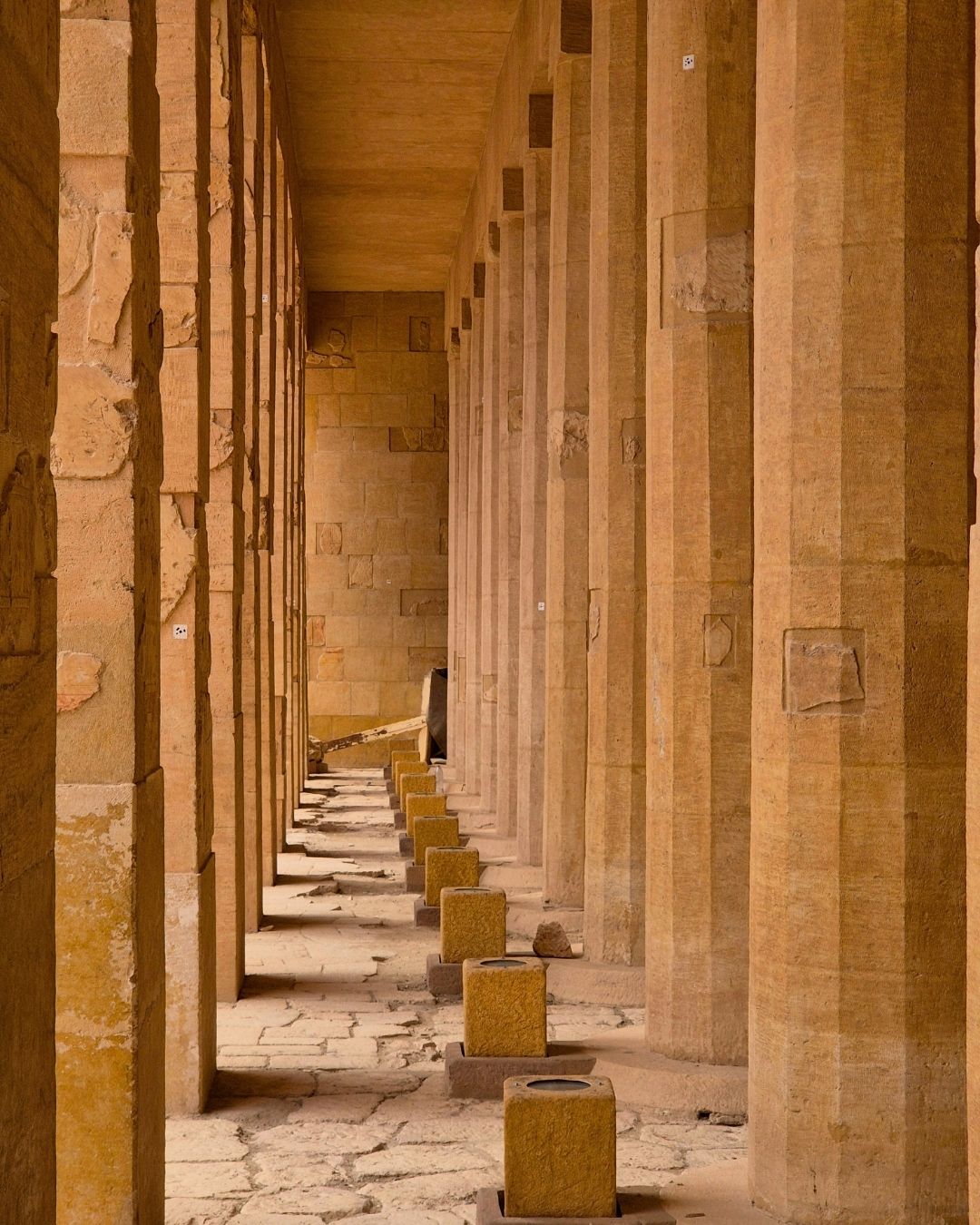
The temple’s most striking feature, three large terraces lined with Colonnades, connected by a long central ramp.
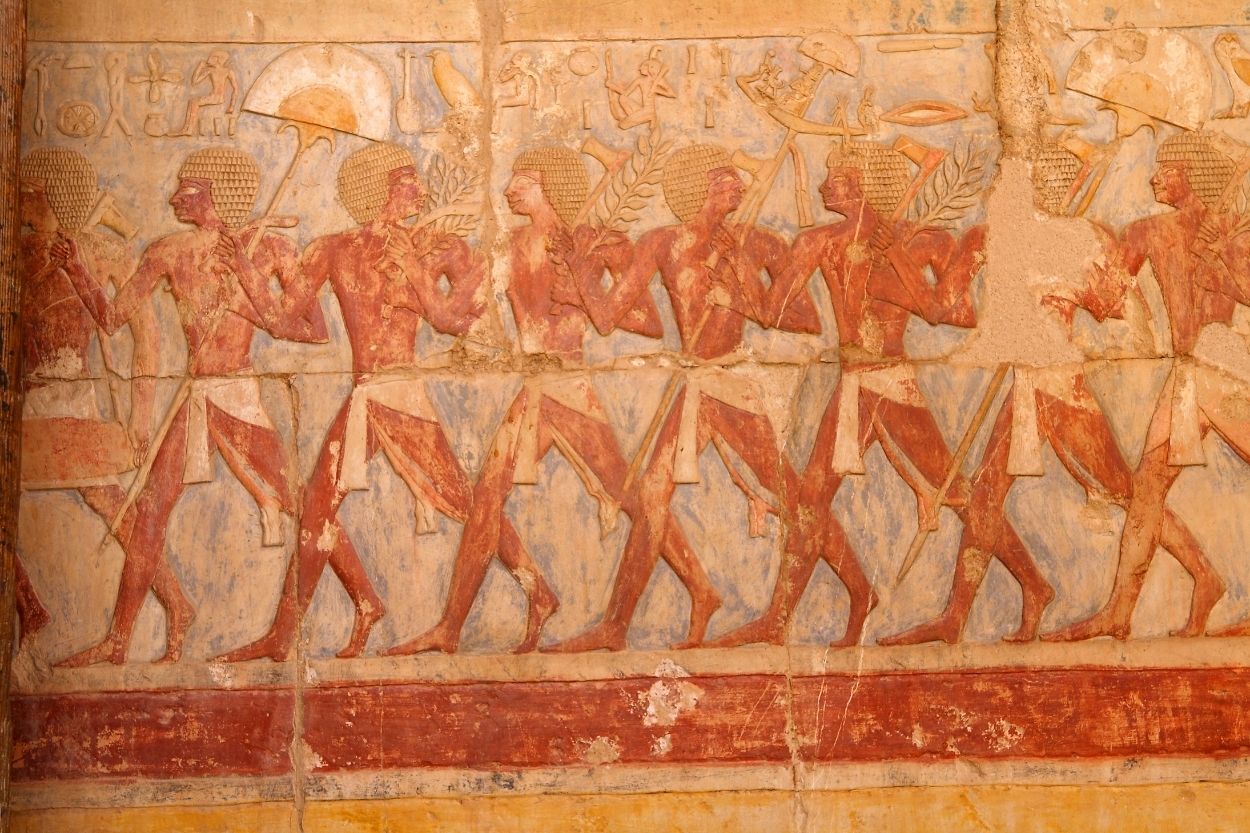
Punt Relief
A series of beautifully reliefs depicting Hatshepsut’s famous trading expedition to the Land of Punt, showcasing ships, exotic animals and valuable goods brought back to Egypt.
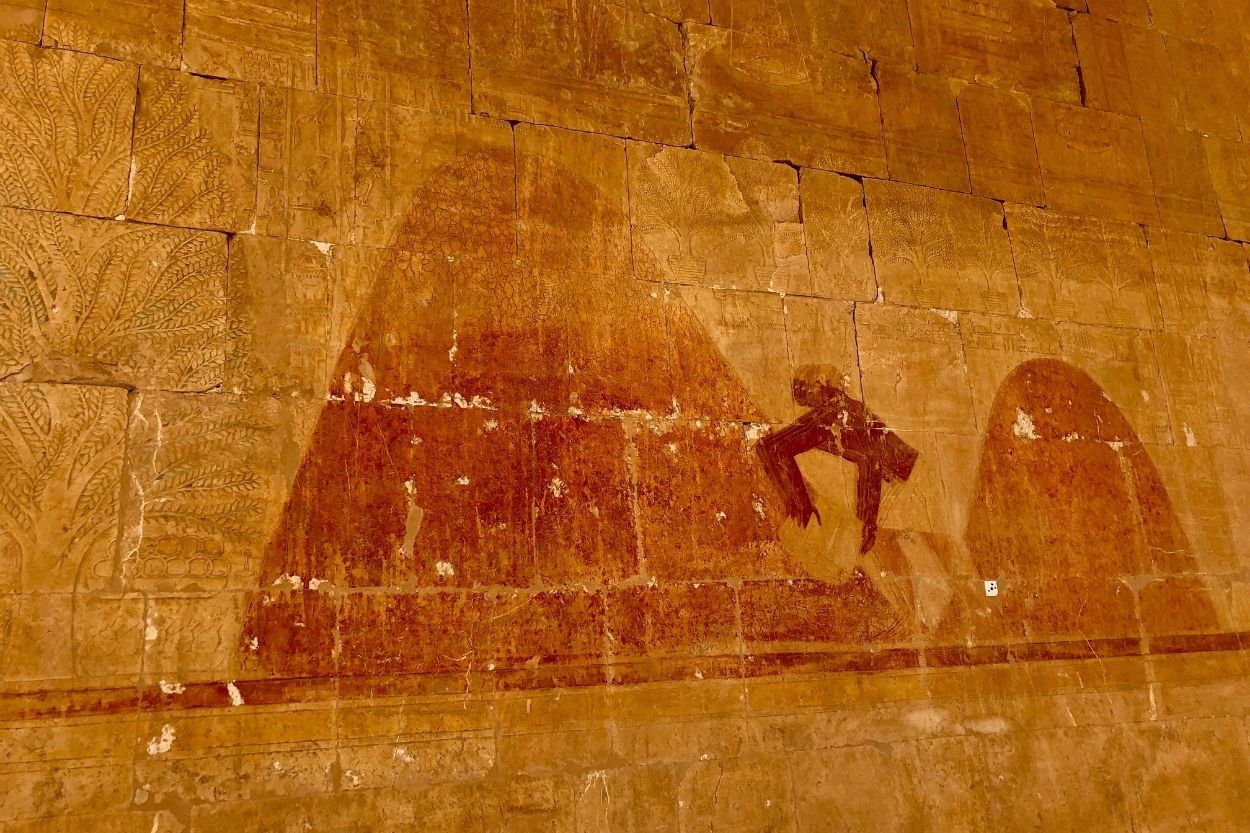
Birth Relief
Reliefs illustrating Hatshepsut’s divine birth and coronation, likely created to reinforce her claim that she had been chosen by the gods to rule as pharaoh.
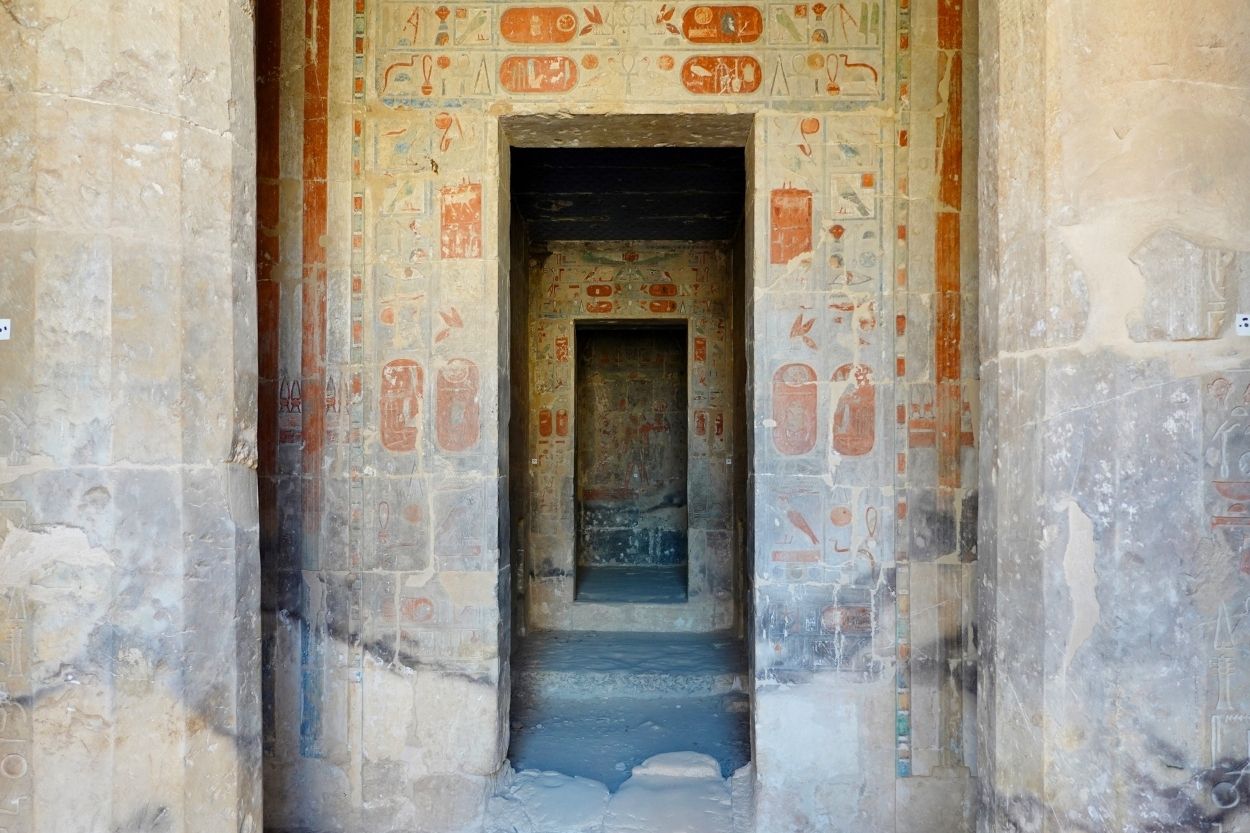
Shrine of Hathor
A chapel dedicated to the goddess Hathor, the ancient Egyptian deity of love, beauty, music, dance, fertility, and joy.
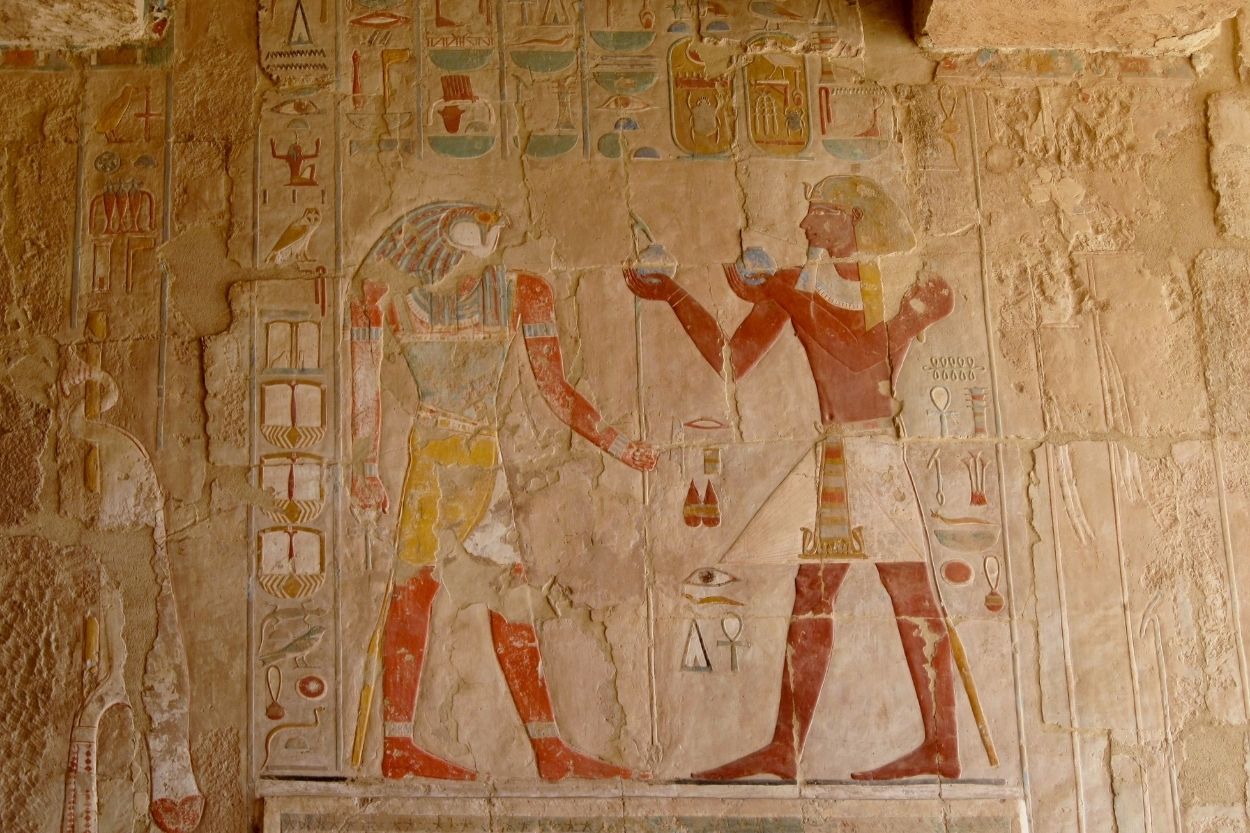
Shrine of Anubis
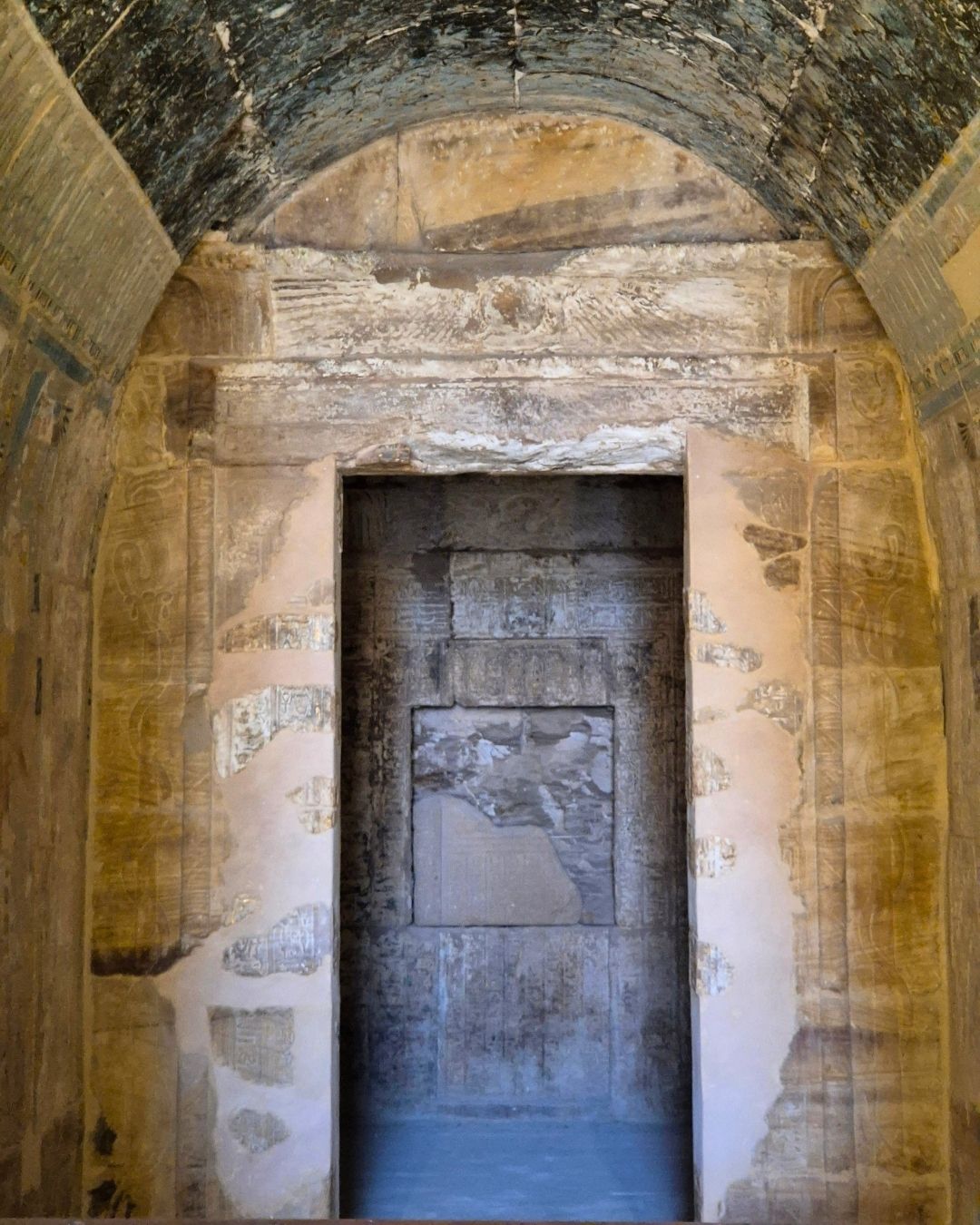
A small shrine honouring Anubis, the god of mummification and the afterlife, featuring well preserved and colourful murals.
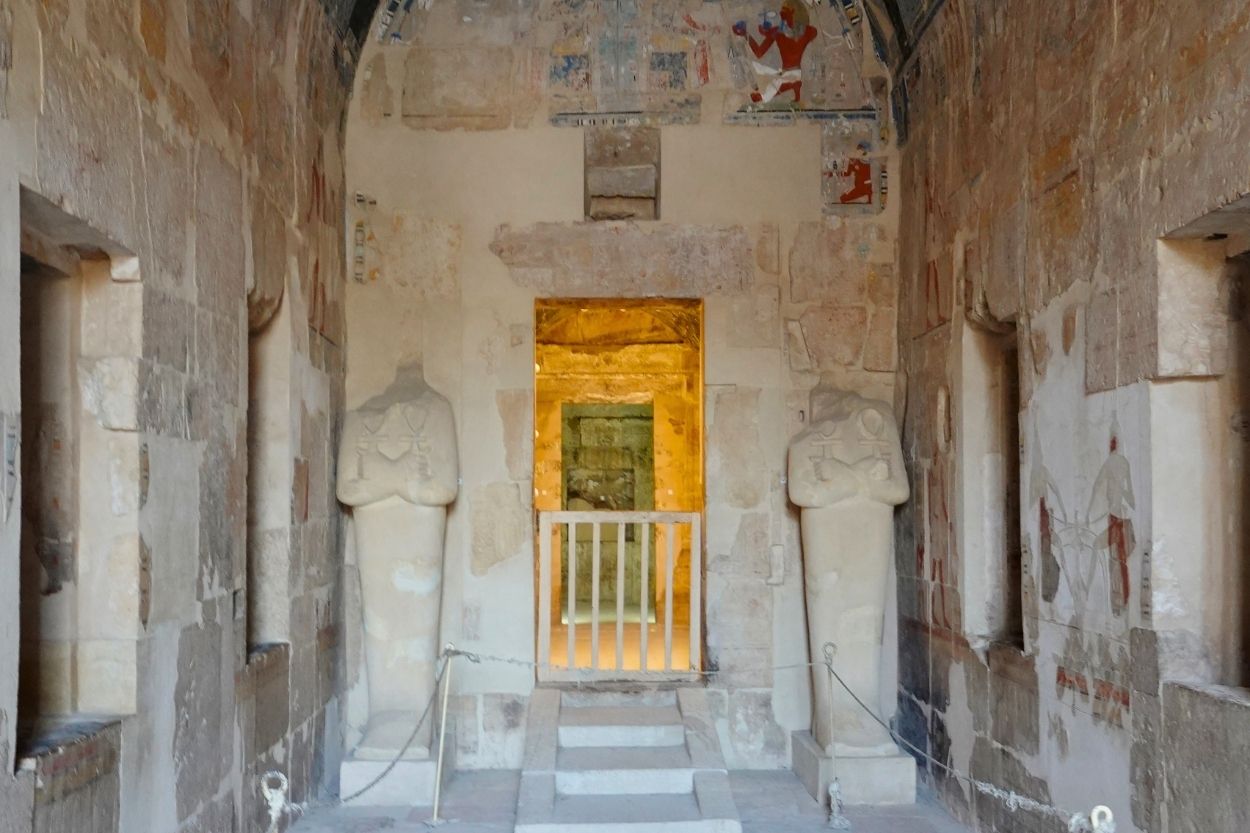
Sanctuary of Amun
The central and most important shrine in the temple, dedicated to the ‘god of gods‘.
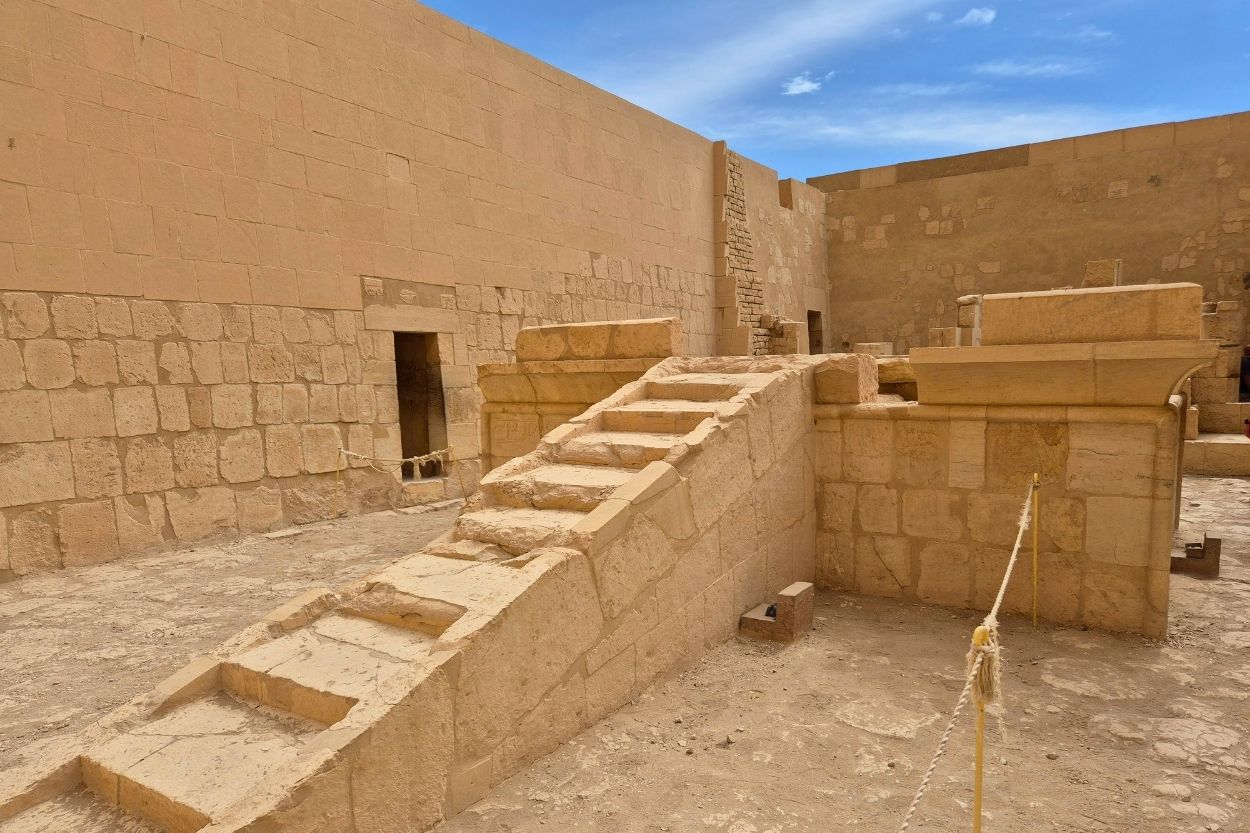
Solar Cult Court
An open courtyard with a shrine dedicated to the worship of Ra, the sun god.
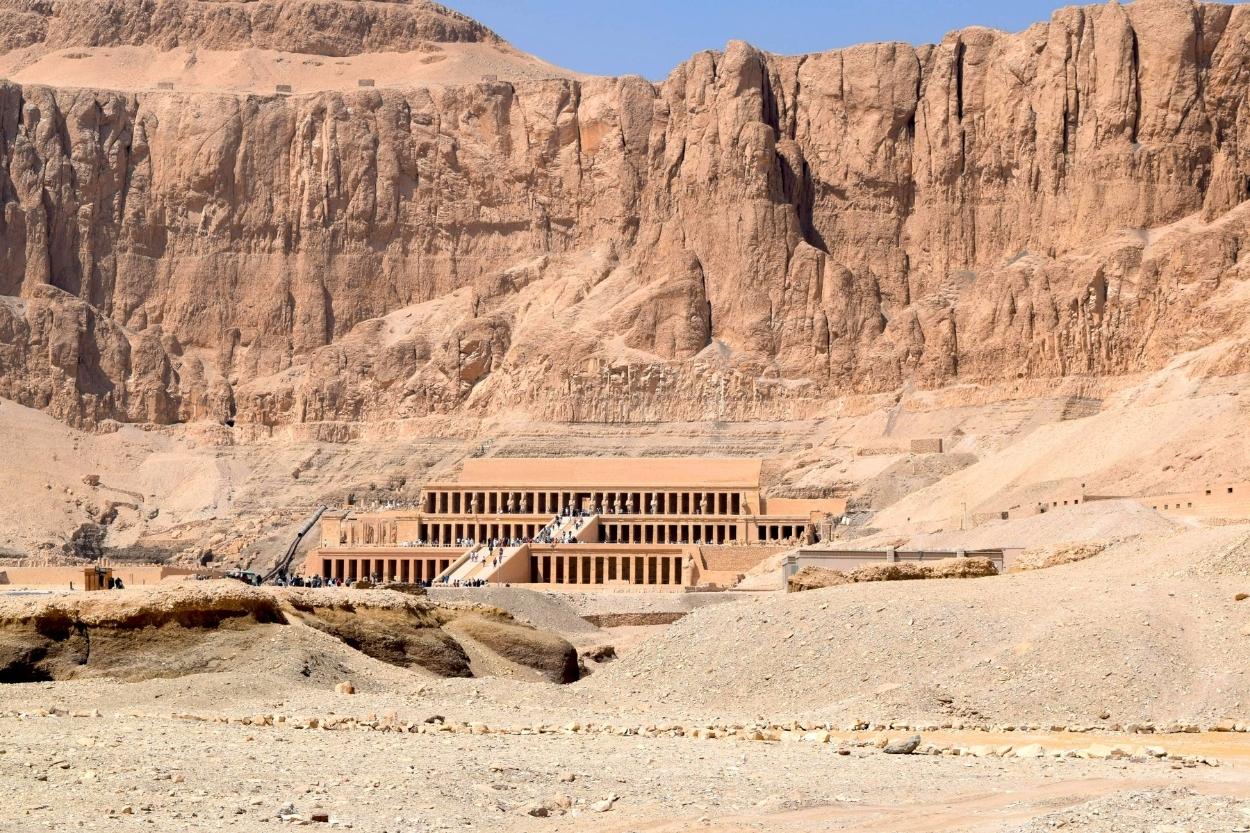
Views of Deir el-Bahari
The stunning backdrop to Hathsepsut Temple, featuring towering stone cliffs and the surrounding ancient ruins around the temple.
Where is Hatshepsut Temple?
📍Hatshepsut Temple is located on the west bank of the Nile River, directly opposite the city of 📍Luxor in southern Egypt. It sits within the ancient Theban Necropolis, the vast burial ground where Egypt’s New Kingdom pharaohs were laid to rest.
Specifically, the temple is located in an area known as Deir el-Bahari, at the base of towering cliffs overlooking the Nile Valley. It is around 8km from Luxor city centre, and takes about 15 – 20min to reach by car.
How to get to Hatshepsut Temple
Given its location about 8km from downtown Luxor, you’re going to need some transportation to reach Hatshepsut Temple.
Option 1: By Taxi
If you’re travelling independently, the simplest way to reach Hatshepsut Temple is by taxi.
Finding a taxi in Luxor is easy. You’ll likely be hounded by local taxi drivers offering you a ride as you walk down the street in Luxor.
The price will depend on exactly where you’re coming from, your haggling skills, and whether you include any other stops along the way.
You’ll want to arrange for the taxi to wait for you and drive you back to town after your visit, as you may not find a taxi from the site. A round trip from Luxor to Hatshepsut Temple should set you back around 100 – 200 EGP.
Option 2: By Guided Tour
If you want all the transportation and logistics handled for you, I recommend booking a guided tour to Hatshepsut Temple.
There is no shortage of tour operators in Luxor that will take you to the temple, with it being one of the top attractions.
Guided tours typically include pick up from your accommodation in an air-conditioned vehicle (an important luxury in Egypt), entrance tickets covered for you, an experienced Egyptologist guide to show you around and teach you about the site, and drop off back at your hotel. Many tours also include stops at other nearby historical sites, such as the Colossi of Memnon, and the Valley of the Kings.
Option 3: By Nile Cruise
Another way to reach Hatshepsut Temple is on a Nile Cruise.
Nile cruises are one of the most popular things to do in Egypt and a great way to tick off a bunch of the country’s top historical sites in a short amount of time. Cruises typically run between Luxor and Aswan, and include all the top sites in and between the cities (including Hatshepsut Temple).
A cruise usually covers transport, accommodation, entry tickets and provides you with an Egyptologist guide to show you around. In between tours, you’ll get to sit back and relax on the boat, which typically features a rooftop pool, lounge, bar and buffet.
Cruises vary in length, typically ranging from 3 to 10 nights. You can browse available Nile cruise options and pricing on GetYourGuide or Viator.
Best Hatshepsut Temple Tours
I’ve done the research so you don’t have to. Here are the top Hatshepsut Temple tours depending on what you’re looking for…
⭐ Hatshepsut Temple + Valley of the Kings
⭐ Hatshepsut Temple + Valley of the Kings, Karnak Temple & Luxor Temple
Hatshepsut Temple Opening Hours
The Hatshepsut Temple opening hours change depending on the time of year:
- Summer (April to September): 6am – 5pm
- Winter (October to March): 6am – 4pm
These hours remain the same even during Ramadan.
Hatshepsut Temple Ticket Info
The ticket prices for Hatshepsut Temple are as follows:
- 440 EGP – Adult
- 220 EGP – Student
Tickets can be purchased from the ticket booth at the front entrance, or online in advance from the official ticket website.
Other historical sites in Luxor
As the site of the New Kingdom capital of Thebes, Luxor is one of the top destinations in Egypt. Here are some other top sites you may want to include in your itinerary:
For more travel guides to Egypt’s historical sites, check out our Egypt home page.