Thanks to spending over a thousand years buried beneath sand, Edfu Temple (also known as the Temple of Horus) is one of the best-preserved ancient temples in Egypt.
Because it’s located far from Egypt’s major tourist centres, Edfu is often overlooked by visitors unless they’re travelling on a Nile cruise. From personal experience, though, I can confidently say that Edfu Temple is one of the most impressive historical sites in the country and absolutely worth a visit.
In this guide, you’ll find everything you need to plan a visit to Edfu Temple, including what to see, how to get there, ticket info, and more.
Contents
History of Edfu Temple
The Temple of Edfu was built during the Ptolemaic Period, a time when Egypt was ruled by the Greeks following Alexander the Great’s conquest. Despite being ruled by Greeks, Egyptian culture remained very much intact. The Ptolemies governed as pharaohs, largely maintaining ancient Egyptian religious practices and architecture.
Construction of the temple began in 237 BCE, during the reign of Ptolemy III, in the ancient city of Tell Edfu. To put it into perspective, Edfu Temple was built closer to our time than to the building of the Pyramids of Giza.
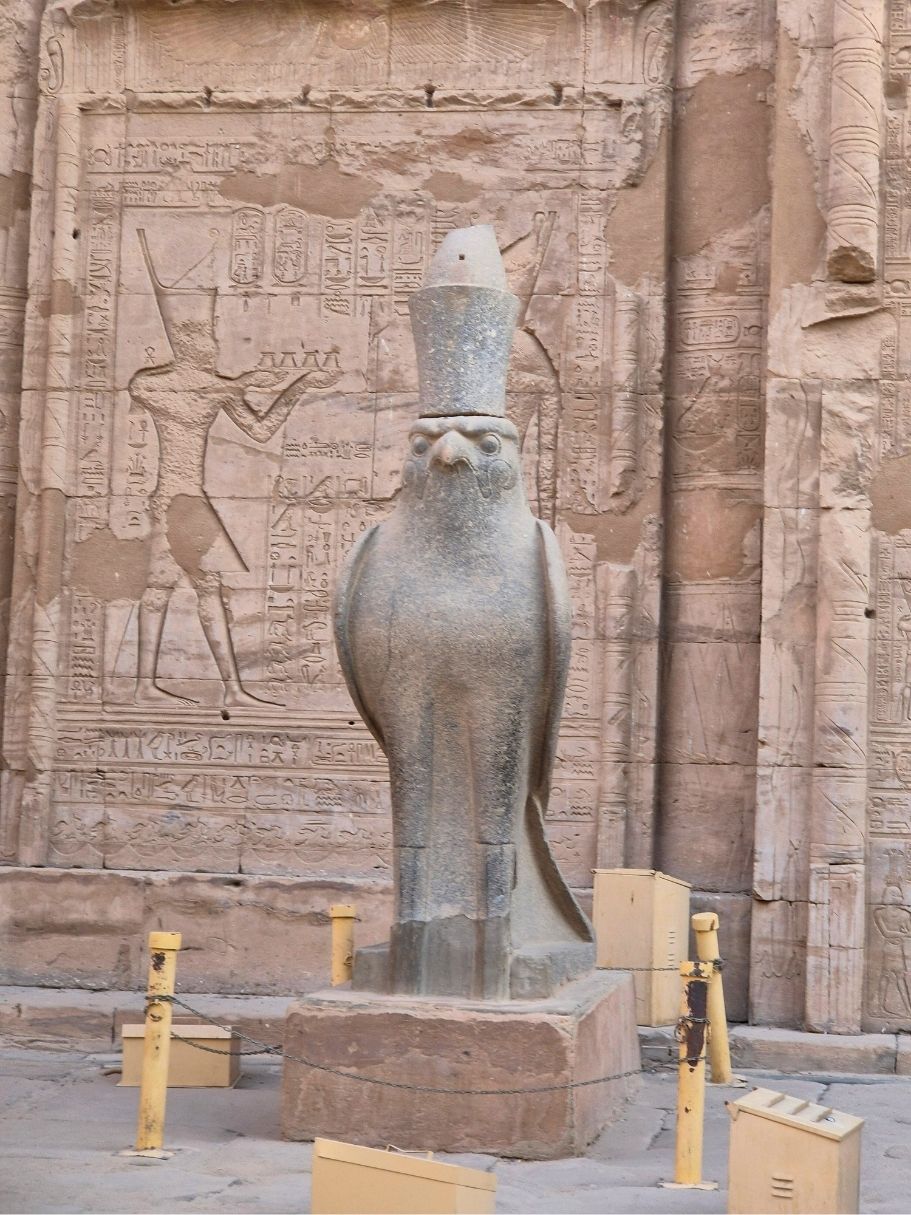
Dedicated to Horus, the falcon-headed Egyptian god of kingship, protection and order, the temple was gradually built over several generations, with the last addition by 57 BCE.
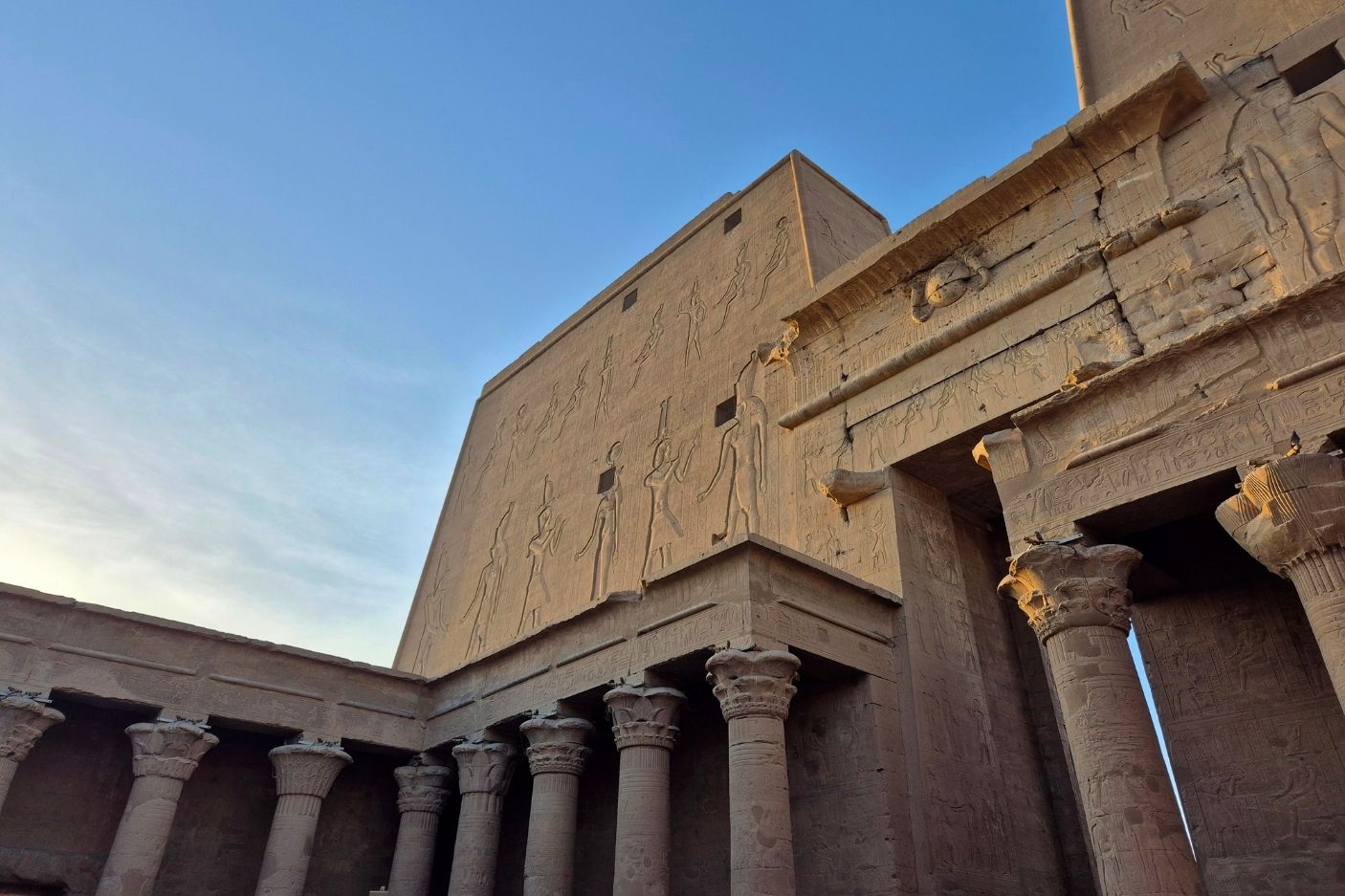
Edfu Temple follows the classic ancient Egyptian architectural style. Visitors enter through a massive pylon gateway into an open courtyard, beyond which is a large hypostyle hall leading to a dark inner sanctuary.
The temple remained in use for centuries until Christianity became the dominant religion in Roman Egypt, around the 4th century CE.
In the following millennia, Edfu Temple, like many other ancient Egyptian temples, became buried in sand, with only the roof of the pylons exposed. Locals built their homes on top of it, unaware of what lay beneath. It wasn’t until the late 19th century that a French team of archaeologists began digging it out of the sand.
Being protected beneath sand for thousands of years, Edfu Temple is one of the best preserved ancient temples in Egypt. The structure stands largely as it did 2000 years ago, making it a popular tourist attraction, and one of the main stops for the many Nile cruises that travel between Aswan and Luxor.
Things to see at Edfu Temple
1 | Pylon Entrance
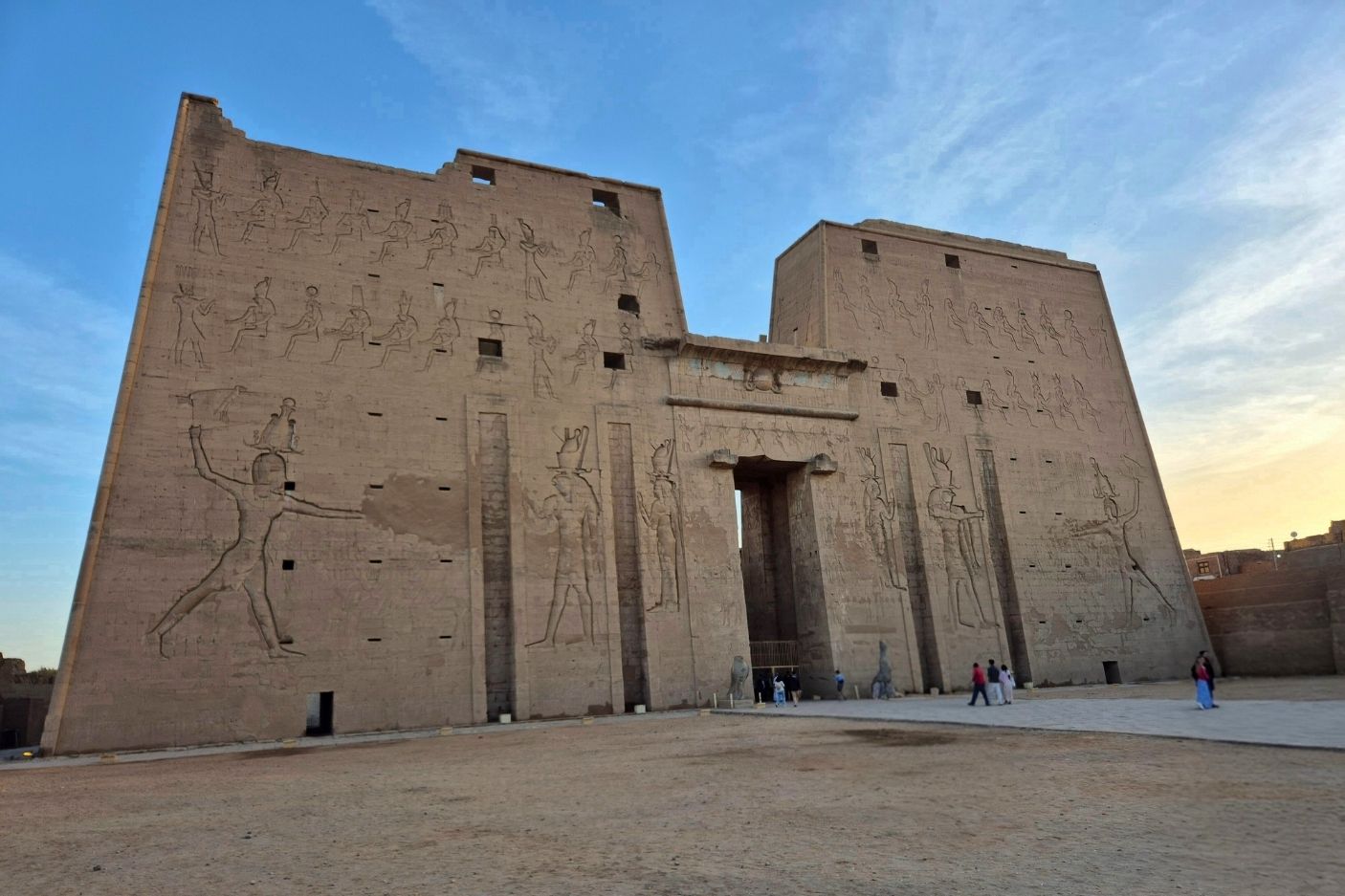
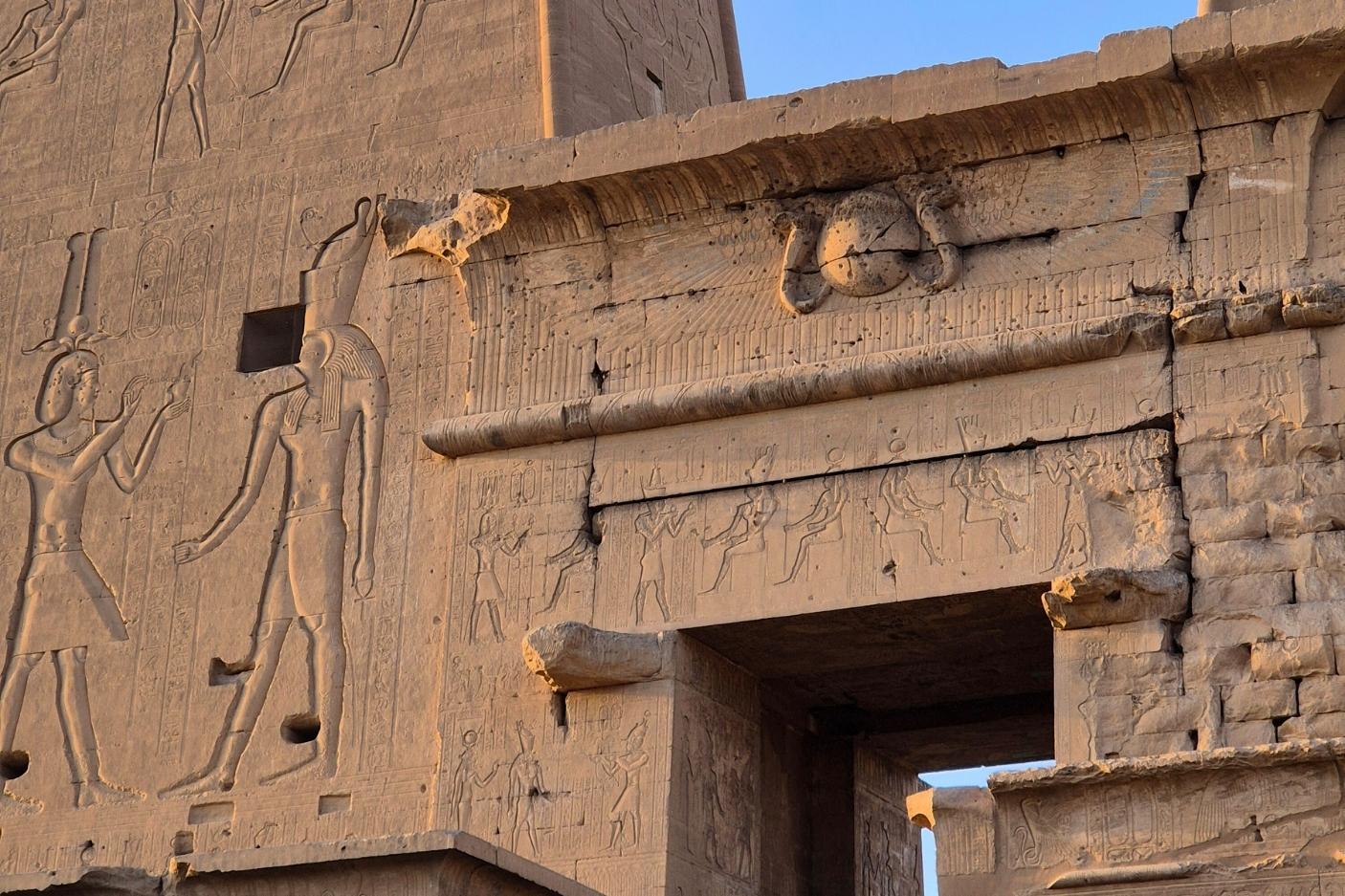
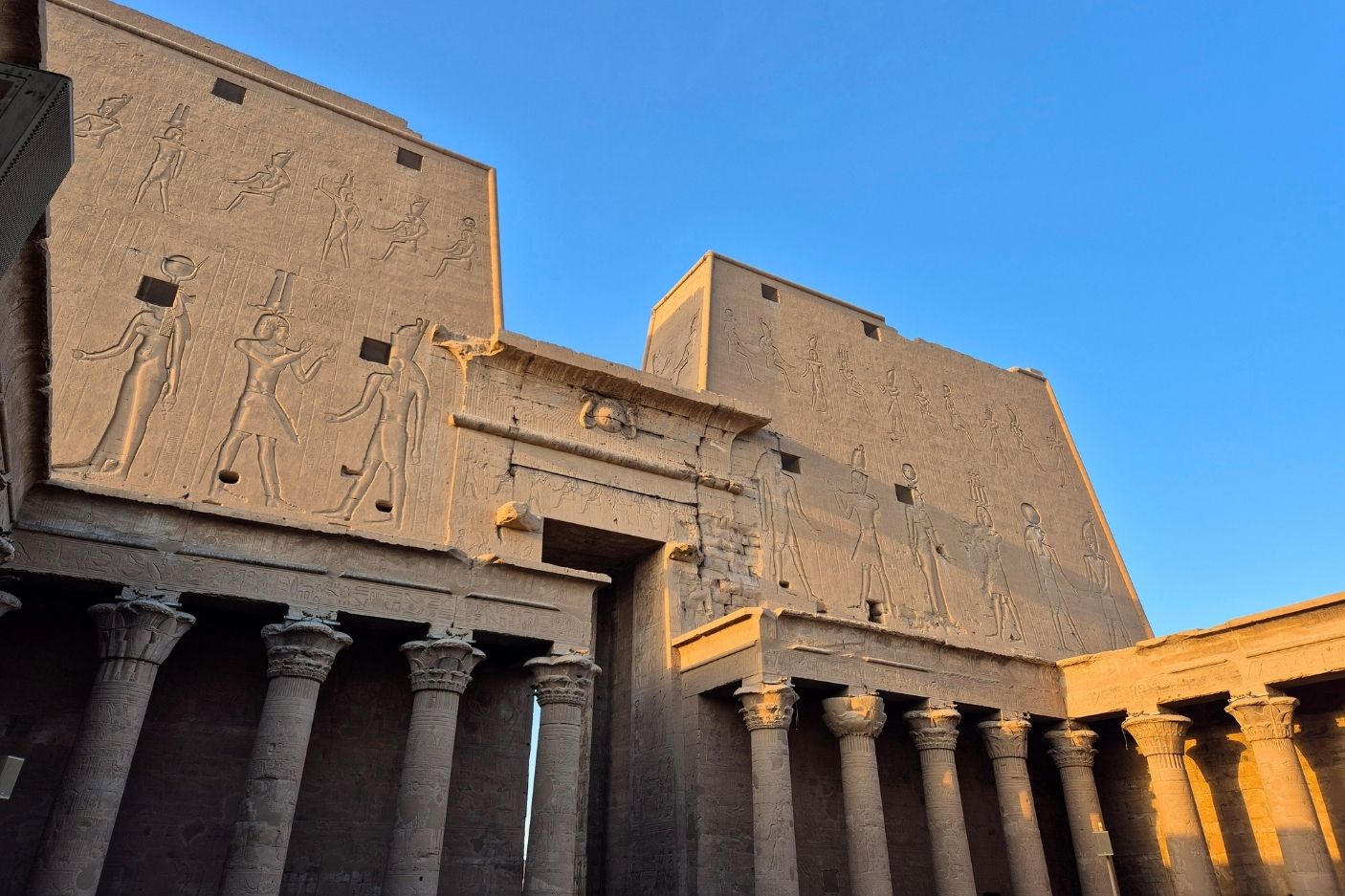
The first thing you’ll see when entering the complex is the towering pylon entrance. The structure consists of 2 massive towers, each rising to around 36 metres, making them among the largest in Egypt.
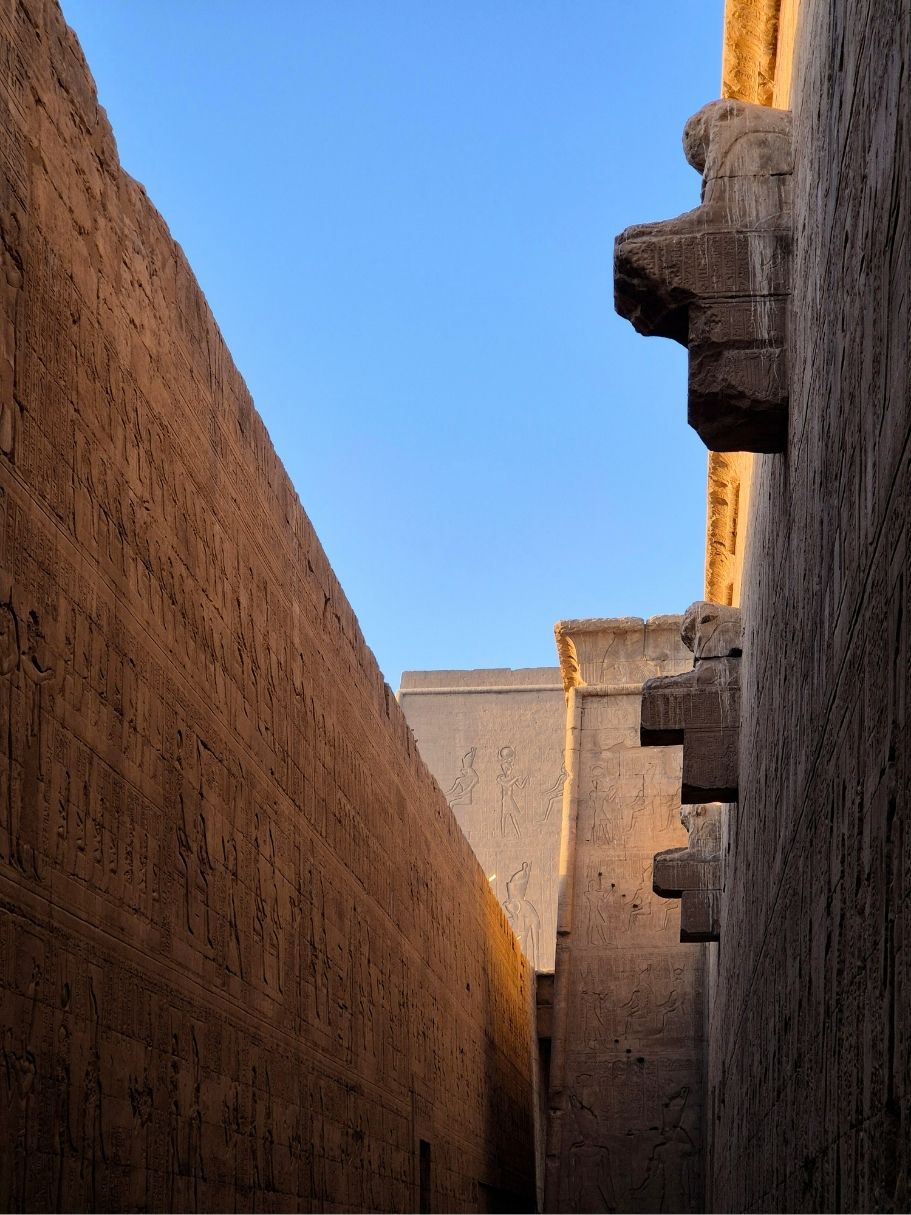
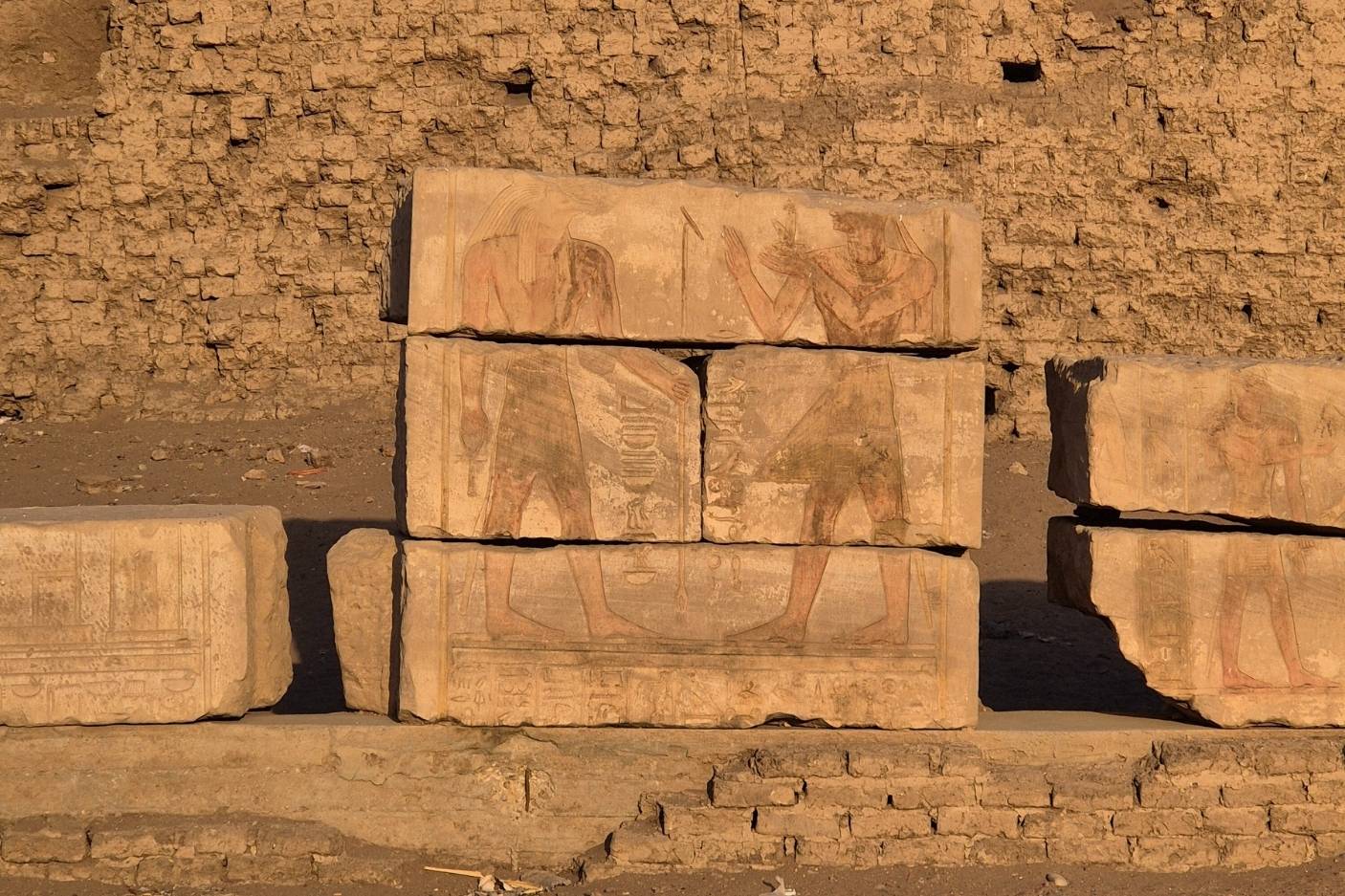
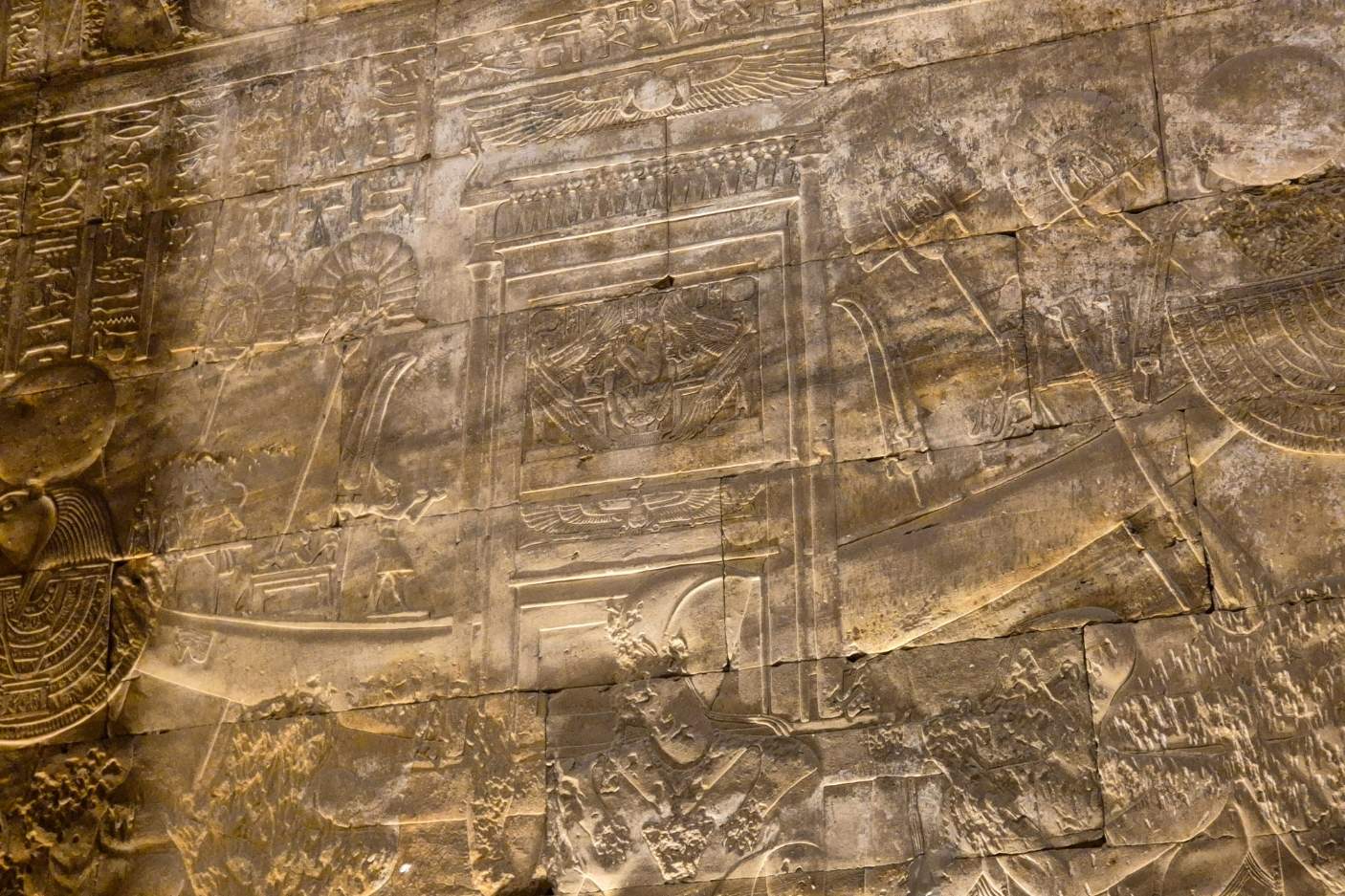
The surface is covered in large carvings of Horus and other religious imagery. Most ancient Egyptian temples were originally decorated like this, but are usually so worn that you can barely make out the reliefs. Edfu Temple, on the other hand, has been preserved beneath the sands.
If you look carefully at the upper portion of the pylon you can still see the line where the temple was once buried, with the exposed section noticeably more weathered.
2 | Forecourt
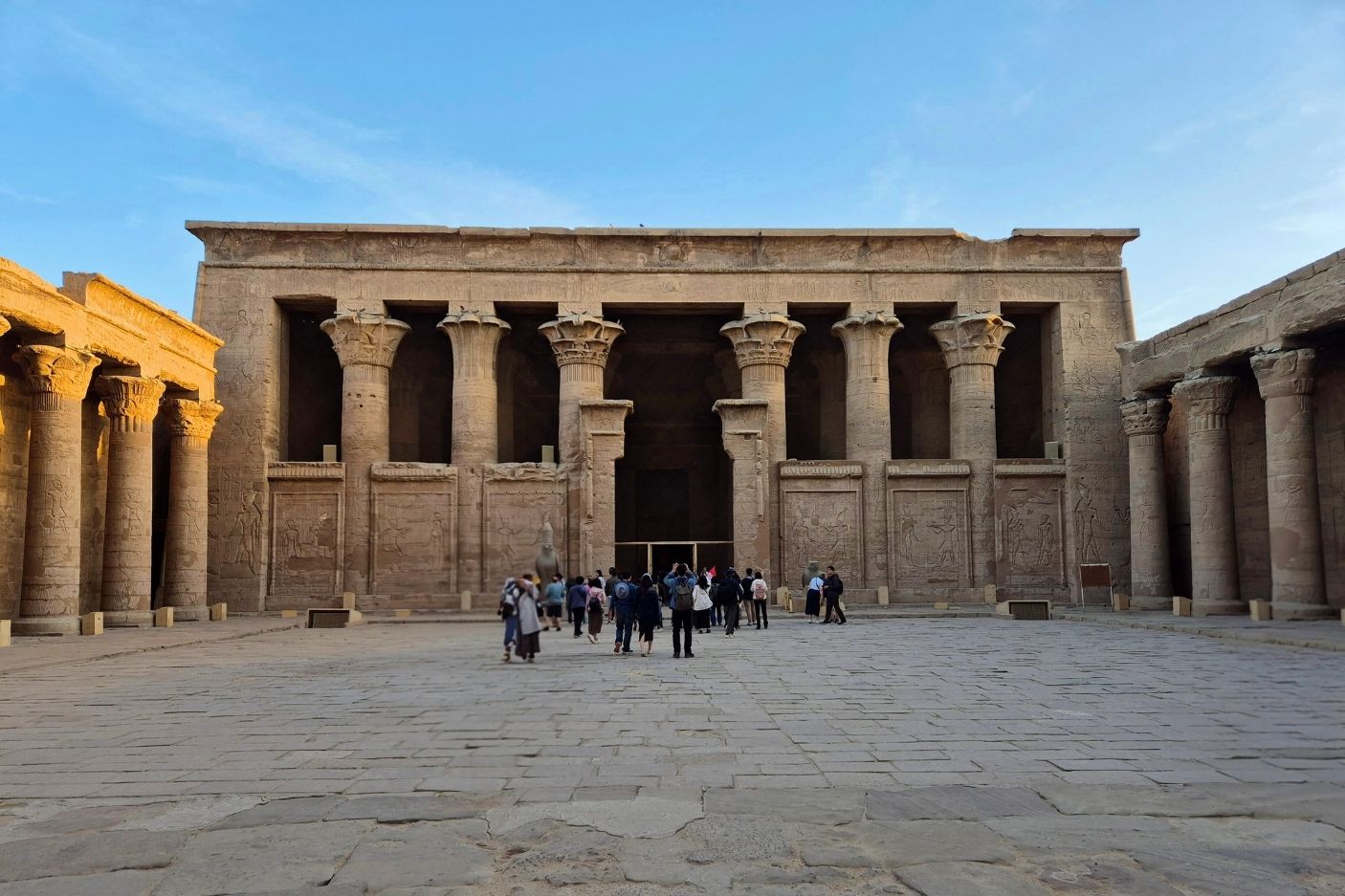
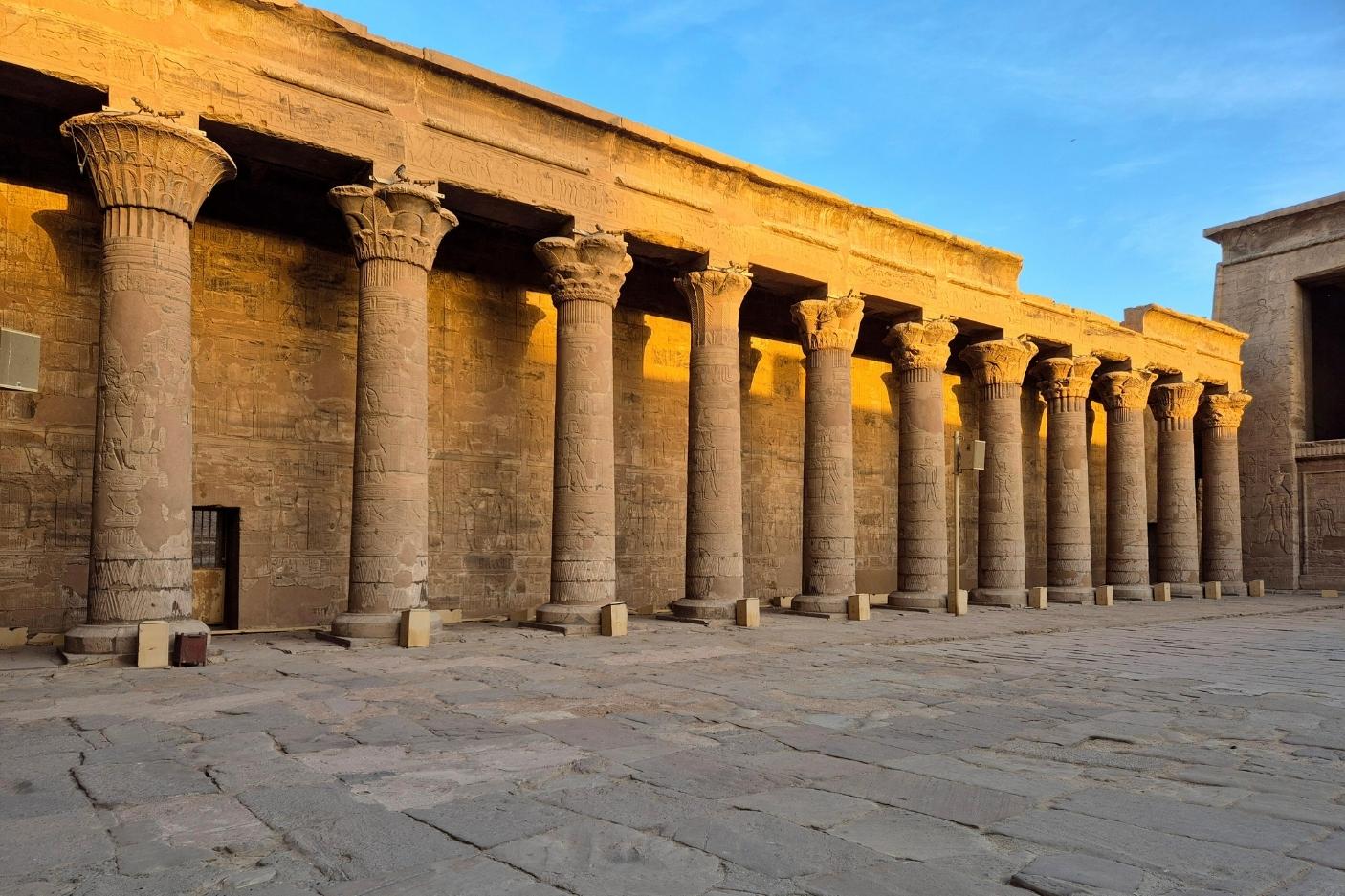
After passing through the pylon gateway, you’ll enter the temple’s forecourt, an open-air courtyard surrounded by 32 large pillars.
The forecourt played an important role in the temple’s religious life. It was a place where members of the local community would gather and take part in rituals and ceremonies, such as the 15-day Feast of the Joyous Union, which is depicted on the murals and reliefs along the walls of the forecourt.
3 | Hypostyle Hall
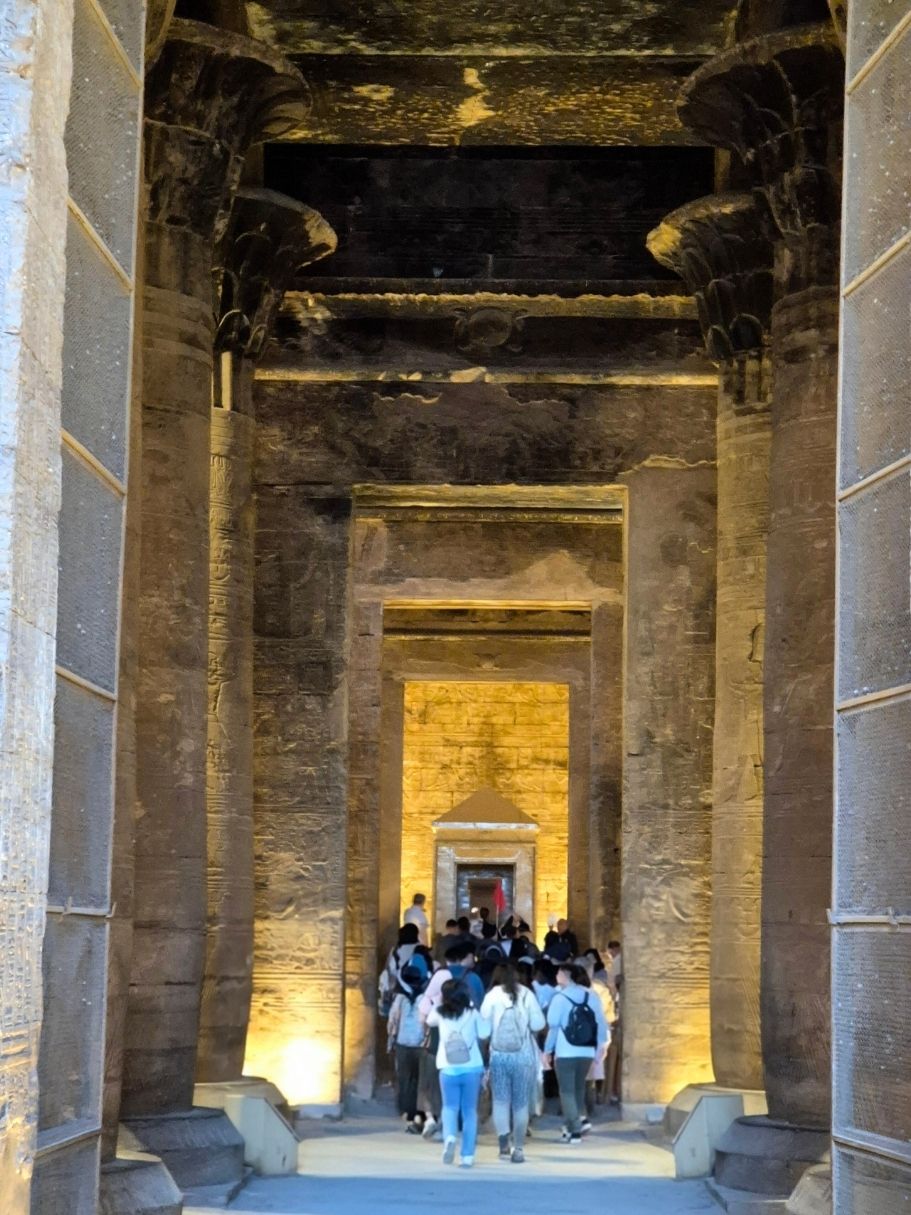
Beyond the forecourt, you’ll enter the hypostyle hall.
The word hypostyle comes from Greek, meaning “under pillars”, which is exactly what this area is: a large hall with a high roof supported by rows of massive columns.
The hypostyle hall is divided into 2 sections, the outer and inner hall. Several smaller rooms branch off to the sides, such as the House of Morning (used for rituals) and the House of Books (a library).
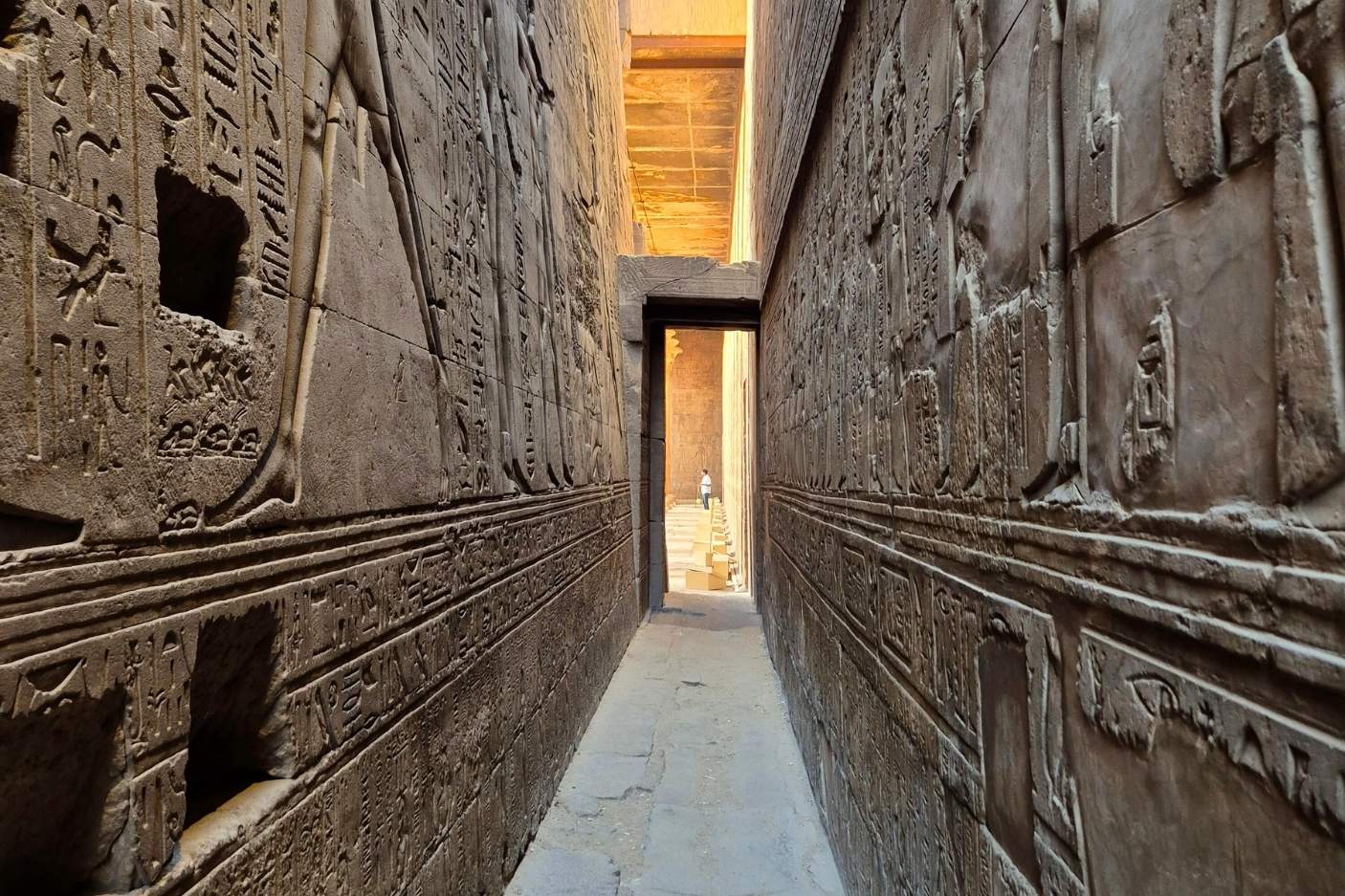
If you look to the ceiling of the hypostyle hall, you can see it’s stained black from the smoke of candles and torches that burned here for centuries – a direct physical trace of human activity from thousands of years ago.
4 | Inner Sanctuary
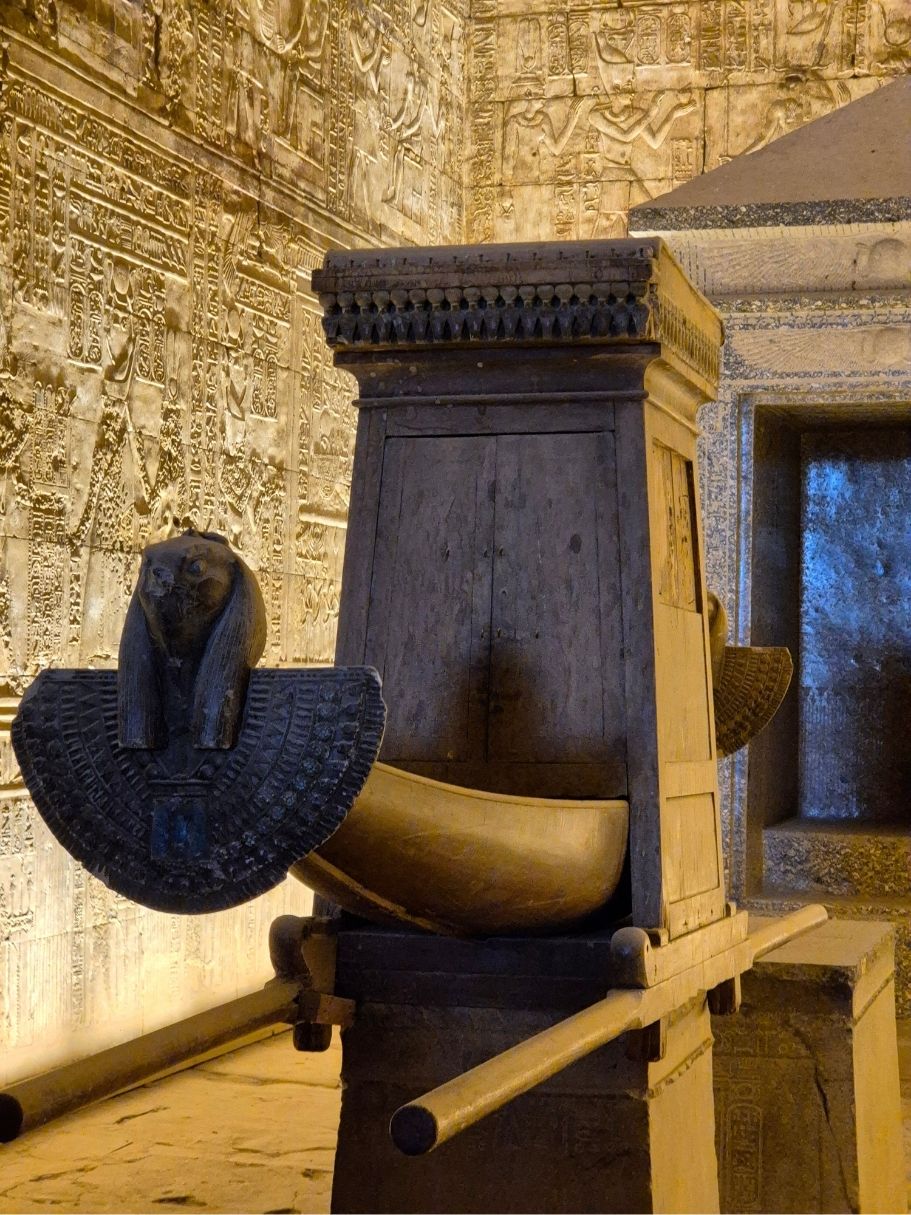
As you move deeper into the temple the space is designed to become progressively darker until you reach the inner sanctuary — the most restricted area of the temple, where only priests, or the pharaoh himself, were allowed to enter.
The inner sanctuary was the most sacred space in the temple. It was believed to be the place that the god — in this case Horus — physically dwelled on Earth, embodied by a statue kept here.
The sanctuary also housed the sacred bark of Horus, a boat-shaped wooden shrine that would be carried into the forecourt during ritual processions. Today, a recreation of the sacred bark is housed in the sanctuary.
5 | Birth House
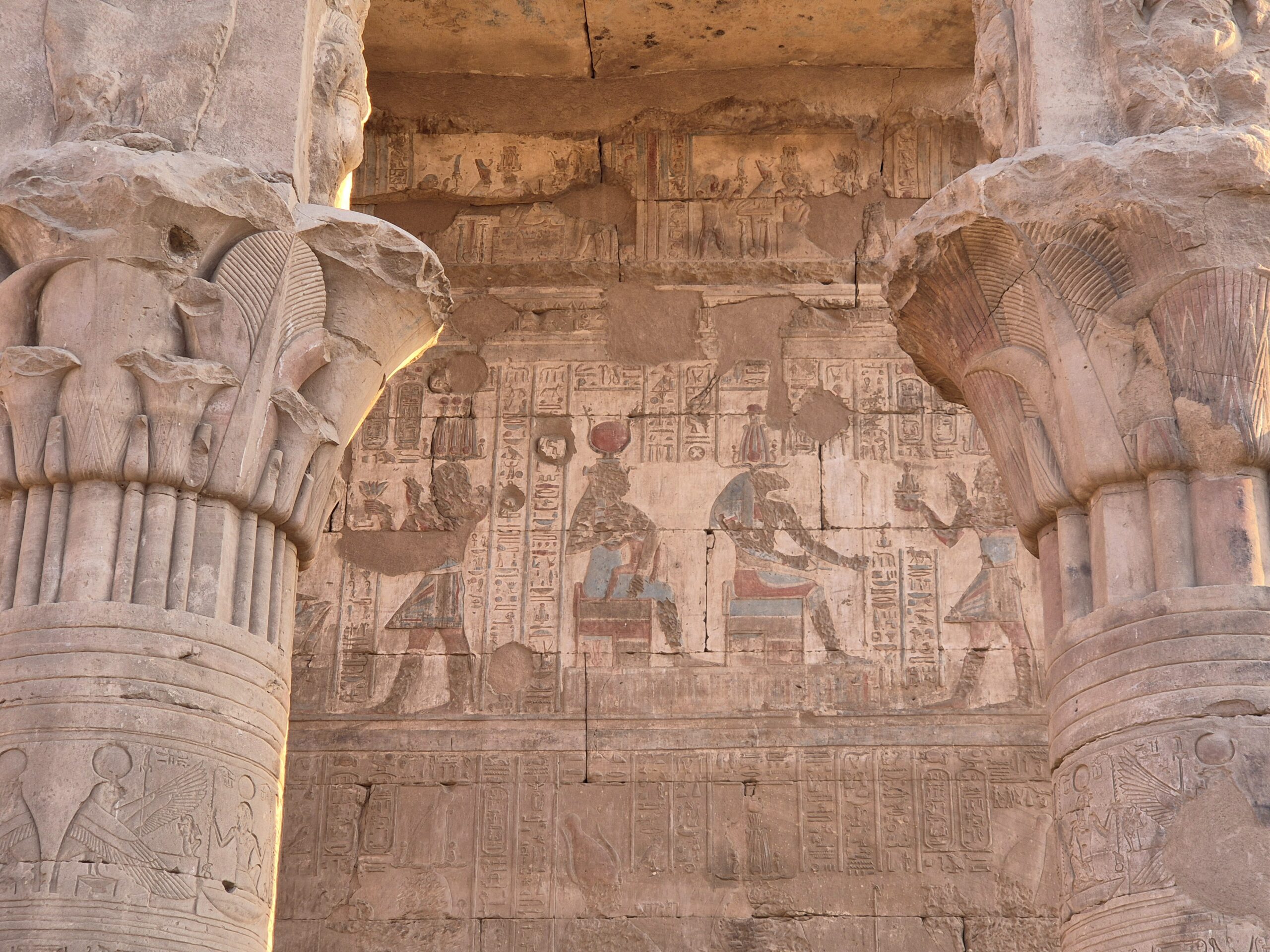
Typical of Graeco-Roman-era Egyptian temples, Edfu Temple also has a smaller, auxiliary temple known as the Birth House.
Temples like this were considered to be the place where the temple’s main god (Horus) was born, and were used once per year during the Coronation Festival, in which Horus was reborn.
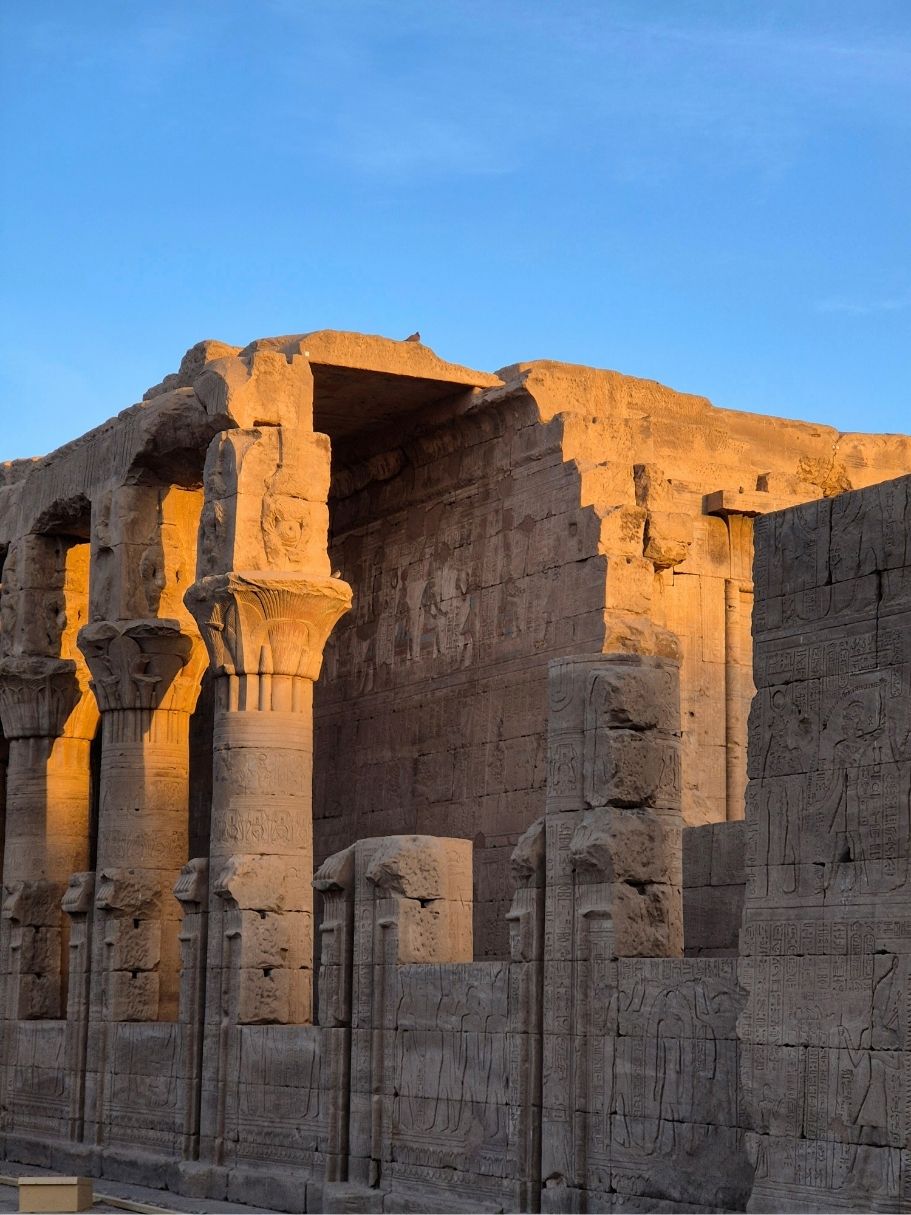
As you approach the main temple, the birth house will be on your left. It was once a miniature version of the main temple, following a similar layout. Much of it has collapsed, but if you look to the upper portion of the inner walls, you’ll find some of the best-preserved murals in Egypt, still retaining much of their original colour.
6 | Ruins of Tell Edfu
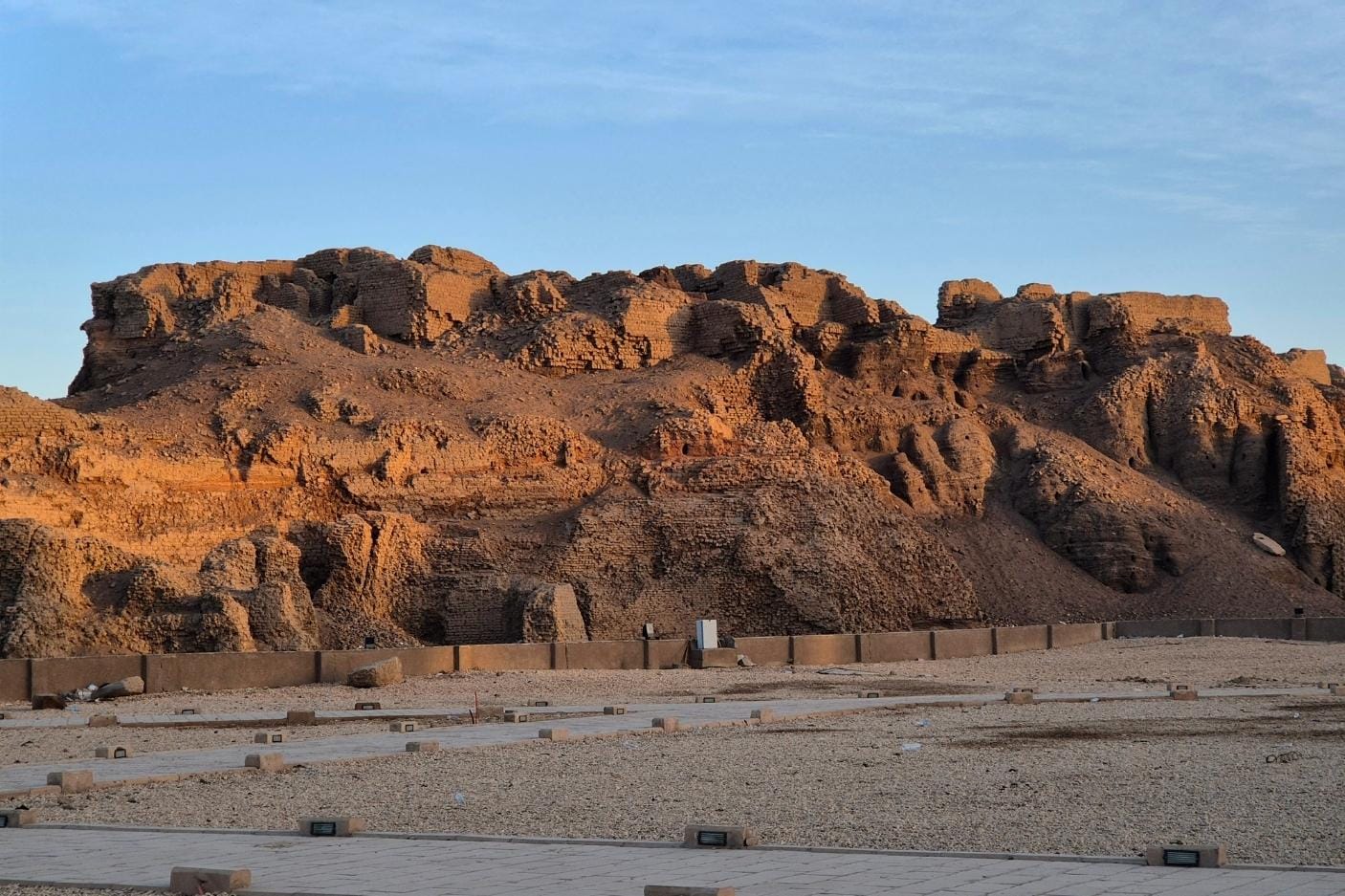
There’s one more interesting feature to see at the Temple of Horus: the ruins of Tell Edfu, the ancient city in which the temple was built.
Impossible to miss as you enter the complex, the remains of Tell Edfu surround the temple and extend well beyond the visitor area.
Much of the ruins predate the temple by thousands of years, but, due to being built largely of mudbrick, as opposed to the large stone blocks used for the temple, are heavily eroded. The temple is the last standing structure from this ancient city.
Much of Tell Edfu is still an active excavation site, and only a small portion is visible from within the temple complex, but it stands as a reminder that the temple did not stand in isolation but was once the heart of a thriving community.
Where is Edfu Temple?
Edfu Temple is located in the town of Edfu on the west bank of the Nile about halfway between Aswan and Luxor – about a 2-hour drive from either.
Is Edfu Temple worth it?
Given its location far from any major city, you might be wondering: is Edfu Temple worth visiting?
The short answer is: yes. Not only is Edfu Temple one of the largest ancient Egyptian temples, it’s also one of the best preserved, thanks to it being buried in sand for thousands of years. Many of the murals and reliefs that are heavily eroded in other temples are in great condition at Edfu.
And its location between Luxor and Aswan makes it a convenient stop when travelling between these 2 popular cities.
The main drawback you should know about is that Edfu Temple can get crowded. Because it’s one of the main stops for Nile cruises, it’s common for many (sometimes over a dozen) boats to arrive at once, flooding the temple with crowds as soon as the gates open.
Generally, these cruise tours aim to get there early in the morning before the heat sets in. Meaning if you’re okay with the heat, you could visit later in the day once most of the boats have moved on.
Other than the waves of crowds from Nile cruises, Edfu Temple is one of the best ancient Egyptian temples in the country, and absolutely worth a visit.
How to get to Edfu Temple
Nile Cruise
One of the best ways to reach Edfu Temple — and one of the most popular experiences in Egypt — is by Nile cruise. Since many of Egypt’s major historical sites are concentrated along the river, cruising between Luxor and Aswan is a convenient and efficient way to visit them.
If you book a Nile cruise on this route, Edfu Temple will be one of the stops. With this option, all the logistics are handled for you, including transport, tickets, and a guide.
All you really need to do is show up and enjoy the ride.
Guided Tour
If you don’t want a Nile cruise but still want the logistics handled for you, a guided tour is a great alternative. There are plenty of day trips from both Luxor and Aswan that include Edfu Temple.
Some tours even combine Edfu Temple and Kom Ombo Temple with your transfer between the cities. Like this guided tour, which picks you up in Aswan, and stops at Edfu Temple and Kom Ombo Temple along the way before dropping you off at Luxor.
Train
It’s also possible to reach Edfu independently by train from either Luxor or Aswan.
Once you arrive at Edfu Railway Station, you’ll need to take a taxi to reach the temple, which is located on the other side of the river.
You’ll need to purchase your ticket in-person at the station from either Luxor or Aswan, as they are not available for this route online.
Edfu Temple Opening Hours
Edfu Temple is open from 7am to 4pm, with the exception of Sundays and Wednesdays in which it opens from 6am to 4pm.
The same hours apply all year round, including during Ramadan.
You can check for updates to the opening hours on the official website.
Edfu Temple Tickets
The Edfu Temple ticket prices are as follows:
For foreigners:
- EGP 550 – Adults
- EGP 275 – Students (must show student ID)
For Egyptian Nationals
- EGP 40 – Adults
- EGP 20 – Students
You can purchase your Edfu Temple tickets on-site at the entrance, or in advance on the official website.
Avoid purchasing tickets from any other websites, as they are likely scams and ticket scalpers.
Edfu Temple Tours
The best way to visit Edfu Temple is with a Nile cruise, which is also one of the most popular experiences in Egypt. Since most historical sites in Egypt are concentrated along the river, a cruise is a convenient way to see them.
The most common route is from Aswan to Luxor (or vice versa). Along this route, you’ll visit many of Egypt’s top historical sites, including Edfu Temple which lies between.
A Nile cruise includes accommodation on the boat, usually with facilities such as a pool, buffet meals, and other amenities. Transport to and from the sites, entry tickets, and a professional guide are all typically included. All you need to do is sit back and enjoy the views and historical sites.
Even if you’re more the independent, solo traveler type, I still highly recommend booking at least a short (3 night) Nile cruise during your visit. Cruising down the Nile is just as fantastic and memorable a way to experience Egypt.
Best Nile River Cruises that include Edfu Temple
🚢 Aswan to Luxor 3 Nights Nile Cruise (I’ve personally tried this cruise and had a fantastic experience)
🚢 Luxor to Aswan 7 Nights Nile Cruise
🚢 Discover Egypt 10 Day Tour (Includes Cairo, Aswan to Luxor Nile Cruise, and Hurghada)
You don’t have to book a Nile cruise to get a guided tour to Edfu Temple. You can also book a day trip from either Aswan or Luxor.
With a guided tour, your transport & tickets are covered, and you get a knowledgeable tour guide to teach you about the history of the site along the way.
Guided tours often combine Edfu Temple with Kom Ombo Temple, another amazing ancient Egyptian temple located between Aswan and Luxor.
Best Edfu Temple guided tours:
⭐ Aswan: Edfu and Kom Ombo Day Tour with Luxor Transfer (this tour also covers your transport from Aswan to Luxor)
⭐ From Luxor: Edfu, Kom Ombo, Aswan Private All-Inclusive Tour (best option from Luxor)
⭐ Luxor: Tour to Edfu Temple & Lunch & Felucca (Includes a Felucca ride)
Further reading on Egypt
Here are more guides on Egypt to help you plan your trip:
⬤ Daytrips to Edfu Temple are often combined with the nearby Kom Ombo Temple. Check out: Complete Travel Guide to Kom Ombo.
⬤ If you’re in Aswan, be sure to visit the world famous temple built by Ramesses the Great with this Complete Guide to Abu Simbel.
⬤ While in Aswan, there’s another amazing ancient temple you won’t want to miss. Check out: Complete Travel Guide to Philae Temple.
⬤ If you’re in Aswan, you’ll want to visit one of the most significant historical sites in Egypt: Valley of the Kings | Complete Guide to Egypt’s New Kingdom Necropolis.
⬤ If you’re going to Egypt, you’re probably interested in visiting some pyramids, so check out my Travel Guide to Pyramids in Egypt.
⬤ For a guide to the last ancient wonder of the world, check out my Giza Pyramids Travel Guide.
⬤ To see the world’s first ‘true’ pyramids, check out my guide to the Red and Bent Pyramids of Dahshur.
⬤ If you’re interested in visiting the world’s oldest pyramid, check out my Travel Guide to the Saqqara Necropolis.
⬤ Plan to visit one of Egypt’s many great museums? Check out my guide comparing the Grand Egyptian Museum vs the Egyptian Museum: Which is Better?
⬤ For more travel guides, visit my Destinations page.
Disclosure: This post may contain affiliate links.