Standing on the east bank of the Nile between Aswan and Luxor, Kom Ombo Temple is one of the most unique temples in Egypt.
Unlike most ancient Egyptian temples, which were dedicated to a single god, Kom Ombo was built as a dual temple. Its entire layout is split into two mirrored halves: one dedicated to the crocodile god Sobek and the other to Horus.
Although much of the complex has been lost over time, Kom Ombo remains one of the most fascinating stops along the Nile thanks to its unusual design and convenient location.
In this guide, you’ll find everything you need to know about visiting Kom Ombo Temple, including what to see, how to get there, ticket information, tours, and more.
Contents
Brief History of Kom Ombo Temple
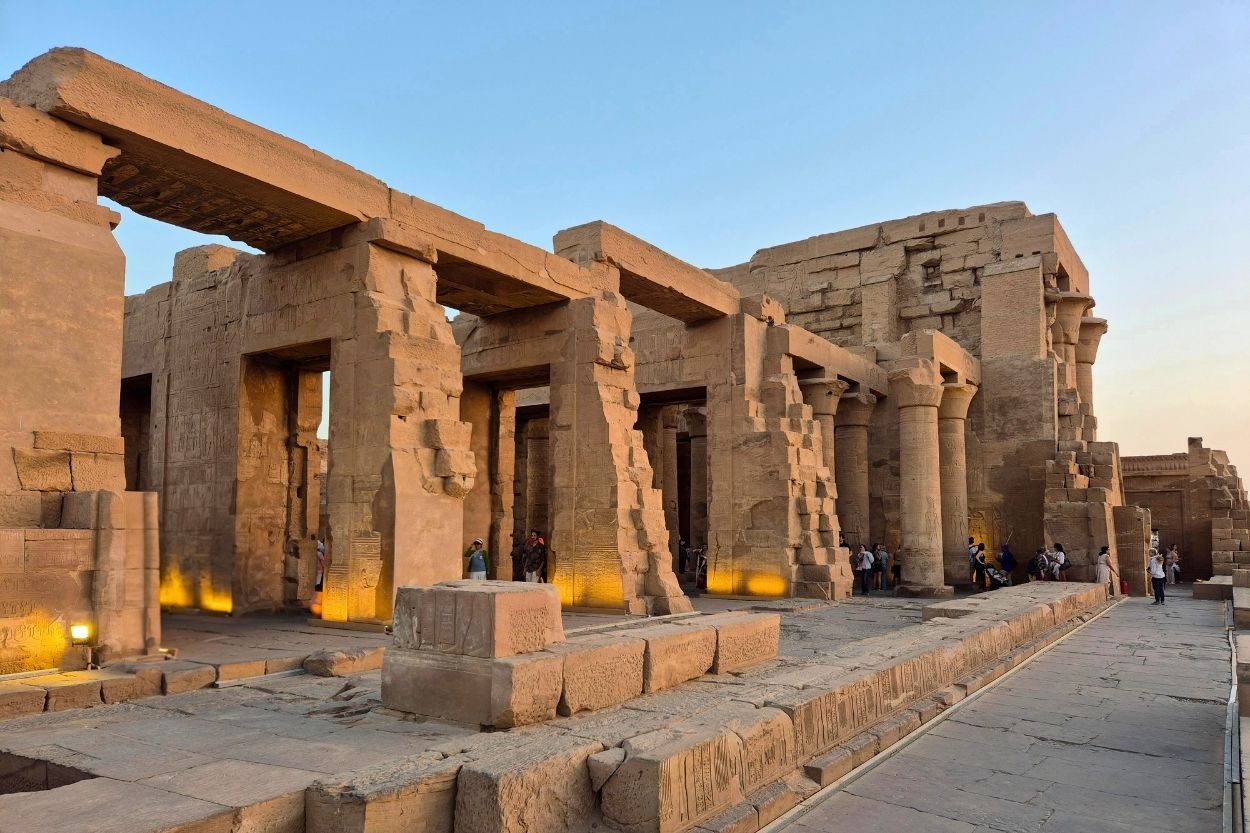
Unlike many of Egypt’s most famous monuments, Kom Ombo Temple was not built during Dynastic Egypt. Instead, it dates to the later Greek and Roman periods of Egyptian history.
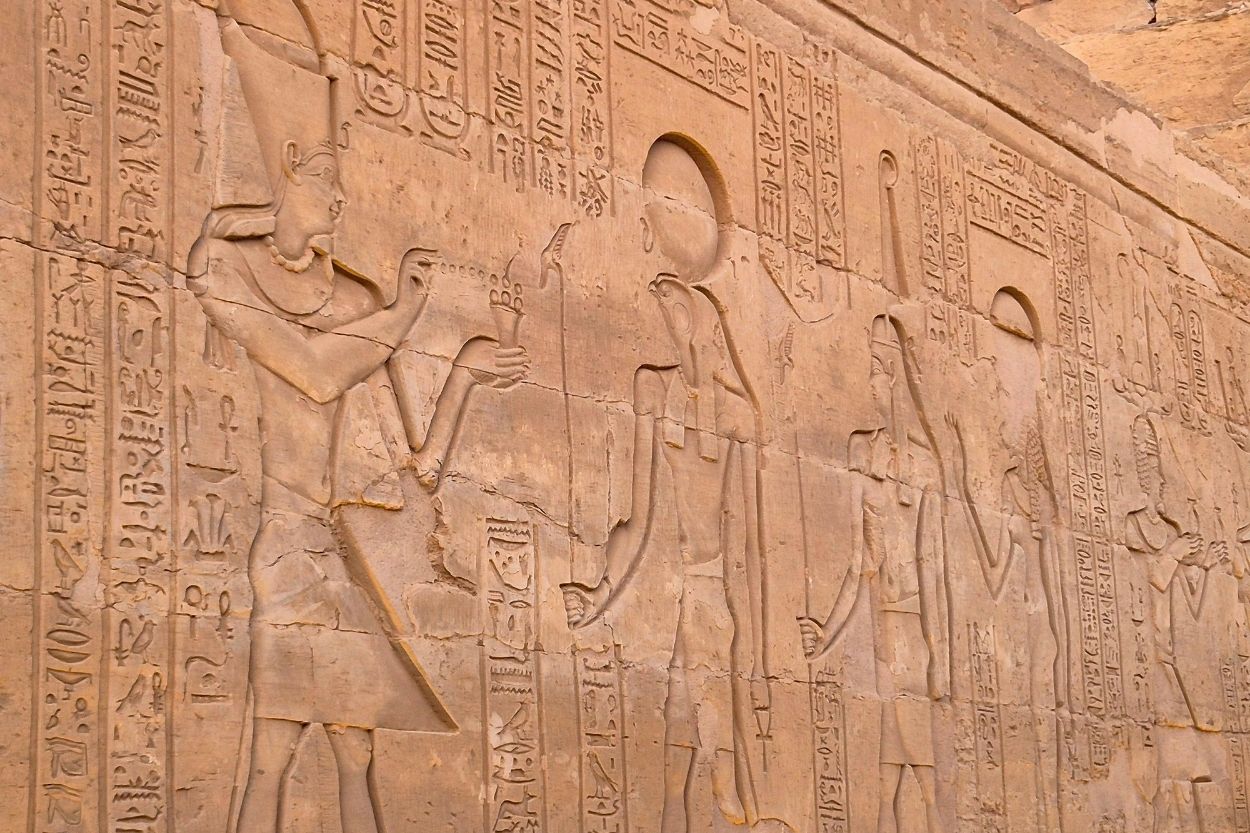
Construction began during the Ptolemaic Dynasty, with inscriptions on the temple walls dedicated to Ptolemy VI Philometor, who ruled from 180 to 145 BCE. The temple was likely expanded and modified over the following centuries, well into the Roman era.
Archaeologists believe an even older temple may once have stood on the site, as reused stone blocks from an earlier structure have been found incorporated into the foundations. However, nothing visible remains of this original temple today.
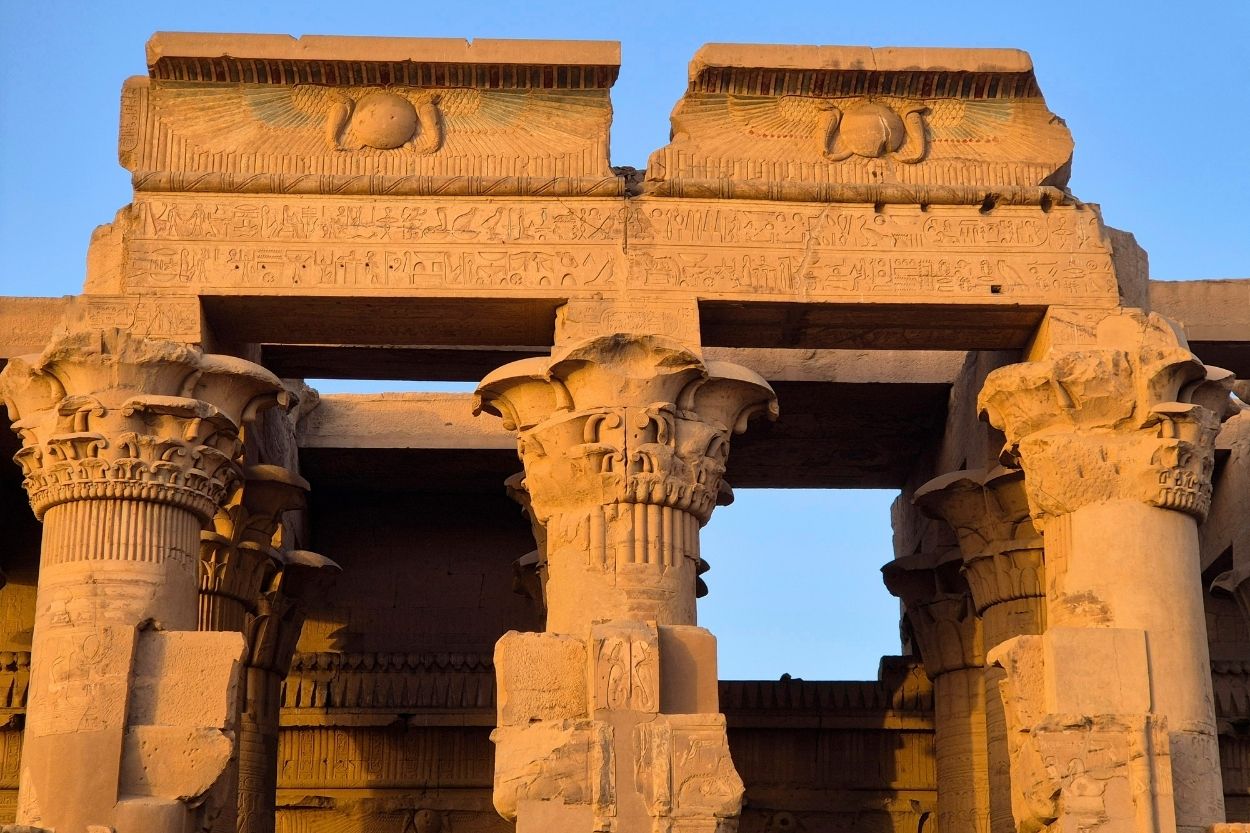
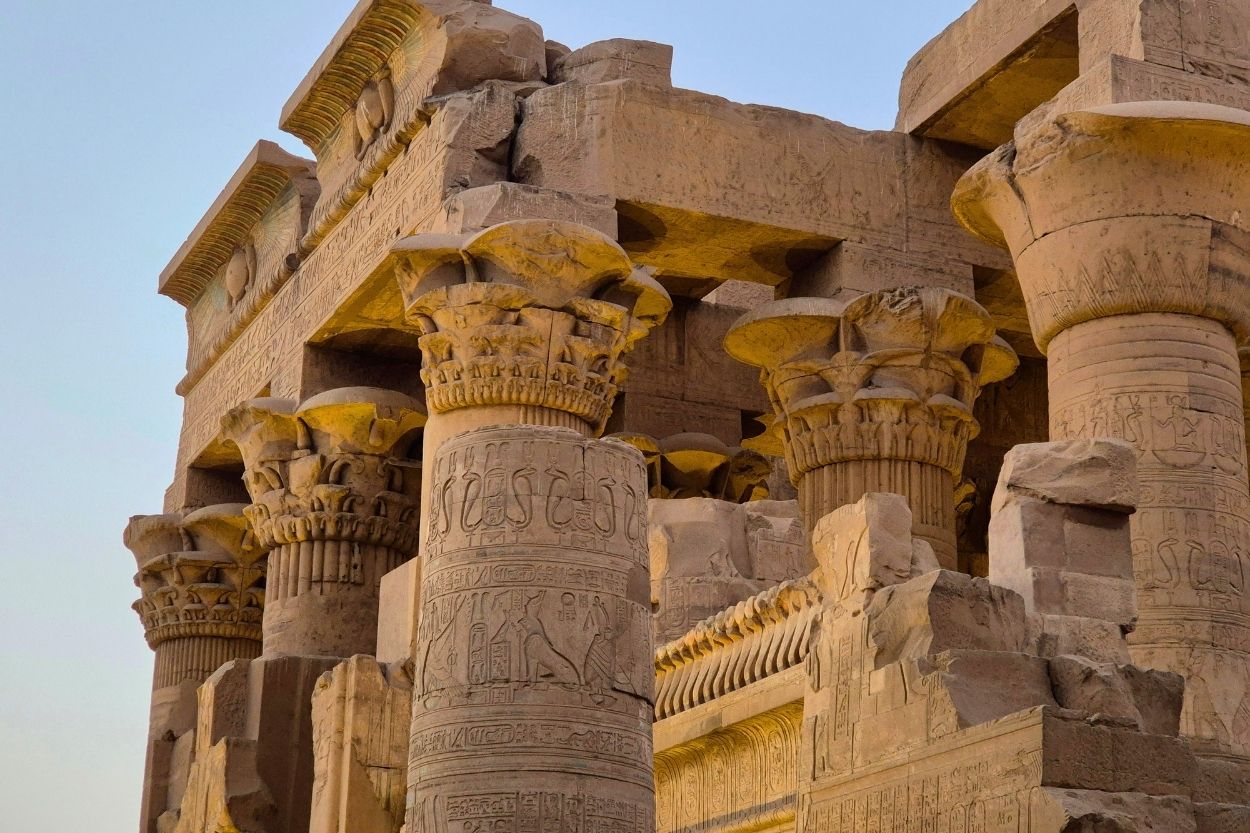
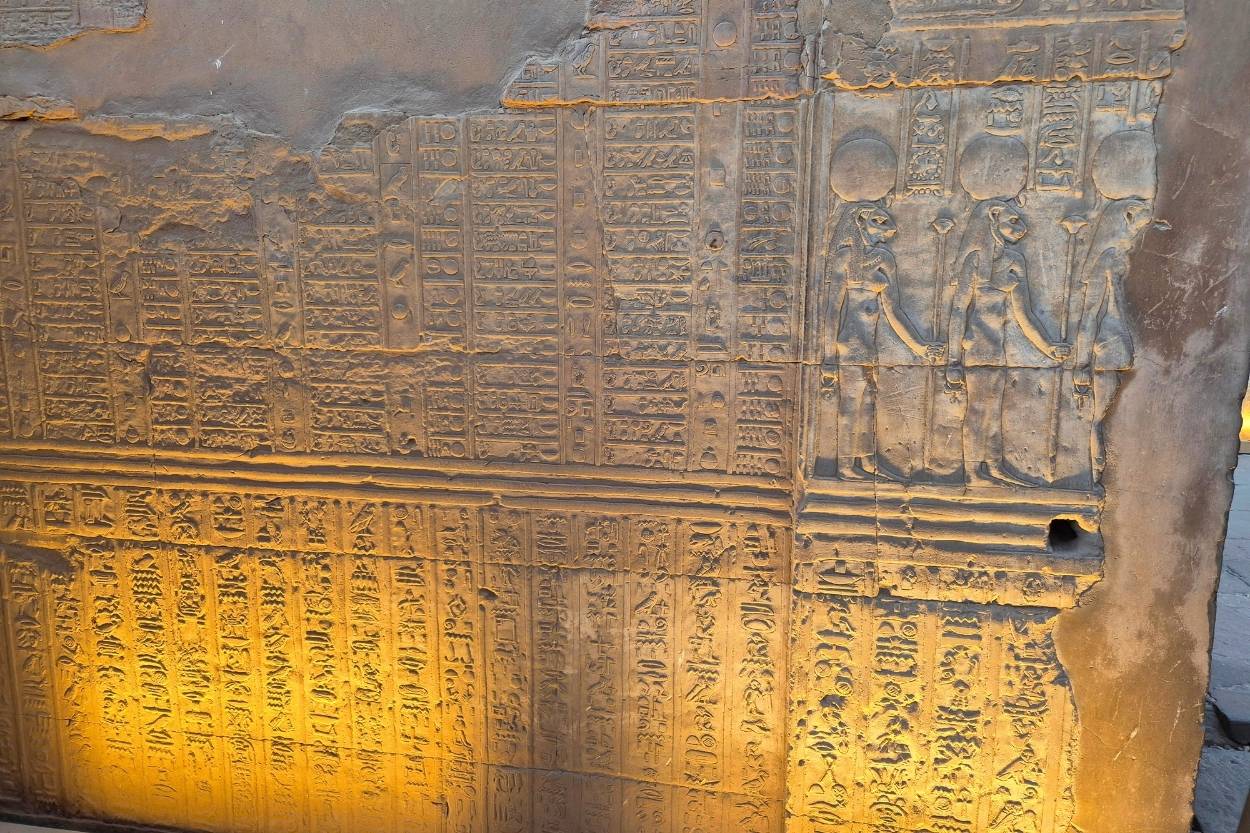
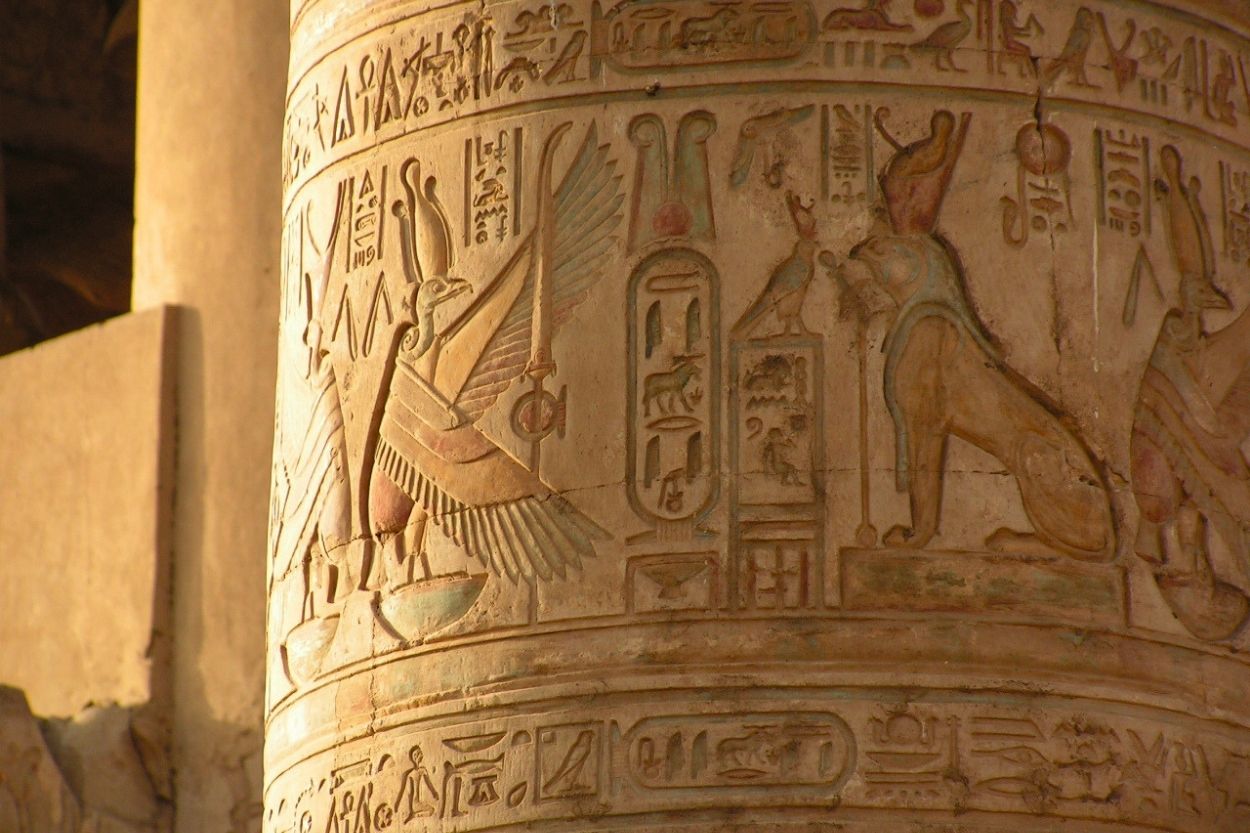
Kom Ombo is particularly unusual because it was dedicated to two different deities rather than one. The southern half of the temple honoured Sobek, the crocodile god associated with power, fertility, and the Nile, while the northern half was dedicated to Horus, the falcon-headed god. This dual dedication can be seen in the design of the temple, with the whole structure being split into 2 mirrored sides, each for one of the gods.
During its height, Kom Ombo served not only as a religious centre but also as a strategic military outpost along the important route between Egypt and Nubia.
Because of its association with Sobek, crocodiles played a major role in the temple’s religious practices. Hundreds of mummified crocodiles were buried at the site, many of which were uncovered during excavations in the late 1800s. Today, many of these crocodile mummies are displayed in the nearby Crocodile Museum.
Following the spread of Christianity through Egypt, the temple was converted into a church. Over time, likely after the Arab conquest, the site was abandoned and gradually fell into ruin. It wasn’t until the late 19th century that it was uncovered by French archaeologists.
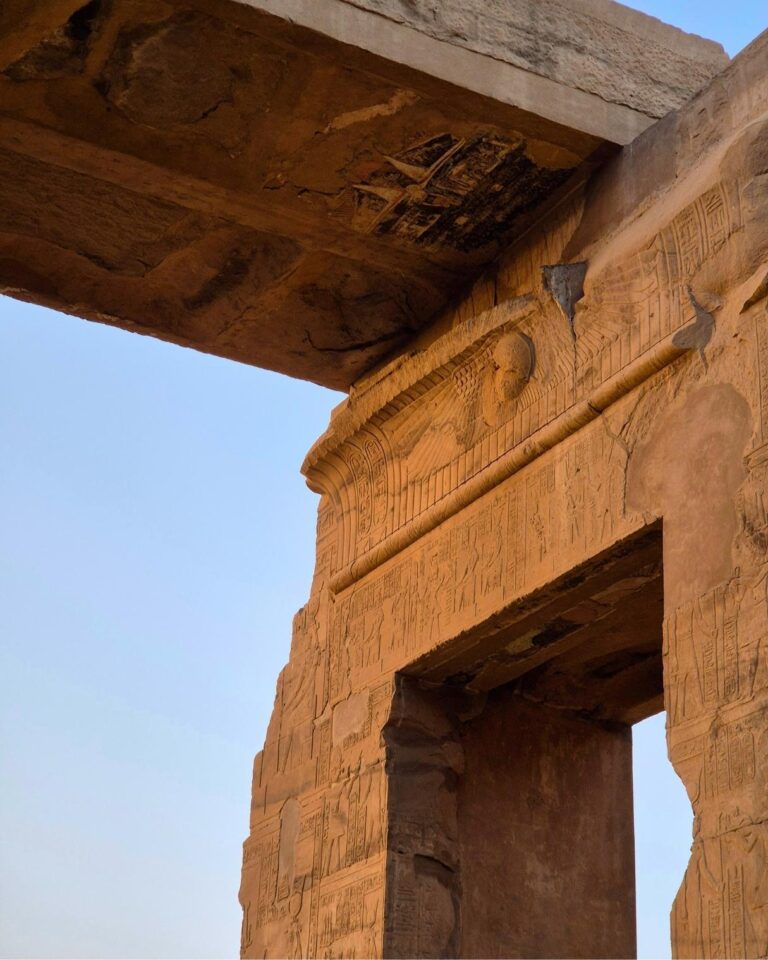
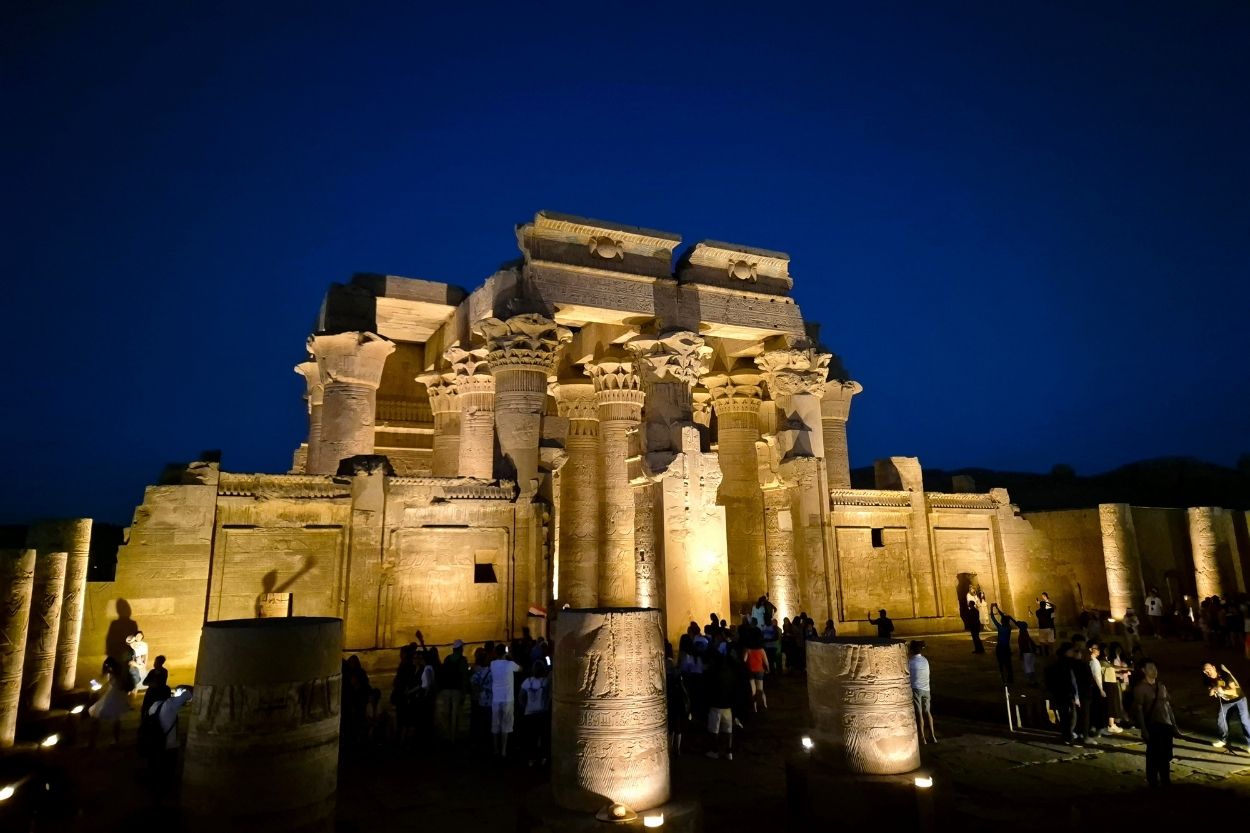
Today, much of the original complex has been lost. The massive outer enclosure wall has almost entirely disappeared, most roofs have collapsed, and many of the auxiliary buildings that once filled the complex survive only as foundations.
Despite this, the temple is still a popular historical site and a regular stop for Nile Cruises travelling between Aswan and Luxor.
Things to see at Kom Ombo Temple
Despite much of the complex being destroyed, there’s still plenty to explore at Kom Ombo Temple.
Hypostyle Halls
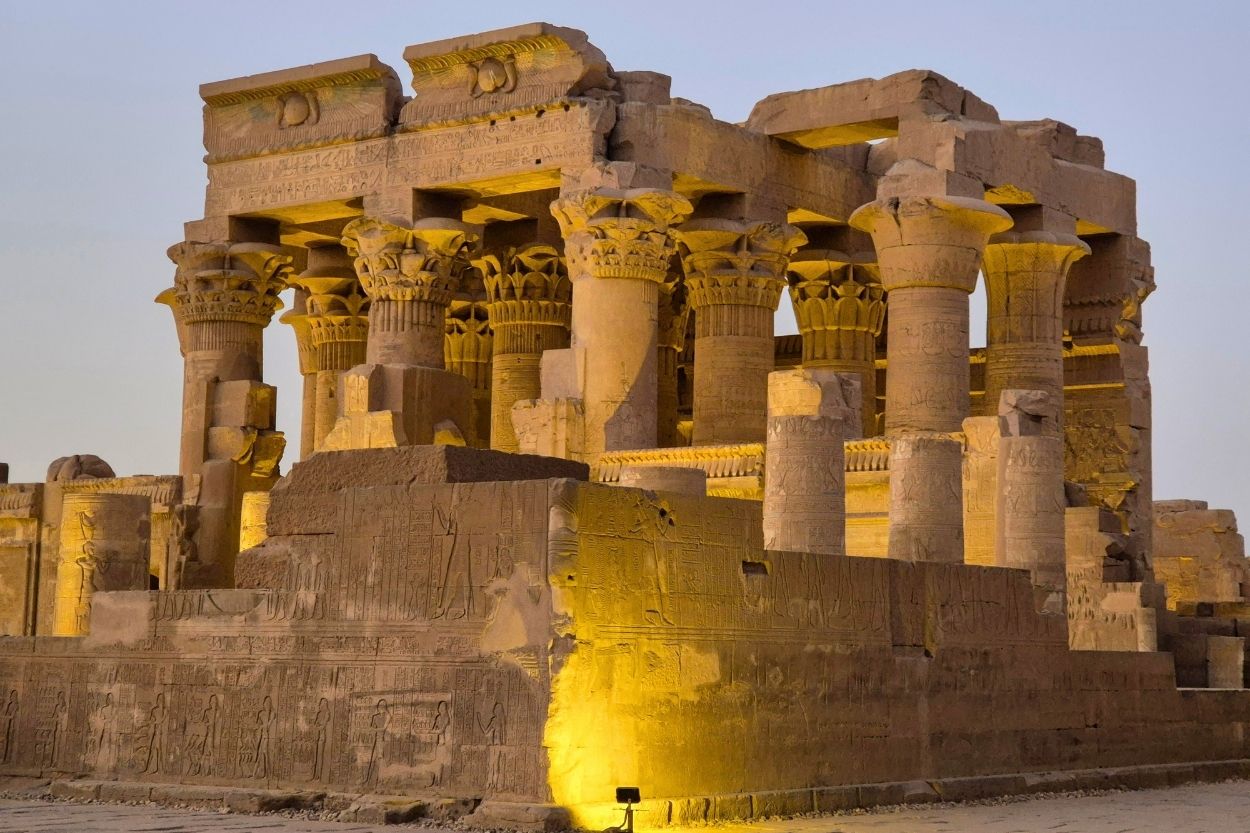
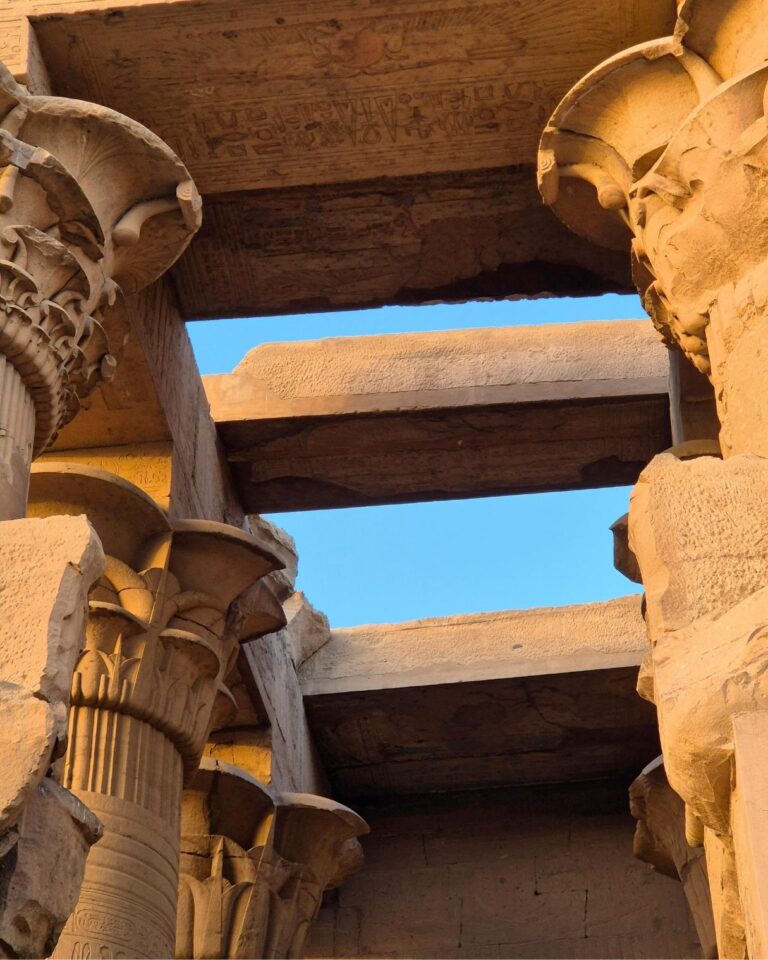
Like most ancient Egyptian temples, visitors first enter the main temple at Kom Ombo through the Hypostyle Hall, a towering pillared hall that led worshippers deeper into the more sacred areas of the temple. But unlike most temples in Egypt, Kom Ombo contains two parallel and almost perfectly mirrored hypostyle halls: one dedicated to Sobek, the crocodile god, and the other to Horus the Elder.
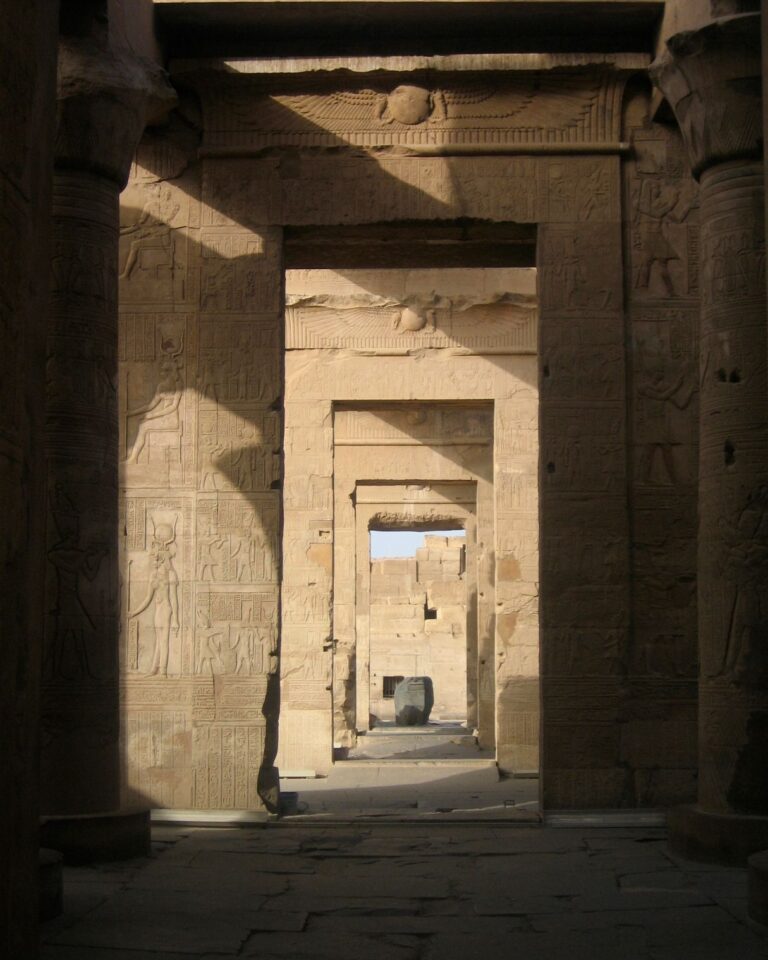
The outer hypostyle hall leads into a second inner hall, before continuing further into the temple’s sanctuary area. In ancient times, this part of the temple was open to priests, temple officials, and worshippers bringing offerings to the gods. Religious ceremonies and processions would also have passed through these halls.
Off to the sides are a series of smaller chambers that were used for shrines, ritual preparation, and storing offerings. Although much of the inner sanctuary has been destroyed, parts of the walls still survive, giving you some idea of the original layout.
Crocodile Museum
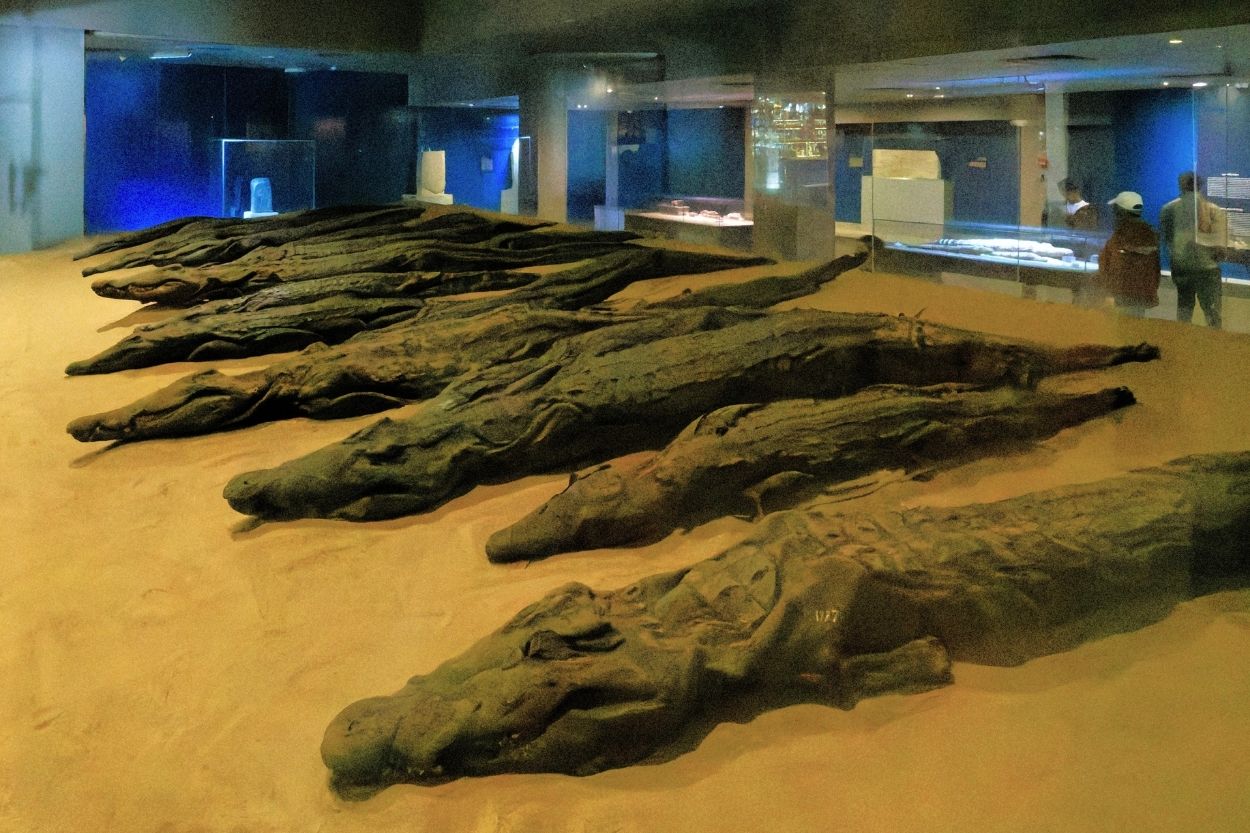
One half of Kom Ombo Temple was dedicated to Sobek, the crocodile-headed god associated with power, fertility, and the Nile. Crocodiles played an important role in the religious life of the temple, and much like humans, they were often mummified after death as sacred animals.
When Kom Ombo was uncovered in the late 1800s, hundreds of mummified crocodiles were discovered. Today, many of them are displayed in the on-site Crocodile Museum.
Inside, you can learn about the role crocodiles played in ancient Egyptian religion and the process used to mummify them. The museum contains dozens of remarkably well-preserved crocodile mummies, some measuring over 4.5 metres long, along with artefacts that were buried alongside them.
The Nilometer
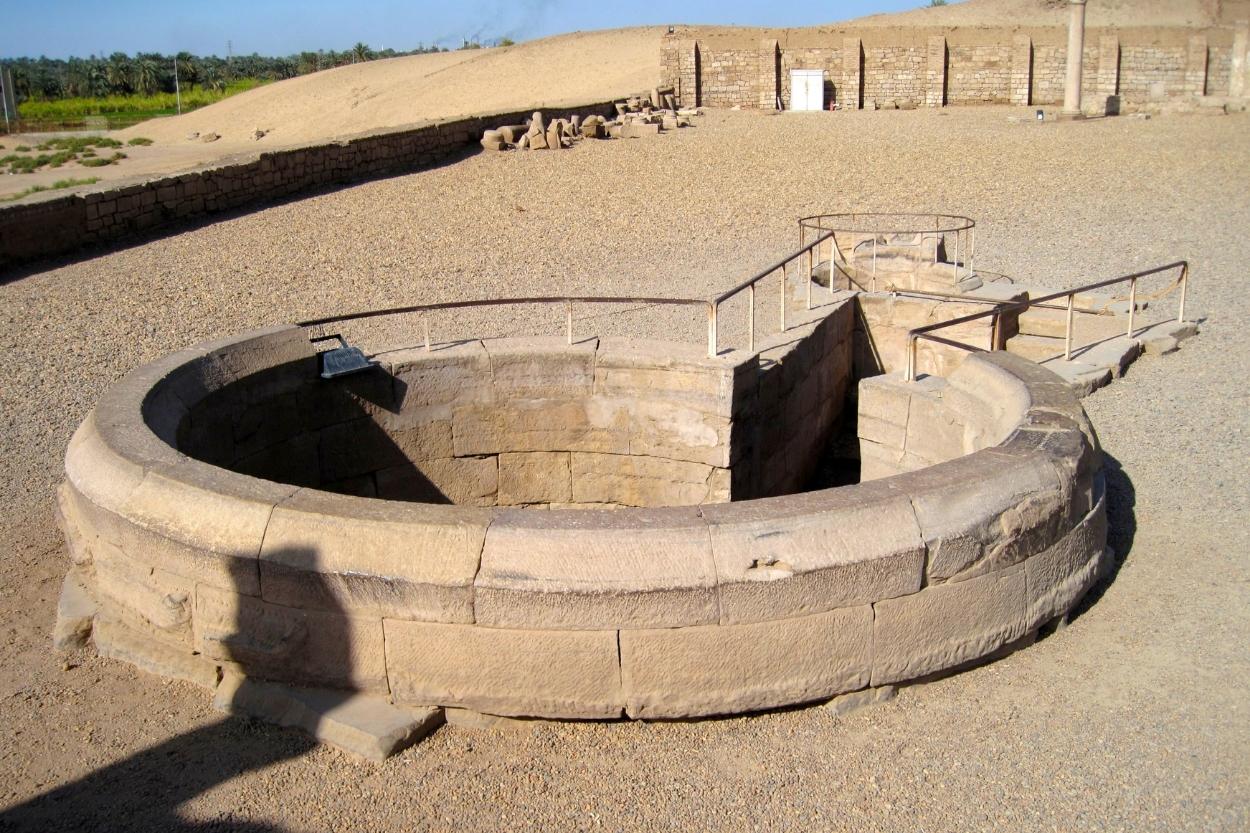
Flooding of the Nile was central to life in ancient Egypt, with the entire agricultural system depending on the river’s annual flood cycle.
To monitor these floods, the Egyptians developed structures known as nilometers. These typically consisted of a deep stone-lined well connected to the Nile, often with measurements marked along a central column or on the walls. By measuring the water level during flood season, officials could predict the quality of the coming harvest.
This information was essential for determining agricultural output, planning crops, managing resources, and calculating taxes.
One such nilometer can still be seen at Kom Ombo Temple today, offering an insight into the role the Nile River played in ancient Egyptian society.
Where is Kom Ombo Temple?
📍Kom Ombo Temple is located in the town of Kom Ombo, on the east bank of the Nile in the Aswan Governorate of Egypt. It is approximately 50km north of the city of 📍Aswan and 160km south of Luxor.
It is most easily visited as a daytrip from Aswan, but can also be reached via daytrip from Luxor or as part of a Nile Cruise.
How to get to Kom Ombo Temple
From Aswan
Aswan is the closest major city and tourist hub to Kom Ombo. It’s the easiest place to go on a day trip to the temple.
The most convenient option is to book a guided tour. Many tours from Aswan to Kom Ombo also include the amazing Edfu Temple.
There are also transfer tours available that pick you up in Aswan, stop at Kom Ombo Temple along the way, and continue onward to Luxor. Some of these also include Edfu Temple, making them a great way to combine sightseeing with your transport between cities.
Alternatively, you can hire a private driver without the guided tour. This can usually be arranged either through local taxi drivers, or through your hotel reception.
The drive from Aswan to Kom Ombo takes around 90 minutes.
From Luxor
Although further away than Aswan, it’s also possible to visit Kom Ombo Temple from Luxor.
The drive takes at least 3 hours one way, so most travellers visit the temple while travelling between Luxor and Aswan rather than as a return day trip.
Nile Cruise
One of the most popular activities in this part of Egypt is taking a Nile cruise between Luxor and Aswan.
Even if cruises are not normally your thing, this is one of the most convenient ways to visit many of Egypt’s top historical sites, with your accommodation, meals, transport, and tickets included.
Kom Ombo is one of the standard stops on most Nile cruises. Cruise boats dock directly beside the temple, allowing passengers to walk straight from the boat into the site.
If you’re already planning to travel between Luxor and Aswan, a Nile cruise is easily one of the best ways to visit Kom Ombo Temple.
Kom Ombo Temple Opening Hours
Kom Ombo Temple is open from 7am to 9pm all year round, including during Ramadan. Last entry to the site is at 8pm.
Kom Ombo Temple Ticket Info
The ticket prices for Kom Ombo Temple are:
- 450EGP – Adult
- 225EGP – Student
Tickets to Kom Ombo Temple can be purchased on-site from the ticket booth, or online in advance from this website.
Kom Ombo Temple Tours
Because Kom Ombo is located far from any major tourist hub, the easiest and most convenient way to visit is with a guided tour.
There are several different types of tours available depending on your itinerary. Some depart from Aswan, while others begin in Luxor. Some focus solely on Kom Ombo Temple, while others combine it with nearby Temple of Edfu.
Another popular option is a Nile cruise, which is one of the best ways to visit the major historical sites between Luxor and Aswan. Rather than organising transport, hotels, and tickets separately, cruises bundle everything together, allowing you to relax and enjoy the journey while stopping at many of Egypt’s most famous sites along the way.
I’ve reviewed the best Kom Ombo tours so you don’t have to. Here are the top choices depending on what you’re looking for:
From Aswan (+ Edfu Temple) | |
From Luxor (+ Edfu Temple) | |
Transfer Tour: Aswan to Luxor (+Edfu Temple) | |
Transfer Tour: Luxor to Aswan (+Edfu Temple) | From Luxor: Edfu, Kom Ombo, Aswan Private All-Inclusive Tour |
As for Nile cruises, there are plenty of options available depending on your schedule and travel plans. Some cruises depart from Aswan, while others start in Luxor. Trip lengths can range from as little as 3 nights to over a week.
There are several websites where you can book Nile cruises, though I generally find Viator to have the best range of options.
Is Kom Ombo Temple worth it?
Your time in Egypt is probably short and fleeting. So should you make room in your itinerary for Kom Ombo Temple?
It’s true that Kom Ombo is more ruined than some of the other major temples you can visit in this region, with many of the roofs, walls and surrounding structures long gone. But what makes Kom Ombo worth visiting is its location.
The temple sits directly between Aswan and Luxor, two of Egypt’s main tourist hubs. If you’re travelling between these cities, Kom Ombo is an easy and natural stop along the way.
Whether you’re making the journey by car or as part of a Nile cruise, you’ll likely be passing right by the temple anyway. That makes it one of the easiest historical sites in Egypt to add to your itinerary without requiring a major detour.
You probably wouldn’t choose Kom Ombo over more famous sites like Karnak Temple or Abu Simbel, but thankfully you don’t have to. For most, Kom Ombo is an easy and worthwhile addition to an Egypt itinerary.
Further reading on Egypt
Here are more guides on Egypt to help you plan your trip:
⬤ A daytrip to Kom Ombo is often paired with the nearby Edfu Temple. Check out: Complete Travel Guide to Edfu Temple.
⬤ If you’re in Aswan, be sure to visit the world famous temple built by Ramesses the Great with this Complete Guide to Abu Simbel.
⬤ While in Aswan, there’s another amazing ancient temple you won’t want to miss. Check out: Complete Travel Guide to Philae Temple.
⬤ If you’re in Aswan, you’ll want to visit one of the most significant historical sites in Egypt: Valley of the Kings | Complete Guide to Egypt’s New Kingdom Necropolis.
⬤ If you’re going to Egypt, you’re probably interested in visiting some pyramids, so check out my Travel Guide to Pyramids in Egypt.
⬤ For a guide to the last ancient wonder of the world, check out my Giza Pyramids Travel Guide.
⬤ To see the world’s first ‘true’ pyramids, check out my guide to the Red and Bent Pyramids of Dahshur.
⬤ If you’re interested in visiting the world’s oldest pyramid, check out my Travel Guide to the Saqqara Necropolis.
⬤ Plan to visit one of Egypt’s many great museums? Check out my guide comparing the Grand Egyptian Museum vs the Egyptian Museum: Which is Better?
⬤ For more travel guides, visit my Destinations page.