
Being such a historic Islamic nation, it’s easy to forget that Egypt was once predominantly Christian, home to one of the earliest Christian communities in the world.
There’s no better place to explore this rich heritage than Coptic Cairo. Located inside what was once a Roman fort, Coptic Cairo has for centuries been the stronghold of Christianity in Egypt. Inside this walled enclave, you’ll find some of the oldest churches in the country, alongside Egypt’s oldest synagogue and a museum dedicated to Coptic history.
If you’re interested in going beyond the pyramids and seeing a different side to the city’s history, Coptic Cairo deserves a place on your Egypt itinerary.
In this guide, you’ll find everything you need to know to visit Coptic Cairo, including its history, things to see, how to get there, and more.
Best Coptic Cairo Tours
I’ve done the research so you don’t have to. Here are the top Coptic Cairo tours depending on what you’re looking for…
⭐ Coptic Cairo + Cave Church of St. Simon – Best for exploring Cairo’s Coptic history.
⭐ Coptic Cairo + Cairo Citadel & Egyptian Museum – For for exploring a variety of top historical sites in Cairo.
History of Coptic Cairo
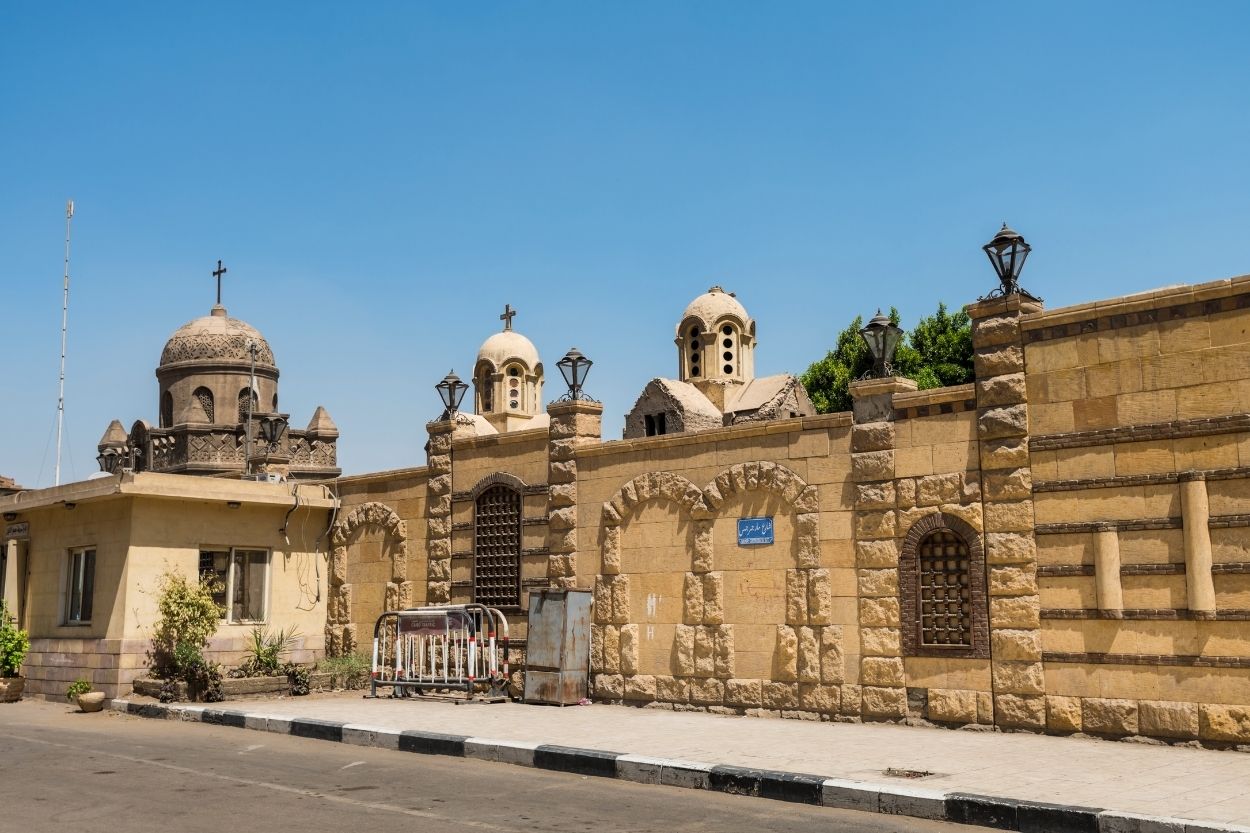
In the early 1st century, what is now Coptic Cairo was a small settlement and port located at the mouth of a canal linking the Nile River with the Red Sea.
According to the Bible (Matthew 2:13 – 23), Joseph and Mary fled the threat of King Herod in Israel and travelled to Egypt with the baby Jesus. The Bible doesn’t say exactly where they stayed, but Christian tradition says that it was right here in this town.
Following the death of Jesus, Egypt was the destination of his disciple Mark, who formed one of the earliest Christian communities in the world. As Christianity took root and the settlement grew, the Romans built walls around the settlement, turning it into Babylon Fortress, around 300 AD.
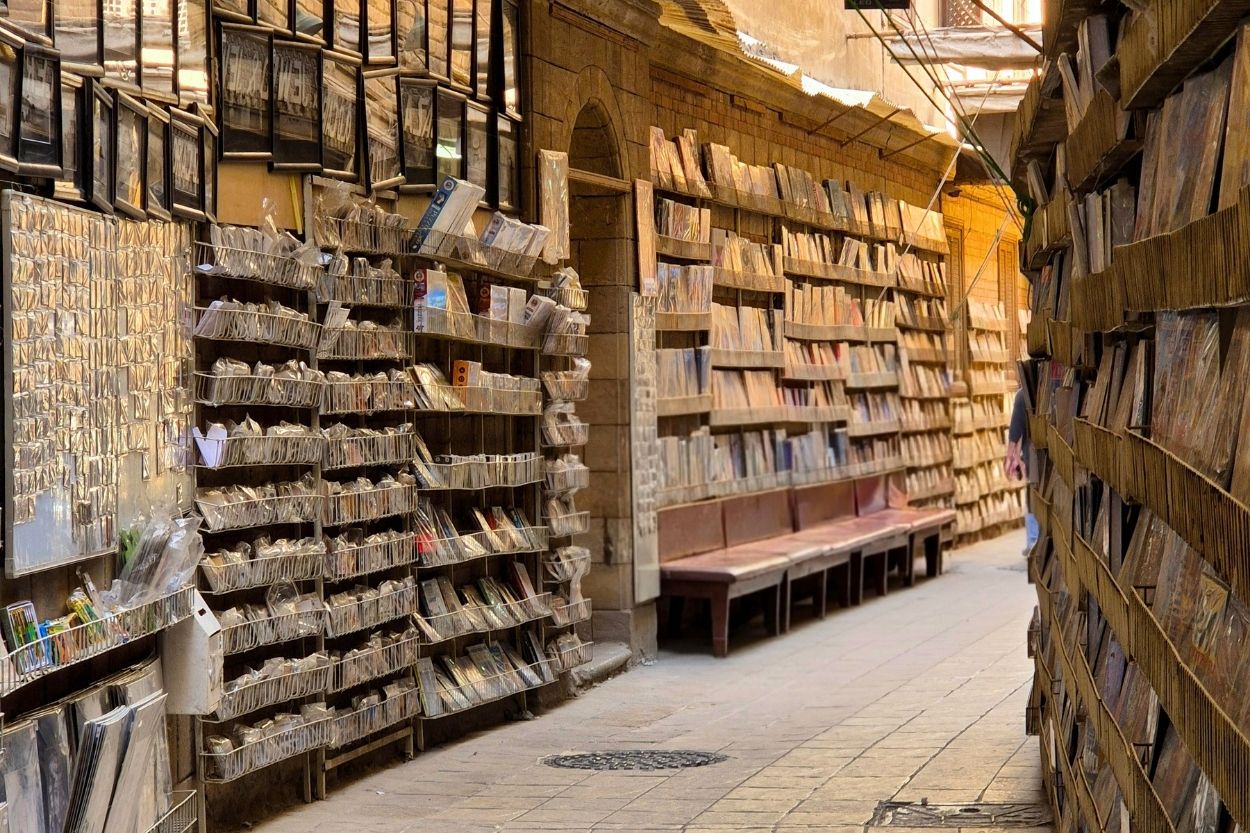
The fort straddled both sides of the canal, with the waterway running directly through the middle. Nothing can be seen today of this old canal, though remnants of it have been found in the ground beneath Coptic Cairo.
The Christian community kept growing, especially after Christianity became the Roman Empire’s state religion in 380 CE. Egypt’s traditional religion, having thrived for thousands of years, began fading into history, and by the 7th century CE, Christianity was Egypt’s dominant faith.
That all came to a crashing halt with the Islamic invasion beginning in 639 AD. Babylon Fortress held out for months, but eventually, all of Egypt fell to the Arabs and the new religion they brought with them. Rather than staying in the former capital of Alexandria, the Arabs began building a brand new capital immediately beside Babylon Fortress, called Fustat.
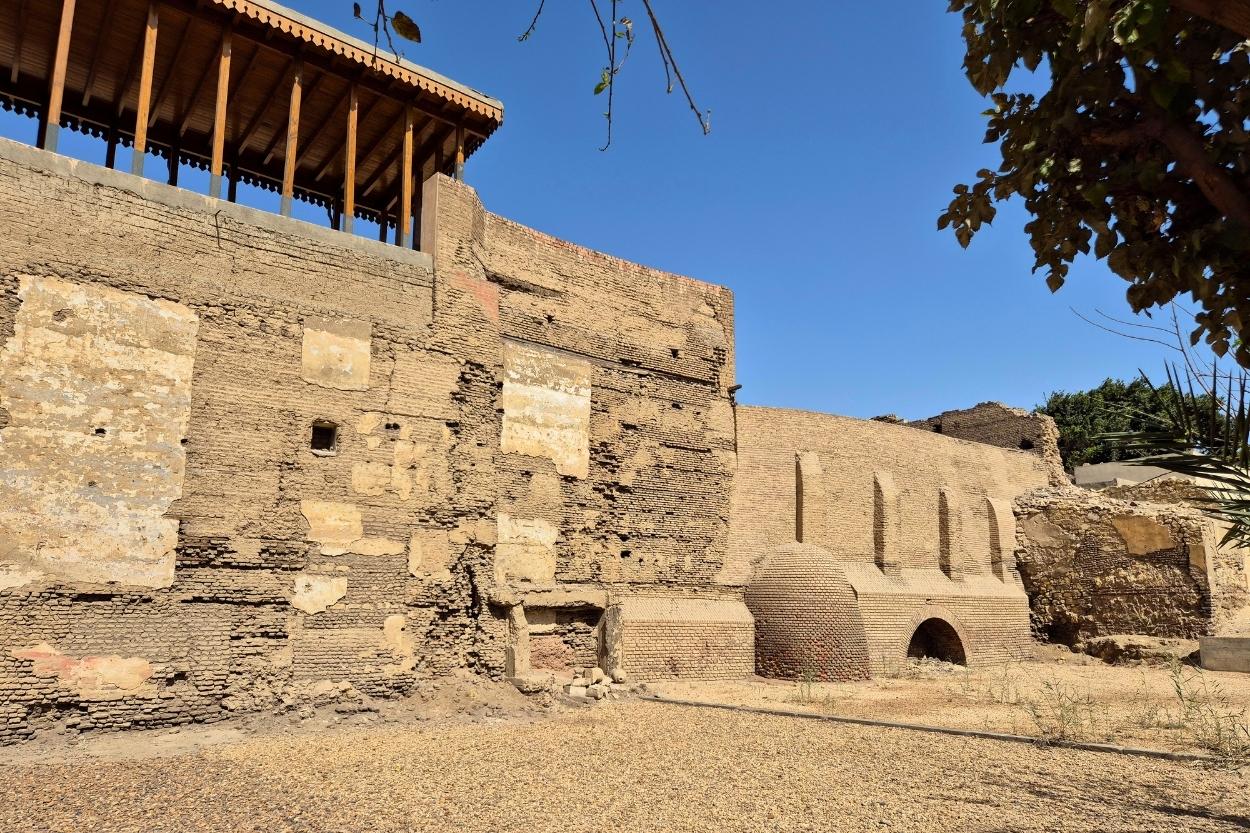
It’s from Arabic that we get the term “Coptic,” from “qubt”, meaning Egyptian. To the Arabs at the time, being Egyptian and Christian were essentially the same thing, and over time the word came to mean Egyptian Christian.
Over the following centuries, the Christian population became a minority in Muslim-controlled Egypt. Despite heavy persecution, the Coptic community endured, using the damaged remains of Babylon Fort as their stronghold, where they built several new churches over the centuries. No longer being maintained, the canal that once ran through the settlement eventually filled with dirt and the greater city of Cairo expanded over it.
Today, the Copts remain a long-established minority in Egypt, estimated at around 10% of the population. The area is still used by the Coptic community, but it’s also open for visitors like you to explore.
Coptic Cairo Map
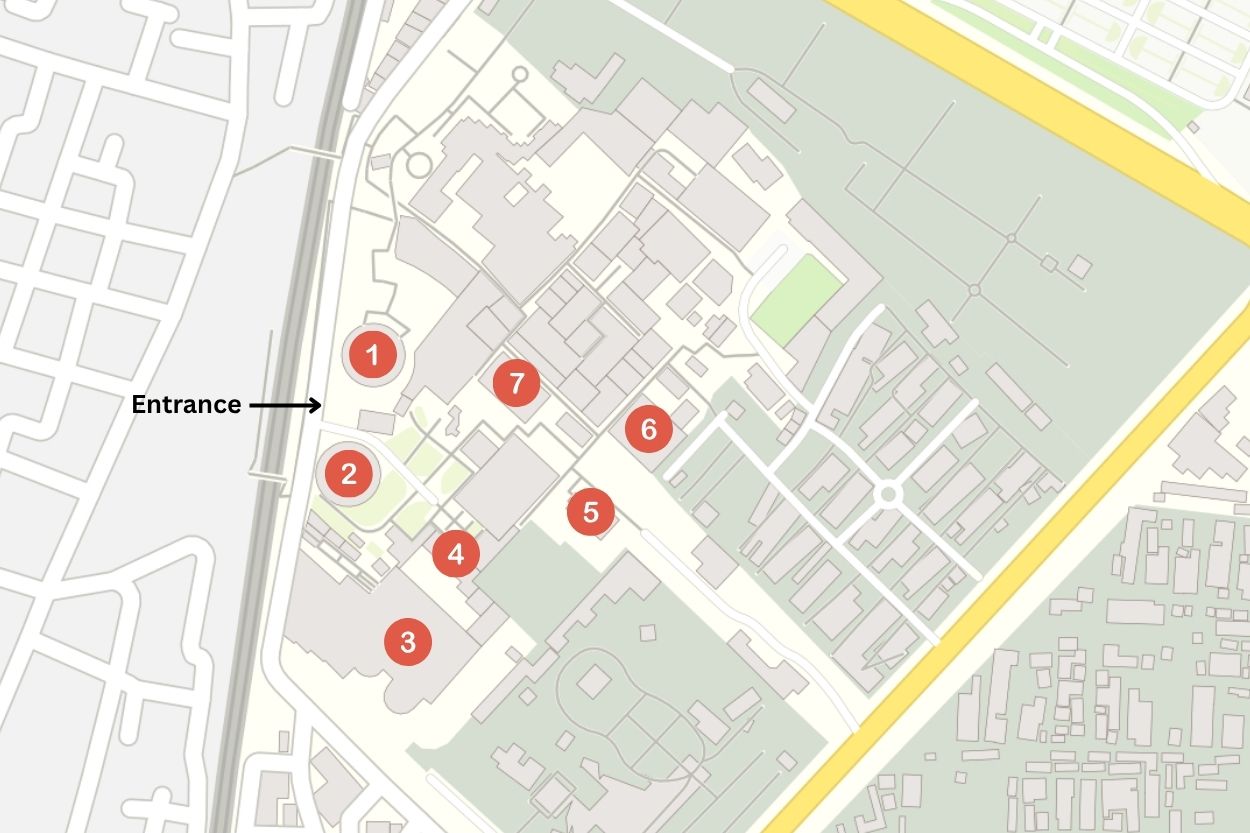
- Church of St George
- Babylon Fort (ruined tower)
- Hanging Church
- Coptic Museum
5. Ben Ezra Synagogue
6. Church of St. Barbara
7. Saints Sergius & Bacchus Church
Things to see at Coptic Cairo
1 - Babylon Fort
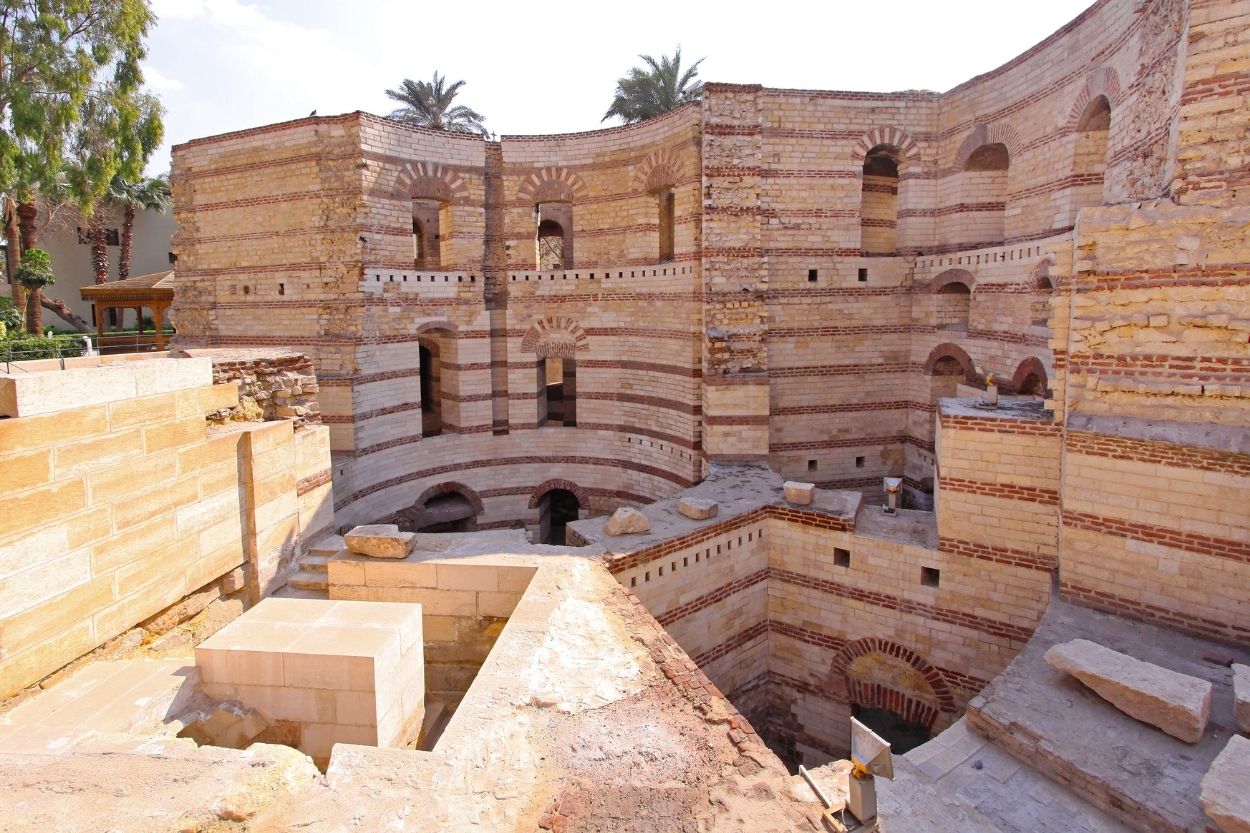
Long before this area became “Coptic Cairo,” it was Babylon Fortress, a Roman stronghold built around 300 AD under Emperor Diocletian.
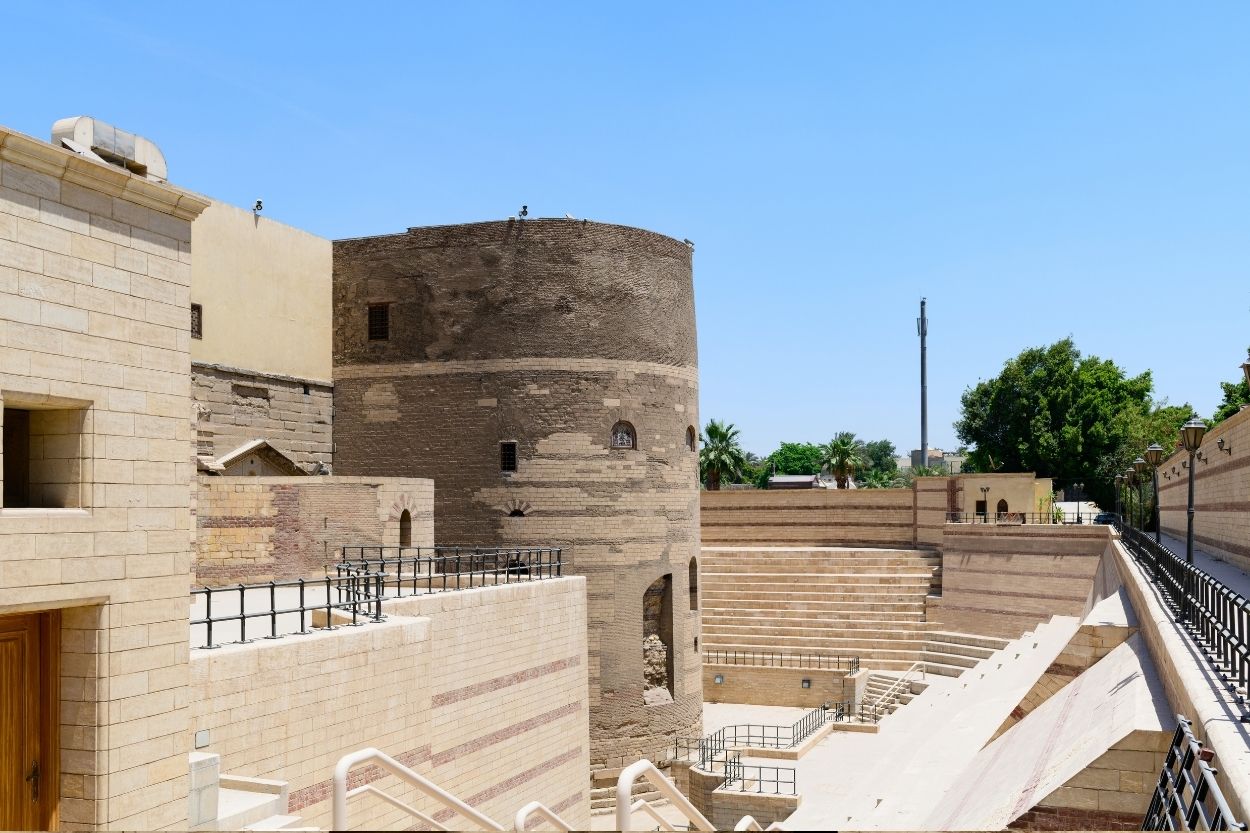
The fort once guarded the entrance to a canal linking the Nile to the Red Sea. Its walls once surrounded both sides of the canal entrance, with the waterway running through the middle. Little remains of the fort today, and the canal is long gone, but you can still check out the remains of one of the towers that once flanked the canal entrance.
Sections of the old walls can also be seen around the area, and several of Coptic Cairo’s churches were built directly on top of its ruins, including the Hanging Church, which sits above the fortress’s old south gate.
2 - Coptic Museum
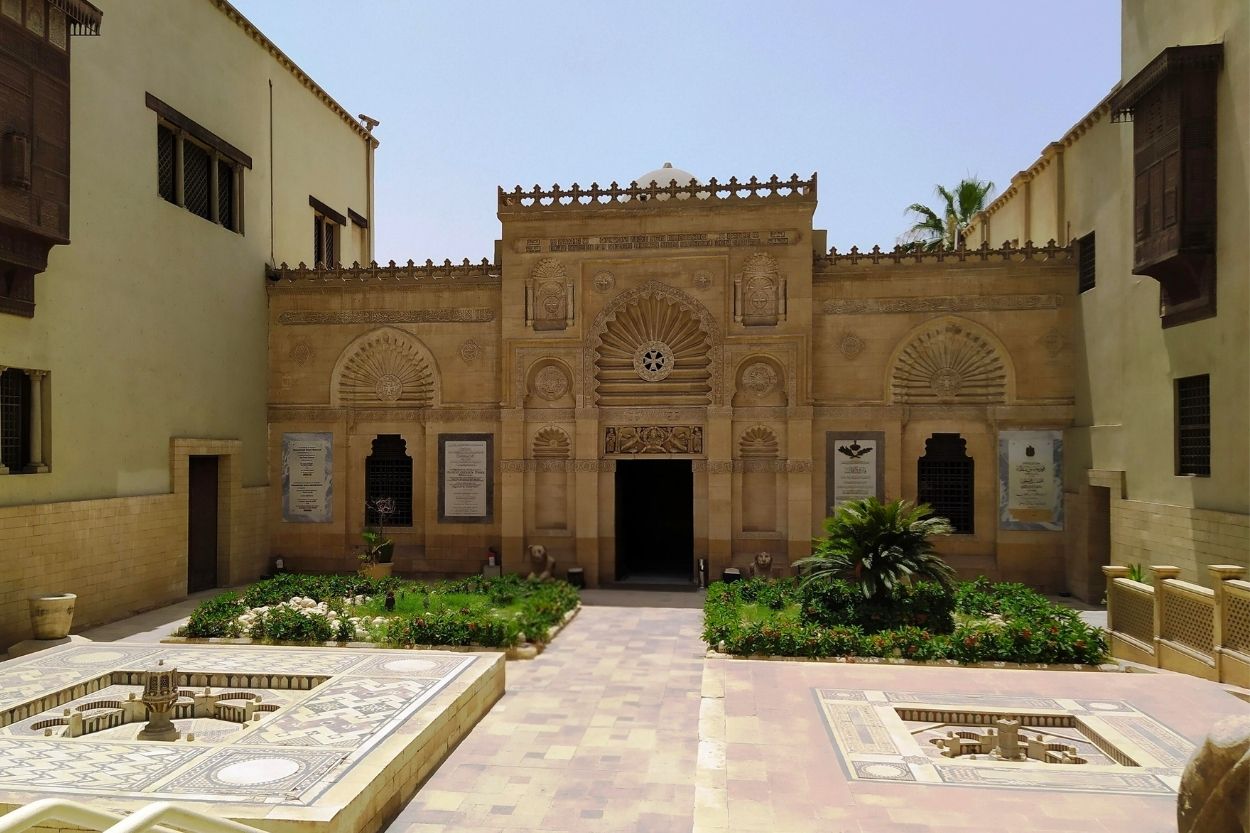
Perhaps the best place to start your adventure in Coptic Cairo is the Coptic Museum, home to the world’s largest collection of Coptic Christian artefacts.
Built on land donated by the Coptic Orthodox Church within the walls of Babylon Fortress, the museum opened to the public in 1910 and later came under state control in 1931, eventually absorbing Coptic treasures transferred from the Egyptian Museum.
Here you can see thousands of items spanning the 3rd to 13th centuries, including textiles, manuscripts, carved woodwork, and icons. It’s a great way to gain a better understanding of Coptic Cairo and its history before exploring the area.
3 - Hanging Church
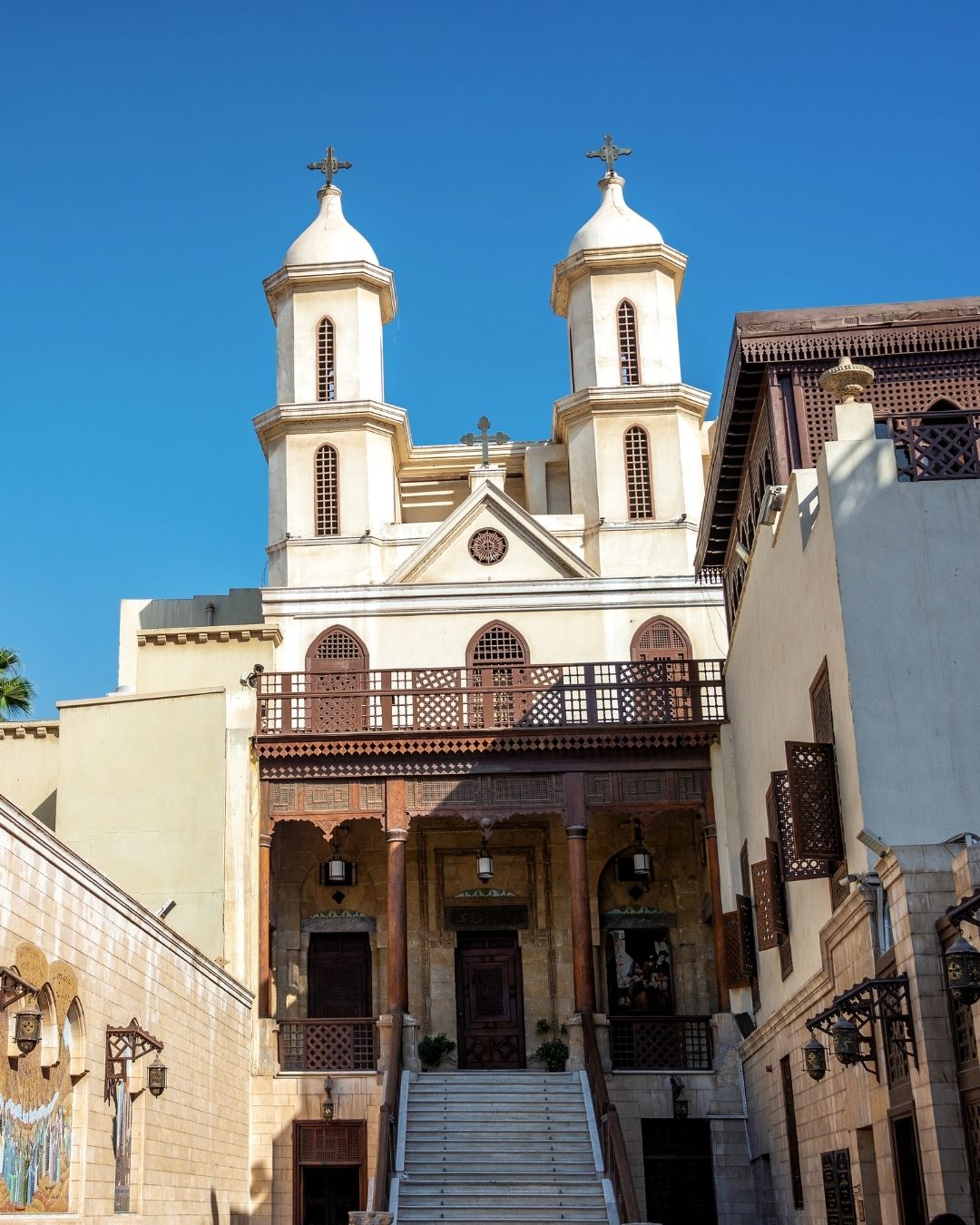
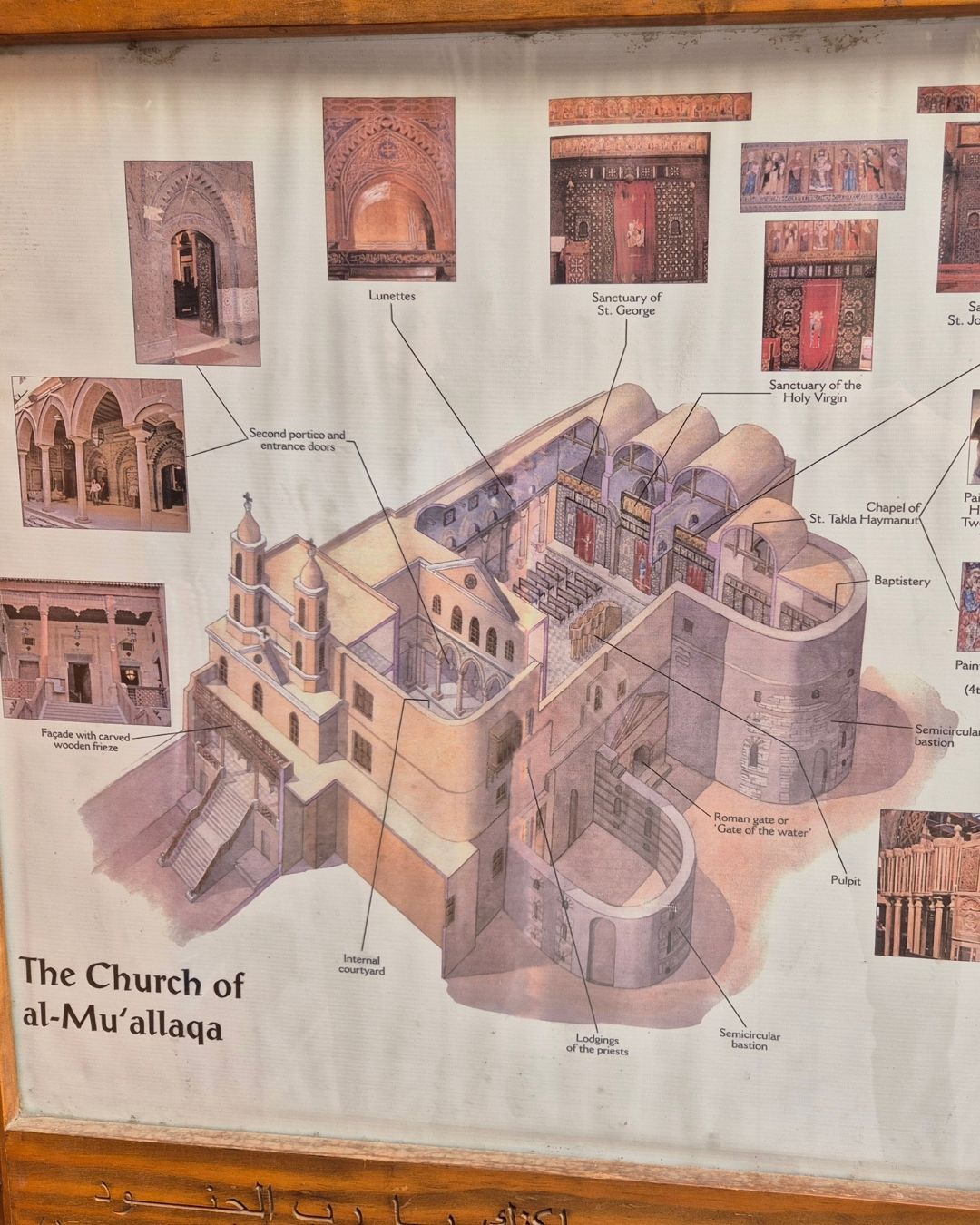
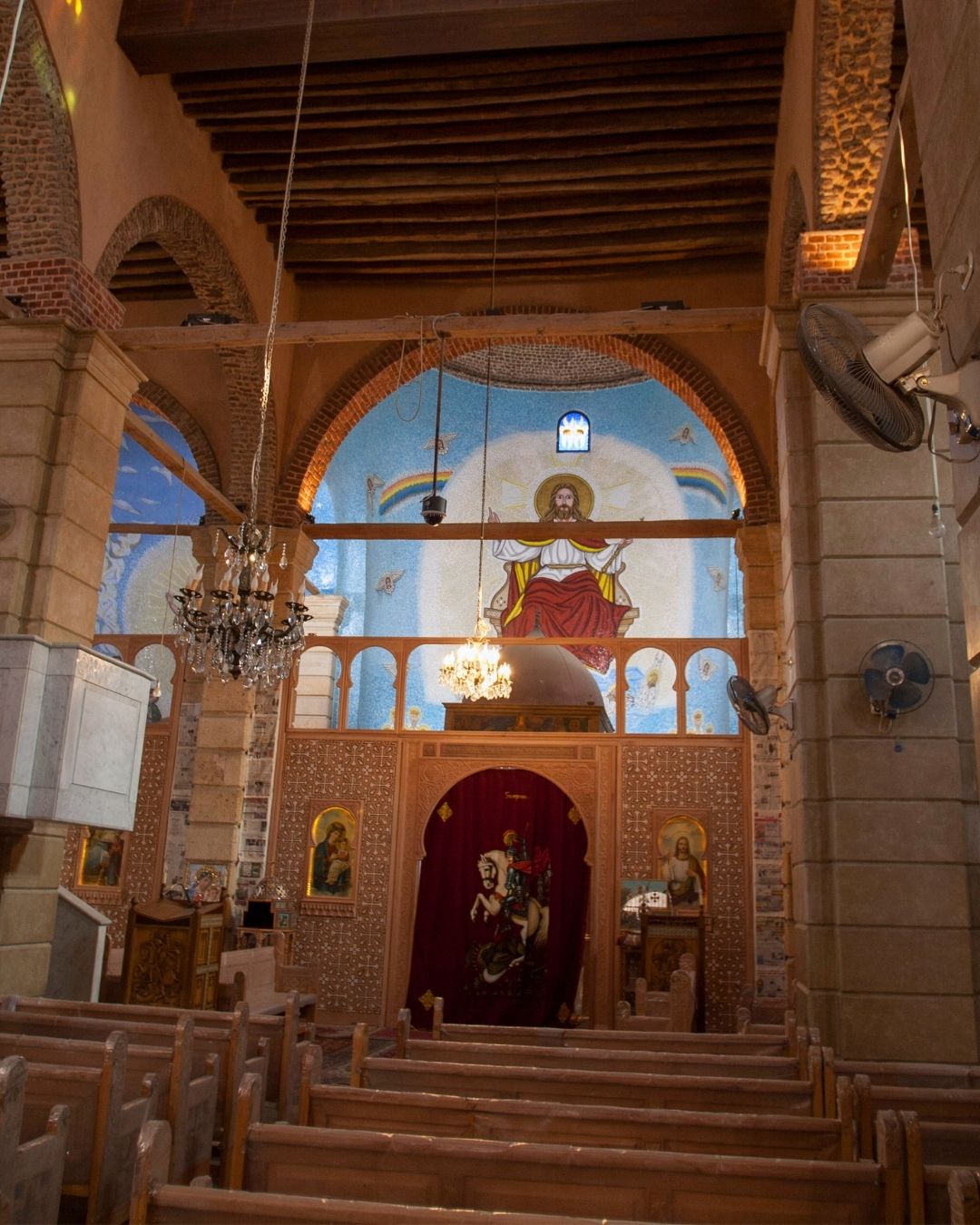
Coptic Cairo’s most iconic church takes its name from where it was built: directly above the old fortress’s south gate, giving the impression it is suspended in the air.
Its origins are somewhat debated. An earlier chapel may have stood here as far back as the 3rd or 4th century, but the church you see today is generally dated to around the 7th century, still making it one of the oldest churches in Egypt. It became the official seat of the Coptic Orthodox Pope in 1047, a position it held for centuries.
Here you can see the church’s wooden ceiling, supposedly shaped like the hull of Noah’s Ark, along with 100s of icons lining its walls. The 13 columns between the church’s aisles are said to represent the 12 disciples, with one noticeably darker to symbolize Judas.
4 - Church of St. George
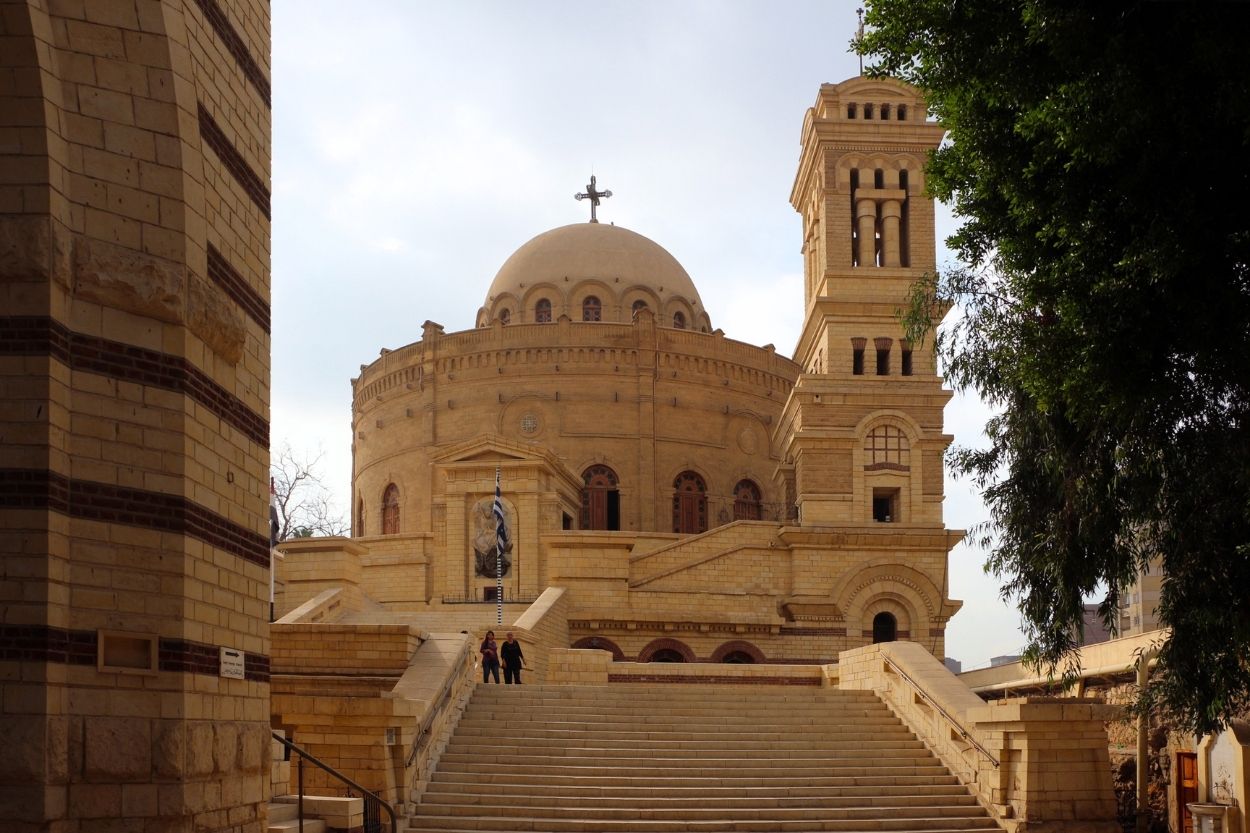
Just past the Coptic Museum stands St George’s Church. It owes its round shape to being built on the remains of a circular Roman tower from Babylon Fort (just like the ruined circular towers that still stand).
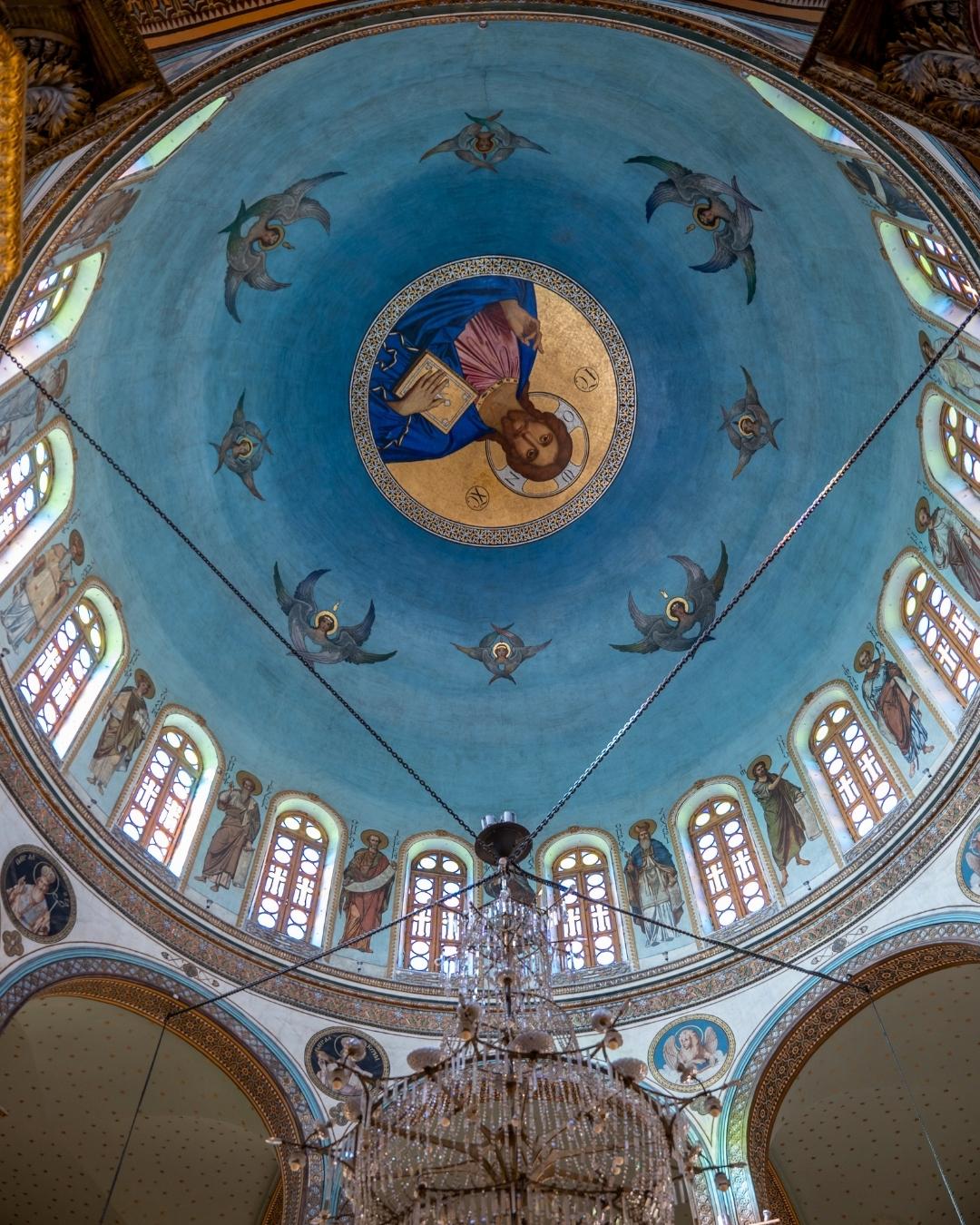
A church has stood on this site since at least the 10th century, though the building you see today only dates to 1909, rebuilt after a fire destroyed the original in 1904. Unlike its Coptic neighbors, St. George’s is Greek Orthodox, and has been since the 15th century, making it something of an outlier within Coptic Cairo.
Here you can climb the stairs to the church’s dome-topped central structure, and explore the stunning art and architecture inside.
5 - Saints Sergius & Bacchus Church
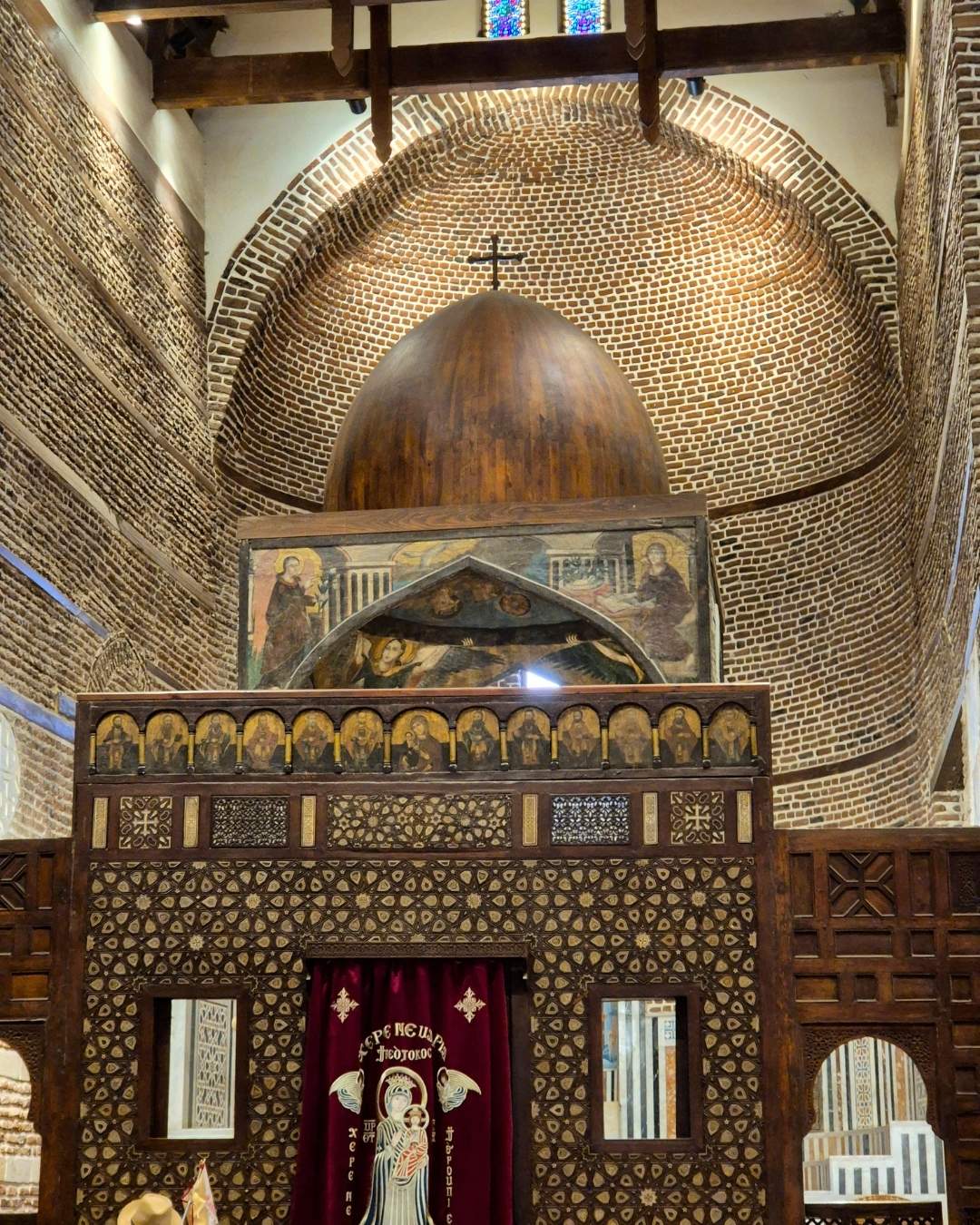
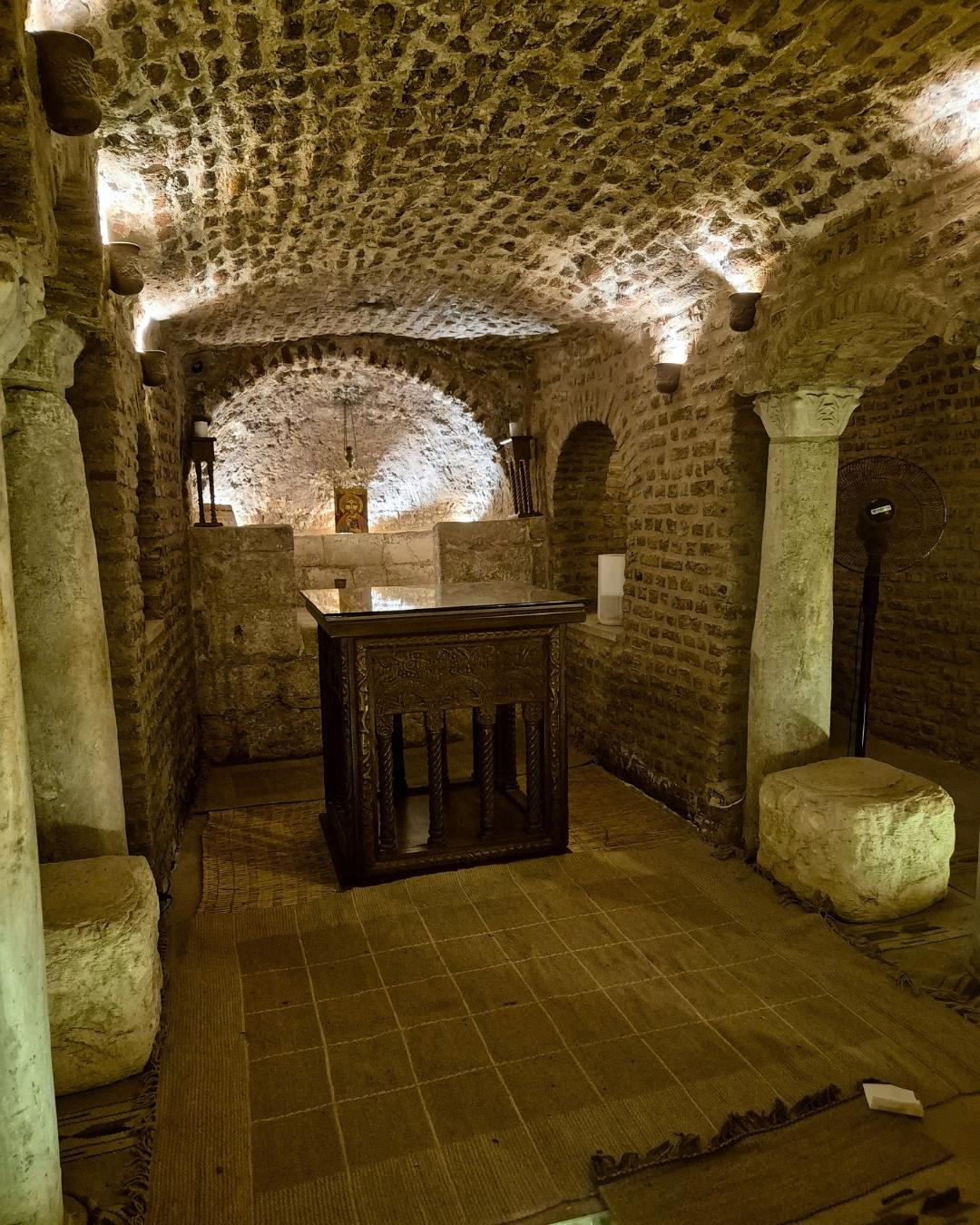
Known locally as Abu Serga, this is one of the oldest churches in Cairo. According to Coptic tradition, it was here, in the crypt beneath the altar, that the Holy Family was sheltered during the Flight Into Egypt.
The church takes its name from Sergius and Bacchus, 2 Roman soldiers martyred for secretly practicing Christianity. It was badly damaged by a fire that swept through Fustat around 750 AD, and has been restored many times since.
Here, you can not only explore the main church building, but also climb down the narrow stairs and check out the crypt that supposedly housed the Holy Family.
6 - Church of St. Barbara
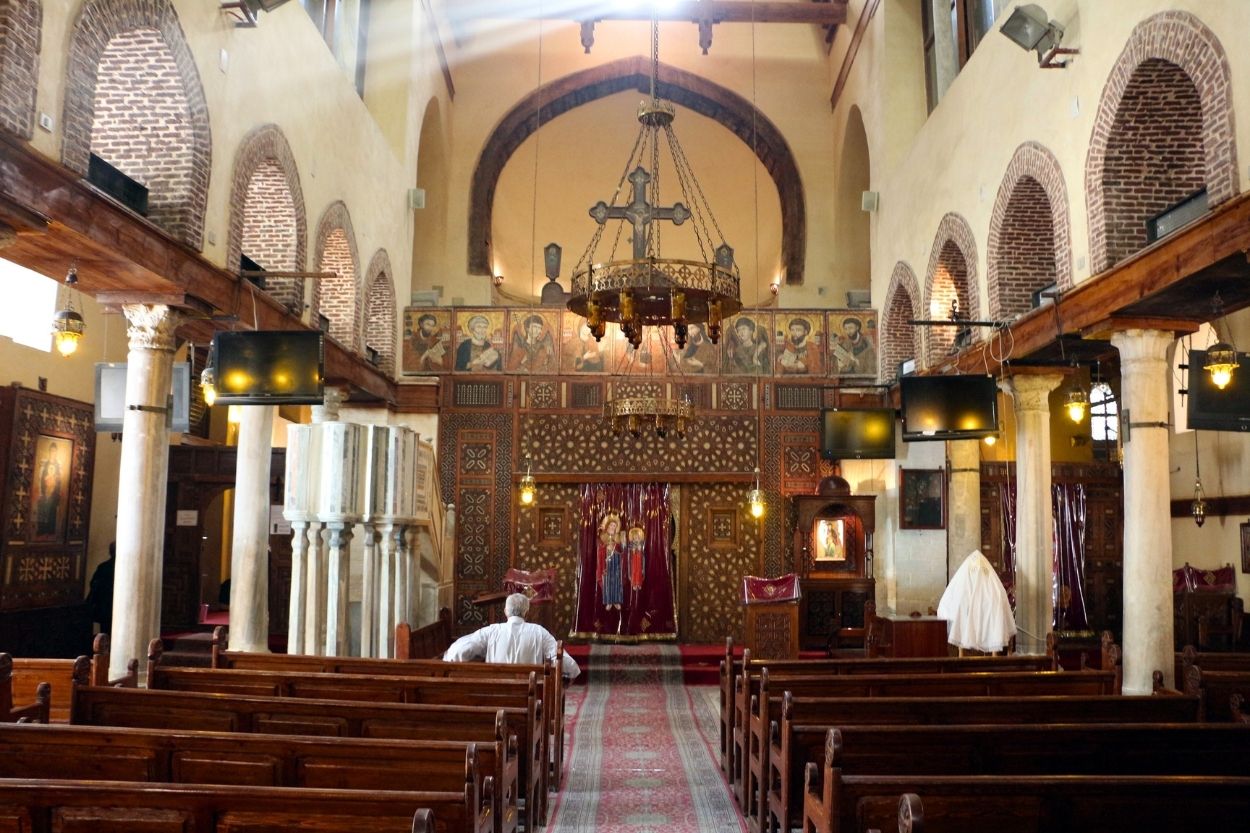
Another ancient church you can visit in Coptic Cairo is the Church of St. Barbara. Despite the name, it was originally built in the 5th or 6th century in honour of Saints Cyrus and John.
It was later, in the 11th century, when relics relating to St. Barbara, a Syrian Christian martyr, were moved here. The church suffered fire damage in the 12th century and underwent major renovation in the early 20th century.
Inside, the layout of the church is very similar to Saints Sergius and Bacchus Church, but what’s interesting to see is the room housing relics relating to St. Barbara, though many of them have since been moved to the nearby Coptic Museum.
7 - Ben Ezra Synagogue
Amongst the rich Christian heritage of Coptic Cairo, you’ll also find the oldest Jewish synagogue in Egypt.
Located just behind the Hanging Church, it sits on a site tradition says is where the pharaoh’s daughter found the infant Moses among the reeds of the Nile.
Its history is heavily debated. The building is widely said to have started as a Coptic church, sold to the Jewish community in 882 AD to help pay taxes demanded by the local ruler, though some historians now question whether that specific story actually belongs to a different, long-lost synagogue nearby.
Either way, it’s another part of Coptic Cairo’s deep religious heritage that you can check out for a small donation on entry.
Where is Coptic Cairo?
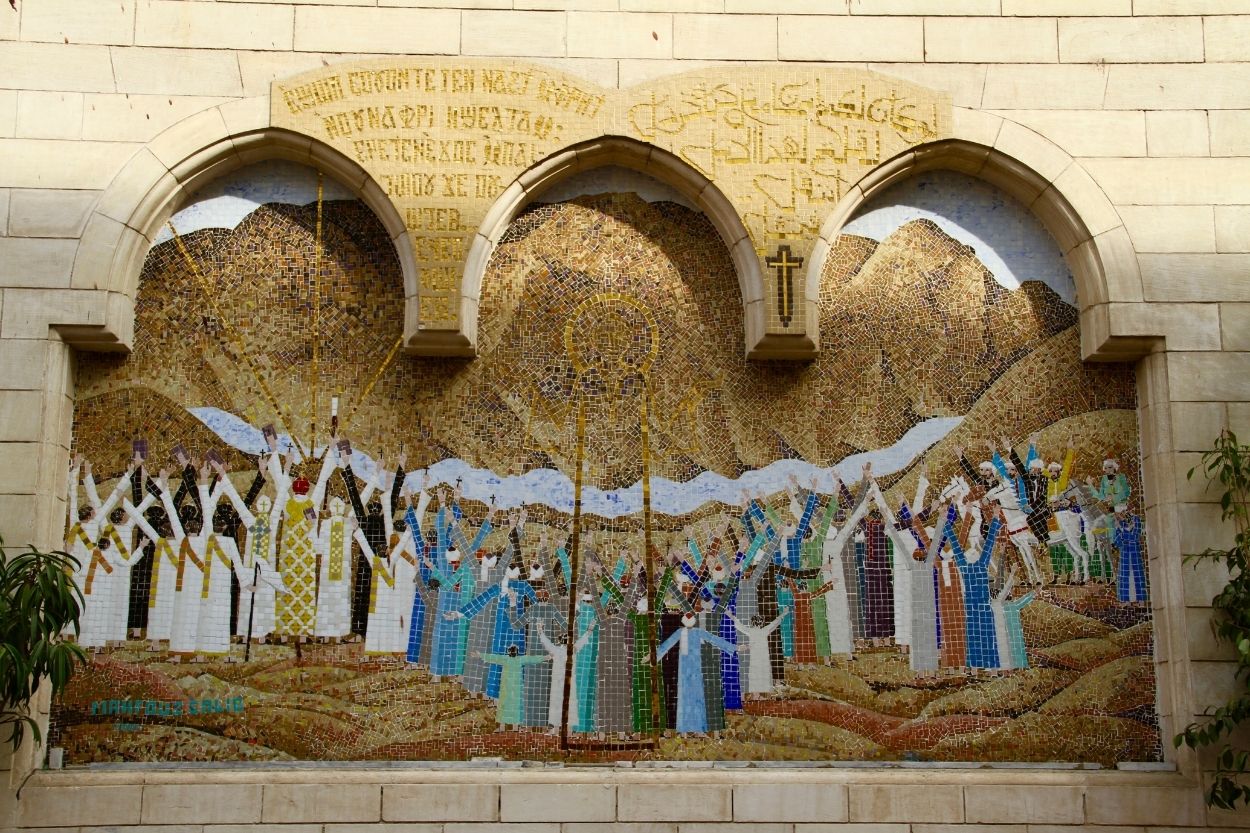
📍Coptic Cairo is located in south-central Cairo, on the east bank of the Nile in a wider area known as Old Cairo.
It’s a small walled enclave with its churches, synagogue, and museum are packed closely together along a network of narrow lanes within what was once the confines of Babylon Fort. It sat right beside Fustat, Egypt’s first Islamic capital built after the Arab conquest. All of which has since been swallowed up by the greater city of Cairo.
How to reach Coptic Cairo
The simplest way to reach Coptic Cairo, and generally get around Cairo, is by taxi or rideshare.
Taxis are common throughout downtown Cairo, and your hotel reception can usually call one for you. Just make sure you confirm the price with the driver upfront to avoid being ripped off on arrival.
Uber is also an easy option, since the price is fixed before you even get in the car. Though, it can sometimes be difficult to find a driver willing to accept the trip, and some will accept the ride before trying to make you pay a higher price in cash instead.
The metro is technically an option too, with Mar Girgis station sitting right beside Coptic Cairo. But as a foreigner, navigating the metro system might be more hassle than its worth.
Alternatively, you could avoid all the hassle and instead book a guided tour to Coptic Cairo. Tours generally cover your transport to and from, any tickets (like to the Coptic Museum) and a knowledgeable guide to teach you the history as they show you around.
Best Coptic Cairo Tours
I’ve done the research so you don’t have to. Here are the top Coptic Cairo tours depending on what you’re looking for…
⭐ Coptic Cairo + Cave Church of St. Simon – Best for exploring Cairo’s Coptic history.
⭐ Coptic Cairo + Cairo Citadel & Egyptian Museum – For for exploring a variety of top historical sites in Cairo.
Coptic Cairo FAQs
What is Coptic Cairo?
Coptic Cairo is a historic walled enclave in Old Cairo, home to some of Egypt’s oldest churches, a synagogue, and the Coptic Museum, all built in and around the ruins of the old Roman Babylon Fortress. It’s the historic heart of Egypt’s Christian community.
What does ‘Coptic’ mean?
The word comes from the Arabic “qubt”, itself derived from the Greek word for “Egyptian.” To the conquering Arabs of the 7th century, being Egyptian and Christian were essentially the same thing, and over time the word came to mean Egyptian Christian.
What's the difference between Coptic Cairo and Old Cairo?
Old Cairo is the broader historic district, which also includes the ruins of Fustat, the first Islamic capital. Coptic Cairo is a small, walled enclave within it, used as a stronghold for christianity in Egypt.
Do you need a ticket for Coptic Cairo?
Entry to the area itself is free, and most of the churches are free to enter too, though donations are encouraged. The only exception is the Coptic Museum, which requires a ticket.
Is Coptic Cairo worth visiting?
Coptic Cairo is worth visiting if you’re interested in exploring Egypt’s Christian history. Egypt is home to one of the oldest Christian communities in the world, and Coptic Cairo is the best place to learn more about it.
How long does it take to visit Coptic Cairo?
Most visitors need 2 to 4 hours to see the main sites. Give yourself half a day if you want to properly explore the sites at a reasonable pace and visit the museum.
Other historical sites in Cairo
Cairo is one of the most historic cities in the world, with many more historical sites for you to explore.
For more Egyptian medieval and early modern history, check out: 10 Best Historical Sites in Cairo (that aren’t the pyramids).
To explore the ‘sultans and Islam’ side of Egypt’s long history, you could visit Cairo Citadel, a massive fortress that was Egypt’s centre of power for over 700 years.
To explore the ancient history that likely brought you to Egypt, check out:
- Giza Plateau – Home of the Great Pyramid and the Sphinx, located on the outskirts of Cairo.
- The Grand Egyptian Museum and Egyptian Museum – The country’s 2 premiere museums, and the best place to see ancient Egyptian artefacts.
Or you could travel just outside of Cairo and visit the world’s oldest pyramids at:
- Saqqara Necropolis – Home to the world’s oldest pyramid.
- Dahshur – Home to the world’s first ‘true’ pyramid.
For more Egypt content, check out our Egypt hub page.