You likely already know about the ancient history near Cairo. It’s probably the main reason you’re visiting, with the Pyramids of Giza right on the city’s doorstep, and even older pyramids at Saqqara and Dahshur just beyond the outskirts.
But there’s a whole other side to Egypt’s history waiting for you. Rather than pyramids and mummies, this side is shaped by sultans and Islam, and there’s no better place to experience it than Cairo.
The city itself is nearly 1,400 years old, with some parts going back even further. It’s long been among the most important cities in the Islamic world, and all that history is alive and well in Egypt’s chaotic mega-city, with countless forts, mosques, palaces and more.
If this side of Cairo’s history interests you, this list is for you, with the city’s top 10 historical sites all from after the time of the pharaohs.
Contents
Top 10 Historical Sites To Visit In Cairo
1 | Cairo Citadel
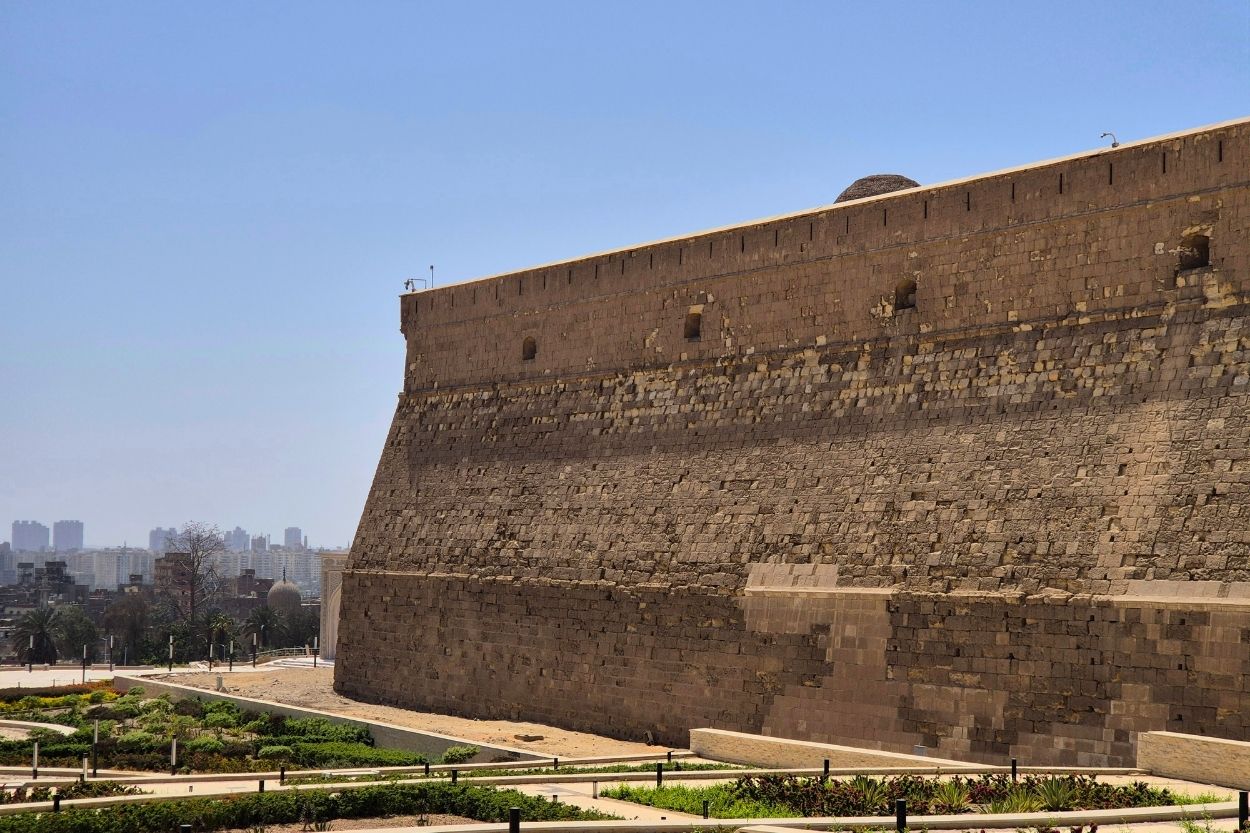
For nearly 700 years, Cairo Citadel was the seat of power in Egypt. It was commissioned in 1176 by Ayyubid ruler Salah al-Din in response to the European crusader threat in the Near East, and subsequently used by the Mamluk and Ottoman dynasties until the construction of Abdeen Palace in 1874.
Today, it’s the best place to explore Cairo’s medieval and early modern history. Inside this UNESCO-listed fort, you can visit several of the city’s most stunning mosques, stop by a few museums, explore royal palaces and enjoy panoramic views of the city (and spot the pyramids in the distance).
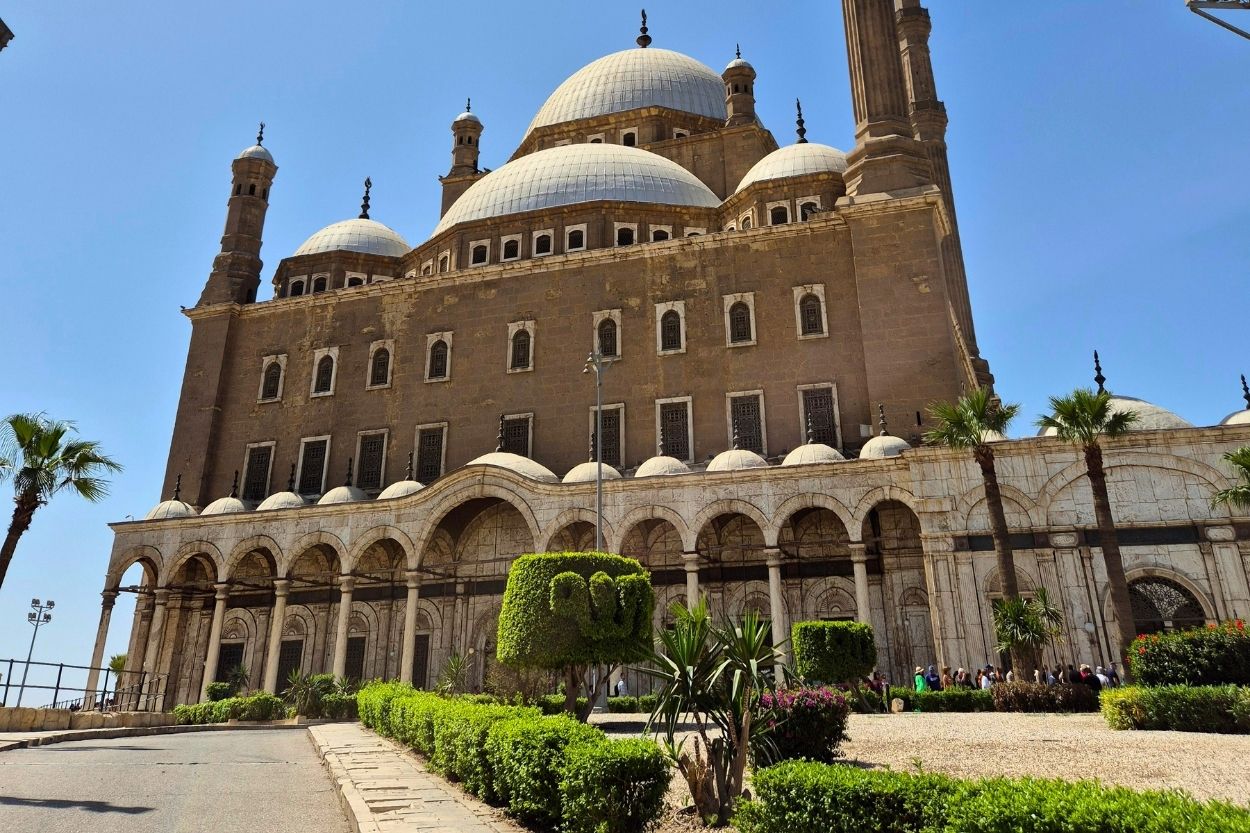
The Citadel is located on a hilltop in the southeastern part of central Cairo. A single entrance fee gets you into the mosques, grounds, and most of the museums, though the Egyptian Military Museum requires an additional ticket.
Cairo Citadel is highly recommended if you’re interested in learning a more modern side to Egypt’s history.
>> Read More: Complete Guide to Cairo Citadel
2 | Coptic Cairo
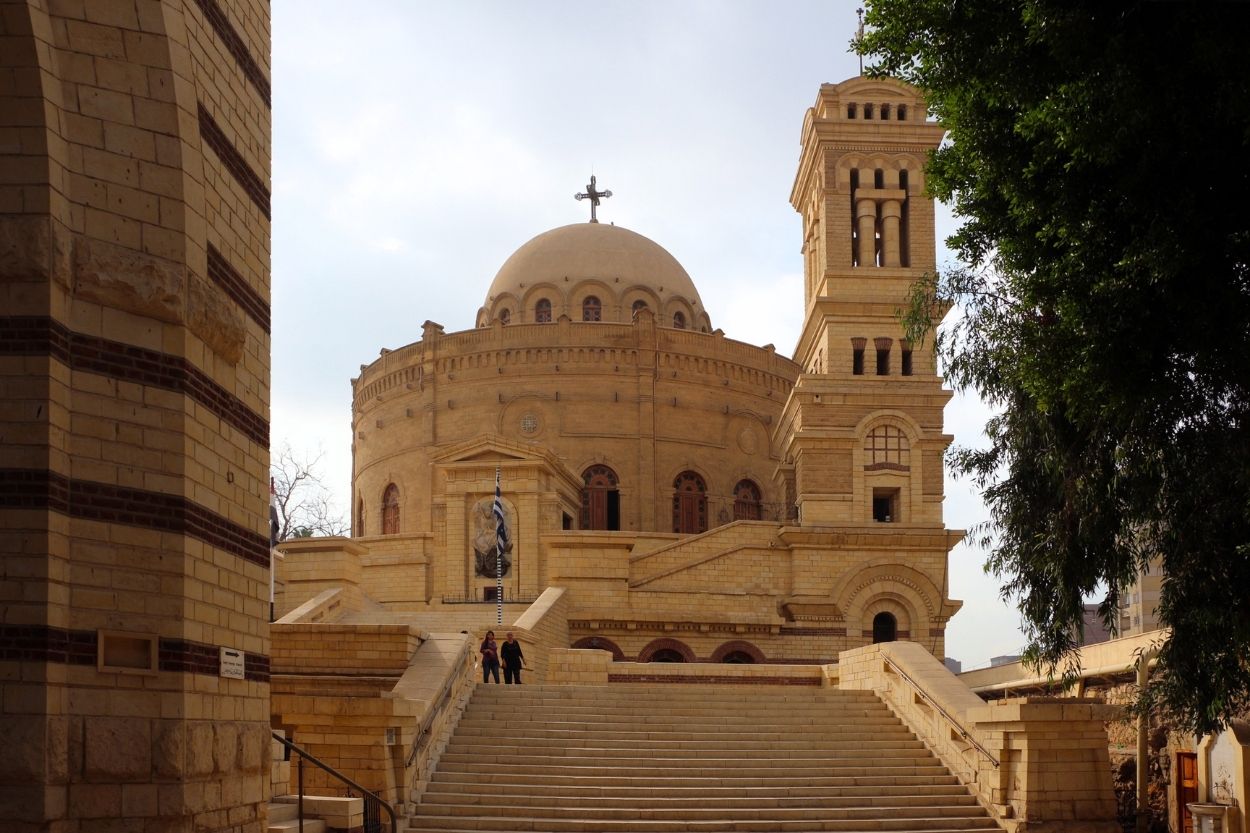
Being such a historic Muslim nation, it’s easy to forget that Egypt was home to one of the earliest Christian communities in the world, and there’s no better place to explore this than at Coptic Cairo.
Go back 2000 years, and this walled enclave in what is now south-central Cairo was a small, fortified Roman settlement at the mouth of a canal that connected the Nile with the Red Sea. According to Christian tradition, it was here that the Holy Family took refuge during the Flight to Egypt with infant Jesus.
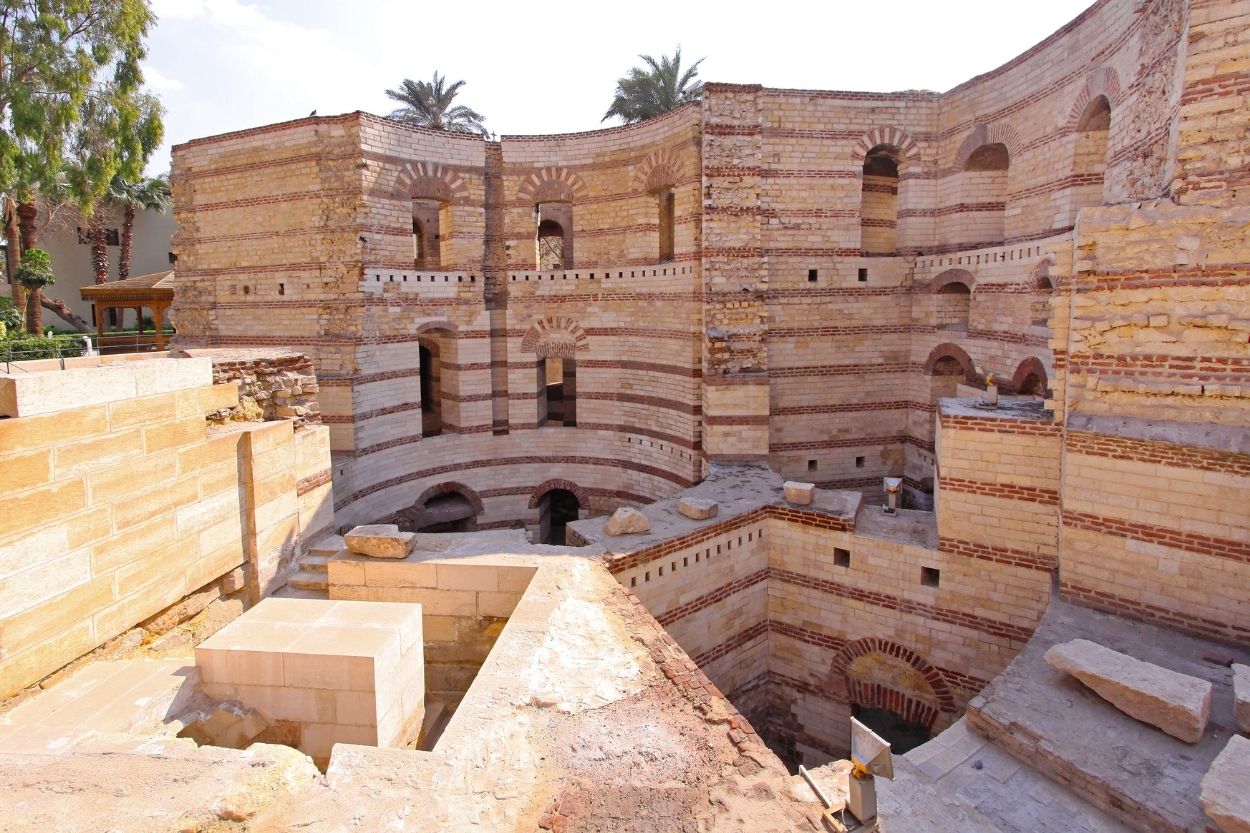
After the Islamic conquest, it became a stronghold for the Christian minority, who built several churches within the ruins of the Roman fort. Today, it’s the best place to experience Egypt’s Christian heritage.
Inside its walls, you can visit several of the country’s oldest churches and explore the Coptic Museum, home to the world’s largest collection of Coptic Christian art.
>> Read More: Complete Travel Guide to Coptic Cairo
3 | Mosques
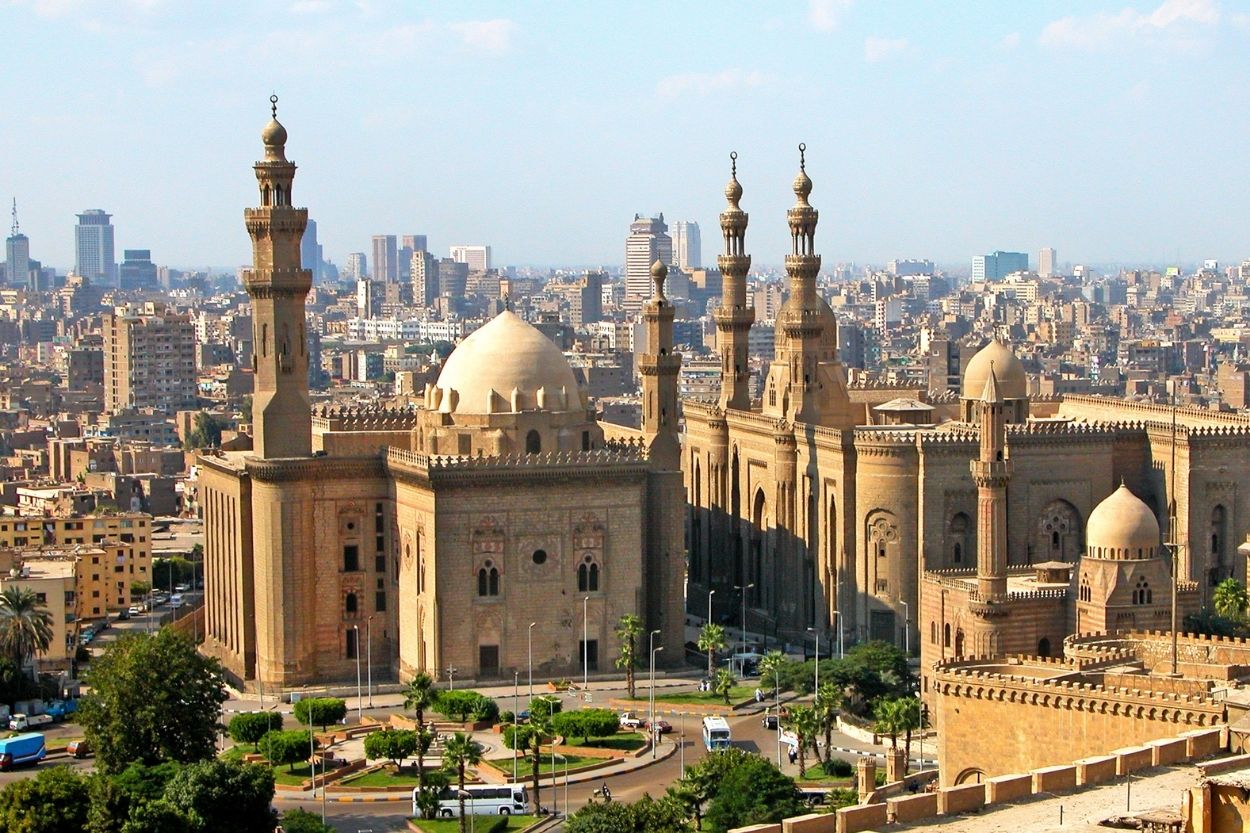
Ever since the Arab conquest in 641 CE, Islam has played an integral role in Egypt’s history.
From the Ayyubids to the Mamluks and later the Ottomans, Egypt’s Islamic dynasties competed to build ever grander mosques, madrasas, and mausoleums, leading it to become one of the most important centres for Islam outside of Arabia and Cairo to become known as the ‘city of a thousand minarets’.
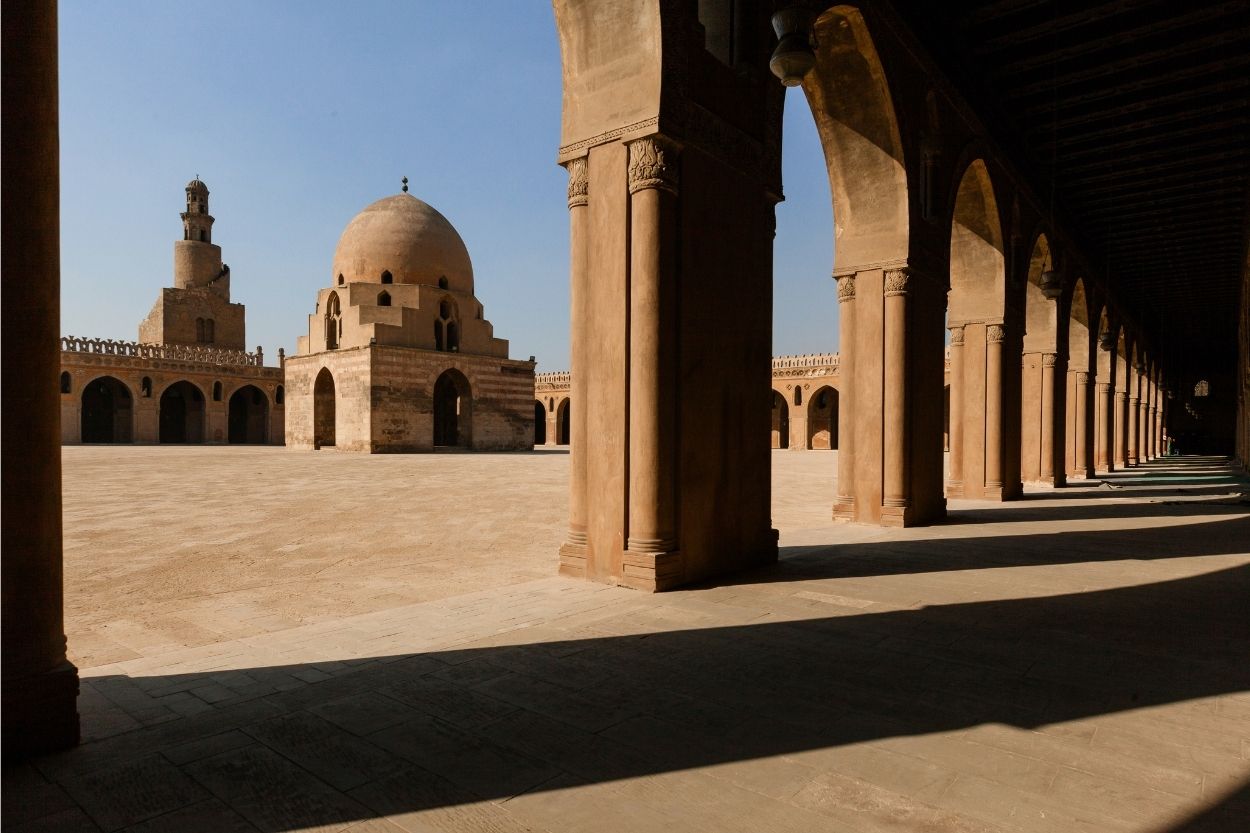
If you’re interested in exploring Islamic history and architecture, then you’ll definitely want to visit some mosques while you’re here.
Some of the best mosques to visit in Cairo include:
- 📍Al-Azhar Mosque
- 📍Ibn Tulun Mosque
- 📍Amr ibn al-As Mosque
- 📍Sultan Hassan Mosque
- 📍Al-Rifa’i Mosque
- 📍Al-Hakim Mosque
Mosques are generally free to enter, but donations are encouraged. Before entering, you’ll be expected to cover your shoulders and knees and remove footwear, so best to dress accordingly before visiting.
4 | Khan el-Khalili
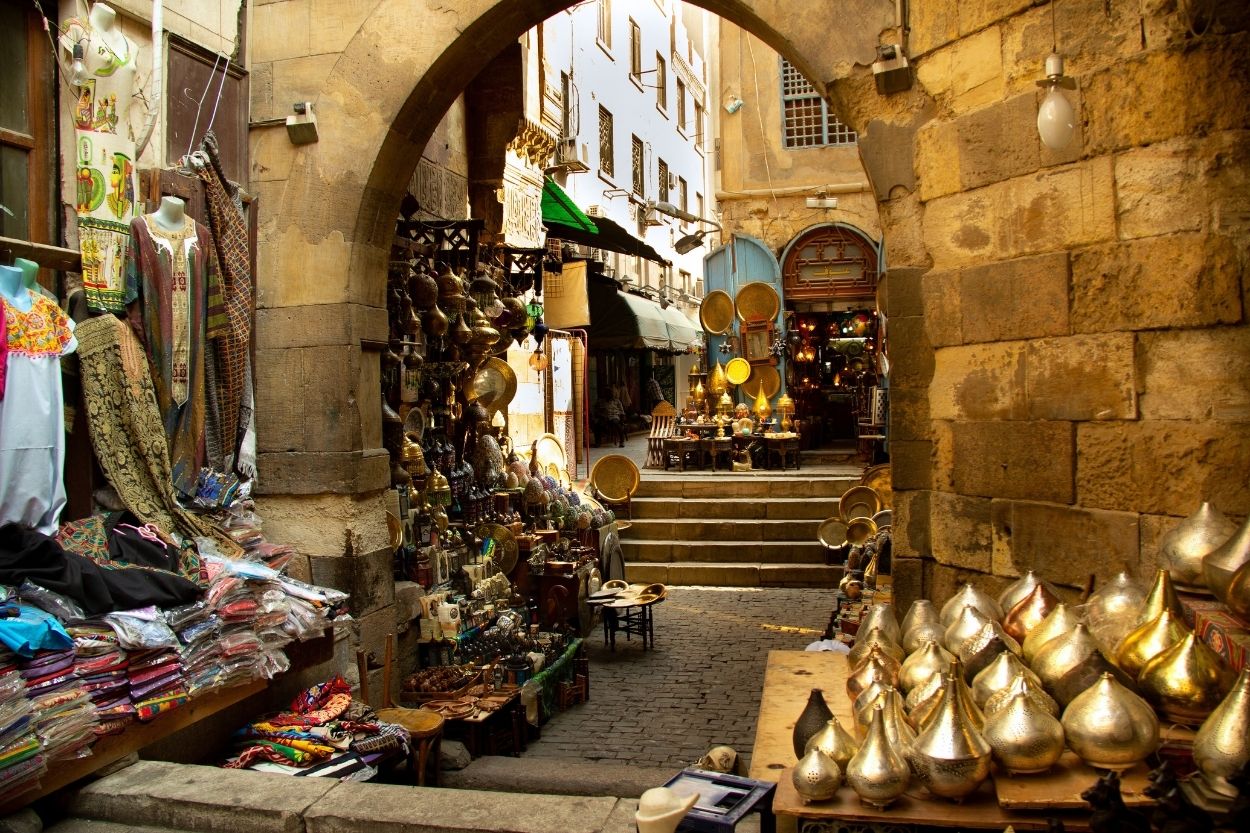
📍📍Khan el-Khalili began as a caravanserai in 1382, a fortified inn where traveling merchants could rest, trade, and safely store their goods. Under the Mamluks and later the Ottomans, that single caravanserai grew into a sprawling regional trading hub, drawing merchants from across Africa, Asia, and Europe.
Over 640 years later and it’s still going, now one of the oldest continuously operating bazaars in the world.
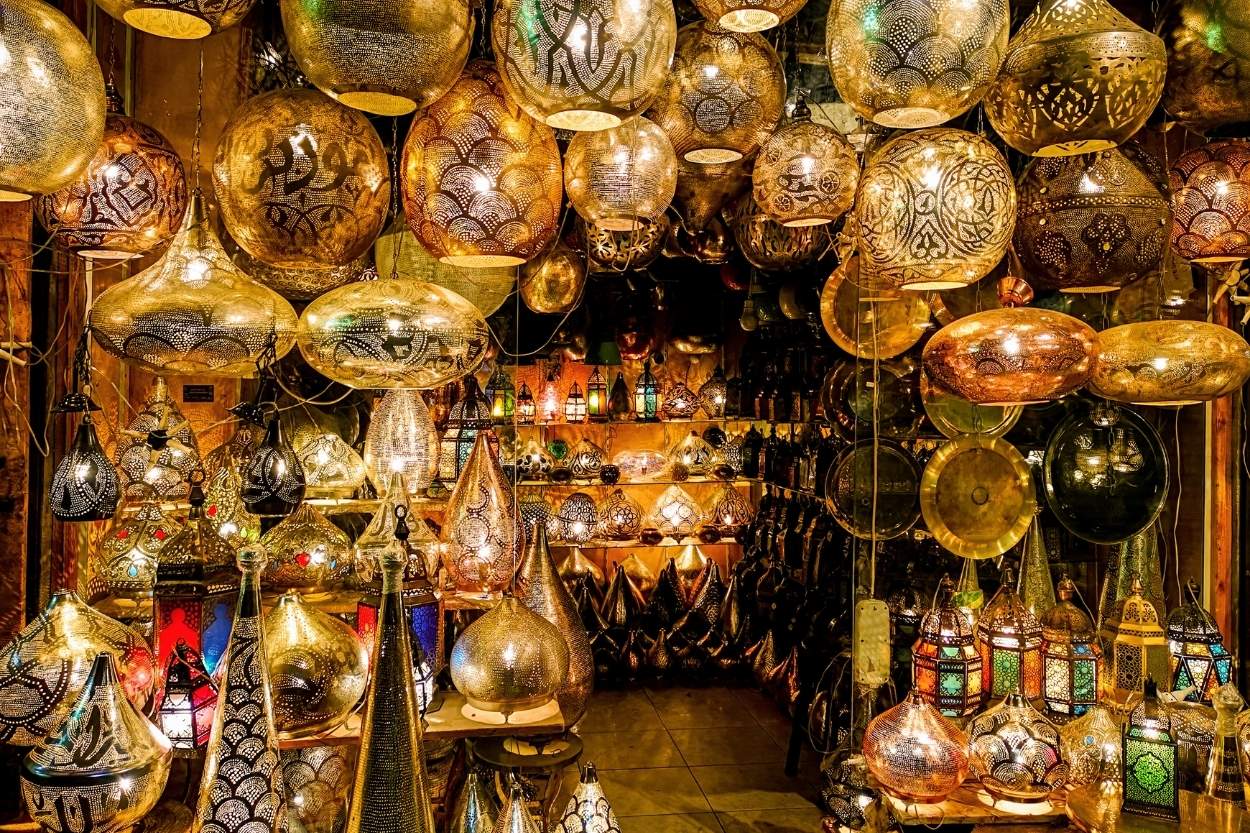
Here you can wander its maze of narrow medieval alleyways and find gold and silver jewelry, spices, perfumes, handcrafted copperware, alongside the souvenir stalls you’d expect in any tourist market today.
Even if you don’t plan on shopping, visiting Khan el-Khalili is a great way to explore the commercial side to Cairo’s history. Just arrive ready to embrace chaos, and be prepared to haggle!
5 | The Old Walls
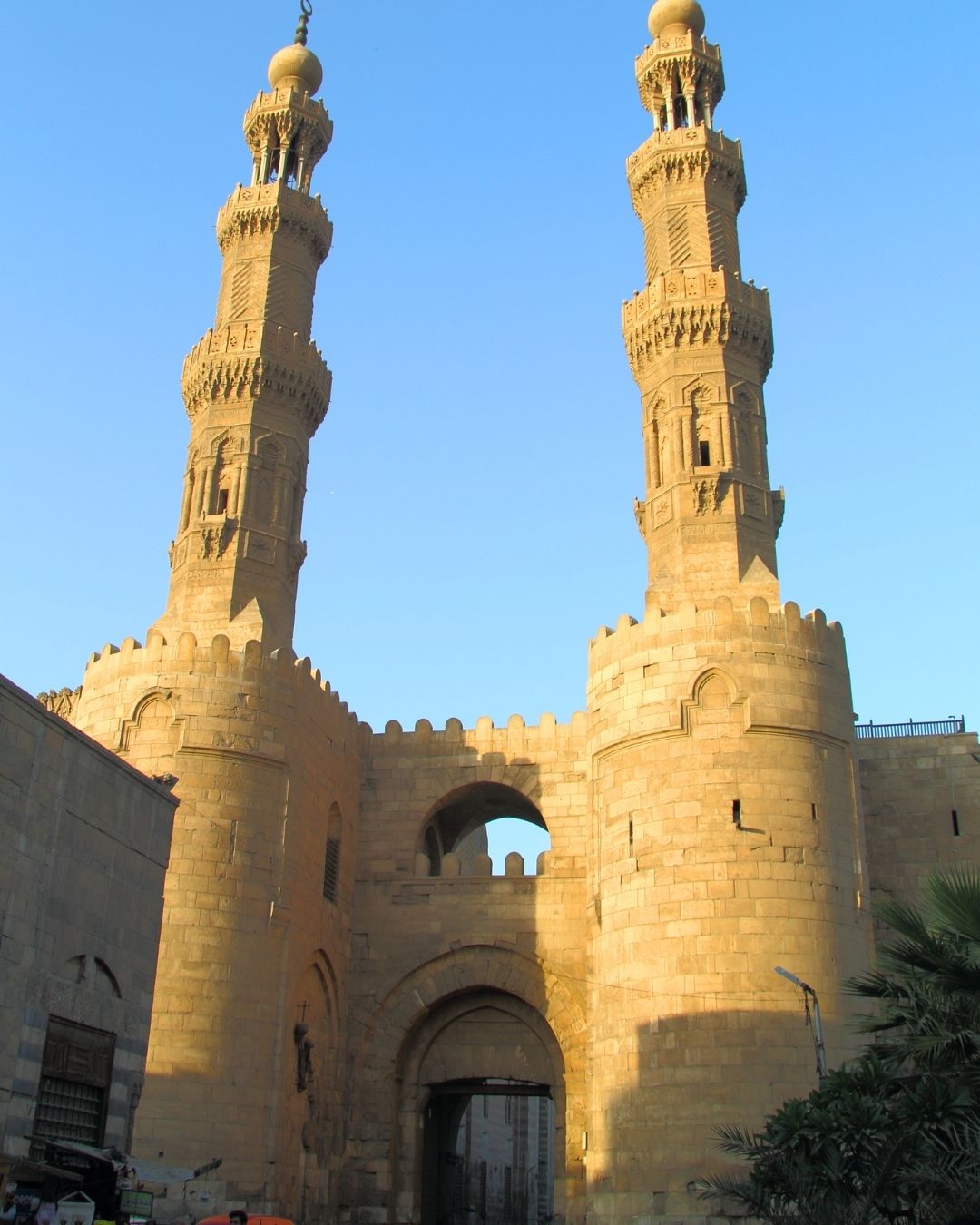
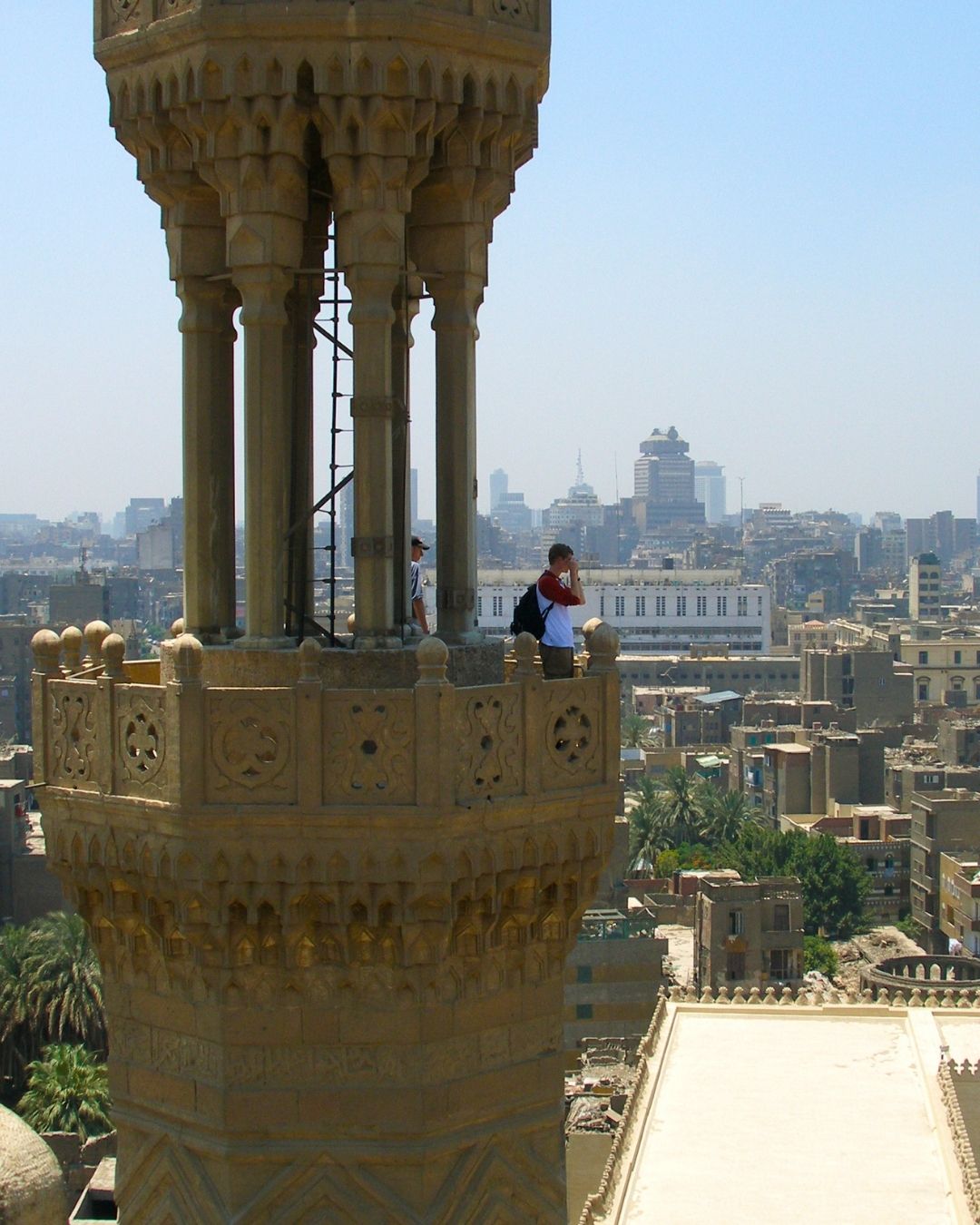
In 969 CE, the Fatimids built mudbrick walls around their newly founded city of Cairo, marking its original boundaries. These were rebuilt in stone about a century later, making Cairo one of the most defensible cities in the Middle East. While most of the wall has long since been demolished, with the modern city built over it, a handful of gatehouses still stand.
The best place to find these old gatehouses is along historic Al-Muizz Street. At the south end of the street you’ll find 📍Bab Zuweila, with its 2 minaret towers.
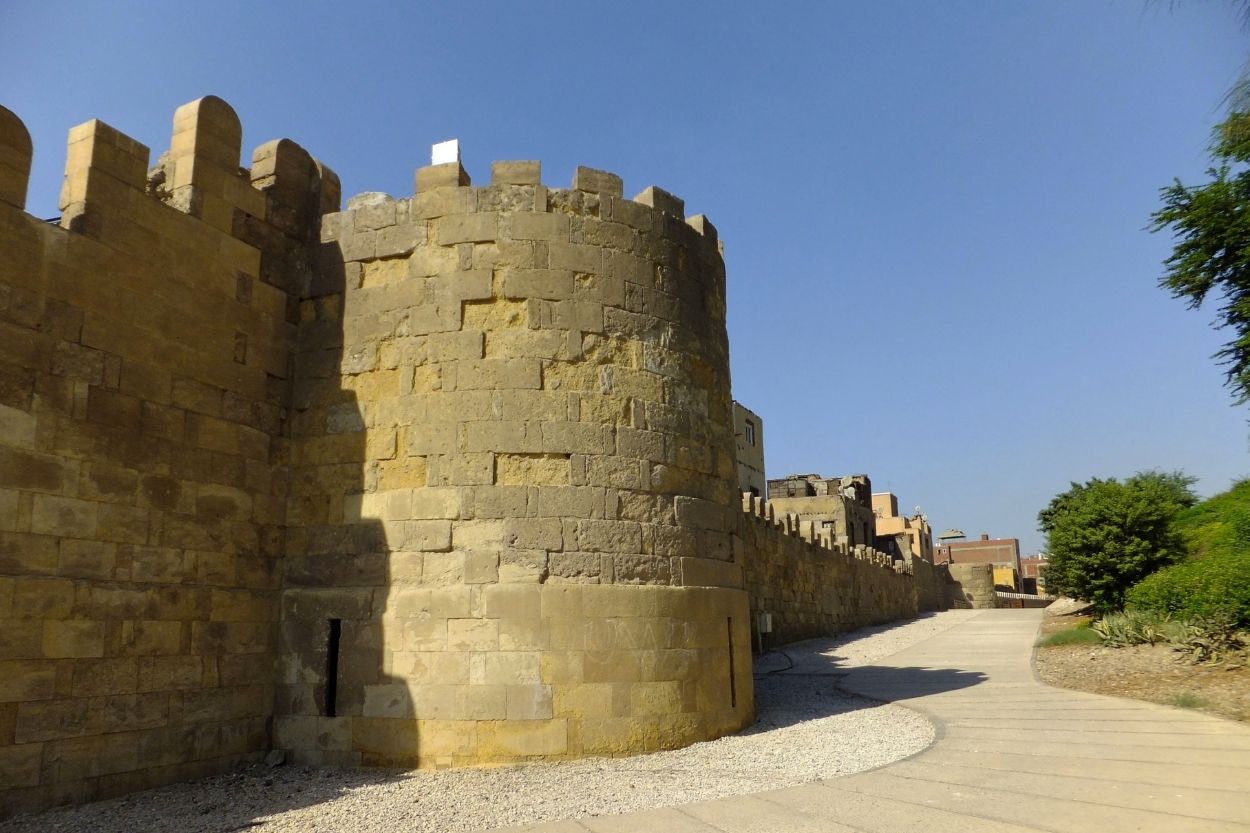
At the northern end of Al-Muizz Street there’s 📍Bab al-Futuh, another well preserved gatehouse. Connected to it is a small section of the old wall that the gatehouse was once a part of. Follow this wall east, just to the other side of the Al-Hakim Mosque, and you’ll find another gatehouse: 📍Bab al-Nasr.
All 3 of these gatehouses are open for visitors, for a small fee. Inside you can explore their chambers and climb the stairs up to the ramparts. At Bab Zuweila, you can even climb the winding stairs to the top of the minarets for sweeping views of the city.
6 | City of the Dead
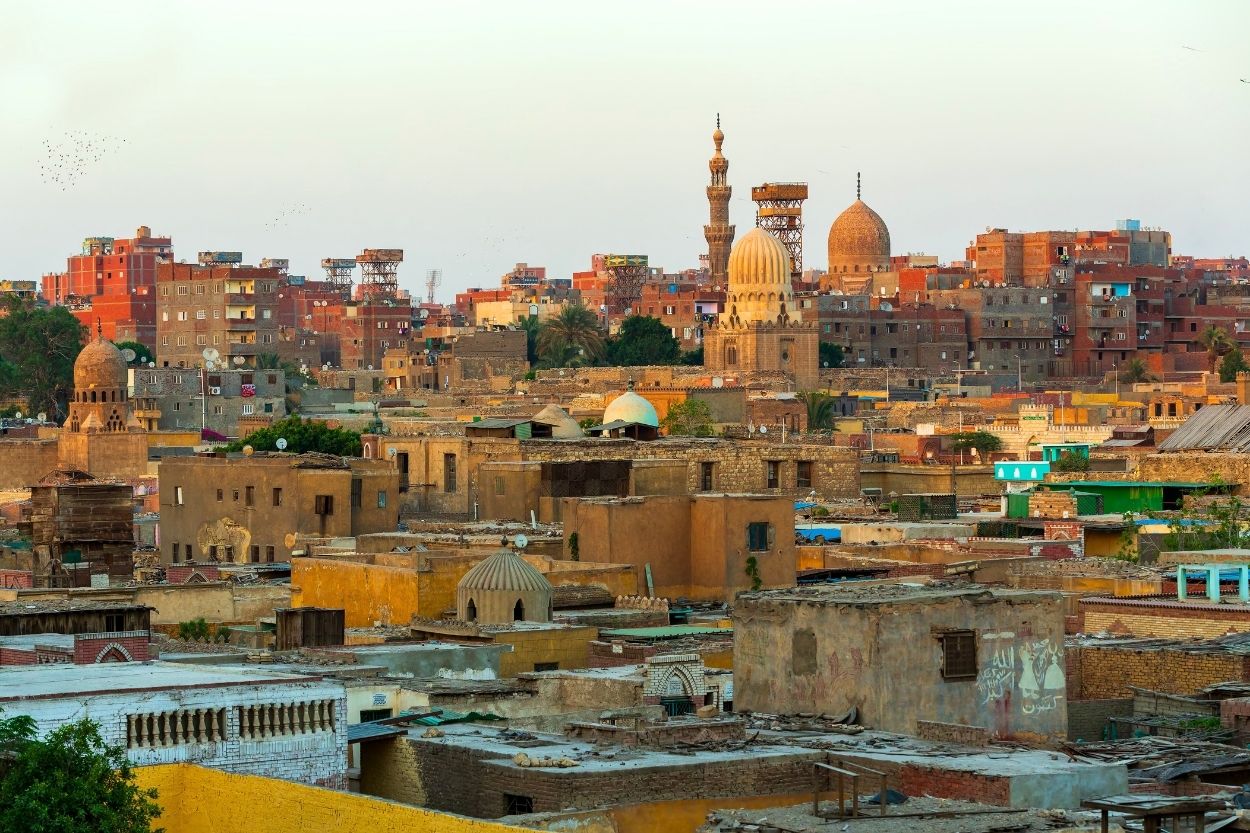
Visiting a cemetery may not sound like an appealing travel experience, but hear me out…
After the founding of Fustat, Egypt’s first Islamic capital, in 642 CE, a plot of land was allocated as the new city’s official cemetery, where common folk were buried in modest graves alongside the elite in their elaborate mausoleums.
It kept growing over the following centuries, and along the way people started living in it, likely beginning with the gravediggers, craftsmen, and custodians who worked there. As Cairo’s population boomed through the 20th century and housing grew scarce, more people moved in, turning the cemetery into a thriving and permanent community, complete with shops, cafes and schools.
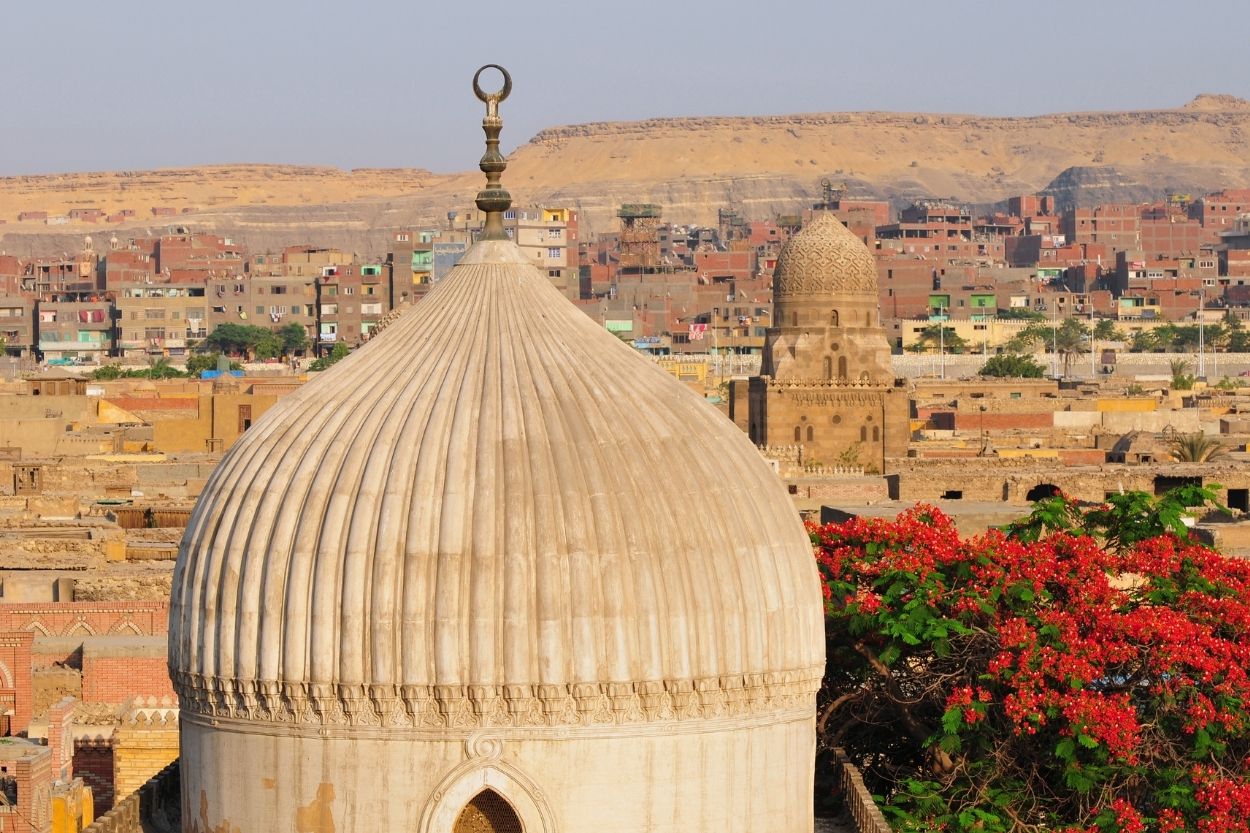
Today, the City of the Dead, which is located near Cairo Citadel, is one of the city’s most unique historical attractions, offering a chance to explore Islamic architecture and a unique historic community.
There are two separate areas that make up this vast necropolis: the older 📍Southern Cemetery, where you can visit the Mausoleum of Imam al-Shafi’i, and the elaborate mausoleum of Muhammad Ali. And the Mamluk-era 📍Northern Cemetery, centred on the domed complex of Sultan Qaitbay.
The 2 parts cover a wide area, and it can be difficult to know where to go to find the top sights, which is why I strongly recommend visiting the City of the Dead on a guided tour.
7 | Museums
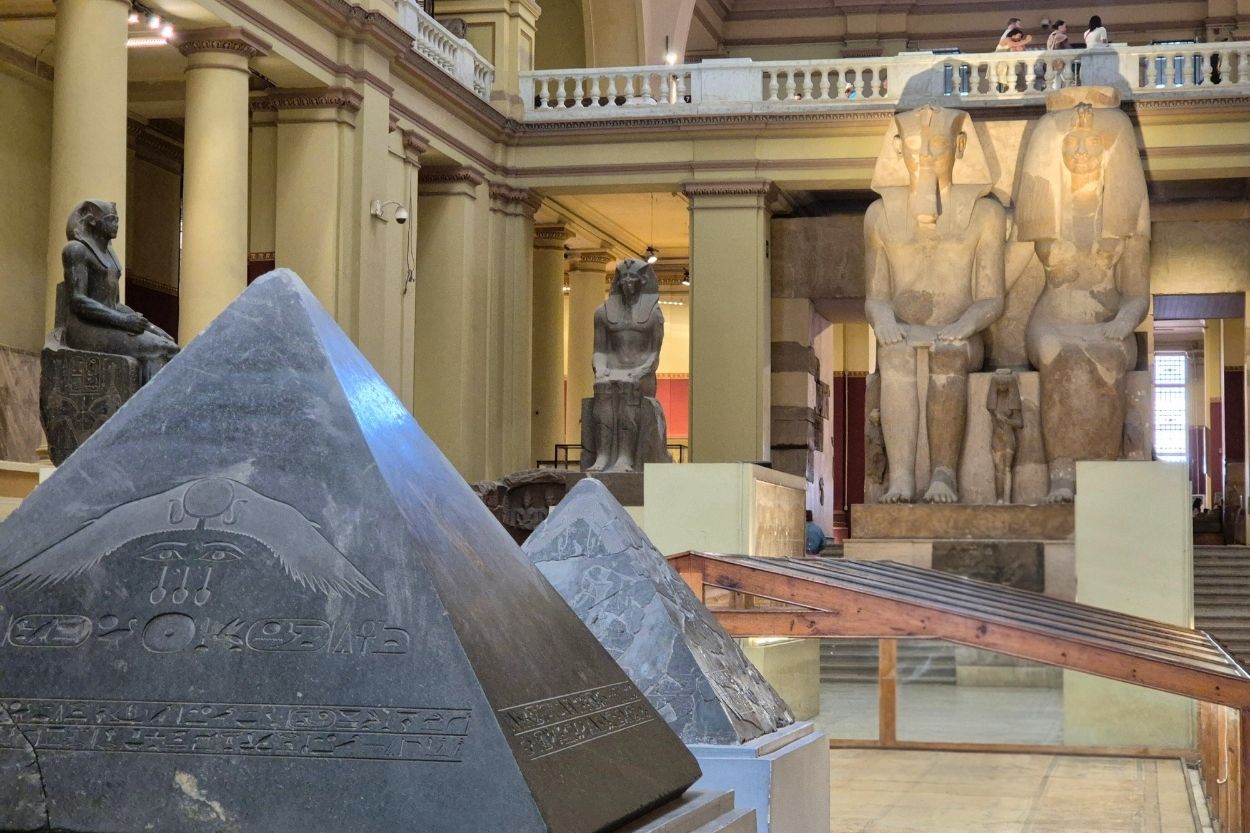
When travelling to such a historic country as Egypt, you’re probably interested in visiting a museum or two, and the best in the country are found right here in Cairo.
Firstly, there are Egypt’s two biggest and best museums, both dedicated to ancient Egyptian civilization. The brand-new 📍Grand Egyptian Museum, which opened in 2025, houses the world’s largest collection of ancient Egyptian artefacts.
In downtown Cairo at Tahrir Square, there’s the older version, officially named the 📍Museum of Egyptian Antiquities (though commonly just called the Egyptian Museum), which remains open despite the new one.
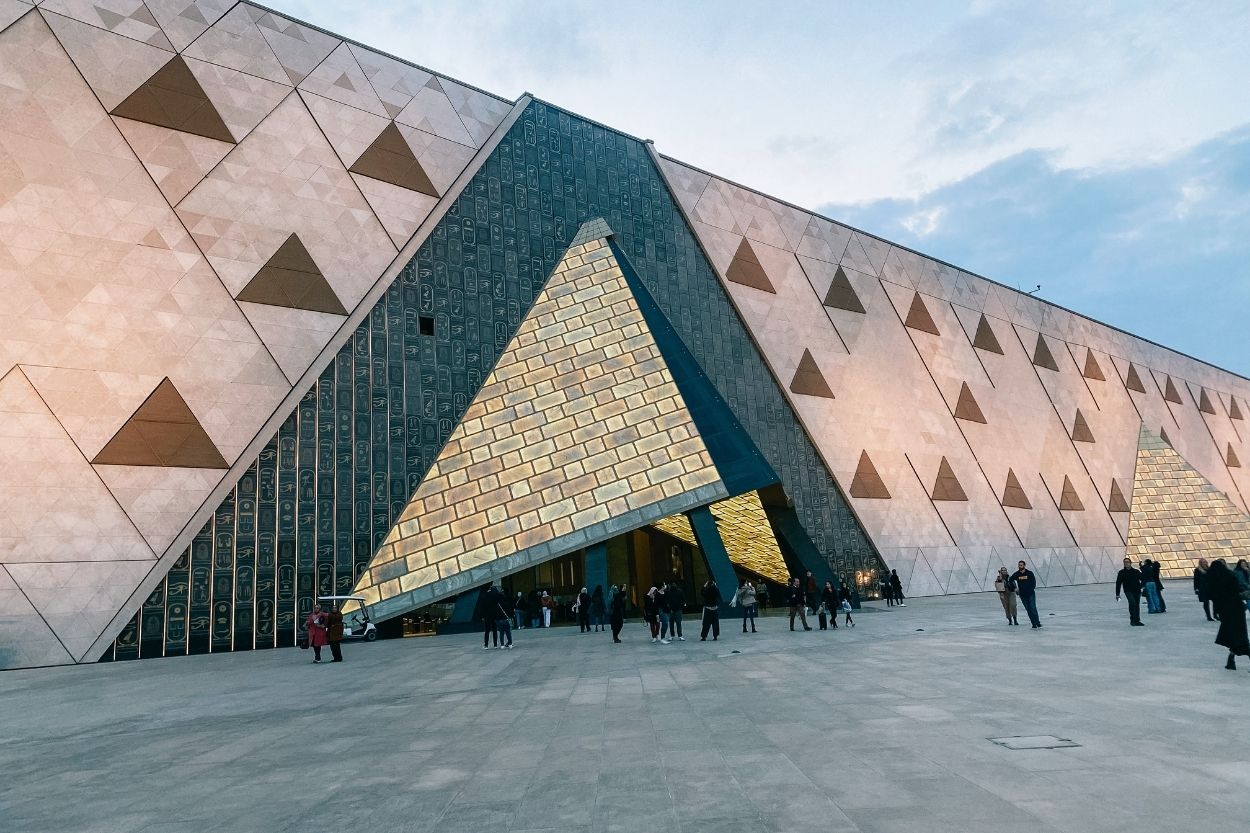
To dive deeper into Egypt’s Islamic history, there’s the 📍Museum of Islamic Art, or to explore its modern history, you have places like the 📍Military Museum in Cairo Citadel, or the 📍Manial Palace Museum.
8 | Sultan Qalawun Complex
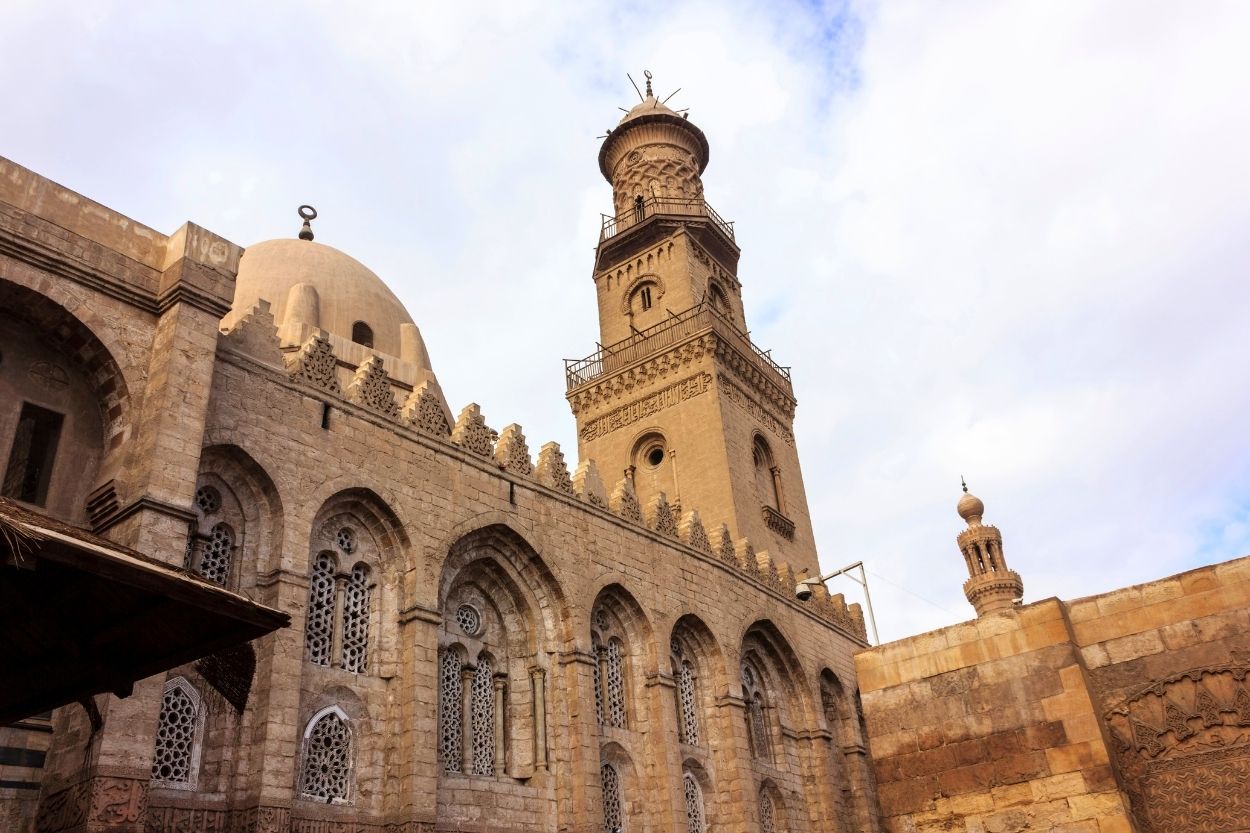
During the Mamluk era, it was typical for a sultan to build a funerary complex, a place not only to be honoured in death, but remembered through public charity.
This is one of the most significant of these complexes to survive from that era: the funerary complex of Sultan al-Mansur Qalawun, a Mamluk sultan who rose from slave-soldier to ruler of Egypt in 1279.
Built in 1285, the 📍Qalawan Complex comprises a madrasa (an Islamic religious school), a mausoleum, a mosque, and a hospital, all connected within the same building via a single internal corridor. Together, they served as an important community space, providing healthcare, education, and worship for the people of medieval Cairo.
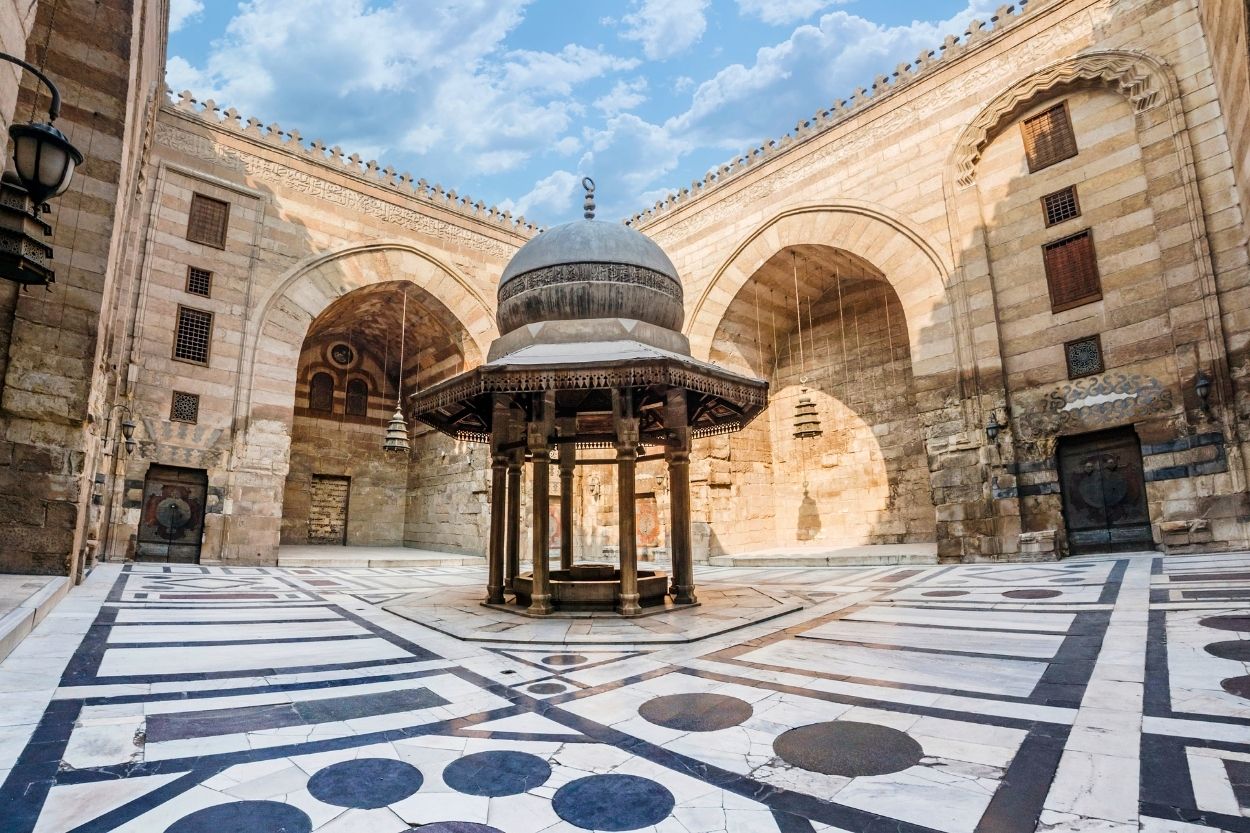
While the mosque and mausoleum are still in use today, this UNESCO World Heritage site is also open to visitors, and it’s one of the top attractions along the historic 📍Al-Muizz Street.
Here you can explore the complex’s stunning Mamluk-era architecture, check out the remains of the old school and hospital, and visit the mausoleum of Sultan Qalawun himself.
9 | Abdeen Palace
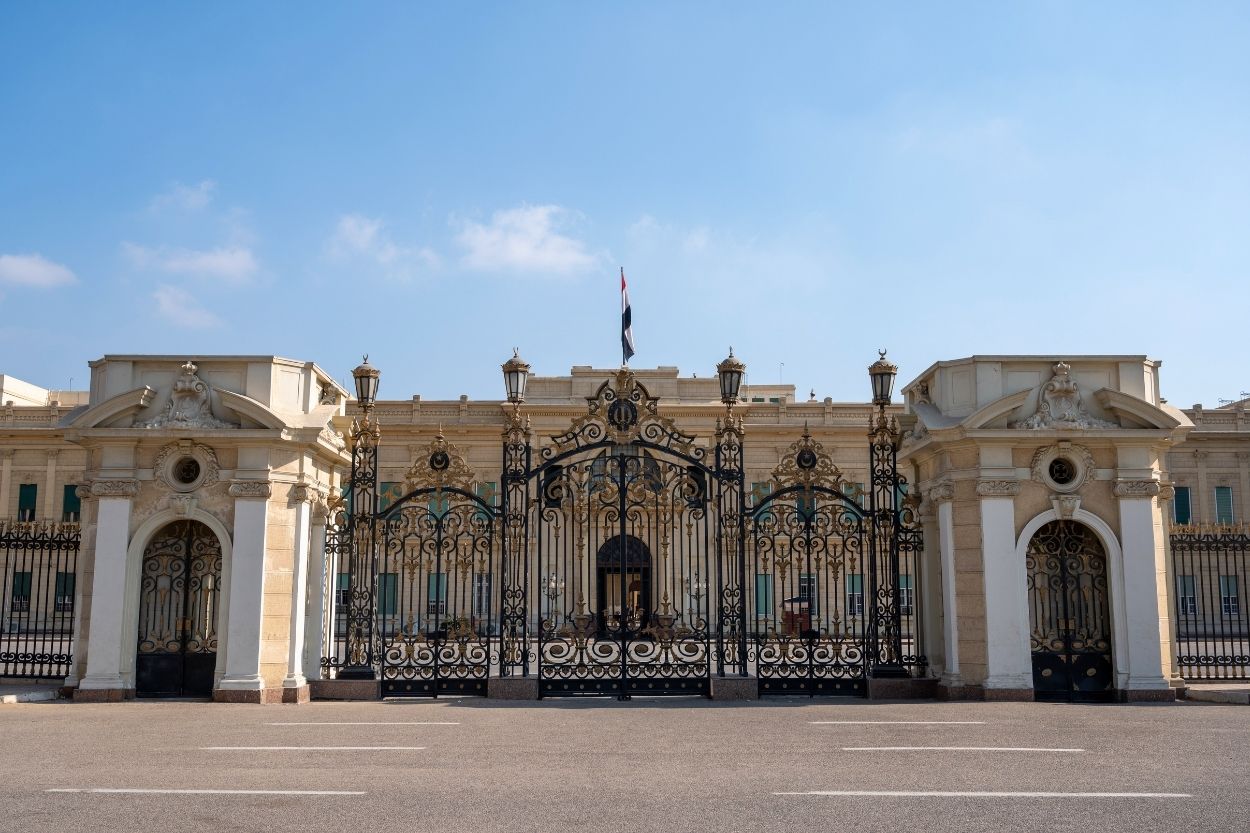
From 1176 until 1874, the seat of power in Egypt was Cairo Citadel. But by the mid-19th century, the fortress was getting old, and so a new palace was constructed in the heart of the city.
📍Abdeen Palace was part of an attempt to make Cairo the “Paris of the East,” and it’s immediately apparent the moment you see the building. Abdeen Palace was designed by French architects in a distinctly European style, the kind of palace you’d expect to find in Versailles or Westminster.
It served as the seat of government from 1874 until the 1952 revolution.
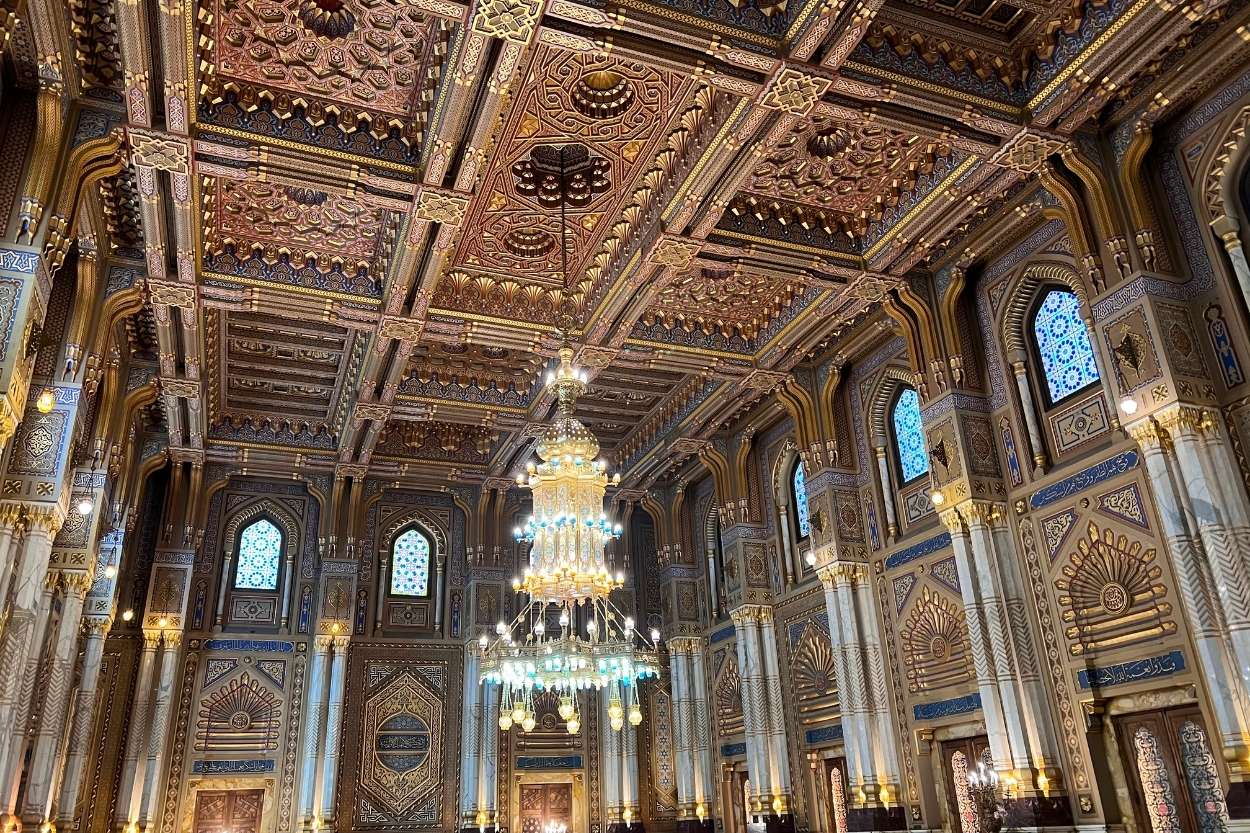
Today, part of the palace still functions as the official presidential residence, while the rest of it has opened up as a museum. Here you can explore several themed collections, including royal silverware, historic weaponry, the royal family’s personal belongings, and gifts presented to Egypt’s presidents by foreign leaders over the decades.
Amongst all the ancient and medieval history you’ll experience across Egypt, Abdeen Palace offers a chance to see the modern side of the country’s history.
10 | Rhoda Island Nilometer
For most of Egypt’s history, the entire economy hinged on one annual event: the Nile flood. Too little water meant famine, too much meant destruction. Rulers needed a way to measure and predict it.
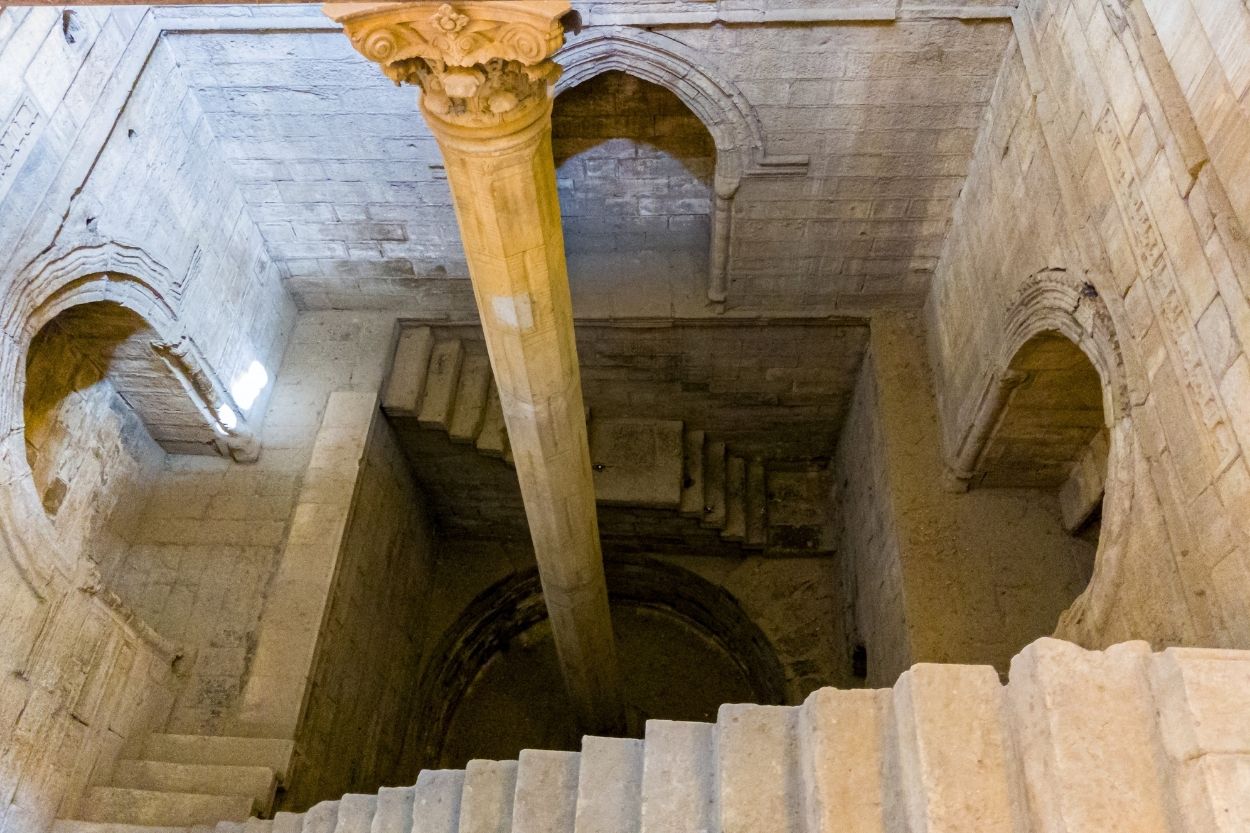
To do this, they used a structure called a Nilometer (essentially meaning “Nile measure“), a submerged well connected to the river, marked with measurements to track the water level as it rose each flood season. These nilometers can be found all up and down the Nile, in various designs and sizes.
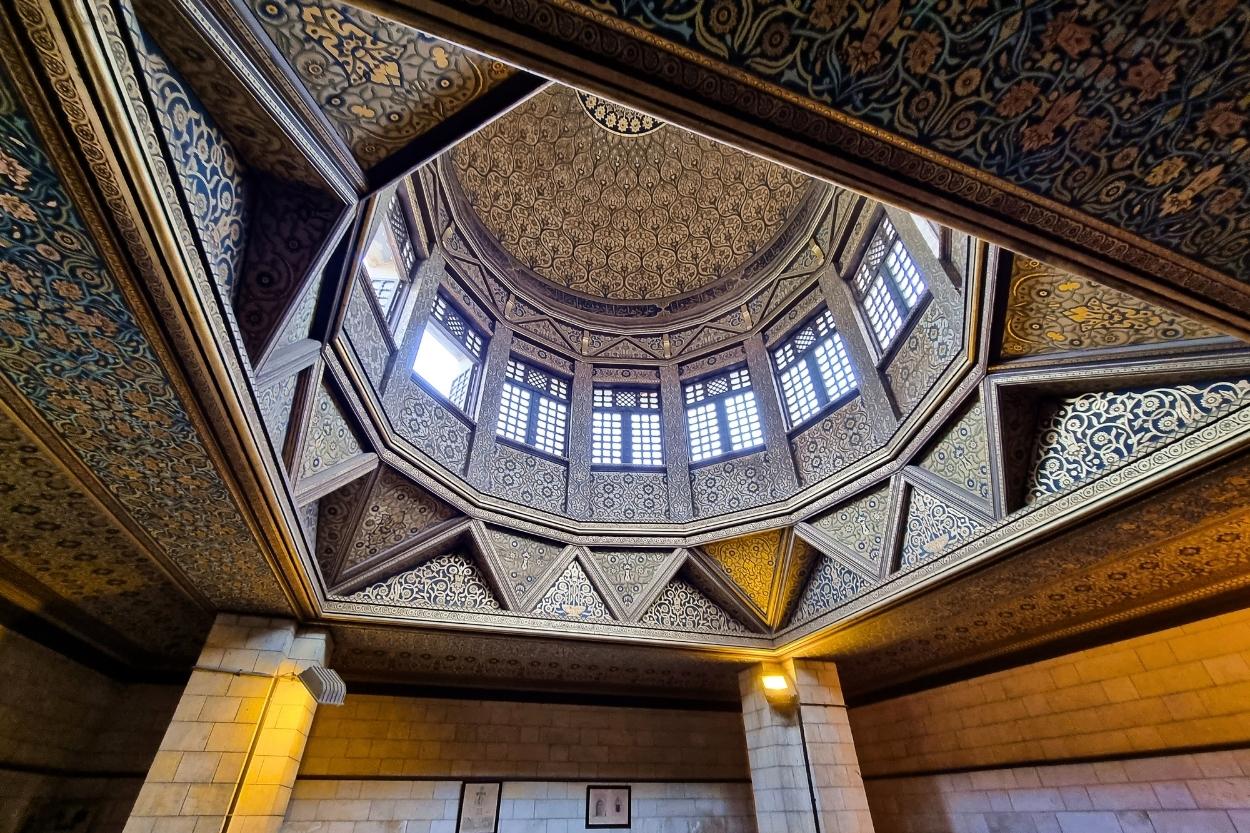
If you’re interested in visiting one of these historical structures, you’ll find one right here in downtown Cairo, on Rhoda Island.
The 📍Rhoda Island Nilometer was built in 861 AD, commissioned by the Abbasid Caliph al-Mutawakkil, replacing an earlier version on the same site from 715 AD. It was used both to measure the annual Nile levels, and to set the tax rate the state would collect that year.
Here you can descend into the well and see the original marble column up close, still marked with its ancient measurements.
More on Cairo
That above list features Cairo’s top historical sites from the city’s medieval and early modern eras. You can dive deeper into this with our guides on Cairo Citadel and Coptic Cairo.
To experience the ancient history that likely drew you to Egypt, check out:
- Giza Plateau – Home of the Great Pyramid and the Sphinx, located on the outskirts of Cairo.
- The Grand Egyptian Museum and Egyptian Museum – The country’s 2 premiere museums, and the best place to see ancient Egyptian artefacts.
Or you could travel just outside of Cairo and visit even older pyramids at:
- Saqqara Necropolis – Home to the world’s oldest pyramid.
- Dahshur – Home to the world’s first ‘true‘ pyramid.
For more Egypt content, check out our Egypt hub page.