The Valley of the Kings is one of Egypt’s most significant historical sites.
During the Old Kingdom, pharaohs were famously buried in pyramids, but come the beginning of ancient Egypt’s New Kingdom, the capital shifted south to Thebes (modern-day Luxor) and royals were instead buried deep inside the mountains of the Theban Necropolis.
The heart of this Necropolis is the Valley of the Kings, where their most important rulers were buried for nearly 500 years, including the famous Tutankhamun.
Because these tombs were carved deep underground, their interiors, with their vivid murals and hieroglyphs, have remained remarkably well preserved. Exploring them offers an experience you can’t get anywhere else in Egypt.
But visiting the Valley of the Kings isn’t simple. The site is located far outside of Luxor with no public transport routes, and the many ticket types can be confusing.
That’s why I’ve created this guide, where you’ll find everything you need to know to visit the Valley of the Kings, including its history, what tombs to see, how to get there, ticket info and more.
Best Valley of the Kings Tours
I’ve done the research so you don’t have to. Here are the top Valley of the Kings tours depending on what you’re looking for…
⭐ Valley of the Kings + Hatshepsut Temple & Colossi of Memnon
⭐ Best Nile Cruise inc. Valley of the Kings (Luxor to Aswan)
Contents
History of the Valley of the Kings
During Egypt’s Old Kingdom (c. 2686–2181 BC), rulers were famously buried in pyramids and mastabas. At the time, the Egyptian capital was based at Memphis, and pharaohs were buried in the vast pyramid fields that stretch from Giza to Dahshur.
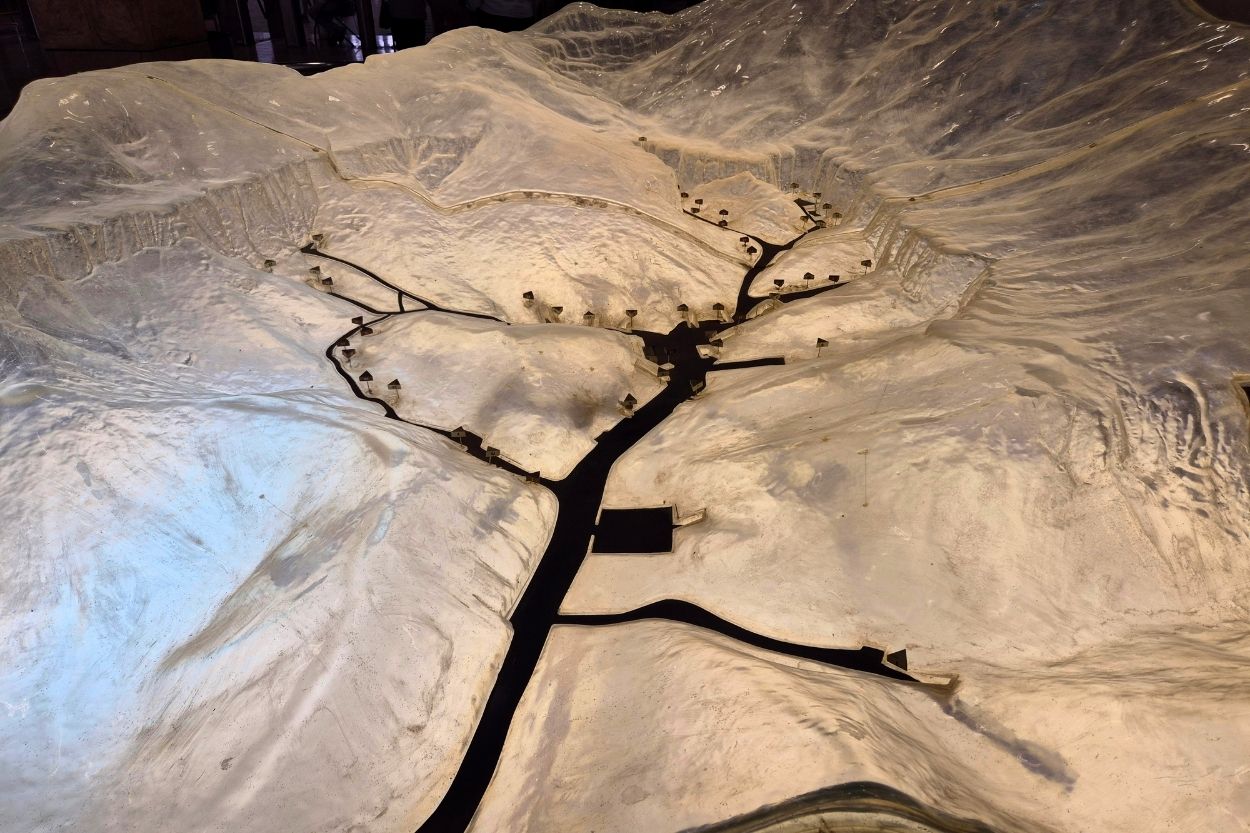
Following the collapse of the Old Kingdom, Egypt later entered the New Kingdom (c. 1550–1069 BC), a period often regarded as a golden age, with the capital shifting south to Thebes (modern day Luxor). Rather than burying their rulers in pyramids like their ancestors did, they instead carved elaborate tombs deep into the hills of the Theban Necropolis, an area on the west bank of the Nile opposite Thebes (Luxor).
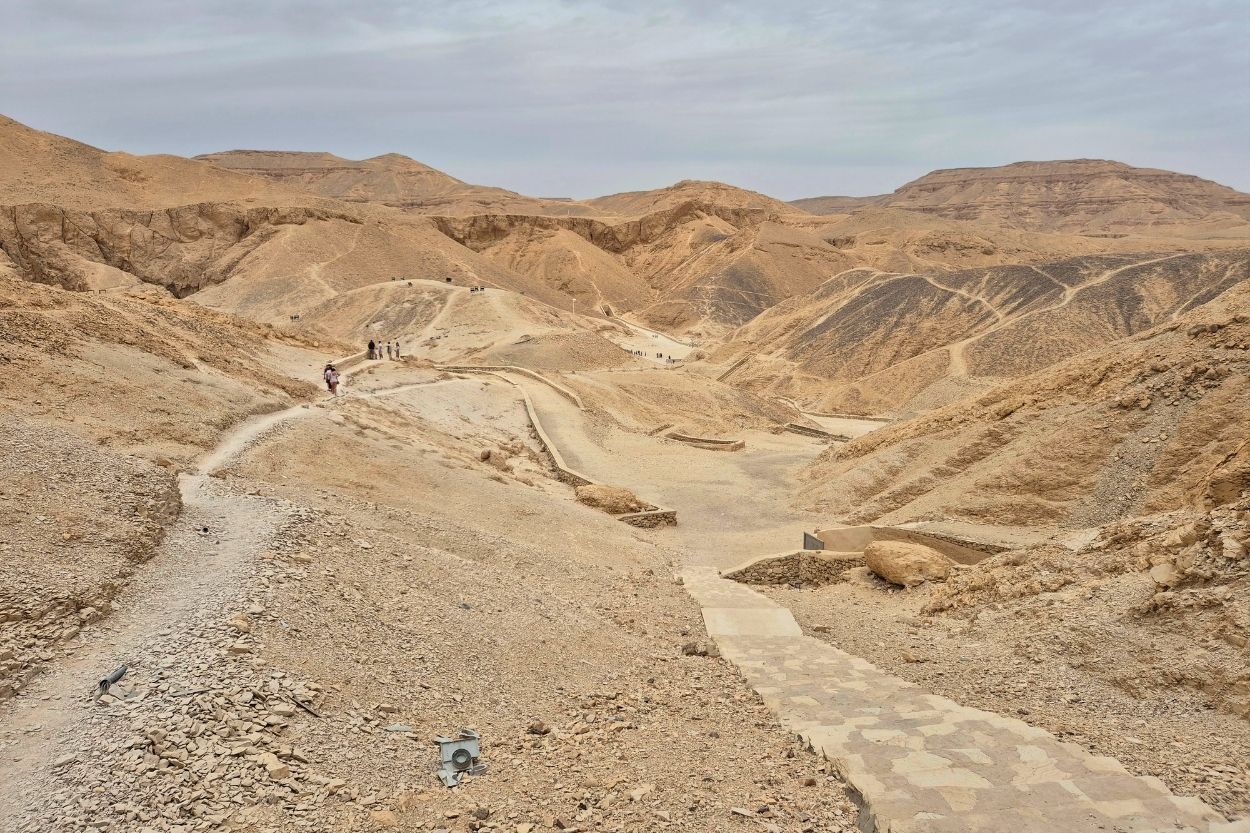
Countless ancient tombs and temples can be found all over the Theban Necropolis, but the most important section lies in a secluded desert valley on the other side of the hills forming the Nile Valley. This is known to us now as the Valley of the Kings.
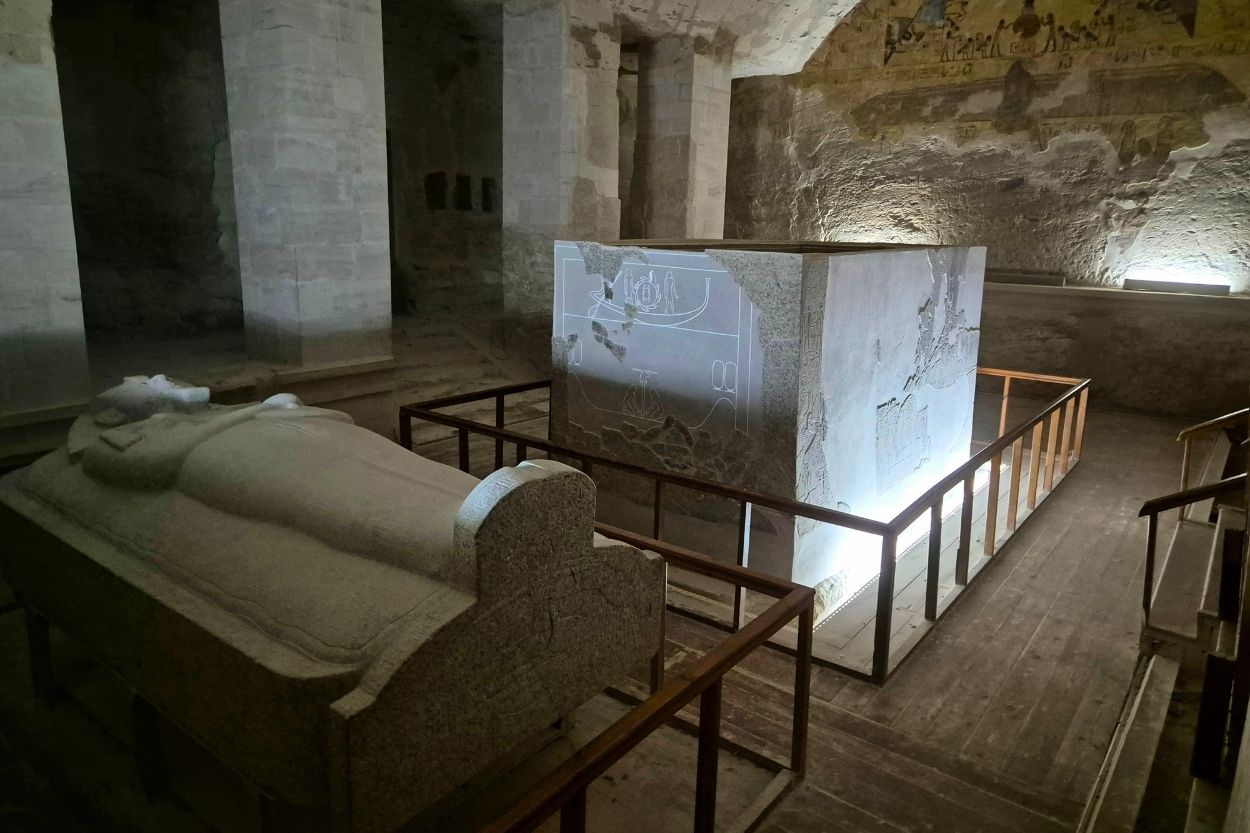
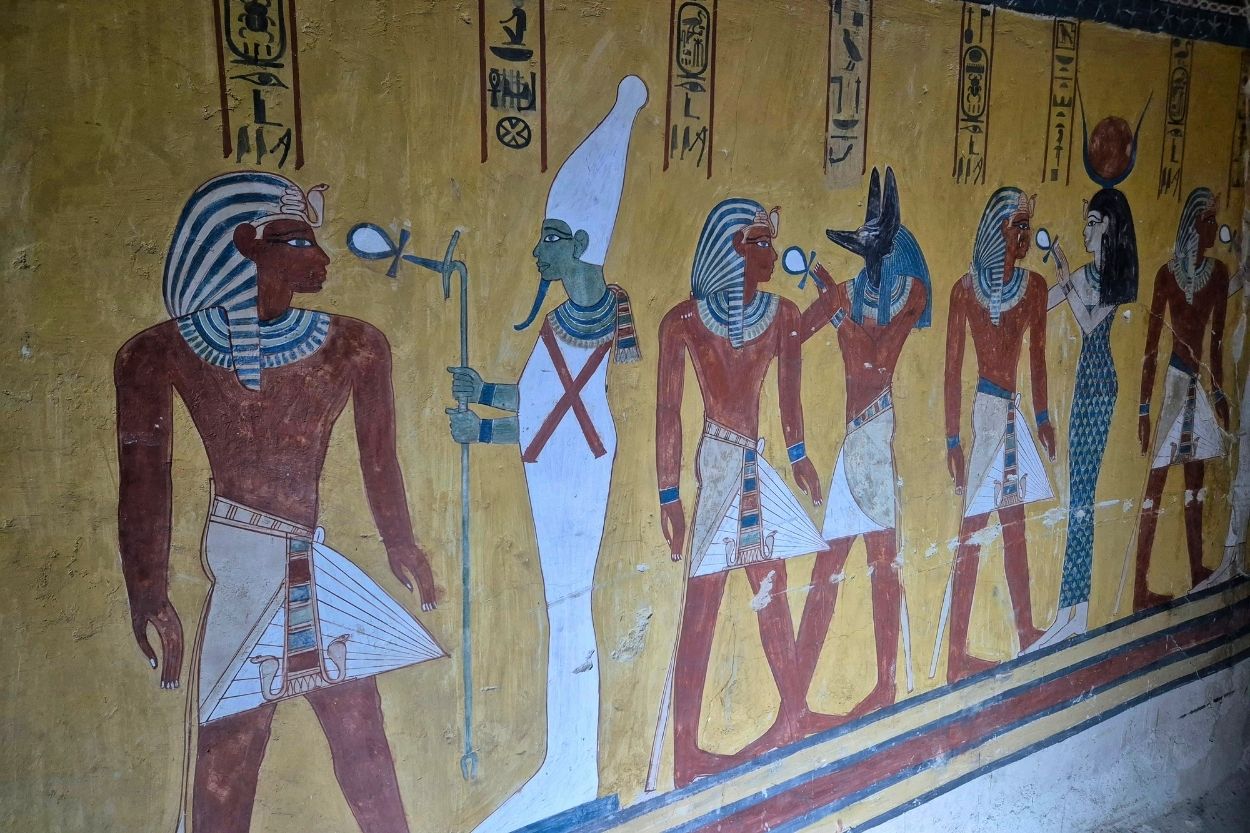
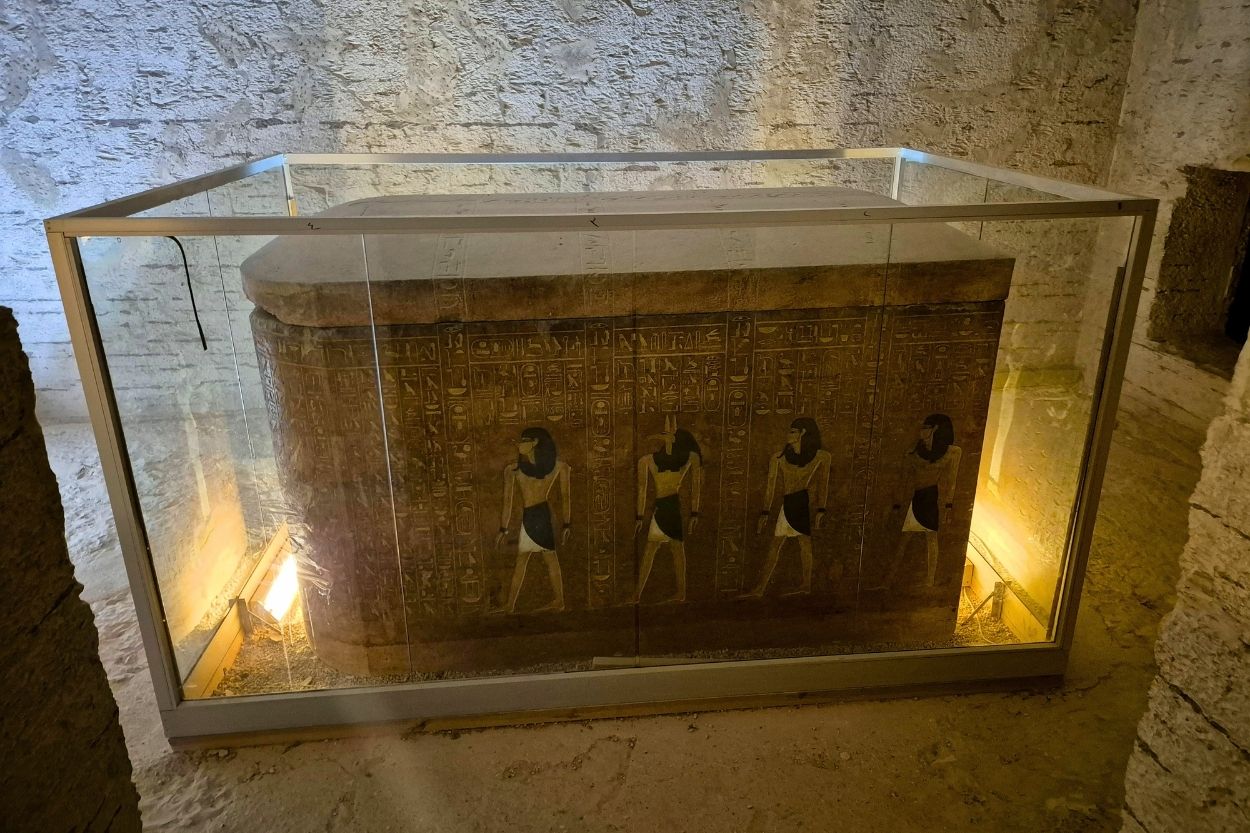
Inside these tombs, the long corridors and chambers were decorated with vivid scenes of Egyptian mythology and funerary rituals. At the bottom of each tomb lies the burial chamber, where the pharaohs’ sarcophagus were buried alongside valuables intended to accompany them into the afterlife.
For nearly 500 years, pharaohs and other high ranking nobles were buried in the Valley of the Kings, with the entrances sealed and concealed against would-be graverobbers. Despite their efforts, most of the tombs were already looted by antiquity.
It’s for exactly this reason that the 1922 discovery of Tutankhamun’s tomb was such a big deal. While almost every other tomb across Egypt had been looted long ago, this pharaoh’s tomb was still sealed inside the Valley of the Kings, along with all the valuables he was buried with. It was one of the most significant archaeologist discoveries of all time, and drastically increased our understanding of ancient Egypt.
Come the 21st century, and new tombs are still being uncovered in the Valley of the Kings, with the most recent being in 2008. In total, 65 tombs have been discovered.
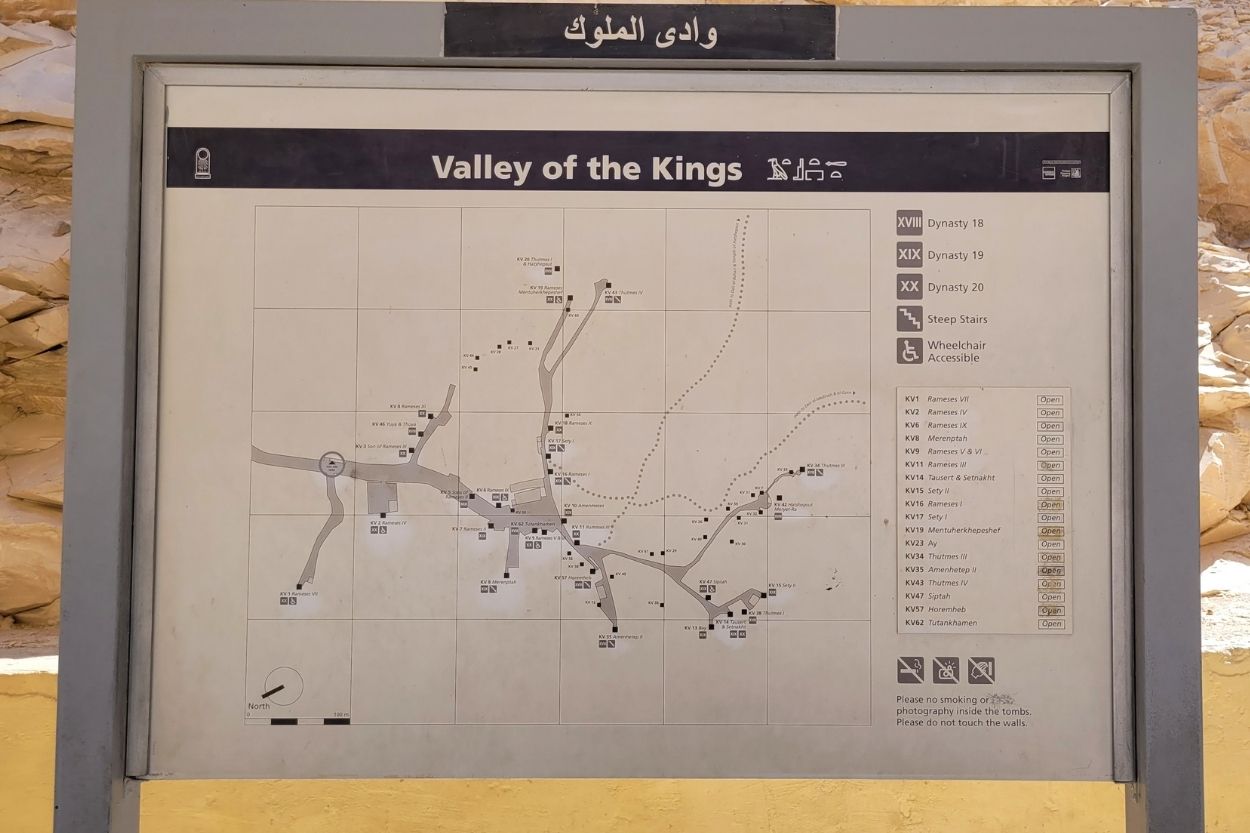
Valley of the Kings Map
Tombs at the Valley of the Kings
There are currently 65 known tombs in the Valley of the Kings, although not all of them are open to the public at any one time. The tombs included with the standard ticket are rotated periodically, so I can’t tell you exactly which will be open during your visit.
That being said, the following tombs generally open:
- KV1 – Ramesses VII
- KV2 – Ramesses IV
- KV6 – Ramesses IX
- KV8 – Merenptah
- KV11 – Ramesses III
- KV14 – Tausert-Setnakht
- KV15 – Sety II
- KV16 – Ramesses I
- KV43 – Thutmose
- KV47 – Siptah
The standard entry ticket grants access to 3 of these tombs. As you enter, the attendant will stamp your ticket. Once you’ve collected 3 stamps, you won’t be able to explore any more on the standard entry ticket.
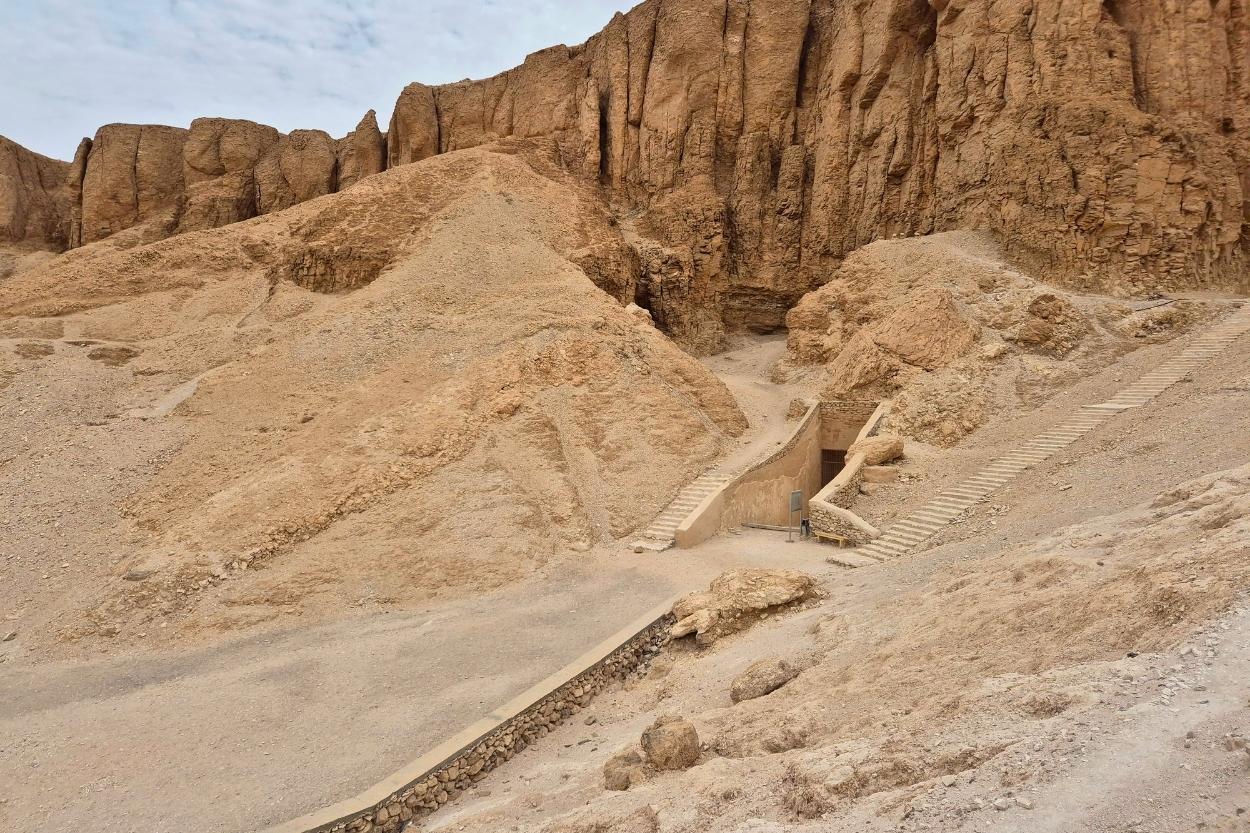
With only 3 entries included in the ticket, you might be wondering: which 3 tombs should I visit? Well, there’s no one right answer, but I recommend any 3 of the following:
- KV2 (Ramesses IV) – Possibly the best choice for murals.
- KV11 (Ramesses III) – One of the largest tombs you can visit with the standard entry ticket.
- KV43 (Thutmose) – Personally I found this tomb to be a fantastic choice. It is located further away than the main area of the Valley, and sees fewer visitors. But the tomb itself is massive with vivid murals.
- KV8 (Merenptah) – Another great choice. It doesn’t have much in the way of murals, but has a very large and open burial chamber.
In addition to the standard ticket, there are several other tombs you can visit with an additional ticket. Each of these require their own separate ticket, and include:
- KV17 – Seti I
- KV62 – Tutankhamun
- KV9 – Ramses V & VI
Of these, I definitely recommended purchasing KV9 (Ramesses V and VI), as its great value for the cheap price of the ticket.
KV62, (Tutankhamun), is undoubtedly the valley’s most famous burial chamber. While the tomb itself is smaller and less elaborately decorated than many others, the opportunity to stand inside the resting place of ancient Egypt’s most famous pharaoh is somewhat of a bucket-list experience.
Lastly, KV17 (Seti I) is widely regarded as one of the best tombs in the entire valley. It’s massive, with some beautiful murals, but is also the most expensive by far.
More on tickets later in the guide.
Where is Valley of the Kings?
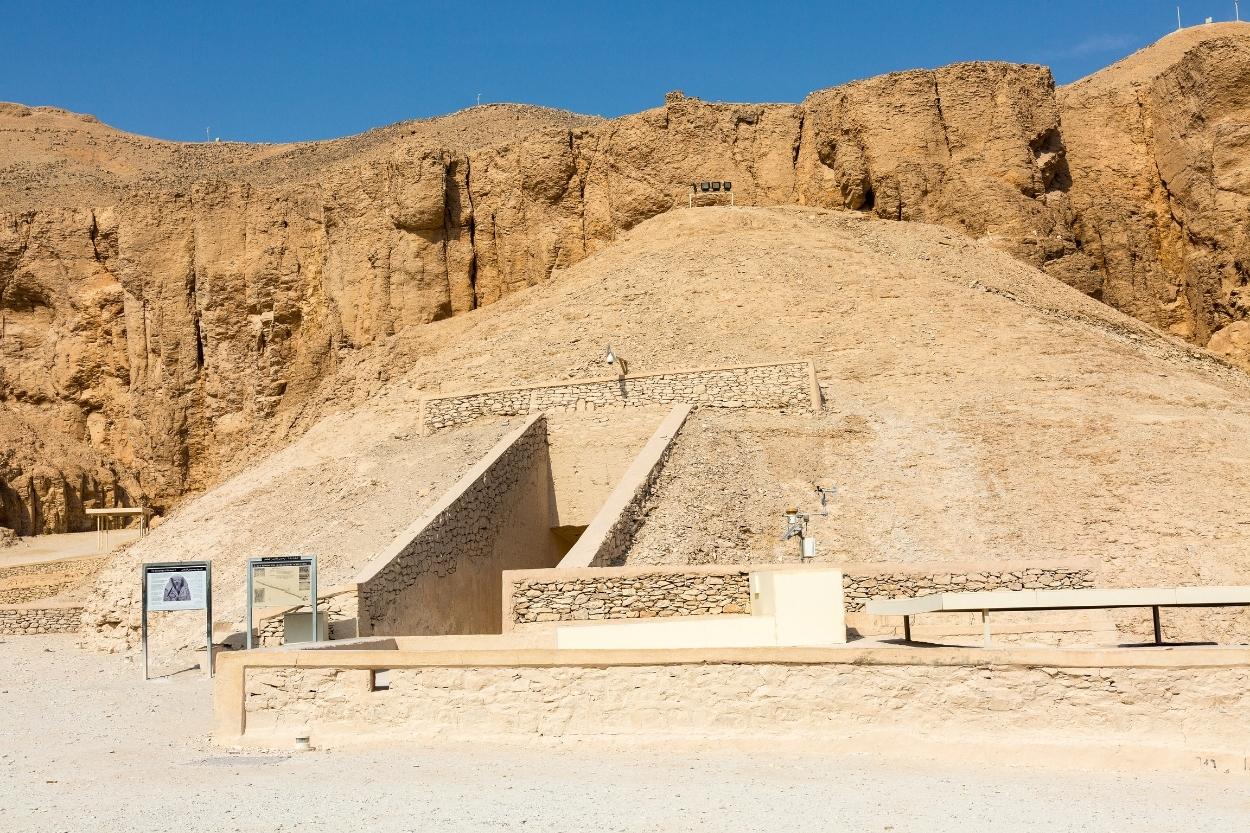
📍The Valley of the Kings is located on the west bank of the Nile River opposite the city of 📍Luxor in southern Egypt. It lies within the Theban Necropolis, an area filled with temples, tombs, and other archaeological sites.
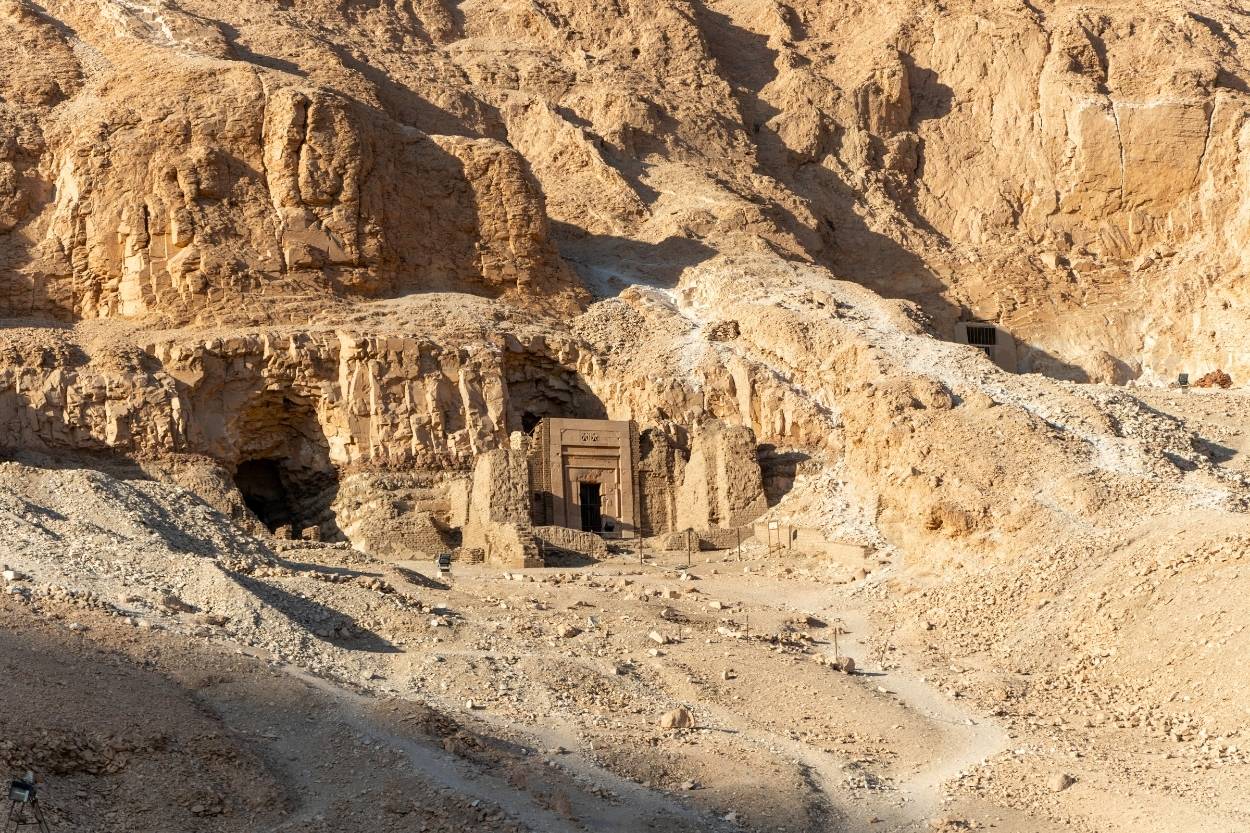
While there are plenty of tombs along the river bank, the Valley itself is tucked away in the rocky hills that form the Nile Valley.
How to get to the Valley of the Kings
Option 1: By Taxi (Visit independently)
If you want to visit the Valley of the Kings without a tour, you’ll need to hire a taxi. It is located far outside of Luxor and there are no buses or other public transport methods to get there.
It’s generally very easy to find a taxi in downtown Luxor. You’ll likely be regularly offered rides from taxi drivers just by walking down the street. Alternatively, your hotel reception can likely arrange for one to pick you up.
The drive from downtown Luxor to the Valley of the Kings takes about 30 to 45min. There’s plenty of other amazing historical sites you might consider stopping at along the way, such as 📍Hatshepsut Temple or the 📍Colossi of Memnon.
You’ll need to arrange for the taxi to wait for you while you explore the Valley, as you may not be able to find one at the site to take you back.
Option 2: By Guided Tour
Since, with the above option, you’d need to hire the taxi for the full day, it’s arguably more practical to simply join a guided tour.
Luxor has no shortage of tour companies that can take you to the Valley of the Kings. These typically include hotel pick-up and drop-off in an air-conditioned mini-van, transport to the Valley, entry tickets, and a knowledgeable guide to show you around.
Many tours also include stops at other historical sites along the way, such as the Temple of Hatshepsut and the Colossi of Memnon.
Option 3: By Nile Cruise
Aside from the standard daytrip tour from Luxor, there’s also a Nile Cruise. Nile Cruises are one of the most popular activities in Egypt, and a fantastic way to tick off a bunch of the country’s best historical sites in the most convenient way.
Nile Cruises typically travel between Luxor and Aswan, stopping at many top sites in and between these cities. This generally includes the Valley of the Kings. Like a standard tour, it covers your transport to and from the Valley of the Kings, the tickets, and a guide to show you around.
In between tours, you’ll then get to relax on the boat, which typically features a rooftop pool, lounge, bar and buffet.
Best Valley of the Kings Tours
I’ve done the research so you don’t have to. Here are the top Valley of the Kings tours depending on what you’re looking for…
⭐ Valley of the Kings + Hatshepsut Temple & Colossi of Memnon
⭐ Best Nile Cruise inc. Valley of the Kings (Luxor to Aswan)
Valley of the Kings Opening Hours
The Valley of the Kings Opening Hours change depending on the time of year:
- Summer (May to Sept) – 6am to 5pm
- Winter (Oct to Apr) – 6am to 4pm (including during Ramadan)
Valley of the Kings Ticket Info
Valley of the Kings tickets can be purchased at the front entrance, or online in advance from the official ticket website.
There are several different types of tickets available depending on which tombs you wish to visit…
Standard Ticket
The standard Valley of the Kings entry ticket costs EGP 750 (375 if you’re a student).
This gets you entry to the Valley and to any 3 of the following tombs:
- KV1 – Ramesses VII
- KV2 – Ramesses IV
- KV6 – Ramesses IX
- KV8 – Merenptah
- KV11 – Ramesses III
- KV14 – Tausert-Setnakht
- KV15 – Sety II
- KV16 – Ramesses I
- KV43 – Thutmose
- KV47 – Siptah
Which you visit is entirely up to you, but you’re limited to 3 in total.
Additional Tickets
Several of the Valley of the Kings’ most famous tombs require separate tickets in addition to your standard admission. Each additional tomb requires its own ticket.
These include:
- EGP 1,000 – KV17 (Seti I)
- EGP 200 – KV62 (Tutankhamun)
- EGP 80 – KV9 (Ramesses V & VI)
For more info on the tombs and which to visit, you’ll find this earlier in the guide.
Tram Ticket
In addition to your entry tickets, you can purchase a ticket for the small electric tram that transports visitors from the entrance area to the main tomb area.
The tram ticket costs EGP 20 and can be purchased at the entrance. The ride itself takes only around three minutes.
You don’t have to purchase a tram ticket, but without it you’ll need to walk roughly 500 metres uphill.
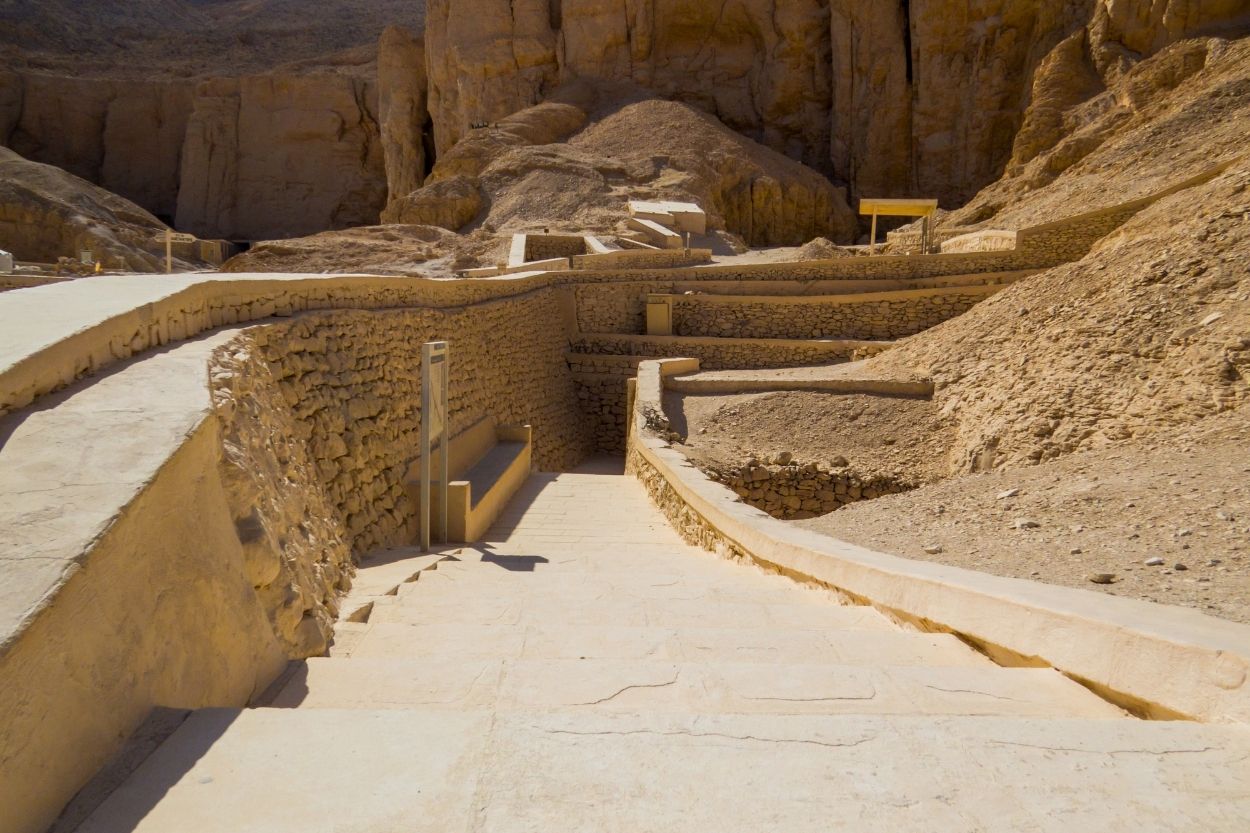
Is the Valley of the Kings worth it?
Aboslutely. The Valley of the Kings is one of Egypt’s most significant historical attractions and, for many travellers, the main reason to visit Luxor in the first place.
Luxor was once known as Thebes, and was the capital of ancient Egypt’s New King, a time known as Egypt’s 2nd Golden Age. Across the Nile from Thebes was the vast Theban Necropolis, where pharaohs and other members of the elite were buried for nearly 500 years.
The Valley of the Kings was the heart of this necropolis. Just as the pyramids of Giza, Dahshur and Saqqara form the most important necropolis for Egypt’s Old Kingdom, so too does the Valley of the Kings for Egypt’s New Kingdom.
In other words, the Valley of the Kings is one of the most historically significant sites in Egypt.
And because they’re underground, the interior of these tombs, particularly their vivid murals and hieroglyphs, have been remarkably well preserved. Exploring them offers an insight into ancient Egypt that you won’t find anywhere else.
If you’re travelling to Egypt, you’ll likely be visiting Luxor anyway, at the very least for its other famous sites like Luxor and Karnak temples, or to join a Nile Cruise. While you’re there, the Valley of the Kings is a worthwhile addition to your itinerary.
Valley of the Kings FAQs
How to get around the valley of the kings?
The Valley of the Kings covers a large area, but thankfully, for a small price, there’s a tram that can take you from the front entrance to the main area. From here, you’ll need to walk to explore the tombs.
How long does it take to visit the valley of the kings?
How long you spend at the Valley of the Kings will depend on if you purchased any of the additional tickets. With only the standard ticket, you’ll need about 2 to 3 hours at the site. With additional tickets, expect to spend about 3 to 4 hours. If you also consider transport to and from the Valley from Luxor, expect your visit to be a half-day trip.
Are there toilets at the Valley of the Kings?
Yes, there are toilets both at the entrance and at the main area near the tombs.
Is food available at the valley of the kings?
Yes, in the main area amongst the tombs you’ll find a small cafe/restaurant which services basic food and drinks.
Further reading on Egypt
Here are more guides on Egypt to help you plan your trip:
⬤ After Luxor, you might be on your way to Aswan. Along the way there’s another ancient temple you might want to visit. Check out: Complete Guide to Visiting Kom Ombo Temple.
⬤ If you’re going to Egypt, you’re probably interested in visiting some pyramids, so check out my Travel Guide to Pyramids in Egypt.
⬤ For a guide to the last ancient wonder of the world, check out my Giza Pyramids Travel Guide.
⬤ To see the world’s first ‘true’ pyramids, check out my guide to the Red and Bent Pyramids of Dahshur.
⬤ If you’re interested in visiting the world’s oldest pyramid, check out my Travel Guide to the Saqqara Necropolis.
⬤ Plan to visit one of Egypt’s many great museums? Check out my guide comparing the Grand Egyptian Museum vs the Egyptian Museum: Which is Better?
⬤ For more travel guides, visit my Destinations page.