Located on an island in the Nile River near Aswan, Philae Temple is one of Egypt’s most beautiful and best-preserved ancient temples.
Dating back more than 2,000 years to the Ptolemaic Period, the temple remains remarkably intact today, despite being dismantled piece by piece and relocated in the 1970s.
As one of the top historical attractions in southern Egypt, Philae Temple is a must-visit for anyone exploring Aswan. However, due to its location on an island on the Nile River, there are a few things you need to know before visiting.
In this guide, you’ll find everything you need to plan your visit to Philae Temple, including its history, how to get there, ticket info and more.
Best Philae Temple Tours
I’ve done the research so you don’t have to. Here are the top Philae Temple tours depending on what you’re looking for…
⭐ Philae Temple only (from Aswan)
⭐ Philae Temple + Unfinished Obelisk & High Dam
Contents
History of Philae Temple
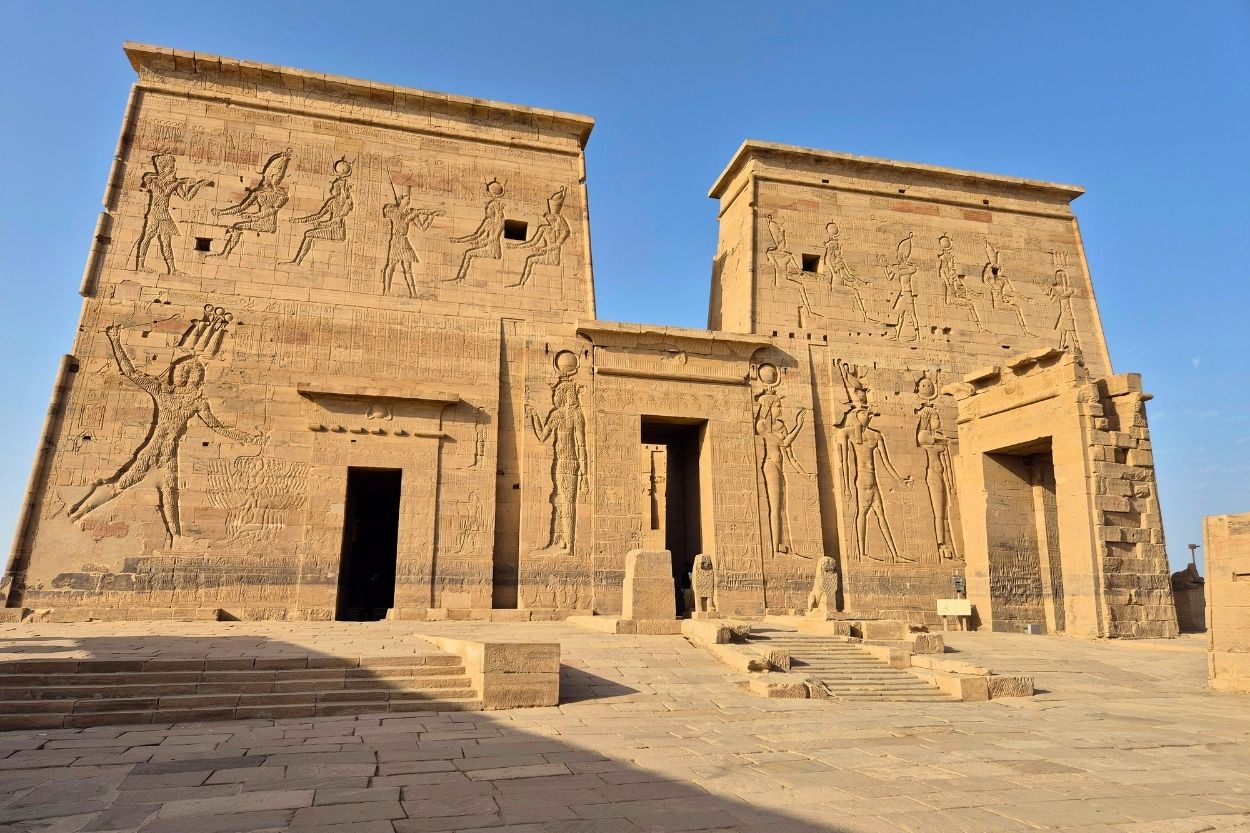
While it may be an ancient Egyptian temple, Philae Temple was built long after Egypt’s famous pyramids. In fact, Philae Temple was constructed closer to our time than to the construction of the pyramids.
The temple was built during the Ptolemaic Era, a period when Egypt was under Greek rule following the conquest of Alexander the Great. Located on Egypt’s southern frontier near the border with Nubia, the complex was gradually constructed between the 3rd and 1st centuries BCE before being expanded further under Roman rule. The main temple was dedicated to Isis, the Egyptian goddess of motherhood, fertility, and healing.
Under the Roman Empire, Christianity spread rapidly throughout the Mediterranean world, and Egypt became one of its earliest strongholds outside the Levant. With the rise of Christianity came the decline of the traditional Egyptian religion that had existed for thousands of years.
Philae Temple became one of the last strongholds of Egyptian religion, and it is believed to have held out as late as the 6th century CE, making it one of the final places where the traditional Egyptian gods were still worshipped.
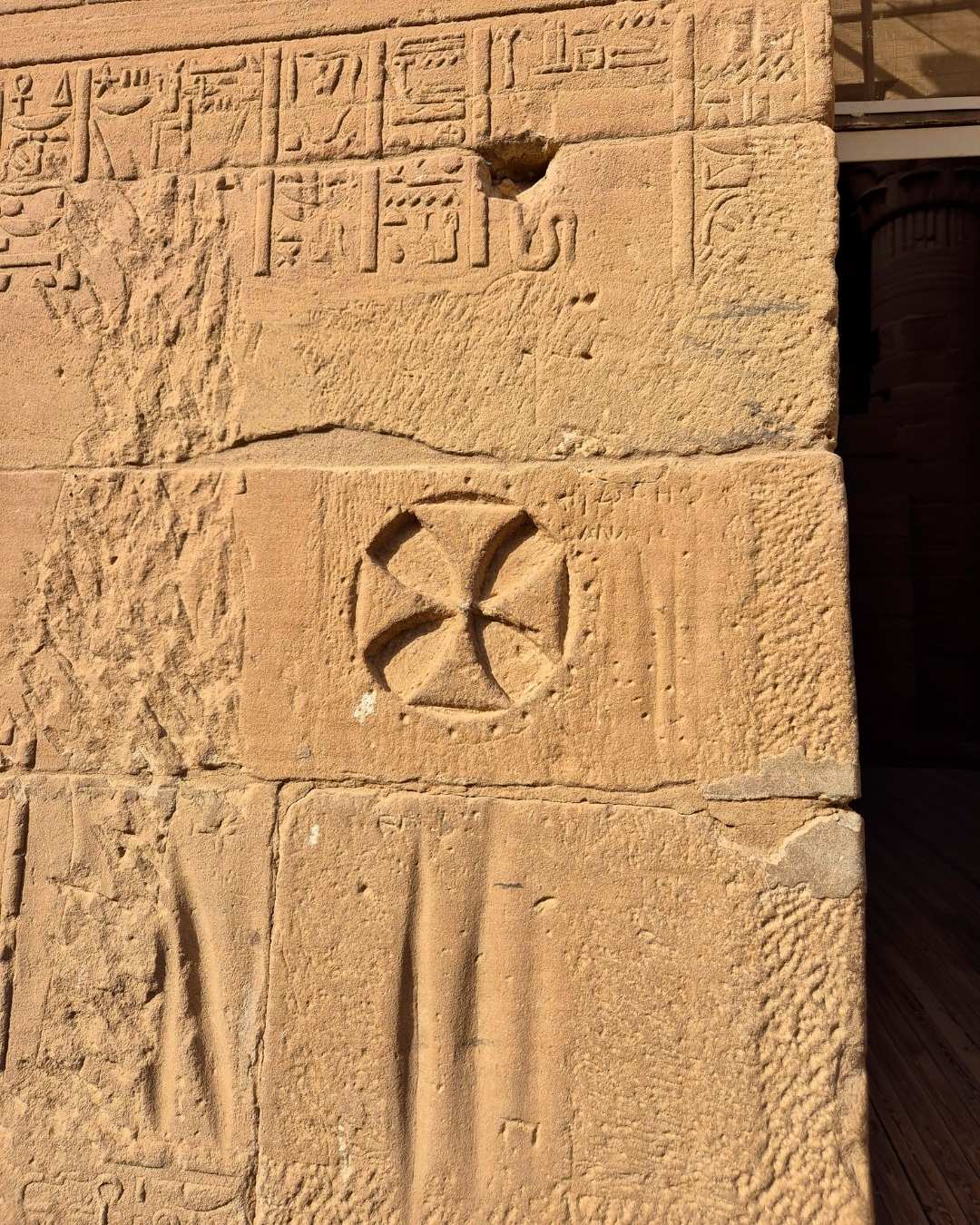
Like many temples in Egypt, Philae was eventually converted into a Christian church. Evidence of this can still be seen today, with some of the temple’s reliefs having been deliberately altered.
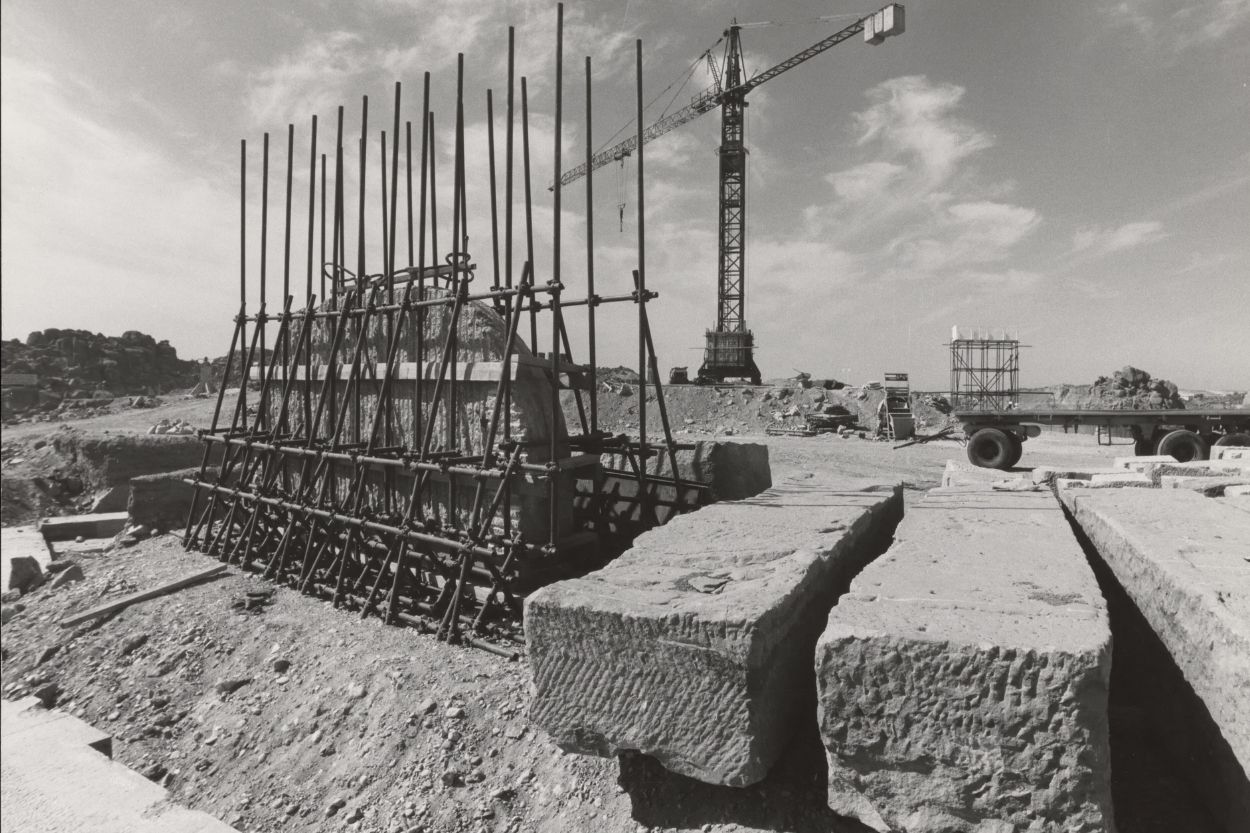
Throughout all this time, the temple was located on Philae Island in the Nile River. However, the construction of the Aswan Dam in 1902 caused the island to become partially submerged for much of the year. Then, in the 1960s, the planned construction of the Aswan High Dam threatened to permanently flood the entire complex.
This led to one of the largest archaeological rescue projects in history. Led by UNESCO, several major monuments in southern Egypt (including Abu Simbel and Philae Temple) were dismantled piece by piece and relocated to higher ground. Philae Temple was carefully moved to the nearby island of Agilkia, where it remains today.
The relocation of these temples is almost as impressive as their original construction thousands of years ago. When visiting the Philae Temple today, you’d never know that it’s not where it was originally built.
What to see at Philae Temple
Philae Temple is not a single building but a full complex that takes up most of the island, with multiple temples, chapels, and smaller structures spread across the site.
Here are some of the highlights you can expect to see during your visit:
Temple of Isis
The Temple of Isis is the main structure and heart of the entire complex. It was originally constructed during the Ptolemaic period, beginning around the 3rd century BCE.
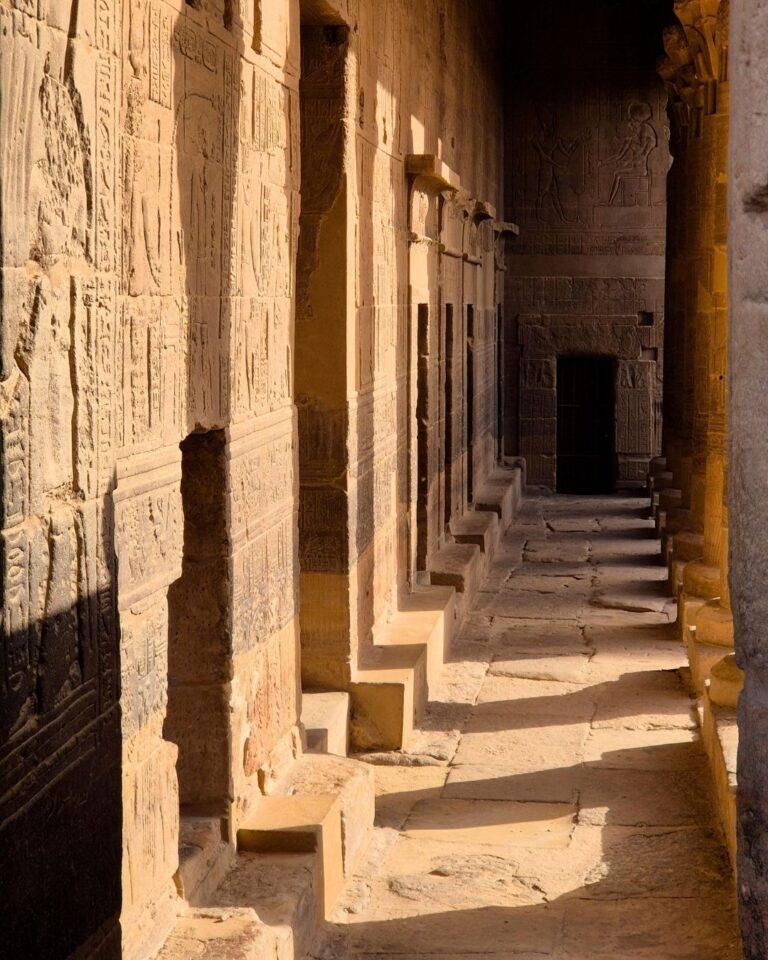
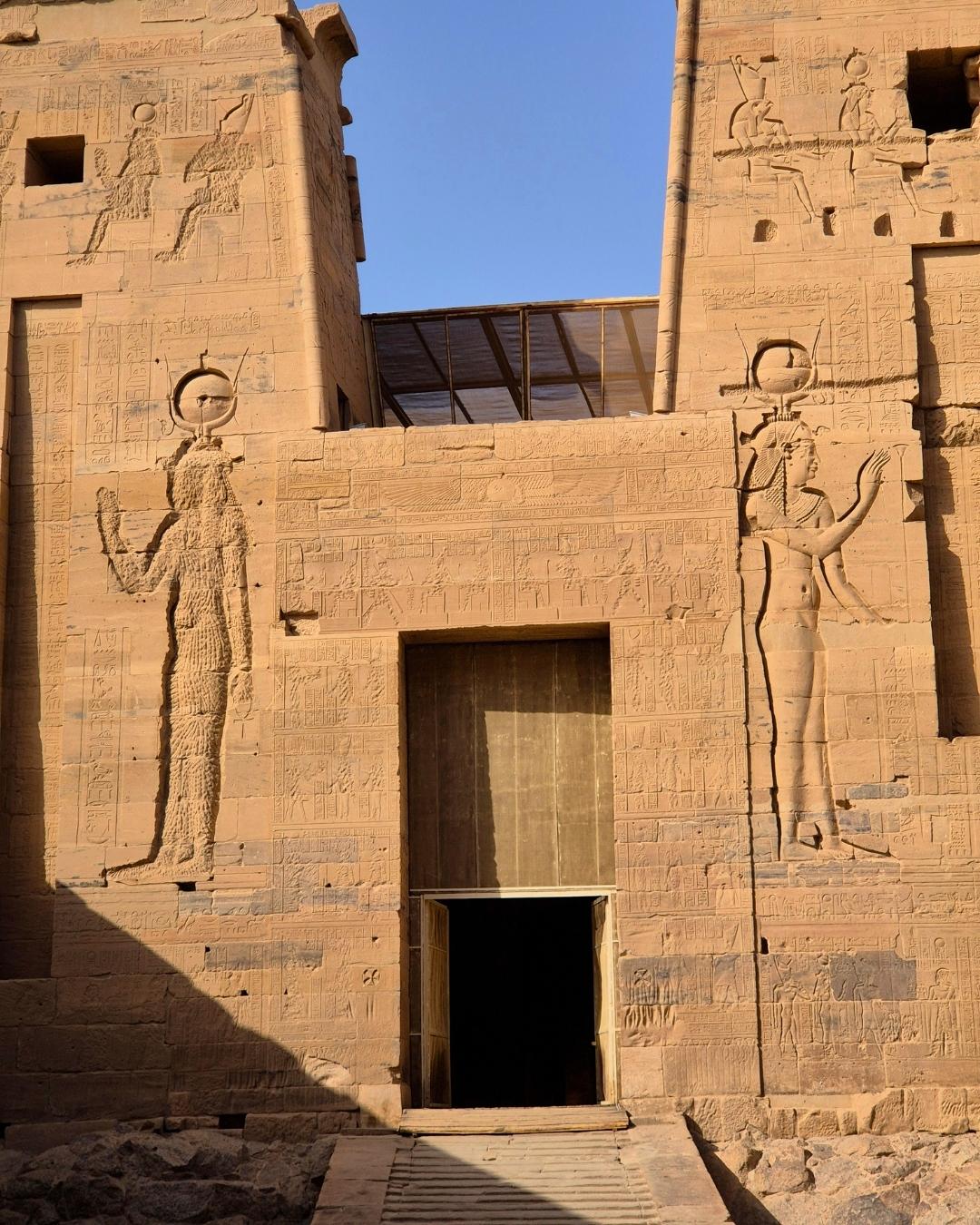
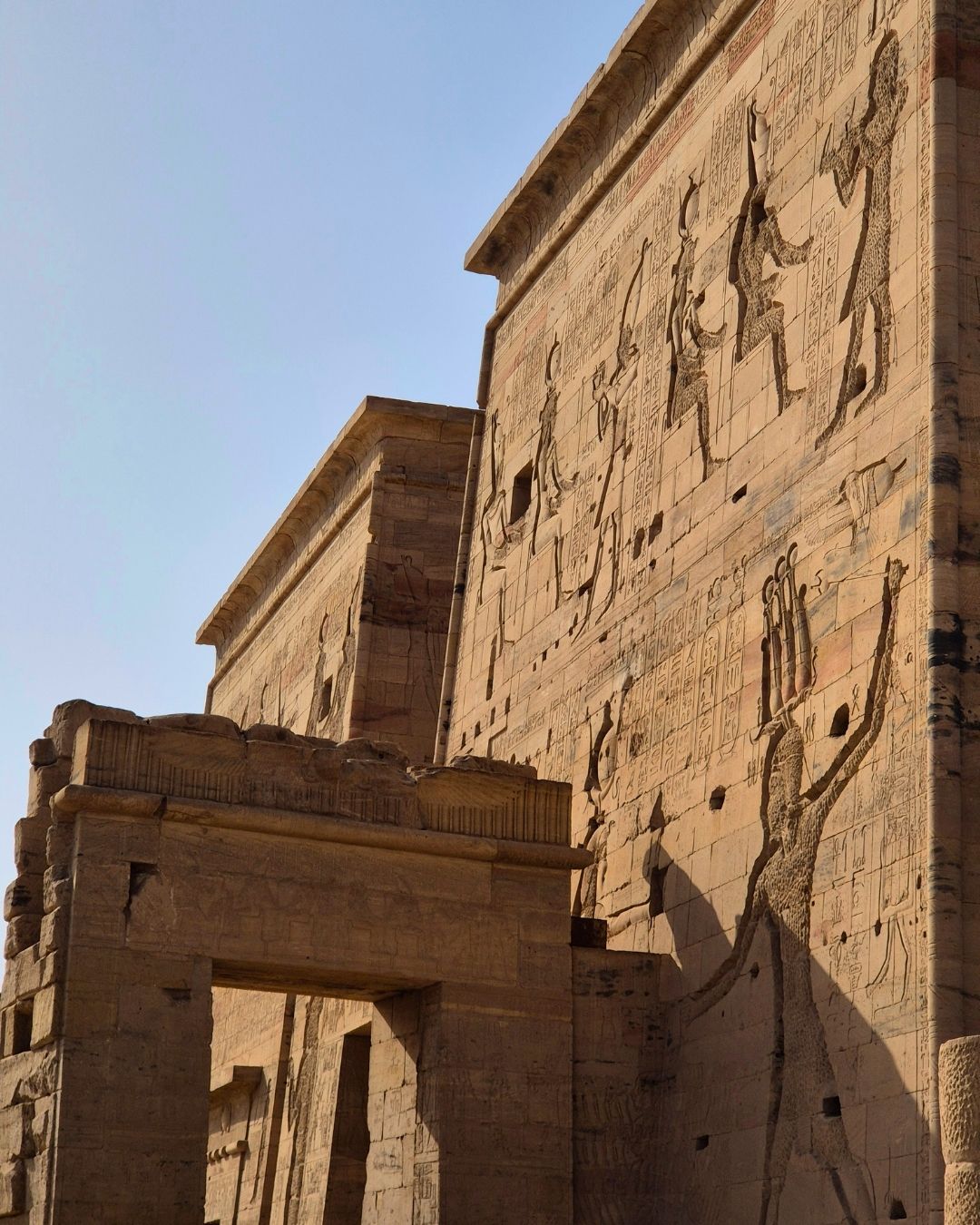
It follows the classic layout of an ancient Egyptian temple. Visitors enter through two massive stone pylons decorated with carved reliefs, before moving into a large open courtyard and then a series of columned halls. This leads progressively deeper into the temple until reaching the inner sanctuary, where the sacred cult statue of Isis would once have been kept.
Today, much of this structure remains remarkably intact. The pylons and portions of the roof still stand, with the walls and pillars covered in detailed reliefs and murals.
Birth House
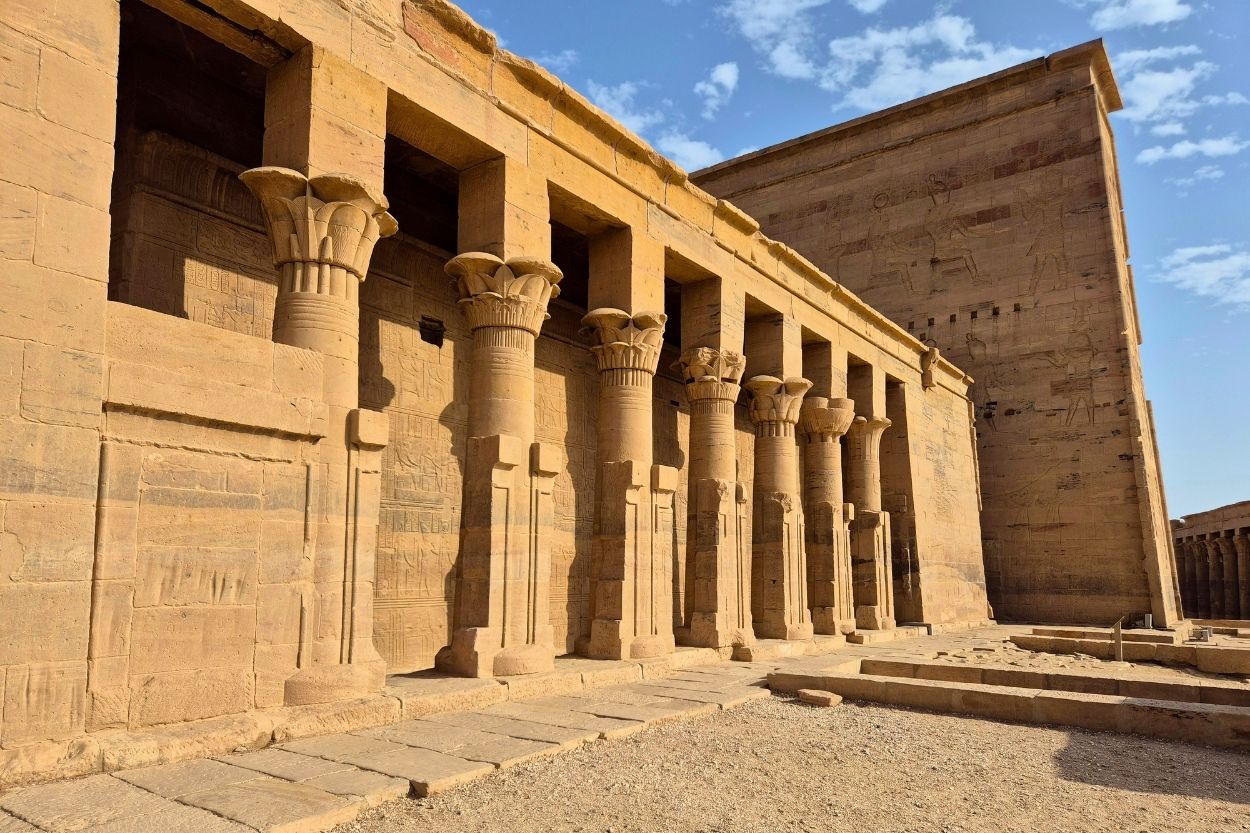
Next to the Temple of Isis is the Birth House, or Mammisi. A birth house like this is a classic adjacent structure in any ancient Egyptian temple complex from this era, with this one built to celebrate the birth of Horus, the son of Isis and Osiris.
It is a smaller, more decorative structure featuring carved columns and reliefs showing scenes of childbirth and ancient Egyptian mythology. Today, it is one of the more detailed areas of the complex, with well-preserved carvings still visible on its walls.
Trajan’s Kiosk
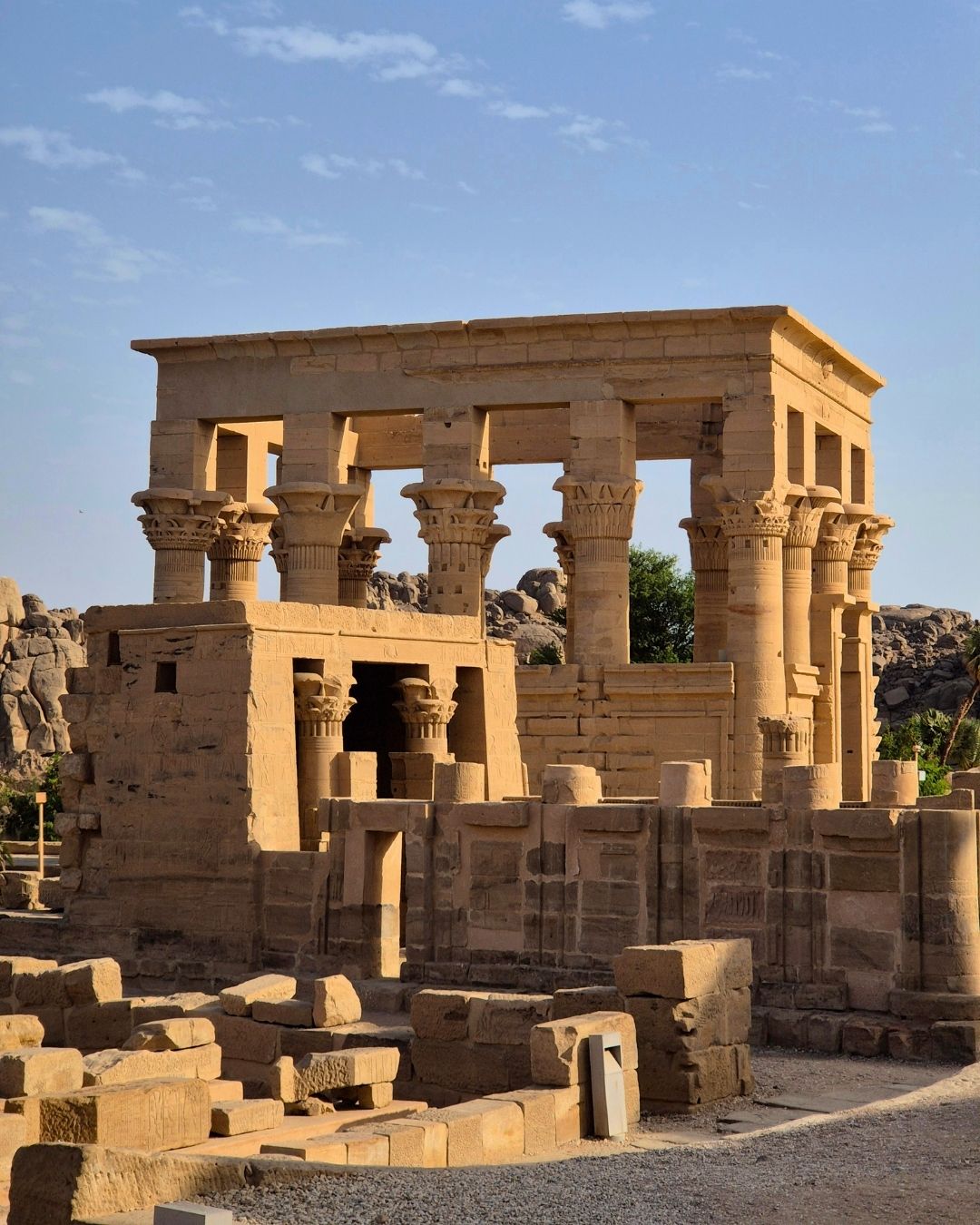
Trajan’s Kiosk, as the name suggests, was built during the Roman period under Emperor Trajan in the 2nd century CE, and was never fully completed.
It is a pavilion-like structure made up of tall columns connected by partially finished stone blocks. It is thought to have served as a gateway for religious processions arriving by boat.
Temple of Hathor
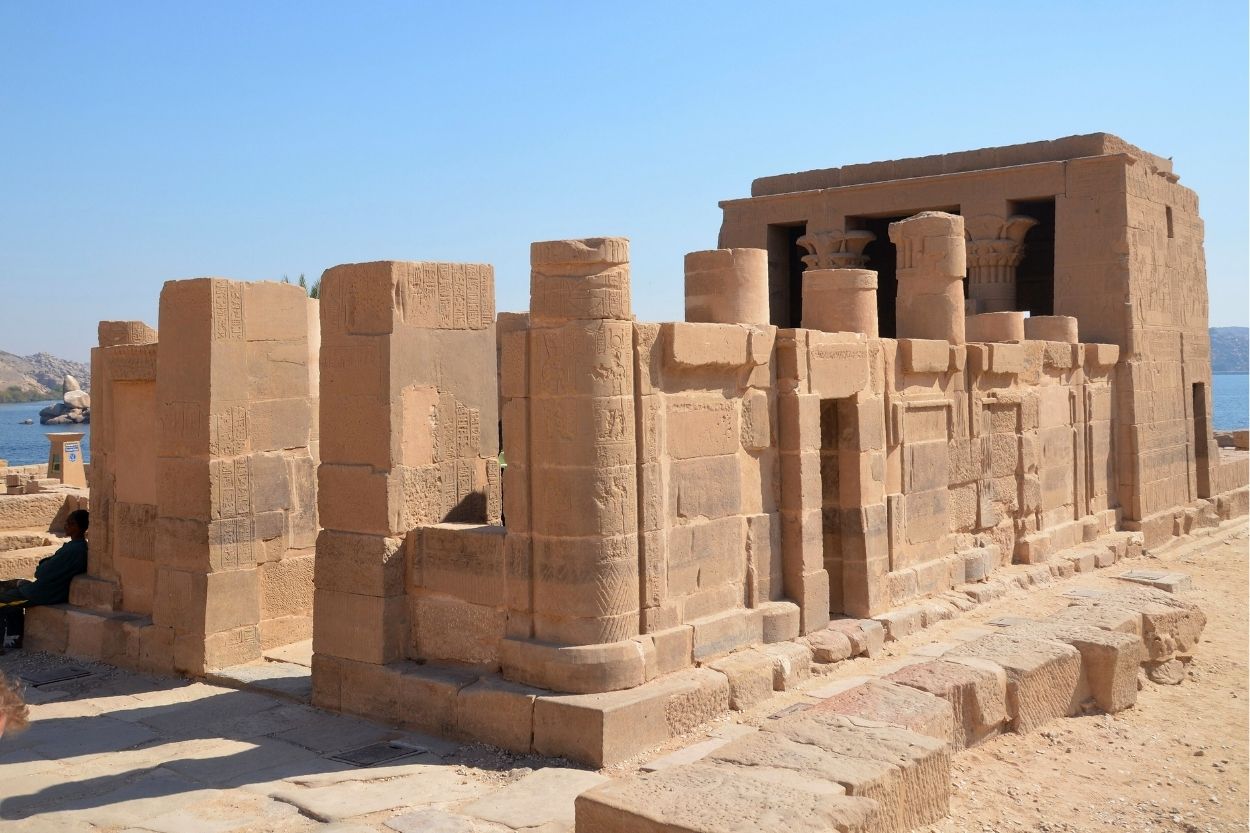
Next to Trajan’s Kiosk you’ll find the Temple of Hathor, a smaller adjacent temple that is believed to have been added during the Roman period. It is dedicated to Hathor, the goddess of music, joy, love, and motherhood
It is more modest in scale than the Temple of Isis, but features some carved reliefs and its own small hypostyle hall.
Nile Views
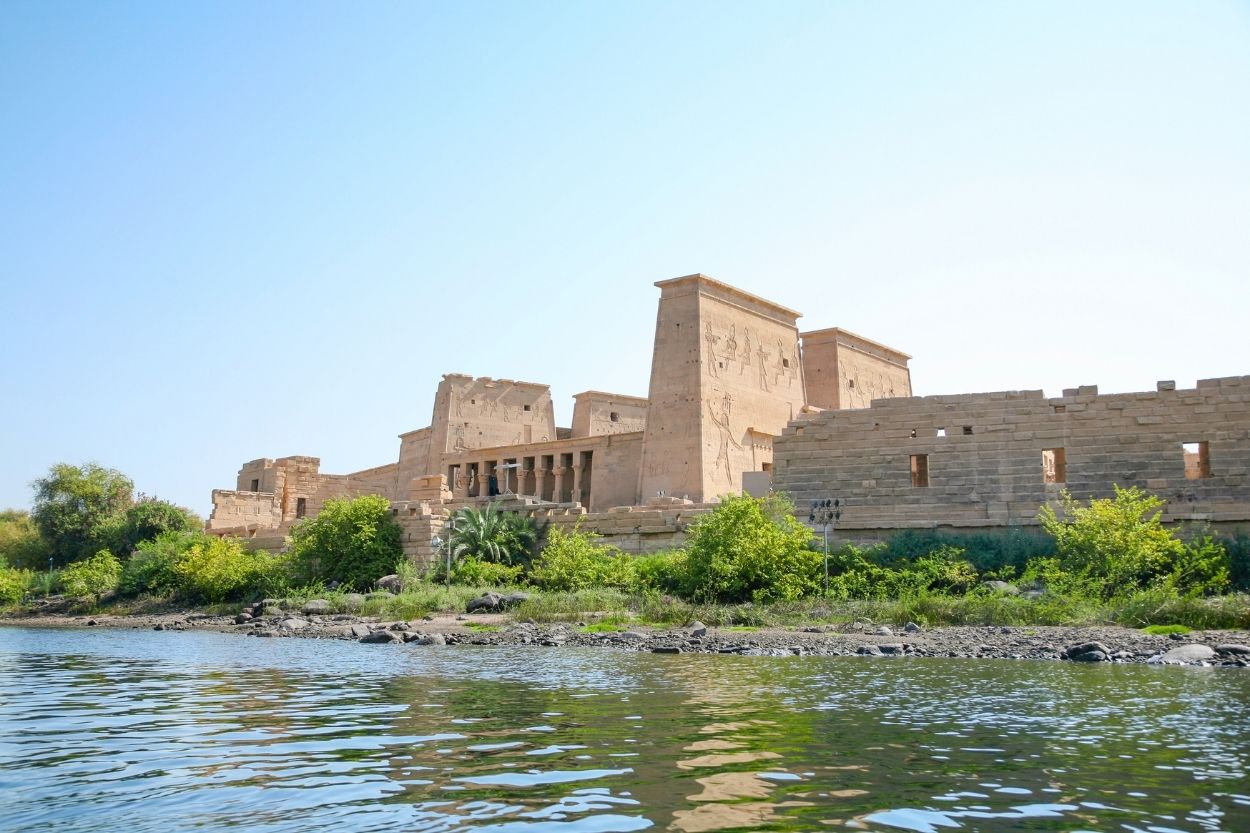
Aside from the ancient buildings, one of the highlights of visiting Philae Temple is the Nile River.
Reaching the island involves a short boat ride across the stretch of water between the Old Aswan Dam and the Aswan High Dam. It’s a chance to experience the Nile up close, with wide views of the surrounding landscape and the reservoir waters created by the dam.
While exploring Philae Temple, be sure to stop and check out the sweeping views of the Nile River along the way.
Where is Philae Temple?
📍Philae Temple is located on Agilkia Island on the stretch of the Nile River between the Old Aswan Dam and the Aswan High Dam. This is about 12km south of the downtown area of 📍Aswan.
Due to its location, the temple is only accessible by boat. More on that below…
How to get to Philae Temple?
Philae Temple is located on an island. So you might be wondering: how do I get there?
Here are your 2 main options for reaching Philae Temple from Aswan:
Option 1: Boat from Philae Marina
If you’re planning to visit Philae Temple without a tour, you’ll need to arrange your own transport to the site.
To reach Philae Island, you’ll first need to make your way to 📍Philae Marina, which is located about 10km south of downtown Aswan. The easiest way to get there is by taxi. Fortunately, finding a taxi in Aswan is rarely difficult, as you’ll likely be hounded by taxi drivers around town offering you a ride. Alternatively, your hotel reception can usually arrange for one to pick you up.
Once you arrive at the Marina and make your way past the many shop vendors harassing you into buying something from them, you’ll then need to purchase your Philae Temple ticket from the ticket booth near the pier. (more on tickets below). This ticket is only for the Temple and does not include the boat.
Make your way down the pier where you’ll find plenty of boats waiting for ferry passengers to the island. The exact price will depend on your haggling skills, but expect to pay 300 to 500 EGP for a round trip.
Make sure you arrange for the boat to wait for you and take you back after you’ve explored the island. While there are usually plenty of boats at the marina, there are often far fewer waiting at the island itself.
From here, all that’s left is to sit back and enjoy the roughly 15min ride to the island.
Option 2: Guided tour
If the above sounds like too much hassle, you can skip it and have it all arranged for you with a guided tour.
There are 2 types of Philae Temple tours to consider:
Standard Tour – There are plenty of tour operators around Aswan that will pick you up from your accommodation in an air-conditioned van, drive you to the Marina, arrange the boat and tickets, show you around the site with an experienced guide, and take you back to your accommodation. Some tours also include visits to other nearby sites, such as the unfinished obelisk.
Nile Cruise – The other type of tour is a Nile Cruise. A Cruise is one of the most popular activities in Egypt, typically running between Aswan and Luxor, and including visits to all the popular historical sites in and between these cities (including Philae Temple). It’s a fantastic way to tick off a bunch of historical sites in comfort, and highly recommended. Check out the best Nile Cruises below that include a visit to Philae Temple.
Best Philae Temple Tours
I’ve done the research so you don’t have to. Here are the top Philae Temple tours depending on what you’re looking for…
⭐ Philae Temple only (from Aswan)
⭐ Philae Temple + Unfinished Obelisk & High Dam
Is Philae Temple worth it?
So, now that you know all about Philae Temple, the real question is: is it worth including in your Egypt itinerary?
Philae Temple is arguably the top attraction in Aswan, a city known for being the gateway to Egypt’s historic Nubia region. It’s one of the best-preserved ancient temples in Egypt, with much of the original structure still intact and some of the most detailed surviving reliefs.
Combined with its island location and the short boat ride required to reach it, a visit to Philae Temple offers an experience that most other historical sites in Egypt don’t.
In short, if you are visiting Aswan, Philae Temple absolutely deserves a place on your itinerary.
Further reading on Egypt
Here are more guides on Egypt to help you plan your trip:
⬤ If you’re in Aswan, be sure to visit the world famous temple built by Ramesses the Great with this Complete Guide to Abu Simbel.
⬤ Aswan is also one of the best places to go on a day trip to the ancient Egyptian temple of Kom Ombo. Check out: Complete Guide to Visiting Kom Ombo Temple.
⬤ If you’re going to Egypt, you’re probably interested in visiting some pyramids, so check out my Travel Guide to Pyramids in Egypt.
⬤ For a guide to the last ancient wonder of the world, check out my Giza Pyramids Travel Guide.
⬤ To see the world’s first ‘true’ pyramids, check out my guide to the Red and Bent Pyramids of Dahshur.
⬤ If you’re interested in visiting the world’s oldest pyramid, check out my Travel Guide to the Saqqara Necropolis.
⬤ Plan to visit one of Egypt’s many great museums? Check out my guide comparing the Grand Egyptian Museum vs the Egyptian Museum: Which is Better?
⬤ For more travel guides, visit my Destinations page.
Disclosure: This post may contain affiliate links.