Giza is arguably the most recognisable and iconic historical site in the world.
Situated on the northern end of Egypt’s vast Pyramid Fields, the Giza Plateau was once the site of ancient Egypt’s most ambitious pyramid building. It’s home to some of the most famous historical monuments, including the Great Sphinx and the last Ancient Wonder of the World: the Great Pyramid.
Given its location just outside Cairo, Egypt’s bustling capital city, Giza is also one of the most easily accessible historical sites in the country.
In this detailed guide, you’ll find everything you need to plan your visit to Giza, including when to go, how to get there, and the best things to see once you’ve arrived.
Contents
The History of the Giza Pyramids
Somewhere in Egypt’s distant past the idea of preserving bodies after death became central to Egyptian culture and religion. To protect the deceased they began constructing mastabas – essentially rectangular shaped stone tombs. Over time these mastabas became symbols of wealth and social status.
By the 27th century BCE a new type of tomb was built, one that involved stacking 6 mastabas on top of each other, creating a towering stepped structure. This became the Step Pyramid of Djoser, the world’s first pyramid, located at Saqqara.
This new style of tomb was revolutionary, and inspired the Egyptians to build something even grander. A pyramid that wasn’t stepped, but smooth-sided. This led to the world’s first ‘true‘ pyramids at Dahshur.
Having perfected pyramid building, the Egyptians turned to the Giza Plateau for an even grander project. Starting around 2580 BC and taking 26 years, roughly 5.57 million tonnes of stone were quarried and assembled.
Most came from nearby, the fine white casing stones from across the Nile about 10 km away, and the largest blocks, ranging from 25 to 80 tonnes each, came from Aswan, roughly 900km upriver.
Exactly how these massive stones were cut, moved and placed is still debated and is beyond the scope of this guide, but you can read more about it here.
Built for Pharaoh Khufu, this became the Great Pyramid of Giza. At 147m tall, it was the tallest human-made structure on Earth for nearly 3,800 years. Its single northern entrance leads to a complex system of tunnels and chambers, with new areas still being discovered as recently as 2023.
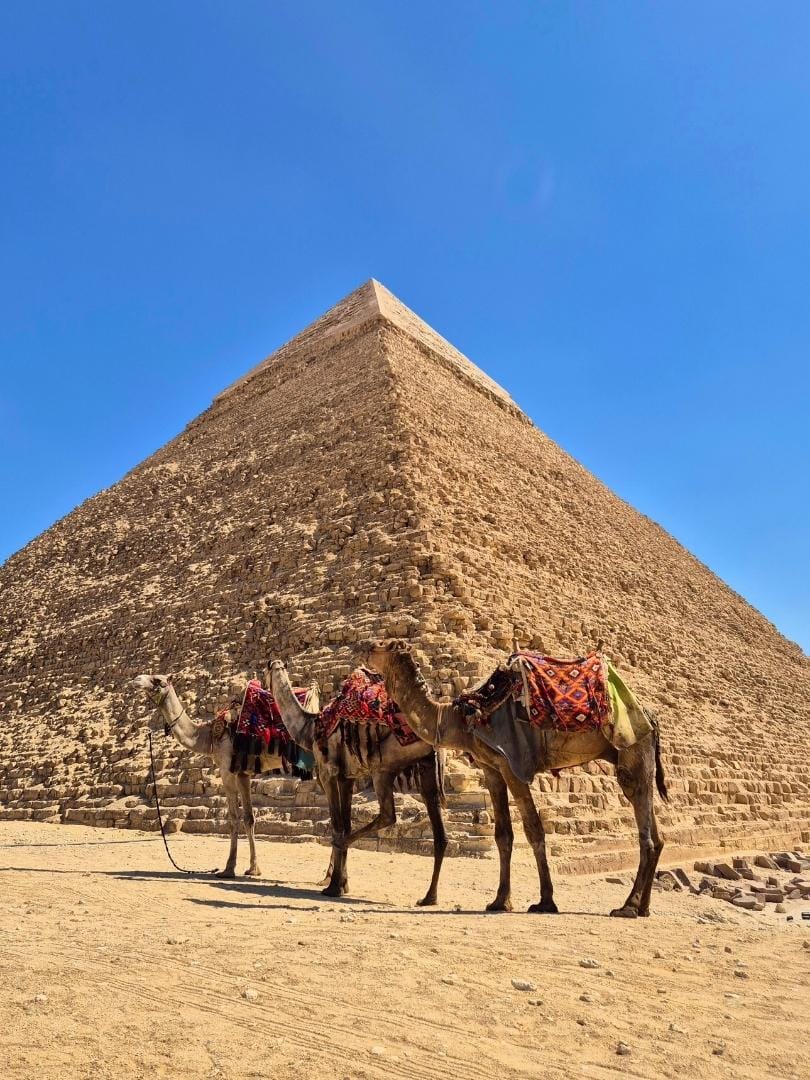
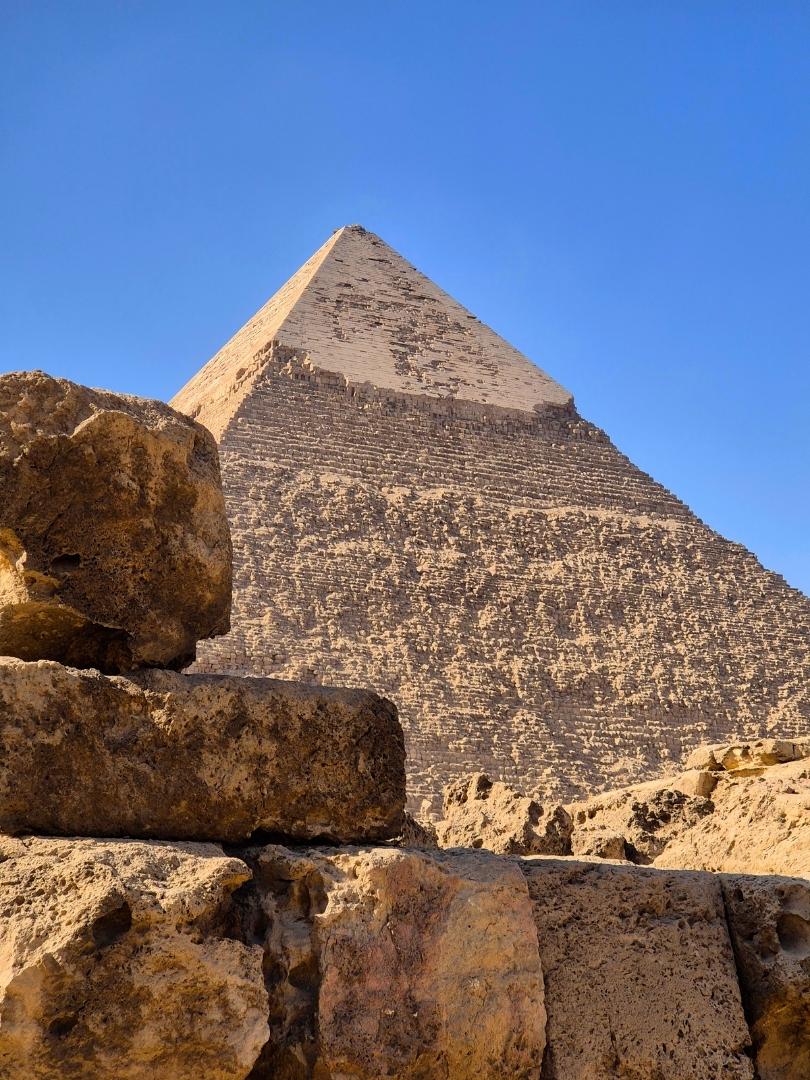
Only a few years later, Khufu’s son Khafre began construction on his own tomb. Standing at 143m tall, Khafre’s pyramid was only slightly smaller than his father’s, and today still retains some of its casing stone at its peak. In front of it, facing the Nile, he commissioned the Great Sphinx.
Khafre’s successor, Menkaure, then constructed a much smaller pyramid, standing 61m high.
Menkaure’s death marked the end of major pyramid building at Giza. Smaller tombs continued to appear for centuries, but the main construction phase lasted only about 100 years under Khufu, Khafre and Menkaure.
Over the following millenia, Giza experienced cycles of revival and repair, but by the time the Greeks took over in the 4th century BCE, the pyramids were as ancient as them as the Athens Acropolis is to us today.
It wasn’t until the 19th and 20th centuries that formal excavations, lead by European archeologists, began at Giza. Excavations are still ongoing at today and new things are constantly being discovered while the site welcomes over 15 million visitors per year.
Where is Giza?
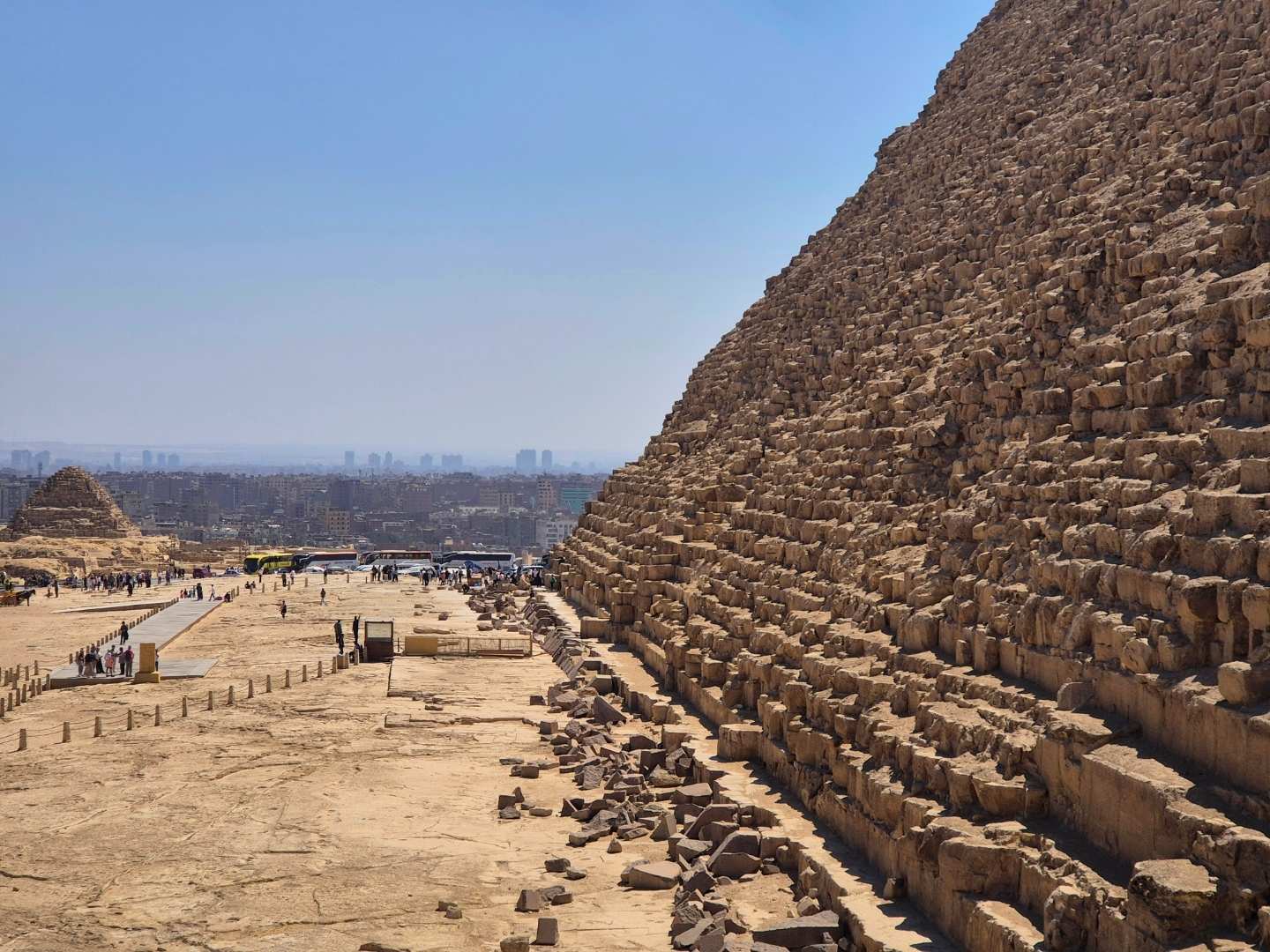
Giza is located on the outskirts of Cairo, Egypt’s capital and largest city, and only about 12km from the city centre. It forms the northern-most point of Egypt’s vast Pyramid Fields, with Dahshur at the other end.
Best time to visit Giza
The Giza Necropolis is open all year-round, but the time of year you visit can make a difference.
Being in the Sahara Desert, Egypt doesn’t experience a rainy season, nor any traditional seasons. But if you visit during the summer months (May to September), expect the days to get extremely hot, with temperatures staying consistently over 40°C.
Climbing inside the pyramids at Giza will offer an escape from the heat, but you’re still going to be spending a lot of time in the sun. If you visit Egypt during this time, aim to visit Giza early in the morning.
The best time to visit Giza, and Egypt in general, is between October and April, when daytime temperatures range from 20°C to 30°C, making the experience much more pleasant.
How long to spend at Giza?
Plan to spend at least 3 hours at Giza. This includes time to stroll around the site and admire the pyramids and other structures from the outside, and time to go inside 2 of the 3 pyramids (only 2 are open at a time, more on that below).
Giza makes for a great half day trip, allowing the other half of the day to visit the new Grand Egyptian Museum or the older Egyptian Museum in downtown Cairo.
How to get to Giza
The Giza Necropolis is located on the western outskirts of Cairo, about 12kms from the city centre.
There are plenty of accommodation options in Giza itself, many with great views of the pyramids. It’s recommended that you stay in Giza for a couple of nights as you explore not only Giza, but other nearby pyramids like those at Saqqara and Dahshur.
But for those who aren’t staying within walking distance of the Giza Pyramids, here are your options for getting there:
By Taxi
Finding a taxi in Cairo is easy. As a tourist, you’ll likely be offered a taxis very insistently, even when you don’t need one. All taxis in Egypt are required to have meters, but many drivers choose not to use them, especially with tourists. To avoid getting ripped off, make sure your driver uses their meter before setting off.
By Uber
Egypt does have Uber, but while it can be cheaper than your average taxi, it’s also somewhat unreliable. Drivers will often try to charge you more than what stated in the app, and may cancel the ride if you refuse. But if you do get lucky and find a driver who sticks to the app, Uber can be a convenient way to get around.
By Tour
There are many companies that offer tours to the Giza Pyramids. This covers your transportation to and from your hotel, your entry ticket (sometimes optional), and provides you with a knowledgeable guide to help you get the most out of your visit. There are a range of tours to choose from. Some include only the Giza Pyramids, some also include the nearby Grand Egyptian Museum, and other full-day tours might include Saqqara and Dahshur.
By Private Driver
If you want the most convenient transport and prefer to explore the site on your own, consider hiring a private car and driver. Most hotel receptions can arrange a driver for you, with the price depending on how long you need it for.
It’s also possible to get around using Egypt’s public transportation (bus, metro, etc), but this can be difficult for foreigners who don’t speak the language.
Where to stay at Giza
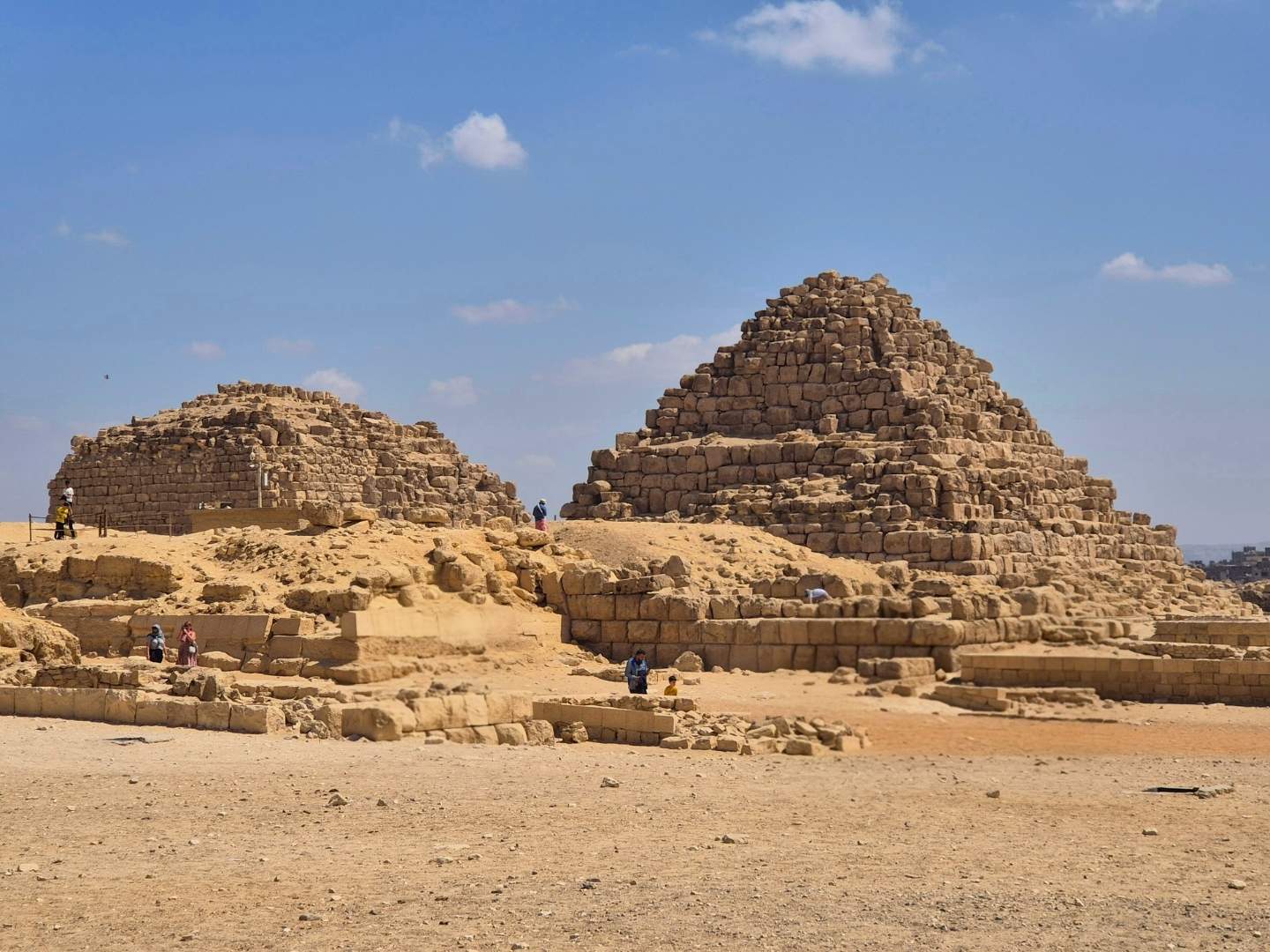
The Giza Pyramids are located not in a remote location, but right next to the city. This may take away from its magic somewhat, but it means that there are hotels right outside the fence, with amazing views of the pyramids.
Most hotels are located near the eastern gate to the complex, and this is the best place to stay if you want to watch the sunset over the pyramids.
If you’re seeking a medium-range hotel with great views of the Giza Pyramids, I recommend the Comfort Sphinx & Pyramids Inn, but you can find many more options to choose from on Booking.com.
Giza Pyramids ticket information
Giza Pyramids ticket prices in 2025 are:
700 EGP – Standard entry to the site.
The standard entry ticket gets you access to the Giza Plateau, allowing you to walk around and view all the structures. To go inside any of them, however, you need to purchase one of the following additional tickets:
- 1500 EGP – Entry to the Great Pyramid
- 280 EGP – Entry to the Pyramid of Menkaure
- 200 EGP – Pyramid of Khafre
- 200 EGP – Mars Ankh Tomb
- 700 EGP – Labor Tombs (minimum 5 tickets required)
You can book your Giza Pyramids tickets online in advance from the Egypt Monuments website, or from the ticket booth at either entrance.
Giza Pyramids opening hours
The Giza Pyramid complex is open from 7am to 4pm all year round, including on public holidays.
The only exception to this is during Ramadan when the opening hours are reduced to 8am to 3:30pm. The exact dates of Ramadan change slightly every year, but in 2026 it’s expected to run from mid-February to mid-March.
Things to see at Giza
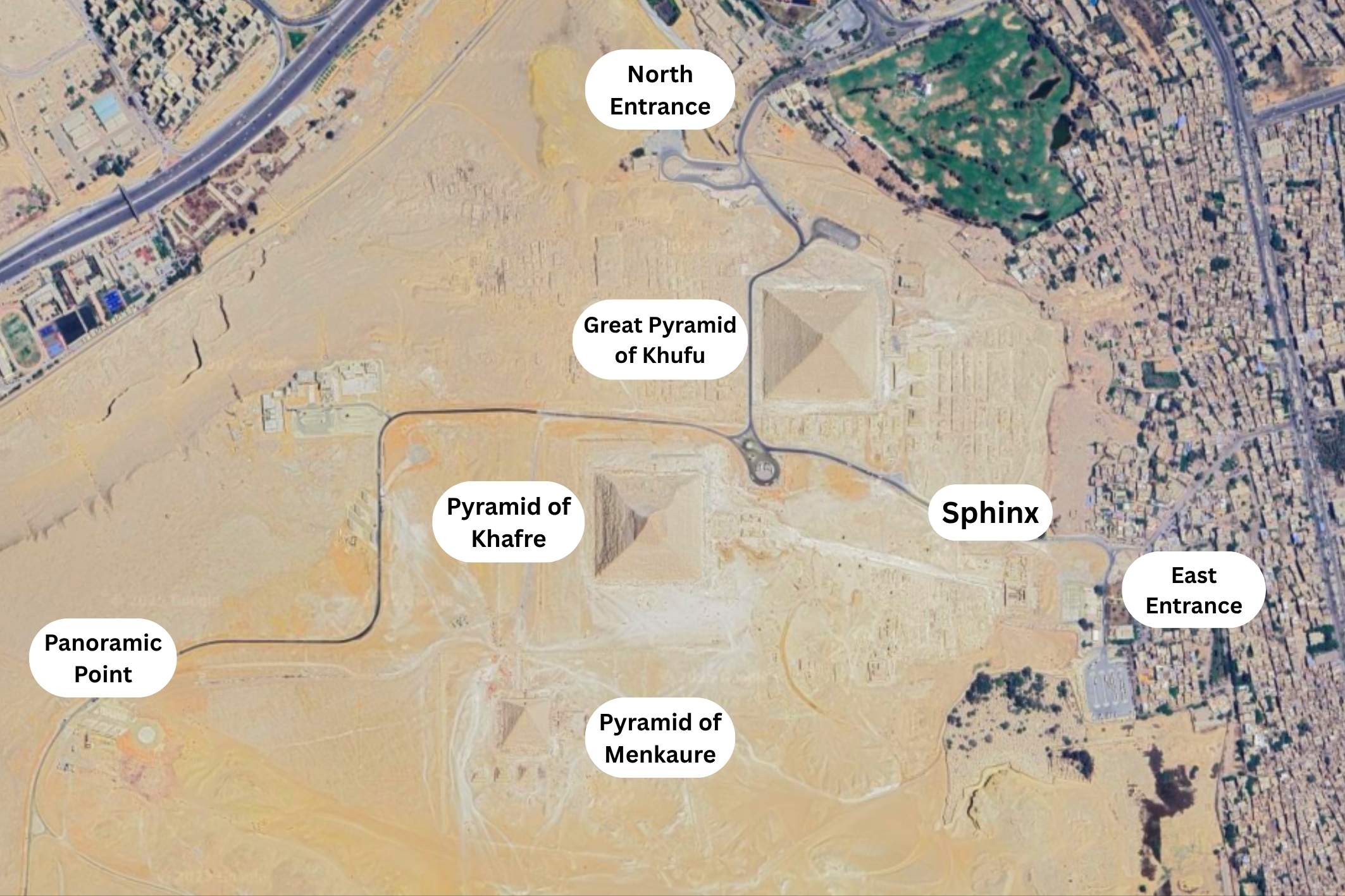
There’s a lot to see at the Giza Plateau. In addition to the Great Pyramid, you’ve got the Pyramids of Khafre and Menkaure, the Great Sphinx, the Tomb of Meresankh III and the workers area.
There are many smaller mastabas and monuments you’ll see as you explore the site, as well as several areas that are off limits, but below are the main highlights.
Of the 3 pyramids at Giza, only 2 will be open at any one time. The Great Pyramid of Khufu is always open for visitors to go inside, while the pyramids of Khafre and Menkaure are alternated. This means that no matter what time of year you visit Giza, you’ll only be able to go inside 2 of the pyramids.
Great Pyramid of Khufu
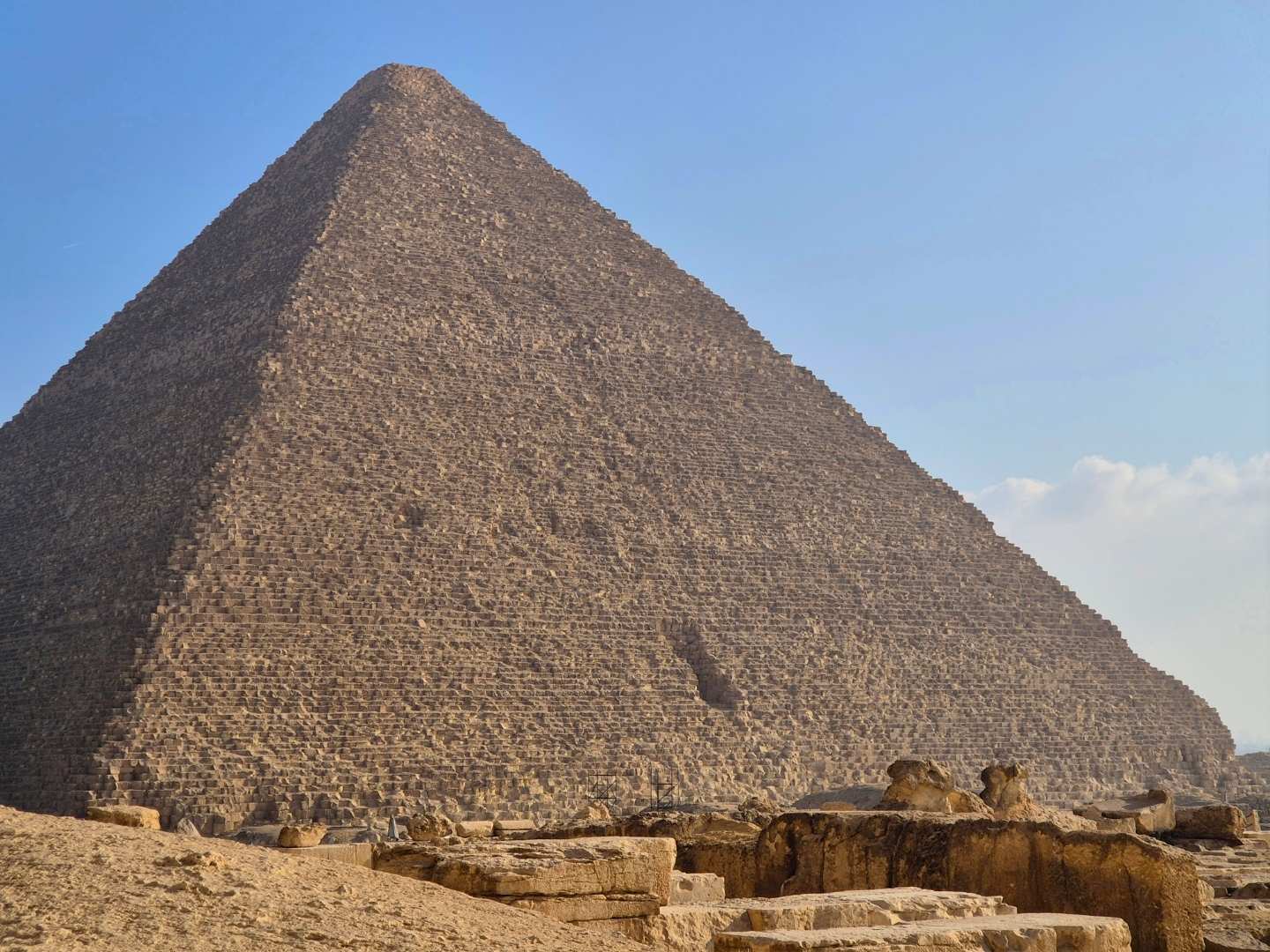
The first and largest of Giza’s pyramids, the Great Pyramid is the star attraction. Built around 2560 BCE for Pharaoh Khufu, it originally stood at 146 metres tall and was the tallest structure on Earth for nearly 3,800 years. It’s made from an estimated 2.3 million limestone blocks, some weighing up to 80 tonnes, and remains the only surviving Wonder of the Ancient World.
The Great Pyramid is the only pyramid at Giza that’s open to visitors all year round. There are many tunnels and chambers within the structure, but the path visitors follow leads to the King’s Chamber, right in the centre. To get there, you’ll enter through the entrance on the pyramid’s northern face before walking, and potentially crawling, through a series of tunnels of various sizes.
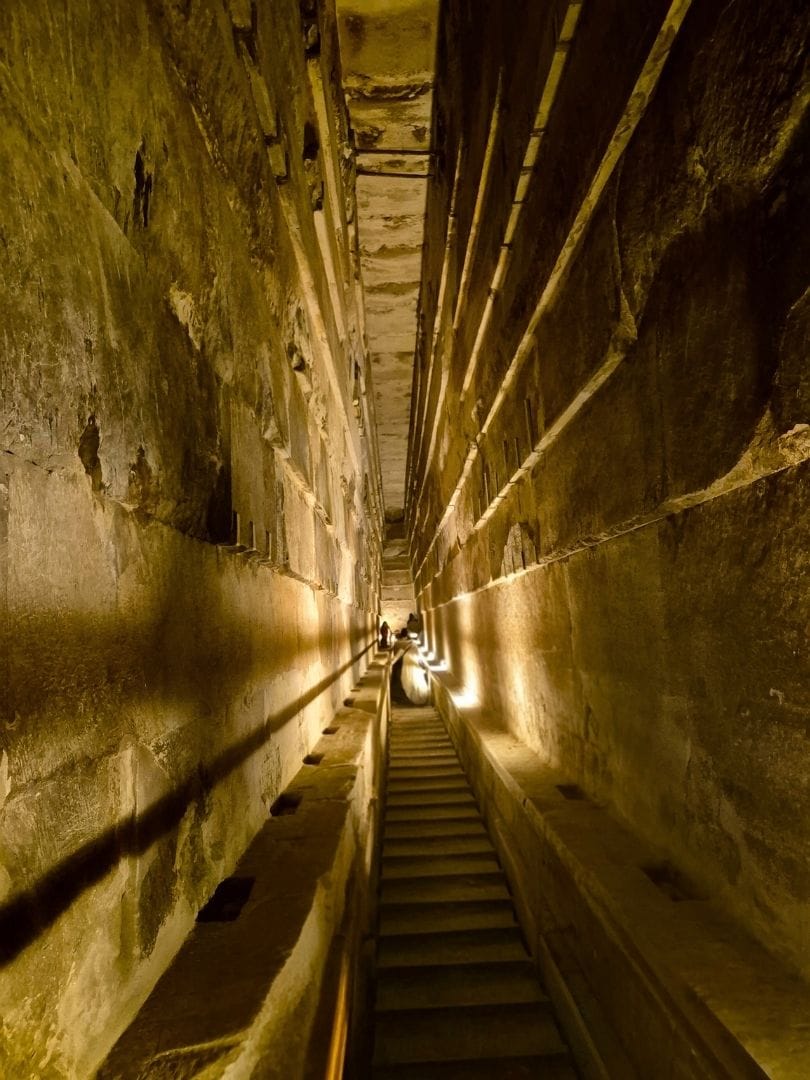
The first section of the tunnel is spacious enough to stand up in, but it soon gives way to a small, about 1.5m tall and wide, tunnel that ascends for about 40 metres. The rest of the journey is much easier, as you climb the stairs up the spacious Central Gallery before reaching the King’s Chamber at the top.
Going inside the Great Pyramid isn’t for everyone. In addition to crawling through confined spaces, the lack of airflow inside the structure means the air gets very hot and humid. With the addition of a few hundred people navigating the tunnels alongside you, the experience can be a challenge for some.
But it’s all worth it once you reach the King’s Chamber. Standing in the centre of a 3800 year old pyramid, the same place where great historical figures, like Khufu and Napoleon, once stood is an unforgettable experience.
Pyramid of Khafre
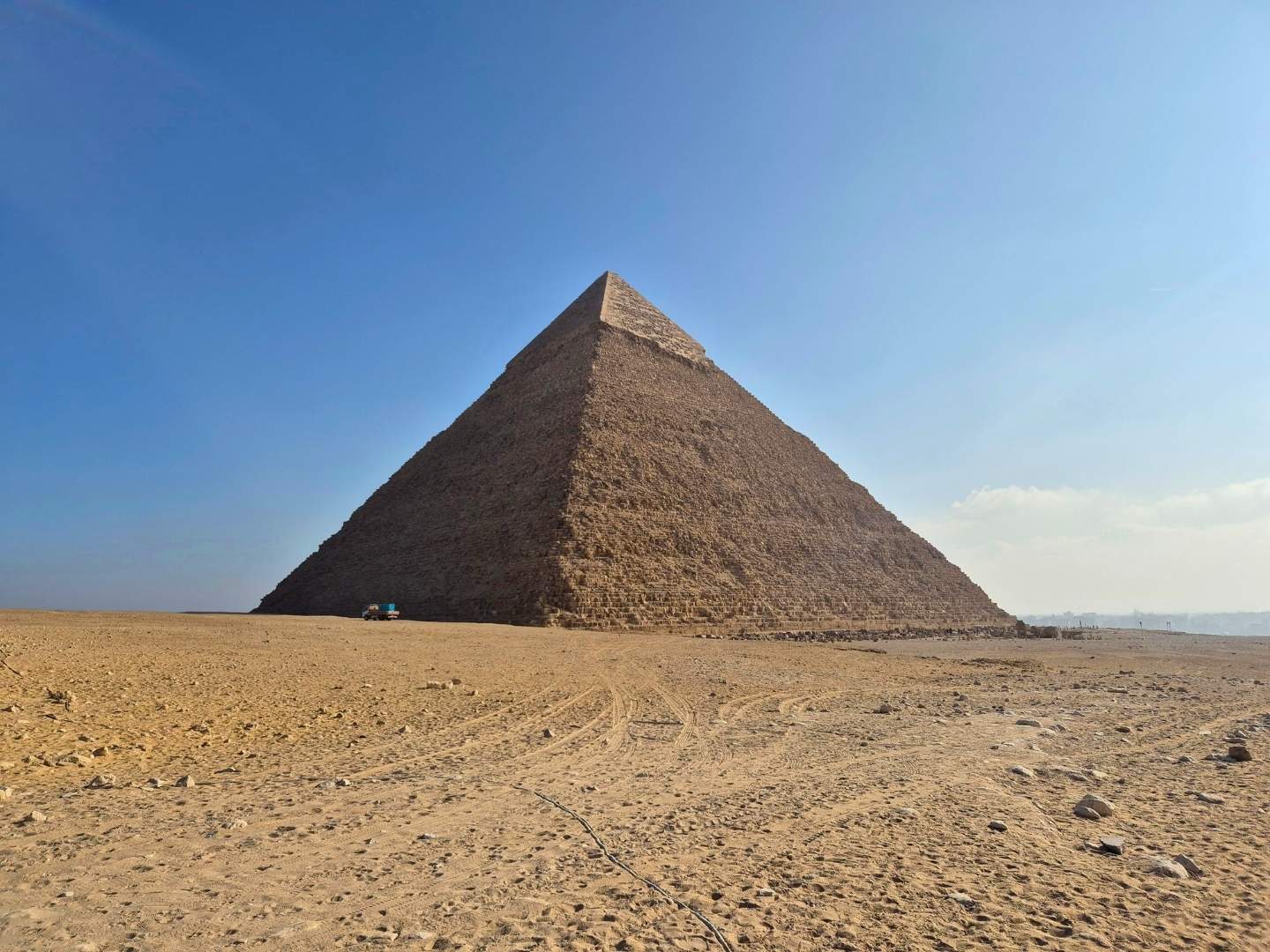
Next to the Great Pyramid stands the Pyramid of Khafre. Though it appears to be the taller of the two, Khafre’s pyramid stood about 3m shorter than its counterpart when it was first built, but was constructed on slightly higher ground (about 10m higher).
Built for Pharaoh Khafre, the son of Khufu, construction on this pyramid began shortly after the Great Pyramid was completed. Today, it still retains some of its casing stone at its peak, offering a small glimpse into how these pyramids looked before their outer layer was pillaged and eroded.
Like the Great Pyramid, Khafre’s pyramid is open to visitors to go inside, but unfortunately it isn’t open all year round. Khafre’s pyramid is alternated with the Pyramid of Menkaure, meaning only one will be open during your visit.
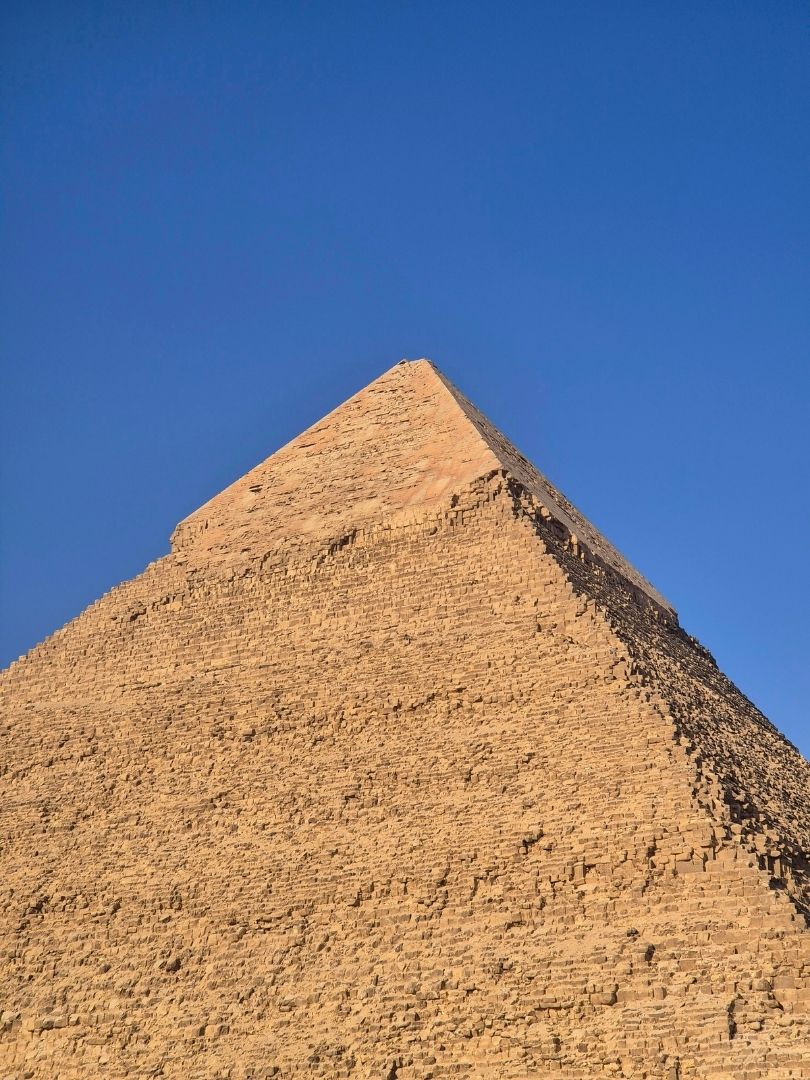
Visitors can enter the Khafre’s pyramid through a tunnel on its northern face, crawling down a narrow passage that descends into the bedrock beneath the structure. After this, the interior opens up somewhat and it’s easy to reach the central chamber, where you’ll find Khafre’s sarcophagus.
The interior of Khafre’s pyramid is less impressive than the Great Pyramid, but it also offers a quieter experience, with less crowds to contend with compared to the ever-popular Great Pyramid.
Pyramid of Menkaure
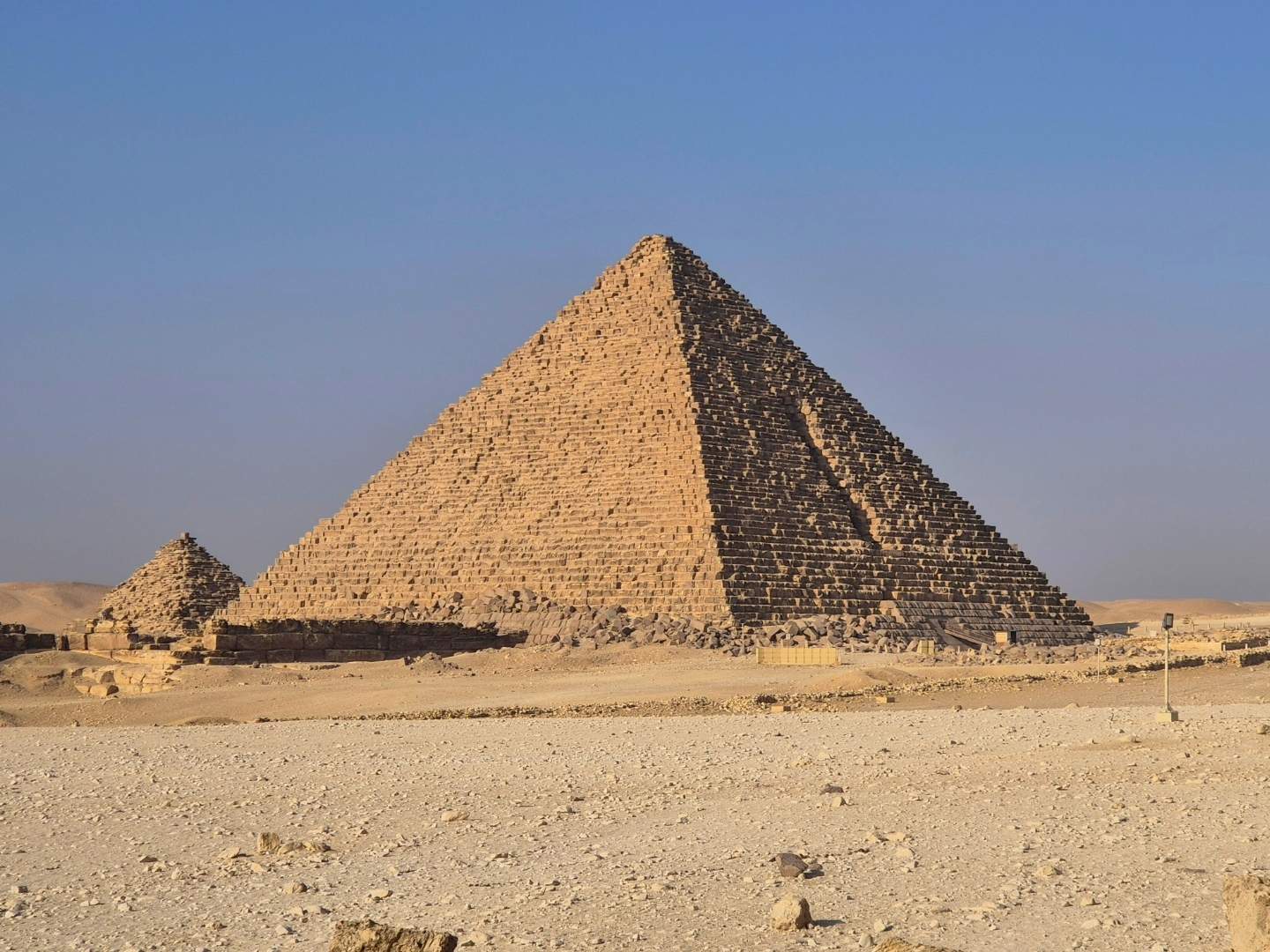
The final and smallest of the Giza’s 3 main pyramids, Menkaure’s is often overlooked in favour of its more impressive counterparts.
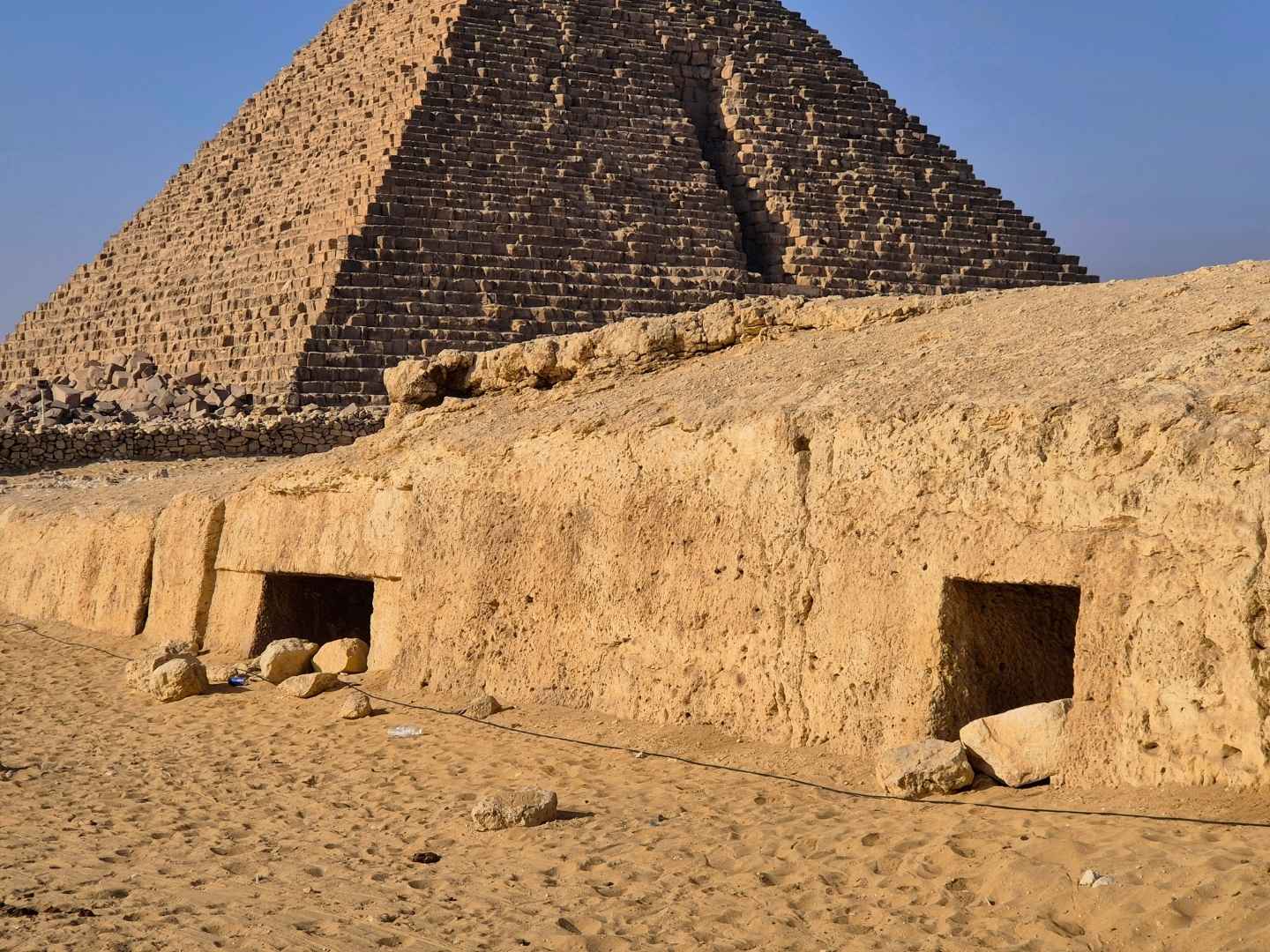
Built for Pharaoh Menkaure, the successor of Khafre (it’s unknown if they were related), this pyramid stood at ‘only’ 65 metres tall. The pyramid was never fully completed, with only the lower portion of the casing stone being applied, some of which can still be seen today.
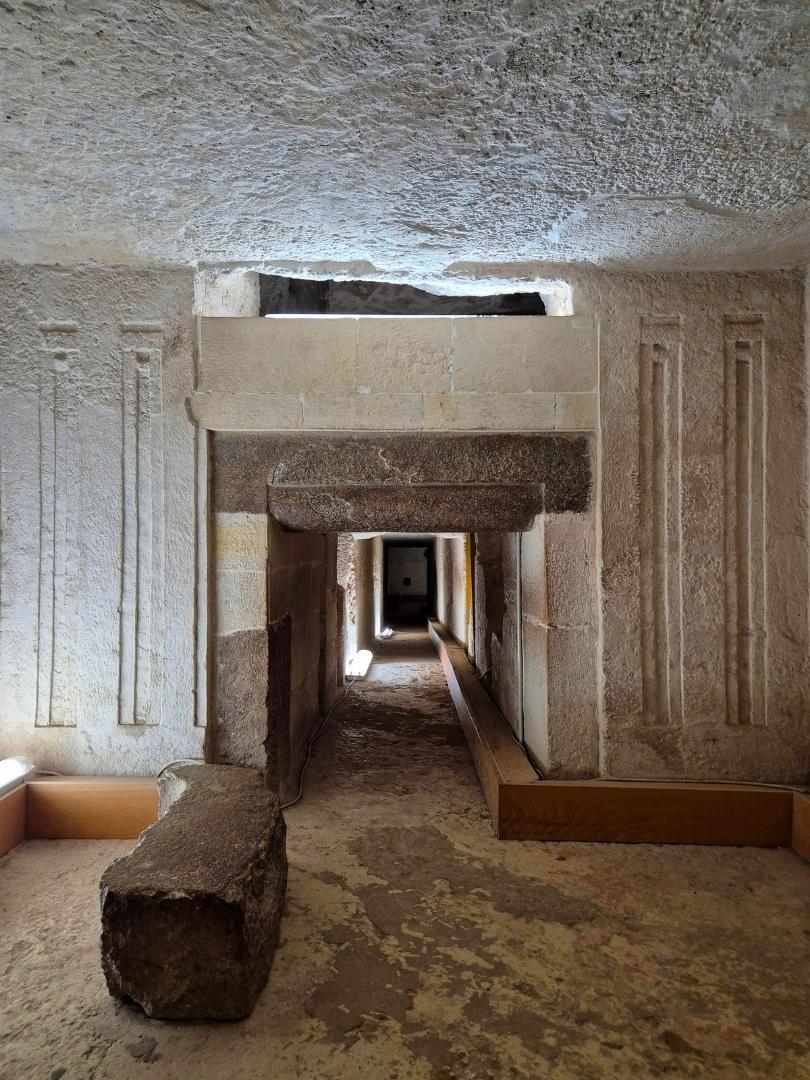
Like the other 2, the pyramid of Menkaure is open for visitors to go inside, although it is alternated with Khafre’s Pyramid. The easiest of the 3 to navigate, Menkaure’s tomb does require some crawling/squatting through the initial tunnel, but the rest of the interior is relatively spacious, and has a lot less ground to cover than the others.
The Pyramid of Menkaure sees far less crowds than the Great Pyramid. Personally I visited the pyramid right as the site opened, and had the whole place to myself.
The Great Sphinx
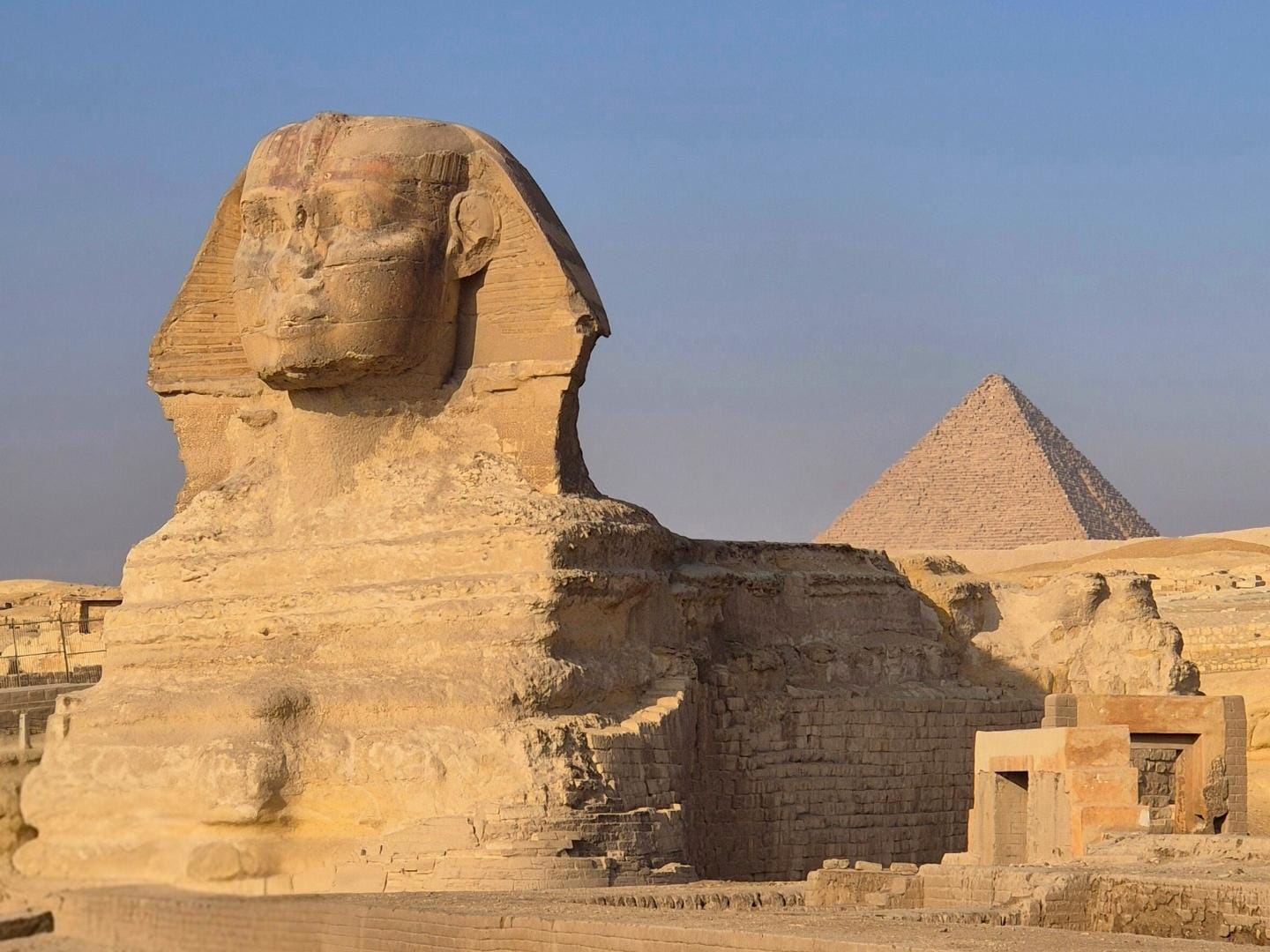
A visit to Giza wouldn’t be complete without saying hello to the Sphinx – one of the most recognisable monuments on Earth. With the body of a lion and the head of a man, it sits before the Pyramid of Khafre and was carved directly from the limestone bedrock where it stands.
No one is quite certain when it was built, but it was certainly during the main pyramid building phase at Giza. Its alignment with Khafre’s pyramid suggests it was built alongside his tomb, and many Egyptologists believe the face of the Sphinx was modelled after Khafre himself.
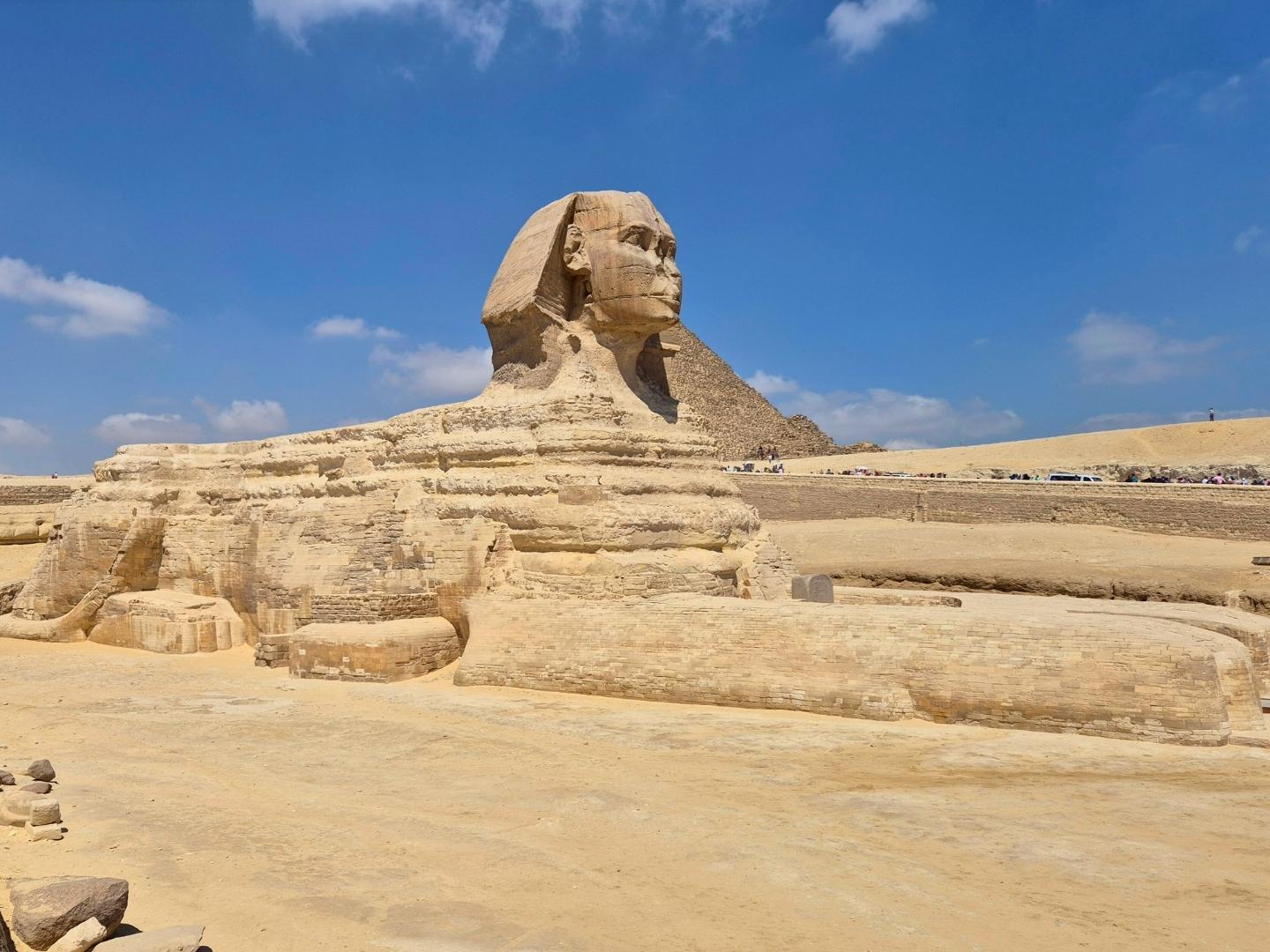
There are many places around the complex to get a good view of the Great Sphinx, but for the best angles there are 2 main viewing platforms you don’t want to miss.
The first, to the Sphinx’s right, provides a postcard of the statue view with the Great Pyramid in the background. The second is directly in front of the monument, where you can get a close up look at the famed Dream Stelae.
No additional ticket is required to visit or view the Sphinx – access to both viewing areas is included with your standard entry to the Giza Plateau.
The Labor Tombs
For a long time, historians and archaeologists believed that a massive slave labour force was used to build the pyramids at Giza. Afterall, slavery was the norm in ancient societies, so naturally one would assume the ancient Egyptians used it to haul and place the heavy stones.
But this all changed in the 1990s with the discovery of the so-called Labor Tombs. Located about 500m away from the main pyramids, the Labor Tombs are what remains of the area the workers lived during the construction of the pyramids.
The excavations of this living area revealed that these workers were skilled and provided with proper living spaces including housing, bakeries, and medical care.
The Labor Tombs are a great way to get to know the people who really built the pyramids. Unlike the other monuments at Giza, Labor Tomb tickets are not sold individually and require a minimum group of 5 to visit.
Mars Ankh Tomb
When building great monuments for themselves, it wasn’t uncommon for pharaohs to build a little something for their queens – just as Ramesses II built a temple for Queen Nefertari at Abu Simbel.
The same happened here at Giza. While Khafre built his pyramid, a tomb was created for Queen Meresankh III. Officially called the Mars Ankh Tomb at the ticket booth, this mastaba sits just east of the Great Pyramid in Giza’s Eastern Cemetery.
Inside visitors can explore 3 relatively large chambers containing murals that depict aspects of ancient Egyptian daily life, as well as sculptures of Meresankh and members of her family. Visitors can then descend the stairs down the 5 metre deep burial shaft which used to contain Meresankh’s sarcophagus (now on display at the Grand Egyptian Museum).
The Sound & Light Show
Every evening, the Pyramids and the Sphinx are illuminated during the Giza Sound & Light show. a long-running show that uses projection lights, lasers and narration to tell the story of ancient Egypt.
The show runs for about an hour, and is available in multiple languages. It first began in the 1960s and some of the tech does feel a bit out-dated, but it’s an interesting activity if you’re in Giza and looking for something to do in the evening.
Check out the official website to learn more.
Other things to see near Giza
This region of Egypt has a lot more to offer than just the Giza pyramids. Here are some other amazing historical sites near Giza you don’t want to miss.
The Museums
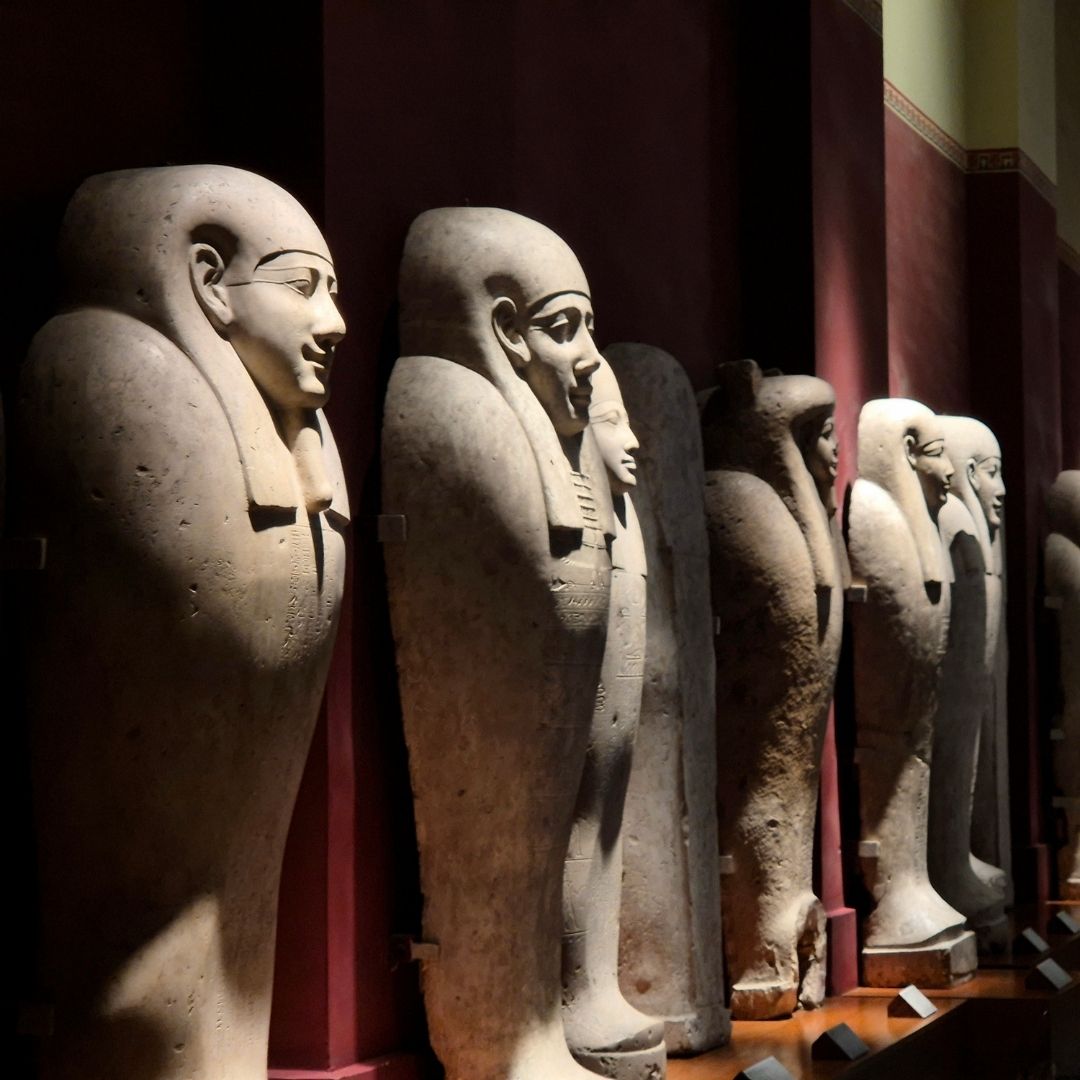
A visit to the Giza Plateau really isn’t complete without stopping by the museums. That’s right, museum(s) – there’s more than one.
The Museum of Egyptian Antiquities (often simply called the Egyptian Museum) is located in Tahrir Square in central Cairo. For more than a century, it has been Egypt’s premier history museum, and is full of artefacts stretching from the Old Kingdom all the way to the Romans.
Then there’s the Grand Egyptian Museum (GEM), Egypt’s billion-dollar project to create one of the largest museums in the world. The official opening is scheduled for 1st November 2025, but the museum has been partially open for some time. Once fully complete, the GEM will be the go-to place for Egyptian history, and will house many of the artefacts still found in the older museum.
Not sure which museum to visit? Check out my guide:
Saqqara
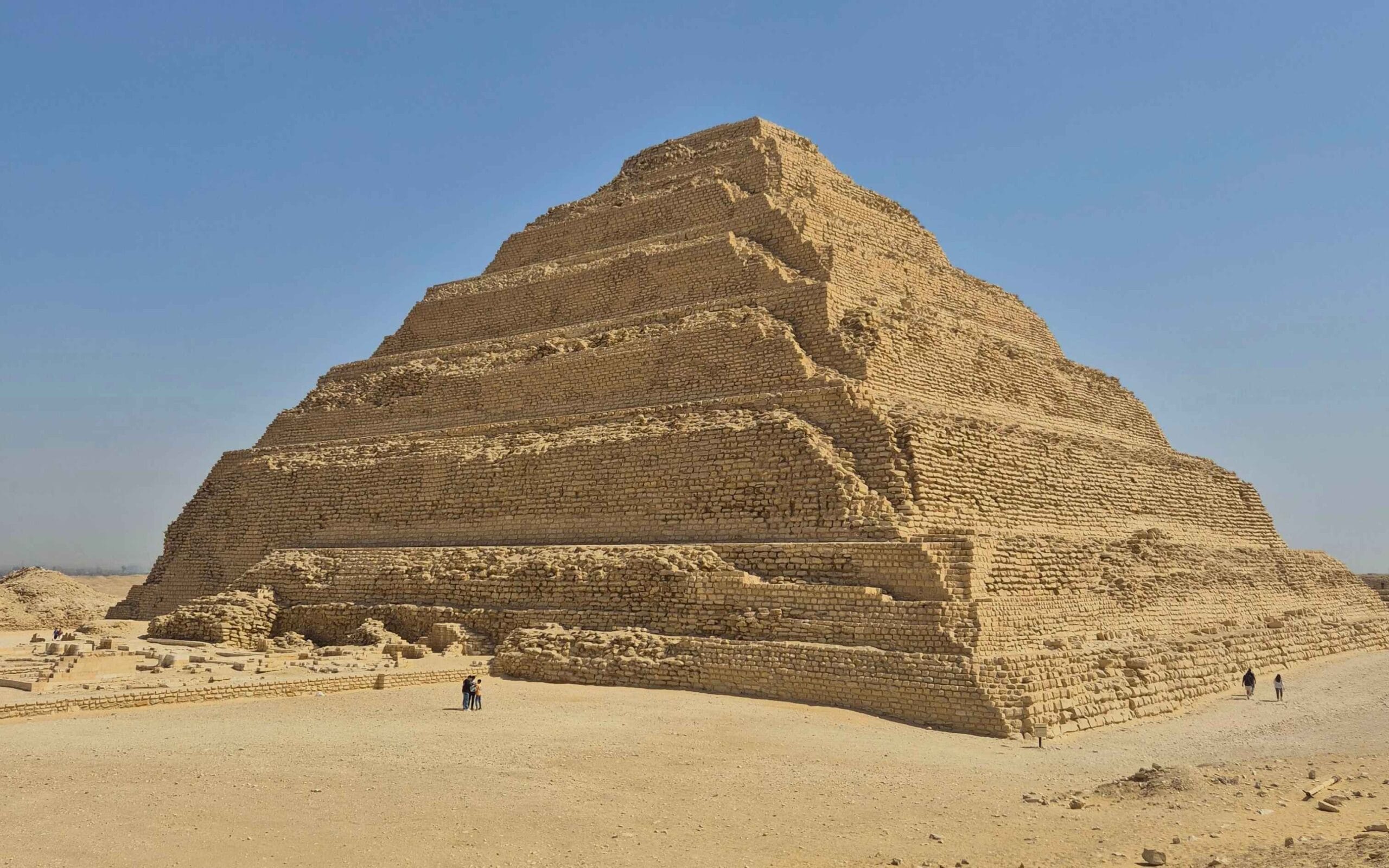
If you’ve visited Giza and want to see more pyramids, then travel down the Pyramid Fields to the Saqqara Necropolis to find the world’s oldest.
Located less than an hour’s drive south of Giza, Saqqara was the original burial ground for Egyptian elites during the reign of Egypt’s first capital city of Memphis.
This sprawling necropolis has countless mastabas and monuments to explore, but the star attraction is undoubtedly the Step Pyramid of Djoser, the world’s first. It may not be a ‘true’ pyramid (smooth sided), but it’s the original and represents the moment when Egyptians discovered pyramid-building.
Saqqara can be visited on a half day trip on the same day as Giza, but its best combined with Dahshur and Memphis.
Dahshur

Cap off your Egyptian pyramid adventure with a visit to Dahshur, home of the world’s first ‘true’ pyramids.
Located about an hour’s drive south of Cairo and just a short distance from Saqqara, Dahshur boasts pyramids that are even older than those at Giza. While the Step Pyramid of Djoser was Egypt’s oldest, those at Dahshur represent the moment Egyptians perfected pyramid building.
Here you’ll find the odd-shaped Bent Pyramid – somewhat of a trial-and-error effort by the ancient Egyptians – and the Red Pyramid, the first successful attempt at building a smooth-sided pyramid. The pyramids at Dahshur set a precedent and paved the way for those at Giza.
Dahshur also offers a quieter and less crowded experience than Giza.
Cairo
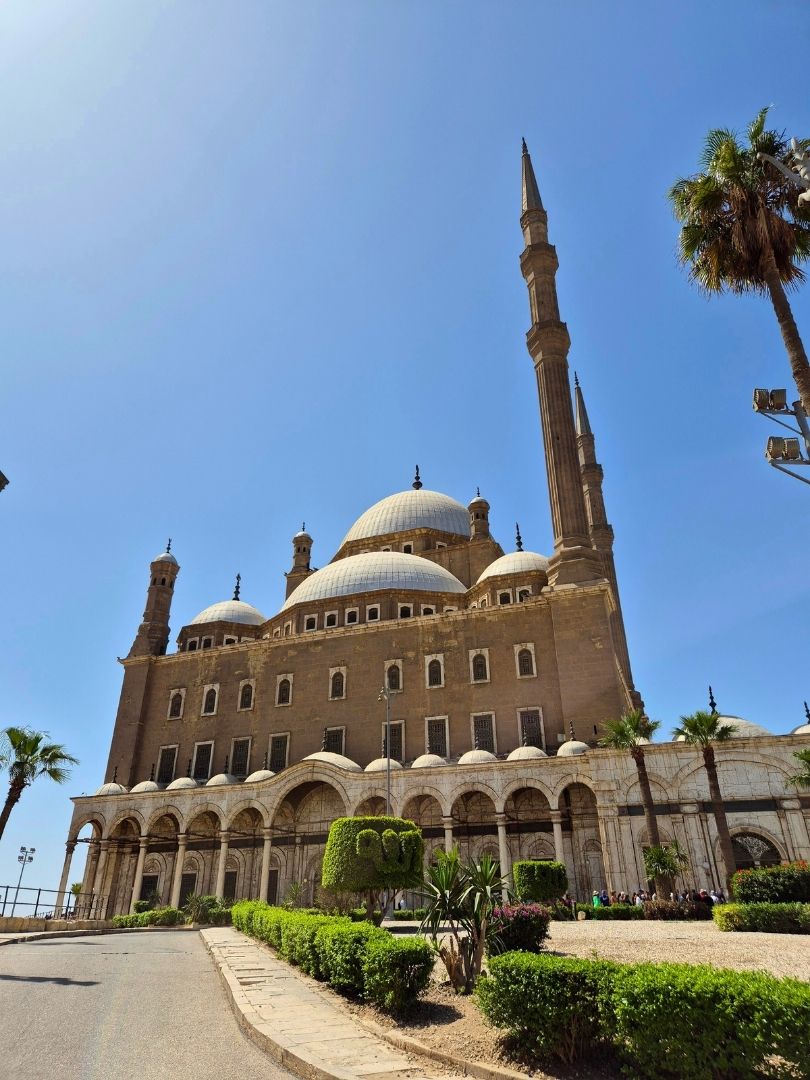
Beyond the ancient monuments of Egypt’s Pyramid Fields, the city of Cairo also has a lot to offer for history lovers. The city’s history dates back thousands of years, and it has long been one of the most important in the Middle East.
The city began as a Roman settlement, where some of the world’s oldest churches were built. This area, known today as Old Cairo (or Coptic Cairo), preserves remnants from Egypt’s early Christian period, including the famous Hanging Church and the Church of St. Sergius.
Following the Arab invasion in the 7th century, Cairo (then called Fustat) became one of the most important centres in the Islamic world. The city is littered with historical sites from this era, such as the Mosque of Ibn Tulun and Cairo Citadel.
It may be chaotic and crowded, but Cairo
Giza FAQs
Are the Giza Pyramids worth visiting?
Yes, Giza is absolutely worth visiting.
It’s home to some of the oldest, largest and most iconic historical monuments in the world, including the Great Pyramid which is the last remaining of the Ancient Wonder of the World. Giza is also located right on Cairo’s doorstep, making it one of the most accessible of all Egypt’s historical sites.
Can you go inside the Giza Pyramids?
Yes, you can go inside the Great Pyramid of Khufu, the Pyramid of Khafre and the smaller Pyramid of Menkaure. However, while the Great Pyramid is open all year around, the other 2 are rotated seasonally, so you’ll only ever be able to go inside 2 during your visit.
Which pyramid is the best to go inside?
The best pyramid to go inside at Giza is the Great Pyramid of Khufu.
It may be the more crowded of the 3 pyramids at Giza, but the Great Pyramid has the most elaborate and impressive interior.
Can you climb the Pyramids at Giza?
No, climbing the pyramids at Giza is strictly prohibited.
Are there toilets at the Giza Pyramids?
Yes, there are toilet facilities near the 2 entrances to the Giza Pyramids complex. Like most public toilets in Egypt, you will need to pay a small fee to the attendant before entering.
Is there food & drink available at the Giza Pyramids?
Yes, there are cafes/restaurants near the eastern entrance to the Giza Pyramids complex, as well as many restaurants in the streets just outside the complex.
Further reading on Egypt
⬤ If you’re going to Egypt, you’re probably interested in visiting some pyramids, so check out my guide on How to Visit Pyramids in Egypt.
⬤ To see the world’s first ‘true’ pyramids, check out my guide to the Red and Bent Pyramids of Dahshur.
⬤ If you’re interested in visiting the world’s oldest pyramid, check out my Travel Guide to the Saqqara Necropolis.
⬤ To explore a different side to Egypt, check out: 10 Best Historical Sites in Cairo (that aren’t the pyramids).
⬤ Plan to visit one of Egypt’s many great museums? Check out my guide comparing the Grand Egyptian Museum vs the Egyptian Museum: Which is Better?
⬤ Buried in sand for over a thousand years, the best preserved ancient Egyptian temple can be found at Edfu. Plan your visit with this guide: Complete Travel Guide to Edfu Temple.
⬤ For one of the most unique ancient Egyptian temples, visit the dual Temple of Kom Ombo: Complete Travel Guide to Kom Ombo.
⬤ For more travel guides, visit my Destinations page.
Disclosure: This post may contain affiliate links.