
Hue Citadel was the first capital of a unified Vietnam, and is one of the country’s top historical attractions.
Built in the 19th century during Vietnam’s last dynasty, this citadel was once the heart of Imperial Vietnam – home to the royal family and the administrative centre of the country.
It was inspired by the Forbidden City in Beijing, and is essentially a smaller version but with a unique Vietnamese flair. Today, this UNESCO World Heritage Site is open to the public and is one of the most popular historical attractions in the country.
In this guide, you’ll find everything you need to visit Hue Imperial Citadel, including what to see, how to get there, ticket info and more.
Best Hue Citadel Tours
I’ve done the research so you don’t have to. Here are the top Hue Citadel tours depending on what you’re looking for…
⭐ Hue Citadel only (walking tour)
Contents
Brief History of Hue Citadel
Hue Imperial Citadel was built relatively recently, in 1803.
This was at the end of a very rough century for Vietnam, with various wars and civil conflicts that ended with a ‘unified’ Vietnam. No longer was Vietnam just the land to the north, centred around the Red River Delta. It now stretched all the way to the Mekong Delta in the south.
Vietnam was now ruled by the Nguyen Dynasty. Little did they know, they would be the last of Vietnam’s royal families.
In order to be more central in the newly extended empire, Emperor Gia Long moved the capital from Hanoi to the original home of the Nguyen Dynasty: Huế. Here they built a capital worthy of the new nation, taking inspiration from the Forbidden City in Beijing.
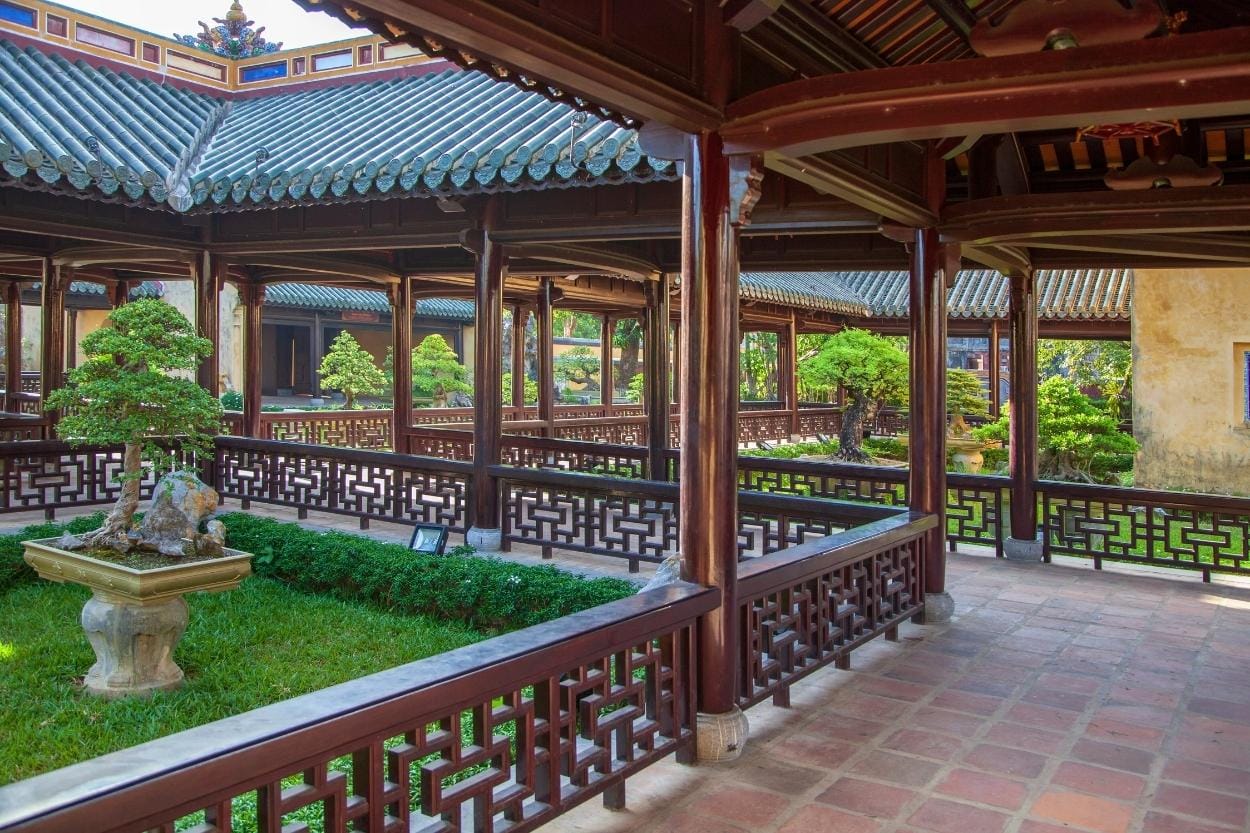
Here they built an entire city, with 6m high walls stretching 10km around. In the centre of this planned city was the Citadel itself, where the royal family and government resided.
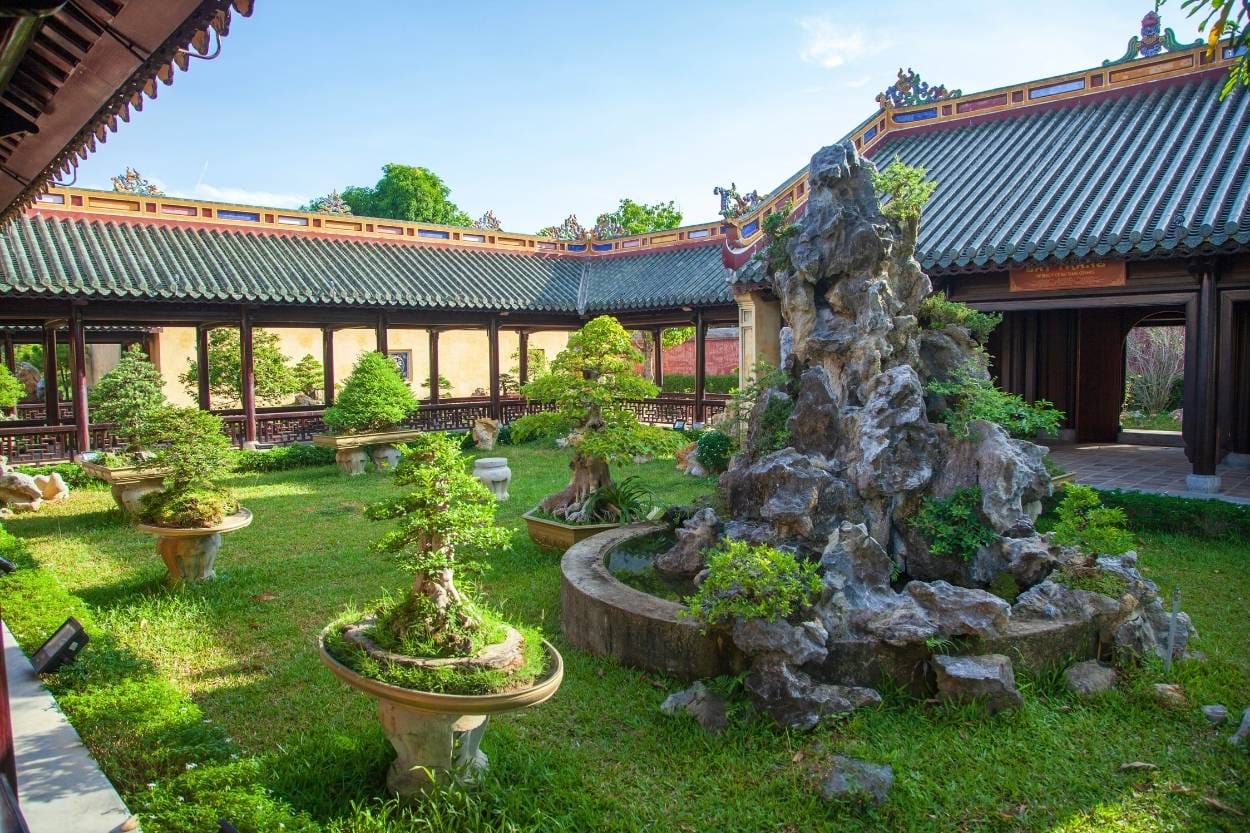
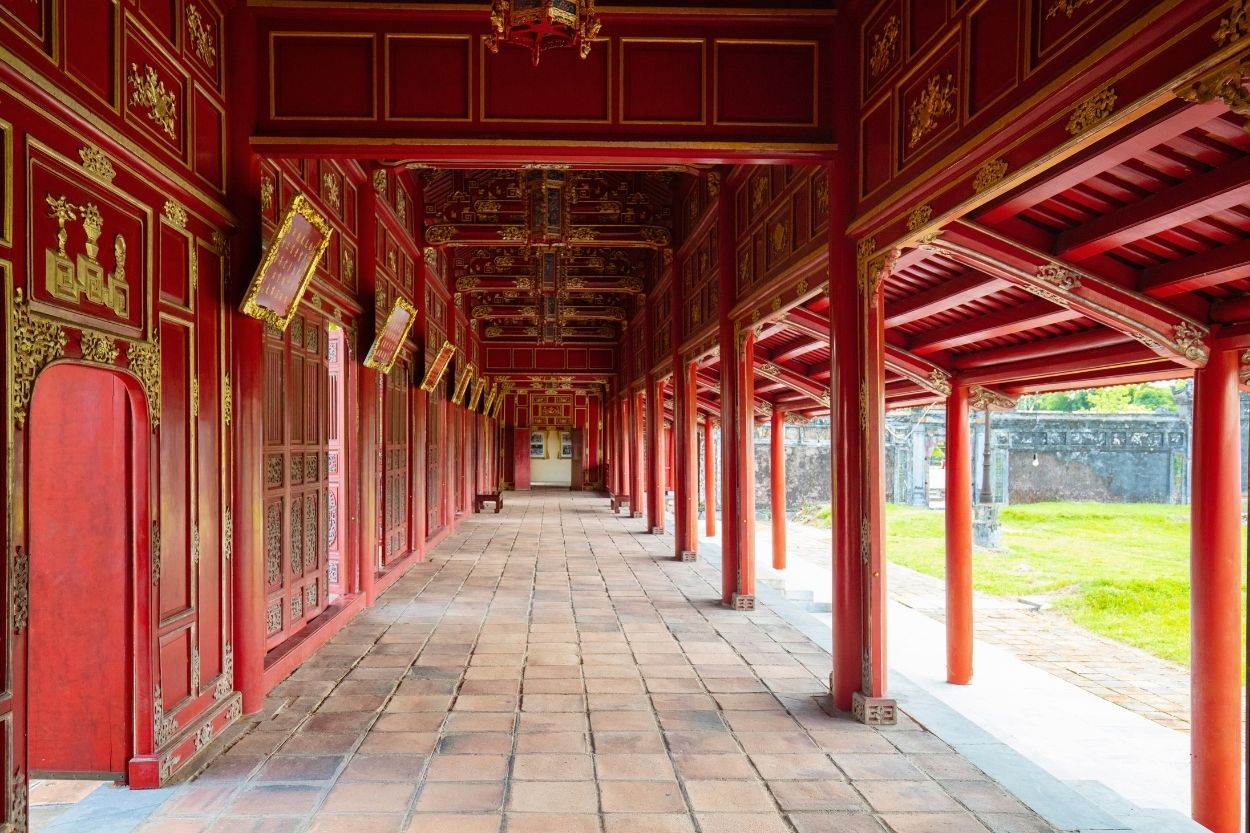
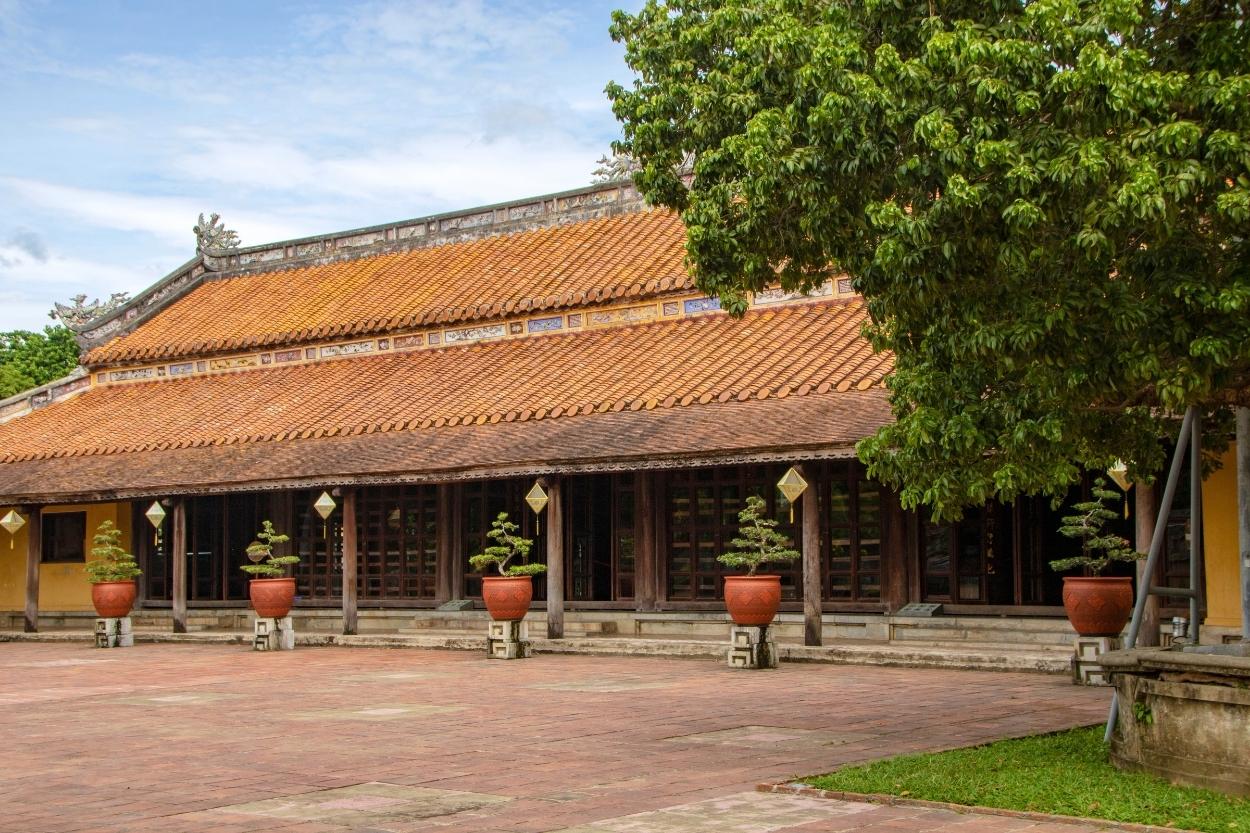
Inside the walls walls of the Citadel were palaces, temples, courtyards, gardens, offices, and various other administrative buildings used to run the empire.
The glory age of the Hue Citadel would only last for about 80 years, because by the 1880s Vietnam formally came under the control of the French Empire after gradually asserting their control over the region for decades.
The French allowed the Nguyen Dynasty to continue ruling, but it was mostly just for show. In all but name, Vietnam was ruled from Paris.
The Nyugen Dynasty came to an end with the Japanese invasion in the 1940s and following their defeat, Vietnamese revolutionary movements filled the gap and Hue Citadel fell into history.
Hue was caught in the firing line of the Vietnam War, and the Citadel would sustain heavy damage. Bullet holes can still be seen in the walls to this day.
Thankfully, Vietnam has recovered from those rough years and now Hue Citadel is undergoing a massive restoration effort. It became a UNESCO World Heritage Site in 1993, and while the restoration is still ongoing, most of the citadel is in great condition.
Imperial City vs Imperial Citadel
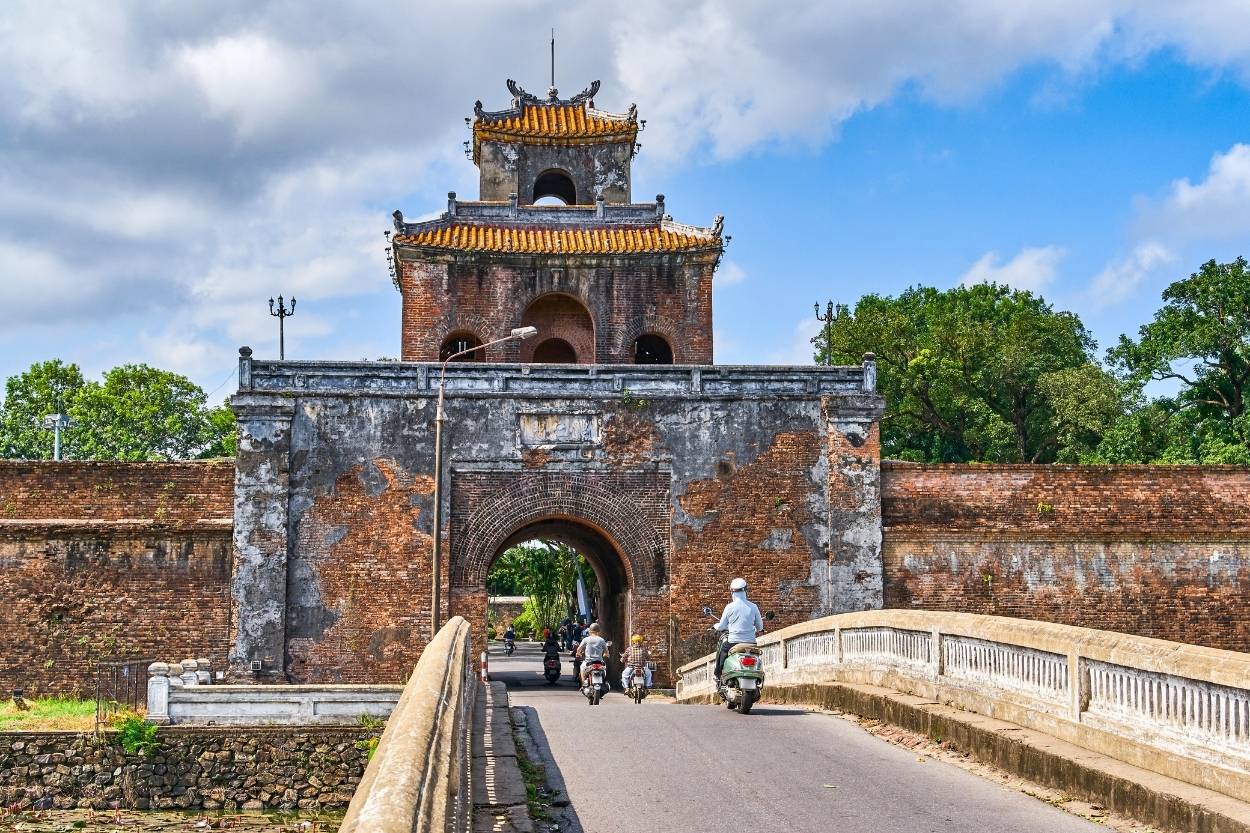
When visiting Hue, you’ll likely here of both the Imperial City and the Imperial Citadel. These terms are often used interchangeably but are technically 2 different things.
Here’s the difference:
When it was built, the citadel was the centrepiece of a large, planned city that surrounded it.
The Citadel is where the royal palace and other central buildings were located. You need a ticket to enter this.
The Imperial City, on the other hand, forms a large area of downtown Huế, so you don’t need a ticket to visit it. You’re free to explore this roughly 35 hectre area where there’s a few monuments left to see, like the old walls and gates, as well as some nice parks and bridges.
This guide is about the Citadel, but it’s important to know the difference.
Things to see at Hue Citadel
There’s a lot to explore inside Huế Citadel, but here’s a few highlights you can expect.
1 | Ngo Mon Gate
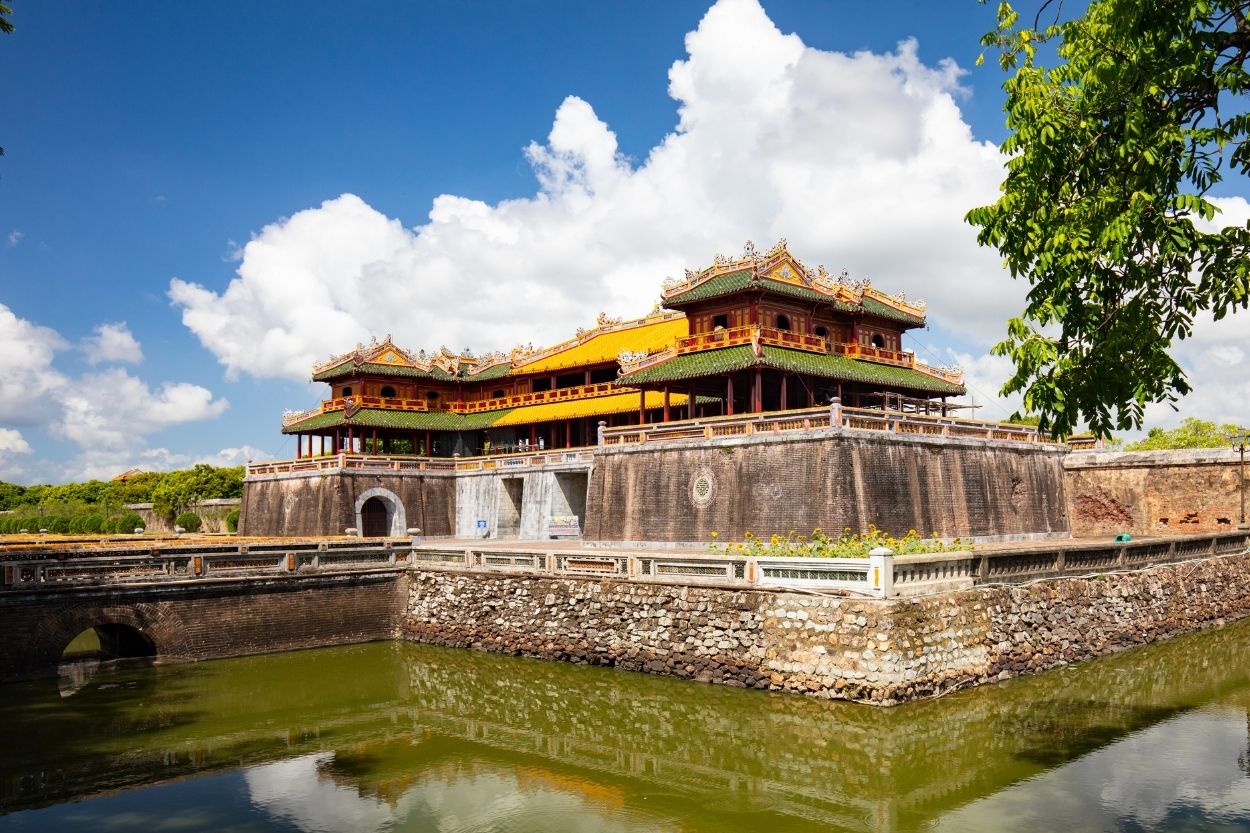
📍Ngọ Môn Gate, known as the Meridian Gate, or south gate, is the main entrance into Hue Imperial Citadel and one of its most impressive features.
It was built slightly later than the rest of the complex, in 1833, and was not only used to watch and defend against potential invaders, but also for ceremonies.
Like the rest of the Citadel, its design was inspired by the Forbidden City in Beijing and is essentially a smaller version of this more famous counterpart.
2 | Thai Hoa Palace
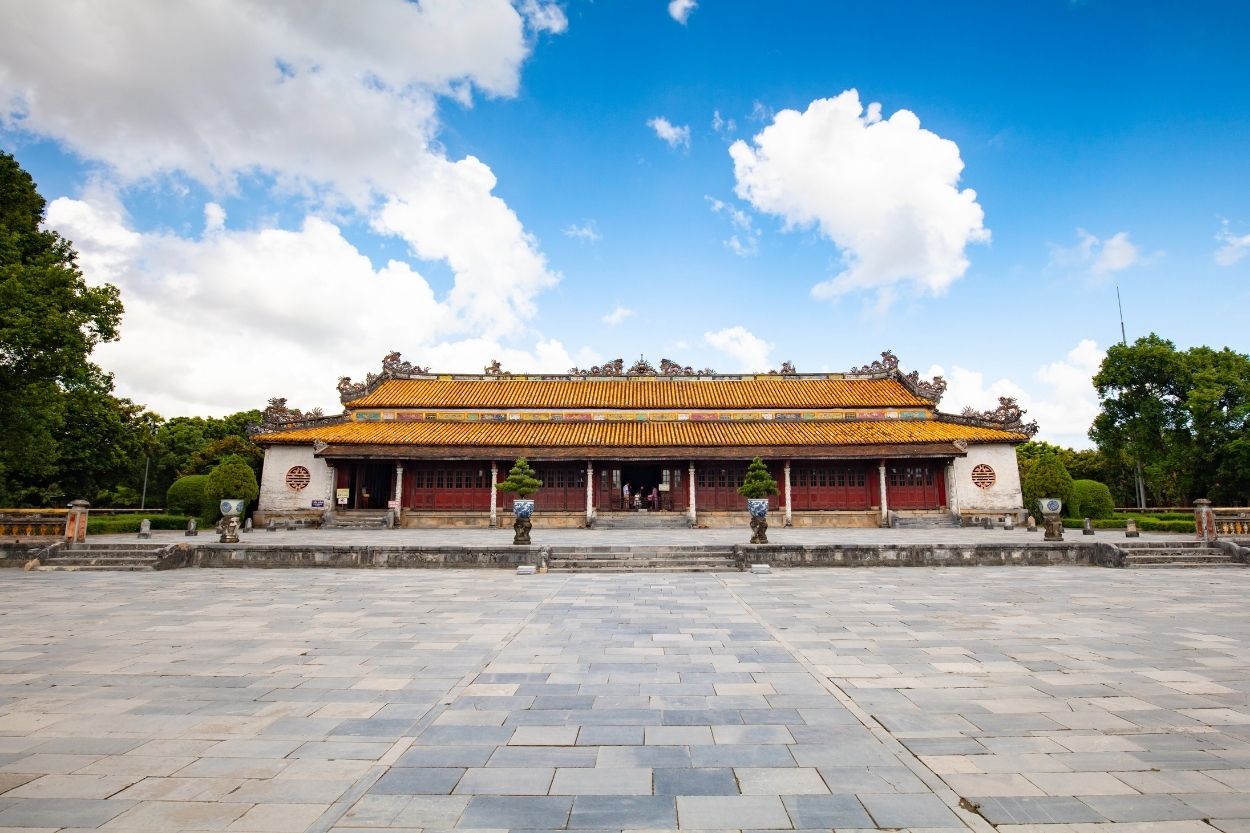
After entering Hue Citadel through the Meridian Gate, you’ll enter an open courtyard which leads up to the next top attraction inside the Citadel: 📍Thai Hoa Palace.
Also called the Palace of Supreme Harmony, this was one of the most important buildings inside the Citadel, and was used as the emperor’s throne room.
All 13 rulers of the Nguyen Dynasty were crowned in this building, and it was here that each ruler would receive and entertain guests from all over the world.
3 | Hien Nhon Gate
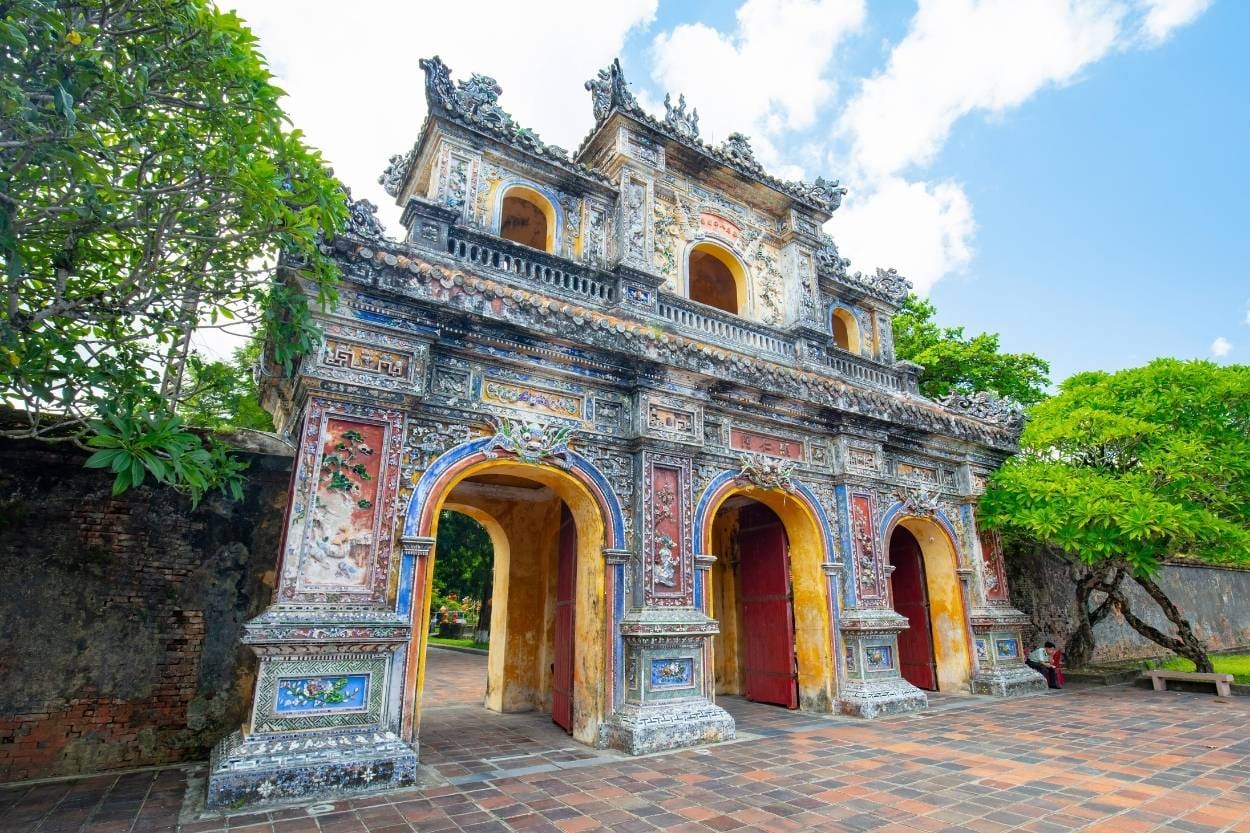
Of all the amazing architecture in Hue Citadel, the most impressive might be 📍Hien Nhon Gate.
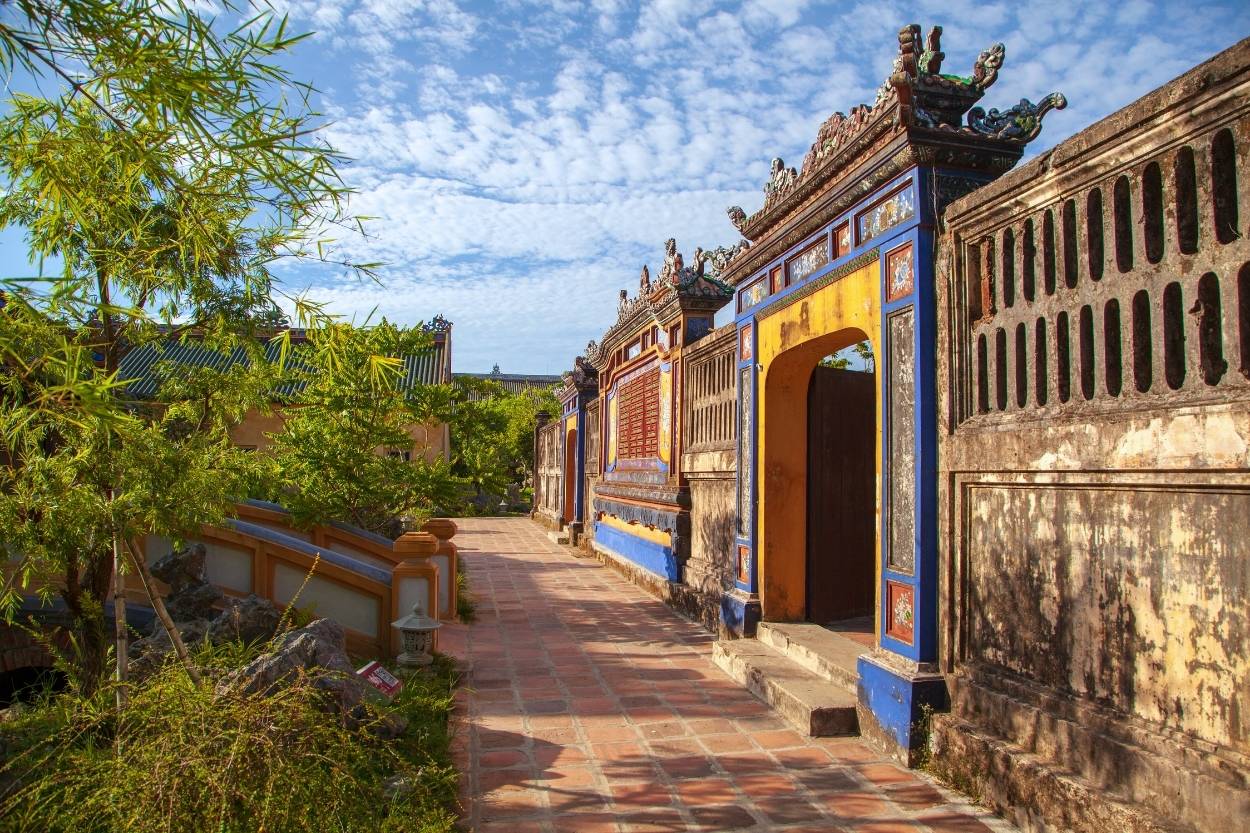
Also called the East Bastion, this colourful and detailed gate was one of the buildings most damaged during the Vietnam War (during the Tet Offensive). Thankfully, it’s since been heavily restored.
There’s no way to visit Hue Citadel without seeing this majestic gate, as it’s where you’re supposed to exit the site (they won’t let you exit from the Meridian Gate)
4 | Hien Lam Pavilion
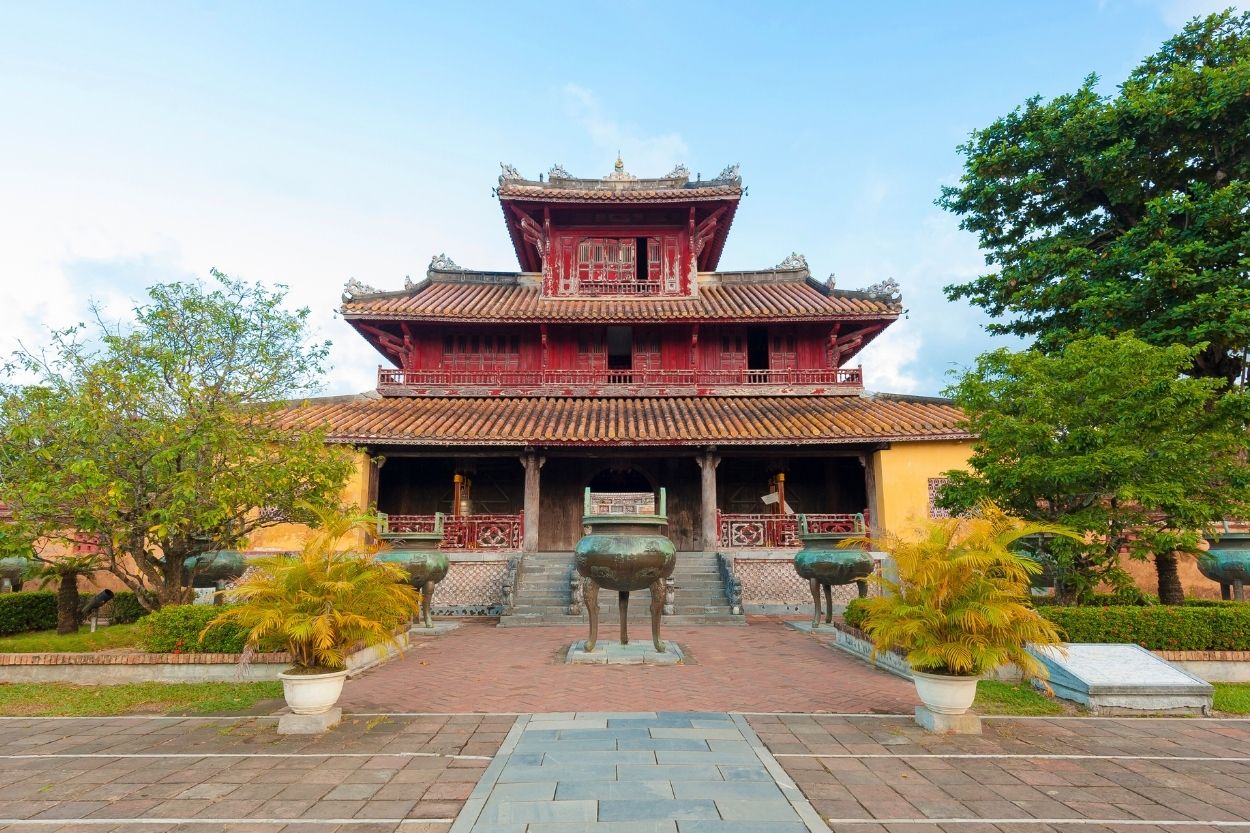
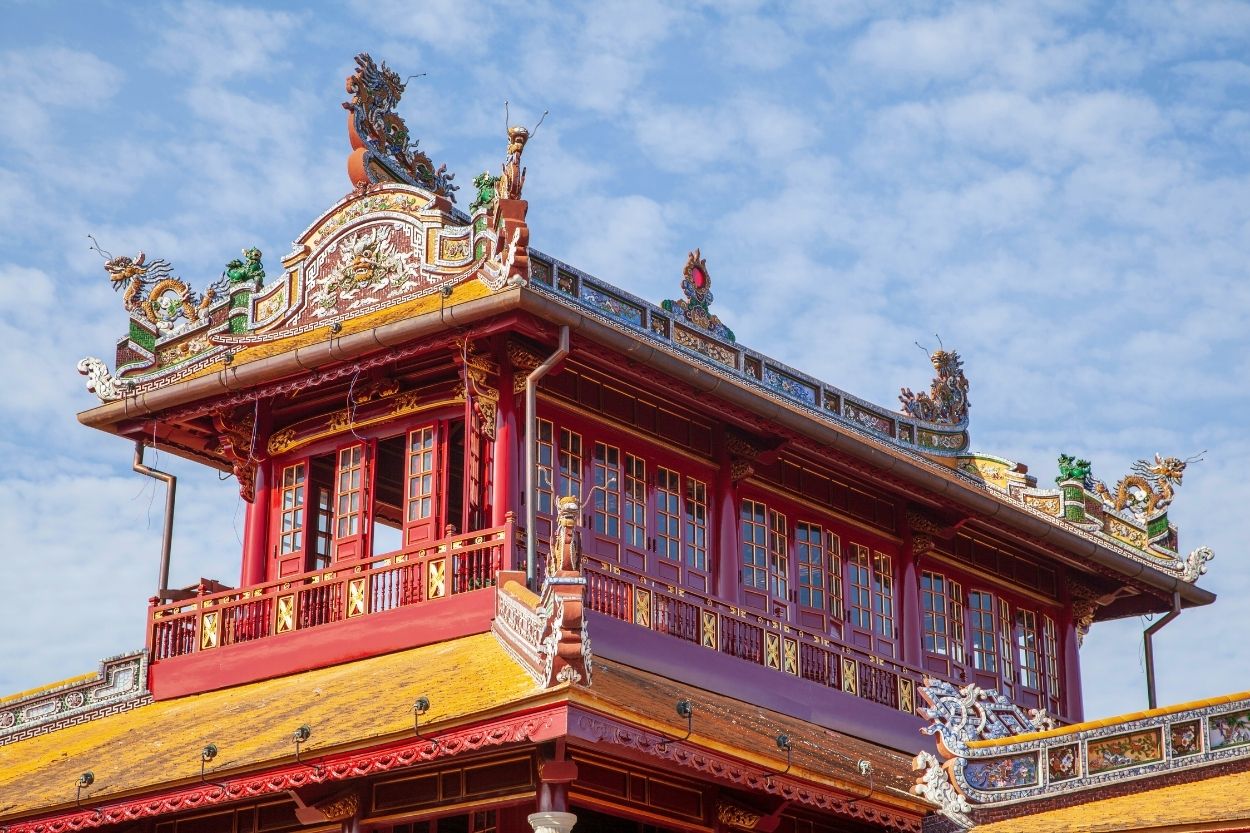
Another great piece of Vietnamese architecture for you to see at Hue Citadel is 📍Hien Lam Pavilion.
Despite being called a ‘pavilion’ this building is really more of a mausoleum. Built opposite the temple, this building contains 9 massive bronze urns which supposedly hold the ashes of various Nyguen rulers, or at least represent them.
5 | Miếu Temple
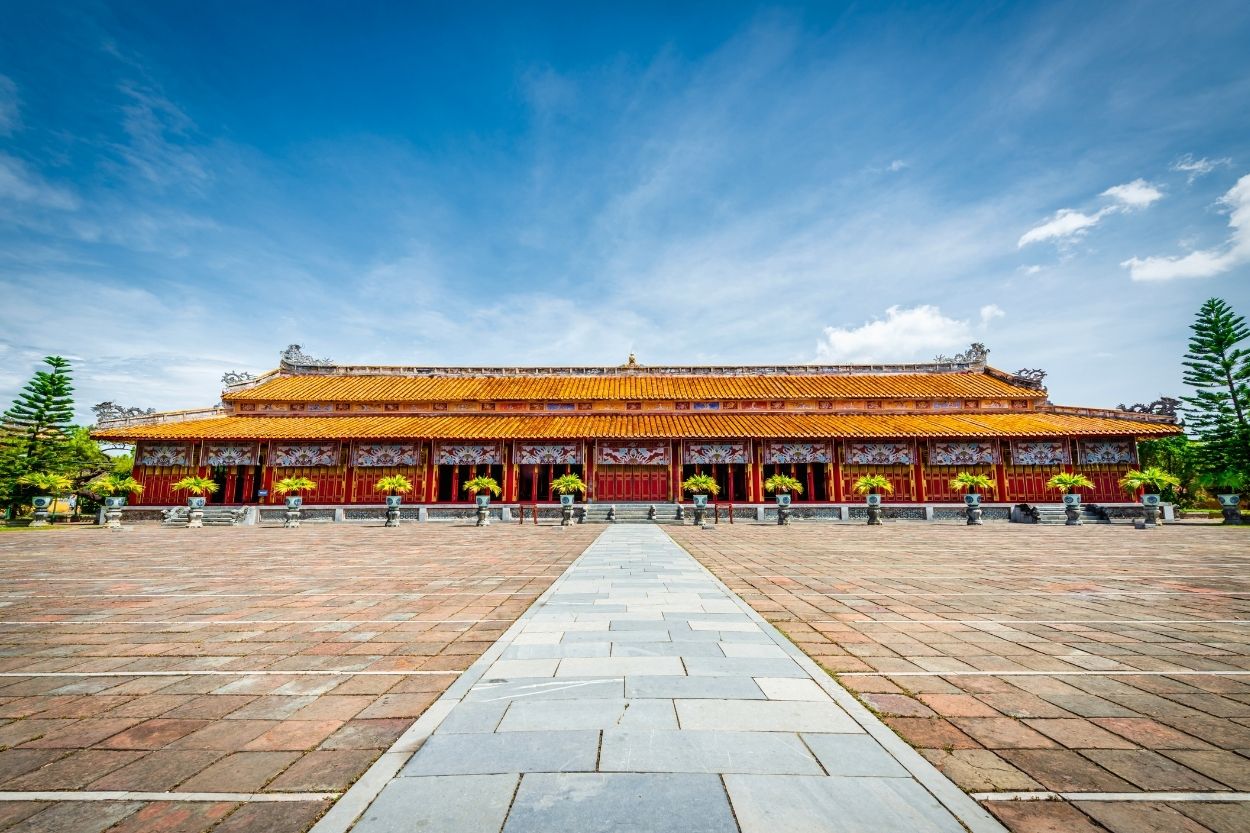
In the south-western corner of Hue Citadel you’ll find 📍Miếu Temple.
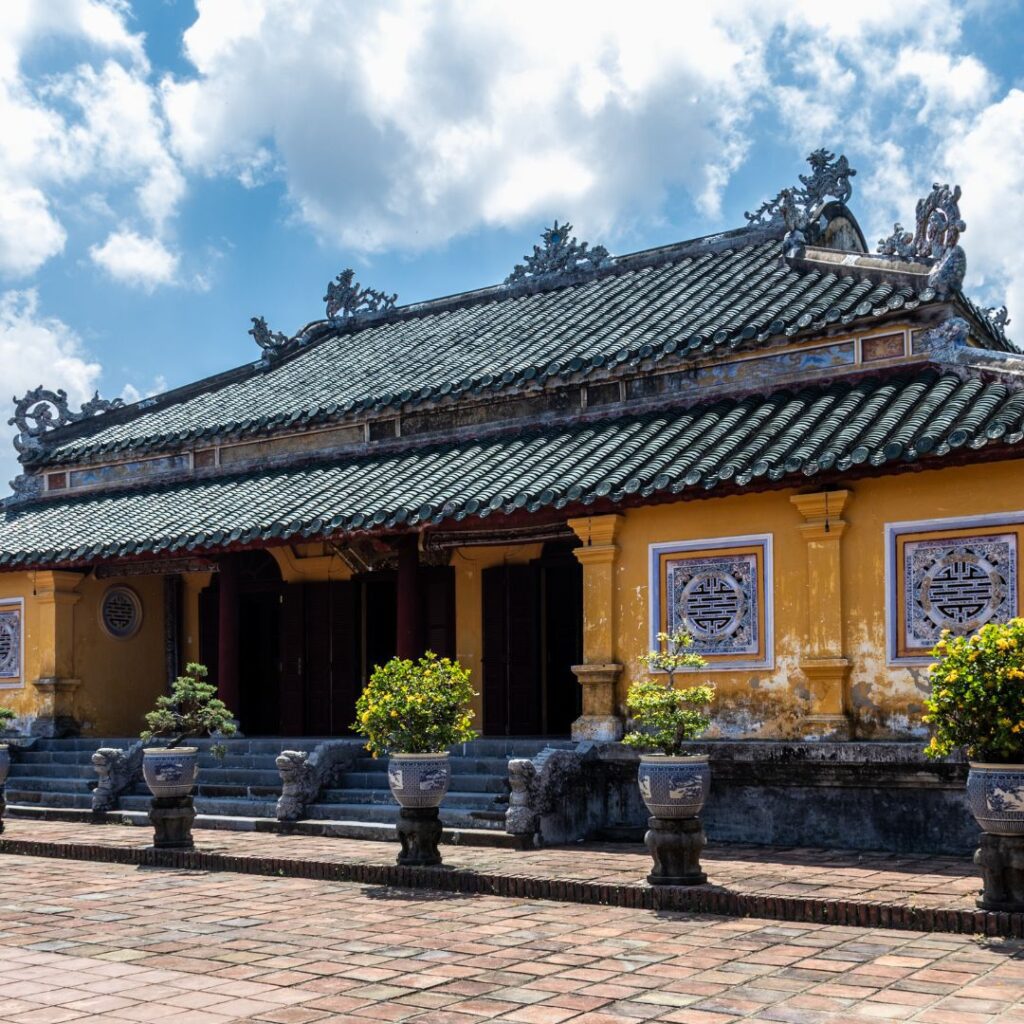
Built in the 1820s, this temple is a Confucian ancestral shrine, built not to honour a deity but rather the former emperors of the Nguyễn Dynasty.
Here you’ll find the 9 Dynastic Urns, each representing one of the former rulers of Imperial Vietnam. Situated in front of the other 8 urns is that of Emperor Gia Long, the founder of the Nguyễn Dynasty.
How to get to Hue Citadel
The city of 📍Huế is located on the central coast of Vietnam, just north of other popular tourist hotspots of Dan Nang and Hoi An.
How you reach Huế will depend on which direction your coming from. Visitors tend to travel Vietnam from one end to the other.
If you started from the North, you’re likely coming from Hanoi, Ninh Binh or Phong Nha. If you started from the South, Huế will almost certainly be your next stop after Hoi An and Da Nang.
Regardless of which direction you’re coming from, Huế is easy to reach, and you have a few different options for getting there.
Reaching Hue via Bus
Buses are arguably the most popular way of traversing Vietnam, especially for backpackers.
Buses in Vietnam can take you anywhere. They aren’t as comfortable as trains, or as quick as flying – but they are cheap.
As an example, a bus from Hanoi to Hue takes about 12 – 13 hours and will cost you about $30 – $50 USD, depending on the type of ticket you buy (whether it’s a regular bus vs an overnight sleeper, luxury vs basic, etc).
If you want to make the most of your days and not waste them sitting on a bus, you have the option of booking an overnight sleeper ticket, allowing you to sleep through the night and wake up at your destination – ready to go.
Or at least that’s the idea – sleeping in a tiny bed on a moving bus is easier for some than others.
As with most transport in South-East Asia, the best place to book your bus ticket to Hue is with 12Go.Asia.
Reaching Hue via Train
Another great way to get to Hue is via train.
Aside from some additional networks in the North of the country, Vietnam’s rail network it’s mostly just one line going north to south – but this is all that’s needed for a country shaped like Vietnam. No matter which direction you’re coming from, you can get a train to Hue.
Just like with a bus, an overnight sleeper train is also an option – and I can tell you from experience that it is much more comfortable sleeping on a train than on a bus.
If you have the choice between a train and a bus, catch a train.
Your best resource to book your train ticket to Hue is 12Go.Asia.
Hue’s train station is located in a central location in downtown Hue. It’s not far from the main tourist precinct, but with your luggage you may not want to walk. Thankfully, it’s easy to order a Grab.
Reaching Hue via Flight
If you’re short on time or have a long distance to cover, you can also fly to Hue.
Catching a flight to Hue is arguably only a suitable option if you’re coming from somewhere far away, like Hanoi or Ho Chi Minh.
A flight from either of these cities takes about 1 hour, and should cost around $80 to $100 USD.
The airport in Hue is called Phu Bai International Airport, and is located a few kilometres south of the city.
Your best resource for finding flights to Hue is Skyscanner.
Reaching Hue via Motorbike
Exploring Vietnam from the back of a motorbike is an iconic experience.
If you’re up for a little adventure, you could rent a motorbike from Hoi An or Da Nang and ride the 4-ish hours to Hue.
Renting a motorbike and riding between these cities is a popular experience for tourists in Vietnam, and it’s easier than you’d think.
Most hostels in Hue, Hoi An and Da Nang offer a service in which you can rent the bike from one city and drop it off at another. The motorbikes aren’t too powerful and are easy to learn. If you’ve driven a car before and know how to ride a bike, you’re set.
The traffic can get a little hectic in some places, but mostly you can just relax and enjoy the unrivalled scenery along Vietnam’s central coastline.
Once in Huế, the Citadel isn’t hard to find.
The former Imperial City covers wdie area, roughly 35 hectres, of downtown Huế. The 📍Imperial Citadel can be found along the south-eastern edge, right on the river.
Best time to visit Hue
When visiting Huế, and Vietnam in general, you have 3 season to choose from: hot, really hot, and hot and wet. The trick is choosing the right balance between the 3.
The hottest months in Hue are generally from May to August. I can say from personal experience that visiting during this time is not a great idea. The daytime temperature consistently stays around the high 30s℃ and low 40s℃, which can make your daytime adventures uncomfortable.
The rainy season in Hue is generally from September to January. While this does mean a break from the heat, temperatures staying around the low 20s℃, it also means frequent bursts of tropical rainfall.
The best time to visit Hue is between February and April, when the temperature is more agreeable, and rainfall uncommon.
Hue Citadel Opening Hours
The opening hours for the Imperial City of Hue are from 8:00am-5:30pm every day of the week.
On Thursdays, those opening hours are extended to 10pm, allowing visitors to experience the citadel by night.
Hue Citadel Entry Ticket
Tickets for Hue Citadel can be purchased from a booth at the main entrance, which is located inside the majestic Hien Nhon Gate. At the time of writing, you cannot purchase your Hue Citadel entry ticket online in advance.
The entrance fee to Hue Citadel is 200,000 VND (around $8 USD).
While I aim to keep this blog up to date, keep in mind prices are open to change. You can also check the price on the Hue World Heritage government website.
How long does it take to visit Hue Citadel?
Set aside half a day to explore Hue Citadel.
Hue Imperial Citadel is a relatively large historical site, enough to contain an entire village within its walls.
How long it takes you to explore the buildings, gardens and fortifications will of course depend on your pace. While it is possible to explore the site in a couple of hours, those who want to take their time and get the most out of the experience should allow for a full morning or afternoon to wander around the palace grounds.
Best Hue Citadel Tours
I’ve done the research so you don’t have to. Here are the top Hue Citadel tours depending on what you’re looking for…
⭐ Hue Citadel only (walking tour)
Further reading on Vietnam
⬤ For more historical sites in Vietnam, check out: 15 Best Historical Places in Vietnam.
⬤ To explore the ruins of the lost Champa Kingdom, check out: Travel Guide to the Cham ruins in Vietnam – All 20+ Sites.
⬤ To learn the best way to explore the historical sites in Vietnam, check out: 10 Day Vietnam Itinerary for History Buffs.
⬤ For more historical travel guides on Vietnam, check out our Vietnam page.
Disclosure: This post may contain affiliate links.