If you’re travelling to Vietnam, you have to visit one of the many Cham ruins scattered across the country.
For over 1600 years, the Champa Kingdom ruled over central Vietnam, filling the landscape with towering brick temples – today known as Cham towers.
These ruins make up some of the best historical sites in Vietnam, yet finding reliable information on them can be difficult.
This guide is here to fix that. It’s the definitive guide to every Cham ruin you can visit in Vietnam – which are available, where they’re located, which ones are actually worth your time, and more.
After you’ve read this guide, you’ll have everything you need to visit Cham ruins in Vietnam.
READ MORE: The 15 Best Historical Sites in Vietnam
Contents
Cham Ruins in Vietnam - Map
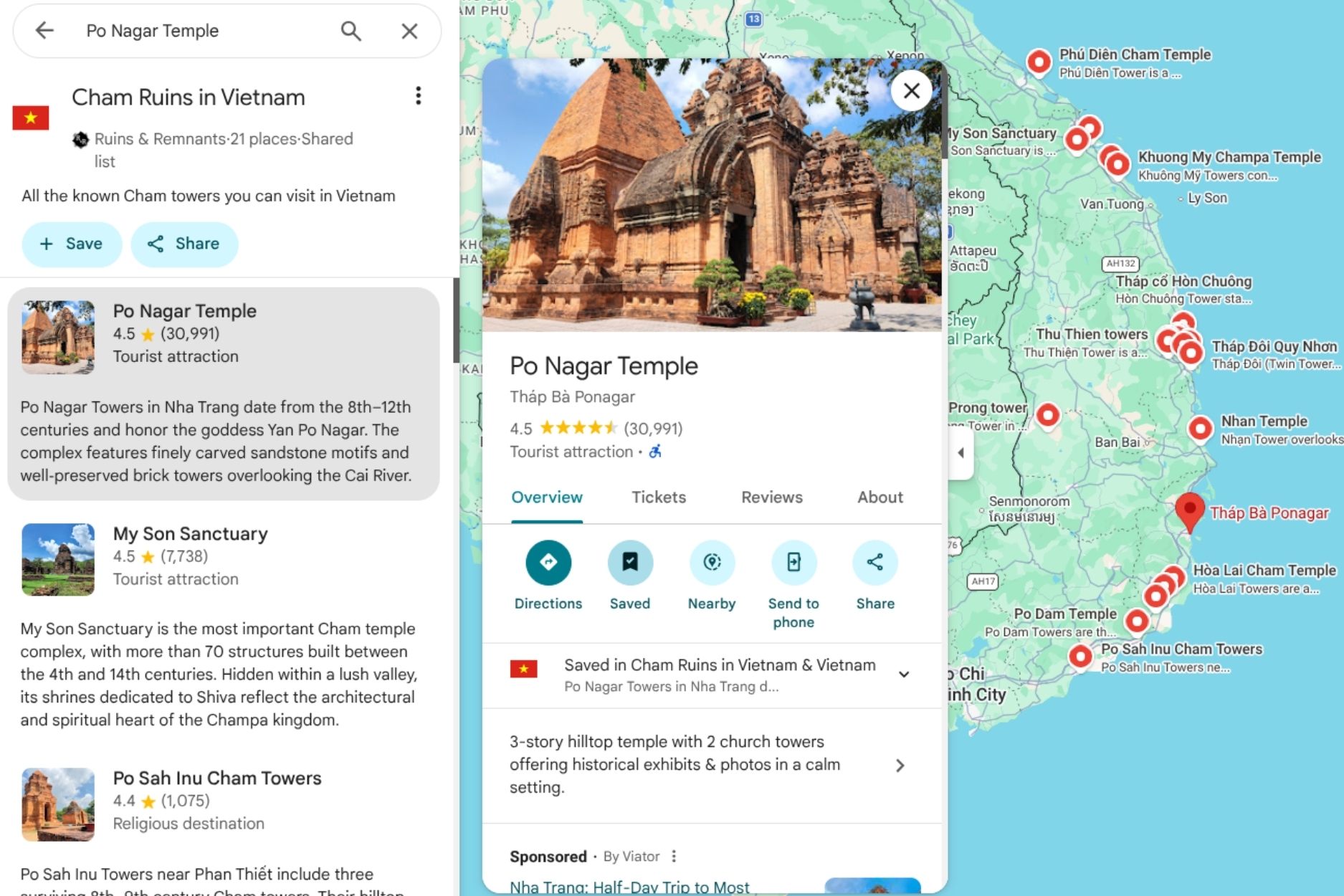
Click the button below to download a custom Google Map containing all 20+ Cham ruins featured in this guide.
Page will open in Google Maps
About Cham ruins in Vietnam
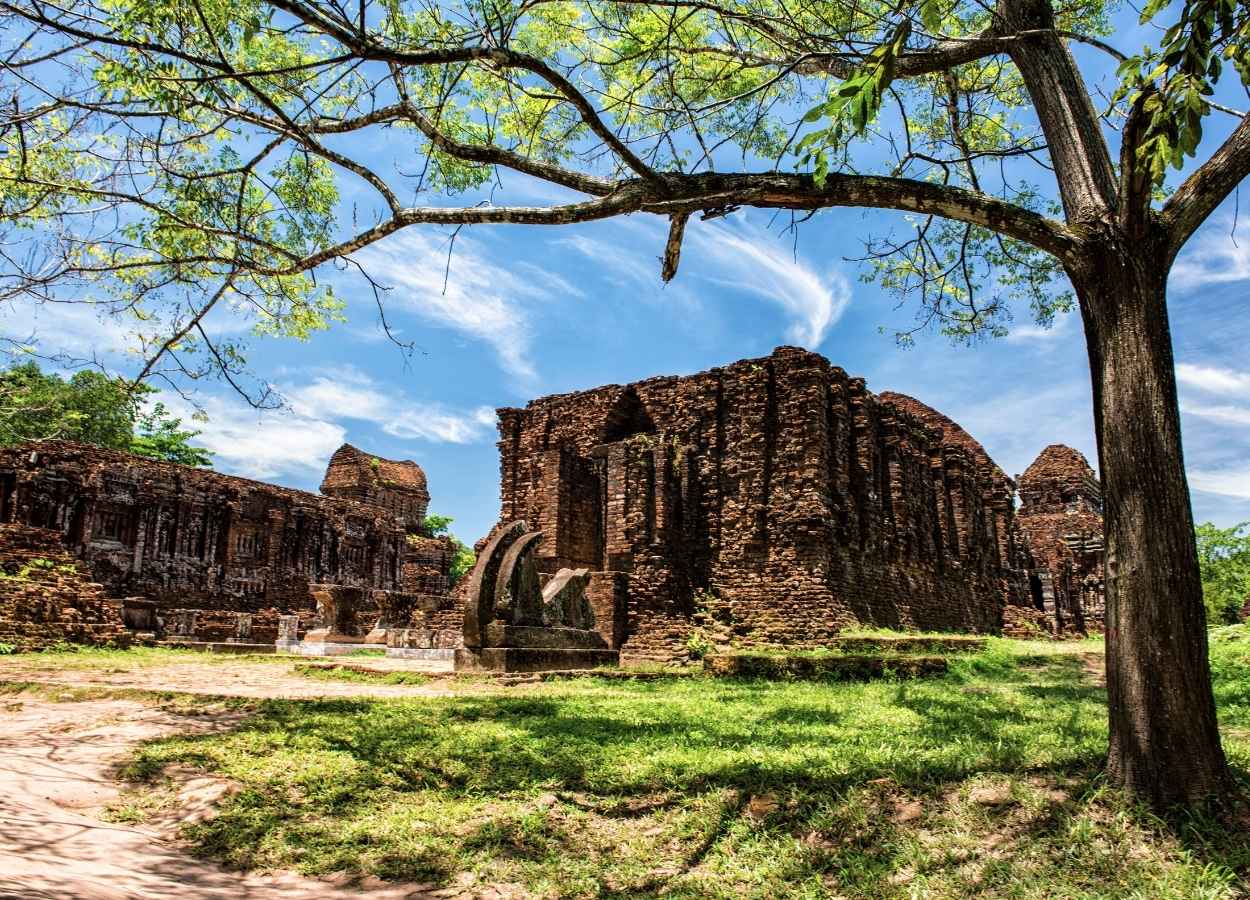
The Champa Kingdom, home to the Cham people, stretched across what is now central Vietnam for more than 1,600 years. It is one of Southeast Asia’s few genuinely ‘lost’ civilizations — a once powerful kingdom now reduced to scattered ruins and a surviving minority community.
Throughout the Medieval Era, they were a major regional player, dominating much of the maritime trade routes that connected China to the Malacca Straits. Culturally, like most of SEA, they were deeply connected to India, with Hinduism as the dominant religion and Sanskrit as the scholarly and religious language.
Historians have long debated whether Champa was a single kingdom or a collection of loosely unified states, but there’s no question that they were a distinct civilization, with their own shared culture.
Many of modern-day Vietnam’s biggest cities along its central coast – including Hội An, Đà Nẵng, Nha Trang, and Quy Nhơn – were originally Cham settlements
Across these regions, the Cham built large religious sites, with Mỹ Sơn Sanctuary being their most important spiritual centre. Their signature monuments were the brick temple towers that still dot the landscape today.
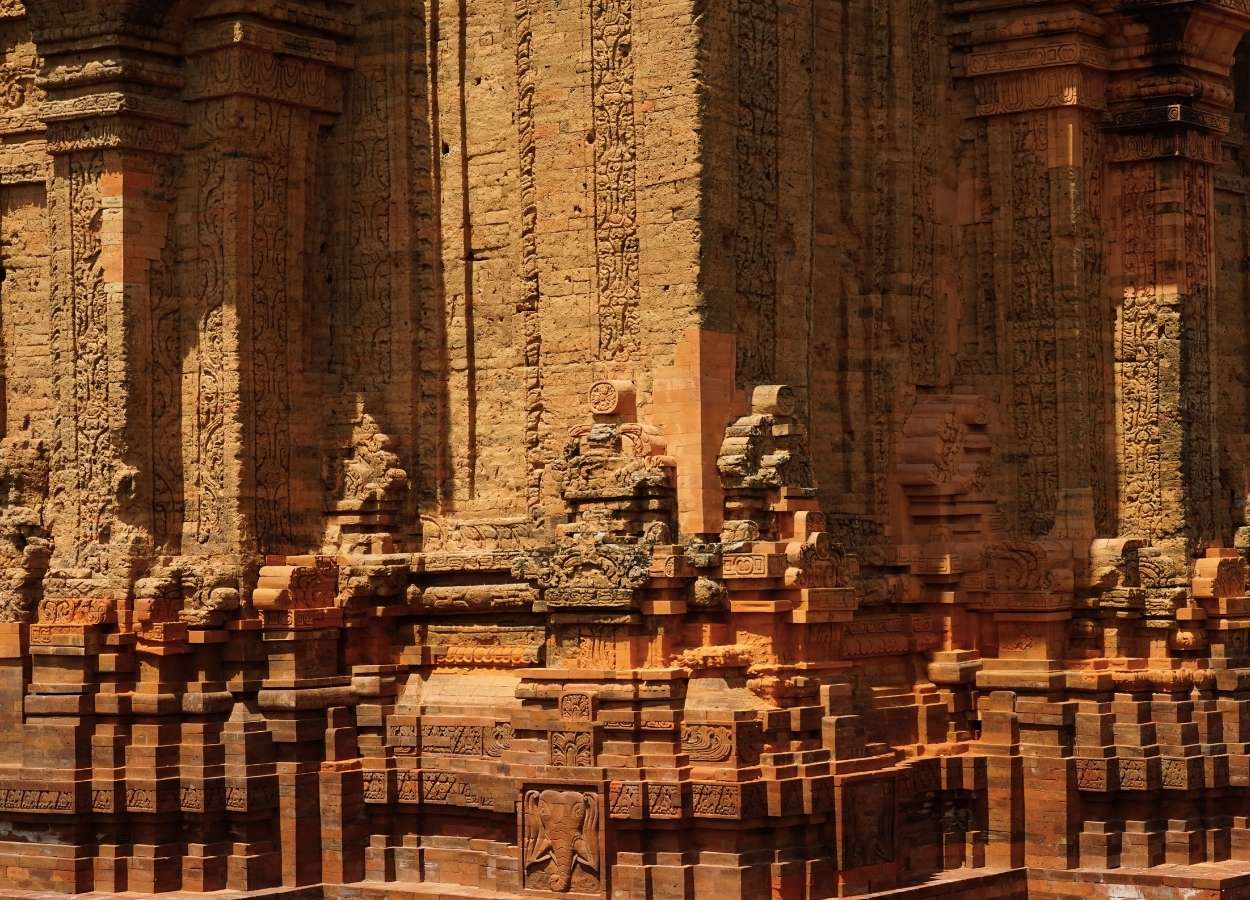
These towers were built in a distinct Cham architectural style: they were often built on hilltops, aligned to face east, typically housed a small shrine inside, and their exteriors were decorated with Hindu sculptures and reliefs.
The Champa Kingdom were constantly at odds with their 2 largest neighbours – squeezed between the Khmer Empire to their south and the Dai Viet (the Vietnamese) to their north. On more than one occasion, the Cham invaded the Khmer Empire, and at one point even sacked the city of Angkor.
But it was the constant pressure from the Vietnamese that caused their gradual decline. Over many centuries, the Vietnamese pushed the Cham further and further south until only a tiny Cham kingdom remained: Panduranga.
In 1832, Emperor Minh Mang of the Nguyễn Dynasty put the final nail in the coffin by absorbing the last remaining Cham kingdom into Vietnam.
While the Champa Kingdom may be gone, the Cham people live on. Across central Vietnam, Cambodia and parts of Laos, ethnic Cham people carry the old kingdom’s legacy, along with the Cham language and cultural traditions.
And throughout central Vietnam, the red-brick towers of the Champa remain, offering some of the best historical sites in Vietnam.
Cham ruins in Vietnam - All 20+ sites
The following is a comprehensive list of the Cham ruins you can visit in Vietnam, broken up into provinces from south to north.
If you know what regions you’re going to be visiting, feel free to skip straight to that part.
If you’re only seeking the absolute best Cham ruins to include in your Vietnam itinerary, you’ll find that further down.
Cham Ruins in Binh Thuan
The province of 📍Binh Thuan marks the southern edge of the former Cham kingdom, and was home to the last surviving Cham polity of Panduranga.
These days, the coastal province is known for its sand dunes and beaches, centred around the popular tourist hotspot of 📍Mui Ne.
Here you’ll find 2 Cham towers.
Po Sah Inu Towers
The 📍Po Sah Inu Towers (also sometimes called the Poshanu Towers) can be found perched on a hilltop overlooking the city of Phan Thiet.
The towers were originally built in the 8th or 9th centuries, but are believed to have been restored later during the Panduranga era.
What survives today are three brick towers: The 16m-tall Tower A, next to the heavily eroded and 4m tall Tower C, while separate to the main bunch is the 12m tall Tower B.
Around the towers lie the low foundations of other buildings that once made up the temple complex, offering a sense of its original layout.
This is the most accessible Cham site in the province and is best visited from either Phan Thiết or Mũi Né. The hilltop location also provides excellent coastal views, making it both a cultural and scenic stop.
Day trips and tours to Po Sah Inu Towers from Mui Ne and Phan Thiet are also available.
Po Dam Tower
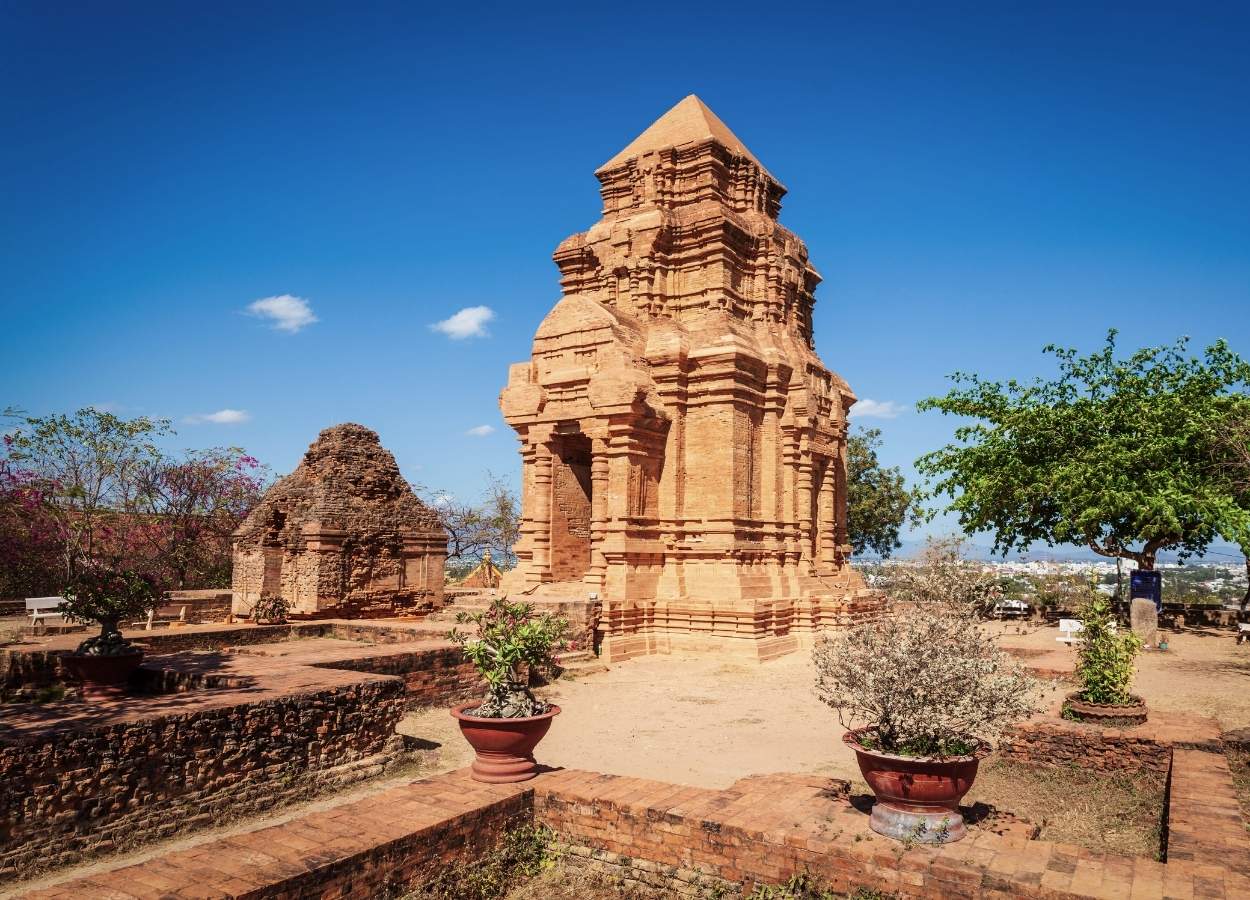
The second Cham site in Bình Thuận is 📍Po Dam Tower, located in the quieter northern part of the province. Far less visited than Po Sah Inu, Po Dam offers an off-the-beaten-path experience.
Dated to the 11th or 12th centuries CE, the site consists of one relatively small Cham tower alongside 3 auxiliary structures. Despite not being a very popular site, the structures have been heavily restored and look much the way they appeared when first built.
The Po Dam site is relatively small compared to most other Cham ruins in Vietnam. If you’re only looking to visit the best Cham sites, you can give it a miss. But if you can’t get enough of Cham ruins, or looking for a stop on your way to Phan Rang, it’s worth a visit.
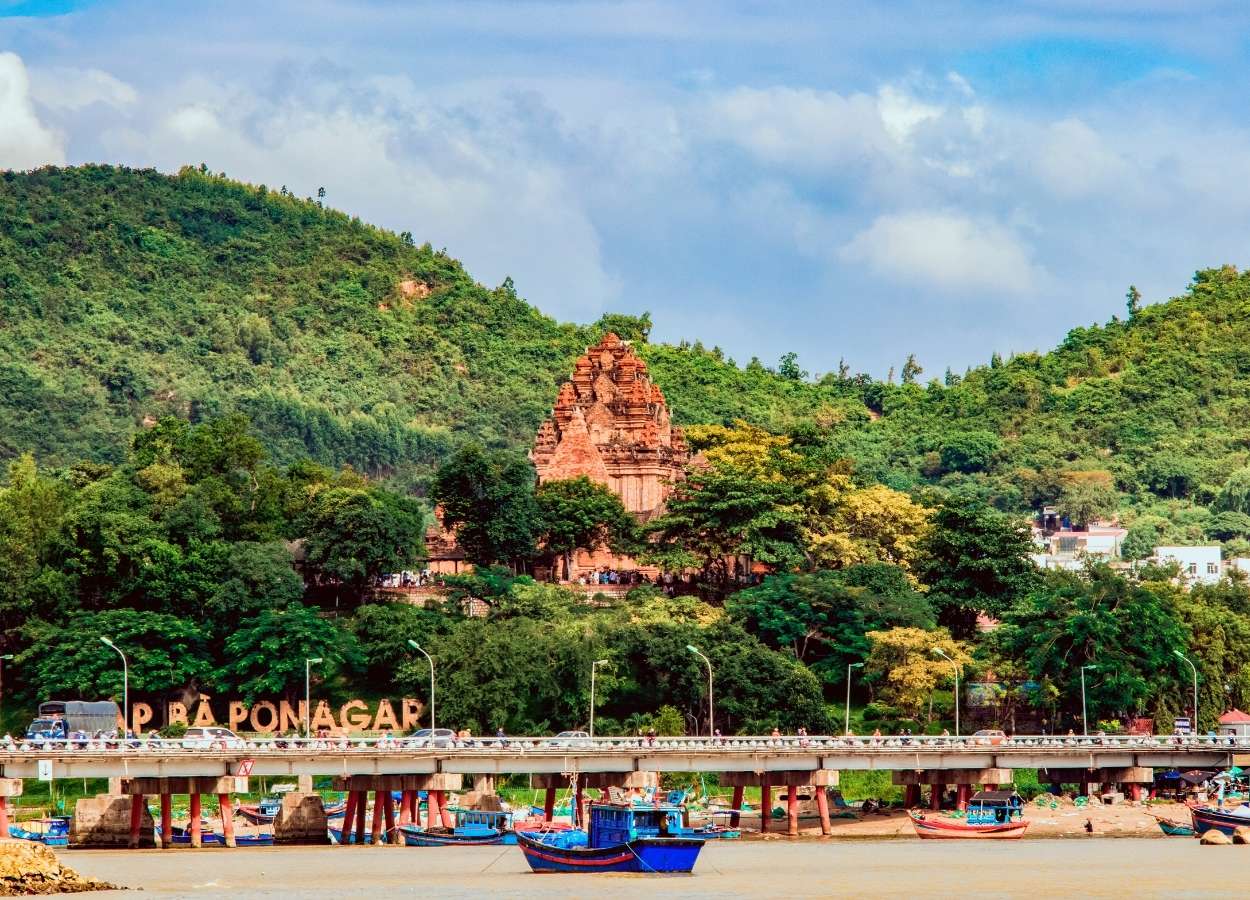
Po Nagar Towers
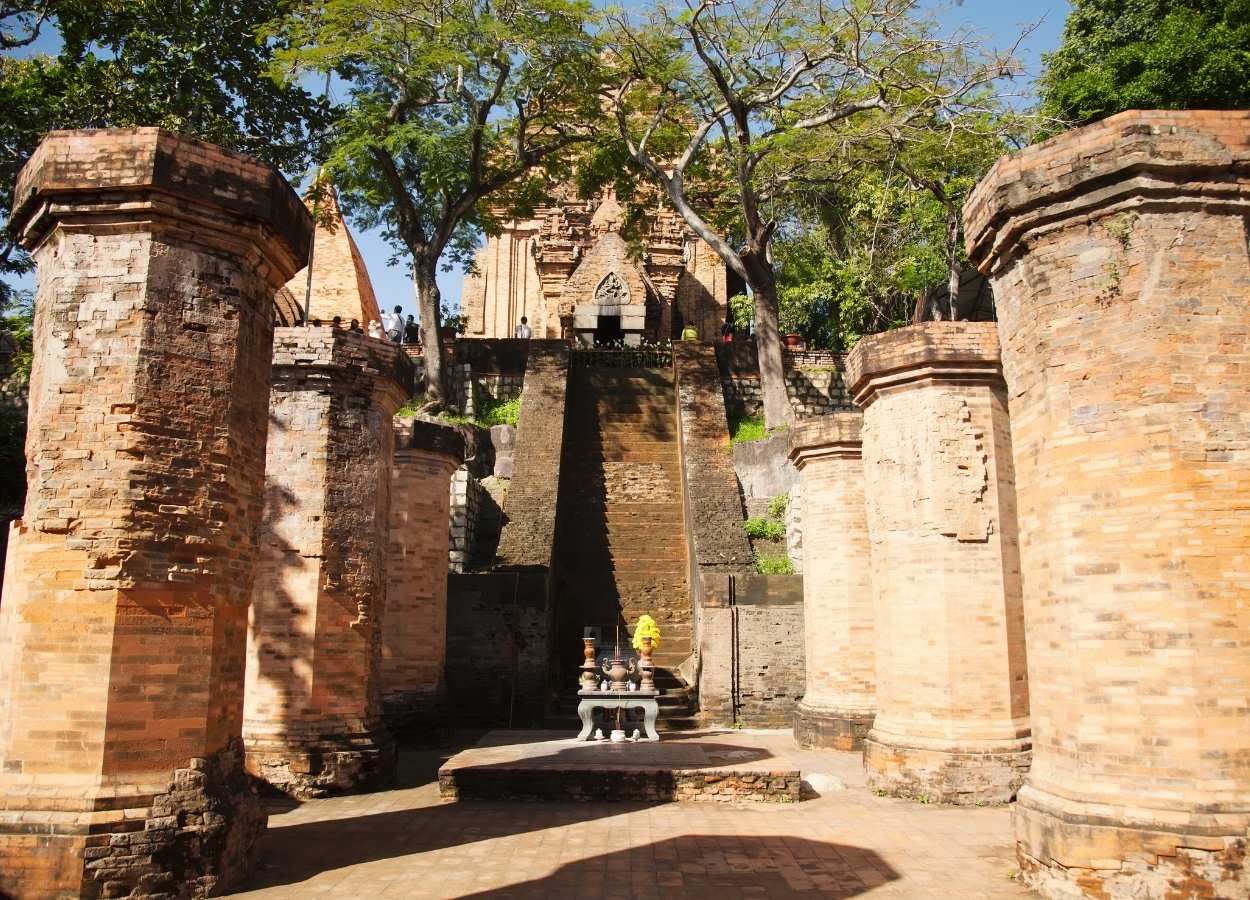
Located in downtown Nha Trang, the 📍Po Nagar Towers are one of the best Cham ruins in Vietnam.
Situated on a small hill overlooking the city, the Po Nagar Towers are dedicated to the Cham goddess Yang Po Inu Nagar, who, according to Cham legend, founded the Champa Kingdom.
From inscriptions at the site, we know that the towers were first built around 781 CE, at a time when the Champa Kingdom was at its peak.
The site consists of a collection of well preserved, and heavily restored, Cham towers – the tallest of which stands at 25m.
One of the most impressive Cham sites in Vietnam, and easily accessible – the Po Nagar Towers are a must visit when in Nha Trang. The site is within walking distance from downtown Nha Trang, but most Nha Trang tours include a stop at the Po Nagar Towers.
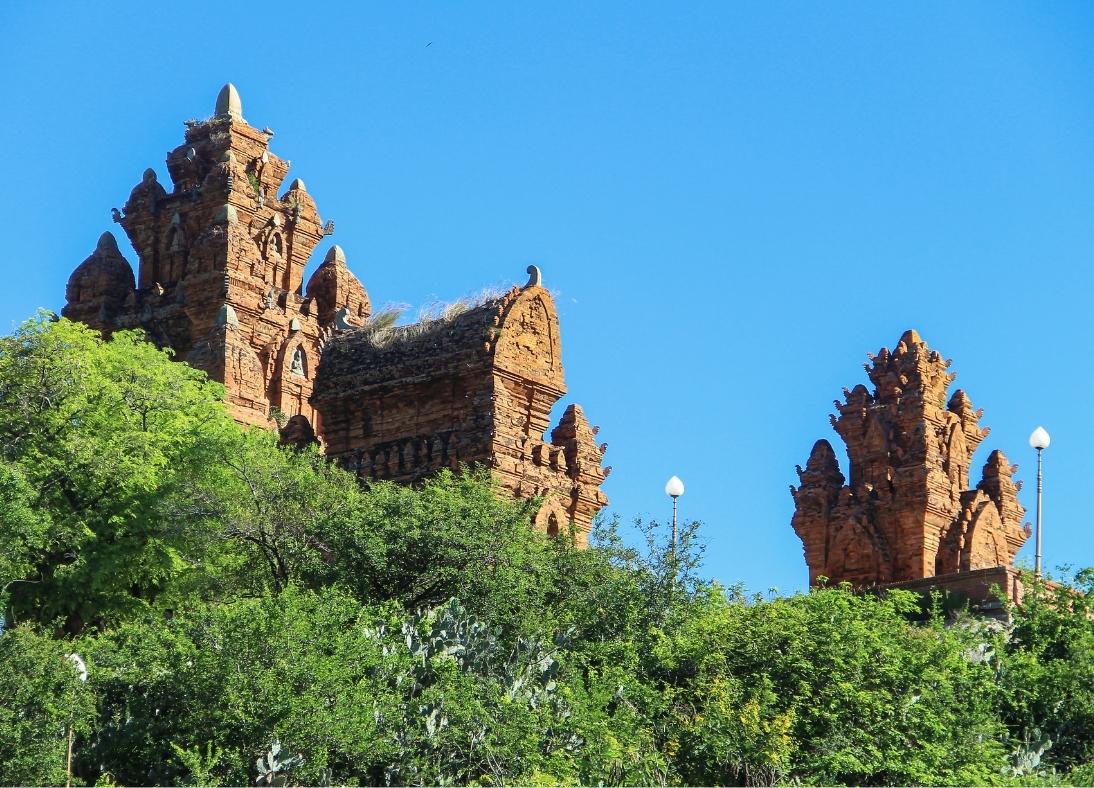
Po Klong Garai Towers
In the south of Khánh Hòa Province, just outside the city of 📍Phan Rang, you’ll find the 📍Po Klong Garai Towers.
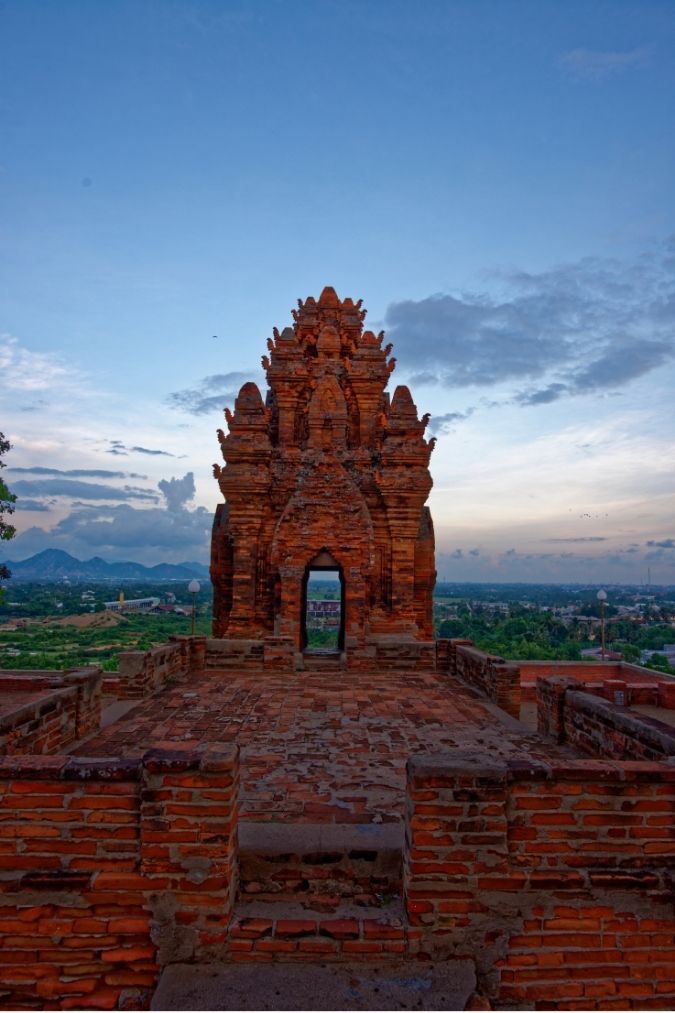
Dated to the 13th century CE, this site was built in honour of Cham king Po Klong Garai. It consists of 3 well-preserved towers. Visitors can enter the main kalan where you can view a small shrine dedicated to the Hindu deity Shiva.
At the entrance you’ll also find a small museum showcasing Cham culture – a great way to add some context before you climb the hill and explore the towers.
The Po Klong Garai Towers can be easily visited from nearby Phan Rang, or on a guided tour from Nha Trang.
Po Rome Tower
The 📍Po Rome Tower (also sometimes spelled Po Ro Me) is located southwest of Phan Rang and represents the final chapter of Cham monumental architecture. Built in the 17th century, it holds the distinction of being the last Cham tower constructed by the last surviving Cham polity, Panduranga, just decades before it was annexed by Vietnam.
The tower was built to honour Po Rome, one of the final Cham kings. The main tower stands about 8 metres tall, and inside you’ll find a 1.2-metre statue of King Po Rome, accompanied by his queen.
Po Rome is a much quieter site than nearby Po Klong Garai or Po Nagar. It receives few tourists, and still remains an active place of worship for the local Cham communities, who come to make offerings.
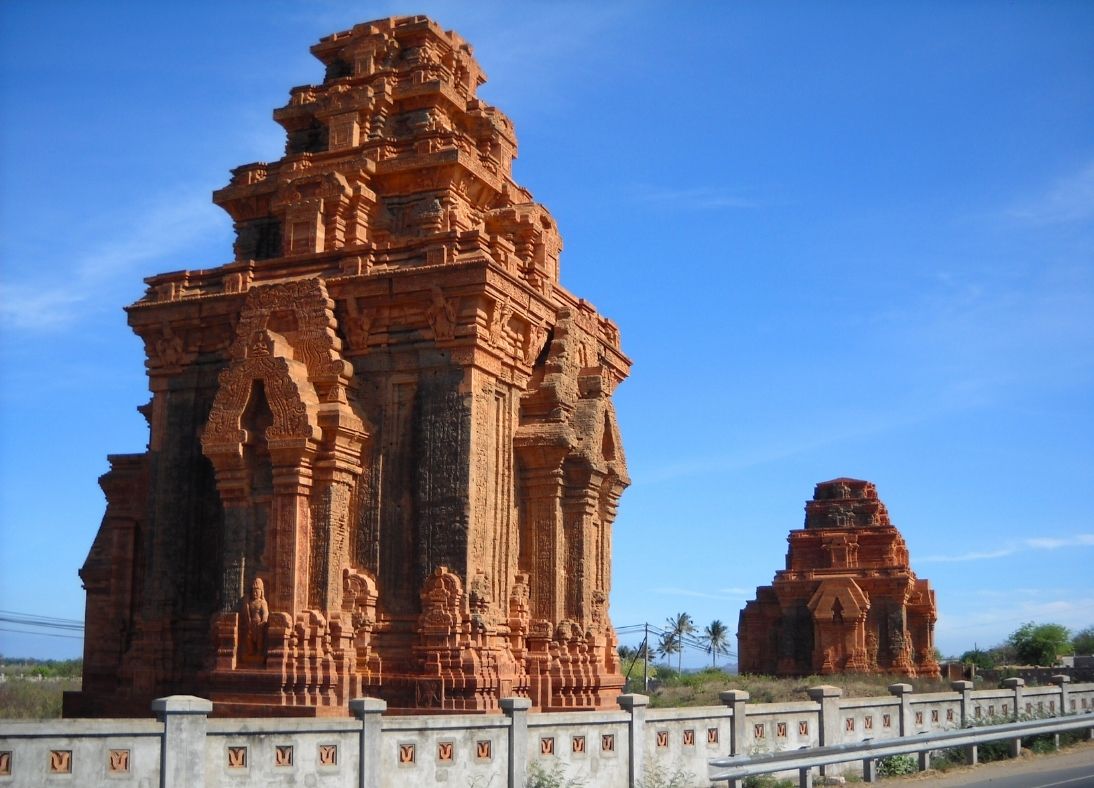
Hoa Lai Tower
The final Cham site you can visit in Khanh Hoa is 📍Hoa Lai Tower.
Located north of Phan Rang, on the road to Nha Trang, Hoa Lai tower is one of the more overlooked Cham sites in the region. Information on the tower is scarce, but it’s believed to have been built in the 8th century.
Originally made up of 3 towers, only 2 remain standing today. While the site itself is relatively unkept, the remaining towers are in surprisingly good condition, with many of their sculptures and reliefs still intact.
Like Po Rome, Hòa Lai receives very few tourists, and there’s a good chance you’ll have the entire complex to yourself.
Cham Ruins in Đắk Lắk
Most of the Cham towers in Vietnam are located along the coastal lowlands, but one exception to this can be found in the scenic mountainous province of 📍Đắk Lắk.
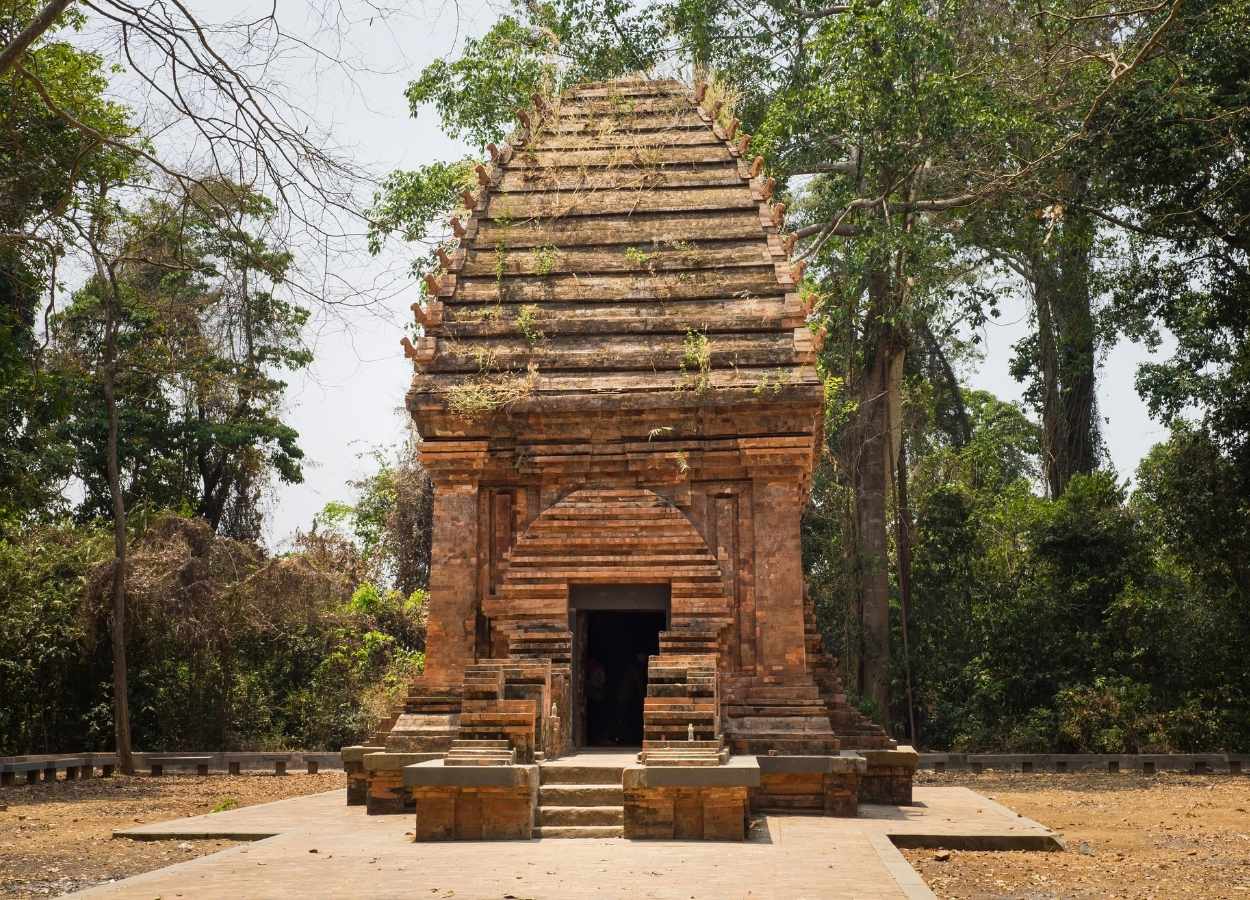
Yang Prong Tower
In the central highlands of Dak Lak, not far from the Cambodian border, you’ll find 📍Yang Prong Tower – one of the most remote Cham sites in Vietnam.
Standing at 9m tall, Yang Prong Tower is small compared to most other Cham towers, but its setting makes up for it. Tucked away in dense jungle and covered in vines and plants, the tower really captures the ‘lost kingdom’ atmosphere more than any other.
Due to its remote location and small scale, Yang Prong tower probably isn’t worth the journey for most travellers, but for those who can’t get enough of Cham history, it’s one of the most unique Cham towers you can visit in Vietnam.
Cham Ruins in Phu Yen
The central coast province of 📍Phú Yên is often skipped by travellers moving between Nha Trang and Quy Nhơn, but it’s home to one of the most impressive Cham ruins in Vietnam.
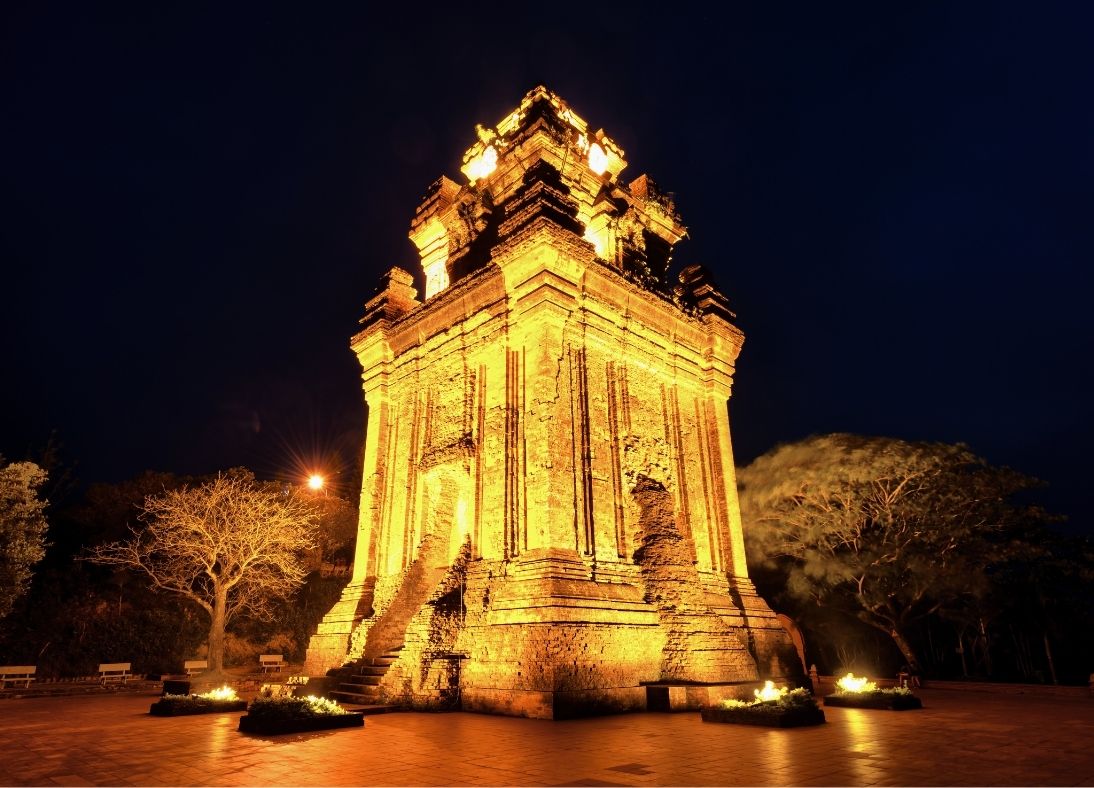
Nhan Tower
The lonely 📍Nhan Tower sits on a hilltop overlooking the city of 📍Tuy Hòa.
The site consists of a single tower, but its impressive size makes up for this. Standing at 20m tall, Nhan Tower stands out above the surrounding treeline, and can be seen from across the city.
Dated to the 13th – 14th century CE, the tower sits within a small botanical park, with a few other sites to see, such as memorials and shrines. The tower is especially stunning at night, when it’s lit up with warm lights.
Nhan Tower is included in most tours around Tuy Hòa and Phu Yen.
Cham Ruins in Gia Lai
Vijaya Citadel & Cánh Tiên Tower
The 📍Vijaya Citadel marks the location of the Cham capital from roughly the 12th to 15th centuries, a period when the kingdom was reaching its height.
It was the seat of Cham royalty until its fall in 1471, when Đại Việt forces captured the city and ended Champa as a major power.
Today, there’s little left of Vijaya Citadel – with little more than some scattered foundations remaining. Visitors can walk around the area and check out a few restored portions of the old walls, but don’t expect to see any substantial ruins.
Within the grounds of the former citadel you’ll find 📍Cánh Tiên Tower. Dated to the 12th century, it’s believed to have been the religious site used by the royal family.
The roughly 20m tall tower has been heavily restored, and is the last structure standing from the old Cham capital.
Cánh Tiên Tower & Vijaya Citadel are often included in guided tours from Quy Nhon.
Dương Long Towers
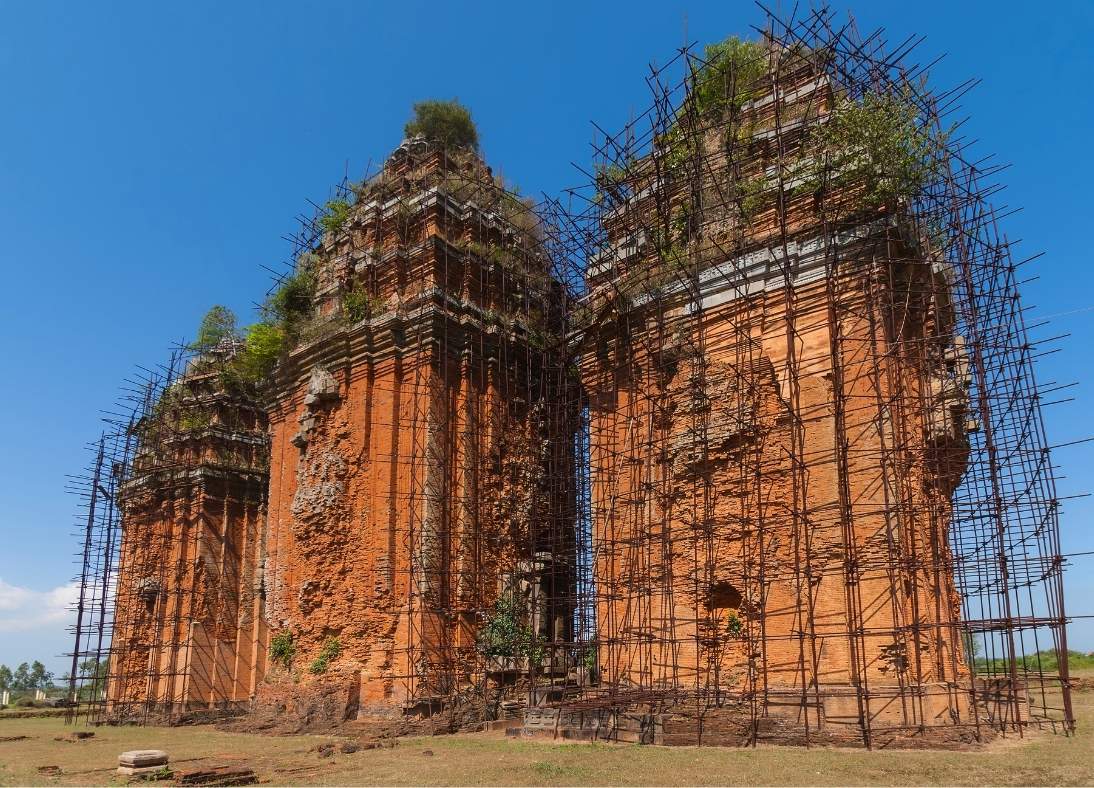
The 📍Duong Long Towers are among the most impressive Cham structures in Vietnam.
Dated to the 12th century, the site consists of 3 red-brick towers, side by side. The middle tower stands at 24m tall, making it the tallest Cham structure you’ll come across. The adjacent towers both stand at a slightly shorter 22m.
The Duong Long Towers are a bit of a hidden gem. Despite their impressive size, the towers see few visitors, and haven’t been heavily restored like many other Cham sites.
Recently, the towers have begun increasing in popularity, and now appear in some local Cham tours.
Thu Thiện Tower
Not far from the Duong Long Towers, just across the river, you’ll find 📍Thu Thien Tower.
Built sometime between the 12th and 14th centuries, this site consists of one lonely Cham tower. Some portions of the tower have been restored, but most of it is heavily eroded and covered in plants.
The site is rarely visited and isn’t as remarkable as other nearby Cham sites, but it’s worth a quick stop if you’re already planning to visit the nearby Duong Long Towers.
Bánh Ít Towers
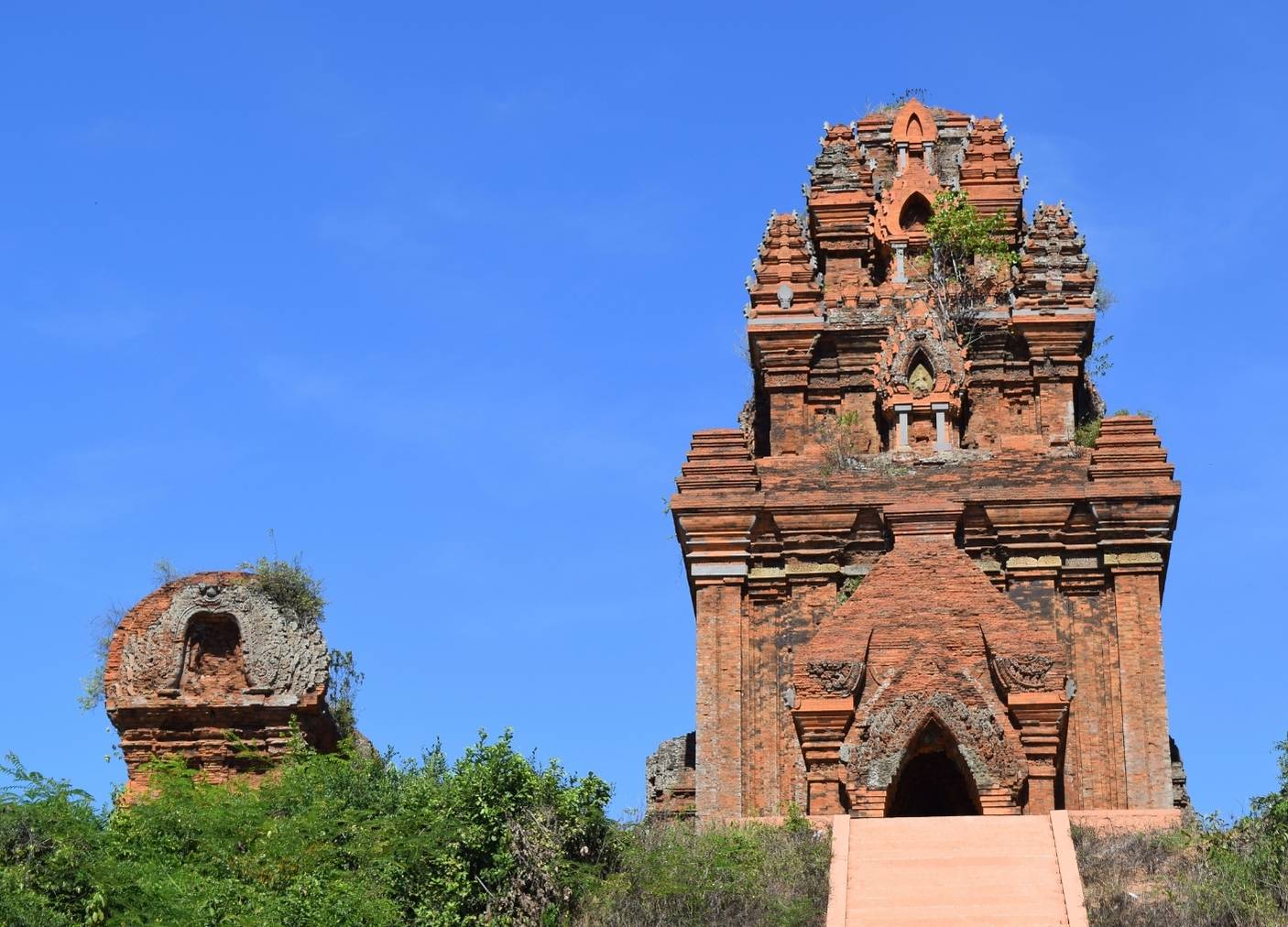
The 📍Bánh Ít Towers, dating from roughly the 11th to 13th centuries, can be found on a hilltop just a 20-minute drive outside of Quy Nhơn. Their scenic position offers panoramic views over the river valley that once formed the heartland of the Champa Kingdom.
The complex consists of four towers. The main kalan stands at about 22m, and is flanked by three smaller structures: the Gate Tower, the Fire Tower, and the Stele Tower.
Compared to other Cham sites in the region, Bánh Ít is well maintained and easily accessible, which has helped make it one of the more popular Cham sites in the province.
Phúoc Lốc Tower
📍Phước Lộc Tower is another lonely Cham tower, perched on a hilltop in the northern part of the river valley.
Dating to the 12th century, the massive tower has a heavily eroded upper section but a partially restored base, which has kept it standing despite being one of the more overlooked Cham sites in the region.
Phuoc Loc Tower offers a very off-the-beaten-path experience. Although the tower is easy to spot from a distance, finding the path up to it can be a little tricky. The entrance is tucked away among small side streets near the highway.
Thankfully, Google Maps now shows roughly where the path is. From here, a narrow, overgrown dirt trail leads to the hilltop, where you’ll be rewarded with one of the more imposing Cham towers in the region, with nice views of the valley.
Hòn Chuông Tower
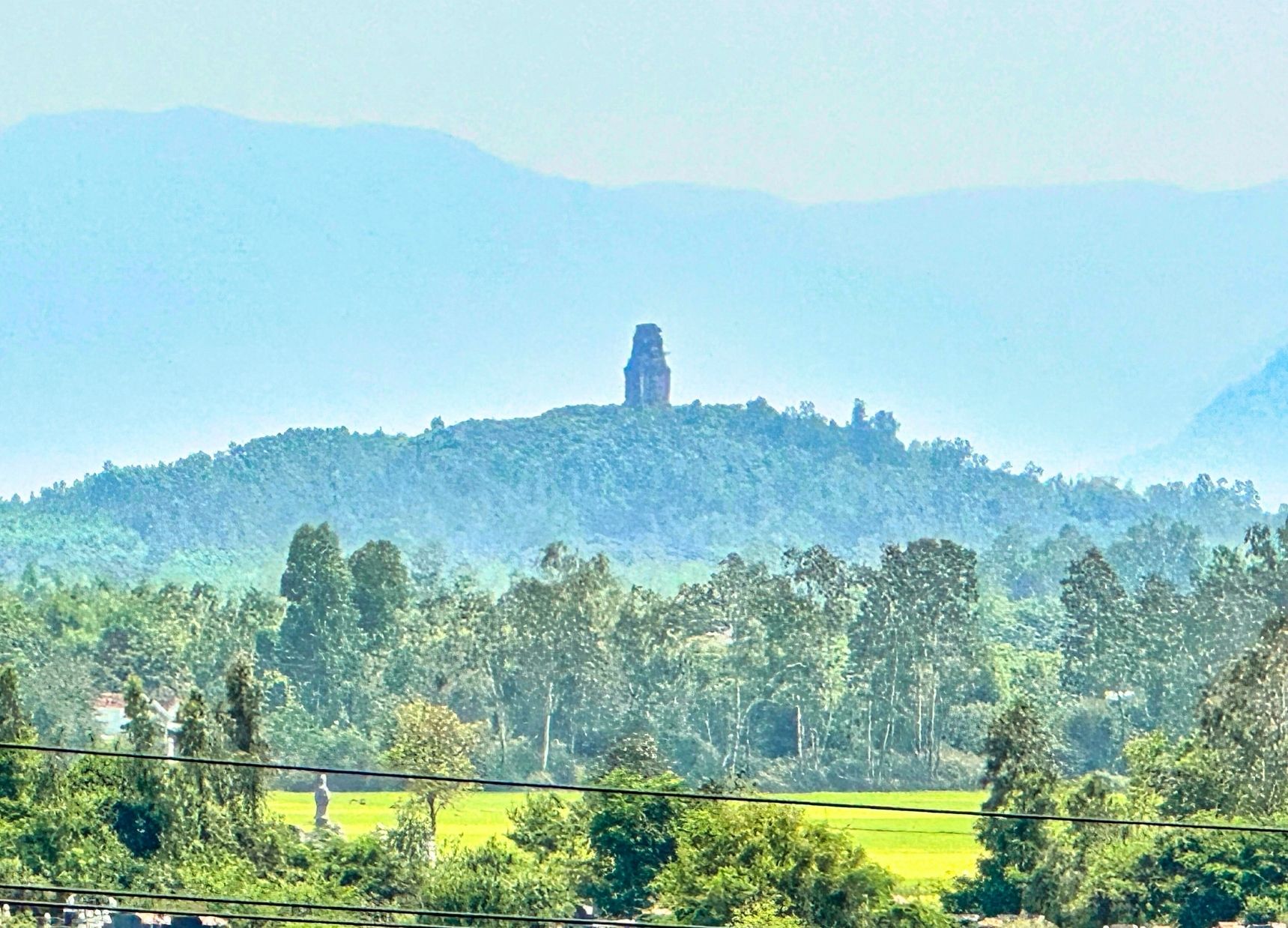
📍Hon Chuong is one of the most unique Cham towers in Vietnam. Not because of the structure itself, which has mostly fallen apart, but due to its location.
Hon Chuong Tower is located atop a large boulder, on a hilltop in the Núi Bà Mountain Range (about 30km north of Quy Nhon). It’s a complete mystery as to how — and why — the tower was built in such an inaccessible location, at almost 700m above sea level.
Reaching Hon Chuong Tower requires a long hike, about 3-4 hours each way. There’s no way to get all the way up to the tower – at least not safely – but you can reach a hill right next to it, where you can get a pretty close up view.
There’s scarce information online on how to reach the tower, but there are local tour companies in Quy Nhon who can arrange it for you.
Tháp Đôi Towers
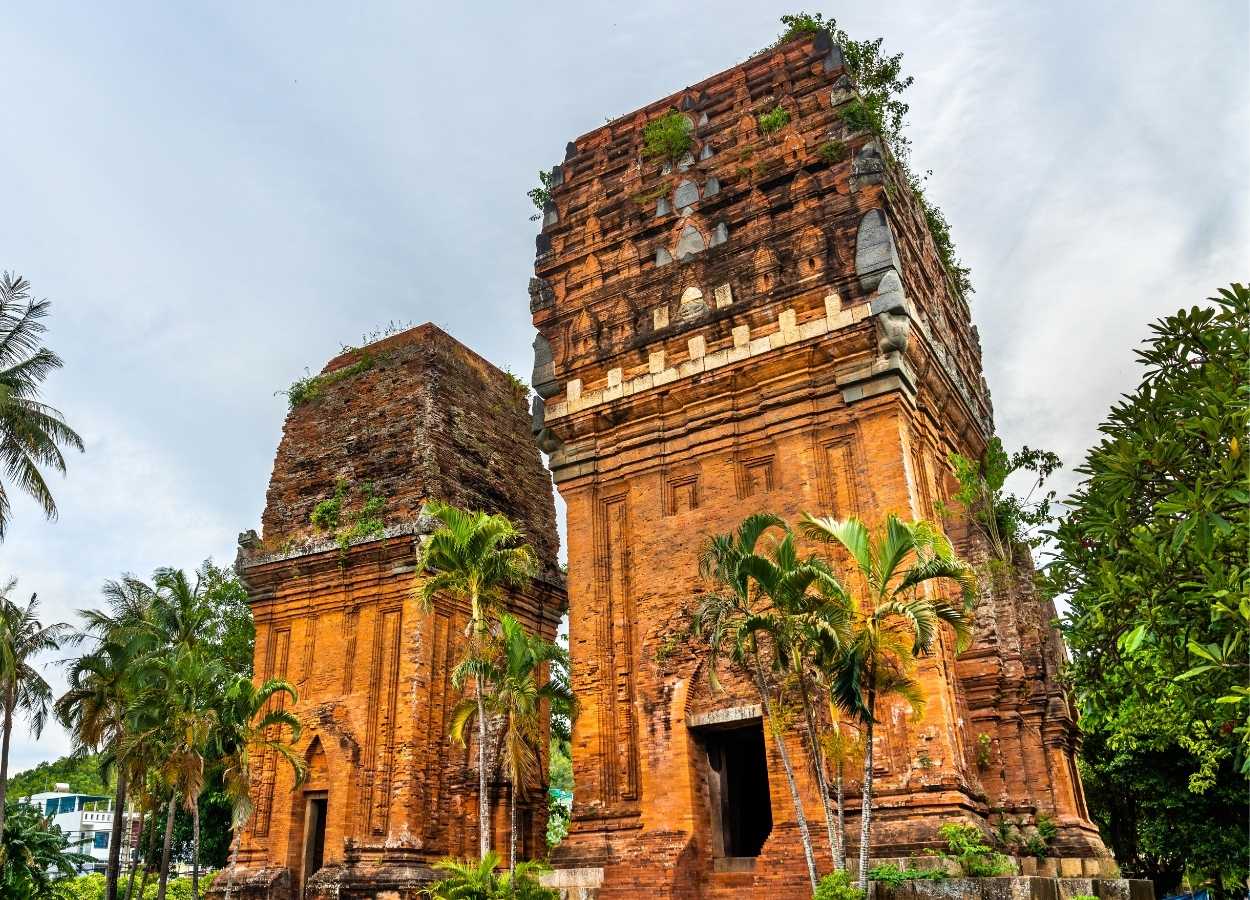
Unlike all the other Cham towers in the region – which are rural, surrounded by farms and jungle – the 📍Thap Doi Towers can be found within the hustle & bustle of Quy Nhon. Located only a 10-minute drive from the city centre, they are the most easily accessible Cham structures in the area and one of the most visited.
Dating to the 12th or early 13th century, the site consists of two towers, each roughly 20m tall. Inside the main kalan you’ll find a stone shrine, where the local Cham people still leave offerings.
Because of their proximity to the coast, the towers have endured centuries of erosion from sea spray and strong winds, but restoration efforts over the decades have left them in excellent condition today.
Their convenient location makes Tháp Đôi Towers an ideal stop for travellers passing through Quy Nhơn, especially if you’re short on time.
Bình Lâm Towers
The final Cham ruin you can visit in Gia Lai Province is 📍Bình Lâm Tower, a quiet site tucked within a small village, among the locals’ houses.
Dating to the 10th or 11th century, it is one of the oldest Cham structures in the region.
Unlike most Cham towers, which are typically built on hilltops, Bình Lâm was built in a low-lying area. This was due to it once being part of a larger citadel which has since been destroyed, leaving no trace but the tower.
Cham Ruins in Da Nang
The newly expanded Da Nang Province, which since 2025 now includes the former Quảng Nam Province, is home to some of the most important Cham sites in Vietnam. Located in central Vietnam, the region encompasses major tourist destinations such as 📍Da Nang City and 📍Hội An, with 📍Huế lying just beyond its northern border.
This region was once the cultural and political heart of the Champa Kingdom, centred around their early capital at Indrapura, before Vietnamese expansion pushed the Cham further south.
It’s within this province that you’ll find Vietnam’s most significant Cham site, along with several smaller and lesser-known towers.
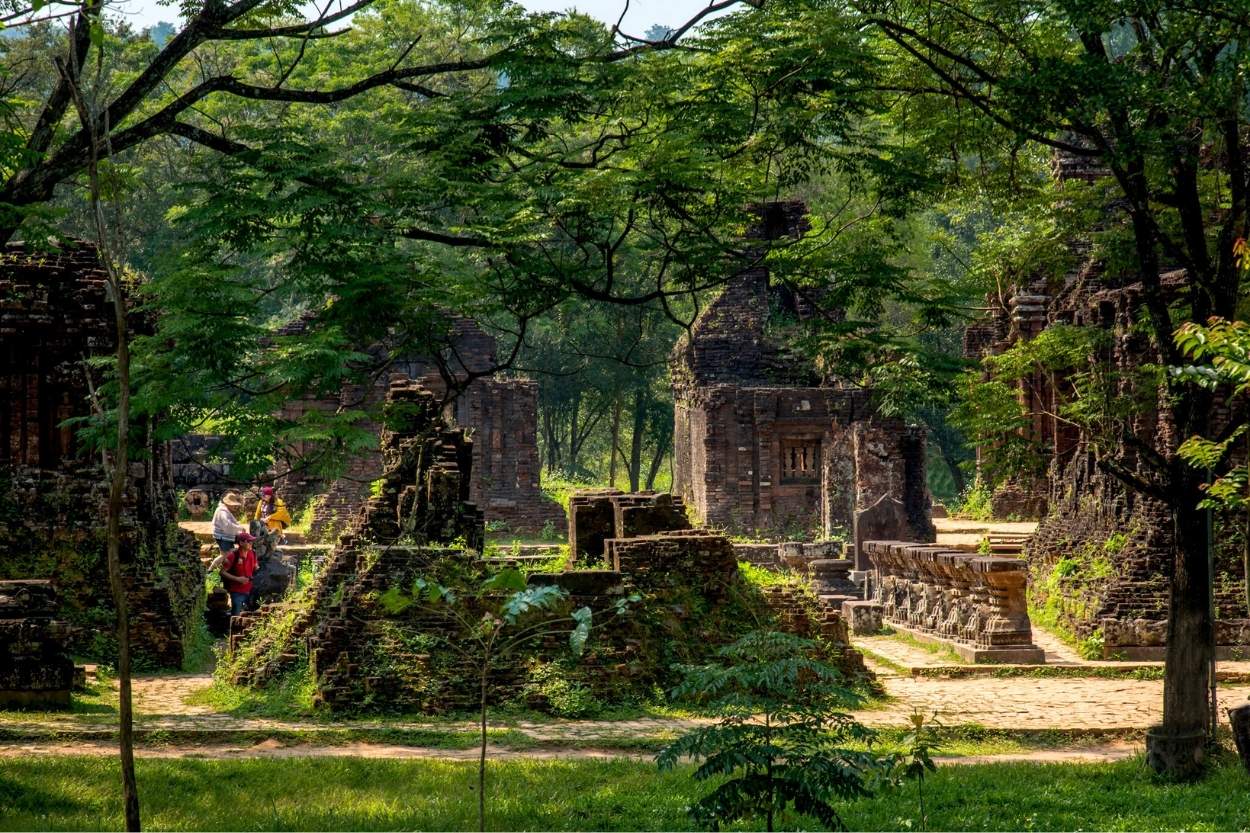
Mỹ Sơn Sanctuary
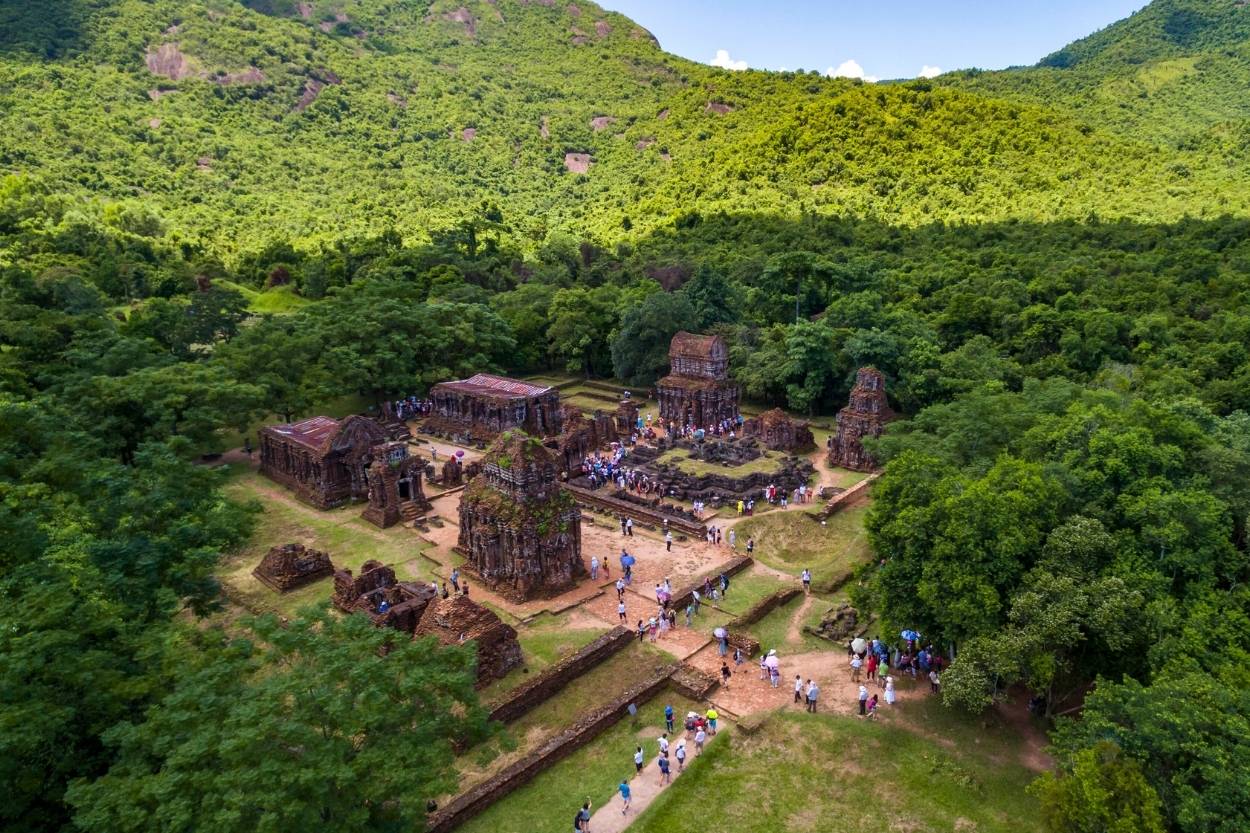
📍Mỹ Sơn Sanctuary is widely regarded as the most important Cham site in Vietnam, and is certainly the most visited.
Unlike many Cham towers, which consists of a few isolated towers, Mỹ Sơn is a sprawling archaeological complex, and the most comprehensive remnant from the old Champa Kingdom.
From the 4th to the 13th century CE, Mỹ Sơn served as the primary Champa holy site, situated close to their early capital at Indrapura. At its peak, the site contained over 70 structures, split into different groups.
The site was heavily damaged by American bombing during the Vietnam War, but extensive restoration efforts are ongoing to return the My Son Sanctuary to its former glory.
It’s certainly the most comprehensive remnant from the old Champa Kingdom, and one of the best Cham sites to include in your Vietnam itinerary.
Many local tour companies offer guided tours to My Son Sanctuary from Hoi An, Da Nang and Hue.
READ MORE: Complete Guide to Visiting My Son Sanctuary
Chiên Đàn Towers
Located south of Hội An, the 📍Chiên Đàn Towers date to the early 11th century and follow the classic Cham layout of three towers standing side by side.
Unlike many other Cham sites in Vietnam, Chiên Đàn hasn’t been restored, giving visitors a much more raw sense of how these structures have weathered the centuries.
A small on-site museum displays statues, pedestals, and sculptural fragments excavated from the complex.
Chiên Đàn is rarely visited, overshadowed by the nearby Mỹ Sơn Sanctuary, but it’s an interesting stop for those wanting a quieter experience.
Bằng An Tower
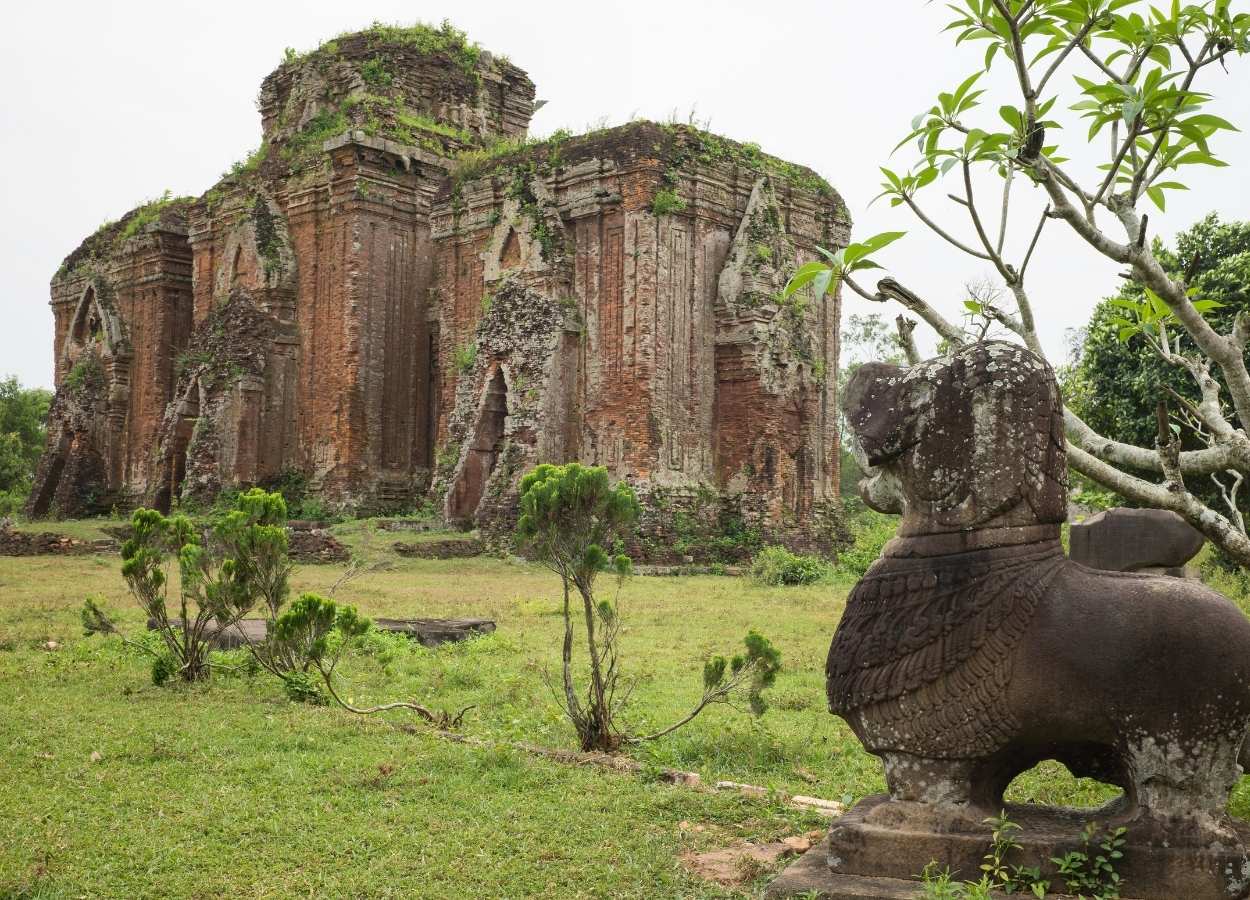
Just outside Hội An you’ll find 📍Bằng An Tower, one of the most unusual Cham structures in Vietnam. While most Cham towers have a square or rectangular design, Bằng An Tower is octagonal, and is the only surviving Cham tower of this shape.
Built in the 9th or 10th century CE, the tower stands at about 20m tall, and still houses a small shrine, where local residents continue to leave offerings. Two statues – an elephant and what appears to be a lion – guard the entrance to the tower.
Bằng An was once part of a larger complex of structures, though today only the one tower remains.
Bằng An Tower is truly one-of-a-kind and well worth the short stop on your way to My Son Sanctuary.
Khương Mỹ Towers
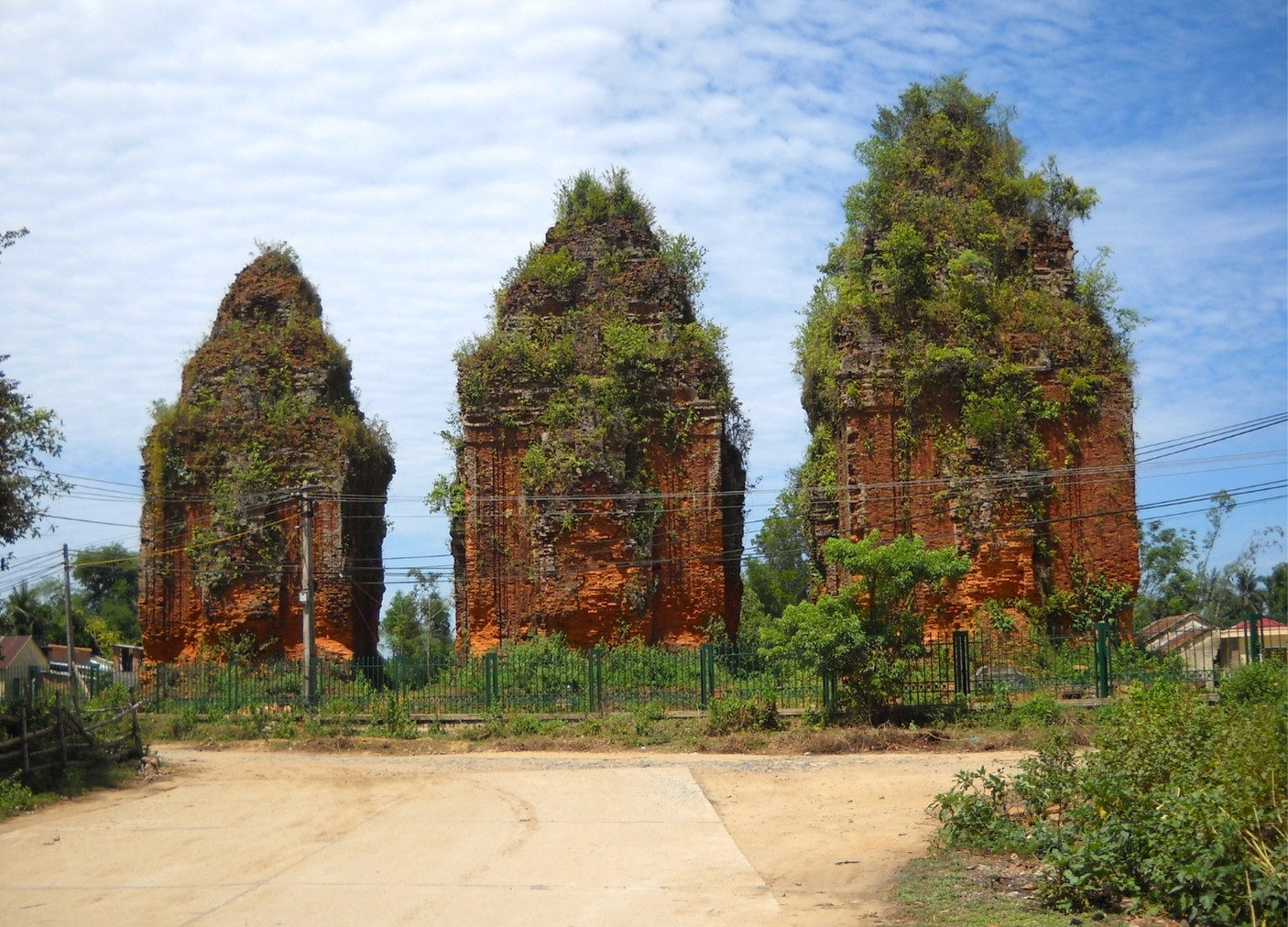
Located on a small hilltop in Tam Kỳ, in the southern part of the province, the 📍Khương Mỹ Towers are one of the older Cham sites you can find in Vietnam.
Dated to the 9th century, the years have not been kind to these 3 brick towers, being heavily eroded and covered in plants. Some restoration work has been done in recent years, replacing some of the bricks around their base, but they still remain some of the more worn-down Cham sites in the region.
Khuong My Towers is a quiet, and slightly out of the way, site that you’ll probably want to skip if you’re only interested in the top Cham sites in Vietnam.
Cham Ruins in Huế
The 📍Huế municipal district once formed part of the northern reaches of the Champa Kingdom. There’s only 1 significant Cham site you can visit in this region.
Phú Diên Tower
Imagine digging at the beach and finding not shells and driftwood, but an entire Cham tower.
Well, that’s exactly what happened in 2001 after 📍Phu Dien Tower was discovered under almost 7m of sand near the city of Hue. It’s unknown how long it was buried, but it was likely for centuries.
Dated to around the 8th century CE, Phú Diên is one of the oldest Cham sites in Vietnam. Only the lower portion of the tower survives, but its bricks are quite well preserved – with the sand protecting it from the rain and moisture that stains most other Cham towers.
Unfortunately for visitors hoping for a nice photo, a protective glass enclosure has been built around the structure. Visitors cannot enter the enclosure, meaning you can only view the tower through the tinted glass.
The site is a little hidden near the beach, with limited signage, but thankfully Google Maps marks the correct location.
Top 3 Cham Ruins in Vietnam
The above list gives you all the Cham sites you can visit, but you’re probably not planning to include all 21 in your Vietnam itinerary. So which ones are the best?
For the overall best Cham site in Vietnam, choose My Son Sanctuary. It’s the largest of all Cham sites and a UNESCO World Heritage Site. A sprawling complex of multiple temple groups, and easy to reach from Hội An, Đà Nẵng or Hue. If you can only pick one Cham site, choose My Son Sanctuary.
For the best Cham site in south Vietnam, visit the Po Nagar Towers. One of the most picturesque Cham sites in Vietnam, beautifully restored and conveniently located in downtown Nha Trang.
For the largest Cham towers ever built, visit the Duong Long Towers. The 24-metre-tall towers are a little off the beaten path near Quy Nhơn, but their sheer scale and great valley views make them a top choice.
Champa ruins FAQs
How many Champa sites are there in Vietnam?
There are countless Cham remnants across Vietnam, but about 20 known sites that you can actually visit.
Which is the best Champa site to visit?
The best Champa site you can visit in Vietnam is Mỹ Sơn Sanctuary. If you only have room for one in your itinerary, make sure it’s My Son Sanctuary.
How old are the Champa towers in Vietnam?
While some sites, like Mỹ Sơn Sanctuary, were in use as far back as the 4th century CE, most Cham towers across Vietnam range from between the 7th to 14th century.
What happened to Champa?
The Champa Kingdom lasted for about 1600 years. In their later years they were pushed further and further south by the Vietnamese, until they were fully annexed into Vietnam in 1832. The Cham people, however, still live on as a minority ethnic group in Vietnam.
Is there a dress code at Cham towers?
Most Champa sites don’t have an enforced dress code, but in some more popular sites, like Po Nagar Towers, you will be expected to remove your shoes before entering the tower.
Cham towers are temples, and many are still in use by locals. It’s considered respectful to remove shoes and dress modestly.
Further reading on Vietnam
⬤ For more historical sites in Vietnam, check out: 15 Best Historical Places in Vietnam.
⬤ If you’re visiting Hue, you’ll want to explore the old imperial citadel. Check out: Hue Citadel | Complete Guide to Vietnam’s Imperial City.
⬤ To learn the best way to explore the historical sites in Vietnam, check out: 10 Day Vietnam Itinerary for History Buffs.
⬤ For more historical travel guides on Vietnam, check out our Vietnam page.
Disclosure: This post may contain affiliate links.