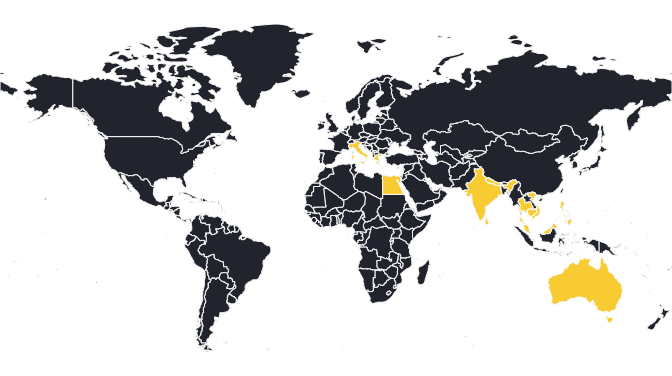
The UNESCO-listed Mỹ Sơn Sanctuary was once the main holy site for the lost Champa Kingdom. Over 1800-years-old, its the top Cham ruin you can visit in Vietnam and one of the country’s top historical sites.
Being located near Vietnam’s central coast, Mỹ Sơn Sanctuary is also a popular daytrip for those visiting popular tourist hubs like Huế, Hội An and Da Nang.
Despite this, visiting Mỹ Sơn Sanctuary is tricky for those who aren’t on a guided tour. The site is located 40km and reliable info is hard to find.
This guide is here to solve that for you. Drawing from first-hand experience, I’m giving you everything you need to know about visiting Mỹ Sơn Sanctuary.
Contents
Brief History of My Son Sanctuary
Throughout the middle ages the area that is now Vietnam was comprised of 3 kingdoms. To the north was the Dai Viet (the Vietnamese). To the south was the mighty Khmer Empire (the Cambodians). And squashed in between was the Kingdom of Champa.
For over 1500 years, the Champa Kingdom was one of the major regional powers in South-East Asia, capitalising on the trade routes to and from China. They were often at conflict with the Khmer Empire, and even invaded and sacked the great city of Angkor.
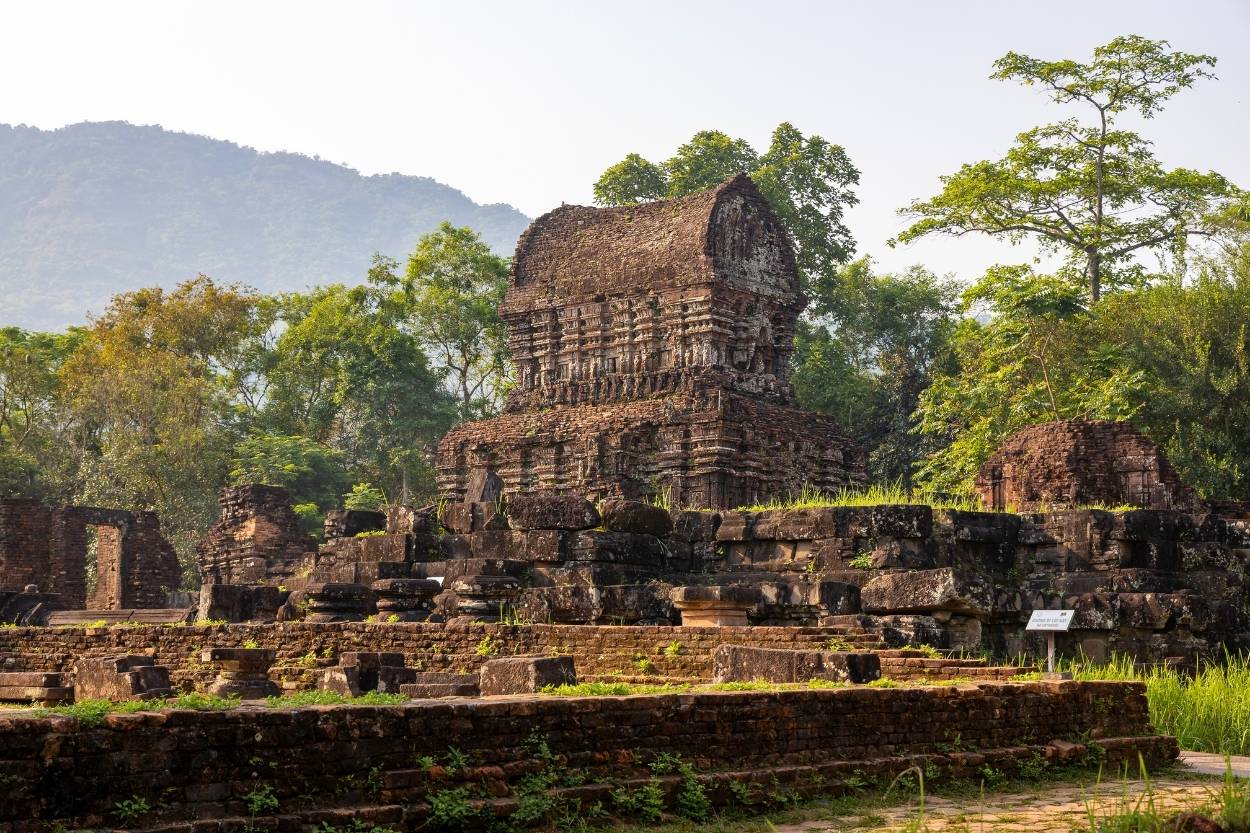
Over their long reign, Champa had multiple capital cities near the modern day town of Hội An, which too was a Champa settlement. In this area, around the 4th century, they established a royal holy site: Mỹ Sơn Sanctuary.
Serving as the spiritual centre for the Champa Kingdom, Mỹ Sơn was home to up to 70 temples, build gradually over 1000 years. It used by the dynasty members and other important people in society for their religious ceremonies, worship and for some even their burial.
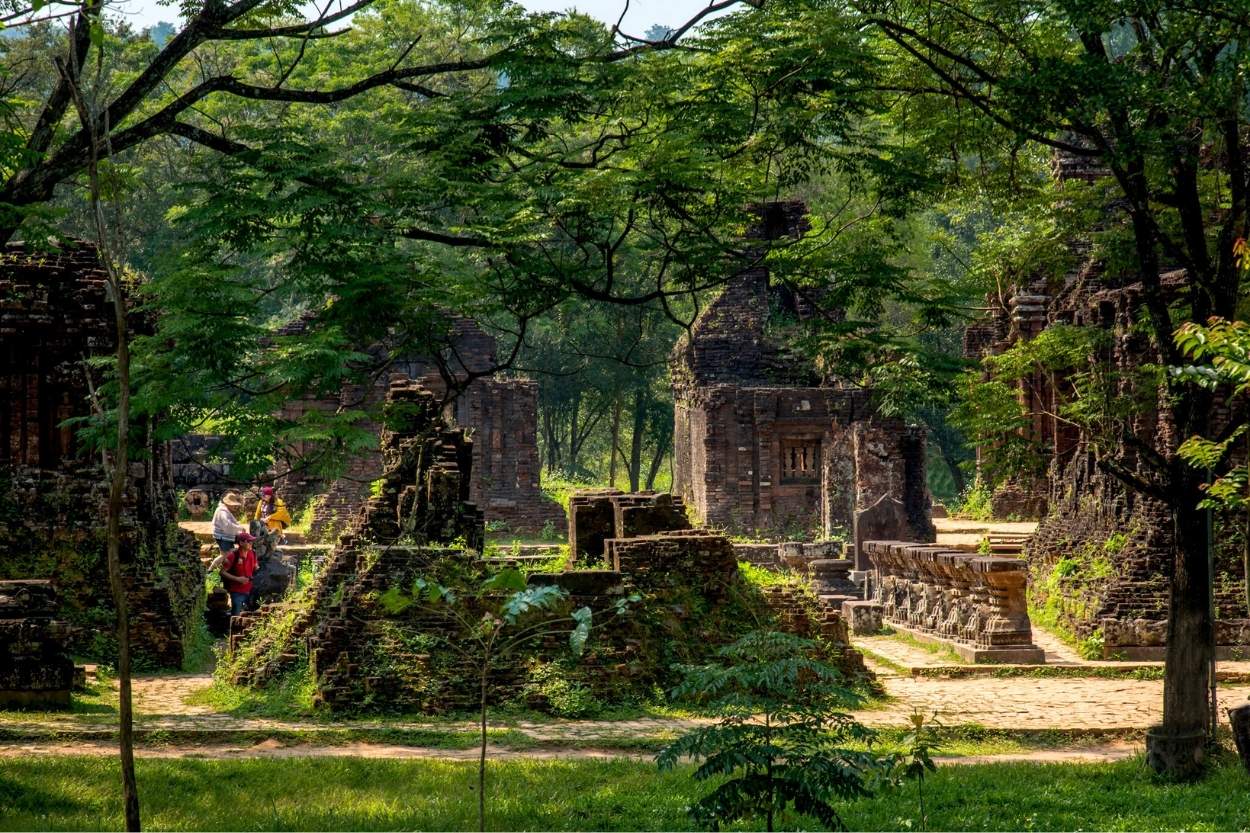
This was during a time when SEA was ‘Indianized‘, which is why Mỹ Sơn Sanctuary is Hindu and the inscriptions you can see carved into its buildings are in Sanskrit.
By the late 16th century CE, the declining Champa kingdom was conquered by the conquering Vietnamese from the north. Mỹ Sơn Sanctuary soon fell into disrepair and was eventually abandoned.
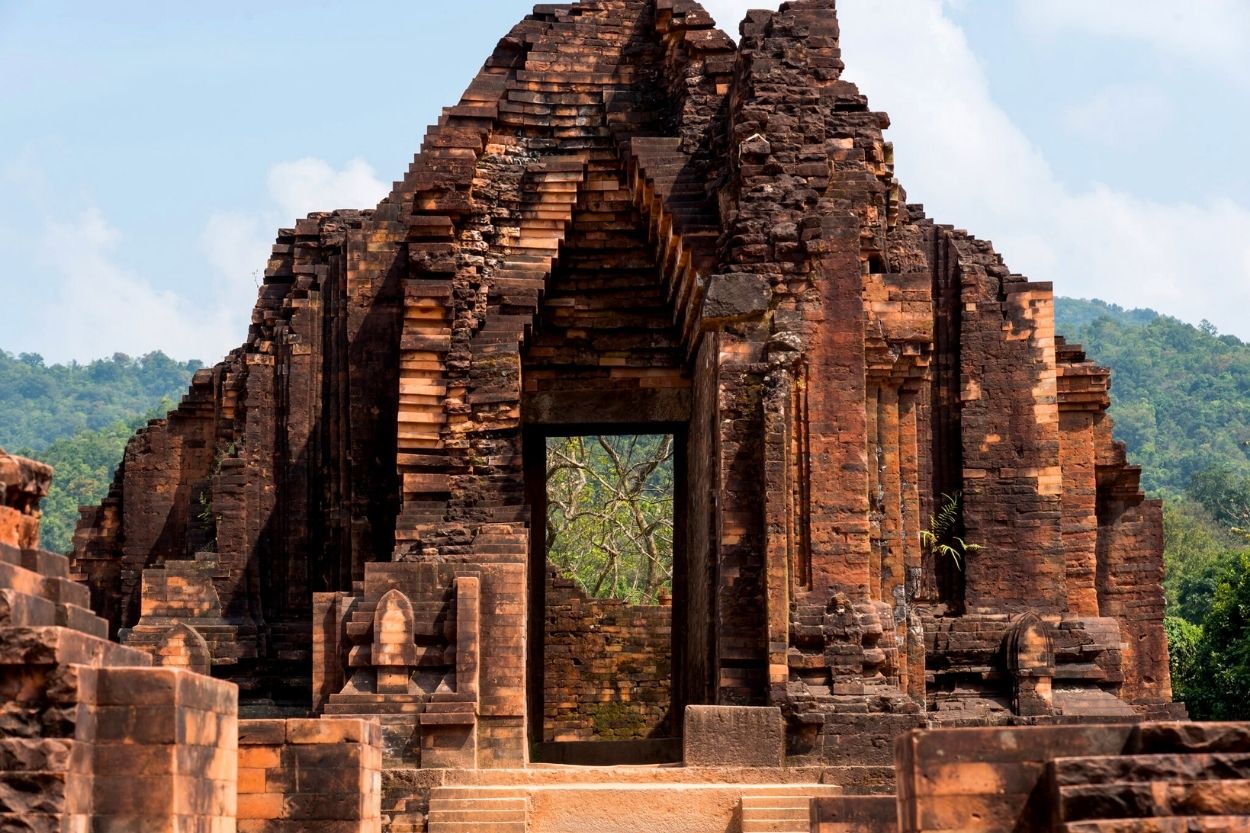
While the site was partially restored under French colonial rule, it would be heavily damaged during by American bombing during the Vietnam War. Bomb craters can still be seen around the site to this day.
Its only in recent years that the restoration on the site began once again. Efforts are ongoing, with many of the temples being largely rubble, but some have been completely restored.
Things to see at Mỹ Sơn Sanctuary
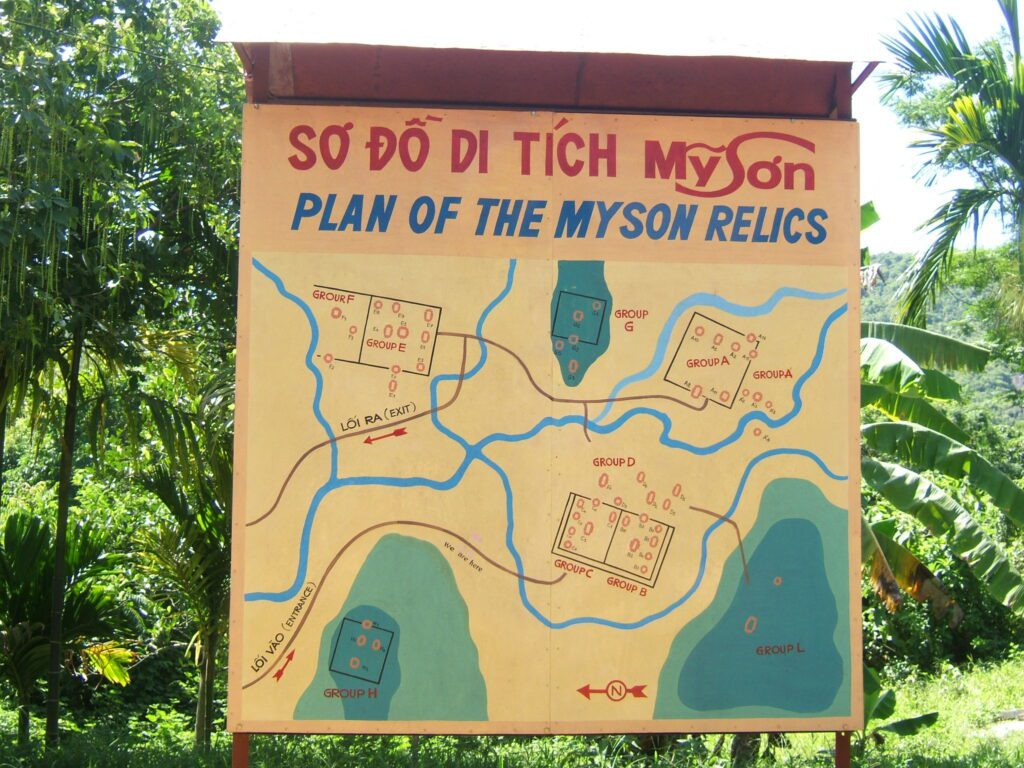
Mỹ Sơn Sanctuary is an expansive site, with multiple groups of ruins spread out over a wide area. After visiting the museum at the entrance, you’ll take the shuttle up the hill. From here a designated path takes you through the following temple groups, in this order:
- Group K
- Group E, F
- Group G
- Group A
- Group B, C, D
- Group H
Here are some of the highlights you can expect along the way…
Museum
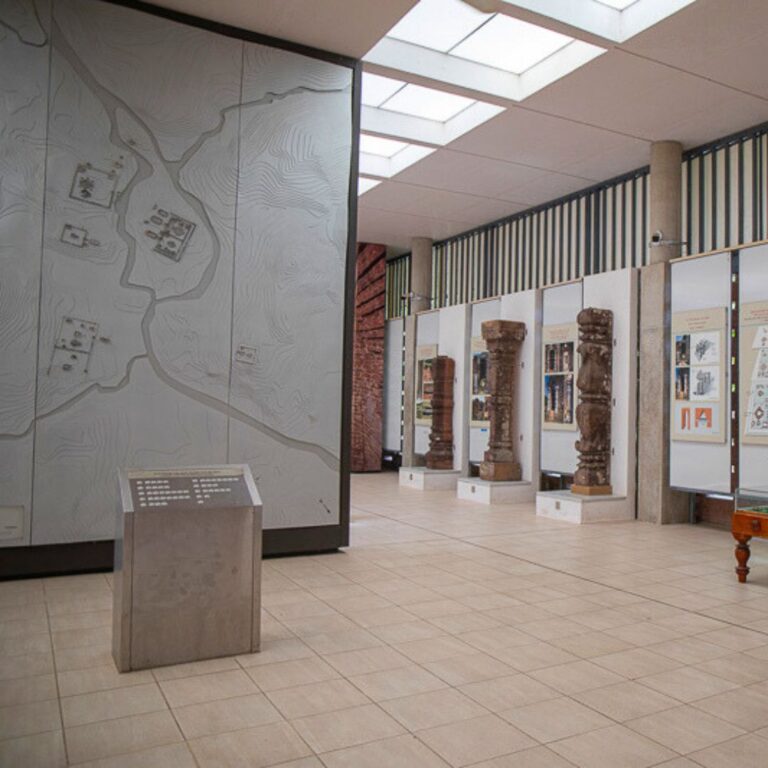
The museum is the first thing you’ll come across after entering Mỹ Sơn. It’s located just beyond the main entry, before taking the shuttle bus up the hill to the ruins.
At this small museum you can learn about the history of the Cham people, the lost Champa Kingdom and of Mỹ Sơn itself.
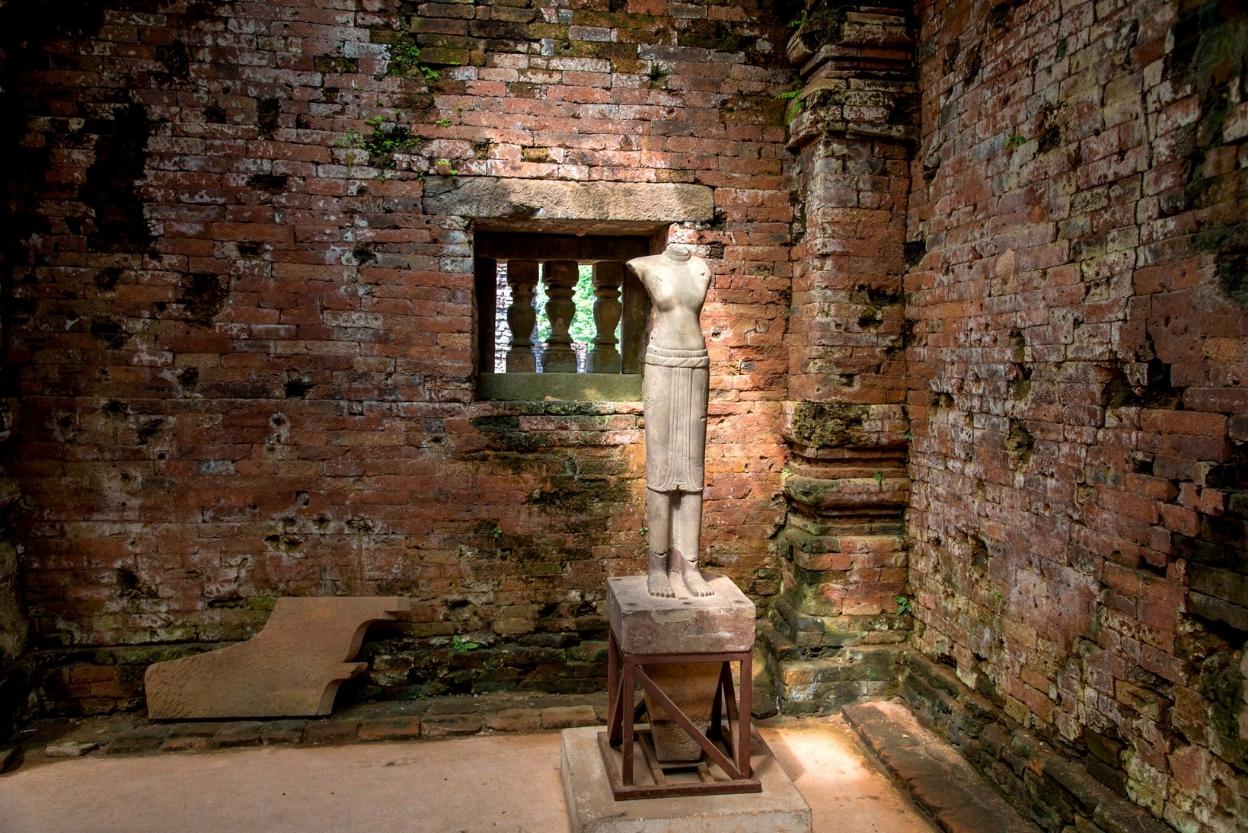
Many of the top artefacts unearthed at Mỹ Sơn Sanctuary were taken abroad by the French during their colonial rule, but this museum still holds a few of its own, such as some impressive sculptures.
Along with infographics and maps, the museum takes you through the long and interesting history of Mỹ Sơn Sanctuary, and covers the building techniques used by the Cham people to construct the temples.
After you’ve visited the museum, you’ll take the free shuttle up the hill and start exploring the ruins.
Group E & F
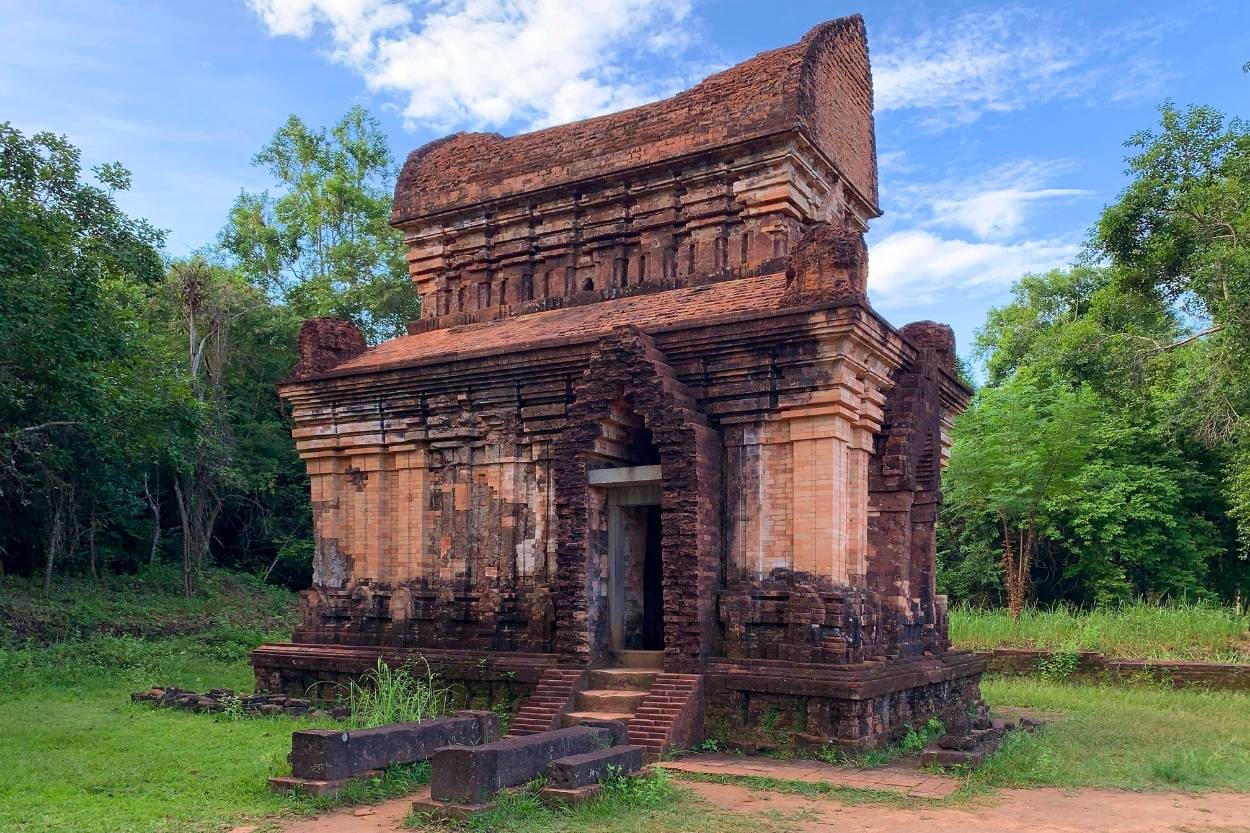
After passing by the lonely Group K, the first collection of temples you’ll visit comprise temples E and F.
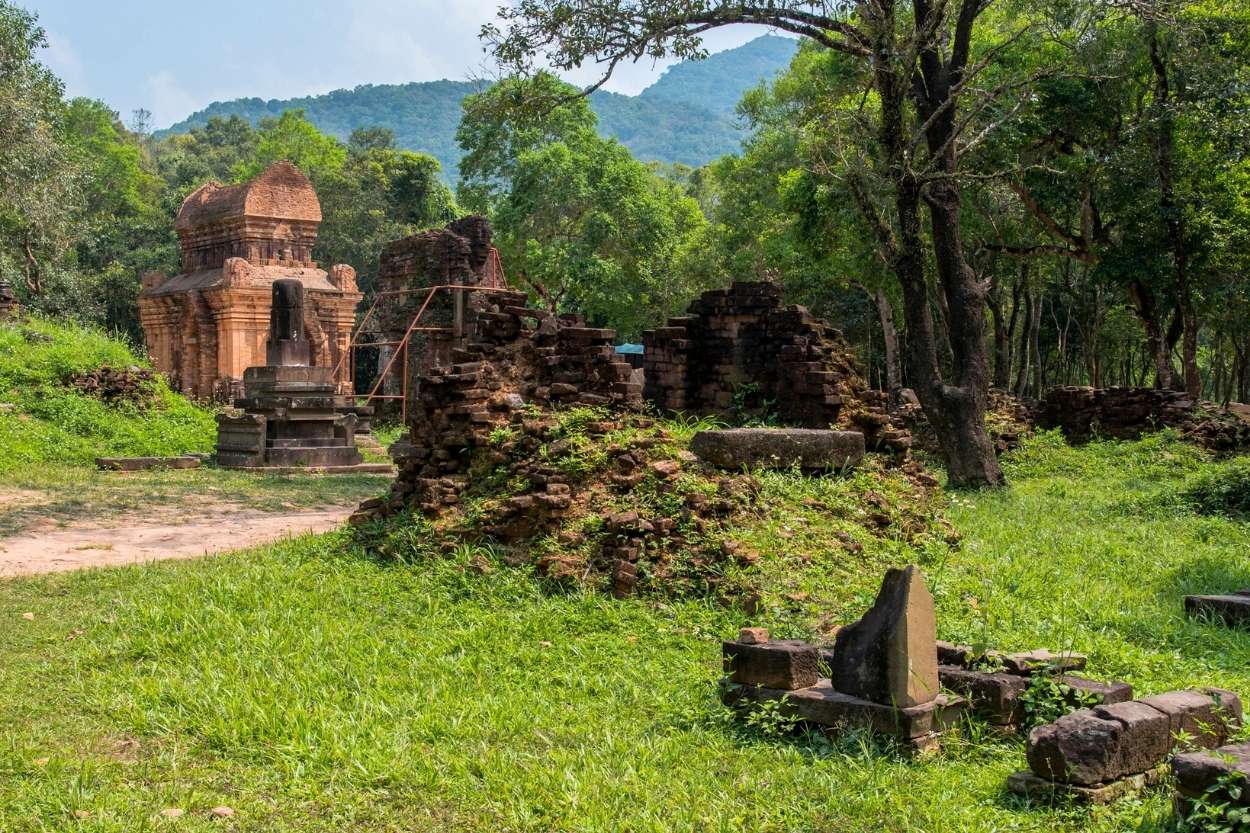
If you find the structures here a bit lackluster, don’t worry because this is considered the least impressive group at My Son. These temples were the most heavily damaged during the American bombing, and multiple bomb craters are still visible around the structures to this day.
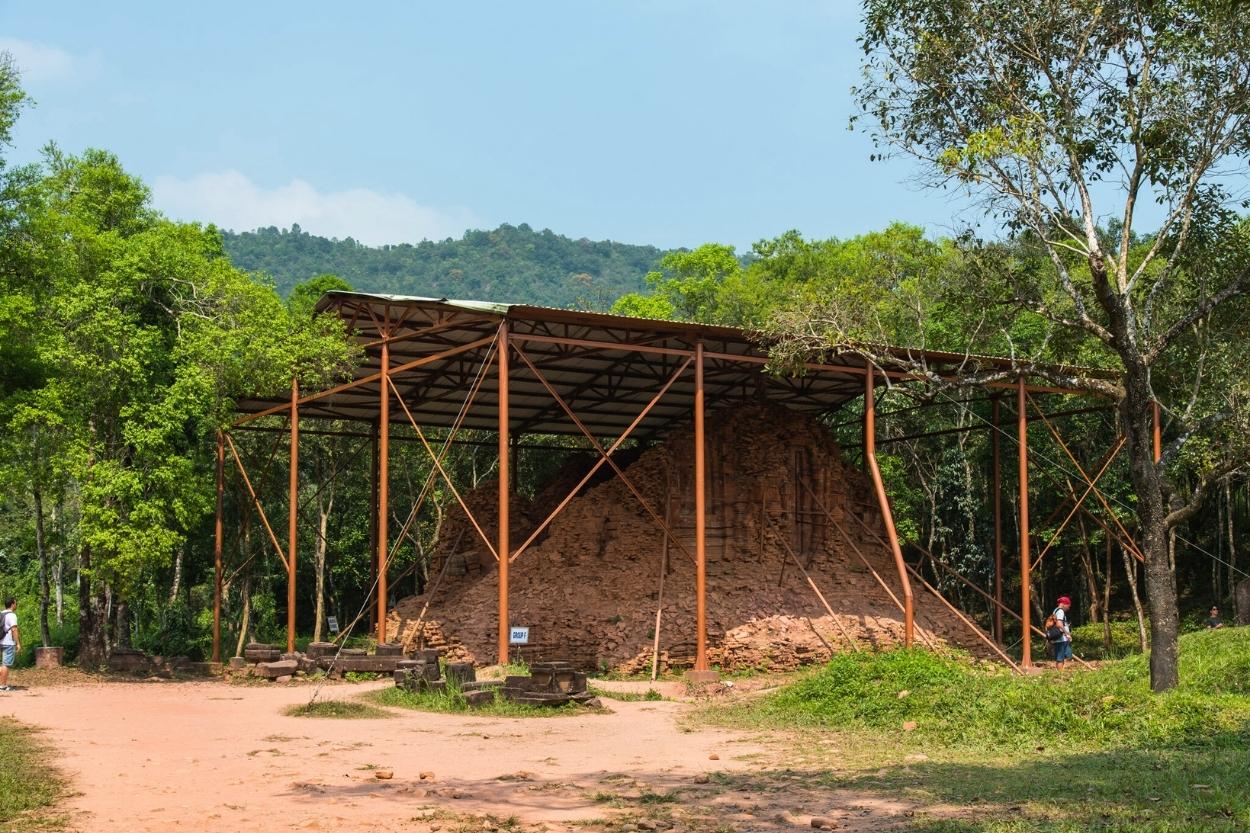
The largest structure in this group (temple F1) is among the most heavily damaged, being little more than a pile of bricks. It’s currently inaccessible to visitors, being fenced off and covered by a roof, as restoration work has begun.
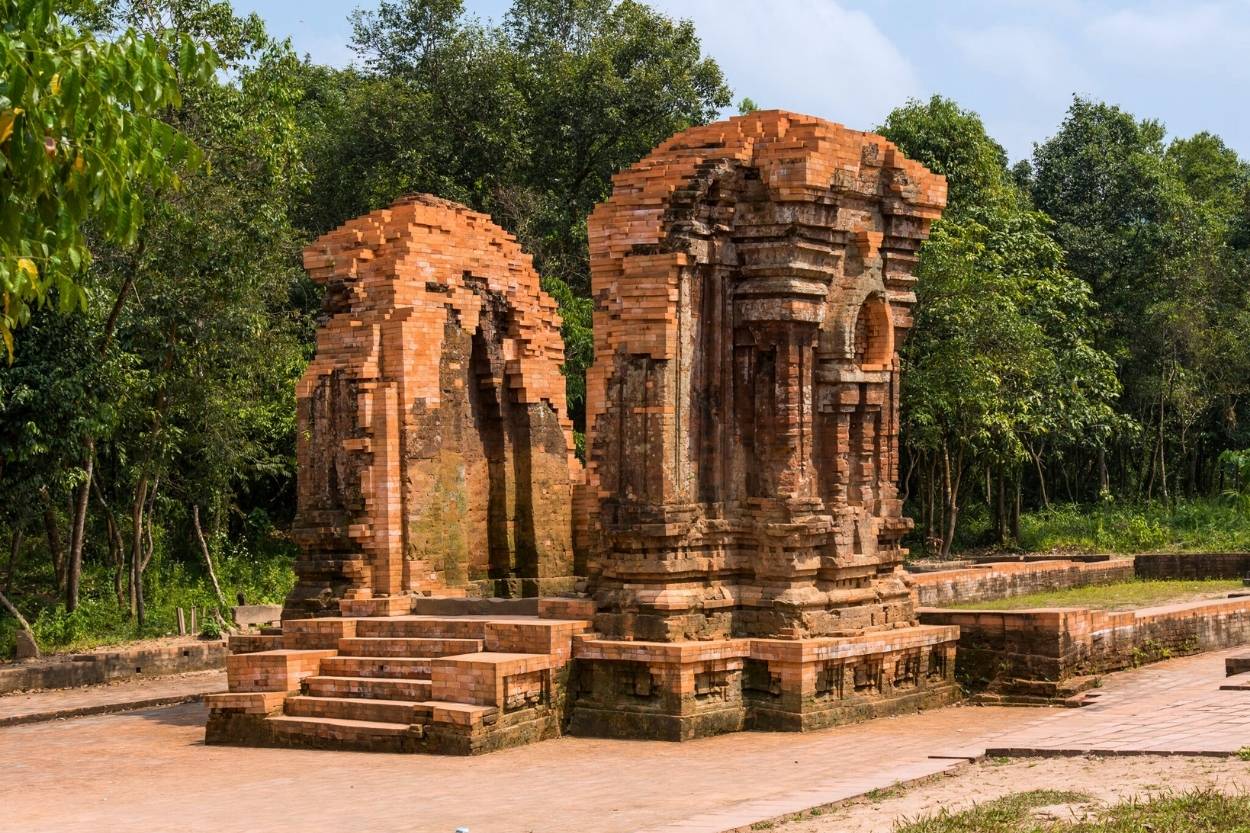
The exception here is temple E7 which, while small, is possibly the most well-preserved single structure at My Son Sanctuary, being in almost perfect condition.
Group A
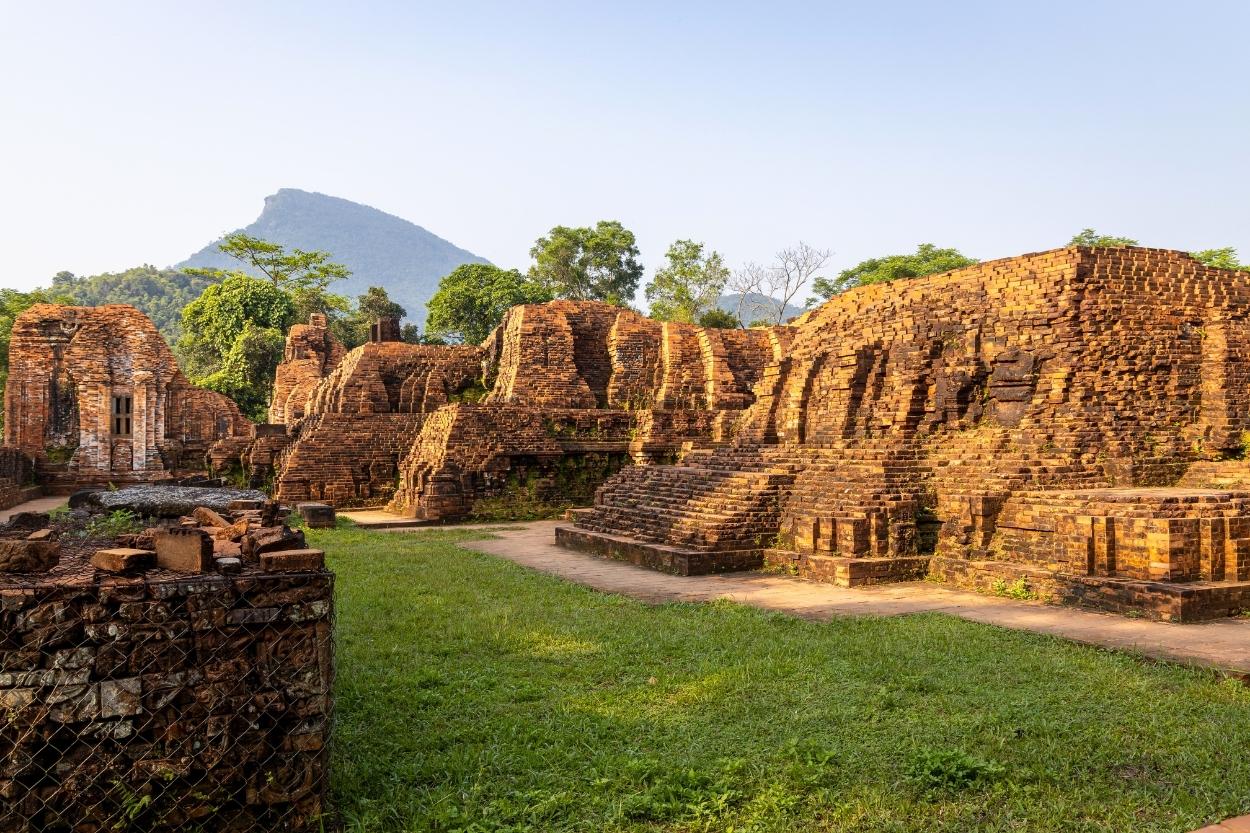
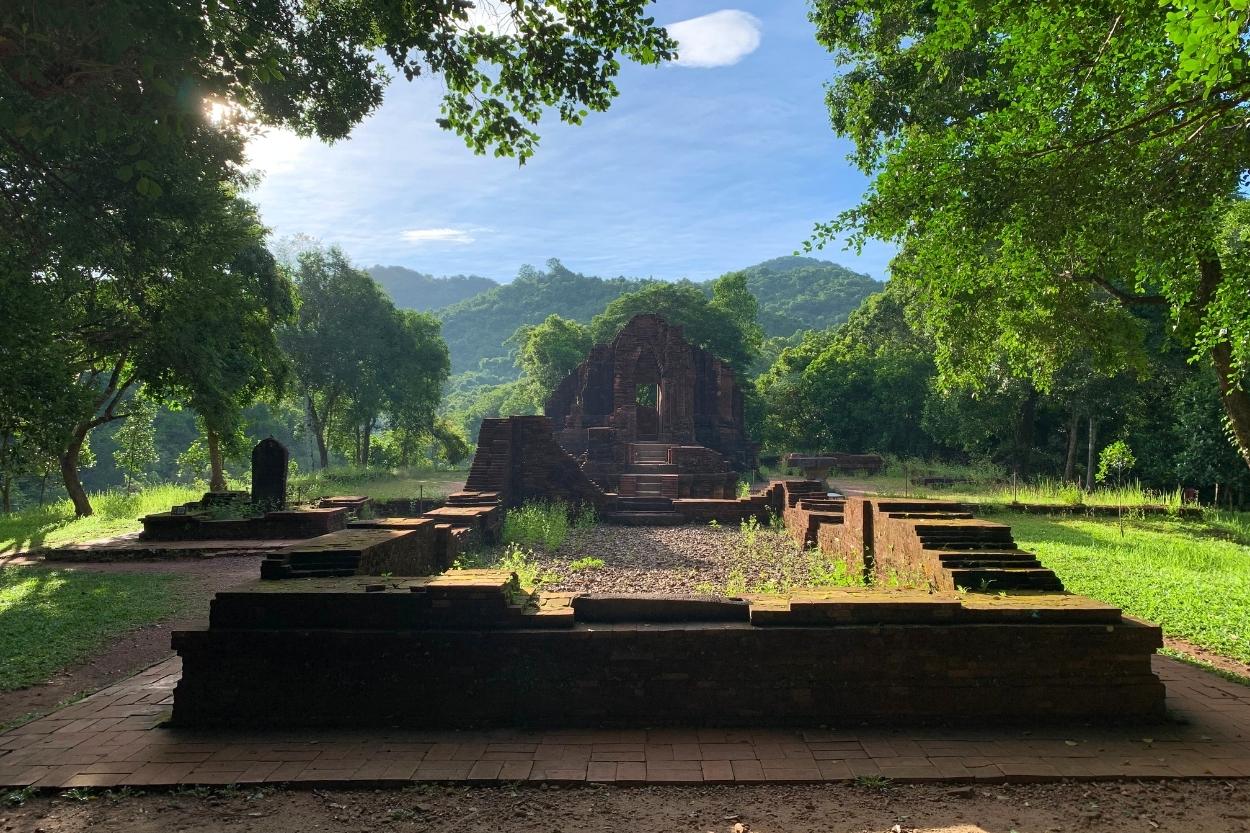
The temples at Group A were once among the largest at Mỹ Sơn.
The central structure, temple A10, was likely built between the 10th and 13th centuries and once stood up to 28m high. Unfortunately, bombing from the Vietnam War destroyed the upper portion and only the lower half remains.
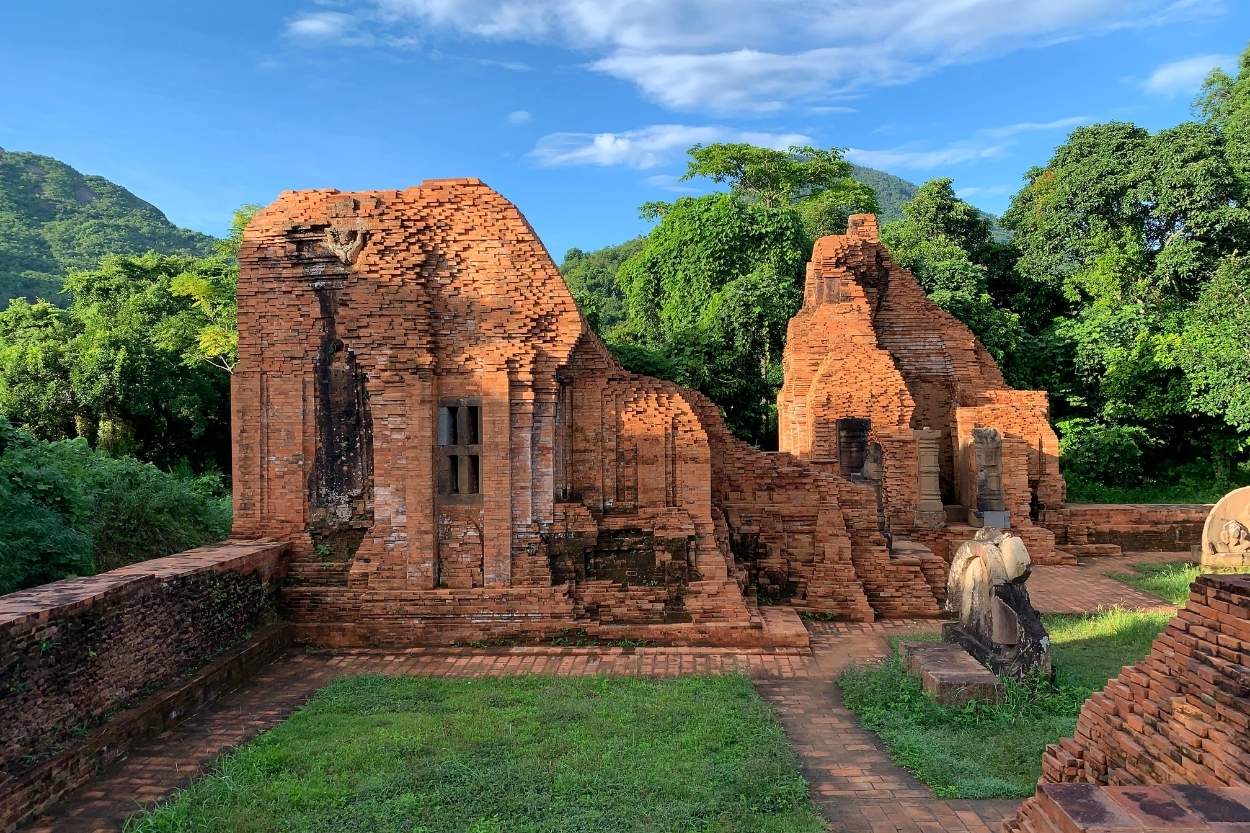
Restoration is underway, and maybe one day soon it’ll return to its former glory.
A10 was the main temple in a walled enclosure with multiple smaller temples surrounding it.
Group B, C & D
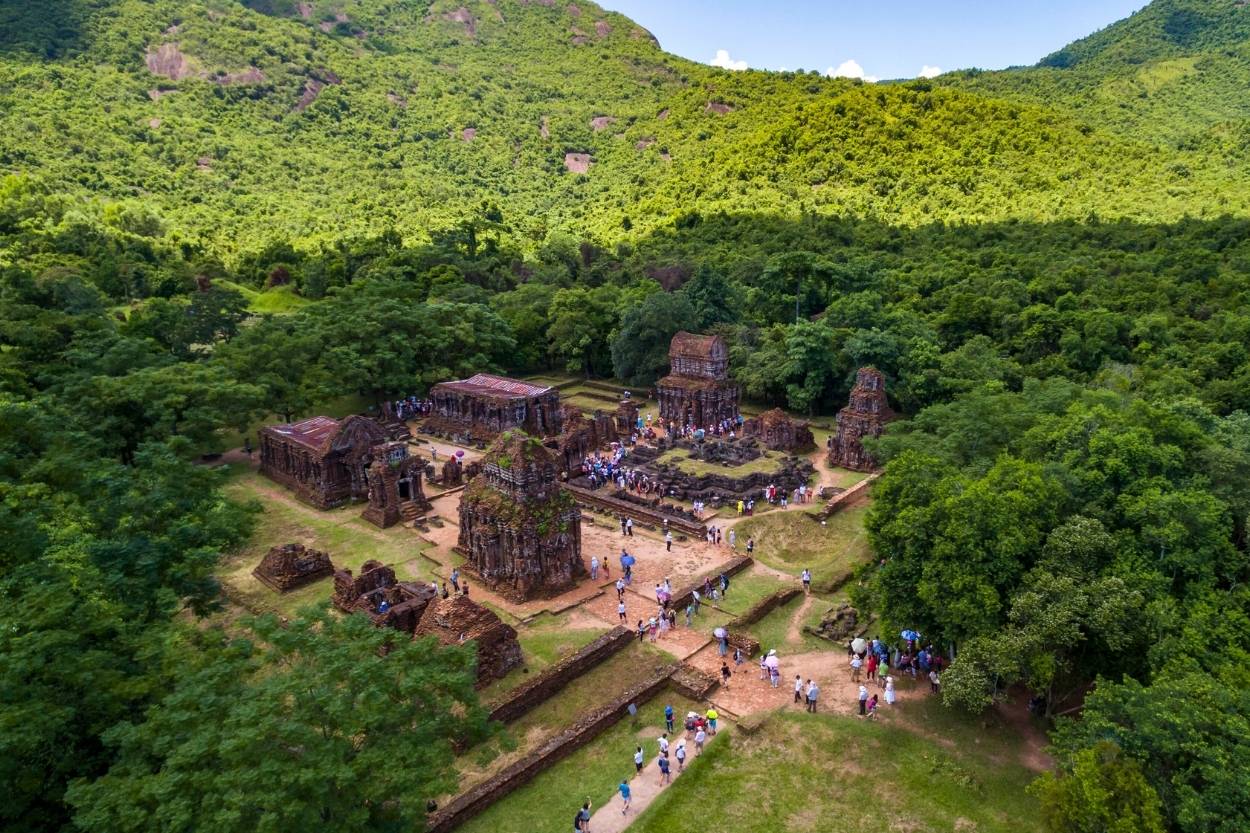
The ruins at group B, C & D are the main attraction at My Son Sanctuary, and the largest group of temples at the site.
Group B boasts the oldest structures at Mỹ Sơn Sanctuary. The oldest (temple B10), was built during the 4th century CE before being destroyed, and then re-built in the 7th century. The other structures here were built later, mostly between the 8th and 10th century.
The structures in this group are among the most well preserved at My Son, which mostly means those that were least damaged from the American bombings.
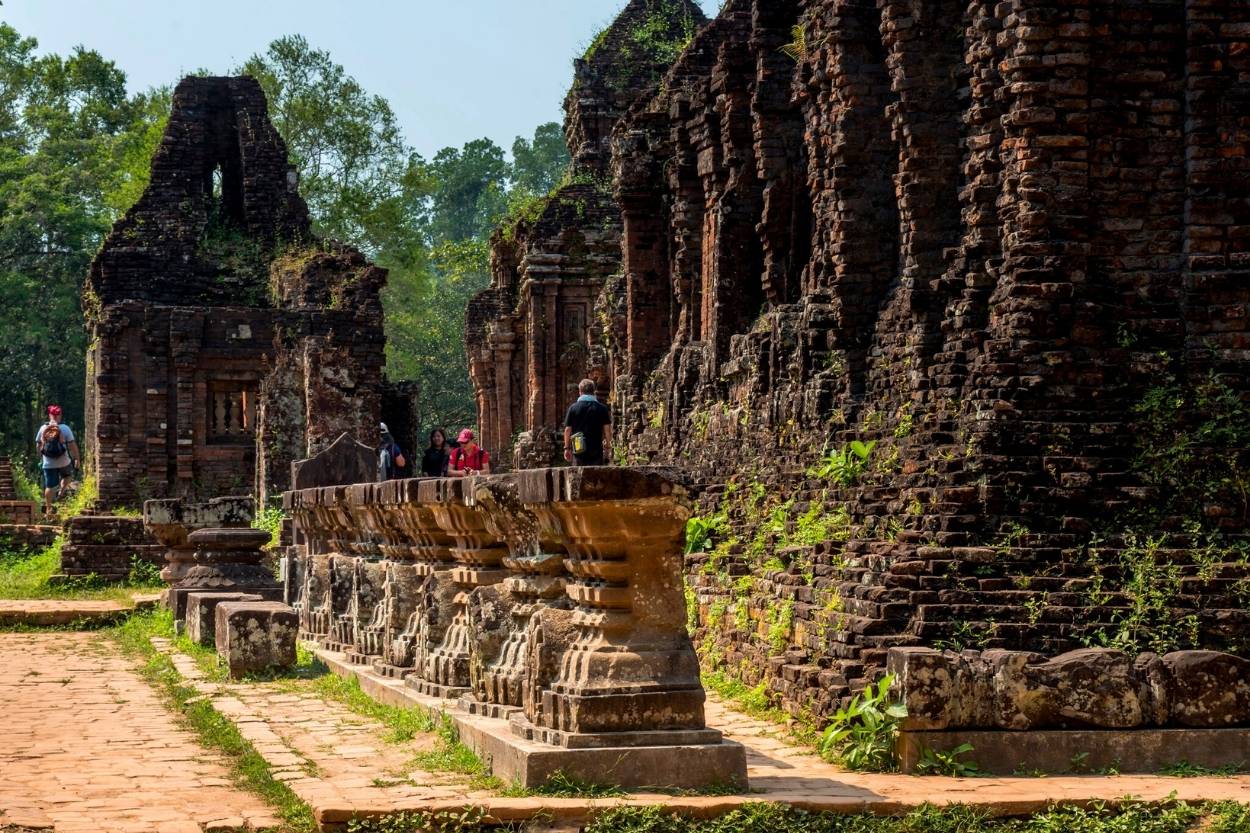
Aside from the large, intact structures you can explore in this group (including the interiors), it’s also the best place at Mỹ Sơn to see the Sanskrit inscriptions carved into the buildings, as well as other rock-carved reliefs and sculptures.
This included structures D1 and D2, which have been covered by a modern roof and turned into a makeshift museum, with a bunch of artefacts unearthed from Mỹ Sơn on display.
Group B, C & D are the final main group of temples you’ll see at Mỹ Sơn Sanctuary. After this, you’ll pass by a couple of small, mostly ruined, structures as you make your way back to the shuttle.
Where is Mỹ Sơn Sanctuary?
📍Mỹ Sơn Sanctuary is located in central Vietnam, in the Da Nang province, about 40km inland from the popular tourist hotspot of Hội An.
How to reach Mỹ Sơn Sanctuary
Mỹ Sơn Sanctuary is best visited on a day trip from either Hội An, Da Nang or Huế. The journey will take approximately 60 to 90min on the road depending on where you’re coming from.
You have a few different options for getting there:
Reaching Mỹ Sơn Sanctuary by Shuttle Bus
Currently there is a local company running a cheap shuttle bus service to Mỹ Sơn from both Hội An and Da Nang. This is probably the simplest and cheapest way to reach the site.
It departs from a designated pick up point in either city, drives you to Mỹ Sơn Sanctuary, allows you plenty of time to explore the site, then drops you of back at the pick up point.
Note that this isn’t a guided tour, it’s a simple ‘drive you there and back’ service.
You can book your place on the shuttle bus here.
Reaching Mỹ Sơn Sanctuary by Scooter
If you’re down for a little adventure, then I’d highly recommend you skip the shuttle bus, rent a scooter/motorbike, and go on a road trip to Mỹ Sơn yourself.
Renting a motorbike is a popular thing to do in Vietnam. It’s cheap, doesn’t require an international licence (or at least I’ve never been asked to show one) and is a lot of fun.
Reaching Mỹ Sơn Sanctuary on a motorbike is the best way to explore the region, allowing you the freedom to stop at other sites along the way.
You’ll need to navigate a bit of chaotic city traffic, especially if you’re leaving from Da Nang, but once you get inland a little the roads a fairly quiet.
You can often book a scooter rental by speaking to your hotel accommodation. Most have connections and can arrange one for you.
If that isn’t an option, then click here to book a motorbike/scooter rental in Da Nang, or click here to book one in Hoi An.
Reaching Mỹ Sơn Sanctuary with a tour
Lastly, you can skip all the hassle and simply book a guided tour to Mỹ Sơn Sanctuary.
No meeting at the shuttle pick up point, no riding a motorbike on chaotic city roads – it’s all covered for you, making a tour the most convenient way of reaching Mỹ Sơn.
Most tours will pick you up from your hotel, drive you to the ruins, provide a guided tour of the site from an experienced English-speaking guide, often provide you with breakfast or lunch, then drop you off back at your hotel.
Some tours also stop by other popular attractions in the area on the way.
Most guided tours are a half-day trip, depending on what’s included, and often give you the choice between morning or afternoon.
You can explore Mỹ Sơn Sanctuary tours by here.
Mỹ Sơn Sanctuary Opening Hours
At the time of writing, My Son Sanctuary is open from 6am to 5pm, 7 days a week including public holidays.
Unfortunately, My Son Sanctuary doesn’t have an official website where you can check for updates to the opening hours, but the times are not known to change.
Mỹ Sơn Sanctuary Entrance Fee
At the time of writing, the entrance fee for My Son Sanctuary is 150,000 VND (about $6 USD).
Tickets to My Son Sanctuary can be purchased from the ticket booth at the site itself.
Tickets to My Son Sanctuary cannot be purchased online or in advance – at least for now.
Is Mỹ Sơn Sanctuary worth it?
Being so far out of the way, you might be wondering if Mỹ Sơn Sanctuary is worth visiting.
Of course, the answer depends on what you’re interested in, but here’s some info to help you decide:
While in Vietnam, I highly recommend visiting at least one of its Cham ruins. There are many to choose from, but Mỹ Sơn Sanctuary is the largest and most historically significant. If you’re interested in this side of Vietnam’s history, its a must visit.
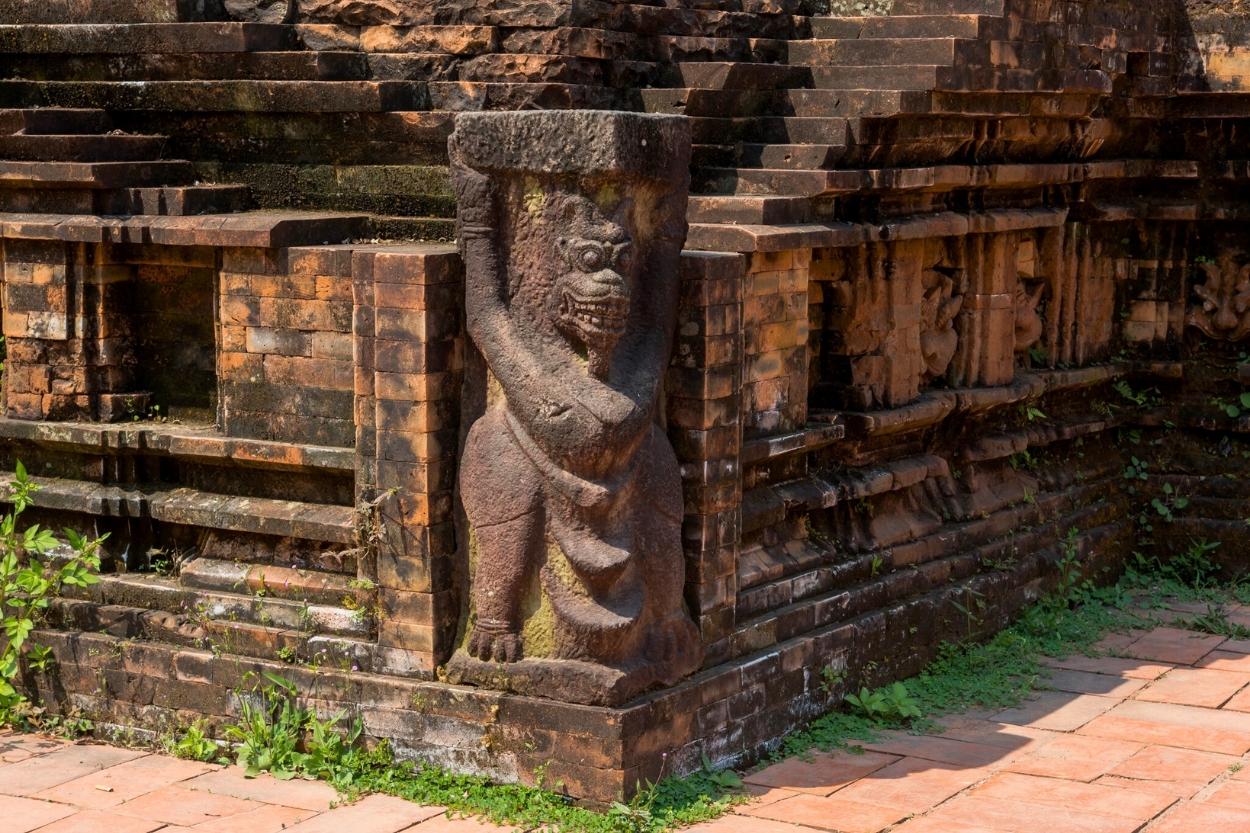
Mỹ Sơn Sanctuary is located in Vietnam’s popular central coast. You’re likely already going to visit this region, stopping by places like Hội An, Da Nang or Huế. While you’re here, Mỹ Sơn is only a 1 hour drive away, making it easy to reach, especially if you book a guided tour.
However, its important to know that, while the site is expansive, many of the structures at Mỹ Sơn Sanctuary are heavily eroded or damaged from Vietnam War bombs. While restoration is underway and some temples have been completely restored, many are still dilapidated. If you arrive expecting a perfectly preserved site, you might be disappointed.
Further reading on Vietnam
⬤ For more historical sites in Vietnam, check out: 15 Best Historical Places in Vietnam.
⬤ To explore more ancient Cham ruins across Vietnam, check out: Travel Guide to the Cham ruins in Vietnam – All 20+ Sites.
⬤ To learn the best way to explore the historical sites in Vietnam, check out: 10 Day Vietnam Itinerary for History Buffs.
⬤ For more historical travel guides on Vietnam, check out our Vietnam page.