Cebu is a 500 year old city whose history is defined by ‘firsts’. First European contact, first Spanish settlement, first church, first fort, and so on.
If you’re a history buff and you’re in Cebu, you’re in for a real treat because much of this rich history is still breathing through the many old churches, houses, monuments and museums that can all be easily found in downtown Cebu.
In this guide you’ll find the top 10 historical sites you can visit in Cebu City.
Contents
A Brief History of Cebu
Before the Spanish, or any Europeans, reached the Philippines, the site of modern Cebu City was part of the Rajahnate of Cebu, a small coastal kingdom. The settlement was already a thriving centre of commerce, with merchants arriving from places such as China, Japan, and across South-East Asia.
The settlement entered the world stage in 1521, when Ferdinand Magellan arrived after crossing the Pacific Ocean. The local ruler formed an alliance with the expedition and converted to Christianity, becoming one of the first major local leaders in the Philippines to convert. Soon after, Magellan joined a conflict against a neighbouring ruler on nearby Mactan Island, where he was killed in battle before completing his journey around the world.
43 years later, in 1565, the Spanish returned with a small fleet with the goal of setting up a colony. Cebu became the first permanent Spanish settlement in the Philippines, and from here Spanish control gradually expanded across the archipelago.
For the first few decades of colonial rule, Cebu served as the centre of Spanish power in the Philippines before that role shifted to Manila in the late 16th century.
Cebu would continue to be a major city in the Philippines, but this early European contact and colony is the defining era of the city’s history. Many of its top historical sites relate to it.
The 10 Best Historical Places in Cebu
1 | Fort San Pedro
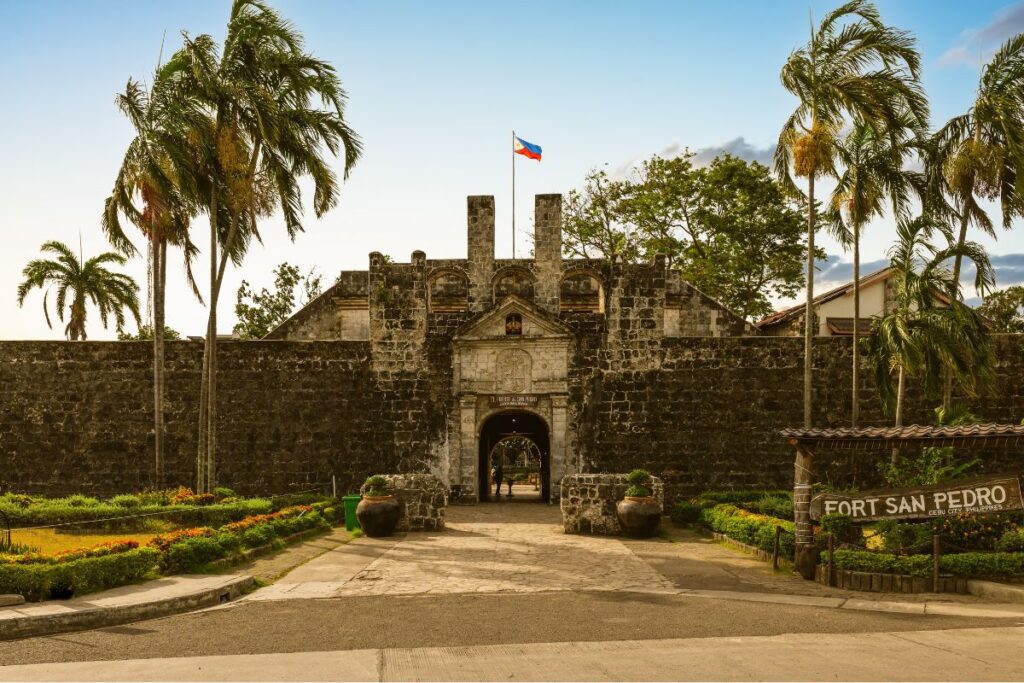
If you’re interested in Cebu’s colonial history, 📍Fort San Pedro is the best place to start.
The fort dates back to 1565, when the Spanish returned to Cebu and established their first permanent settlement in the Philippines. One of their earliest priorities was building a defensive fortification to secure the new colony.
The original structure was made of wood and used to defend against local resistance and pirates. The stone fort seen today was completed later, most likely in the 17th century.
Its a classic Spanish colonial fort, triangular in layout with three bastions and a small enclosed courtyard. Inside, there are several rooms displaying colonial-era artefacts including paintings, documents, sculptures, and historical photographs.
Because of its age, preservation, and historical importance, Fort San Pedro is among Cebu’s most significant heritage sites.
2 | Magellan’s Cross
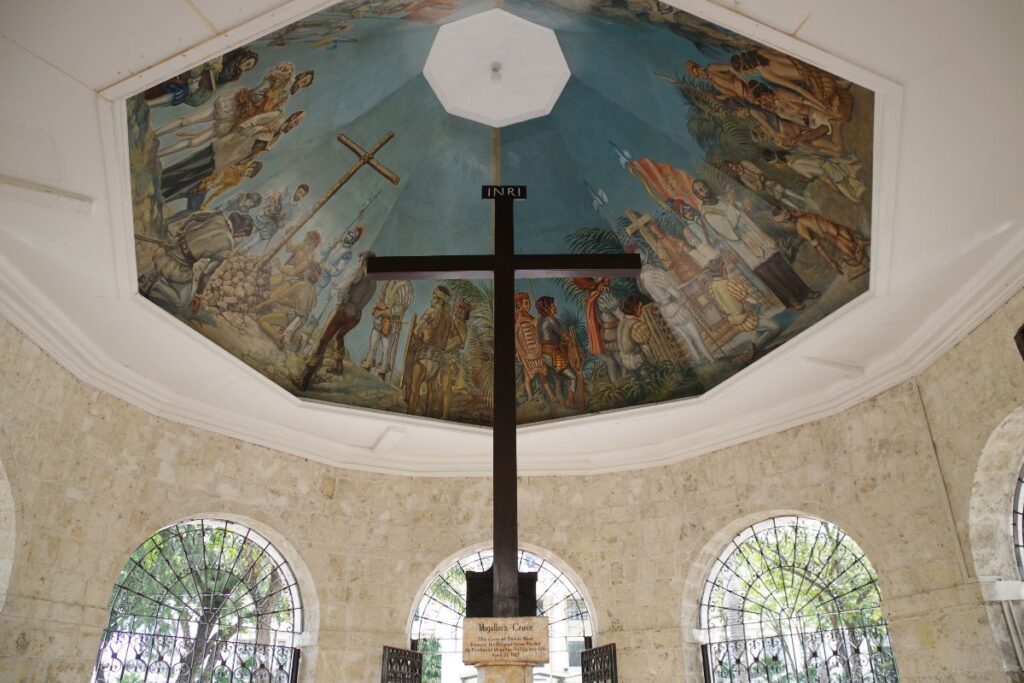
📍Magellan’s Cross marks one of the most important moments in Philippine history.
Its said that when Magellan and his crew set foot on Cebu Island in 1521 after their journey across the Pacific Ocean, they planted a wooden cross in the ground to signify the arrival of Christianity to the island.
That cross is now housed within this pavilion, commemorating the historic moment, although there’s debate over whether this cross is the original, or a replica built in the 1800s.
Regardless, the site is one of Cebu’s most important historical monuments. The painted ceiling inside the pavilion, showing the Spanish arrival and baptism of a local ruler, is also worth checking out.
The pavilion sits directly beside Basilica Minore del Santo Niño de Cebu, making the two sites easy to visit together.
3 | Cebu Heritage Monument
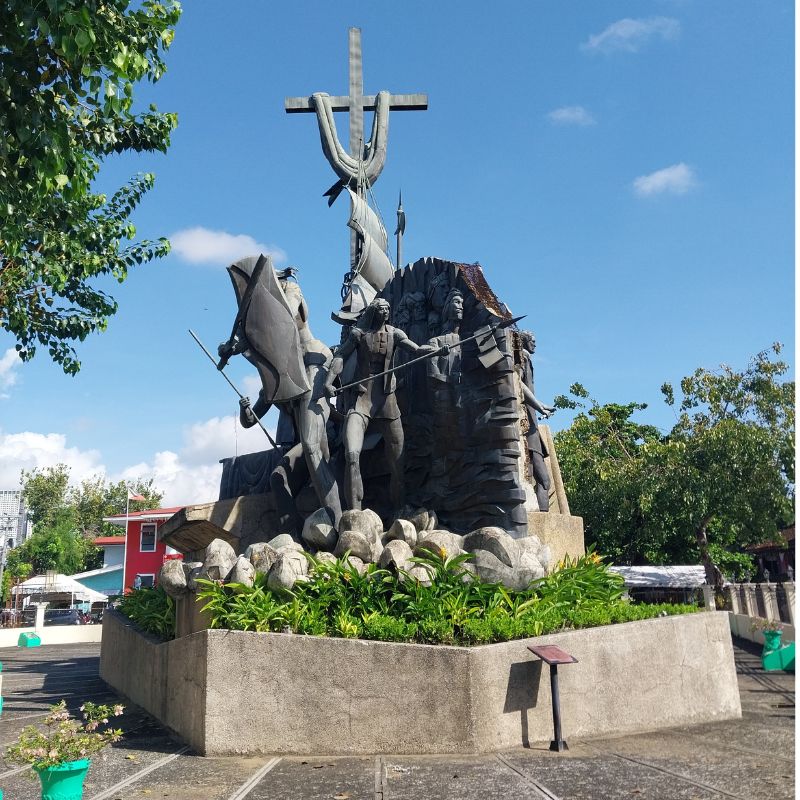
The 📍Cebu Heritage Monument isn’t just a statue and a plaque, its a highly detailed sculpture that tells the city’s story.
The monument contains statues, essentially miniatures, that depict all the most important events in Cebu’s history from the Spanish arrival all the way up until independence. As you walk around the monument, you’re watching Filipino history unfold. Sort of like a summary of the city’s history.
The monument itself isn’t that old, but its interesting depiction the city’s history makes it one of the best historical places in Cebu. Take your time walking around the monument and interpreting the many stories its trying to tell about Cebu’s past.
4 | Yap-Sandiego Ancestral House
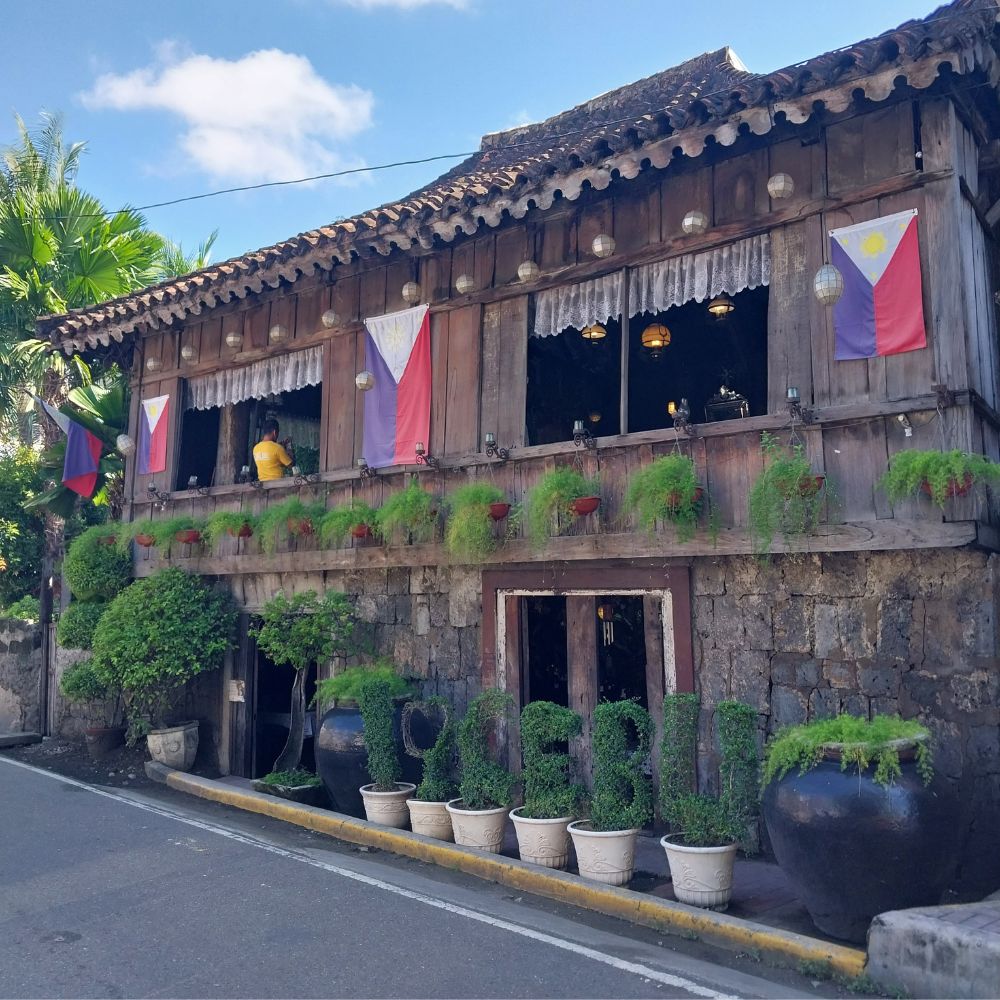
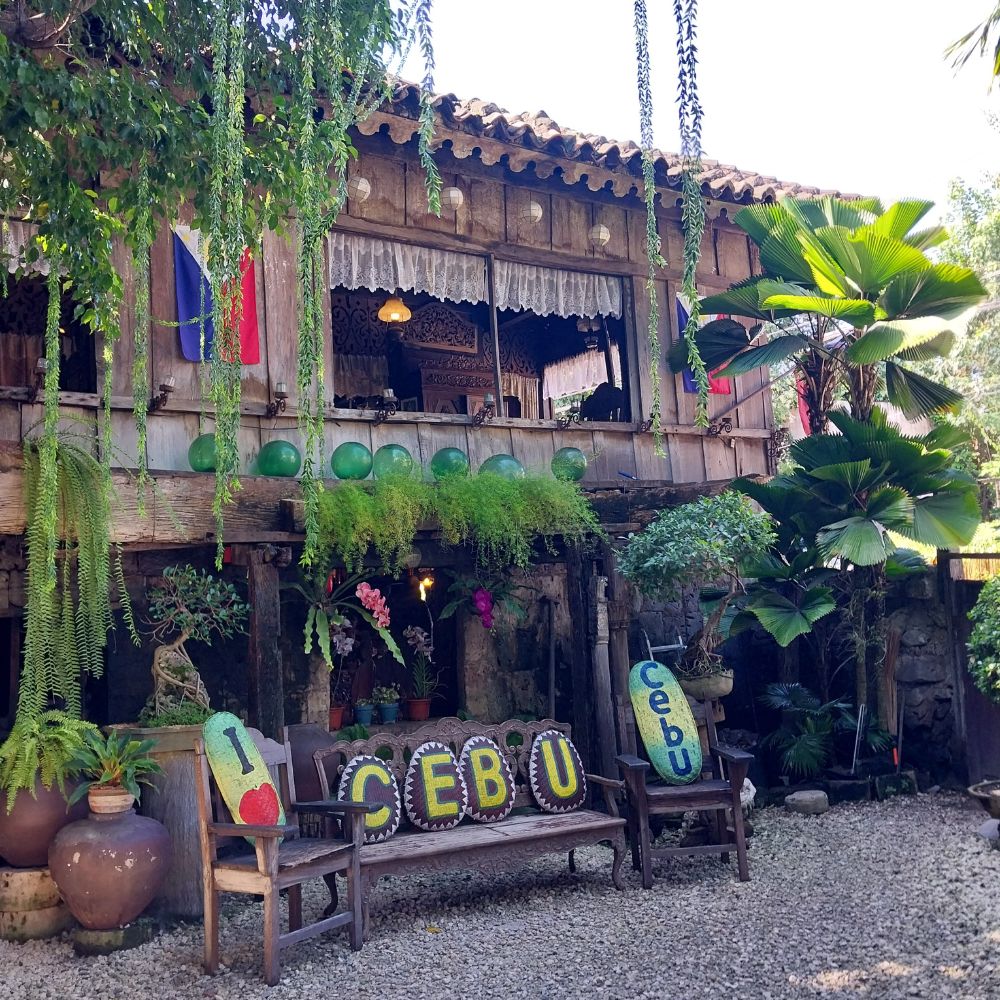
📍Yap-Sandiego Ancestral House is one of the best places to learn what a colonial-era life was like in Cebu.
Unlike many heritage houses, this is not a reconstruction but an original dating back to 1675, making it one of the oldest surviving residential buildings in the city.
The house was built by a wealthy Chinese-Filipino merchant family and remained privately owned for generations before being converted into a living museum.
Inside, the rooms are filled with old furniture, paintings religious icons and all manner of things from the late colonial era.
A small entrance fee applies, and around 30 to 60 minutes is usually enough to explore the house properly.
5 | Museo Sugbo
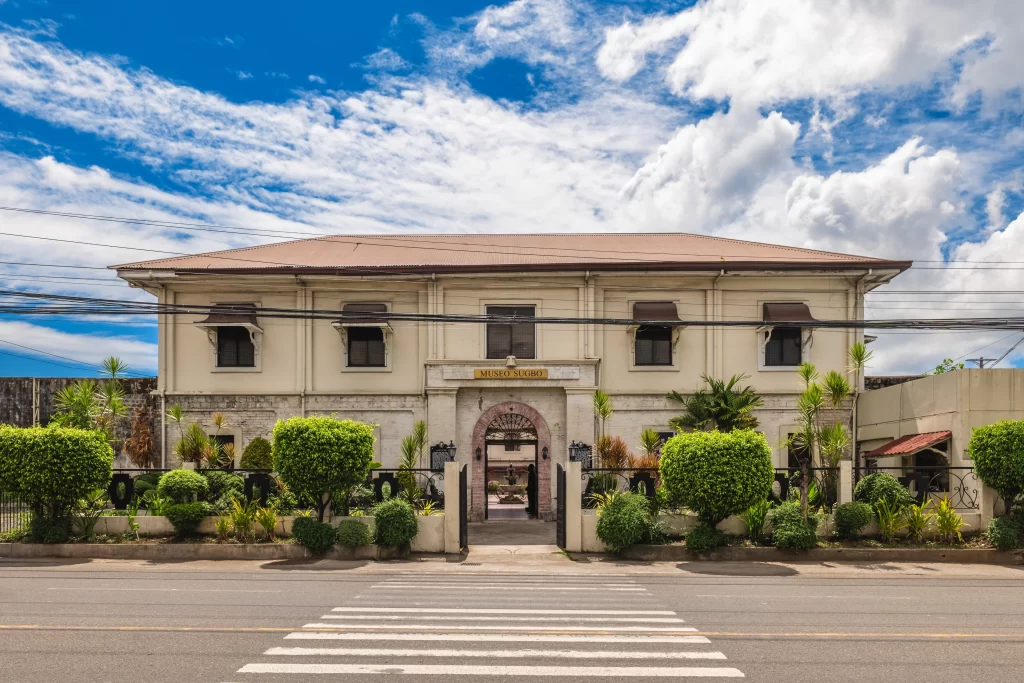
Located within a former prison is the 📍Museo Sugbo (Sugbo being the pre-colonial name for Cebu), also just called the Provincial Museum.
The prison was built in 1871 during the Spanish era and served as the main prison in this region of the Philippines (Visayas). In addition to your standard criminal, it also held a lot of revolutionaries, many of them incarcerated without trial.
It would continue to be used after the American took control, then by the Japanese to hold locals who fought against them, then continued as a standard prison after the war, all the way up until 2004.
Now, as a museum, the inside of the prison has been turned into galleries, each displaying a different time in the city’s history, from pre-colonial, through the Spanish and American eras, all the way up until independence.
It has a fairly impressive collection of artefacts and is one of the best ways to learn about the history of Cebu.
6 | Santo Nino Basilica
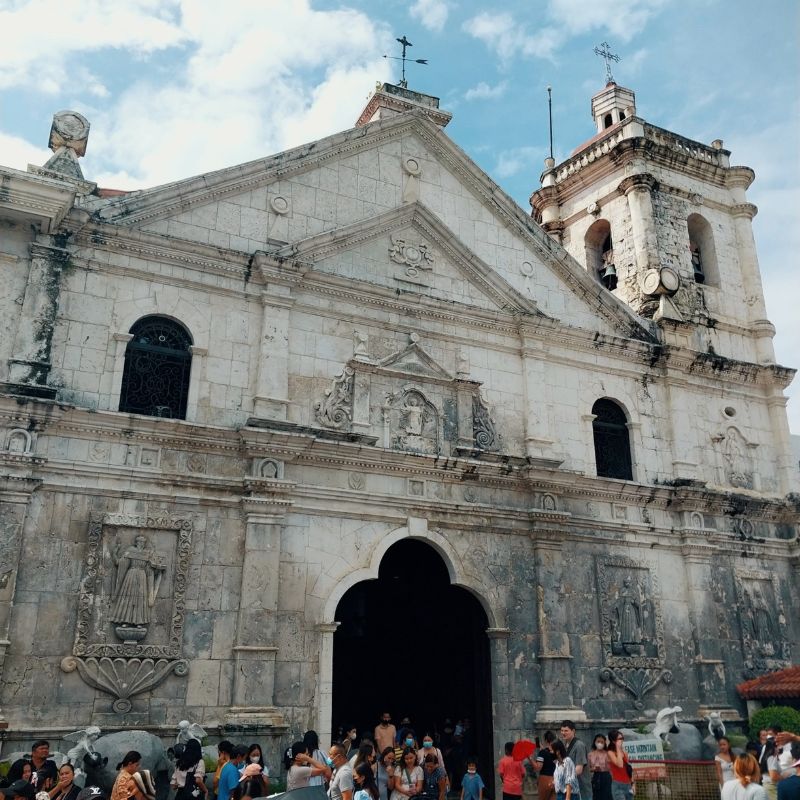
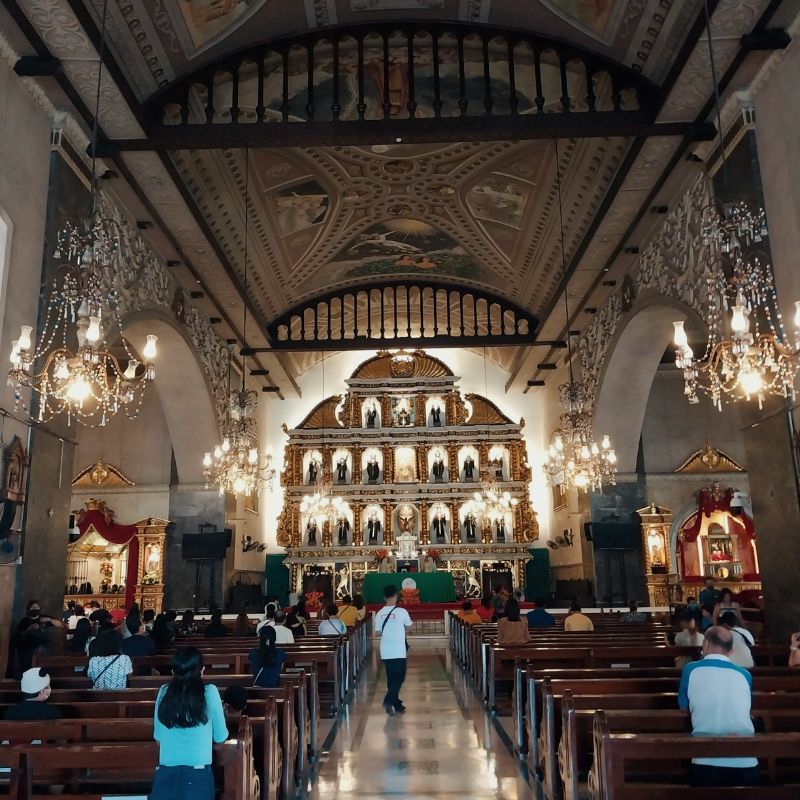
📍Basilica Minore del Santo Niño de Cebu is the oldest church in the Philippines and one of Cebu’s most important historical landmarks.
According to tradition, the site is connected to the arrival of Ferdinand Magellan in 1521, when a statue of the child Jesus was given to the local ruler during his baptism. When the Spanish returned decades later, the statue was found intact after the burning of a local settlement, and the discovery was taken as a sign to build a church on that exact spot.
The first structure was made of wood and was destroyed several times before the present stone structure was completed in the 18th century.
Today the basilica remains one of the most popular churches, especially during weekends and major festivals, when large crowds gather around the church and surrounding plaza.
Alongside the church itself, there’s also museum, which contains religious artefacts from Cebu’s early colonial history.
7 | Casa Gorordo Museum
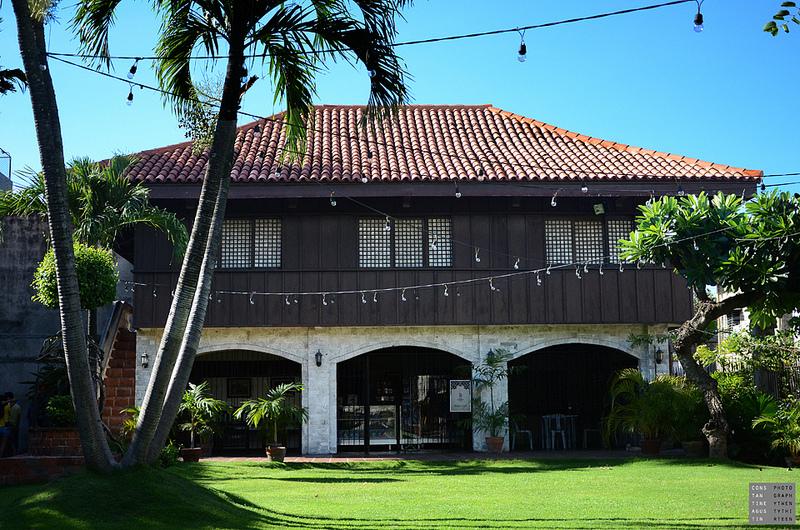
Another heritage house can be found in Cebu at the 📍Casa Corordo Museum, offering an insight into upper-class Spanish colonial life.
This house was built in the mid-19th century and later became home to the Gorordo family, a wealthy merchant family of Spanish descent who lived here for generations.
Architectually, the house reflects both Spanish and local influences, with a timber upper floor, stone lower walls, and design features adapted to the tropical climate.
The house has been converted in a living museum, with the rooms filled with furniture and other household objects from the time period. It also includes some interactive displays and a makeshift museum that details what life was like for the family that once lived here.
8 | Jesuit House
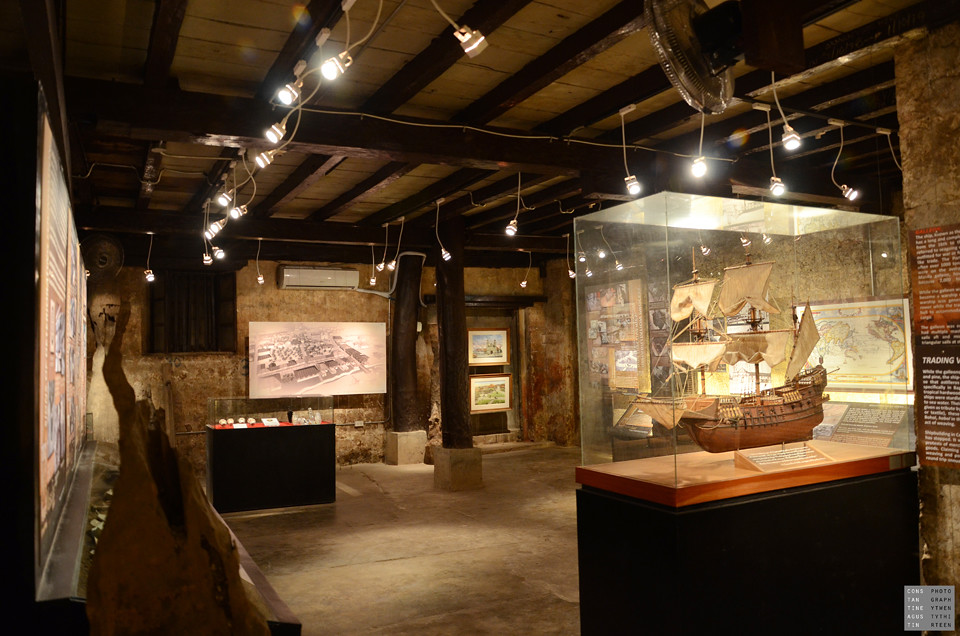
📍Jesuit House Museum is one of Cebu’s lesser-known historical sites and easy to miss from the outside.
From the outside, it looks like a run-down old warehouse, but this old structure is one of the oldest surviving buildings in the city, with parts of it dating back to the early 18th century when it was a residence for a Jesuit priest.
It may have ‘Jesuit’ in the name but the museum’s collection focuses very little on the religious order. Its collection is a mix of artefacts from Cebu’s colonial heritage, with some relating to the house itself while others seemingly random old things the owner could find.
Among these, however, are some truly fascinating finds, like an old diorama of a Spanish warship and 15th century coins from the Ming Dynasty.
9 | Metropolitan Cathedral
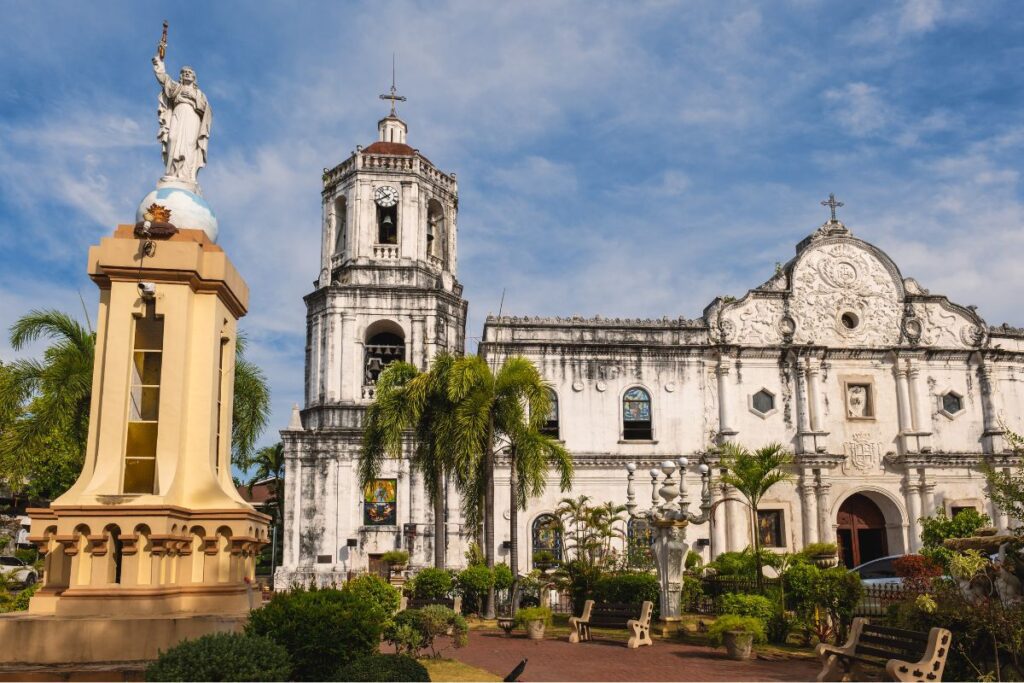
The 2nd oldest church in the country, right after Santo Nino Basilica, is the Metropolitan Cathedral and Parish of St Vitalis and of the Immaculate Conception. Or more commonly referred to by locals as the 📍Metropolitan Cathedral.
The original structure was built in 1565, within the first year of the Spanish arrival. Like almost all buildings in the early days of the colony, it was destroyed at least once before eventually, in the mid-1700s, it was re-built as the stone structure you see today.
The old church is found in downtown Cebu and is just as majestic as Santo Nino Basilica while offering a peaceful break from the city.
10 | Cathedral Museum
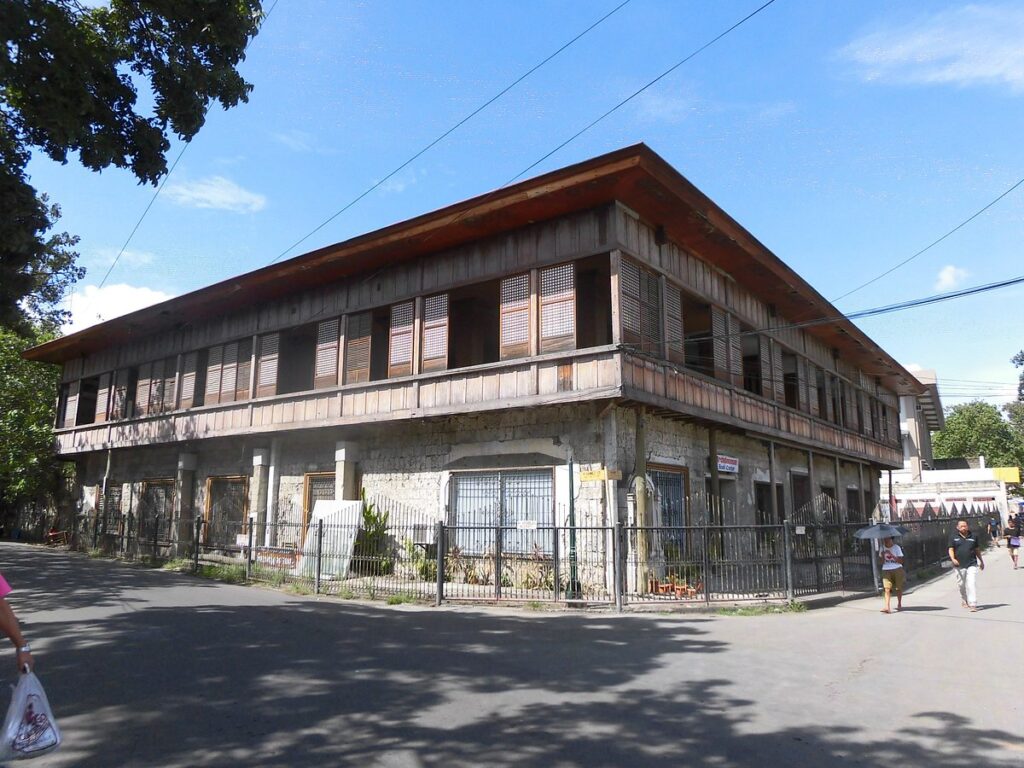
Christianity has played a major role in Cebu, and the Philippines’, history. If you’re interested in learning more about this one of the best places you can visit is the 📍Cathedral Museum, also known as the Archdiocean Museum.
Located right next to the Metropolitan Cathedral, the museum features 6 galleries, each dedicated to different aspects of religious history, such as the personal collection of a former Archbishop or the construction of churches in the region or a collection of old ceremonial tools used in a mass. Almost all the collections are from the Spanish era.
If you’re interested in learning about this important aspect of the city’s history, the Cathedral Museum makes for an interesting visit in combination with the Metropolitan Cathedral.
Further reading on the Philippines
Here are more guides on the Philippines to help you plan your trip:
⬤ If you’re travelling the Philippines, chances are you’re going to be visiting Manila, which has an equally rich history. Check out: 12 Best Historical Sites in Manila.
Disclosure: This post may contain affiliate links.