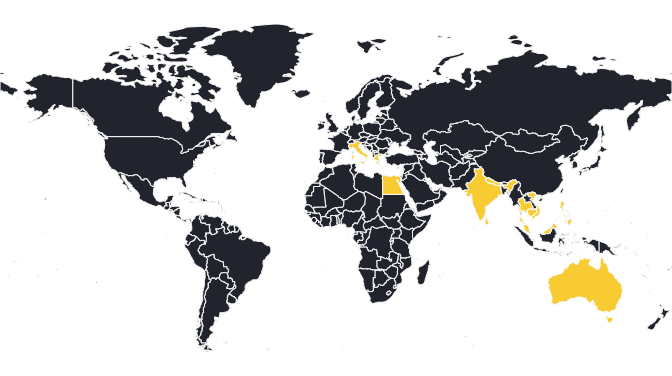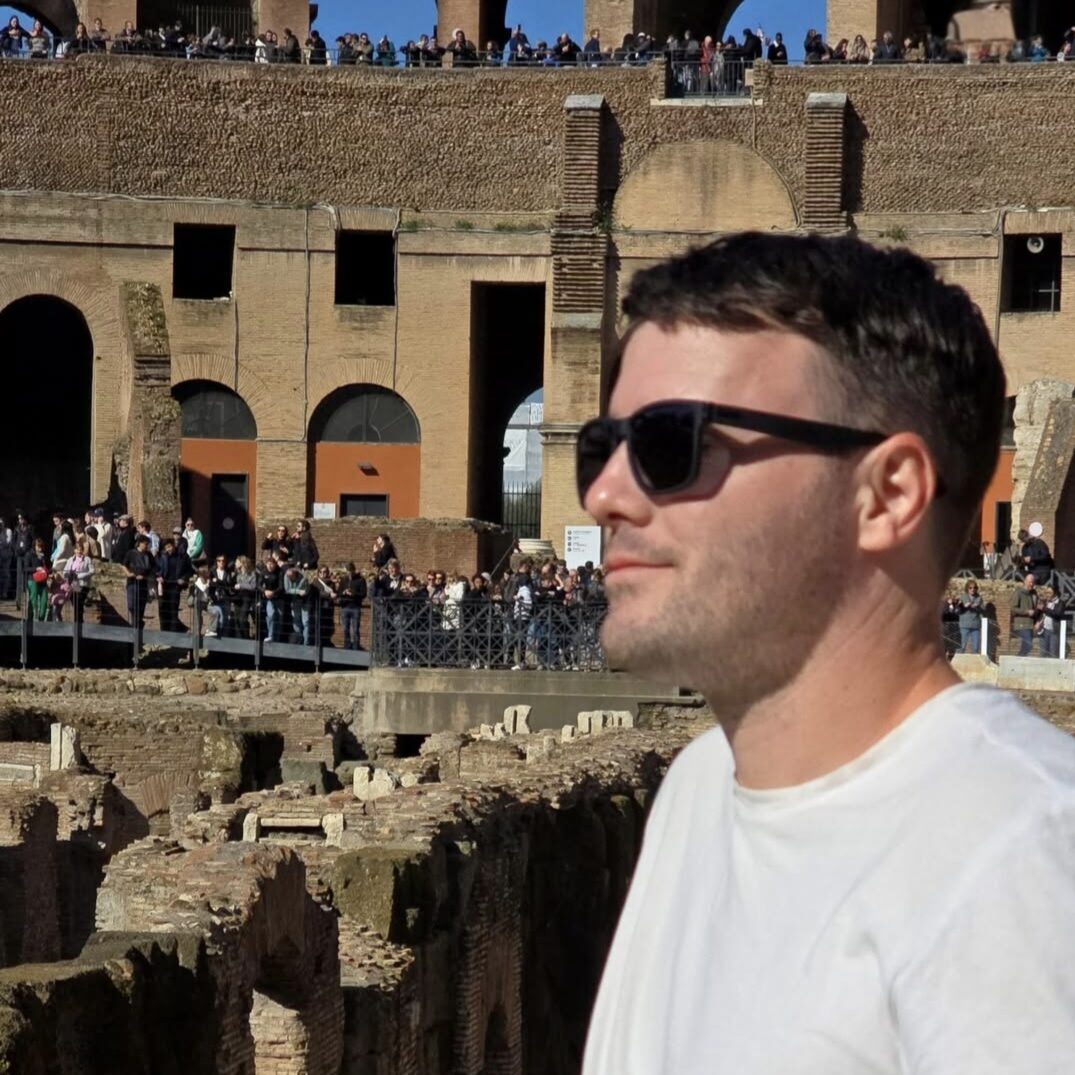
The Khmer Empire was one of the most influential civilizations in Southeast Asia. Over their 600-year reign, the Khmer reshaped the region and left behind an extraordinary legacy of monuments and structures.
In the same way Roman ruins are scattered across the Mediterranean, Khmer ruins are found all over mainland Southeast Asia.
Naturally, most travellers look to Cambodia, the Khmer homeland, in search of Khmer ruins. With sites like Angkor Wat, Cambodia is undoubtedly a top choice, but neighbouring Thailand is an often overlooked and underrated destination, being home to some of the best Khmer ruins in SEA.
There are countless amazing Khmer ruins across Thailand, and this guide gives you everything you need to know to visit them, including background info, where to find them, which are the best, and more.
After you’ve read this guide, you’ll have everything you need to visit Khmer ruins in Thailand.
READ MORE >>> The 20 Best Historical Sites in Thailand
Contents
Khmer Ruins in Thailand - Map
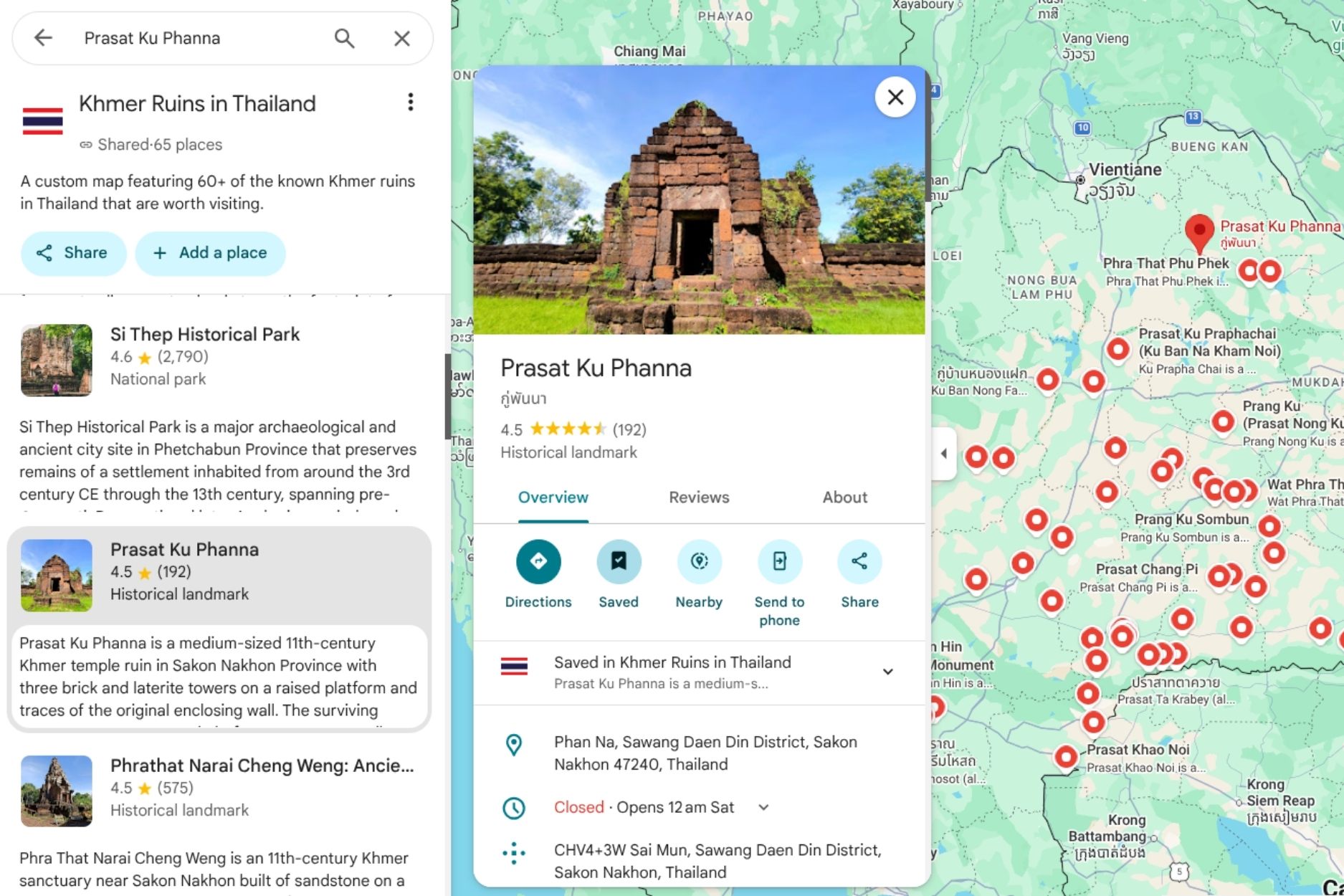
Click the link below to download a custom Google Map featuring 60+ of the best Khmer ruins you can visit in Thailand.
There are quite literally thousands of Khmer remnants scattered across Thailand. Many hidden beneath villages, overgrown by vegetation, or amongst farmland.
This map filters out the many barays, collapsed foundations, lone pillars, traces of ancient roads – anything that could be considered a pile of stones – and gives you all the Khmer sites that are worth visiting. It includes only those sites that still have standing structures you can explore.
About Khmer Ruins in Thailand
A Brief History of Khmer Ruins in Thailand
The Khmer Empire was founded in 802 CE when Jayavarman II rebelled against a kingdom known as ‘Java’. Historians are not certain who this is referring to, as it might not mean the island of Java (modern-day Indonesia).
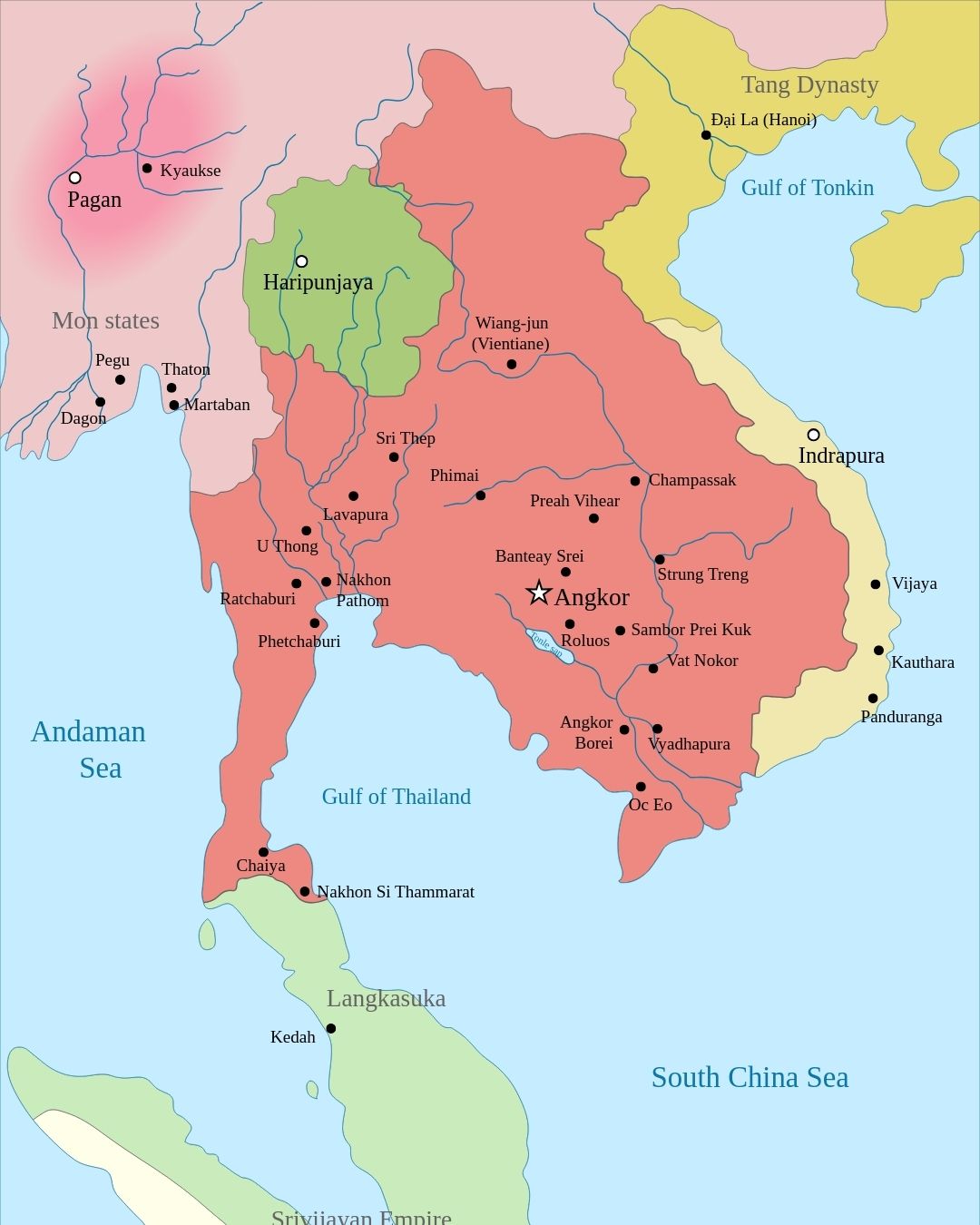
The Khmer had many different capitals over the centuries, but its heartland was centred around Tonle Sap, a large lake in Cambodia, where the great city of Angkor would be built. From here, Jayavarman II and his successors extended the new Khmer Empire across Southeast Asia.
To the south, they controlled the Mekong Delta (now part of modern-day Vietnam). To the east, the Empire stopped at the mountainous border between modern-day Laos and Vietnam (with the Champa Kingdom on the other side). To the north, they ruled over much of modern-day Laos. And to the west, much of Eastern and Central Thailand became part of the Khmer Empire, as far as the modern-day border with Myanmar.
At this time SEA was ‘Indianised’ (heavily influenced by Indian culture). In the same way much of the world today consumes American media and buys American products, medieval Southeast Asia practices Hinduism, and uses the Sanskrit language.
While the Khmer Empire lasted 600 years, their reign was far from peaceful. Not only were they often engaged in internal conflicts, but they were regularly at odds with the Champa Kingdom to their east (and occasionally with the Dai Viet). But while the Champa may have been their arch rival, the doom of the Khmer Empire would come from the west.
After a long decline, the Empire was unable to prevent the Thai people from forming their own kingdoms. First Sukhothai, then Ayutthaya, the new Thai Kingdoms now fought against their former overlords, with Ayutthaya sacking Angkor in 1431. From here the Khmer quietly remained as their own kingdom (just not an empire), where they continued until modern-day Cambodia.
The remnants from the Khmer Empire can be found all across SEA. Within cities & villages, amongst farmland, beneath jungle – their temples, monuments, reservoirs, roads & bridges are impossible to miss.
Khmer Architecture
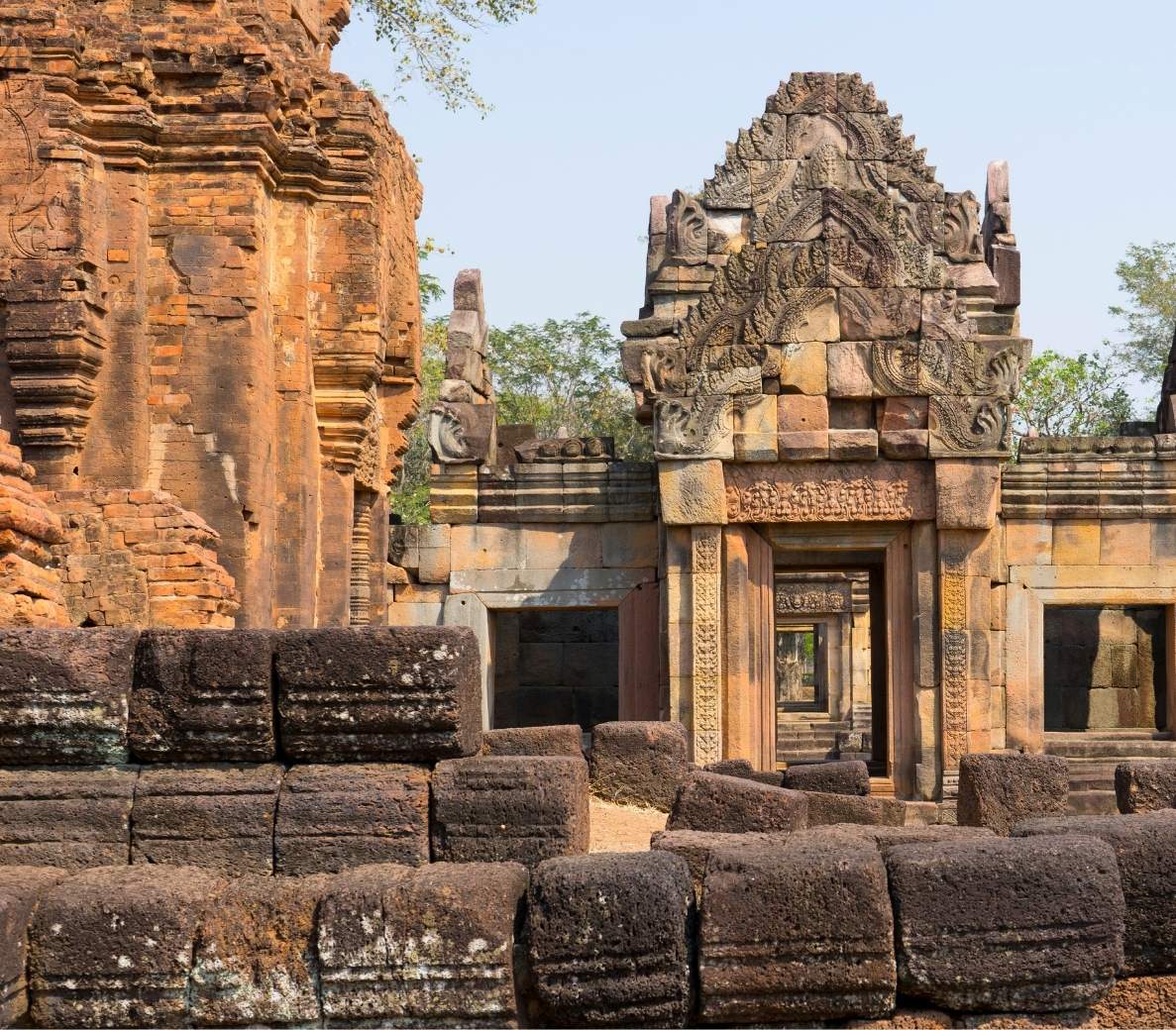
The Khmer Empire left behind a wide range of structures across modern-day Thailand.
While most structures in those times were made from wood and other perishable materials (wood, bamboo, thatch, etc), a few select structures (mainly temples) were made from stone.
The most common Khmer structure you’ll encounter in Thailand is the prasat. A prasat is a temple sanctuary, typically centred on one main tower that houses a Hindu deity or Buddha image. Larger prasat complexes may include multiple towers, enclosure walls forming a rectangular complex, and smaller shrines and ancillary buildings.
Another common structure is the prang, a temple tower, often decorated with intricate carvings and housing a shrine. Prangs are often found within a prasat complex, but are sometimes found on their own at smaller sites. The term is sometimes used interchangeably with prasat.
Then there’s the baray. A baray is a manmade water reservoir that formed part of the complex irrigation systems the Khmer were famous for. In the centre was typically an island that houses a temple. Barays are found all over Thailand, and are still used by some villages. Most of them simply resemble rectangular lakes, so you probably wouldn’t go seeking them out, but you’ll no doubt come across a few as you explore Khmer ruins.
There are many more Khmer structures across Thailand, but these are the main types you can expect to encounter.
Khmer vs Thai
There’s one more thing you should know about Khmer ruins in Thailand, and that’s the distinction between Khmer and Thai architecture.
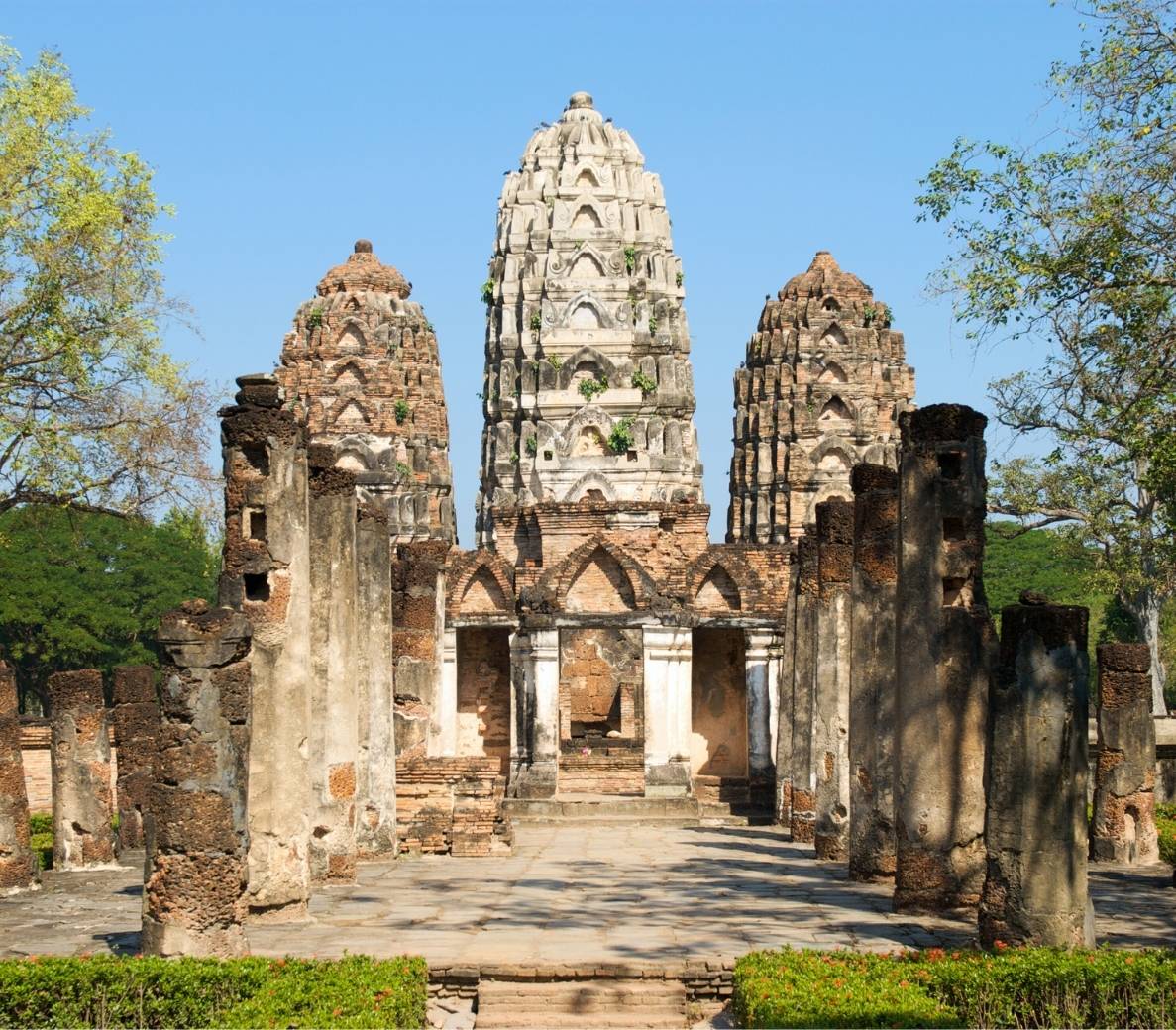
The post-Khmer Thai kingdoms – mainly Sukhothai and Ayutthaya – built their own extraordinary structures. But just as these kingdoms stemmed from the Khmer Empire, so too did their architecture.
In many cases, medieval Thai temples were constructed directly on top of earlier Khmer structures. Others are simply Khmer temples that were altered and modified by the Thais to suit their style of architecture.
Take Wat Phra Phai Luang, for example, located inside Sukhothai Historical Park. It was originally Khmer, with the original foundations and layout remaining. But the central tower has been altered, and Thai structures have been built around it.
So are these structures Khmer or Thai? That’s the tricky part. Most travel guides get this confused, often attributing Thai structures to the Khmer. Or vice versa.
In this guide, I’ve attempted to limit it to sites that are distinctly Khmer, although some may be considered both.
Where to Find Khmer Ruins in Thailand
If you want to find Khmer ruins in Thailand, you have to visit the right regions.
In a nutshell, Khmer ruins can be found across Eastern and Central Thailand.
You’ll find the most Khmer sites in the eastern provinces – in the region known as Isan. It was here, on the fertile plains of the Khorat Basin, that the Khmer had the biggest footprint. This is the region you want to visit if you’re looking for Khmer ruins in Thailand.
The further west you go, the fewer Khmer ruins you’ll find. Although some can be found as far west as 📍Kanchanaburi province.
You won’t find Khmer ruins further north than 📍Sukhothai province, as the Khmer Empire never extended into the mountainous northern regions.
And you won’t find any on the Malay Peninsula further south than 📍Phetchaburi province. While the Khmer did exercise some control over this region, they never established any major settlements.
The 6 Best Khmer Ruins in Thailand
The above map highlights 60+ Khmer sites across Thailand, but which ones are the top choices to add to your itinerary?
We won’t include Sukhothai and Ayutthaya. While these are incredible historical sites and were originally Khmer settlements, they are more Thai than Khmer.
There are many excellent sites to choose from, but if we are forced to choose, we can narrow it down to the following 6 options:
1 - Phimai Historical Park
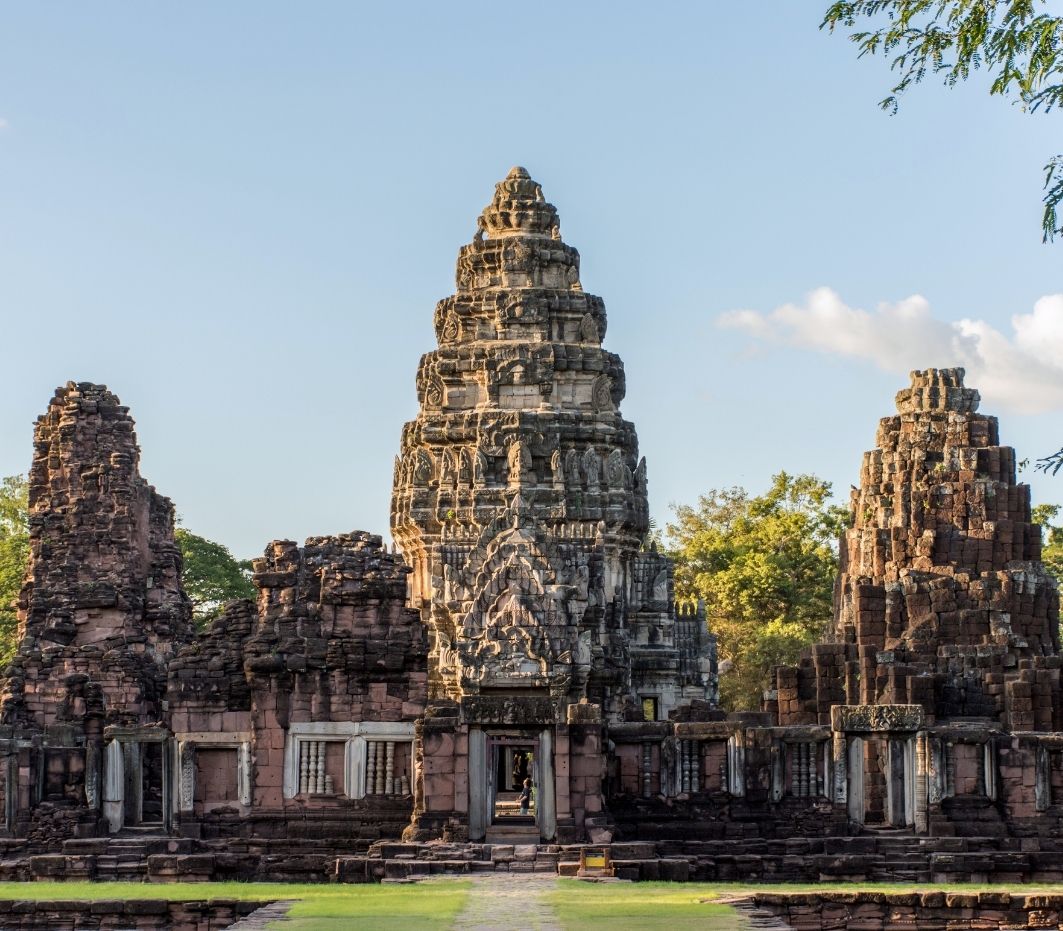
📍Phimai Historical Park is widely regarded as the best Khmer site in Thailand, and is certainly among the most popular.
Located in Nakhon Ratchasima province in Eastern Thailand, the ruins sit in the centre of the modern-day town of Phimai, making them easy to reach.
Phimai was once a major city within the Khmer Empire, situated at the western end of the important imperial highway that linked Angkor with other major hubs. The temple complex, built from the 11th century CE, was once the heart of the ancient city.
Phimai is considered the largest Khmer site in Thailand. Its layout is essentially a miniature version of Angkor Wat, designed as a large, rectangular enclosure, with a smaller inner wall protecting the central prasat.
Phimai was extensively restored in the ‘60s, and today is in great condition. If you want the best Khmer site in Thailand, Phimai is worth the trek into Thailand’s eastern provinces.
2 - Phanom Rung Historical Park
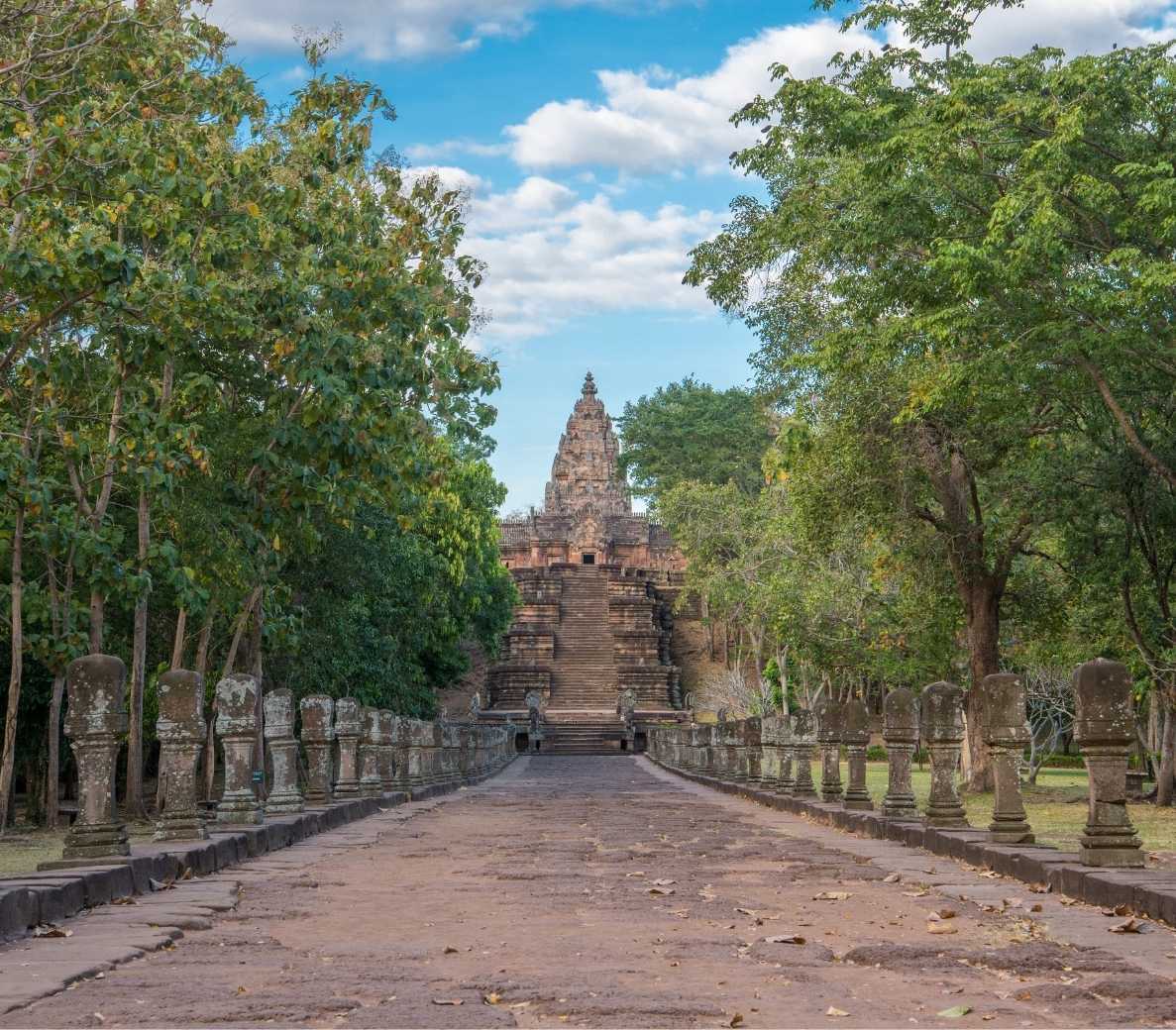
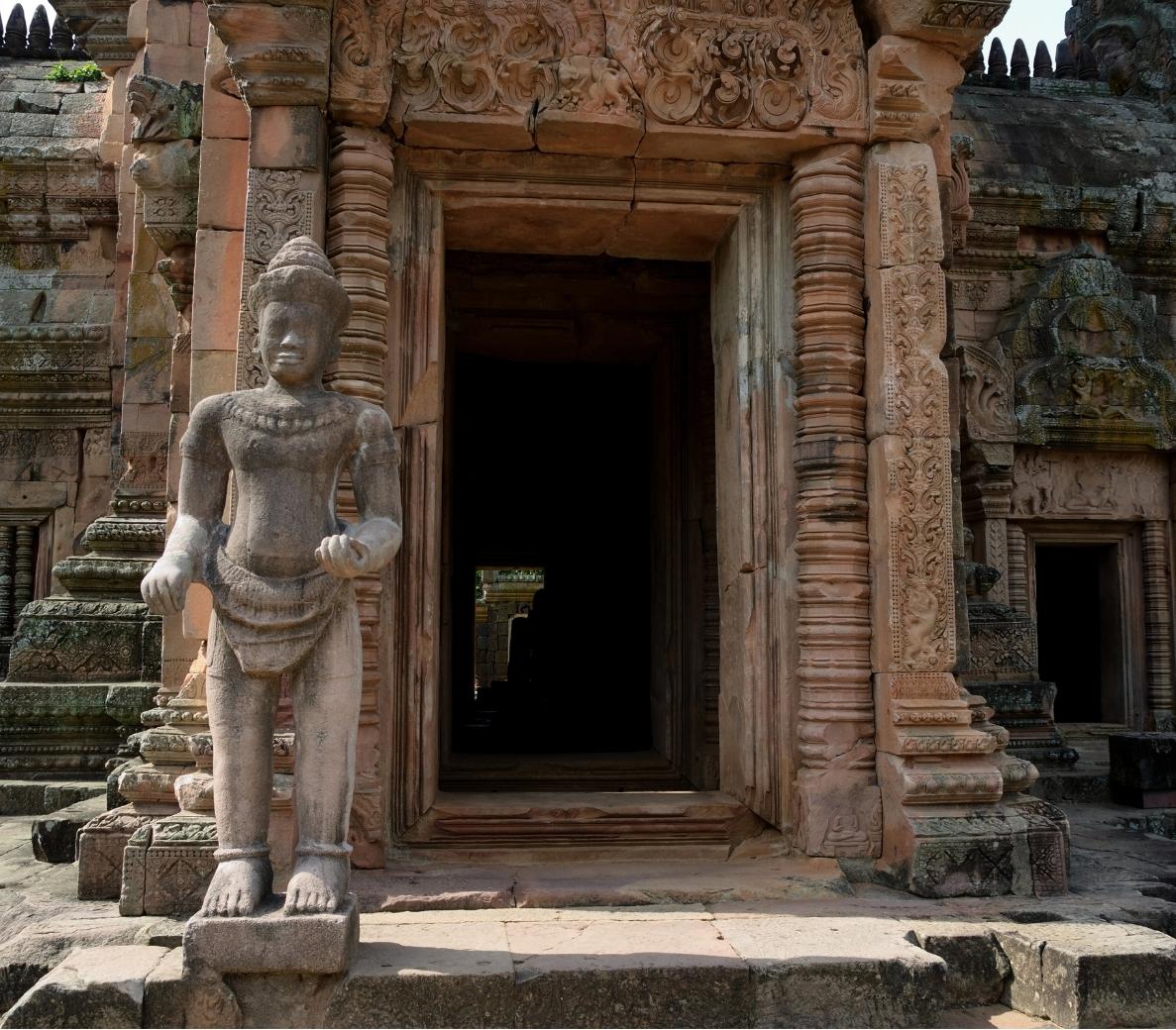
Another Khmer site in Thailand that consistently ranks among the best is 📍Phanom Rung.
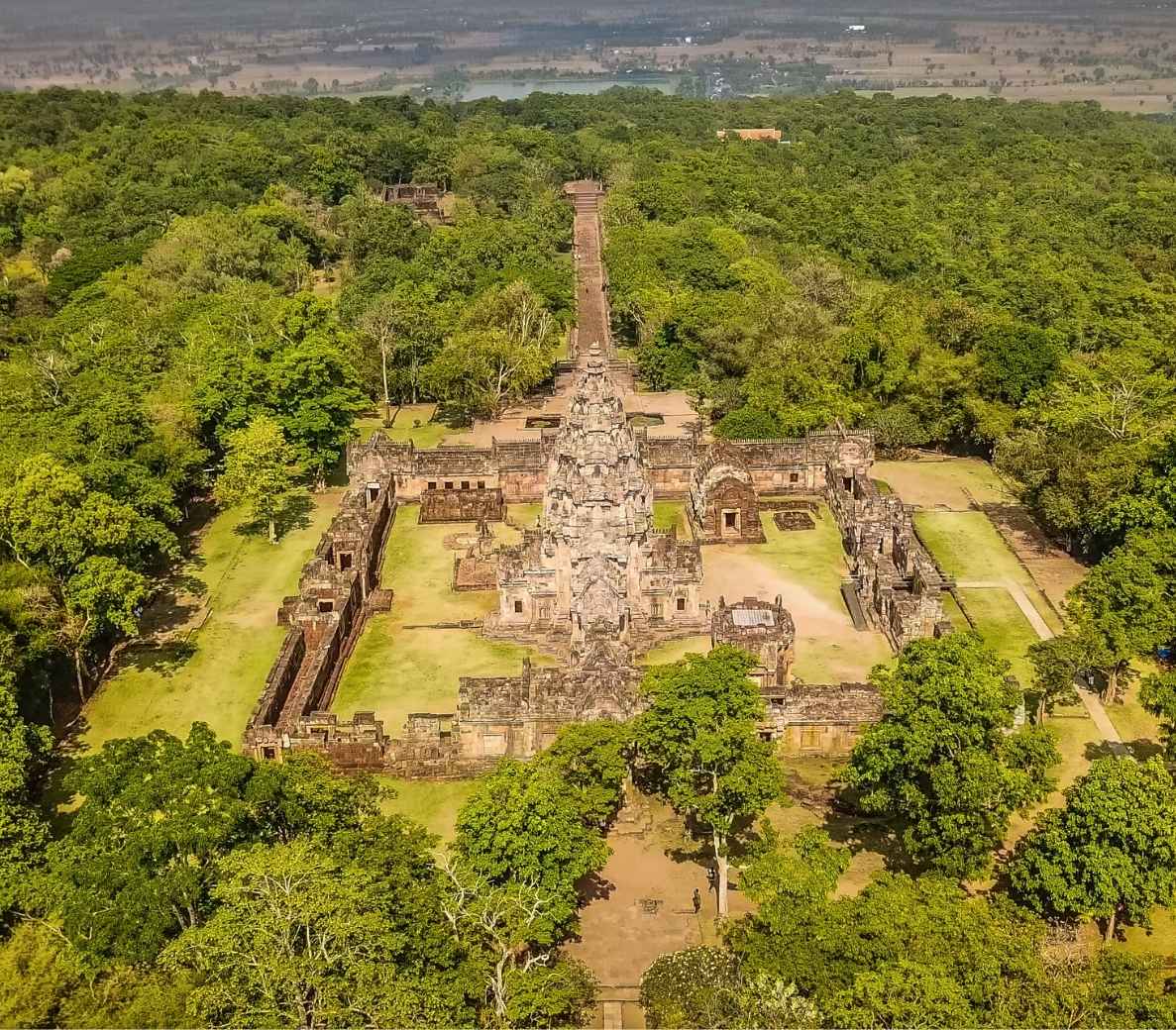
Located in the Buri Ram province in Eastern Thailand, Phanom Rung was built from the 10th century onwards and served as an important religious centre within the Khmer Empire. It sits on the rim of an extinct volcano, adding to its religious symbolism.
Visitors approach the complex via a long, stone pathway known as the Naga Causeway, leading to the sanctuary at the top of the hill. In typical Khmer style, Phanom Rung comprises a walled enclosure with the prasat temple in the centre.
The complex once included other structures like pavilions, libraries, a hospital chapel (arogyasala) and a rest house (dharmasala), although not all of these still stand today.
Phanom Rung was heavily restored in the ‘80s and is now in excellent condition, making it one of the top Khmer ruins in Thailand.
3 - Prasat Muang Tam
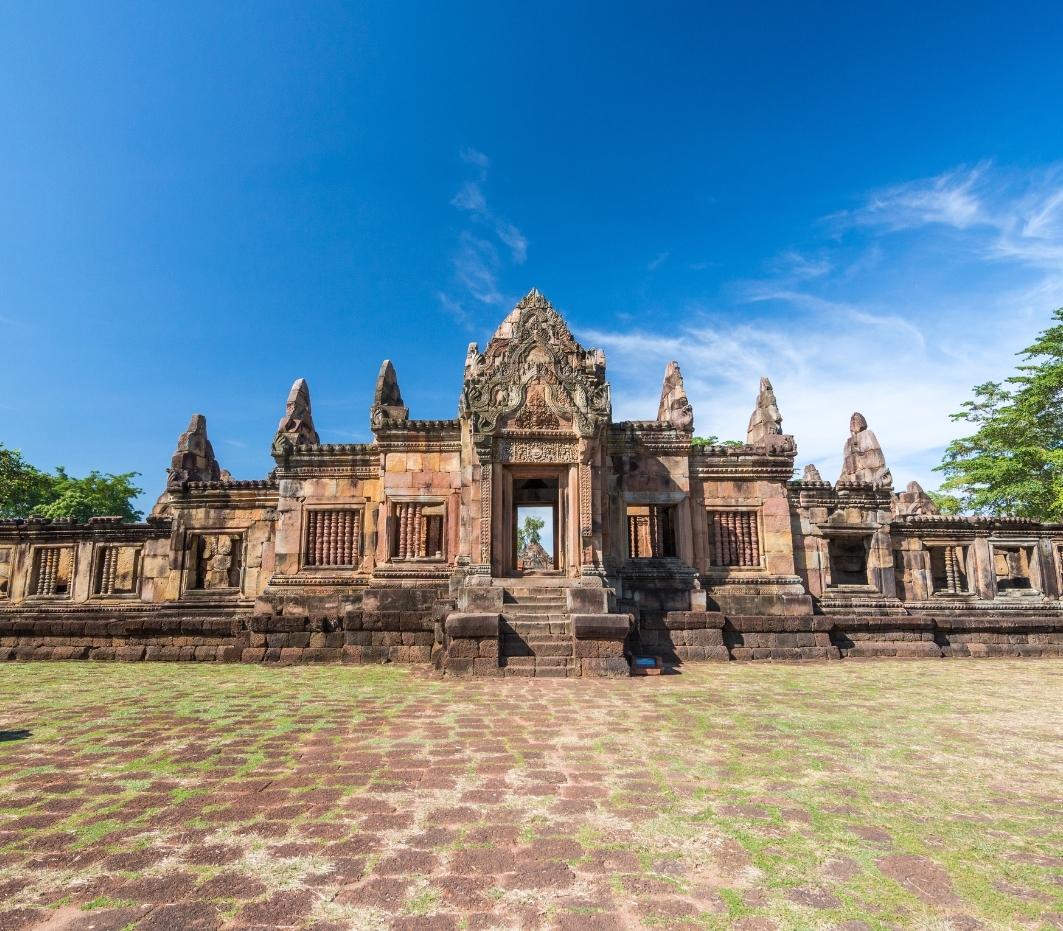
Another popular Khmer site in Buri Ram province is 📍Prasat Muang Tam.
The temple complex is located in the small village of Khok Muang, and was built from the 10th century onwards. Prasat Muang Tam once sat along the imperial highway connecting Angkor with Phimai.
In many ways, Prasat Muang Tam follows a similar layout to most other Khmer temples, but uniquely the enclosure has 4 large ponds surrounding the central prasat.
Behind the complex lies the baray (manmade water reservoir) which once supported the surrounding settlement’s irrigation system, and still holds water today. Just a few streets away you’ll find Kuti Ruesi Ban Khok Muang, another small but worthwhile Khmer ruin. And only 8km to the northwest lies Phanom Rung Historical Park, making it easy to pair the sites together.
4 - Muang Sing Historical Park
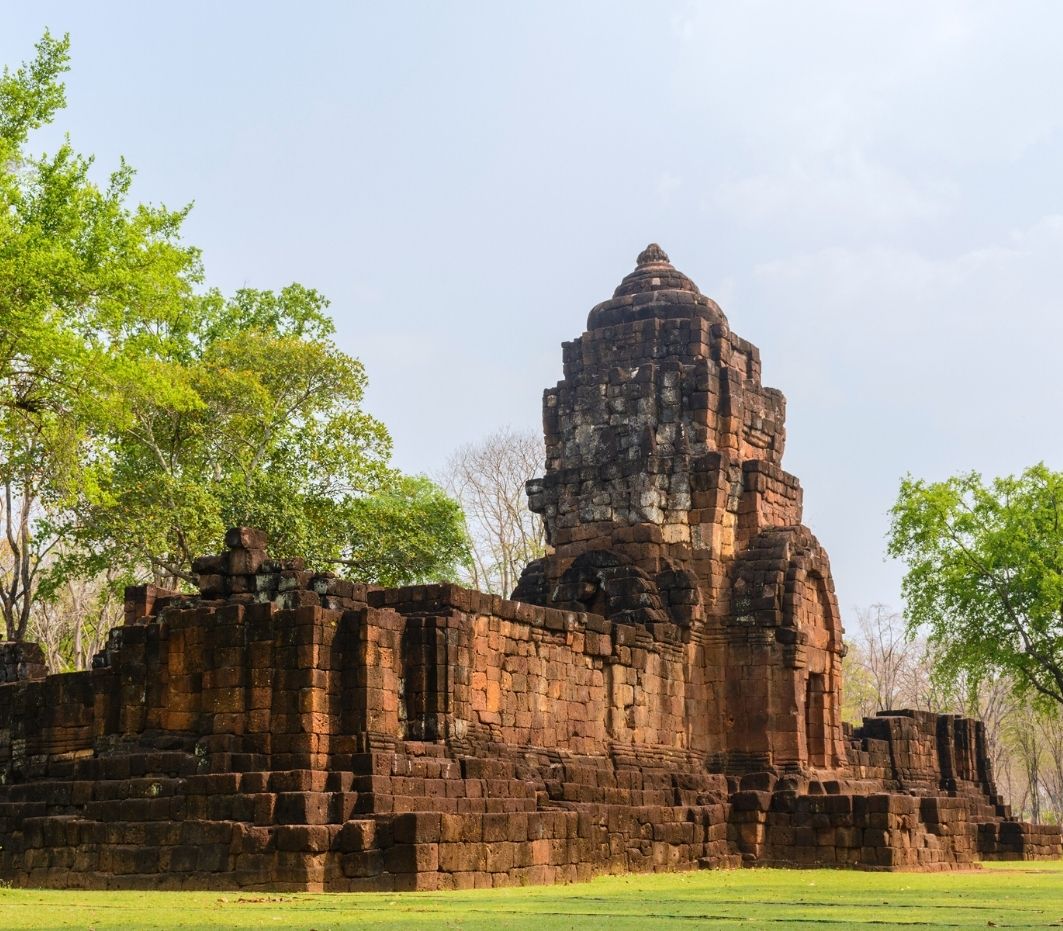
While most Khmer ruins in Thailand are found in the country’s eastern regions, 📍Muang Sing Historical Park (sometimes spelled Mueng Sing), sits far to the west, in the Kanchanaburi province near the border with Myanmar.
When it was built, this location functioned as an outpost for the Khmer Empire, protecting their western borders and trade routes.
At the centre is Prasat Muang Sing, a Khmer temple complex constructed around the early 13th century. The sanctuary remains in good condition, with most of its structures still standing.
The same cannot be said for the surrounding town, most of which is long gone. Still, visitors can explore the area and check out the few remaining features, including the remains of the old walls, gates and moats, a burial pit, a couple of monuments, and the remaining foundations of other buildings.
Muang Sing Historical Park is the top Khmer ruin to add to your itinerary if you’re unable to venture out to Thailand’s eastern regions, with the site being only a 2 hour drive from Bangkok.
5 - Phra Prang Sam Yot
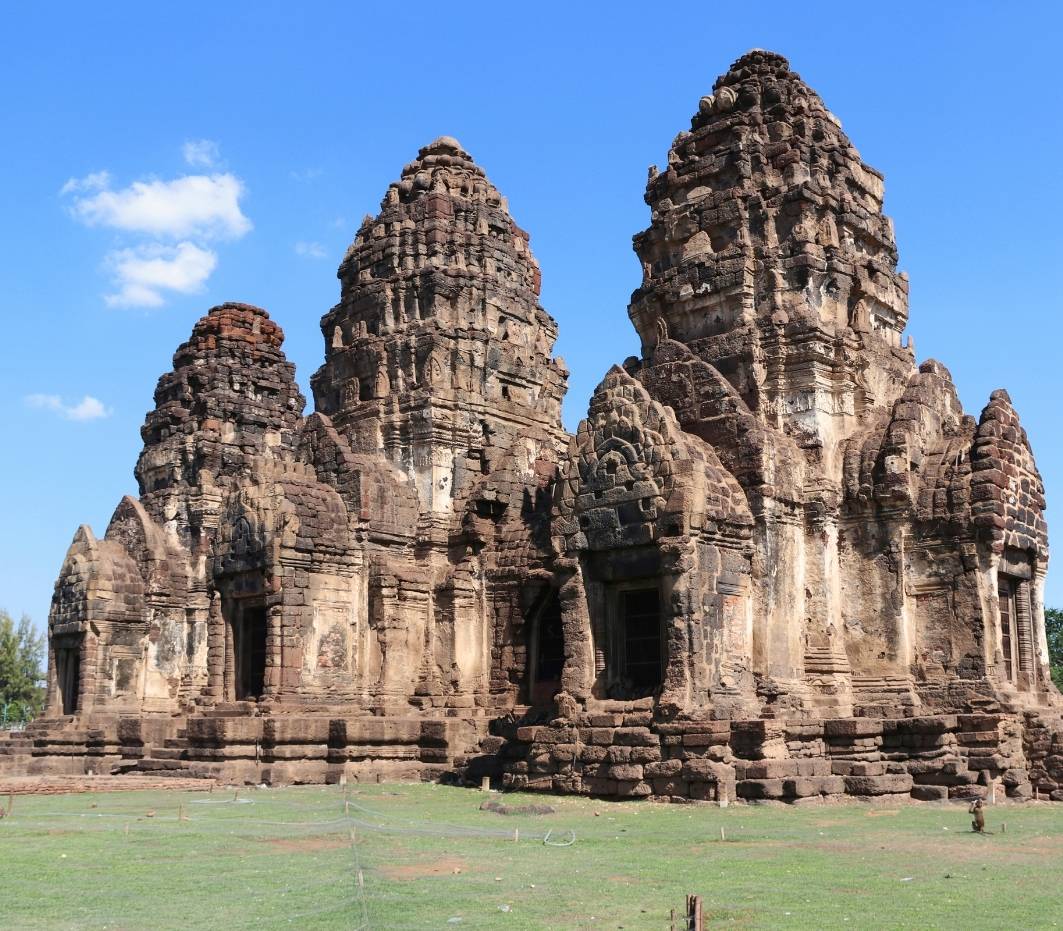
The city of Lopburi is packed with historical monuments to explore.
Located about 50km north of Bangkok, Lopburi was once an important city under the Khmer Empire, who left behind several major historical sites for you to visit. The best of them is arguably 📍Phra Prang Sam Yot.
The complex itself is relatively small, but is home to 3 large prangs (temple towers), with the tallest standing at 22m. Built in the 13th century, these towers loom over the surrounding busy streets, creating an interesting contrast.
One of the things that makes Phra Prang Sam Yot a great choice is not just the towers, but the location. Not only are there other Khmer monuments to explore nearby, but the later Ayutthaya Kingdom built many of their own, including the grand King Narai’s Palace.
Lopburi is a top historical destination in Thailand, and Phra Prang Sam Yot is its best Khmer ruin to add to your itinerary.
6 - Sdok Kok Thom Historical Park
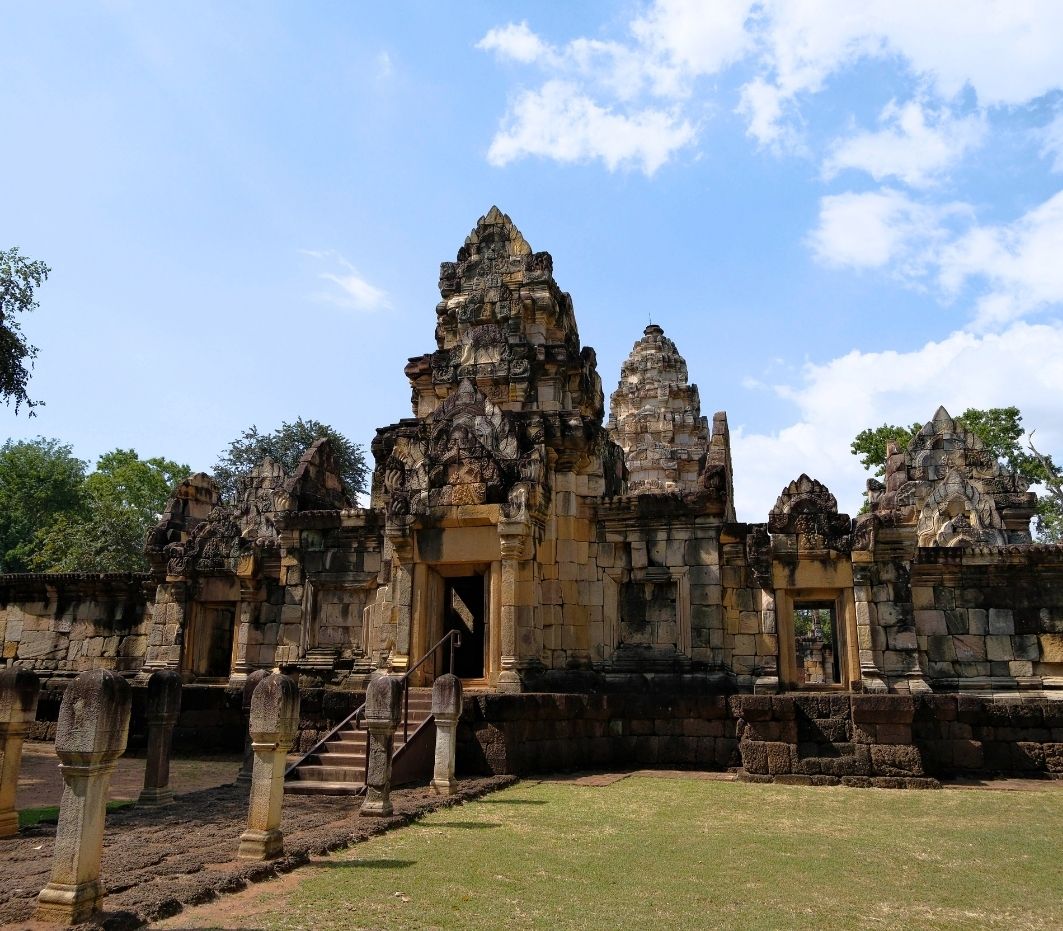
Located in Sa Kaeo Province in Eastern Thailand, right near the Cambodian border, 📍Sdok Kok Thom Historical Park is one of the most historically significant Khmer sites in the country.
The site consists of a classic Khmer prasat temple complex, with a central prang (tower) within an enclosed sanctuary. Similarly to Phanom Rung, visitors approach the heavily restored temple via a long stone pathway.
Near the entrance to the park is a small museum, which displays sculptures and other artefacts found at the site.
The significance of Sdok Kok Thom comes from a series of inscriptions, carved onto a stone stele, which describes the founding of the Khmer Empire by Jayavarman II, as well as some of its early history. These inscriptions are some of the only ways historians know of the Empire’s origins. The stele itself is no longer at the site, however, having been relocated to Bangkok.
Sdok Kok Thom Historical Park may be one of the more remote Khmer ruins in Thailand, but its excellent preservation, historical significance and museum make it worth the journey.
Khmer Ruins in Thailand FAQs
How many Khmer sites are in Thailand?
If you consider any structure, or parts of structures, remaining from the Khmer Empire, there are thousands of Khmer ruins in Thailand. Many of these are not worth visiting, including the many barays, canals, traces of ancient roads, random piles of stone, etc.
If we narrow it down to structures that are still standing, there’s still almost 100.
Which is the best Khmer ruin in Thailand?
There are many great Khmer sites in Thailand, but Phimai Historical Park often ranks among the best. Alternatively, Phanom Rung Historical Park, in the neighbouring province, is also considered one of the best.
Are Khmer temples Buddhist or Hindu?
Khmer temples are a mix between Buddhist and Hindu. While the Khmer Empire was originally Hindu, Jayavarman VII proclaimed Mahayana Buddhism the state religion (a factor some believe contributed to their decline) in the 12th century. New temples were dedicated to Buddhism, and many existing temples were converted.
Further reading on Thailand
⬤ For more historical sites in Thailand, check out: 20 Best Historical Sites in Thailand.
⬤ For more historical travel guides on Thailand, check out our Thailand page.
Disclosure: This post may contain affiliate links.