If you had to pick the best historical site in Sri Lanka, and there are many to choose from, the ancient city of Pollonaruwa might be the winner.
This sprawling historical site was once the capital of a great kingdom during Sri Lanka’s golden age, over 1000 years ago. With its size and scale, this UNESCO World Heritage Site is often compared to Cambodia’s Angkor Wat and has some of the most well preserved ancient ruins in on the island.
In this guide you’ll find everything you need to visit Sri Lanka’s ancient capital, including what to see, how to get there, ticket info and more.
Contents
Brief History of Polonnaruwa
Before Polonnaruwa, Sri Lanka’s great capital was Anuradhapura, which had ruled the island for more than 1,500 years. That era ended in 993 CE when the South Chola Empire (from India) invaded, sacked Anuradhapura, and took control of much of Sri Lanka.
With Anuradhapura in ruins, the Chola’s needed a new site for their capital in Sri Lanka, and chose the former military outpost of Polonnaruwa. Over the next few decades they developed the settlement into one worthy of a capital.
Chola rule ended in 1070 when the Sri Lankan prince Vijayabahu I unified the locals and, after years of warfare, captured Polonnaruwa and expelled the Cholas.
The new rulers put great effort into developing the city. They declared that no drop of water be wasted, and the irrigation system that they developed would make Polonnaruwa one of the most technologically advanced cities in the world, at least in terms of agriculture.
At its peak, Polonnaruwa was renowned for its wealth and glamour, and was known as the ‘Granary of the East’, due to the massive amounts of food it could produce,. Some even referred to it as Sri Lanka’s ‘Garden of Babylon’.
It was during this golden age that they constructed many impressive buildings, which you can still see today, and even built the lake next to Polonnaruwa (Parakrama Samudra). The irrigation system built during this time still supports the surrounding rice fields to this day.
From the late 12th century, repeated invasions from South India and internal political instability weakened the kingdom. Eventually the capital moved elsewher and Polonnaruwa was swallowed by the jungle.
Polonnaruwa was declared a UNESCO World Heritage Site in 1982 and remains one of the most well preserved historical sites in the country.
Highlights to see at Polonnaruwa
1 | Museum
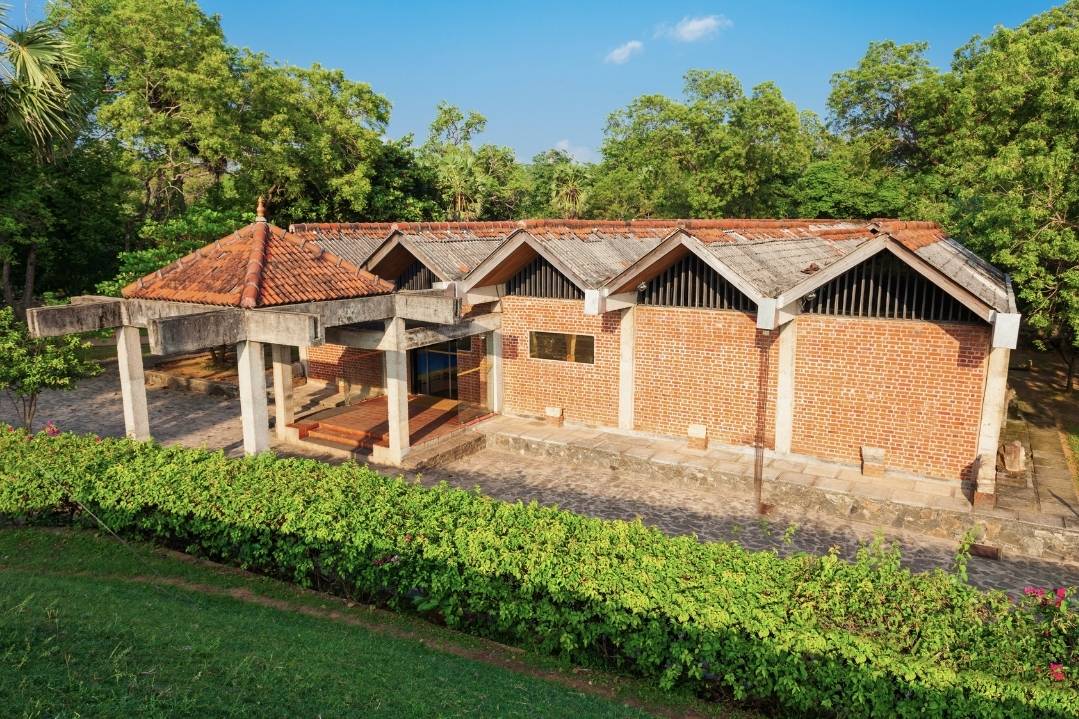
The 📍Archeological Museum is where you’ll buy your ticket to Polonnaruwa, making it your first stop.
To get the most from your visit, I suggest taking some time to explore the museum and get some context for the ruins you’re about to see.
Its a small museum but has an impressive collection of ancient artefacts from the area. Perhaps the most valuable displays are those providing information, and the miniatures depicting what the city looked like during its heyday.
2 | Palace Complex Of King Nissanka
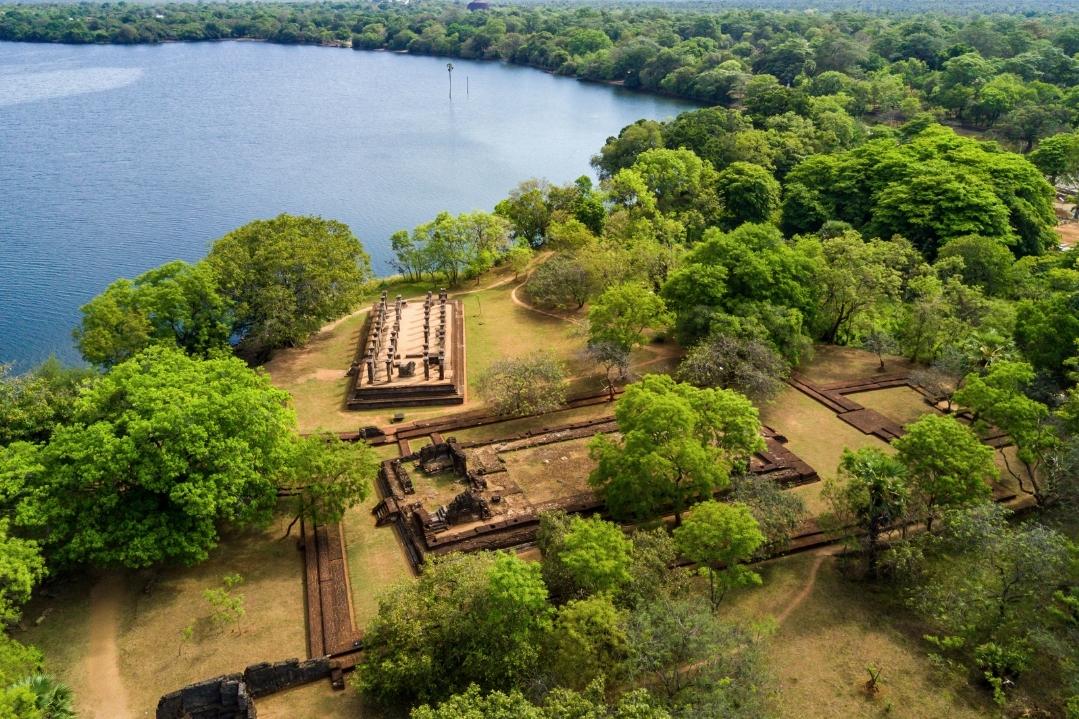
After buying your ticket and visiting the museum, you’ll find one of the entrances to Polonnaruwa just down street.
The first thing you’ll come across is the 📍Palace of King Nissanka. Nissanka was the 3rd ruler of Polonnaruwa after the Sri Lankans retook it from the Cholas, and he ruled from 1197 to 1196 CE.
This palace complex consists of a number of impressive ruins, including the central audience hall, the royal baths and various other smaller structures like a mausoleum, and a royal ‘summer house’ on the water’s edge.
3 | The Citadel
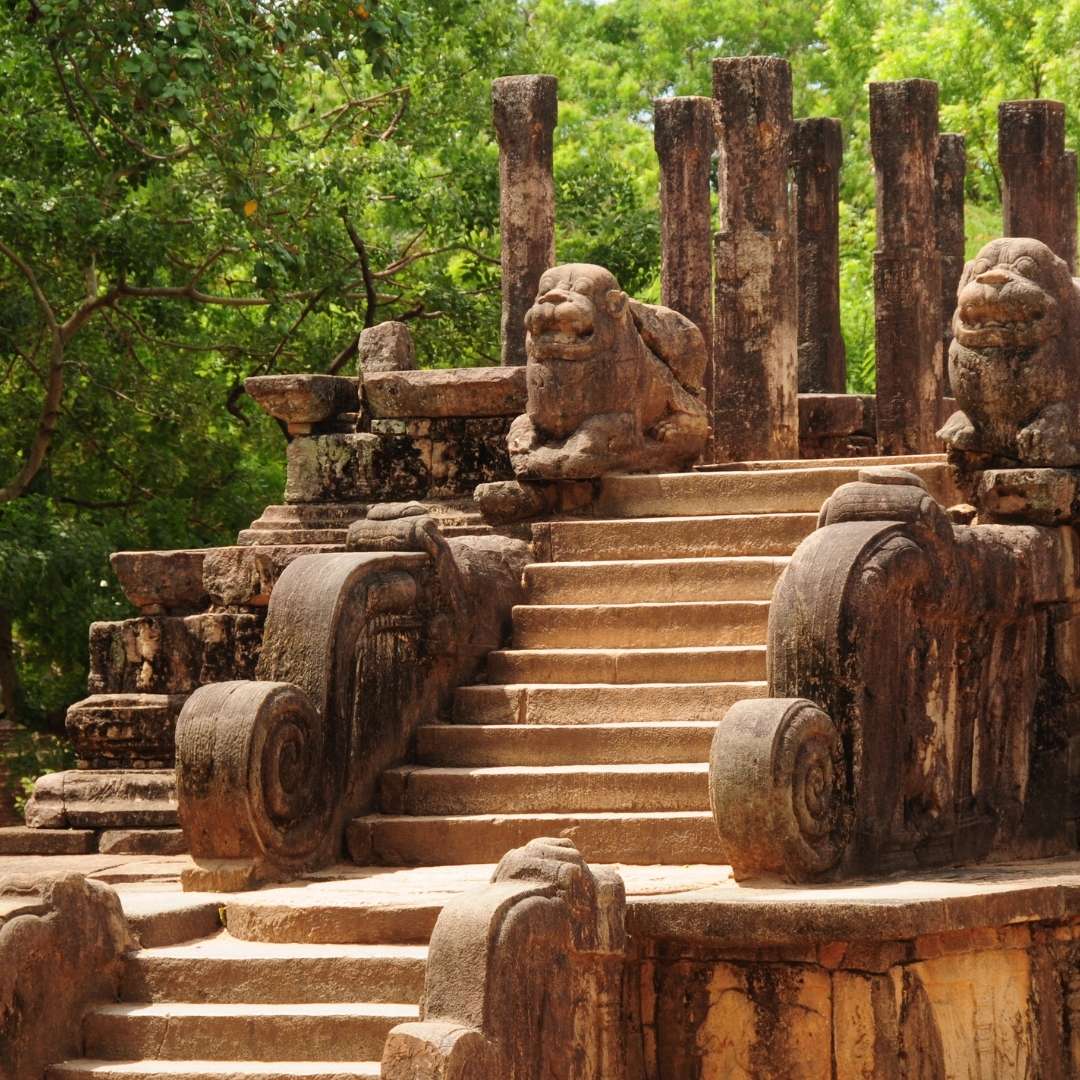
After seeing the Palace of King Nissanka, you’ll make your way across the road and into the main area of Polonnaruwa. After passing the entrance gate, turn right and you’ll come across the next highlight that this ancient city has to offer.
Here, at the Citadel, you’ll find the remains of 2 of the most important structures at Polonnaruwa.
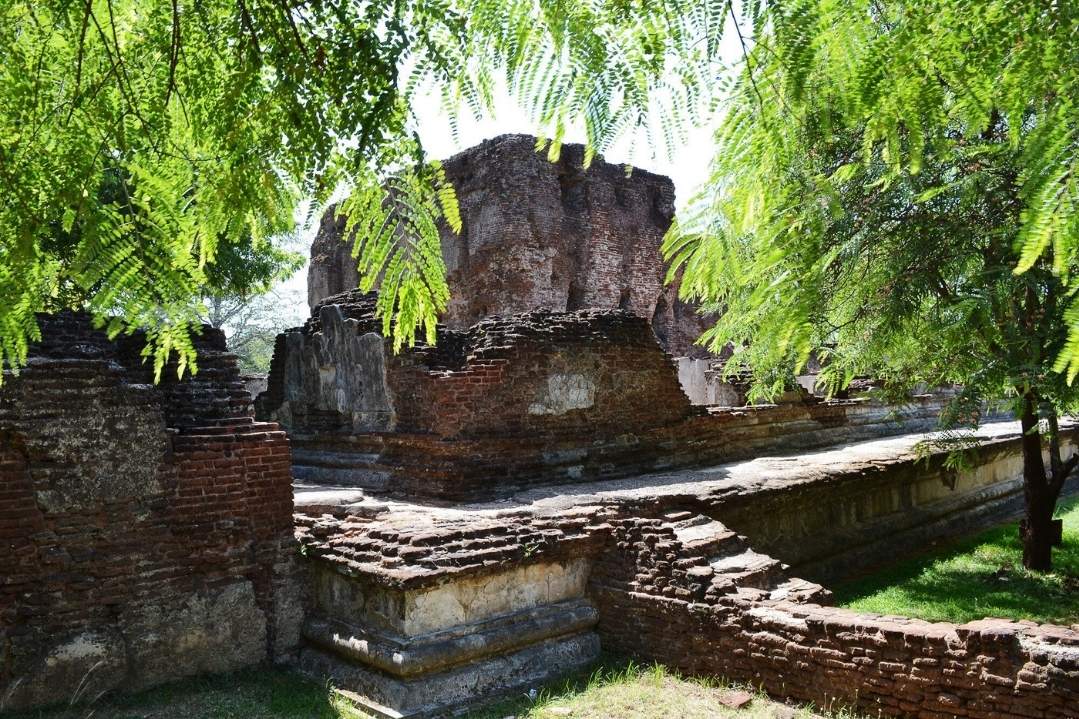
On your left, which unfortunately is little more than just the foundations, are the remains of the 📍Palace of King Vijayabahu the Great. This guy was one of Sri Lanka’s greatest rulers, the first Sri Lankan ruler of Polonnaruwa, the man who took the city from the Cholas.
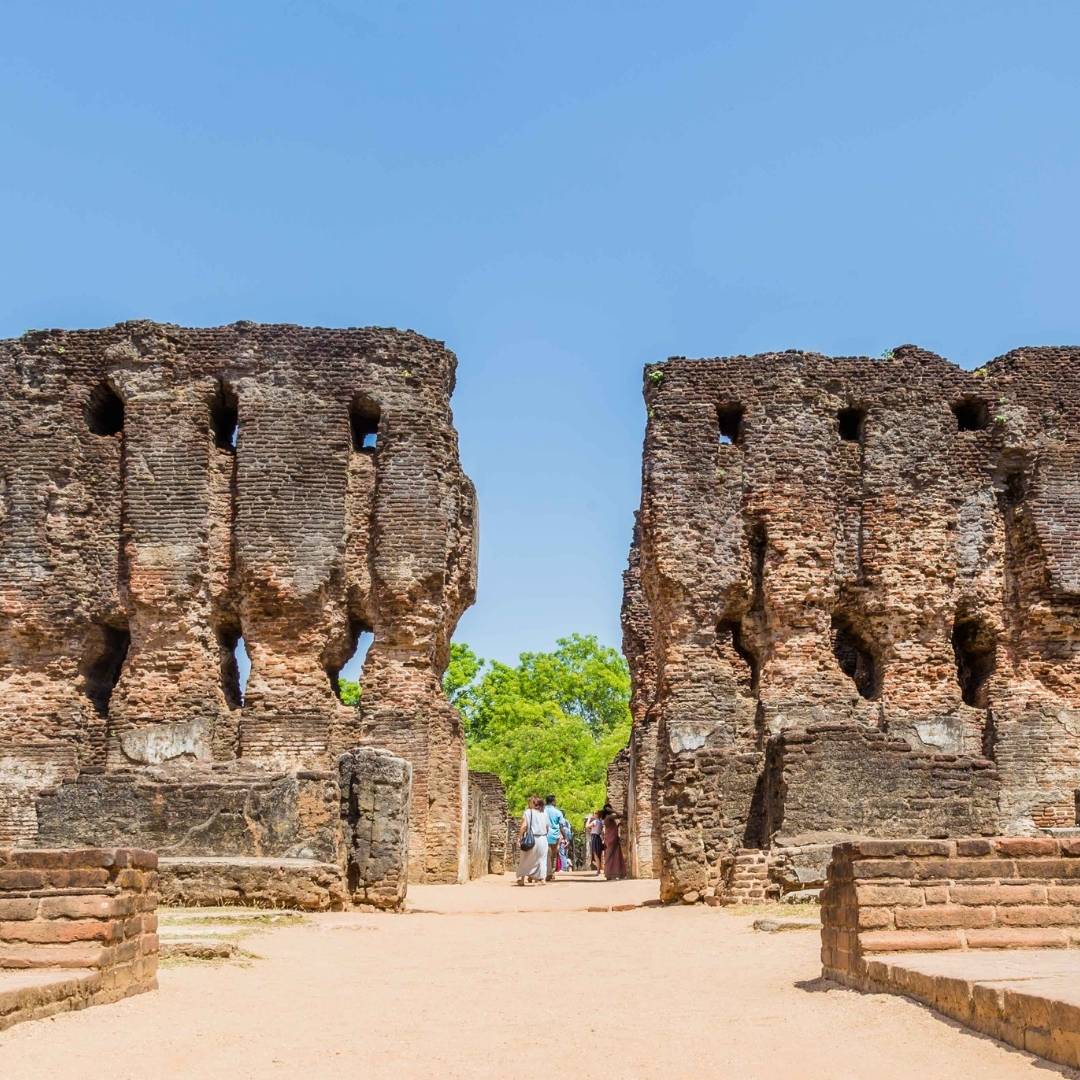
To the right is the remains of the 📍Palace of King Parakramabahu. The successor to Vijayabahu the Great, this guy is right up there as one of Polonnaruwa’s most important kings, with the city thriving under his rule.
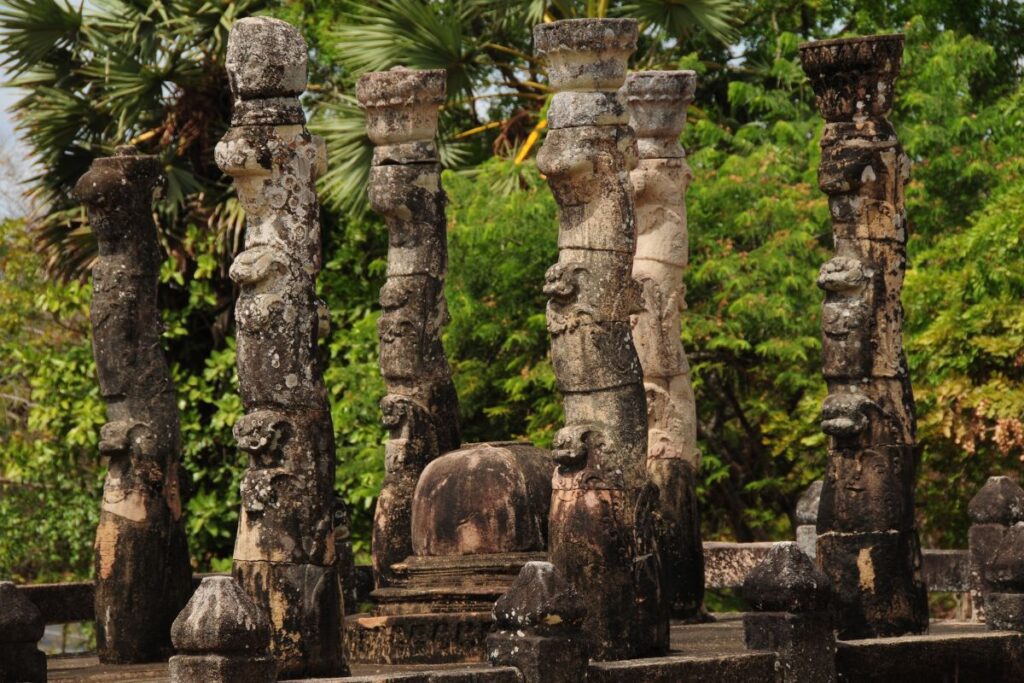
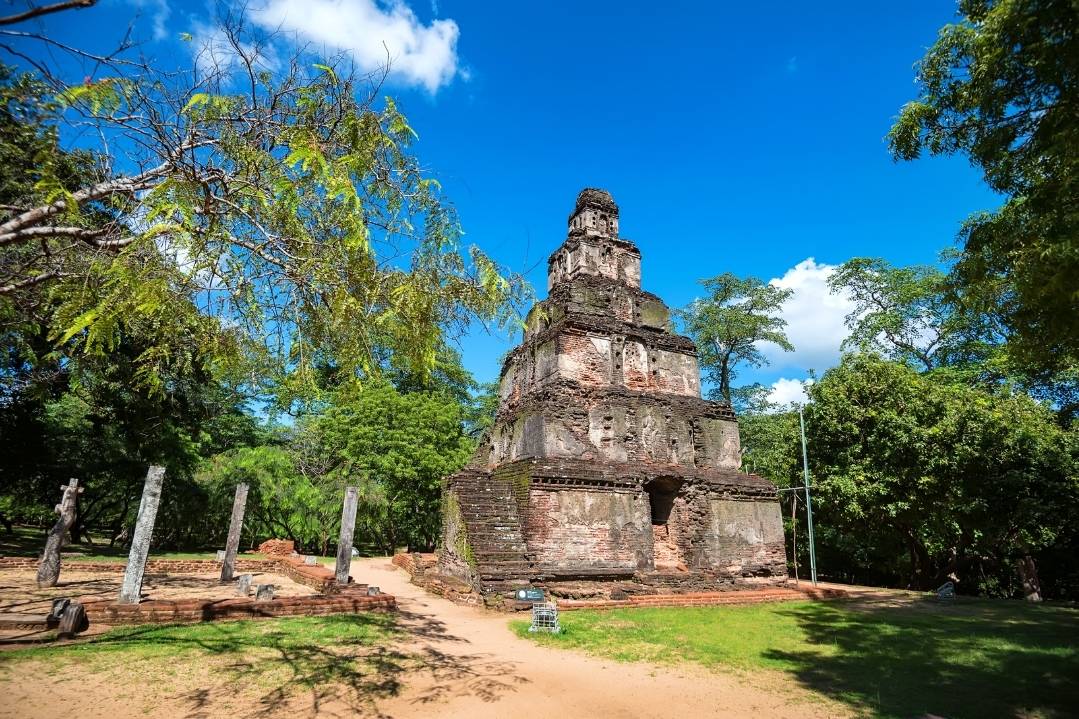
His palace clearly matched his reputation, with the massive stone pillars giving a sense of the scale of this structure. At 7 stories, it was said to be the tallest building in the city and allegedly housed a thousand bed chambers.
There are a few other structures to see here, such as the 📍Audience Hall and the 📍Kumara Pokuna lotus pond.
4 | The Sacred Quadrangle
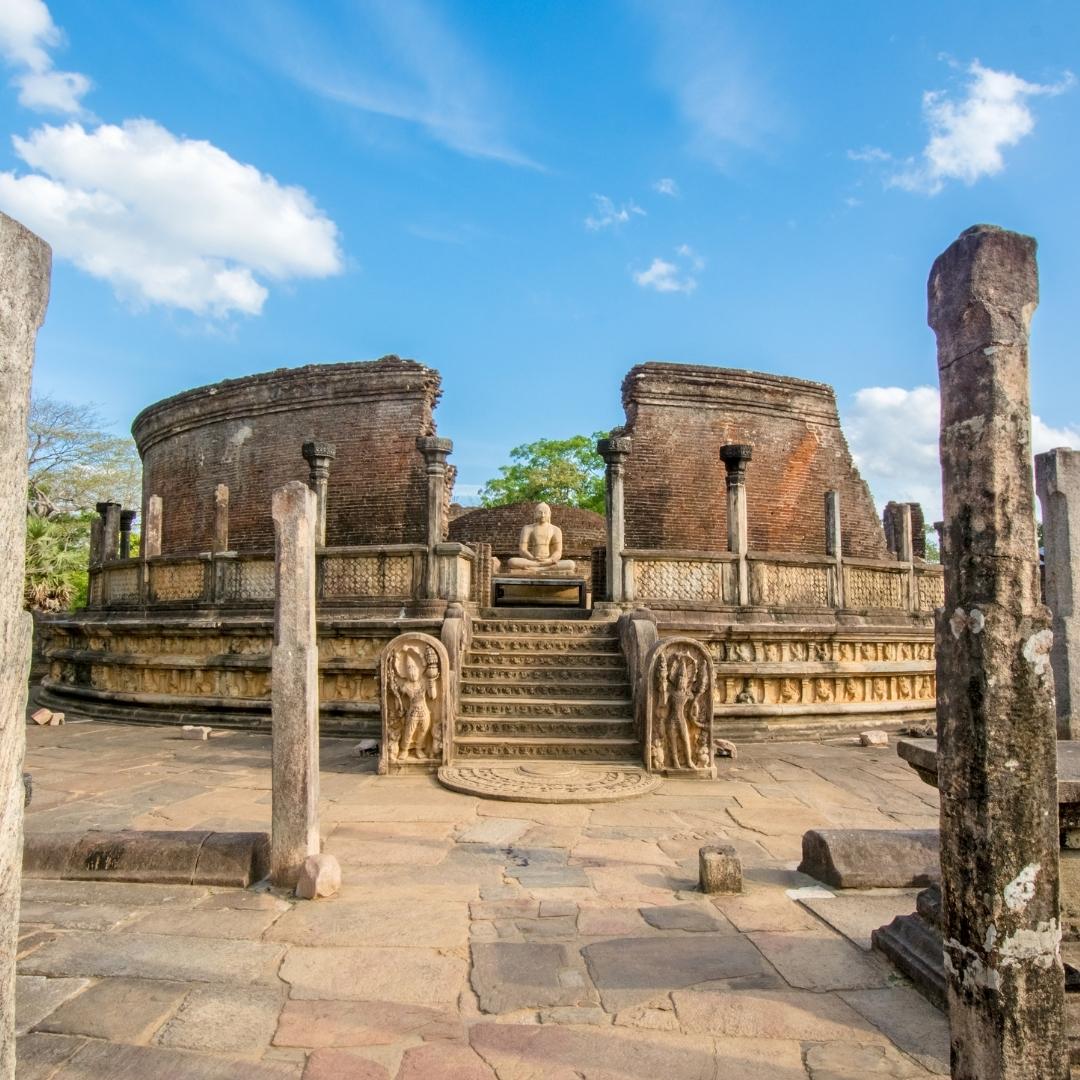
After the Citadel, you’ll follow the road north, pass by gate you entered through, and find the next highlight.
The Sacred Quadrangle has some of the most impressive and well preserved structures in Polonnaruwa. If you’ve ever seen a picture of Polonnaruwa, it was probably of one of these buildings. This site was once the religious centre of the city and housed 10 impressive buildings used for worship.
The first structure you’ll see to your left is 📍the Vatadage, a large circular structure which was said to hold the Relic of the Tooth of the Buddha, an important religious artefact which is now held in Kandy.
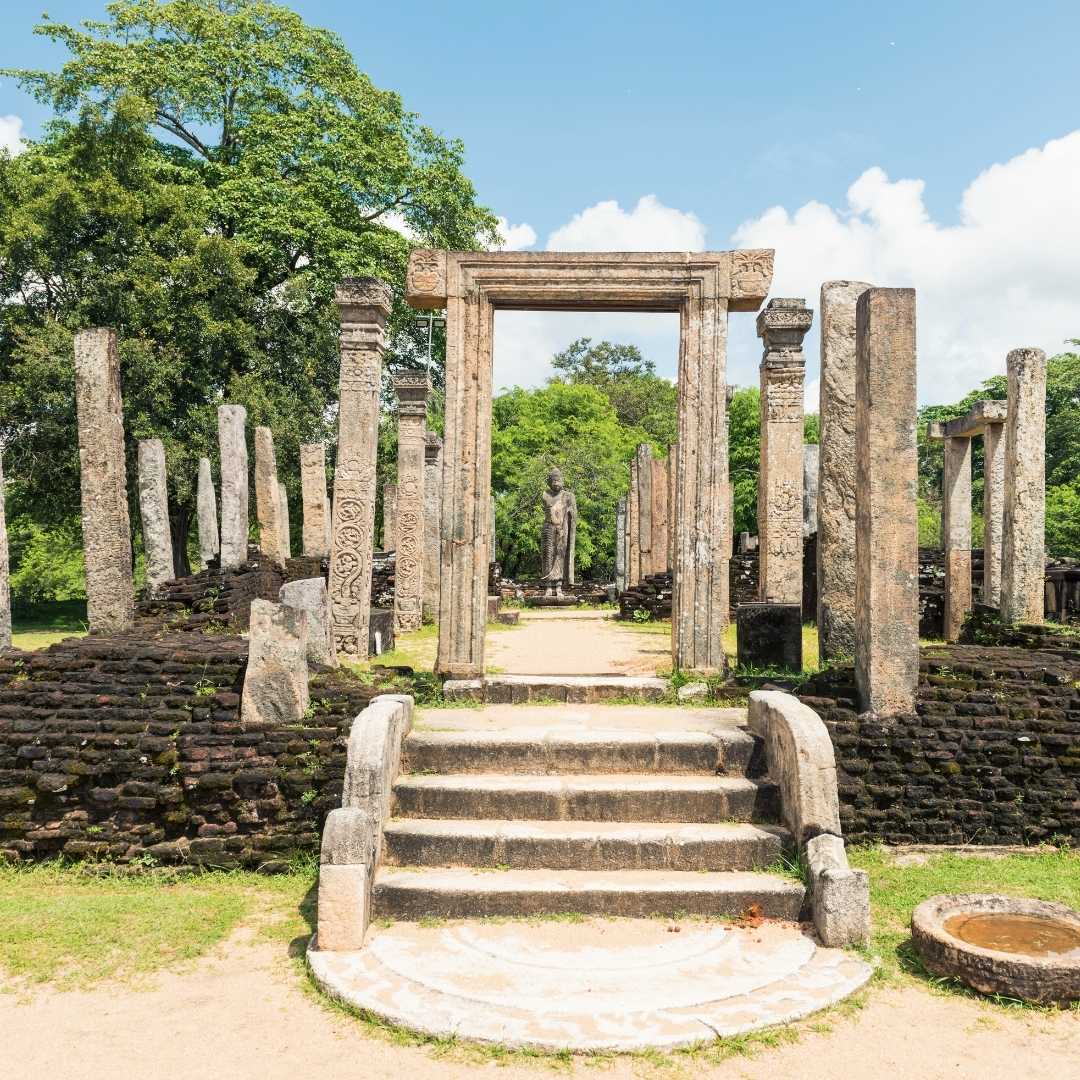
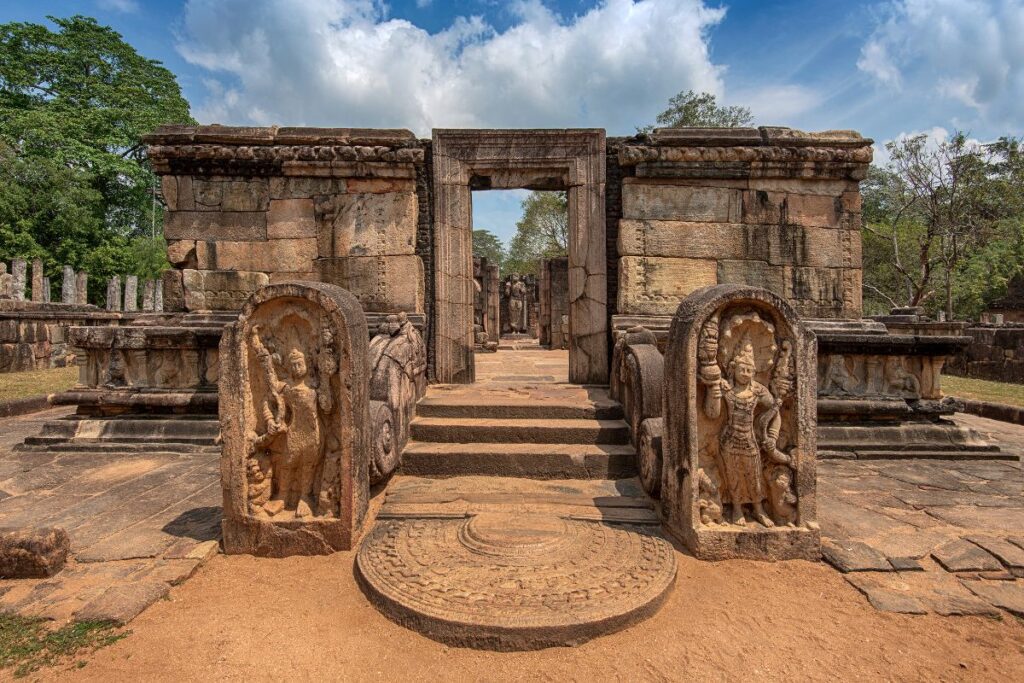
Opposite is 📍the Hatadage, another temple. It once stood 2 stories tall, and though little remains it still houses some beautiful statues.
Another highlight of the Sacred Quadrangle is 📍the Thuparamaya, found behind the Vatadage. This structure is unique in that, while most buildings in Polonnaruwa had wooden roofs, this one is entirely made of stone, meaning it still remains in a similar condition to what it was 1000 years ago, albeit with a bit of wear-and-tear.
Keep in mind, when visiting the Sacred Quadrangle, you’ll be expected to remove your shoes before entering each of the ruined structures. Even though these are 1000 years old, their religious significance in Buddhism is still recognised, so temple etiquette applies.
5 | Rankoth Vihara
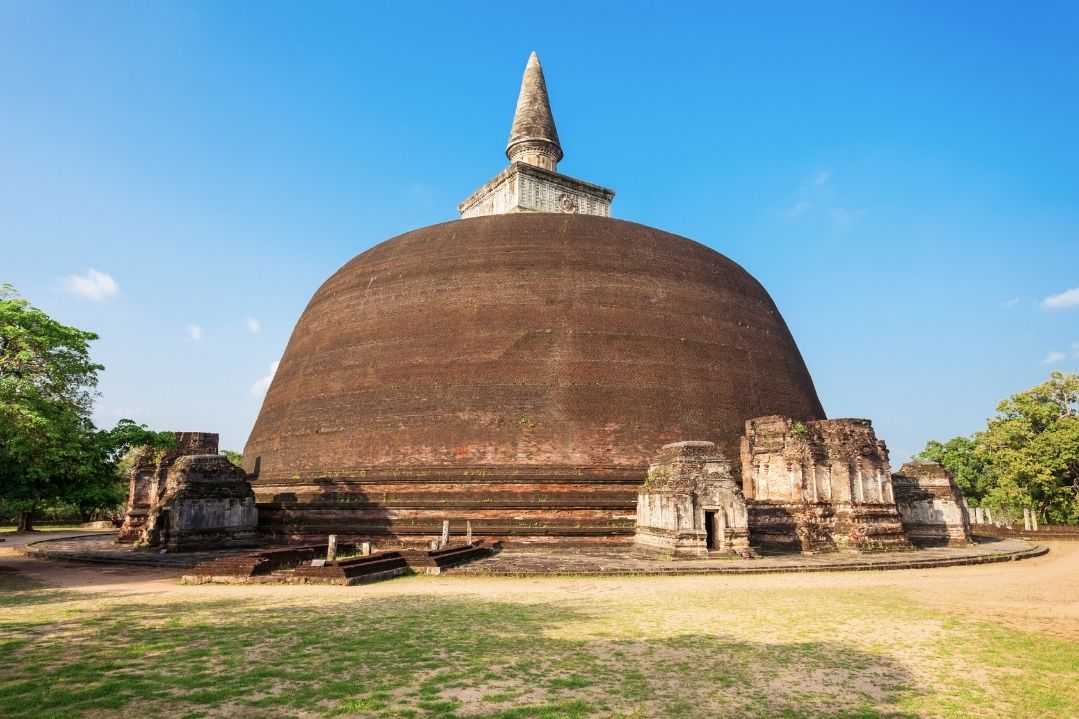
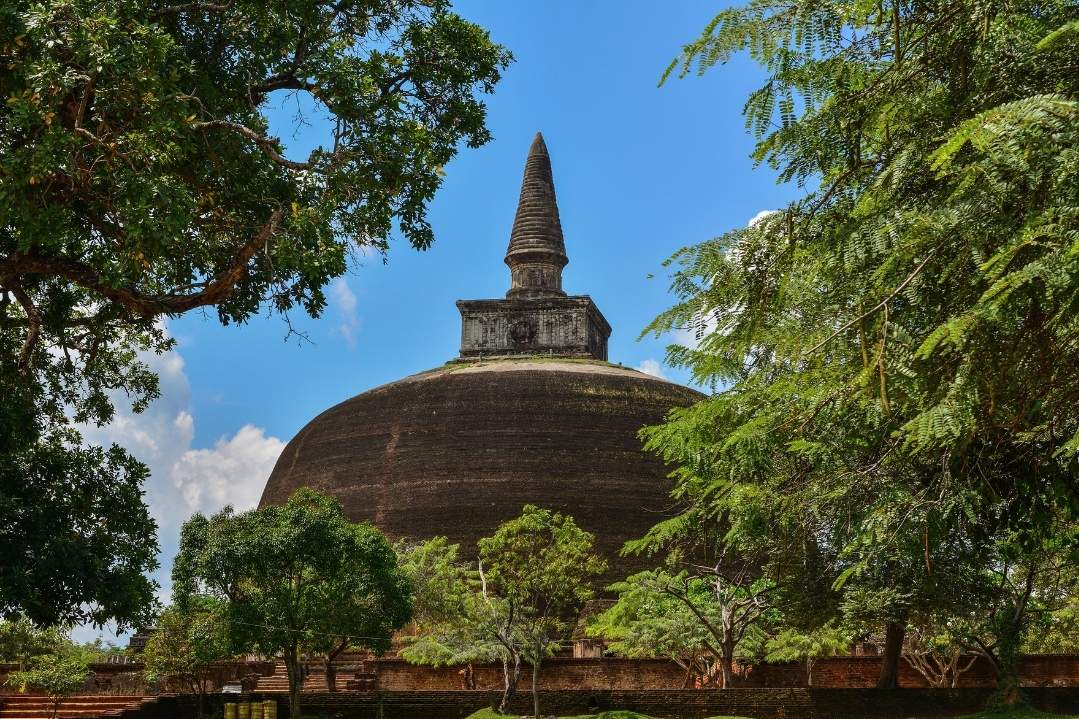
As you make your way north through the ancient city, you can’t miss this massive structure towering above the tree-line.
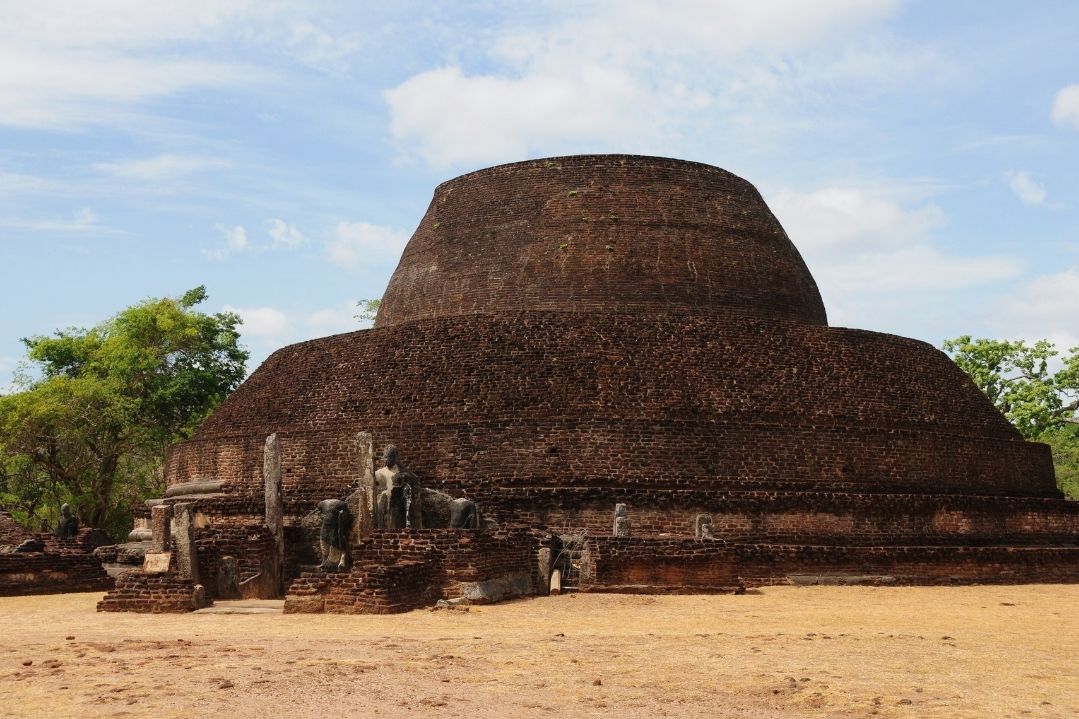
📍Rankoth Vihara is one of the largest stupas in Sri Lanka, which is saying something because Sri Lanka has a lot of stupas.
It was built during the reign of King Nissanka (1187 to 1196), and is one of the best preserved structures in Polonnaruwa.
6 | Lankatilaka Vihara Complex
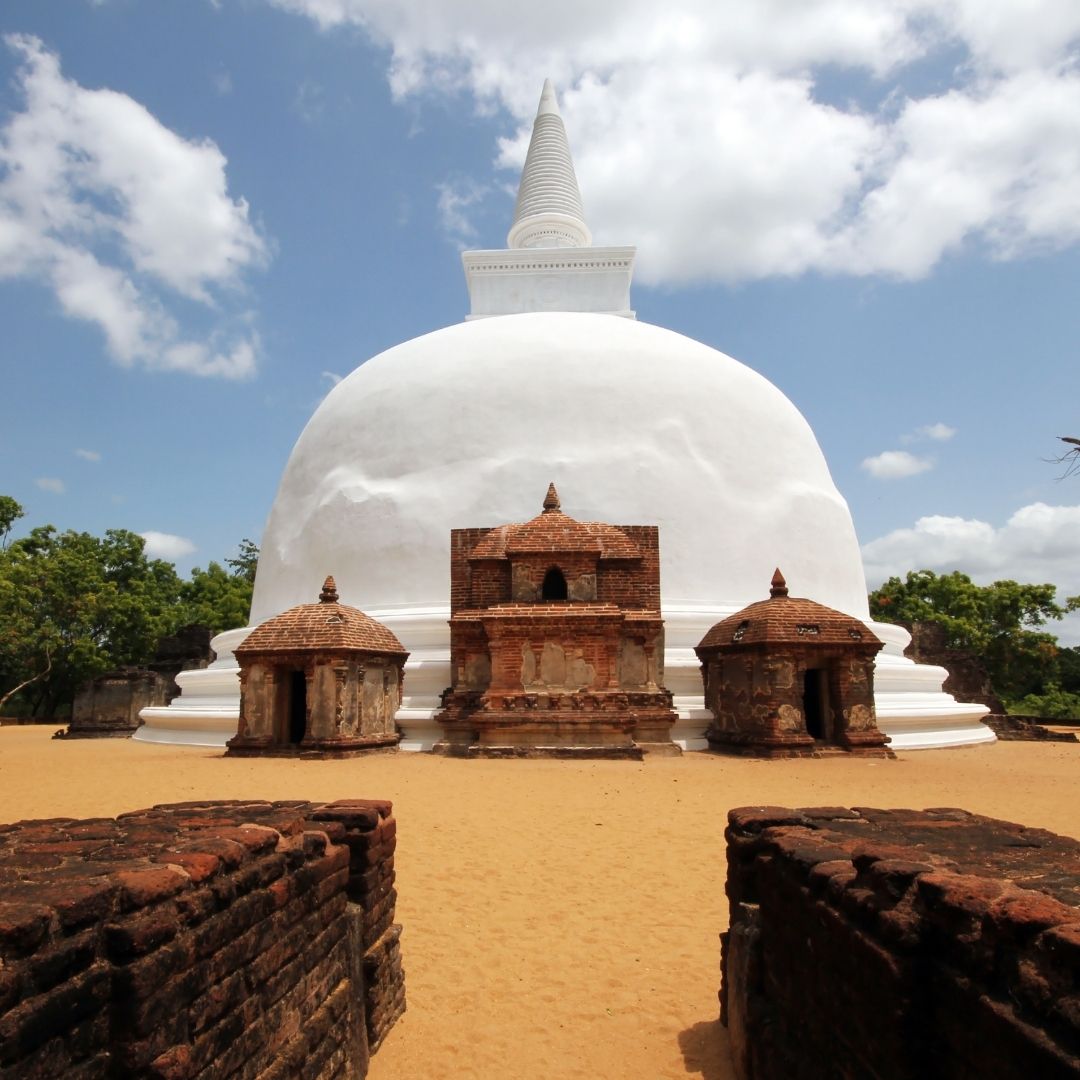
Just north of the Rankoth Vihara you’ll come across another massive temple complex.
The first thing you’ll see here is the 📍Kiri Vihara, another large stupa. It’s slightly smaller than the Rankoth Vihara, but every bit as magnificent.
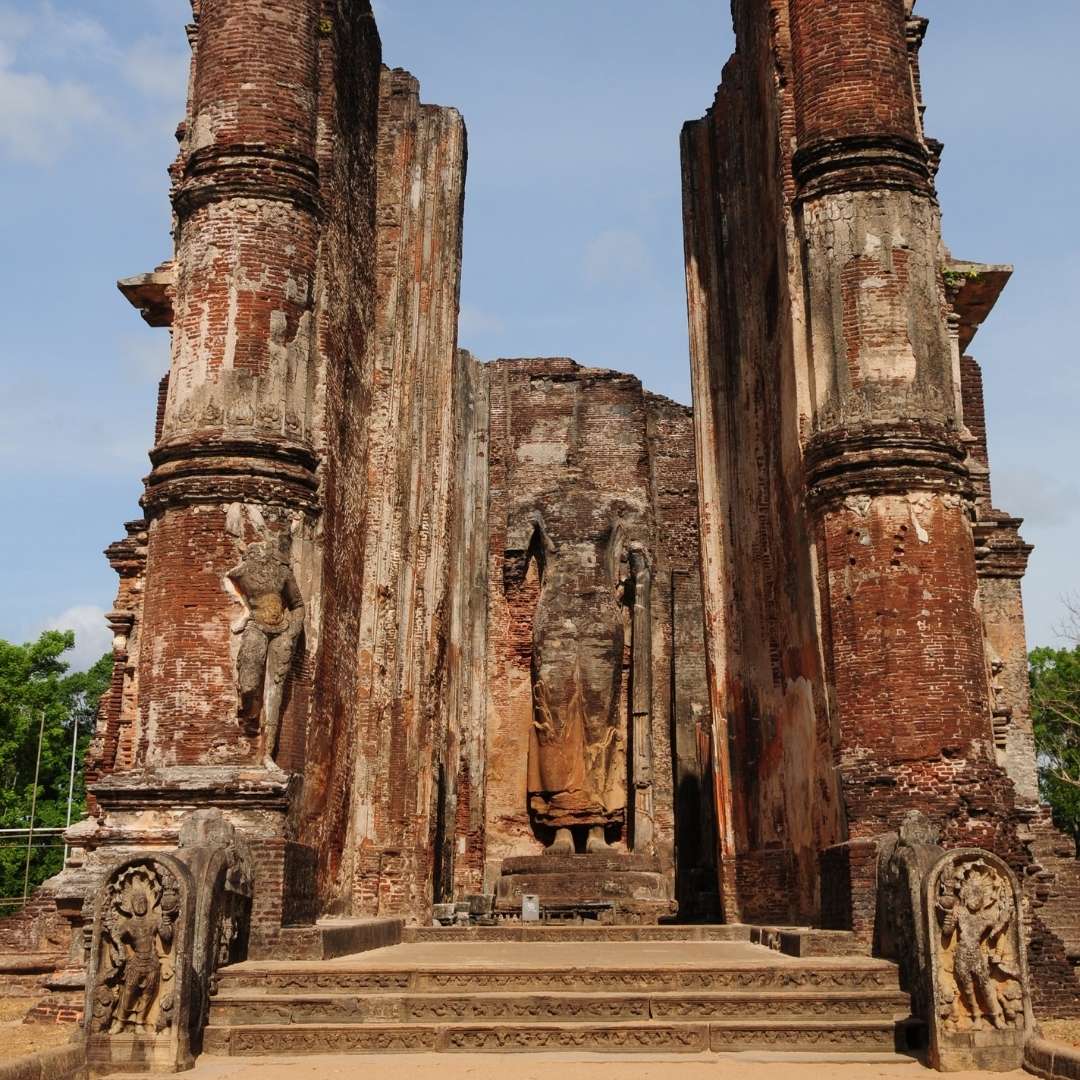
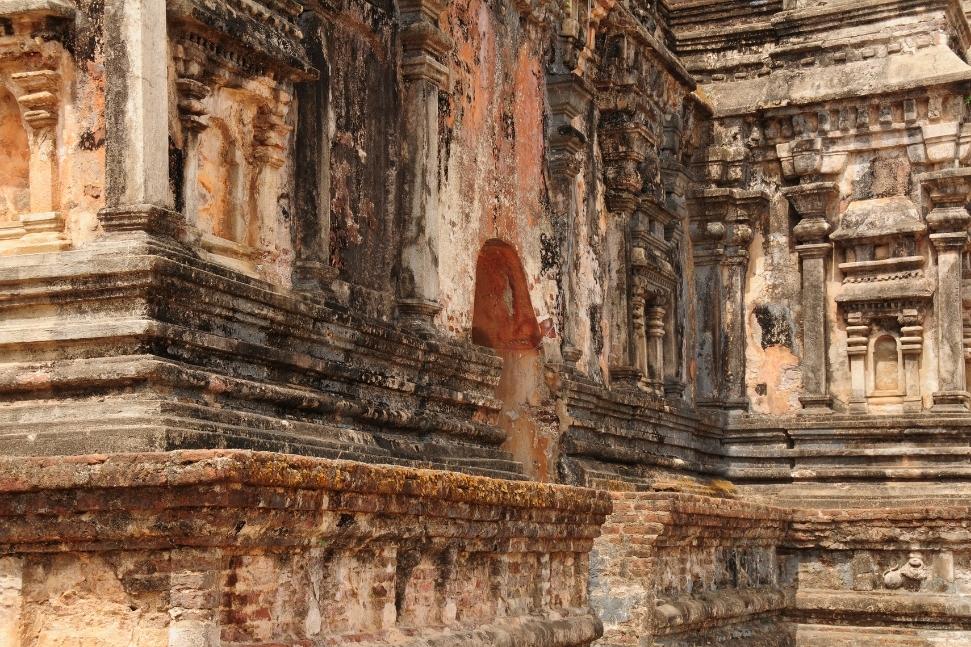
Next to this is 📍Lankatilaka Temple. This is one of the most impressive structures in Polonnaruwa, and the height of the ruined walls give you a sense of how large it was 900 years ago.
Built during the reign of King Parakramabahu (1153 to 1186), this temple once housed a statue of Buddha standing 13m tall, some of which still remains today.
7 | Gal Vihara
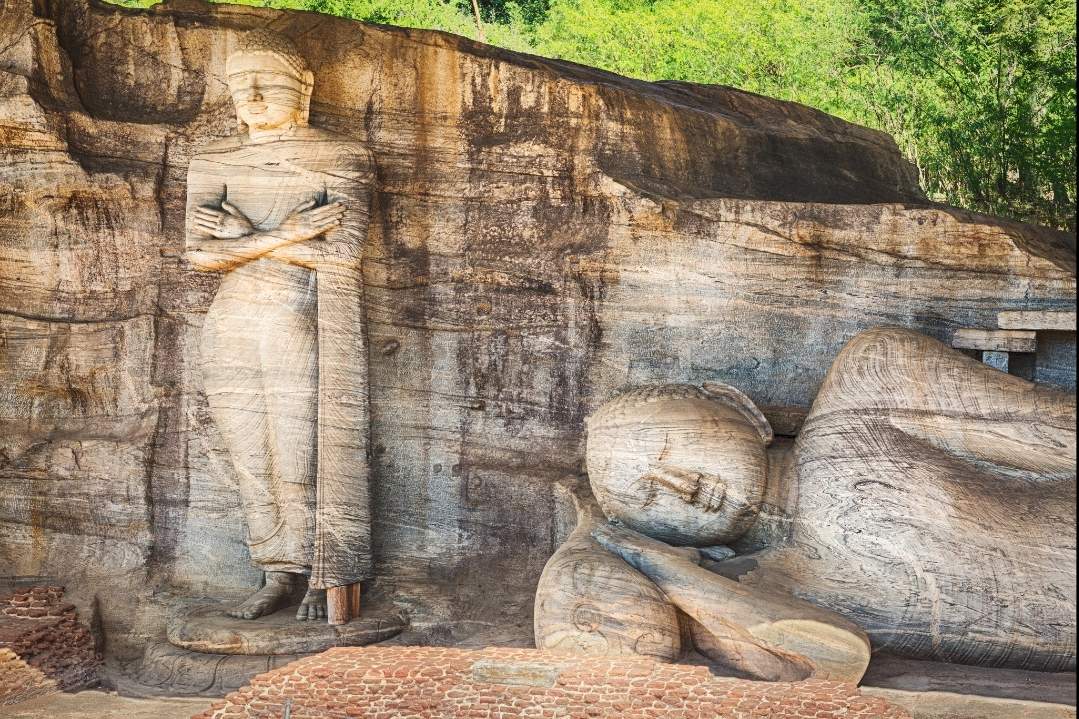
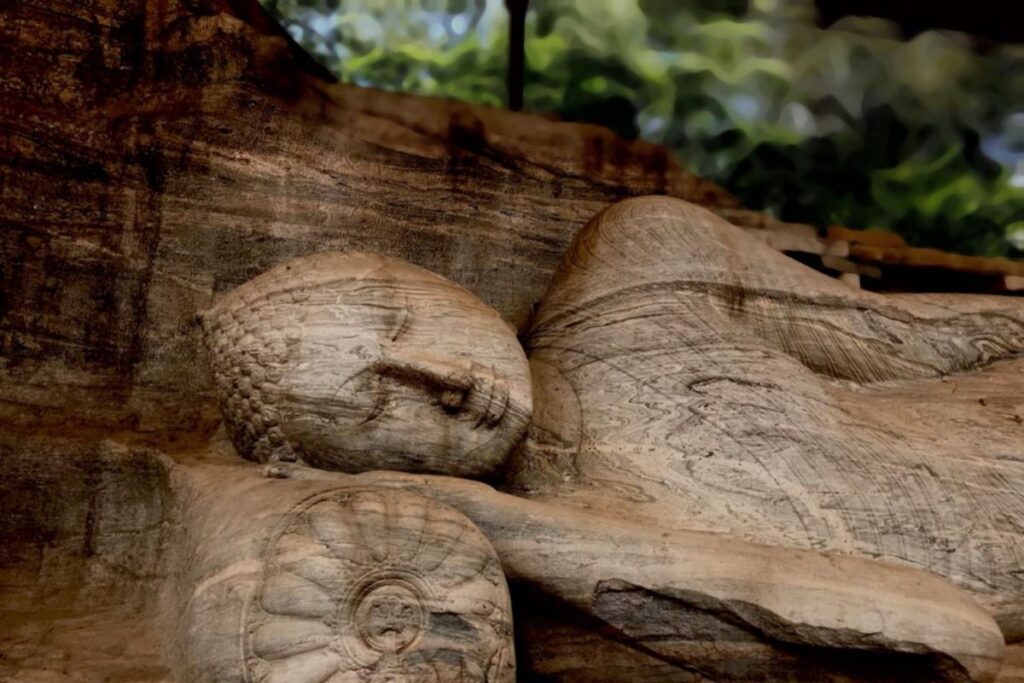
Opposite to Lankatilaka Vihara, down a path by the pond, you’ll find the 📍Gal Vihara, which houses some of the most impressive rock carvings in all of Sri Lanka.
During the reign of King Parakramabahu (1153 to 1186), these massive reliefs were carved into the side of a granite rock, depicting the Buddha in various positions. The tallest sculpture, the standing Buddha, is 7m tall while the reclining Buddha is almost 15m long.
The religious significance of Gal Vihara is still recognised today. In fact, during my visit, there were crowds of people visiting the site to pray.
There are so many more things to see at Polonnaruwa, but that covers some of the highlights.
Best time to visit Polonnaruwa
Sri Lanka has a tropical climate, and that means you need to be mindful of the monsoon seasons.
And I mean ‘seasons’ – as in plural. Because Sri Lanka experiences 2 different monsoon seasons depending on what part of the island you’re in.
The 2 rainy seasons in Sri Lanka are:
- October to January – the monsoon season in the North and East of the island.
- May to August – the monsoon season in the South and West of the island.
Polonnaruwa falls into the former, experiencing its monsoon season between October and January. So the best time to visit Sri Lanka is between May and August.
Polonnaruwa Opening Hours
There’s no official website to check the Polonnaruwa Opening Hours.
But at the time of my recent visit the ancient city opening hours were from 7am to 6:30pm daily.
How to get to Polonnaruwa
The 📍Polonnaruwa historical site is located in a town that is also called 📍Polonarruwa. The modern-day town is sometimes referred to as Newtown (with the ancient city ruins being the ‘old town’.)
It is located in the North Central Province of Sri lanka, about 50km from Sigiriya, another popular site of the Cultural Triangle, and about 220km from Colombo, the capital.
How you get there will of course depend on where you’re staying.
From Polonnaruwa
If you’re staying in the town of Polonnaruwa itself, then getting to the ancient city is easy. There may be public buses you could get, but for less than $2 USD you could get a tuk tuk or rideshare (uber/lyft) from almost anywhere in town to the ancient city.
From Sigiryia
Bus (via Inamaluwa)
There are no direct buses from Sigiriya to Polonnaruwa, but you can take a tuk tuk about 10 km to Inamaluwa junction and board a bus to Polonnaruwa from there. The full journey takes around 2 hours. Expect to pay roughly LKR 500 for the tuk tuk and about LKR 100 for the bus, making this the most budget-friendly option. At Inamaluwa, you’ll need to speak to the bus drivers to find which are headed for Polonnaruwa.
Scooter Rental
Renting a scooter is a popular choice because it gives you complete flexibility and also solves your transport within the Polonnaruwa ruins and back to Sigiriya. The ride takes about 2 hours at a relaxed pace, with the freedom to stop at viewpoints or attractions along the way. Daily rental is usually no more than LKR 2,000, and a full tank of fuel costs around LKR 1,200, bringing the total to roughly LKR 3,200 for the day.
Tuk Tuk (Private Hire)
Hiring a tuk tuk for the full trip is the most hassle-free option. Most local drivers in Sigiriya can arrange a drive to Polonnaruwa, and for an extra fee they’ll be your transport within the ancient city, before and returning you to Sigiriya. Prices will depend on your haggling skills but it’ll likely fall between LKR 4,500 and LKR 6,000.
Where to Buy Your Ticket to Polonnaruwa
If you attempt to go straight to the entrance to Polonnaruwa just off the main road, you’ll be turned away, because to buy your entry ticket you first need to visit the Archeological Museum.
If you’re arriving by bus or hired driver, you’ll likely be dropped off at the museum anyway, but if you’re making your own way there then it can be confusing to find.
To reach the museum, you’ll need to turn off the highway onto Bund Rd. Take the first right and you’ll find the museum, and main entrance, right in front of you.
At the time of writing, the Polonnaruwa entrance fee is 4500 LKR ($25 USD).
This may sound a little steep compared to other historical attractions in Sri Lanka, but the site is huge and has a lot to see, so its worth every cent.
Getting around Polonnaruwa
The Polonnaruwa complex is a massive and sprawling historical site. After all, it was once an entire city. From the entrance of the complex to the far end is almost 4km, and the ruins are scattered throughout.
To get around this ancient city, you have a few different options.
Walk
If you’ve got the time and the energy, there’s nothing stopping you from walking around Polonnaruwa, but I wouldn’t suggest it. You’ll be on your feet all day, and the intense tropical heat doesn’t make it any easier.
But hey, if those things don’t bother you, go for it. There’s plenty of places to rest in the shade when you need it, and no shortage of stalls selling cold bottled water.
Bicycle
One of the most popular ways to get around Polonnaruwa is by renting a bicycle. It’s much faster than walking and cheaper than a scooter.
With paved roads throughout, cycling around the ruins of this ancient city at your own leisurely place makes for a great time, and should take you roughly 4 to 5 hours to see everything.
You can rent a bike at the entrance to the complex. If you’re arriving on foot, someone will likely offer you one. If not, just ask one of the staff where the bike rental is.
Cost // At the time of my recent visit, the cost of renting a bicycle at Polonnaruwa for the full day is LKR 500.
Scooter
If you feel comfortable riding a scooter (as in a motorcycle), then this is certainly the most convenient way to get around Polonnaruwa. With your own scooter, you can zoom around the complex at your own pace.
There are many places to rent a scooter; they’re everywhere in Sri Lanka. Your best bet is to ask at your hotel, they may rent their own or know someone who does. Otherwise, walk around any tourist hotspot and you’ll likely find scooters for rent.
Cost // The cost of renting for a full day depends on the type of scooter and the owner, but you should expect between LKR 1000 to 2000.
Tuk Tuk
Another option for getting around Polonnaruwa is hiring a tuk tuk driver. For a reasonable price, your driver will take you around the whole complex, stopping at each site for as long as you like.
You may be able to hire a tuk tuk from wherever you’re staying, which also covers your transport to and from Polonnaruwa.
Your accommodation staff may be able to arrange a driver for you, otherwise speak to any local tuk tuk driver and negotiate a price.
If you reach the site by other means (e.g. bus), you’ll likely be able to hire a tuk tuk driver from the front entrance to Polonnaruwa.
Cost // The cost of hiring a tuk tuk depends on a few things, such as whether it’s for a full day or half day, whether they are also driving you to and from your hotel, and of course how good your haggling skills are. But if you were to hire one to drive you around the complex only, you can expect somewhere between LKR 1500 and 2000.
Where to stay near Polonnaruwa
If you want to stay closest to the ancient city, you’ll want to book accommodation in Polonnaruwa town. This is a convenient option if you want to arrive at the site as soon as it opens, beating the crowds.
However, many travellers prefer to stay at the popular tourist hotspot of Sigiriya, and then visit Polonnaruwa on a day trip. I definitely recommend this because Sigiriya is a much more interesting place to stay than Polonnaruwua town, and has other incredible historical sites, such as Lion Rock.
Personally, I stayed at the One More Night Hostel in Sigiriya and rented a scooter to visit Polonnaruwa. This hostel is great if you’re on a budget and looking to meet other travellers.
If you’re looking for budget accommodation and want to meet other travellers, then you have to stay at Roy’s Villa Hostel. Roy’s hostel is somewhat famous among Sri Lanka’s backpackers circuit, known for its sociable atmosphere.
It’s so popular that it’s usually fully booked out days or sometimes weeks in advance during high season, so be sure to secure your spot.
If you’re looking for something a little fancier and more private than a hostel, then I’d recommend Sigiriya Rockside Homestay.
Further reading on Sri Lanka
Here are more guides on Sri Lanka to help you plan your trip:
⬤ To find more historical sites in Polonnaruwa, check out: The 10 Best Historical Sites in Sri Lanka.
⬤ To learn the best way to discover Sri Lanka’s historical sites, check out: 10 Day Sri Lanka Itinerary for History Buffs.
⬤ For more historical travel guides on Sri Lanka, check out our Sri Lanka page.
Disclosure: This post may contain affiliate links.