Angkor Archaeological Park is one of the best historical attractions in the world, and was once the capital of the Khmer Empire – South-East Asia’s greatest civilisation.
Located in Cambodia, this ancient city was once among the largest in the world, with a population of up to a million people in the 12th century CE. Today, it’s a sprawling archaeological site full of temples, monuments, barays, and the world-famous Angkor Wat.
This guide covers everything you need to know before visiting Angkor Archaeological Park, including the main sites, tickets info, how to get around the park, and more.
Contents
A Brief History of Angkor
Before the Khmer Empire, South-east Asia was made up of a collection of small kingdoms, and was culturally Indianised (writing in Sanskrit and practising Hinduism).
That changed in the early 9th century, when Jayavarman II unified much of present-day Cambodia and founded the Khmer Empire. His successors established a new capital at Angkor, which over the next several centuries became the political, religious, and economic centre of one of Asia’s most powerful empires.
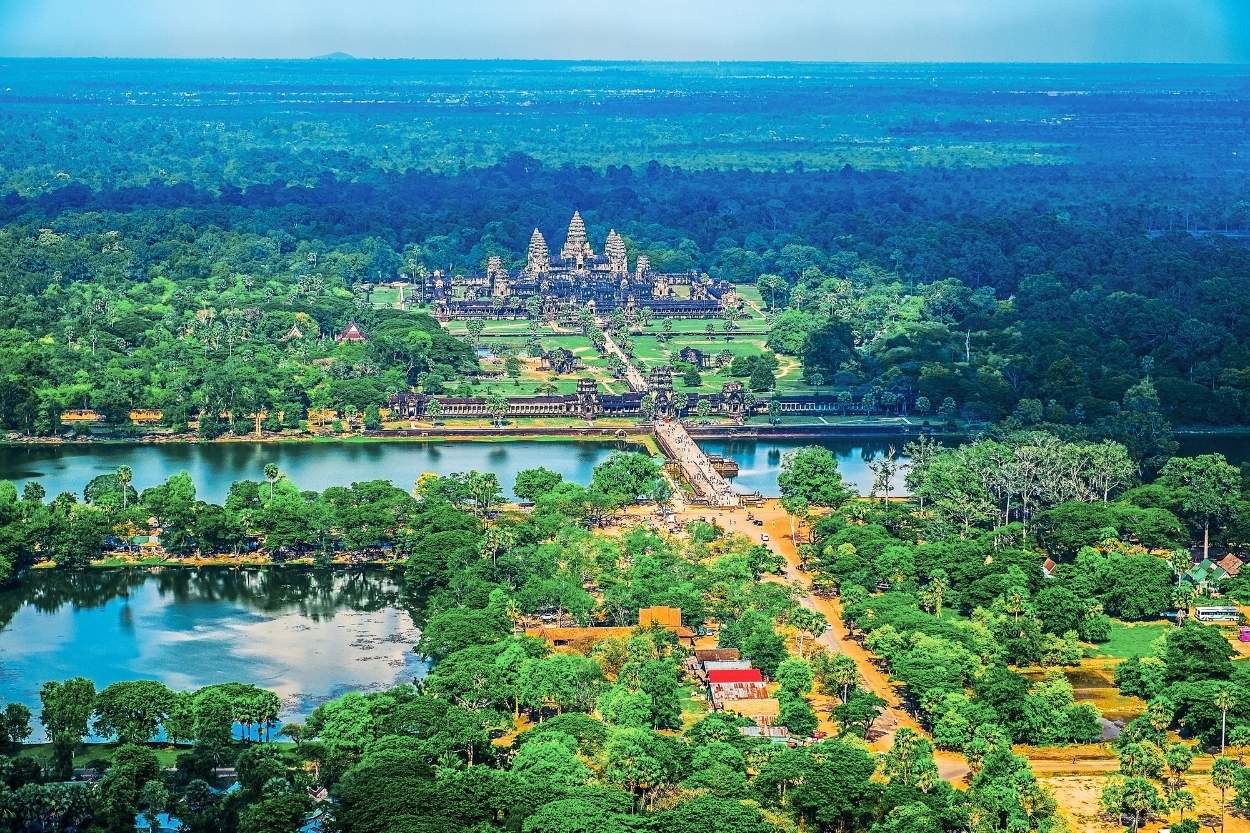
Bird's eye view of Angkor Wat
Between the 9th and 13th centuries, Angkor grew into one of the largest cities in the world, with a population that may have reached one million people. The city covered a huge area, larger than modern-day Paris.
The Khmer rulers were prolific builders, commissioning enormous temples. The most famous of these is Angkor Wat. Built in the 12th century, it is considered the largest religious monument in the world.
Angkor was also known for its advanced water management system. Large reservoirs known as barays, along with canals and channels, helped control seasonal water and supported the city’s large population, making Angkor one of the most sophisticated urban centres of the medieval world.
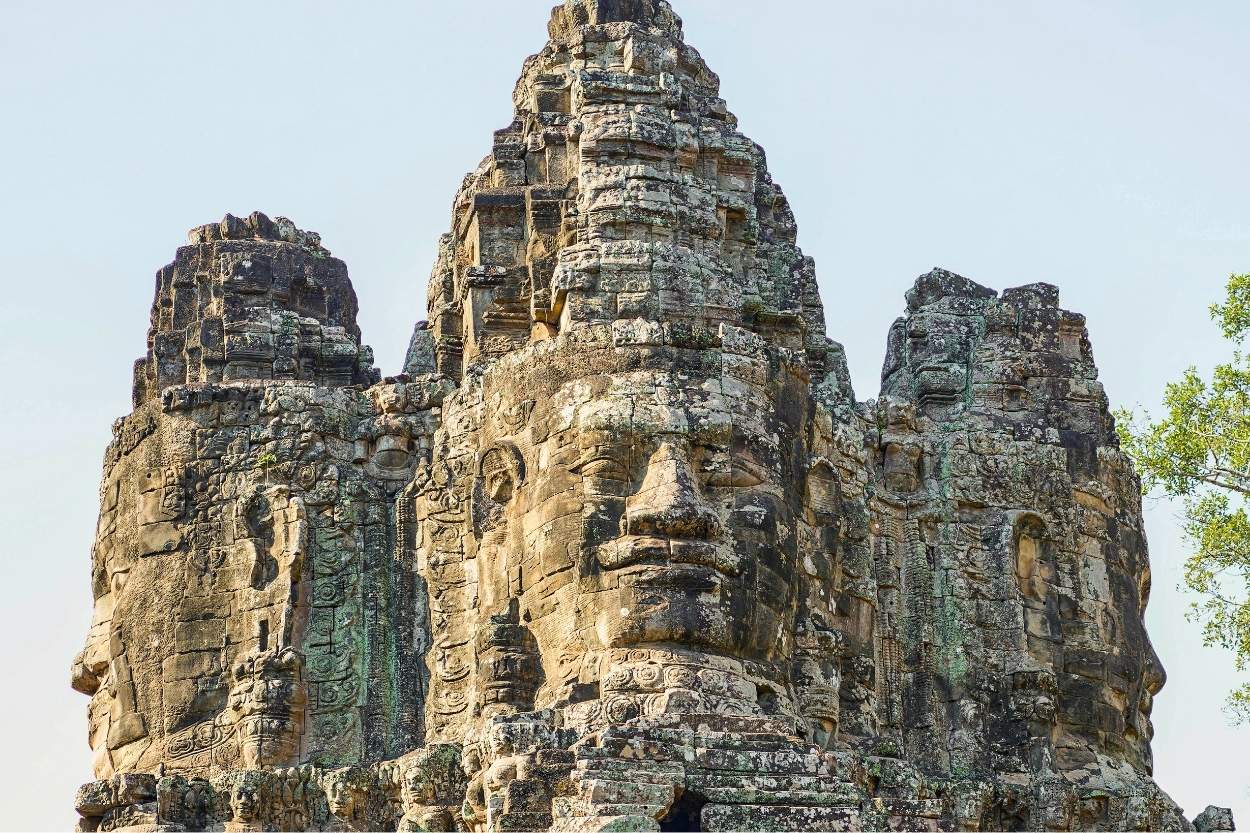
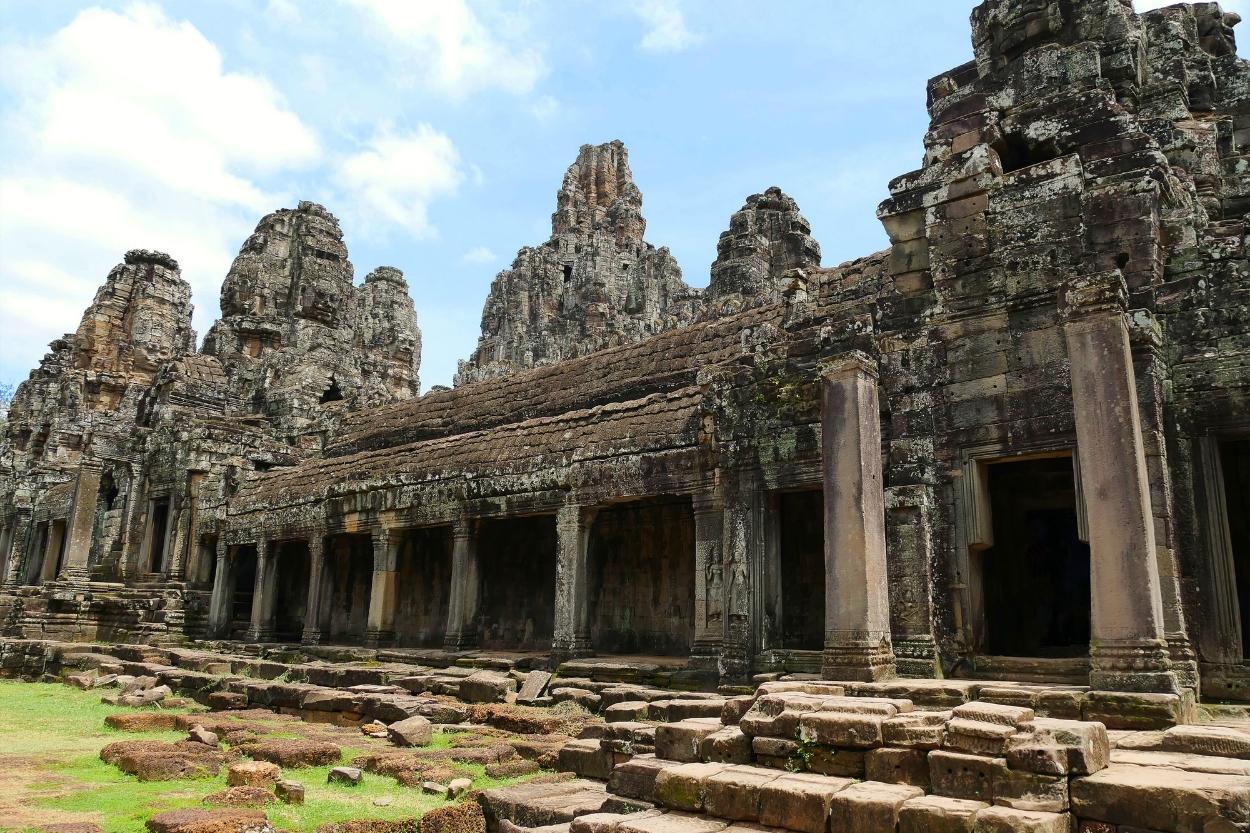
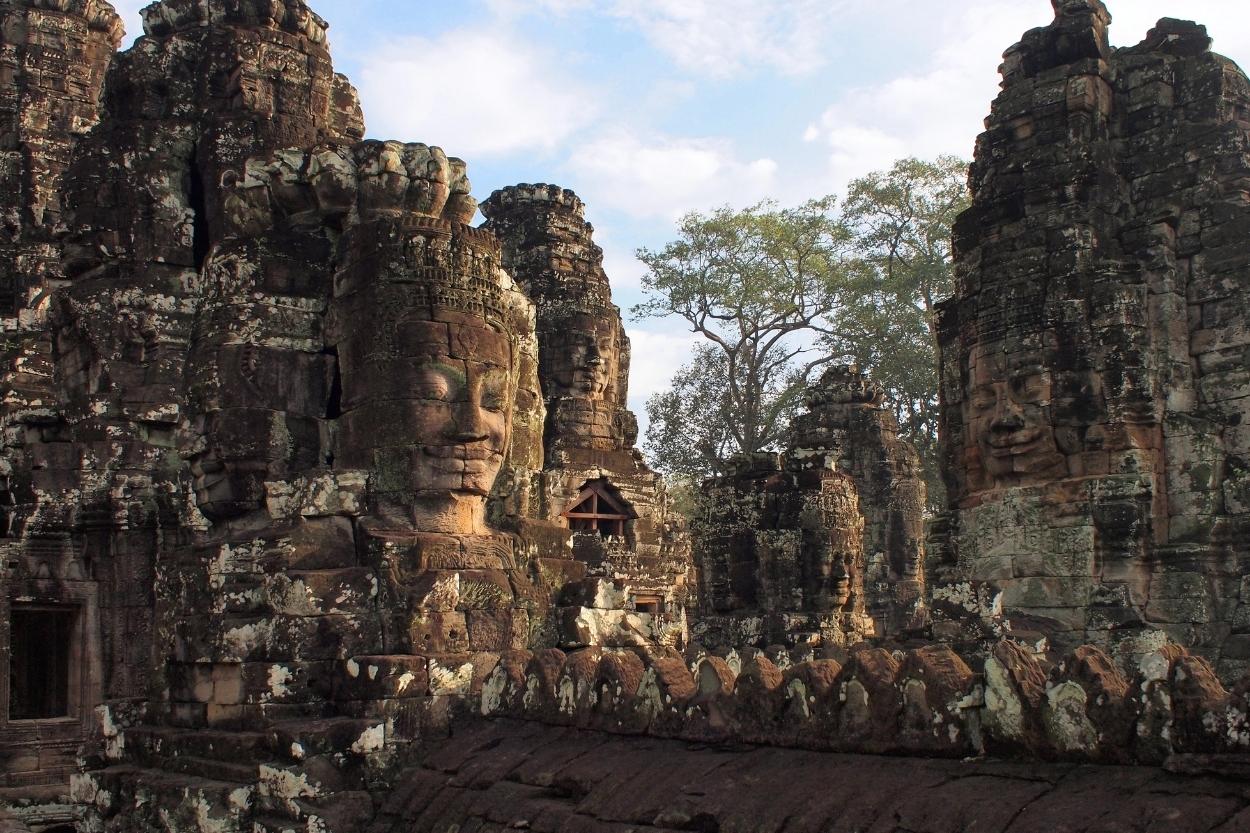
Bayon Temple
The city began to decline from the 13th century as regional power shifted and neighbouring Thai kingdoms grew stronger. By the 15th century, Angkor was largely abandoned, although Angkor Wat remained in use as a Buddhist temple.
What survives today are the stone monuments of the former city. Most ordinary buildings were made of wood and disappeared long ago, while the temples endured beneath the jungle until large-scale restoration began in the late 19th century.
Today, Angkor Archaeological Park is a UNESCO World Heritage Site and one of the top historical attractions in the world.
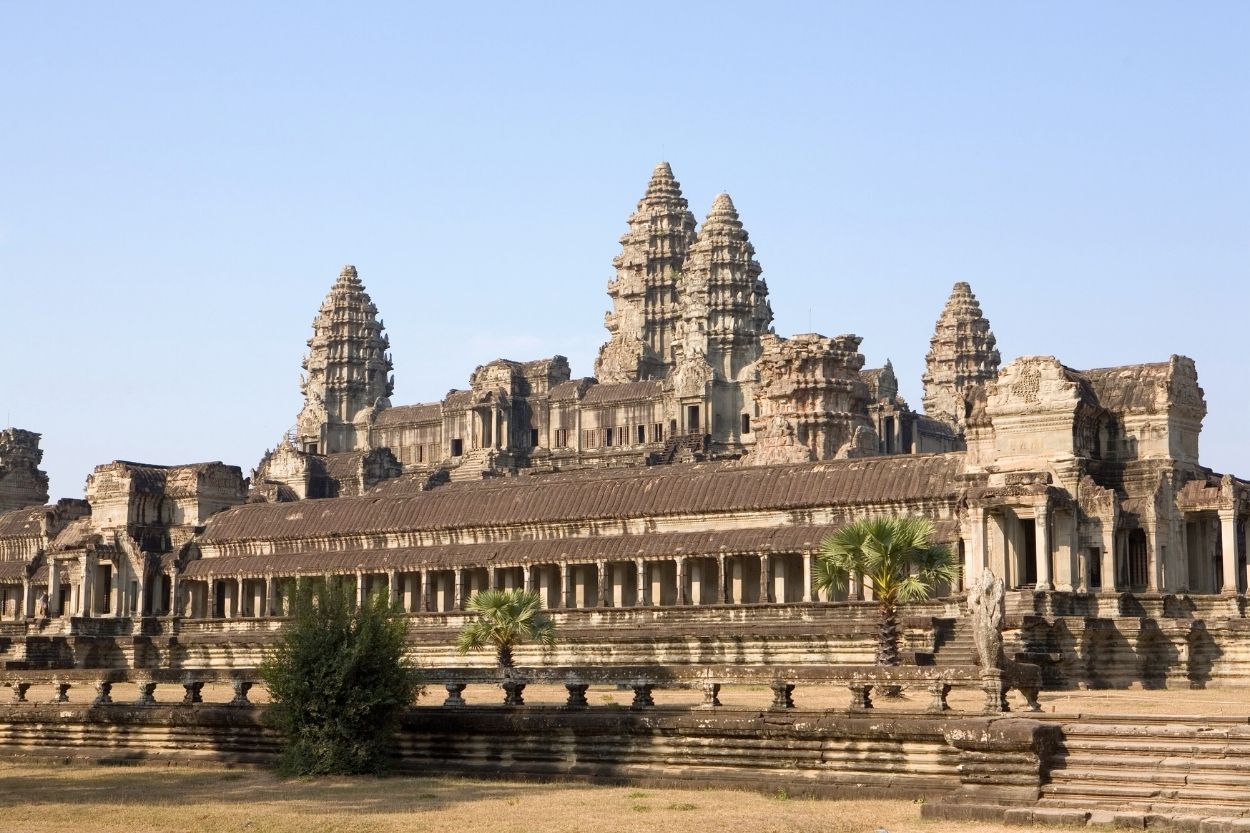
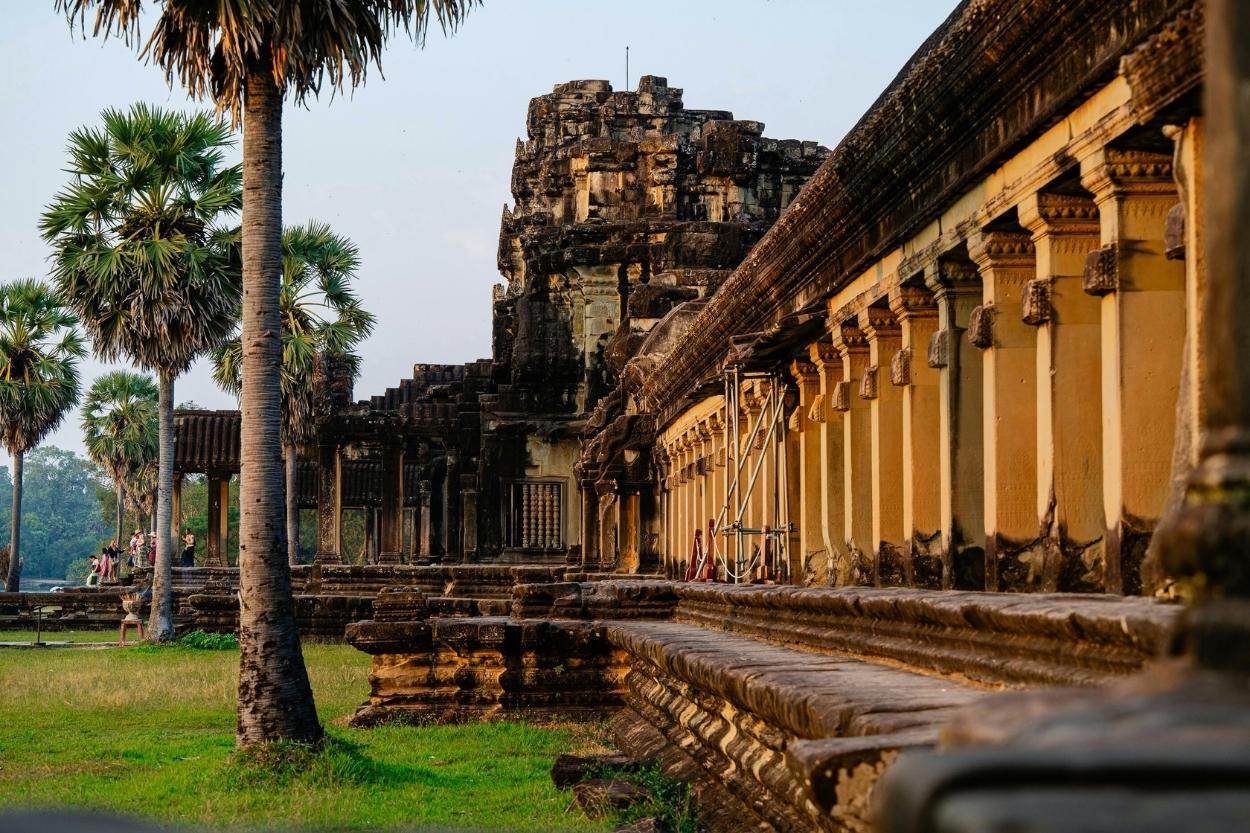
Angkor Wat
Things to see at Angkor Archaeological Park
Angkor Archaeological Park covers a huge 400 square kms. It’s home to 72 major temples you can visit as well as numerous smaller features (monuments, bridges, barays, etc) in between.
Here are some of the highlights you can expect to see during your visit:
1 | Angkor Wat
📍Angkor Wat is the main attraction at Angkor Archaeological Park. The world’s largest religious monument appears on Cambodia’s national flag, and its name has become synonymous with the ancient city itself.
Built in the 12th century, the temple took 28 years to build and was originally Hindu, dedicated to Vishnua. It was constructed during the height of the Khmer Empire, shortly before Buddhism became the main religion. Many of its sculptures have been altered to reflect this change.
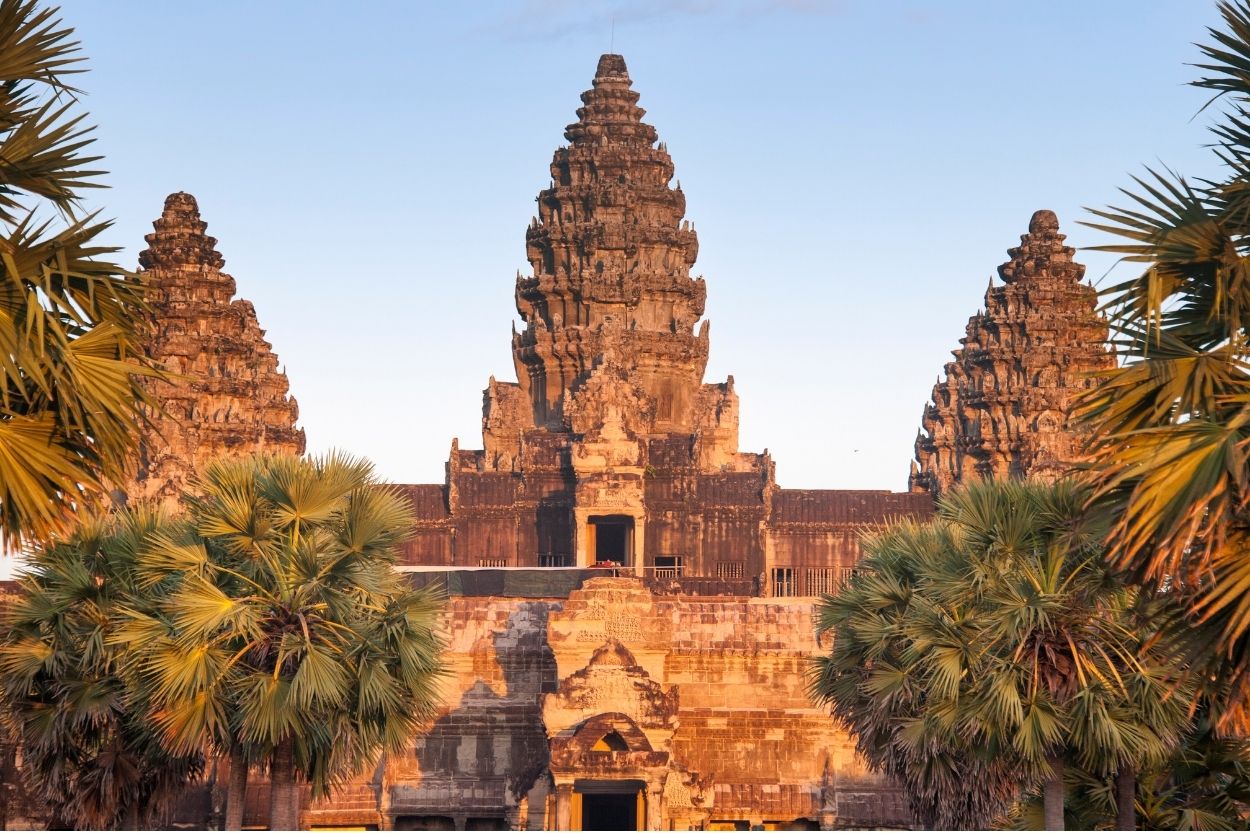
The temple today is in great condition. Visitors are free to explore the outer grounds, courtyards, and central sanctuary, including climbing the stairs to the upper level which offers great views of the rest of the complex.
2 | Bayon Temple
Another one of the most popular sites at Angkor is the 📍Bayon Temple.
Built in the late 12th and early 13th centuries, the Bayon Temple was created after the Khmer Empire had converted to Buddhims. Unlike most others at Angkor, its not a Hindu temple that was later converted, but rather one of the few explicitly Buddhist Temples in the city.
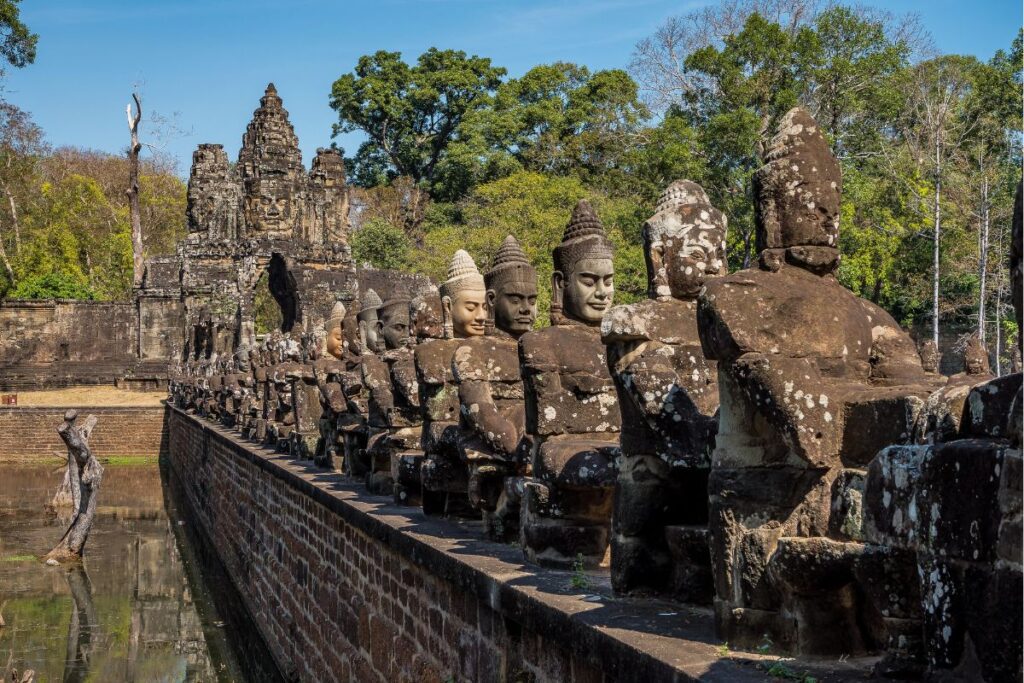
The temple is known for its large stone towers with carved smiling faces, which are believed to represent either the Buddha or Jayavarman VII, the first Buddhist Khmer ruler.
The temple complex also contains interesting reliefs depicting warfare, religion and everyday life in the Khmer Empire.
3 | Bakheng Temple
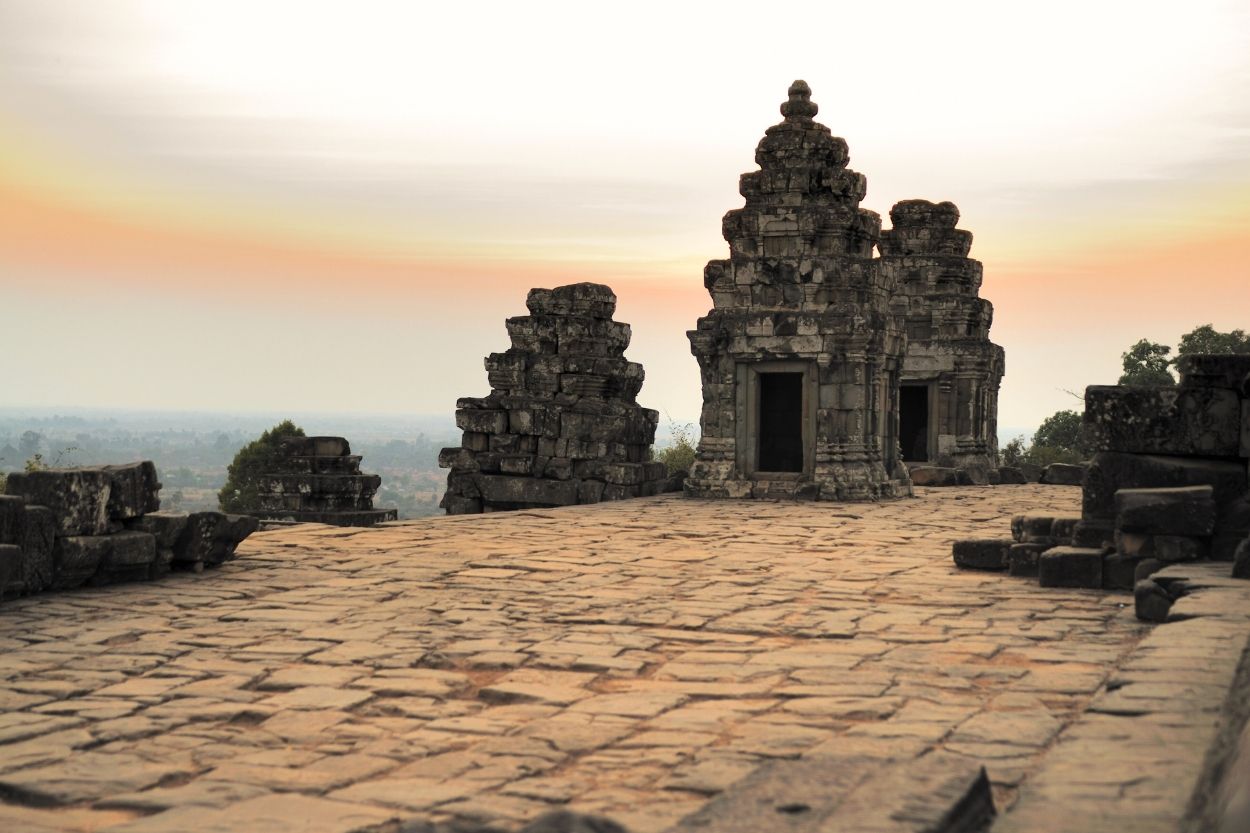
When the first capital at Angkor was established in the late 9th century, one of its earliest major monuments was 📍Bakheng Temple.
Built on a hill overlooking the surrounding plain, it became the main state temple of the Khmer Empire for around two centuries, before Angkor Wat was constructed. Like many of the earlier temples at Angkor, it was originally Hindu and later changed to Buddhist.
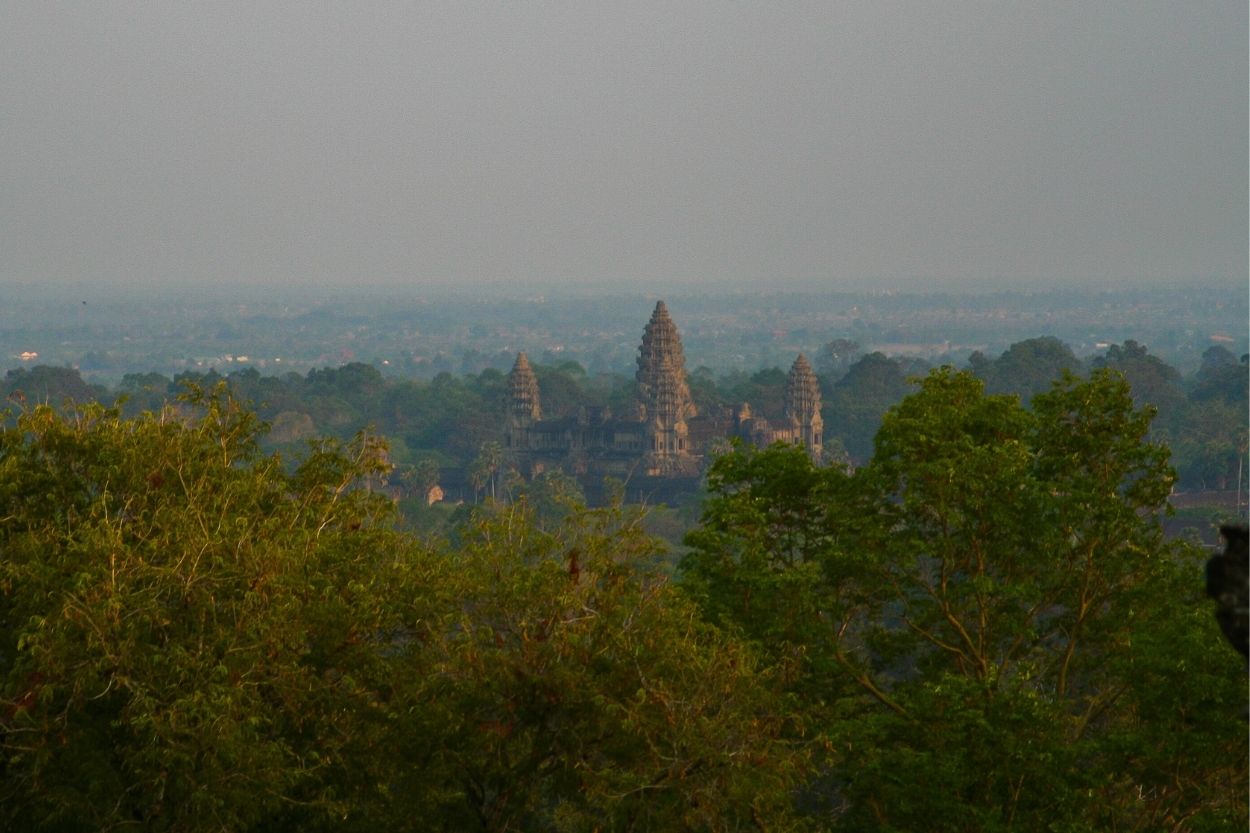
Today, Bakheng is best known for its amazing views over the rest of the archaeological park. From one side its a great place to view the sunset, and from the other you can catch a glimpse of Angkor Wat rising above the jungle.
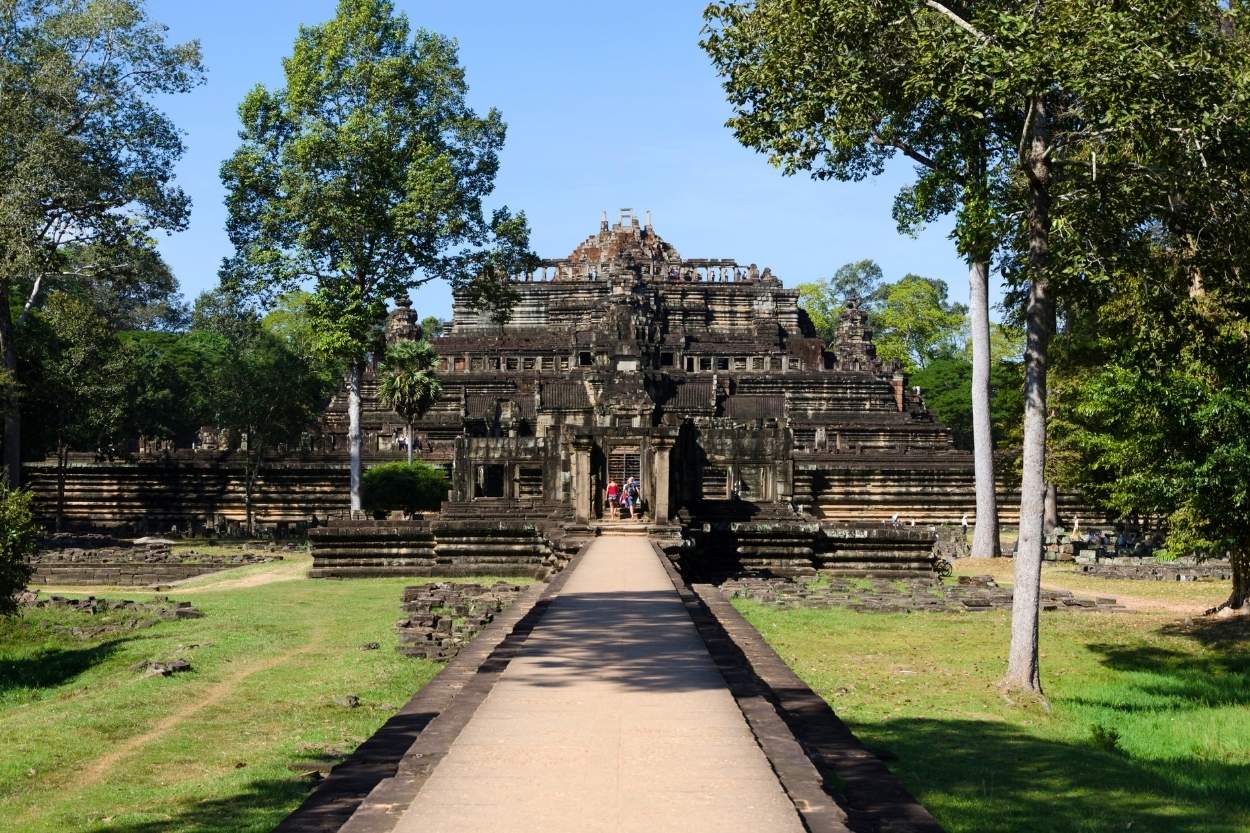
4 | Baphuon Temple
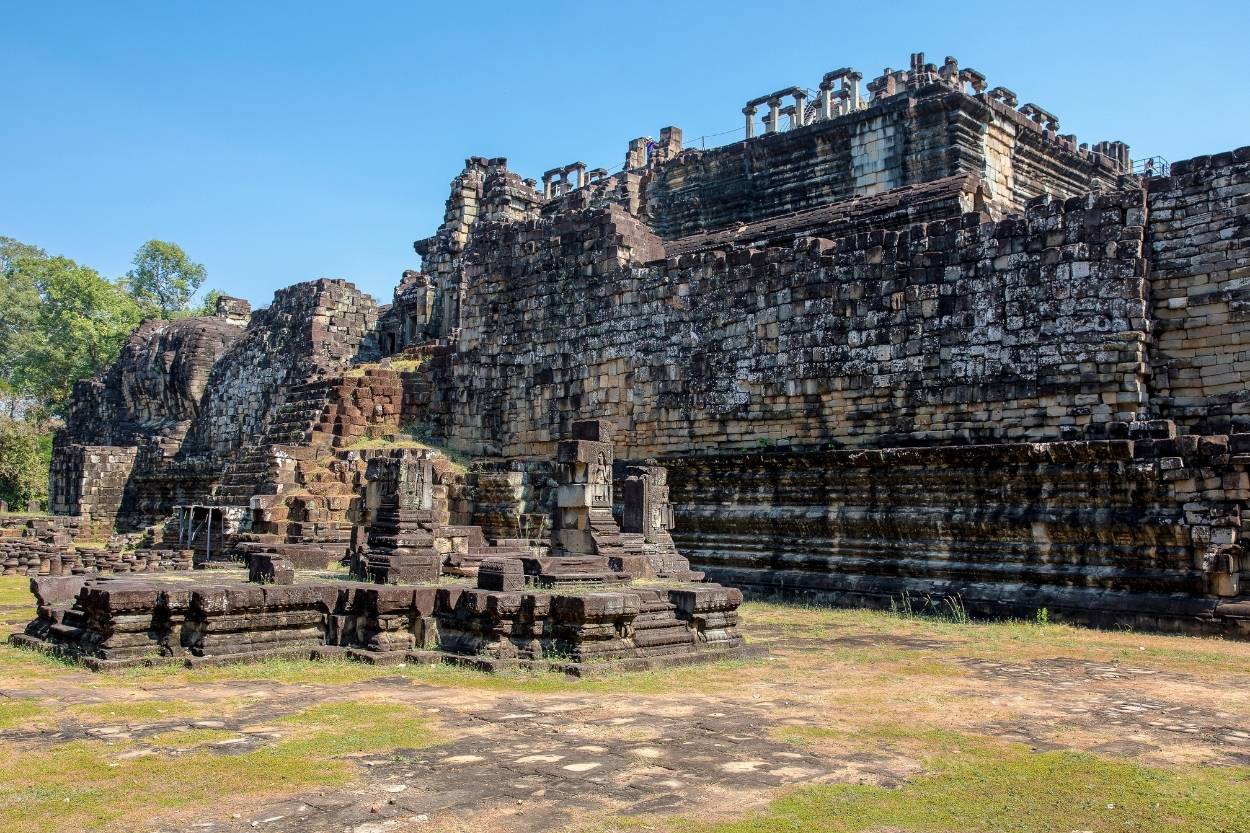
📍Baphuon Temple is a massive pyramid-like temple built in the 11th century, originally dedicated to the Hindu deity Shiva before later being converted into a Buddhist temple.
Because it was built on unstable sandy ground, much of the structure collapsed over the centuries and was left in ruins. A huge restoration effort, carried out over several decades, eventually rebuilt the temple stone by stone and returned it to much of its former form.
Today, visitors can climb the steps and explore the reconstructed inner sanctuary.
5 | Ta Prohm Temple
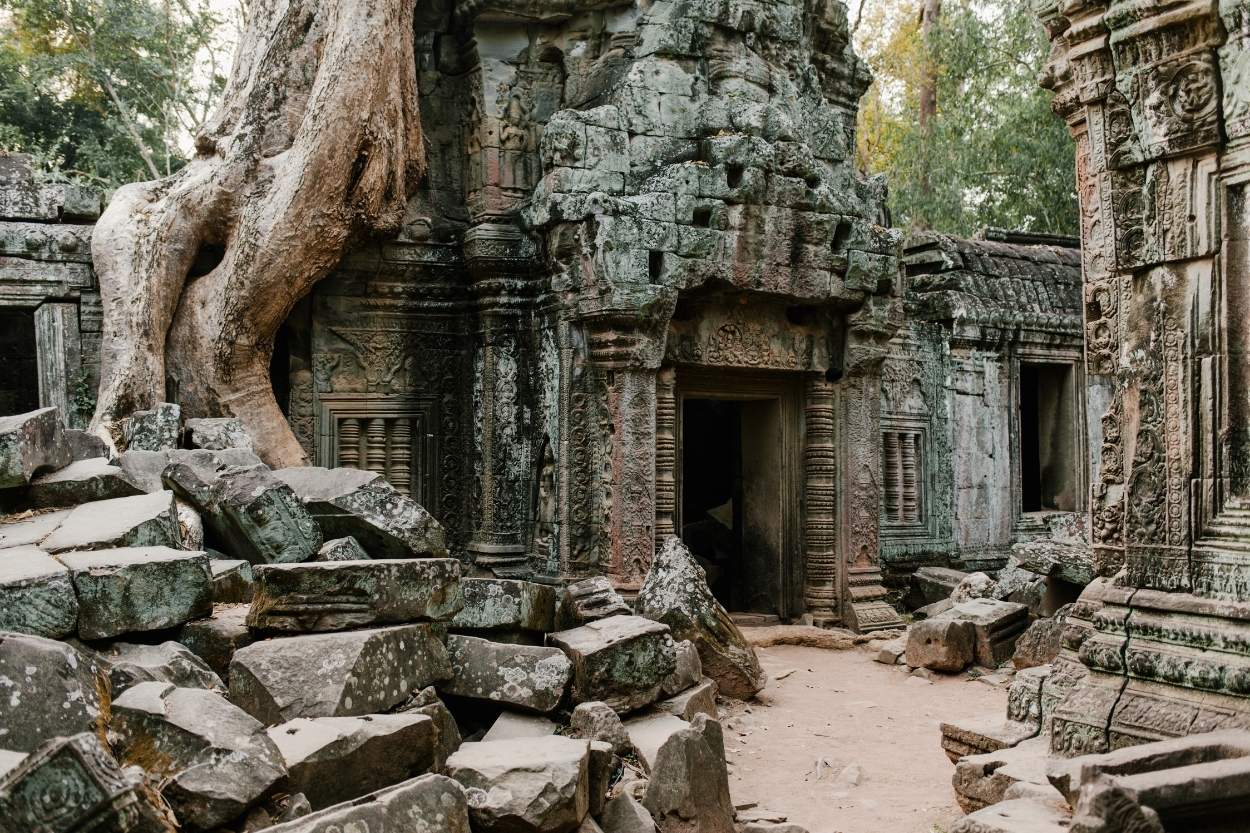
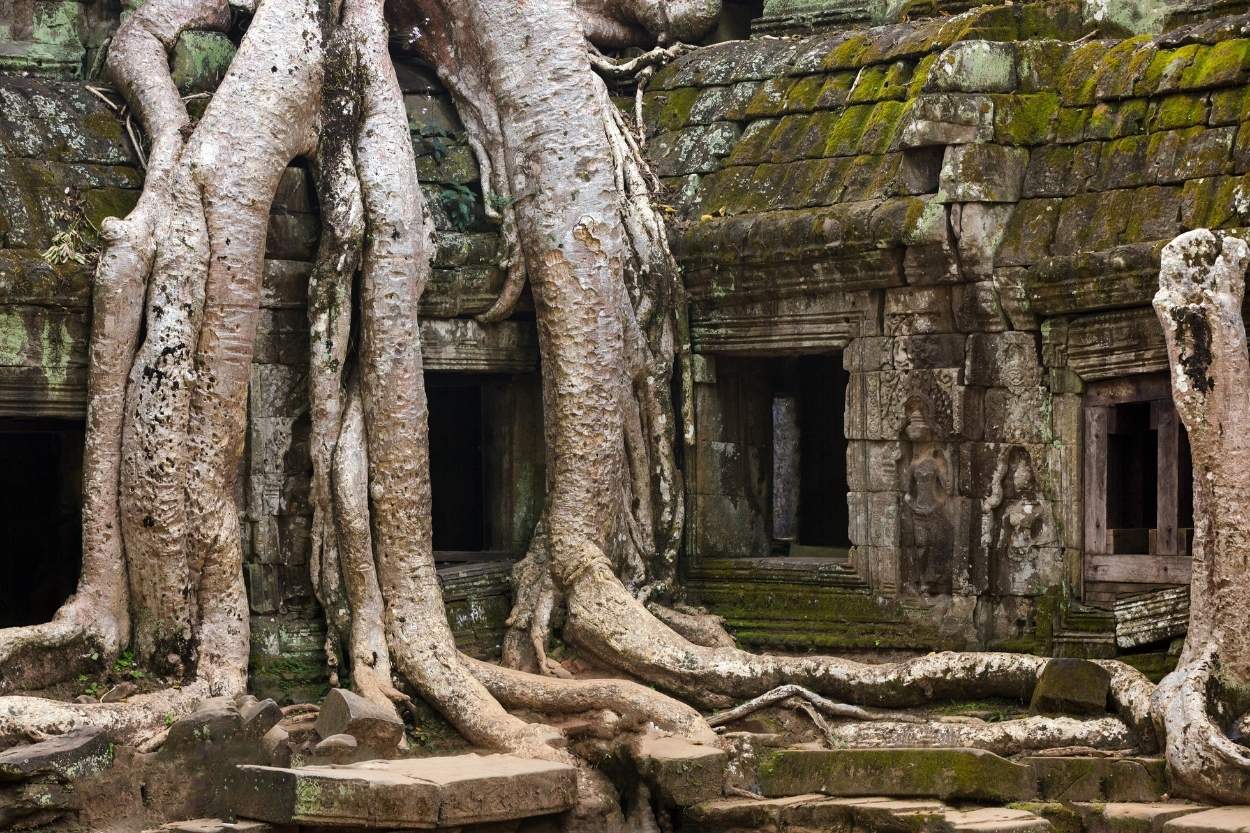
If you’re seeking a ‘lost city‘ experience at Angkor Archaeological Park, look no further than 📍Ta Prohm.
Built in the late 12th century during the reign of Jayavarman VII, it was established as a Buddhist monastery and centre of learning, supporting a large religious community.
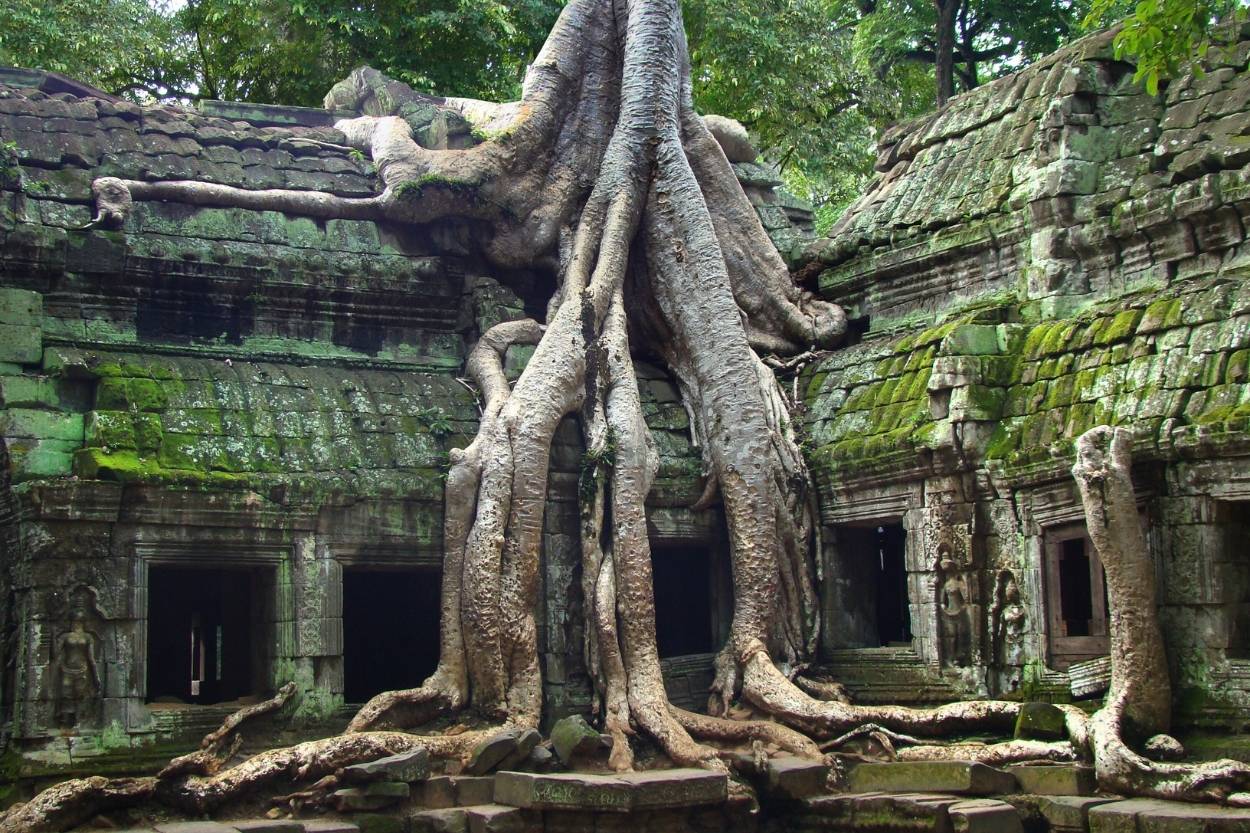
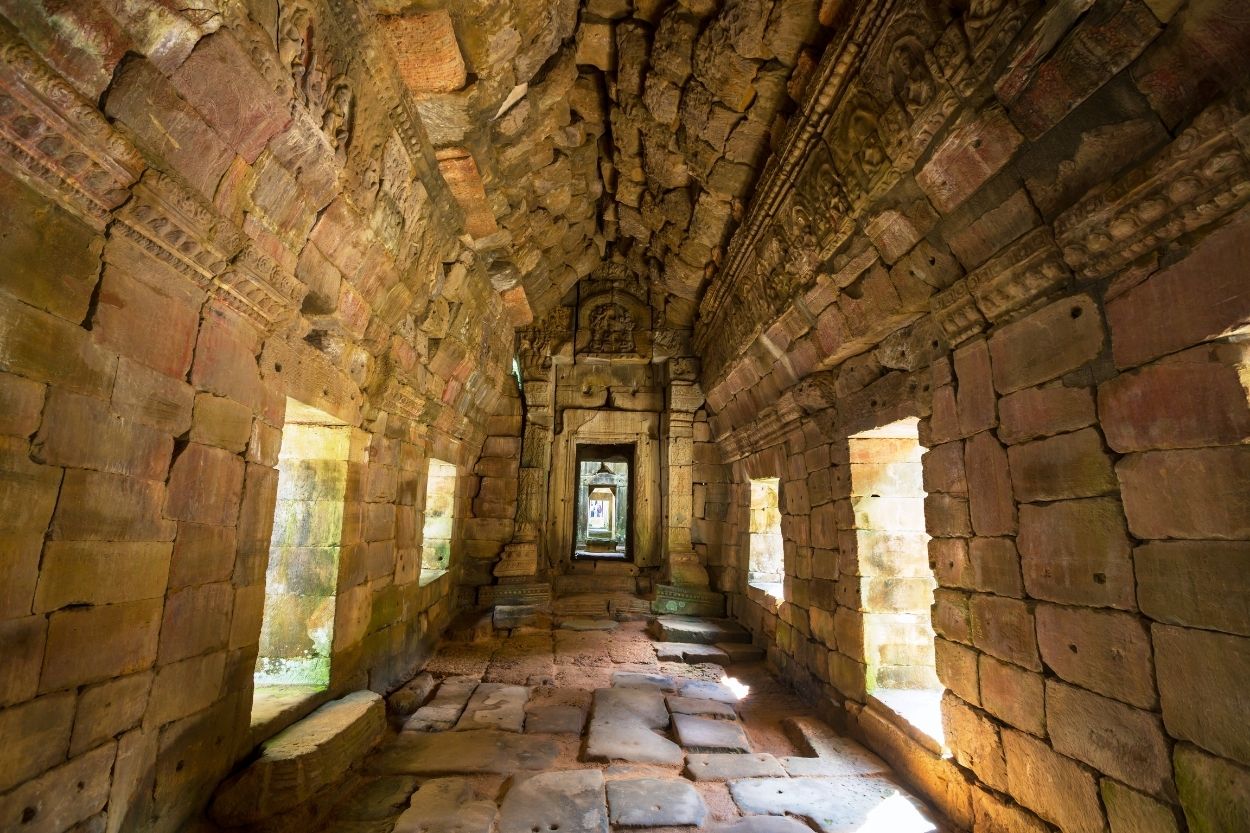
Today, the former monastery has been overtaken by the jungle, with the massive roots of the trees merging with the stone structures.
It was famously one of the locations used in the 2001 Lara Croft: Tomb Raider movie.
Where is Angkor Archaeological Park?
📍Angkor Archaeological Park is located in the north-west of Cambodia, just outside the city of Siem Rap.
The park itself covers a huge area of more than 400 square kilometers.
Ta Prohm
How to reach Angkor Archaeological Park
Most visitors stay in Siem Reap and travel to the park from there. The main entrance to Angkor Archaeological Park is about 15–20 minutes from the city centre by road.
The most common way to get there is by tuk tuk, which can be hired for a full day and serves as your transport around the park. This is the most practical option for most visitors, as the park is huge and the sites spread far apart.
You can also rent a bicycle if you want to explore on your own, though this may not be a great option if you’re visiting during the summer, as you’ll be riding long distances in the intense heat.
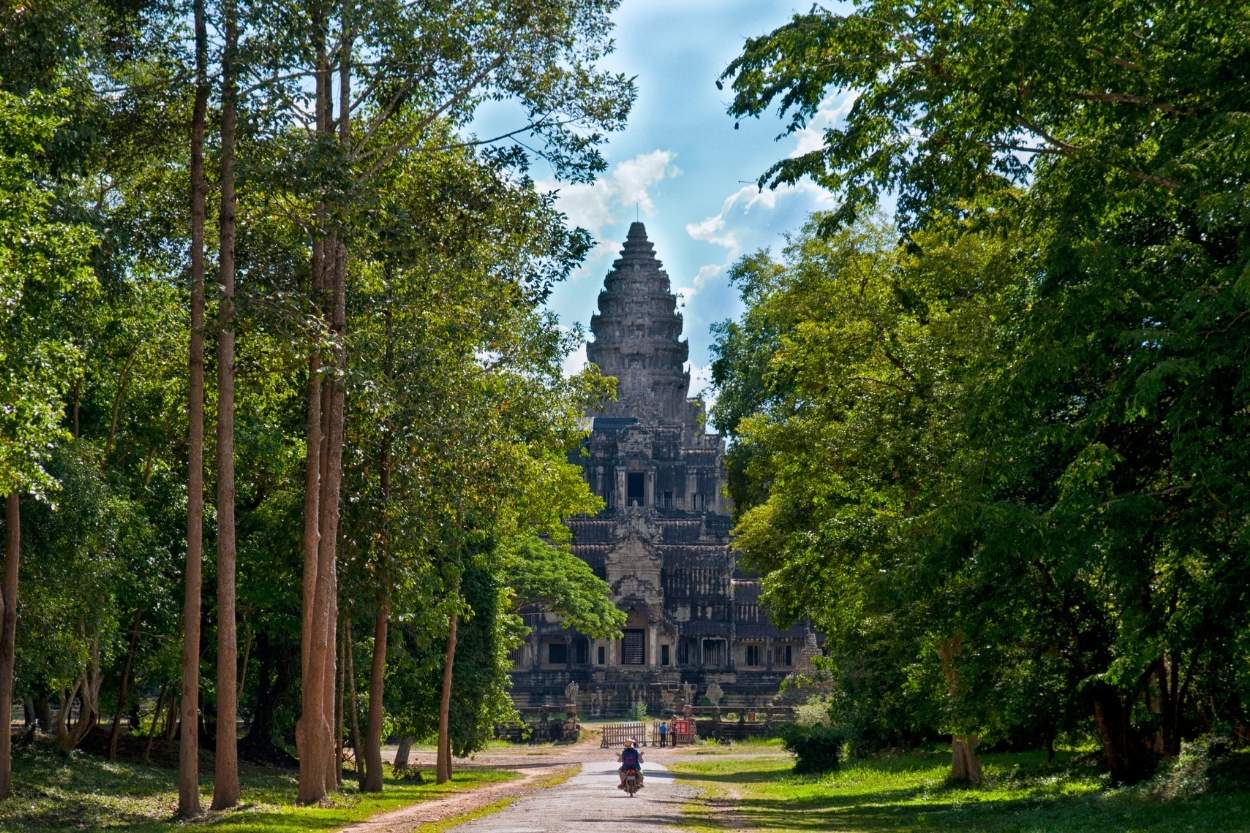
The road into Angkor Wat
Angkor Archaeological Park Ticket Info
Where to buy your ticket
You must purchase your ticket to Angkor Archaeological Park BEFORE visiting. You cannot purchase one at the front entrance.
There are 3 types of Angkor Archaeological Park tickets, depending on how long you want to spend exploring the ancient city:
1 Day Pass – $37 USD
3 Day Pass – $62 USD (expires in 7 days)
7 Day Pass – $72 USD (expires in 30 days)
The 3 Day and 7 Day passes last for 7 days and 30 days, respectively, allow you to spread your visit out over non-consecutive days. The 1 Day Pass must be used on the selected day only.
Which ticket should you buy?
With 1 day you’ll have enough time to visit all the highlights, but if you want to get the most out of your visit I suggest getting the 3 Day Pass so you can come back and see the places you couldn’t fit on the first day.
Angkor Wat
Getting Around Angkor Archaeological Park
The Angkor complex is huge, covering 400 square kms, so in addition to transportation to the site you’ll also need transportation within the site.
The most convenient option is hiring a tuk tuk. For around $20 to $30 USD, depending on distance (and your haggling skills), a driver will usually pick you up from your accommodation, take you around the main temples, wait while you explore each site, and return you to Siem Reap afterwards.
Finding a driver is easy in Siem Reap. Angkor is the city’s main attraction, so most tuk tuk drivers offer temple circuits, and hotels can usually arrange one for you as well.
Alternatively, you always book a guided tour which will cover all your transport to, and within, the park.
Sunrise & Sunset at Angkor
Watching the sunrise and sunset are 2 of the most popular experiences at Angkor Archaeological Park. I highly suggest planning your visit around them.
The best place to watch the sunrise is Angkor Wat. Specifically, the 📍reflecting pool near the front entrance of the inner sanctuary, where crowds often gather at dawn to watch the silhouette of the temple appear behind the pool.
The best place for the sunset is at 📍Bakheng Temple, which is located on a hilltop overlooking the park. From one side you can watch the sunset, while on the other you can view the towers of Angkor Wat rising above the jungle.
Angkor Wat, viewed from Bakheng Temple
Angkor Archaeological Park FAQs
What's the difference between Angkor Archaeological Park vs Angkor Wat ?
Angkor Archaeological Park refers to the remains of the entire medieval city of Angkor. Angkor Wat (wat means temple) is a temple within the former city. The temple is so famous that its name is often used to refer to the entire archaeological site.
How long should I spend at Angkor Archaeological Park?
At least one full day is needed to see the main highlights at Angkor Archaeological Park, but 2 to 3 days is recommended to get the full experience.
Are there toilet facilities in Angkor Archaeological Park?
Yes, public toilet facilities are available at the main temple areas.
Is there food available in Angkor Archaeological Park?
Yes, there are some small restaurants and food stalls near the major sites inside the park.
Are there dress codes at Angkor Archaeological Park?
The structures you’ll be visiting at Angkor Archaeological Park are mostly Hindu or Buddhist temples. While they may not be in active use, modest dress is still expected, with shoulders and knees covered. If you don’t want to be overdressed for the heat, at least bring something you can put on when entering temples.
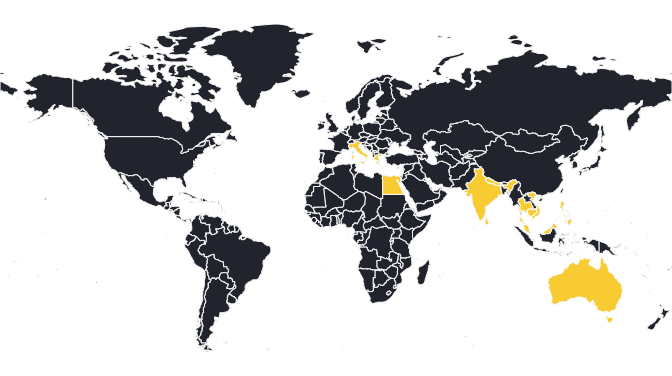
I’m Aaron, a travel blogger specialising in historical destinations. From the pyramids of Egypt, to cave temples in India, to Khmer ruins in SEA, I travel the world visiting the top historical sites and I’m here to help you do the same.