A travel blogger 5+ years of experience exploring historical destinations around the world.
Last updated on March 7, 2026
Beneath Cambodia’s serene tropical paradise, with its beautiful beaches and ancient ruins, lies a dark and tragic past.
From 1975 to 1979 Cambodia was ruled by the brutal Khmer Rouge regime. In just 4 short years, they committed atrocities that would wipe out almost 25% of the county’s population, around 2 million people.
All cross the country, the former prisons and ‘killing fields‘ of the Khmer Rouge have been converted into museums where visitors can learn more about these events. The two most popular sites can be found in Phnom Penh: Tuol Sleng (S21) and Choeung Ek.
It may seem odd for these to be tourist attractions, but visiting them is encouraged by the Cambodians, as they offer a confronting but important insight into the country’s modern history.
In this guide you’ll find everything you need to visit these dark tourism sites, including what to see, how to get there, and more.
Contents
History of the Khmer Rouge
The Khmer Rouge (rouge being French for red) were a communist guerrilla movement that grew from the jungles of Eastern Cambodia in the 1960s.
Supported by North Vietnam, they grew rapidly, especially as heavy US bombing in the region motivated locals to sign up.
After taking swaths of countryside, the Khmer Rouge captured the capital of Phnom Penh in 1975, and established Democratic Kampuchea.
Led by man named Pol Pot, the Khmer Rouge has a vision of an agrarian communist utopia, and believed society needed to be remade from the ground up to achieve it.
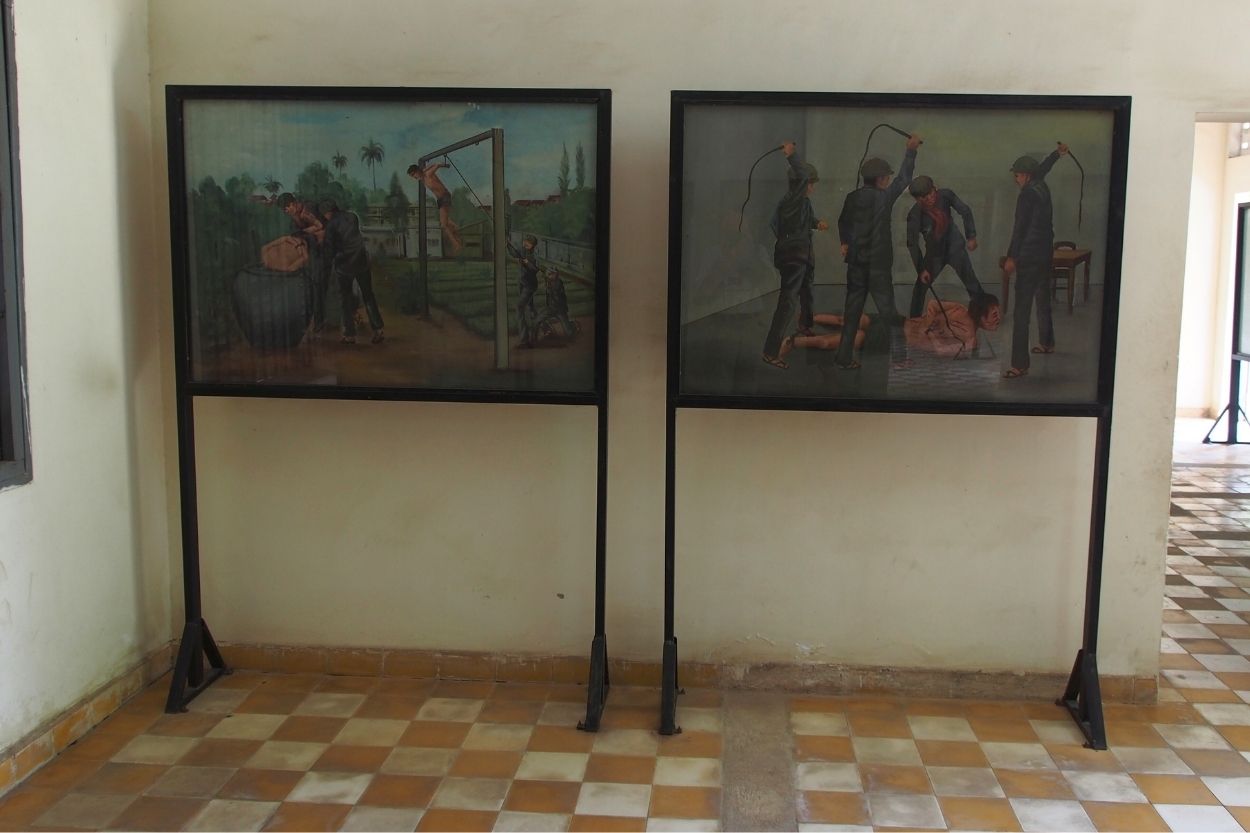
Depictions of the Khmer Rouge, at S21
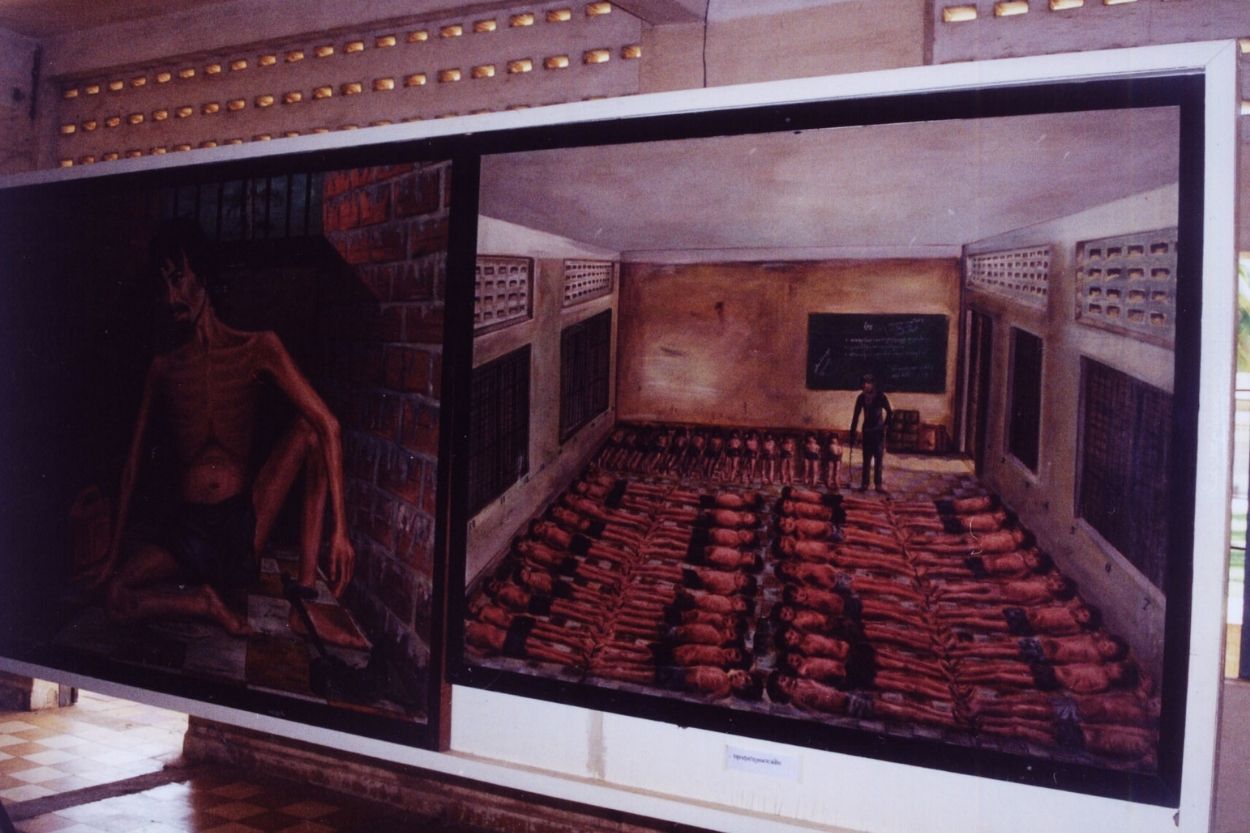
Immediately, cities were emptied and the population were moved into farm communes – essentially labour camps. Money was abolished, religion banned, schools closed, and anyone considered an enemy to the utopia were imprisoned, tortured and often executed.
The label of ‘enemy‘ covered a wide range of people. Aside from ethnic minorities, an enemy was anyone considered educated. Doctors, engineers, scientists, teachers, pretty much anyone who wasn’t a farmer, were systemically killed. Even wearing glasses could have you labelled as ‘educated’ and therefore get you killed.
By 1979 up to 2 million people (around a quarter of the population) were killed from either execution, starvation, disease, or forced labour.
The regime was so savage that even their former supporters, Mao’s China and North Vietnam, turned against them. Ultimately, the newly united Vietnam invaded rid the Cambodia of the Khmer Rouge, but pockets of resistance still held out until the late 1990s.
Depictions of the Khmer Rouge, at S21
After their fall, there was no Nuremberg-style trial where the regime’s crimes were condemned. In fact, the UN still recognised the Khmer Rouge as Cambodia’s government until 1993 and it was only in 2022 when a mere 3 convictions were made against members of the regime.
Cambodia is still recovering from the Khmer Rouge. Unsurprisingly, it takes a long time to rebuild society when you’ve lost most of your educated population. This is one of the reasons why Cambodia, economically speaking, still falls behind neighbouring Thailand and Vietnam.
Tuol Sleng Museum (S21)
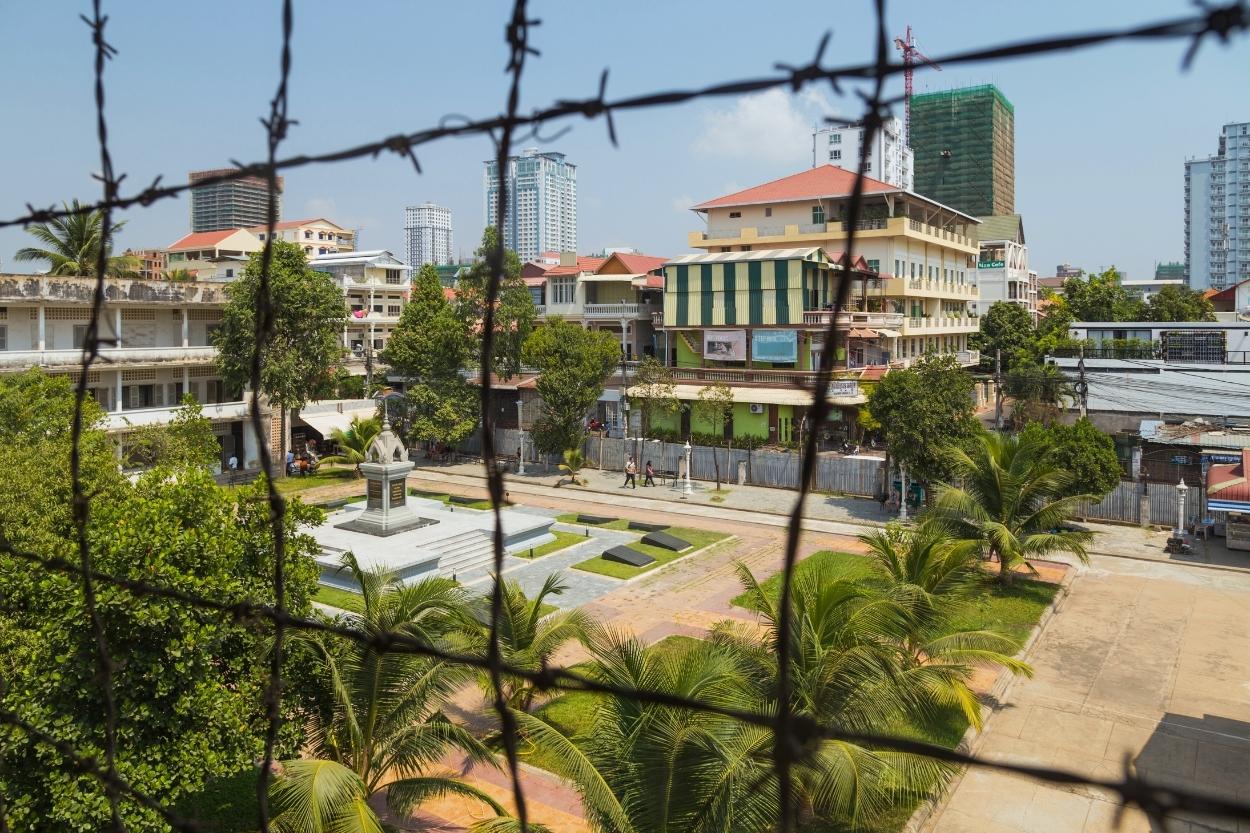
Tuol Sleng/S21
About Tuol Sleng
Originally a high school, this site, known as Security Prison 21 (S21), was one of roughly 150 to 196 prisons and torture centres operated by the Khmer Rouge during its rule, though the exact number remains uncertain.
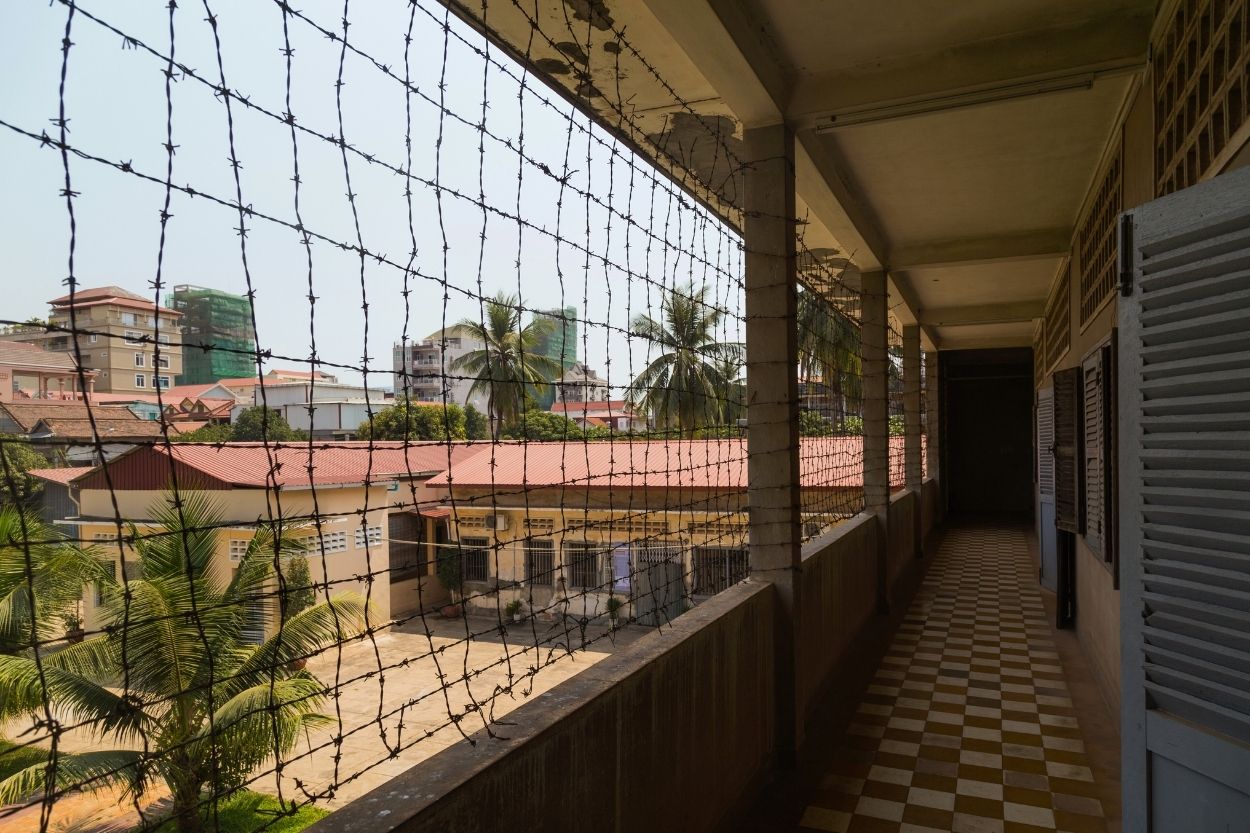
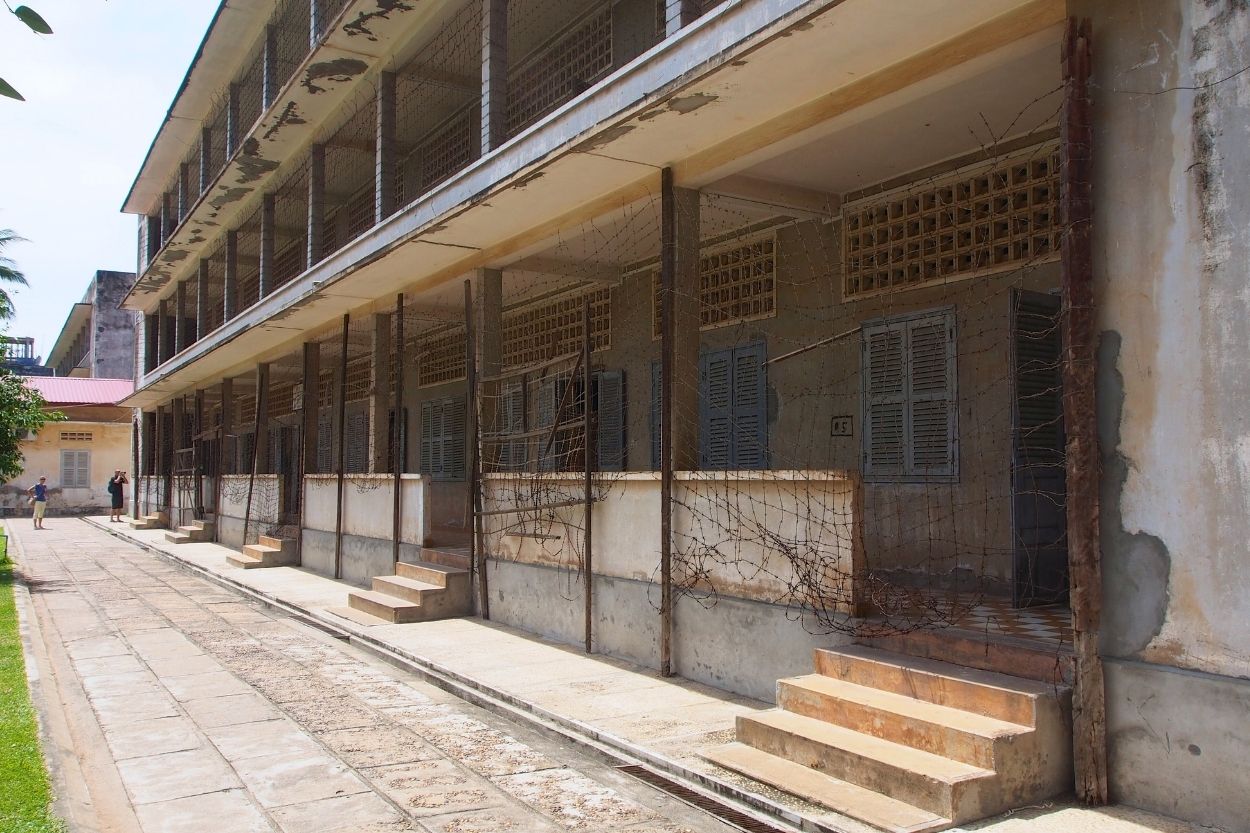
The school was transformed into a prison: classrooms became cells and torture rooms, windows were covered with iron bars, and the grounds were enclosed with electrified barbed wire.
Those identified as enemies of the new utopia were brought here to be interrogated and tortured until they confessed or named relatives, friends, and associates-many of whom were then arrested as well.
During the regime’s four-year rule, an estimated 20,000 people were imprisoned at S21. Only 7 are known to have survived. Almost everyone else were taken to Choeung Ek and executed.
After Phnom Penh was captured by the Vietnamese army in 1979, S21 was quickly preserved as a museum and has remained open to visitors ever since. A reminder of what the regime did.
In 2010, the prison’s commandant, Kang Kek Lew, became one of the few senior regime figures convicted for crimes committed under Khmer Rouge rule.
Tuol Sleng/S21
Visiting Tuol Sleng
After buying your ticket, you can begin exploring the former school grounds. The 4 buildings each present a different side to the prison’s history.
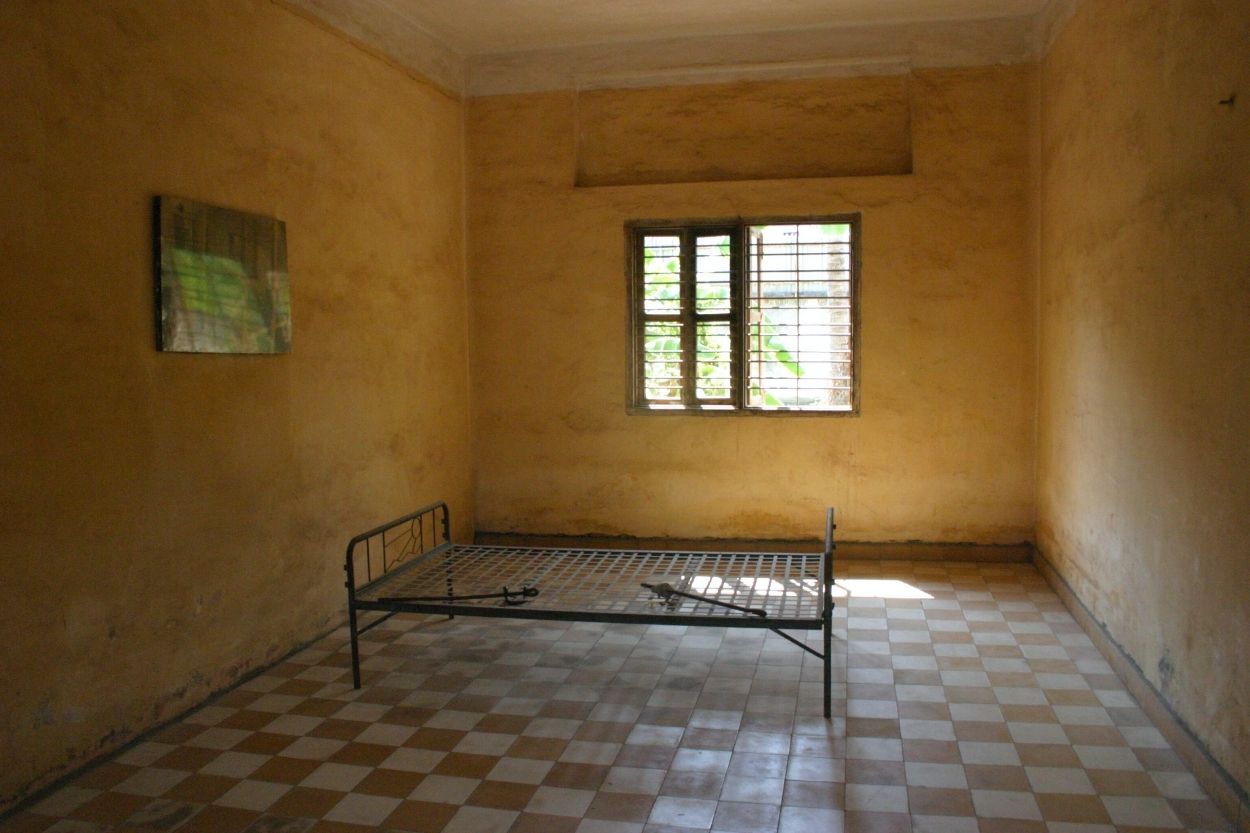
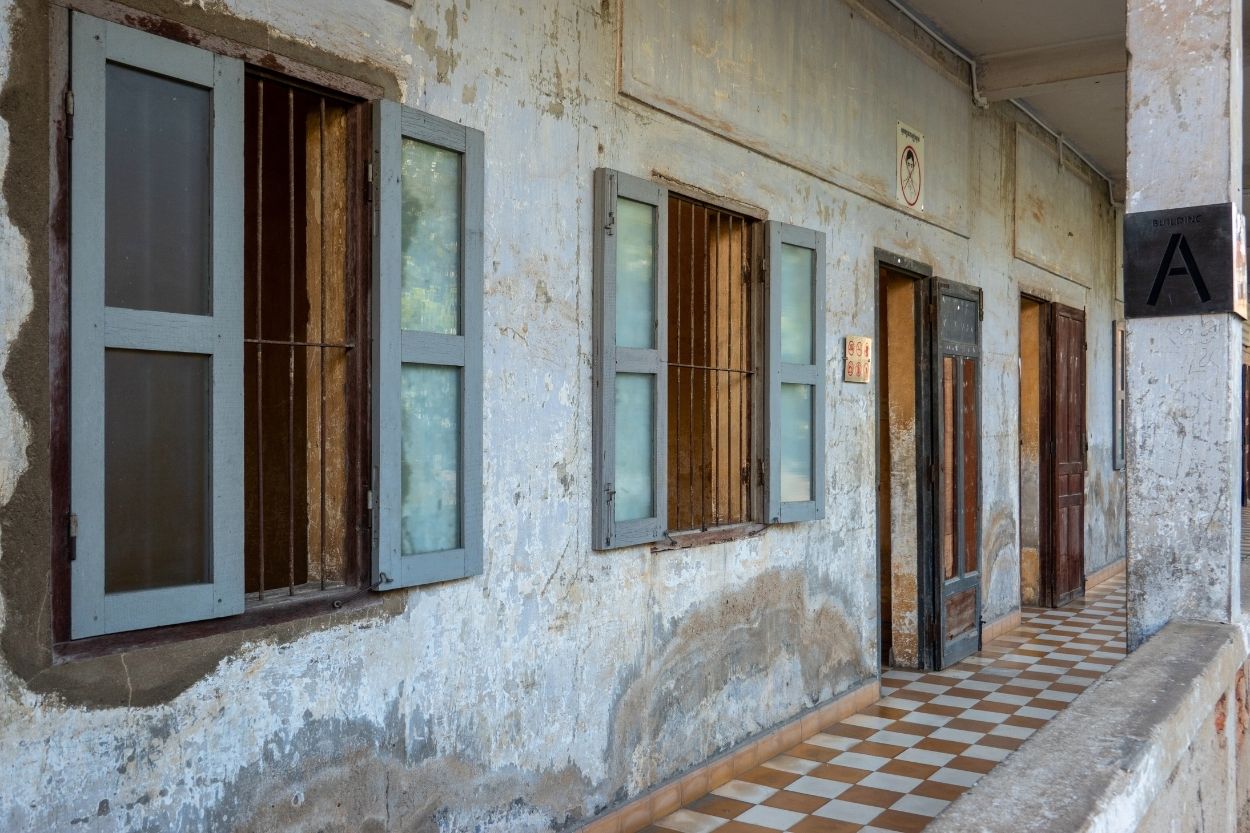
Building A contains rooms preserved much as they were when S21 was operating, including the metal bed frames where prisoners were shackled during interrogation.
Building B serves as a gallery, with walls lined by black-and-white photographs taken of prisoners when they arrived.
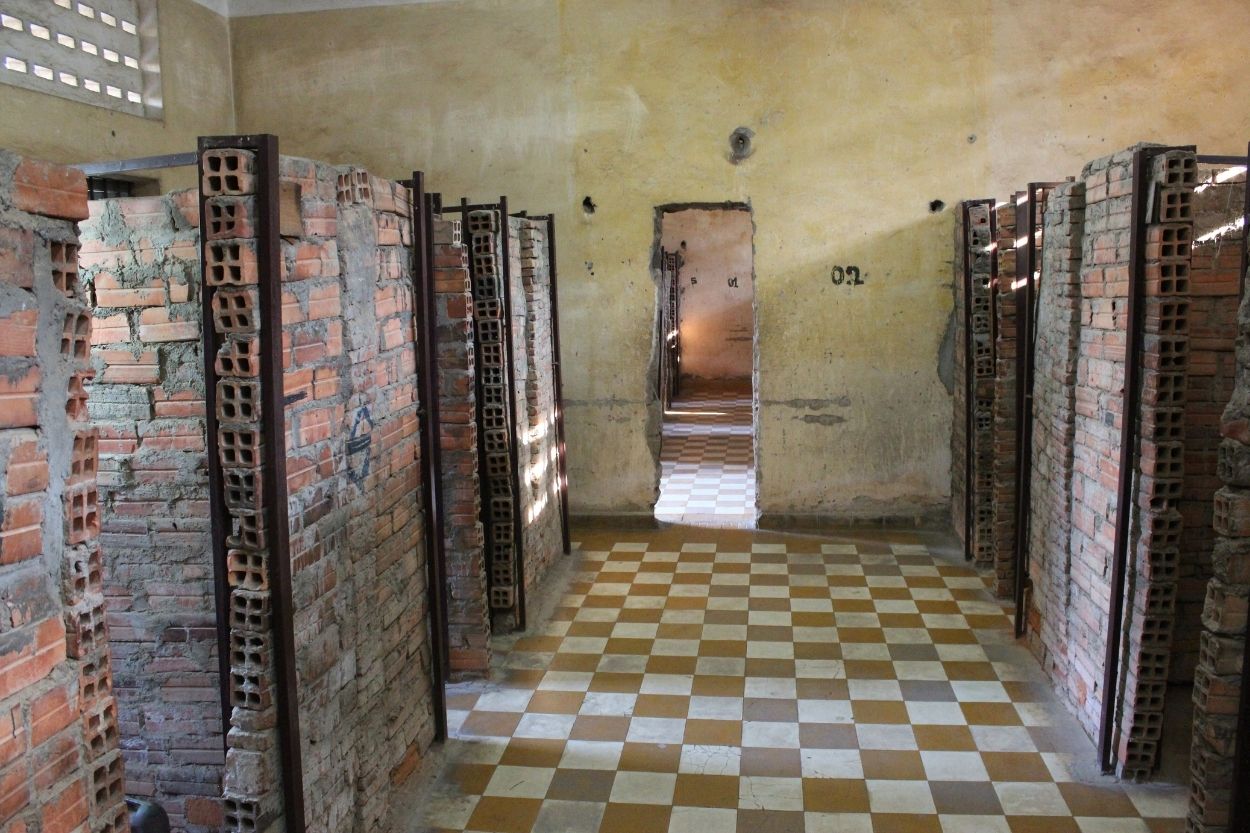
In Building C, many of the classrooms have been divided into narrow wooden cells, showing how prisoners were confined in extremely cramped conditions.
Building D focuses on the prison’s methods of torture, with displays of equipment and explanations of how it was used.
On weekday afternoons, usually between 2:30 and 3:00 pm, the museum sometimes hosts a survivor testimony, where one of the prison’s few surviving former inmates shares his experience.
During my visit to S21, one of the prison’s survivors had set up a stall where they sold copies of their biography, detailing their horrific experience.
Tuol Sleng/S21
How to get to Tuol Sleng
📍Tuol Sleng Museum is located in downtown Phnom Penh and is easy to reach.
Depending on where you’re staying, you may be able to walk there. If not, a tuk tuk should only set you back a few dollars.
Tuol Sleng/S21
Tuol Sleng Tickets & Opening Hours
The Tuol Sleng Genocide Museum is open from 8am to 5pm, 7 days a week.
The entry tickets to Tuol Sleng are as follows:
$5 USD – Entry Only
$10 USD – Entry w/ Audio Guide
Planning to visit Cambodia soon?
🛏 Booking hotels: Trip.com and Booking.com are the best resources for finding and booking hotels in Cambodia.
🏄 Booking tours: GetYourGuide is the best resources for finding guided tours to Cambodia’s historical sites.
🚅 Booking transport:12Go is the best online resource for booking trains and buses in Cambodia, and Asia.
🏥 Travel insurance:Heymondo covers medical, theft, cancellations and more in Cambodia.
Choeung Ek
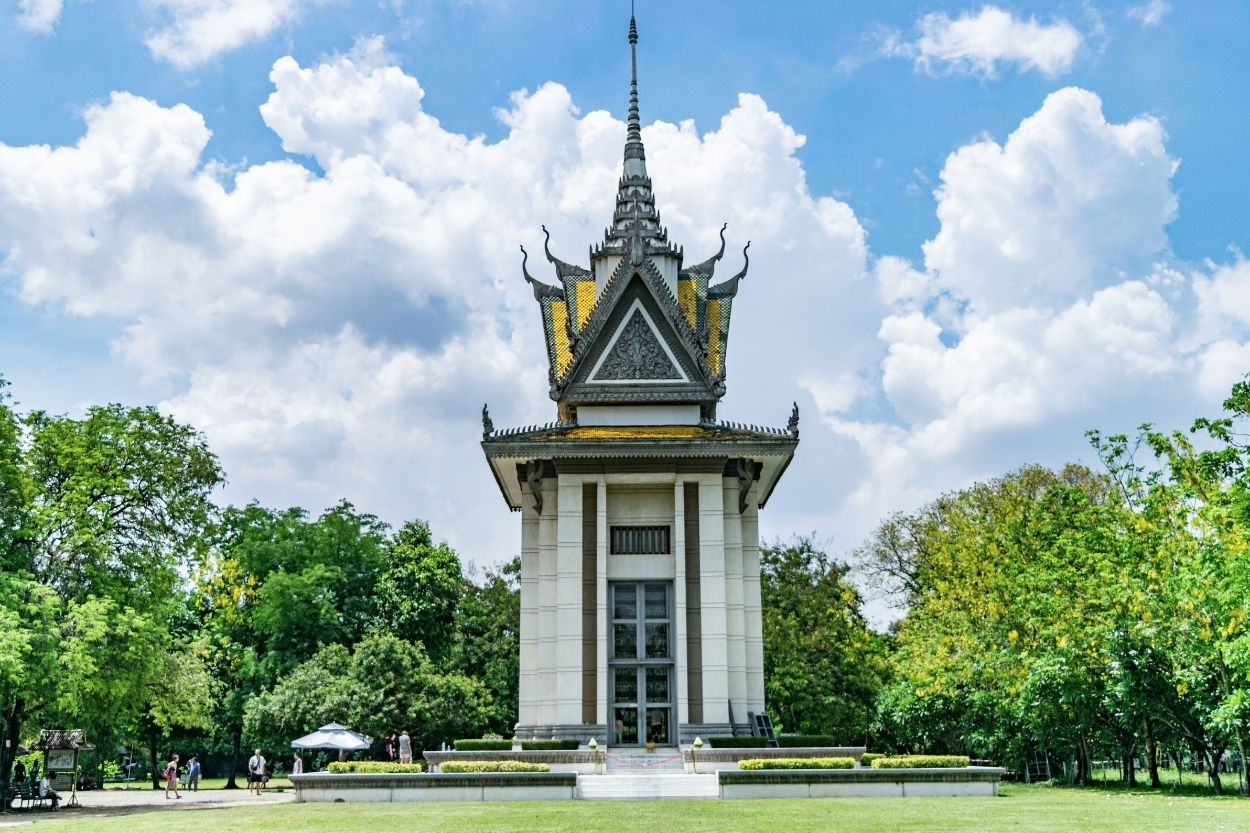
The memorial at Choeung Ek
About Choeung Ek
After prisoners were interrogated and tortured at S21, many were transported by truck to execution sites outside the city. As with the concentration camps of The Holocaust, the Khmer Rouge tried to keep these killings hidden from the wider public.
Choeung Ek Genocidal Center, once an orchard on the outskirts of Phnom Penh, became one of nearly 300 killing fields established across the country, where the regime carried out mass executions.
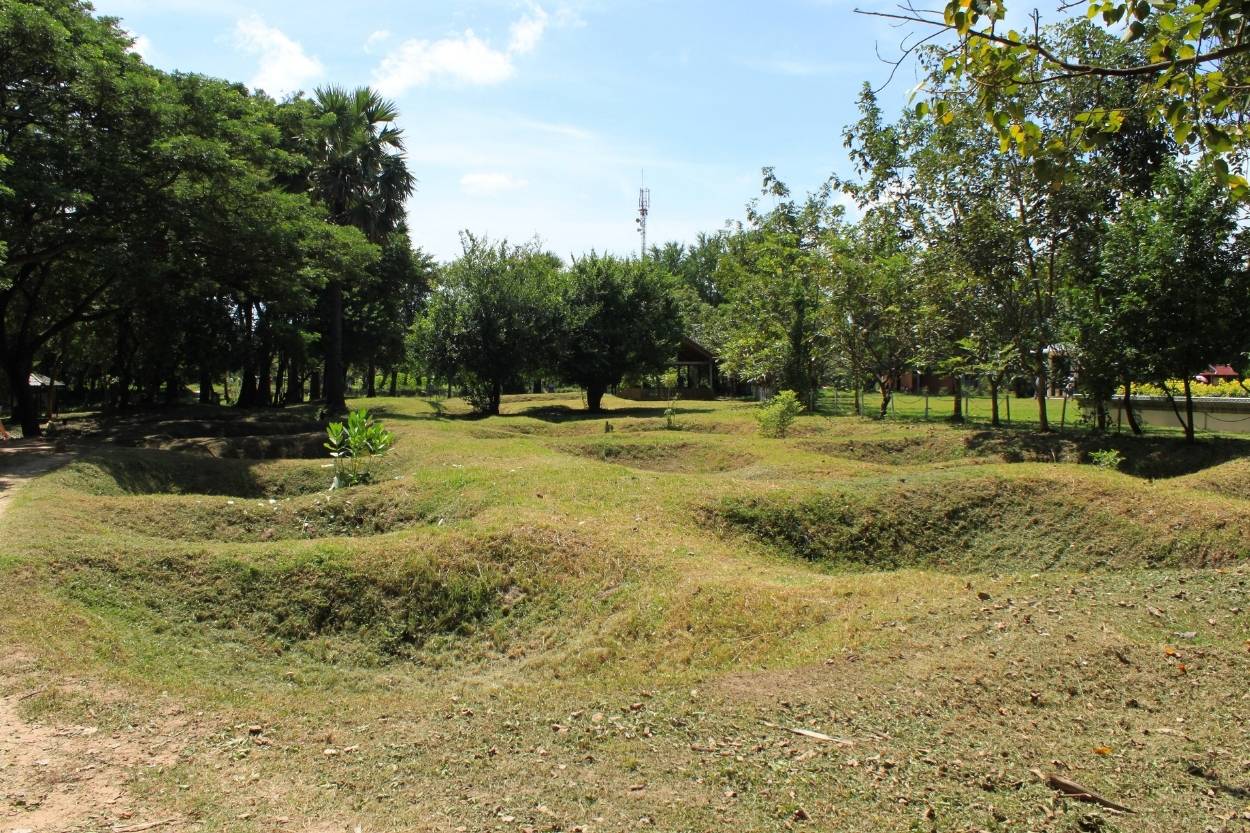
After the Vietnamese army overthrew the Khmer Rouge in 1979 and the scale of the atrocities became clear, almost 9,000 bodies were uncovered here in mass graves.
The victims, which included children, were generally blindfolded and had their hands-tired, before being executed using things like pickaxes, iron bars and farming tools to preserve ammunition.
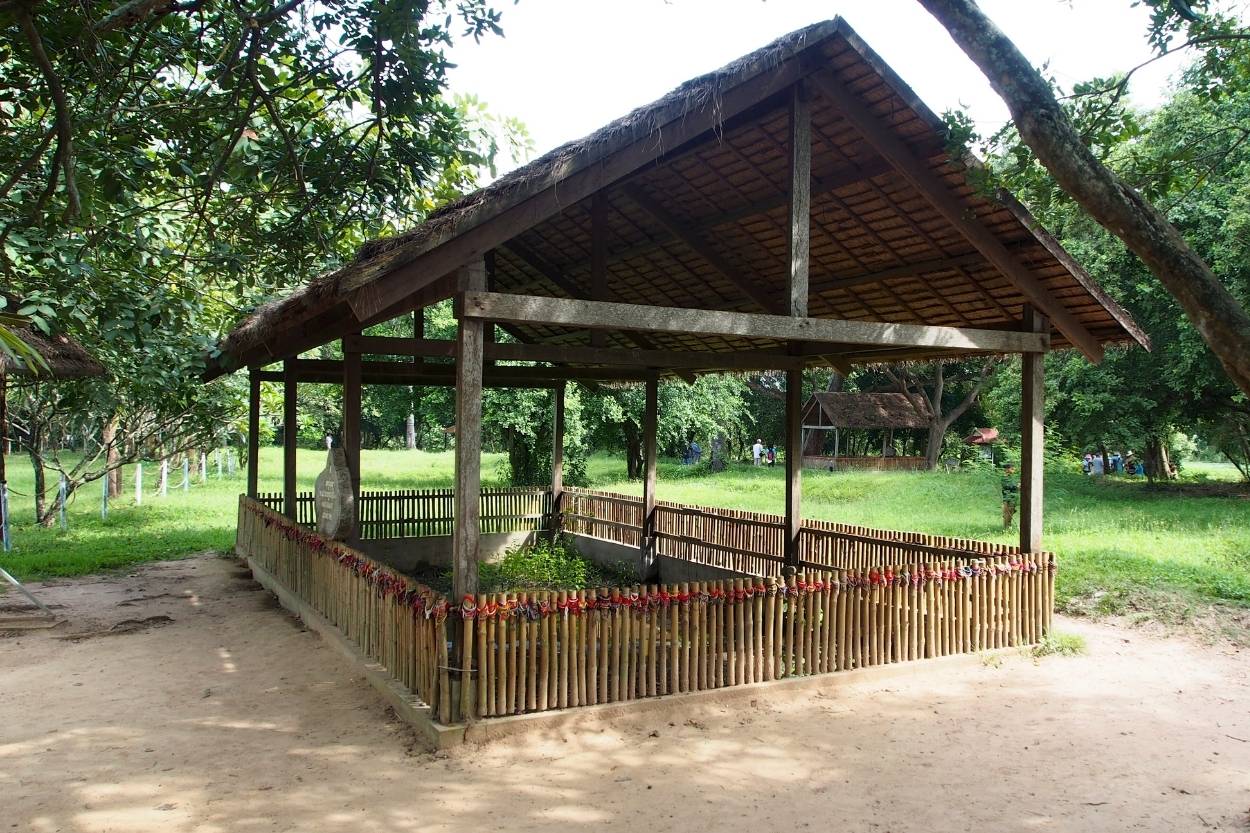
Mass Graves at Choeung Ek
Visiting Choeung Ek
Being the site where so many were brutally executed, visiting Choeung Ek is arguably even more confronting than Tuol Sleng Museum.
Upon entering, the first thing you’ll see is the central Memorial Stupa, a Buddhist monument which displays the skulls & bones of around 5000 of the victims who were dug up at this site.
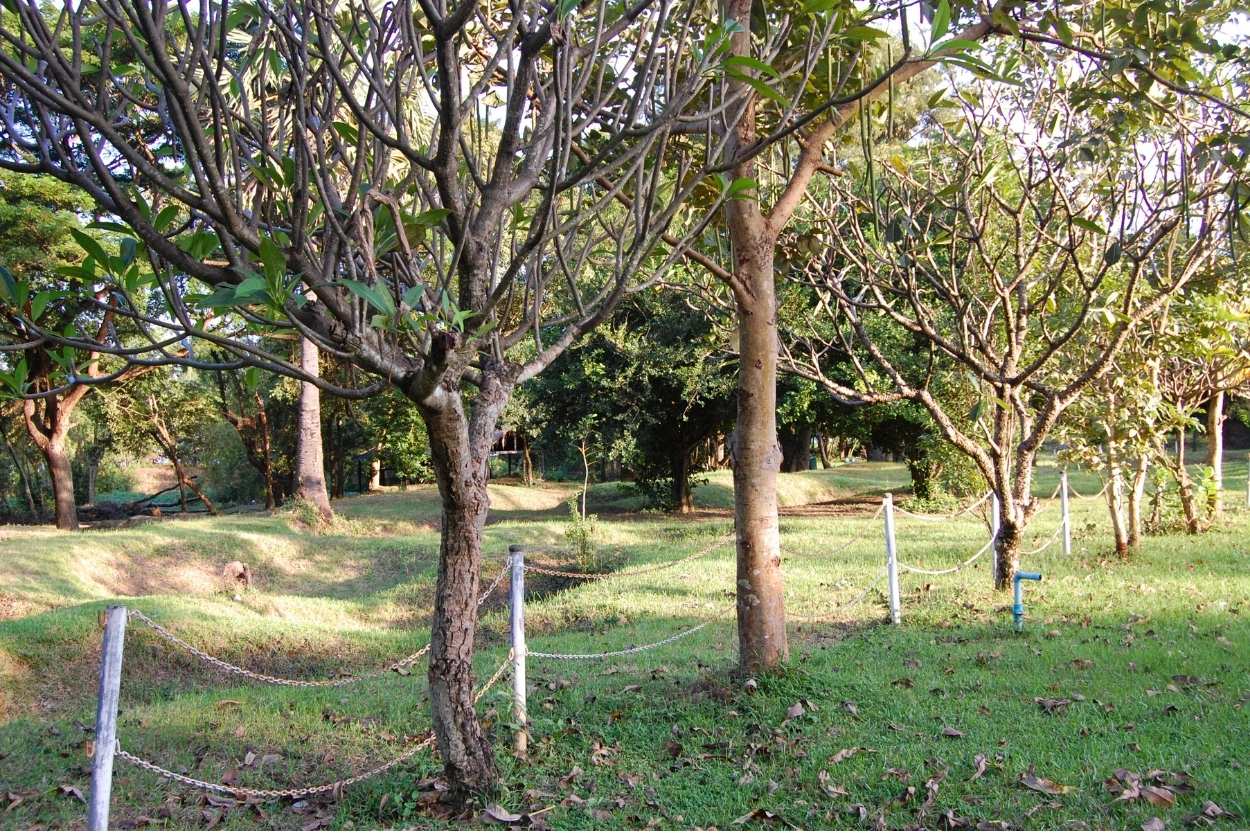
You’re then free to explore the grounds of this former killing field, and see the many exhumed massive grounds, some of which still contain human bones. After this, there’s also a museum. It’s not very big, but it does provide an insight into the Khmer Rouge, including attempts to convict those responsible for places like this.
Mass Graves at Choeung Ek
How to get to Choeung Ek
📍Choeung Ek is located further away, about 17 km south Phnom Penh city centre.
The most convenient way to reaching Choeung Ek is buy hiring a tuk tuk driver from the city. I suggest combining both S21 and Choeung Ek in the same trip.
There are also buses that can take you to Choeung Ek, but finding information on it can be difficult. Your best bet is to download the official City Bus Official App (Apple / Google Play), and look for a bus headed to Choeung Ek.
Mass Graves at Choeung Ek
Choeung Ek Tickets & Opening Hours
The Choeung Ek is open from 7am to 5:30pm, 7 days a week.
The entry ticket to Choeung Ek is $6 USD, which also includes an audio guide and headphones to use during the visit.
Tuol Sleng/S21
Tours to S21 and Choeung Ek
To get the best experience, I suggest visiting both sites in the same day, ideally starting with S21, followed by Choeung Ek.
However, both sites are located far from each other, with Choeung Ek being 17km from the city centre.
Finding a tuk tuk driver to take you to both is usually pretty easy in Phnom Penh. But if you want to take away all the hassle, there are plenty of guided tours available, which generally include:
Pick up from your hotel (or from a location in downtown Phnom Penh).
Entry to both sites.
Experienced guide to teach you about the sites during your visit.
Now that you have all the information on visiting S21 and Choeung Ek, it’s time to start planning your trip. Here are some resources to help you get started:
✈ Flights:Trip.com and Skyscanner are the best resources for finding cheap flights to Cambodia.
🚅 Transport: 12Go is the best online platform for booking trains and buses in Cambodia, and across Asia.
🏨 Accommodation:Booking.com is the best resource for finding amazing hotels in Cambodia, while Hostelworld is the best for finding hostels.
🏥 Travel Insurance:Heymondo covers all the essentials in Cambodia, including theft, medical and cancellations.
🛜 Internet: To stay connected in Cambodia, you can use Airalo. They offer an eSIM, meaning all you need is a smartphone and and the app.
🌐 VPN: To stay connected and access service that may not be available in Cambodia, use NordVPN.
🏄 Tours & Day Trips:GetYourGuide and Viator are the top platforms for tours and activities in Cambodia.
⬤ For more historical travel guides on Cambodia, check out our Cambodia page.
Welcome
I’m Aaron, a travel blogger specialising in historical destinations. From the pyramids of Egypt, to cave temples in India, to Khmer ruins in SEA, I travel the world visiting the top historical sites and I’m here to help you do the same.