If you search for a list of the world’s top historical sites, you’d be hard-pressed to find one that doesn’t include Pompeii.
Located just outside Naples, Pompeii is one of the world’s most important archaeological sites – an entire Roman city preserved beneath volcanic material for almost 2,000 years before being uncovered.
But as you begin planning your visit, you’ll quickly discover that Pompeii isn’t the only preserved Roman city at the base of Mount Vesuvius. Nearby lies Herculaneum, a smaller site that many claim is actually the better of the two.
So, which should you visit?
I’ve visited both Pompeii and Herculaneum, and in this guide I’ll compare the two sites to help you decide which deserves a place on your Italy itinerary. You’ll find a quick overview of the key differences, followed by a deeper dive into their history, attractions, ticket prices, opening hours, and more.
⭐Best Pompeii Guided Tour – Entry Ticket & Guided Tour with Archaeologist
⭐Best Herculaneum Guided Tour – Skip-the-line Guided Tour with Archaeologist
⭐Best Pompeii AND Herculaneum Tour – Pompeii & Herculaneum with Archaeologist Guide
Contents
Pompeii vs Herculaneum: Map

Pompeii vs Herculaneum: Quick Overview
If you want… | Choose… |
Bigger site | Pompeii |
Most popular | Pompeii |
Best preserved | Herculaneum |
Less crowds | Herculaneum |
Quickest to visit | Herculaneum |
Cheapest | Herculaneum |
Easiest to reach (from Naples) | Herculaneum |
Frescoes | Either |
To see body casts | Either |
That’s the quicker answer. But if you want to learn more about each site, keep scrolling.

History of Pompeii & Herculaneum
To understand Pompeii and Herculaneum, we need to go back to 79 AD – a time when the Bay of Naples was a core part of the Roman Empire. Although the local people had once been Samnites, they were now as Roman as any in Rome.
The Bay of Naples was known for its rich and fertile land. Cities such as Pompeii, Herculaneum, Stabiae, and more, thrived here, with the countryside between them filled with vineyards and olive groves. At its peak, Pompeii had reached a population of around 20,000, while nearby Herculaneum was closer to 5,000.
Unbeknownst to the people of this region, their fertile soil was owed to the mountain that overlooked the Bay: Vesuvius. Despite the regular occurrence of earthquakes, they had no idea that they lived atop a ticking time bomb.
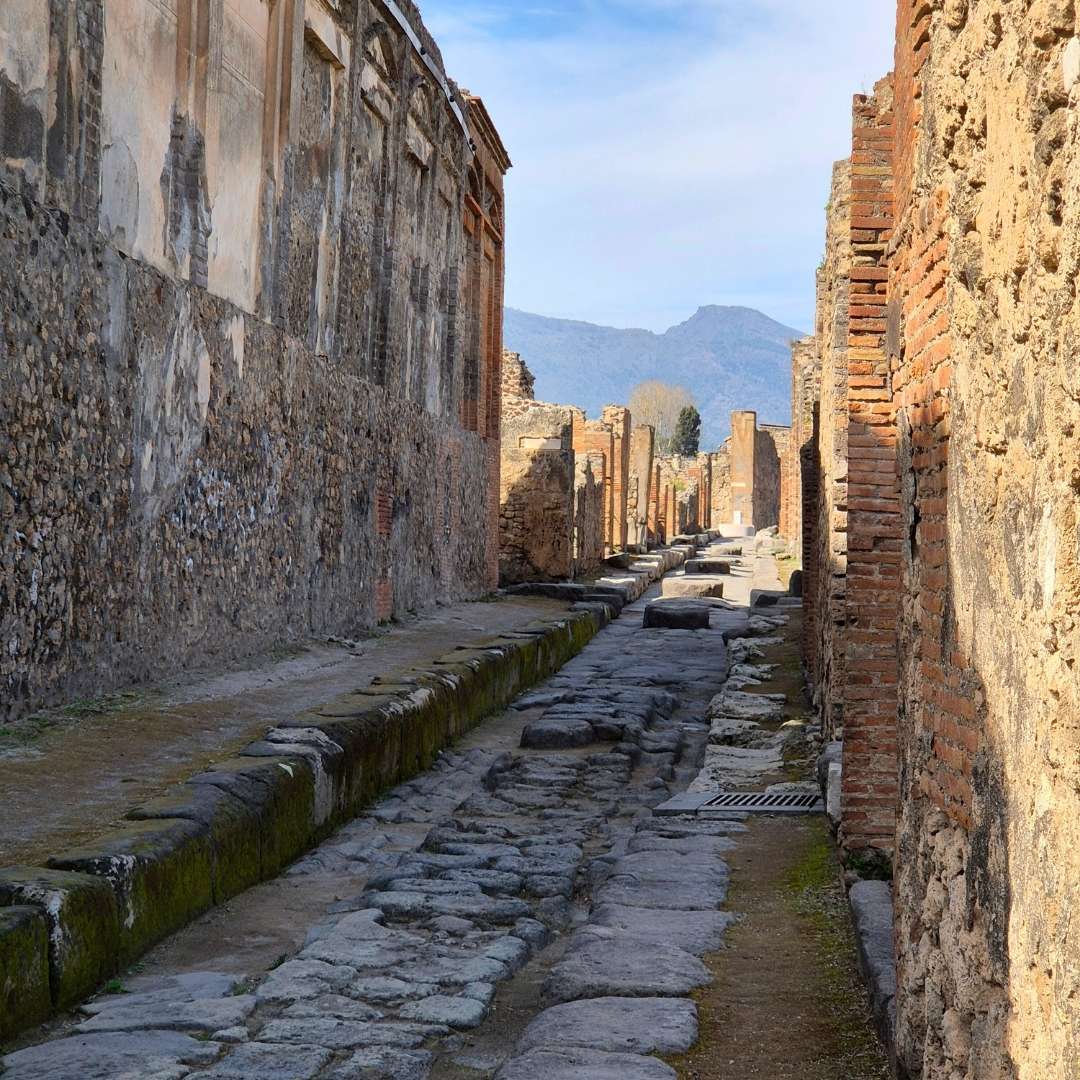
Time ran out in 79 AD when Mt Vesuvius erupted in one of the deadliest eruptions in history. For the first 18 hours, the volcano rained pumice stone and ash onto the surrounding cities. Many residents escaped, but thousands remained when, on the 2nd day, superheated pyroclastic flows surged down the slopes and buried Pompeii and Herculaneum.
The pyroclastic flow effectively froze the cities in time. While wooden and other organic materials burned instantly, all of the brick, stone and plaster buildings that made up most of the city remained largely preserved beneath.
Pompeii and Herculaneum were never completely lost to history. Some ruins remained partially above ground, and looters dug into the sites on multiple occasions over the centuries. But it wasn’t until the 18th century that major archaeological work began to uncover the cities.

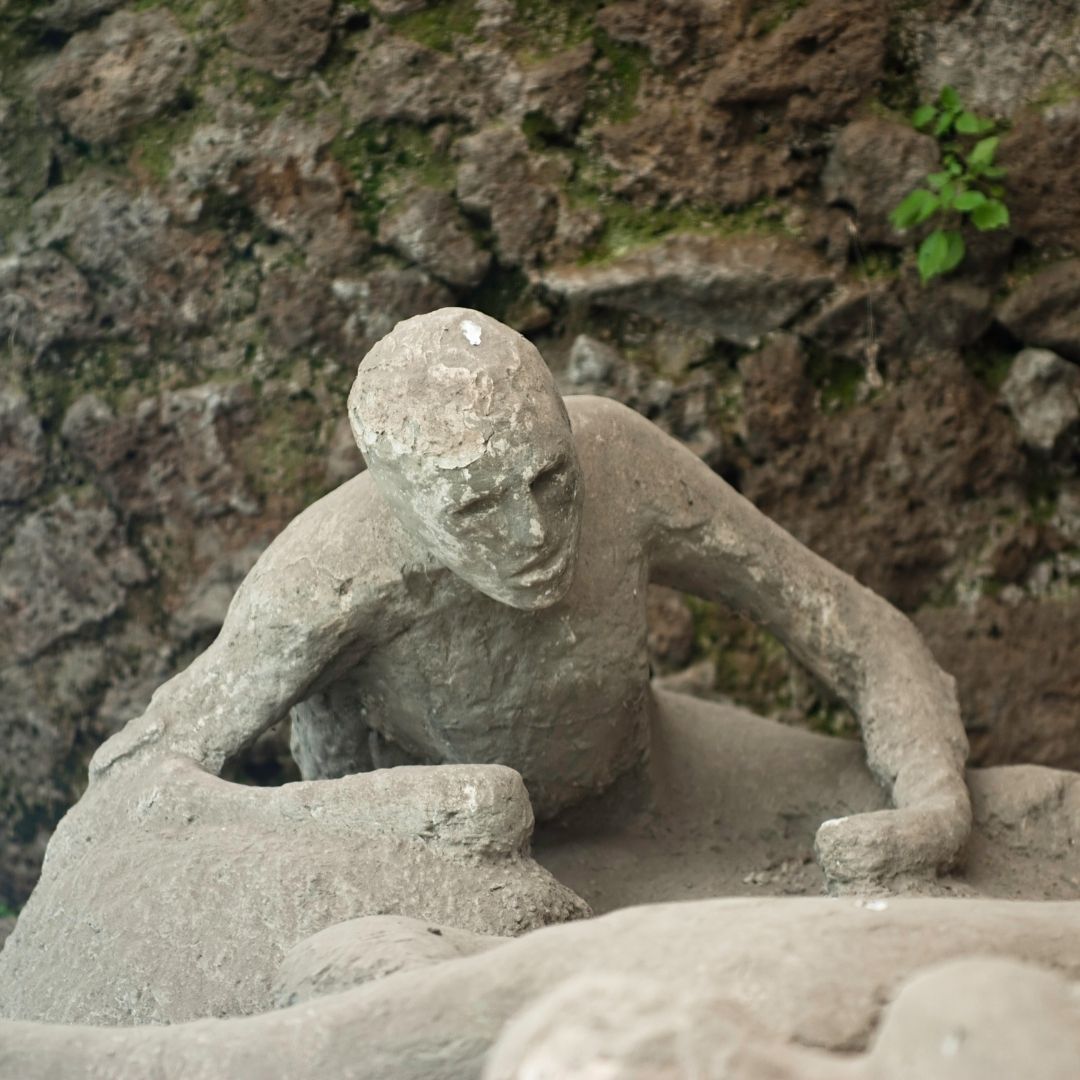
While digging up the buried cities, archaeologists discovered hollow spaces where victims once were. Over time, the bodies had decomposed, leaving behind human-shaped voids.
One archaeologist came up with the idea of filling these holes with plaster, creating human-shaped casts of each victim during their final moment. These body casts can be found across both Pompeii and Herculaneum, giving a horrifying but fascinating insight into the historic event.
Both Pompeii and Herculaneum are now among Italy’s most visited archaeological sites and are popular day trips from Naples.
About Pompeii
To help you decide which site to visit, let’s take a closer look at Pompeii…
Where is Pompeii?
📍Pompeii Archaeological Park is located in southern Italy in the region of Campania, around 25km south of Naples. The ancient Roman city sits at the base of Mount Vesuvius, the volcano responsible for destroying Pompeii in 79 CE.
Today, Pompeii is one of Italy’s most visited archaeological sites and is easily reached from Naples by train in around 30 to 40 minutes. It is also commonly visited as a day trip from the Amalfi Coast or nearby towns such as Sorrento.
For more info on how to reach Pompeii, check out my full guide: Complete Guide to Pompeii.
Pompeii Opening Hours
Pompeii’s opening hours vary depending on the time of year.
From 15 October to 15 March, the site is open from 9:00am to 5:00pm. From 16 March to 14 October, opening hours are extended from 9:00am to 7:00pm.
Keep in mind that Pompeii now has a visitor limit during the summer period between March and October. A maximum of 20,000 people are allowed into the site each day. Once this limit is reached, they stop selling tickets.
To avoid missing out, consider booking tickets online in advance (more on that below).
Pompeii Tickets
Pompeii tickets start at €20, and there are multiple types depending on how much you’d like to see.
- Pompeii Express – Only the ancient city of Pompeii, which is still an expansive site with many things to see, but doesn’t include any of the ‘villas’.
- Pompeii+ – Ancient city of Pompeii with the villas (Villa of Mysteries + Villa of Diomedes + Villa Regina in Boscoreale) and the Antiquarium.
- 3 Day Pass – Pompeii+ in addition to several other sites in the area near Pompeii, including Oplontis, Villa Arianna, Villa San Marco, Libero D’Orsi Museum and Boscoreale.
Tickets can be purchased on site at the front entrance, or online in advance from this website.
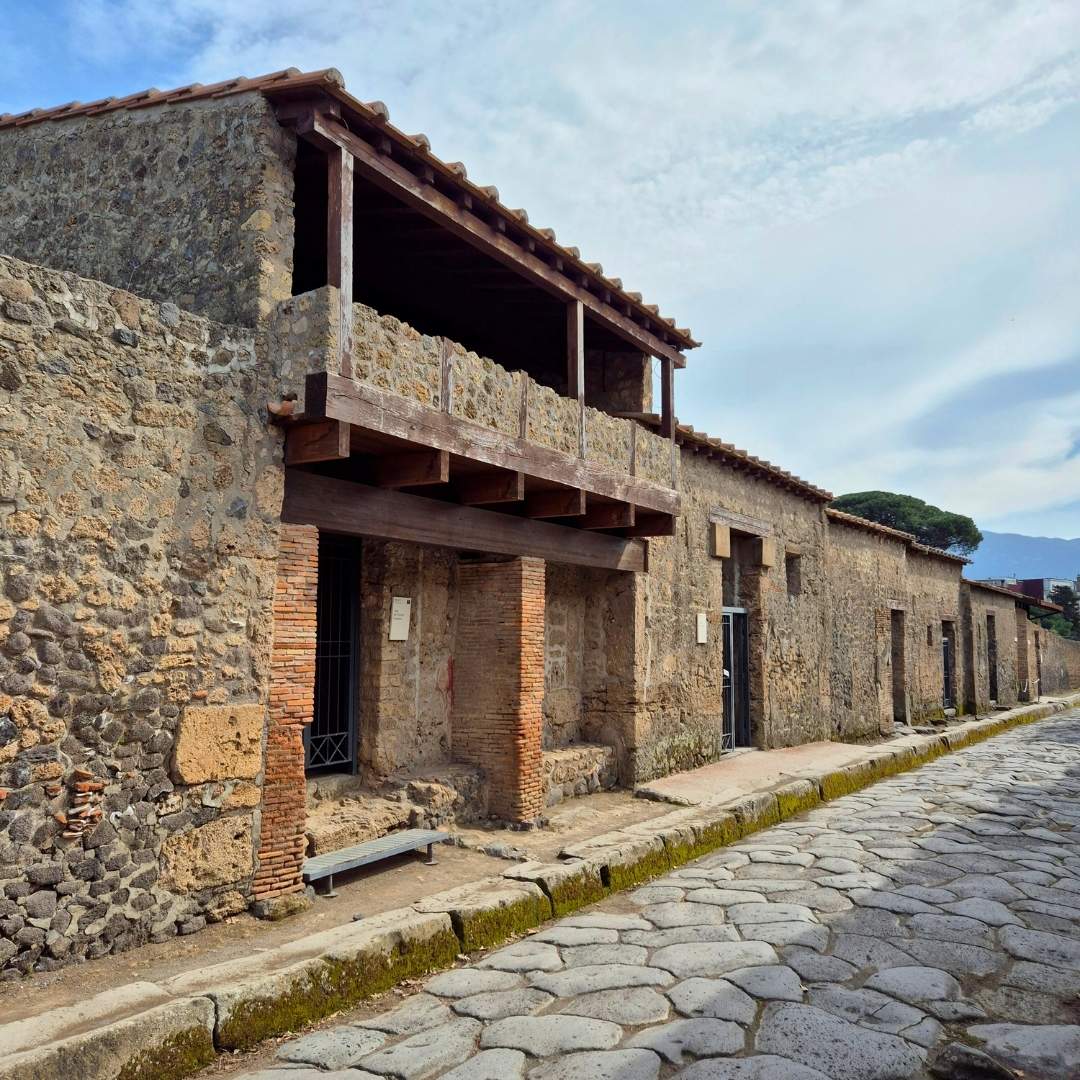
Pompeii Highlights
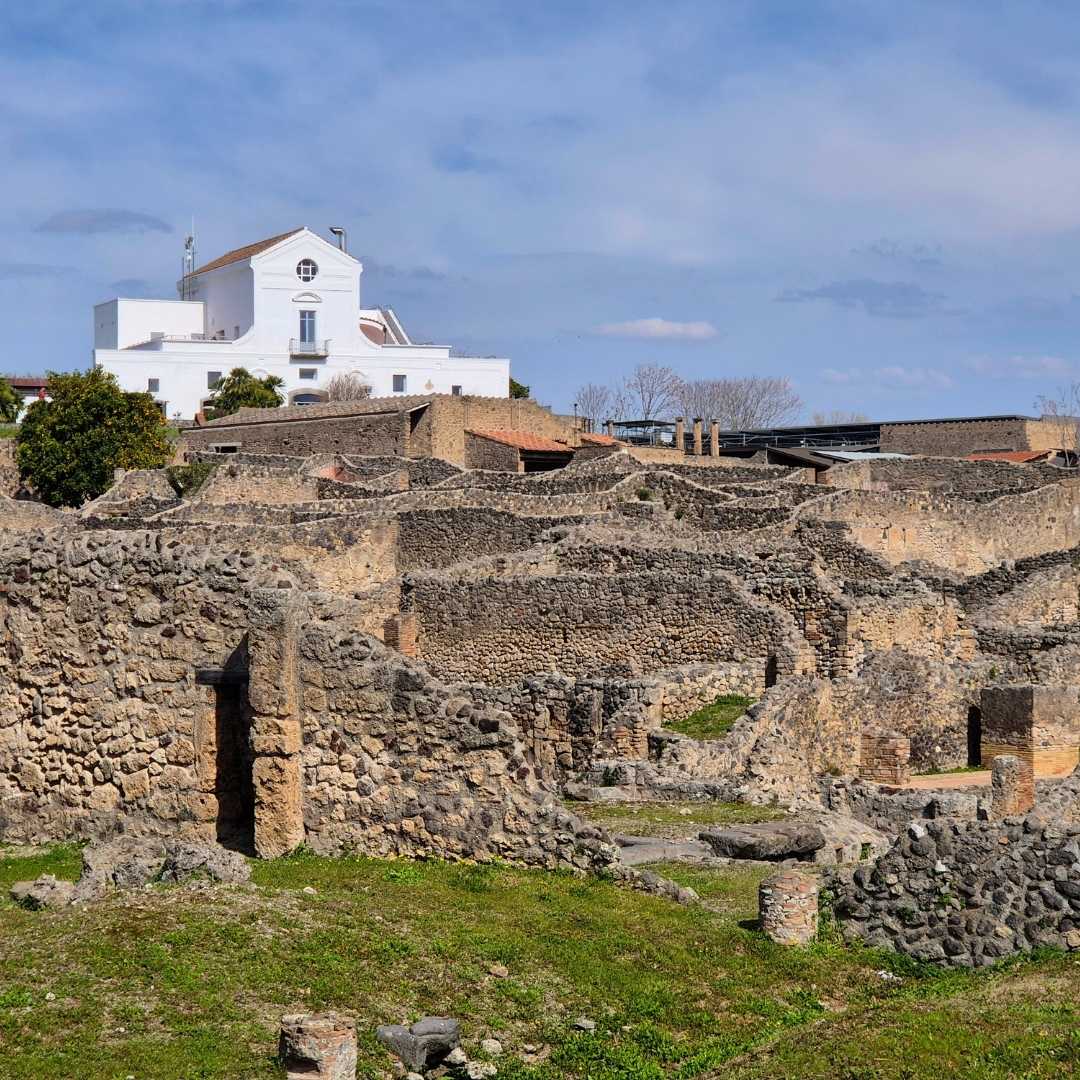
Pompeii is among the largest archaeological sites in the world, and has an incredible variety of ancient Roman ruins to explore.
Some of Pompeii’s best attractions include:
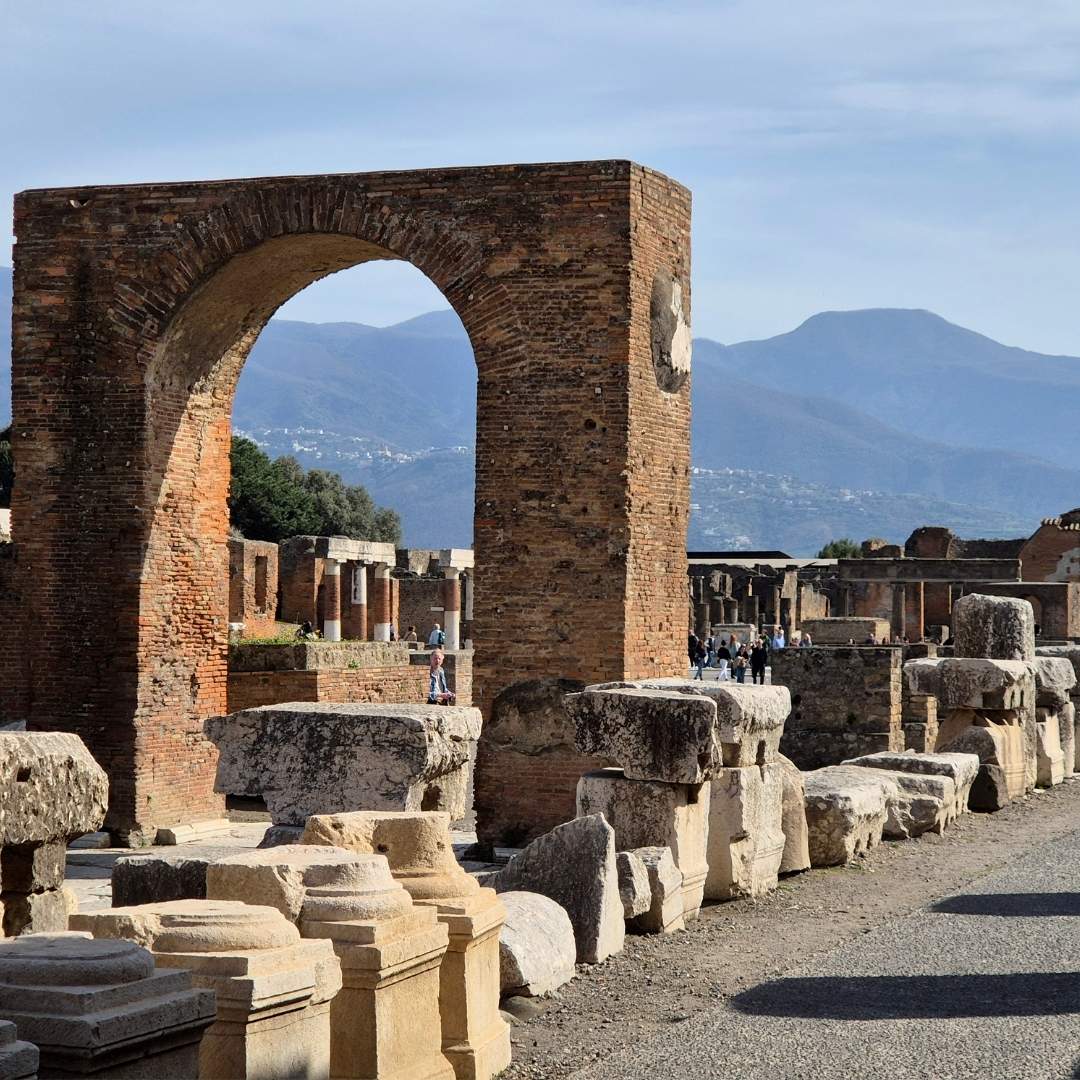
- 📍The Forum – The political and commercial heart of the city.
- 📍Stabian Baths – A well-preserved ancient roman bath house.
- 📍Amphitheatre – One of the oldest surviving Roman amphitheatres. Once used to host gladiatorial fights.
- 📍Great Theatre – Once used for plays, musical performances and public events.
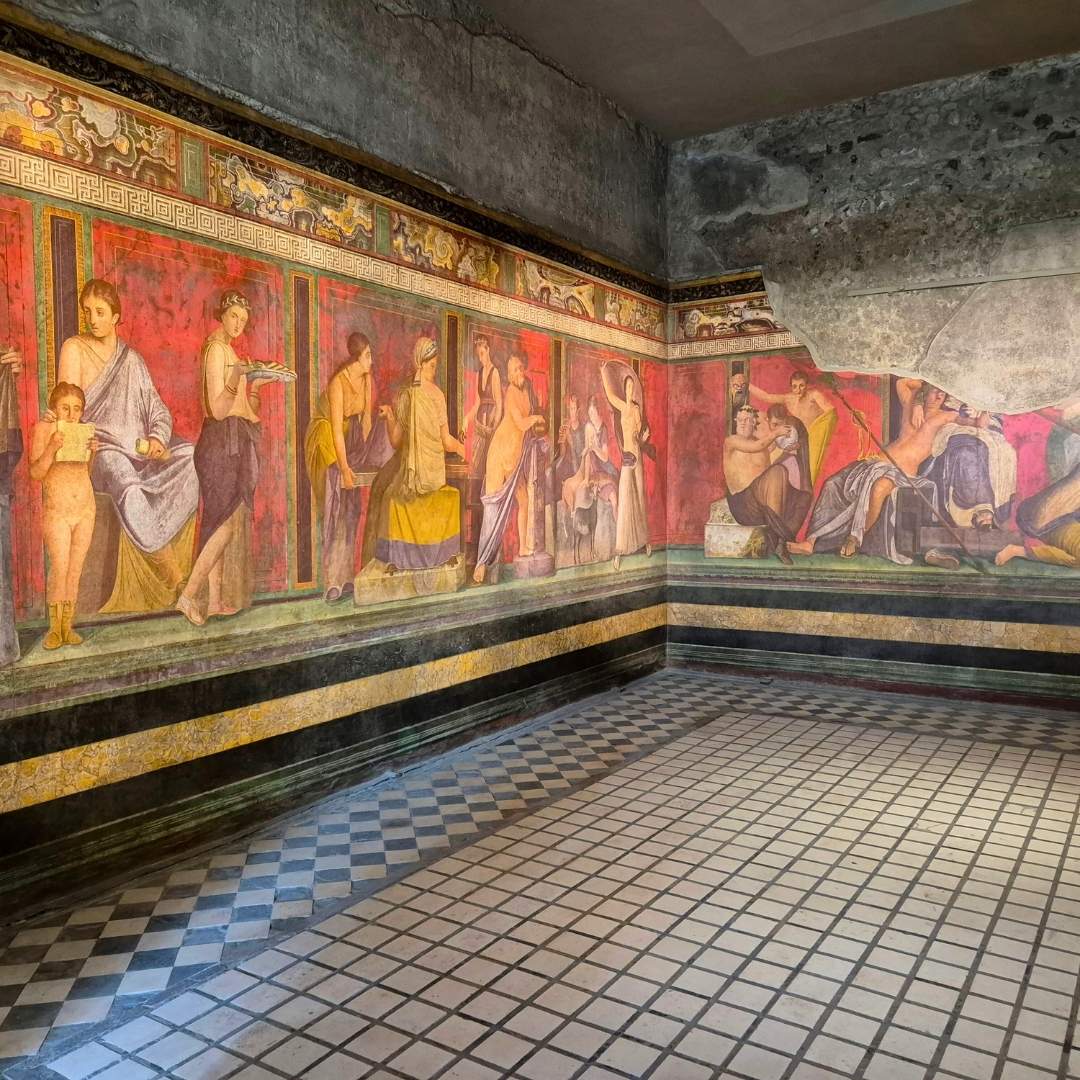
- 📍 Villa of the Mysteries – A restored villa, known for its remarkable wall paintings. An optional addition with the Pompeii+ ticket.
- 📍Garden of the Fugitives – Home to some of the most confronting but interesting body casts.
- 📍Antiquarium – An on-site museum showcasing various fascinating artefacts uncovered at Pompeii.
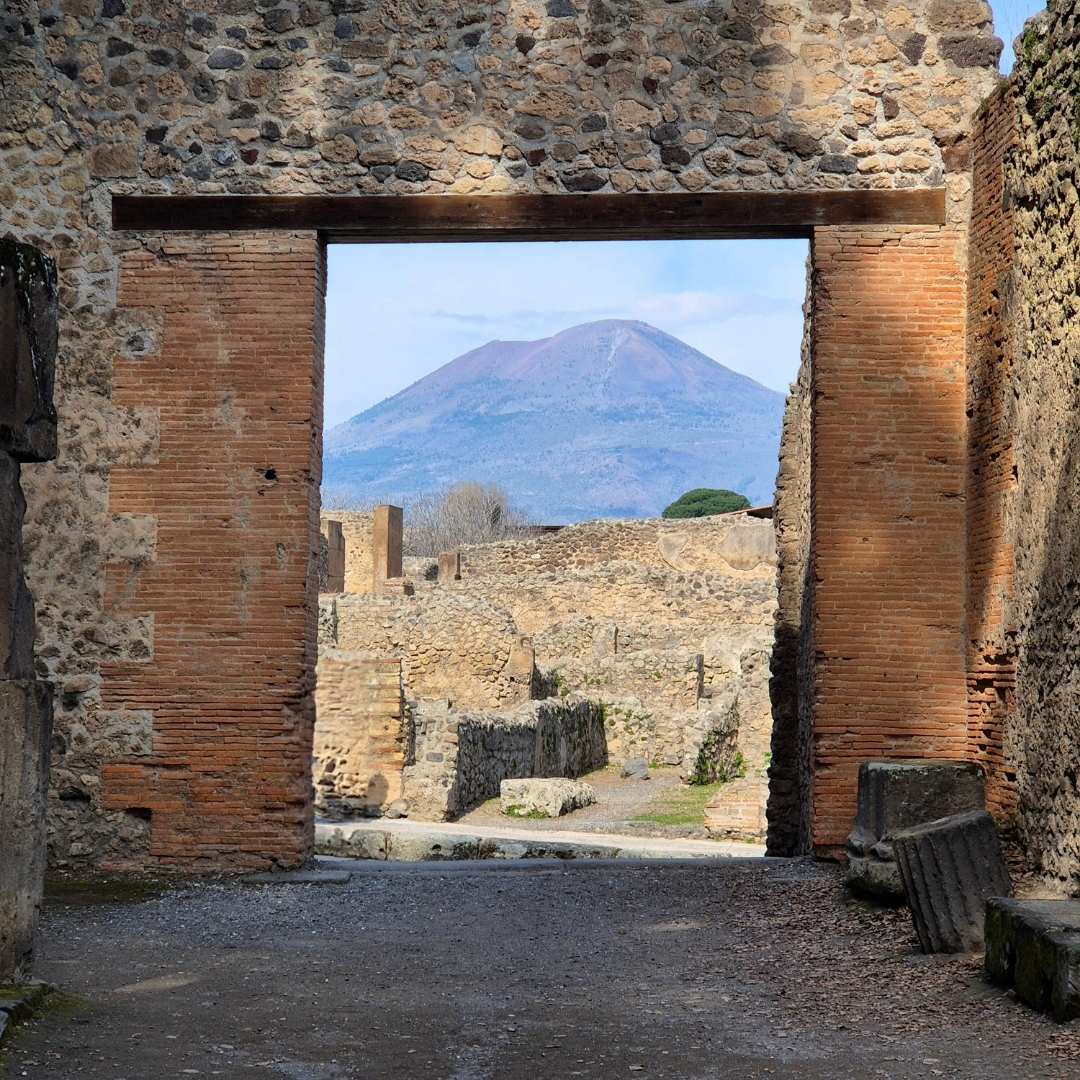
How long do you need at Pompeii
Pompeii is one of the largest archaeological sites in the world. After all, it was an entire ancient city, with all the above-mentioned sites and much more. It’s much larger than Herculaneum, and takes longer to reach from Naples.
To get the most from your visit, I suggest treating Pompeii as a full-day trip. This allows you ample time to reach the site, explore all it has to offer, and travel back to Naples (or wherever you’re staying).
If you’re short on time and stick only to the highlights, it’s possible to visit Pompeii in 3 to 4 hours. Though I don’t recommend it.
About Herculaneum
Now that you know all about Pompeii, let’s take a closer look at Herculaneum…
Where is Herculaneum?
📍Herculaneum Archaeological Park is located in the modern town of Ercolano in southern Italy, around 10 kilometres southeast of Naples. Like Pompeii, the ancient Roman town sits near the base of Mount Vesuvius.
Herculaneum is even easier to visit than Pompeii from Naples, with the journey taking roughly 20 minutes by train.

Herculaneum Opening Hours
Like Pompeii, Herculaneum’s opening hours vary depending on the time of year.
From 15 October to 15 March, the site is open from 8:30am to 5:00pm. From 16 March to 14 October, opening hours are extended from 8:30am to 7:30pm.
Unlike Pompeii, Herculaneum does not currently have daily visitor limits, so you won’t risk missing out during the summer peak. That being said, I still suggest you skip the line and book your ticket online in advance (more on that below).

Herculaneum Tickets
Unlike Pompeii, there’s only one ticket type for Herculaneum (other than the annual pass). The ticket price is €16, which gets you entry to the whole site.
You can purchase your ticket onsite at the front entrance or online in advance from this website.

Herculaneum Highlights
Herculaneum Archaeological Park may be smaller than Pompeii, but it still has plenty of well-preserved Roman ruins to explore.
Some of the top attractions at Herculaneum include:
- 📍 Central Baths – The well-preserved ruins of the city’s main bathhouse.
- 📍Hall of the Augustals – A well-preserved ceremonial hall dedicated to the imperial cult, known for its frescoes.
- 📍 Boathouses – A former warehouse used to store boats, now home to hundreds of skeletons of victims who took shelter here in the city’s final moments.
- 📍House of the Samnite – One of Herculaneum’s oldest residences.
- 📍 Theatre – The underground remains of Herculaneum’s theatre.
- 📍Antiquarium – Like Pompeii, Herculaneum is also home to a small museum featuring interesting artefacts uncovered at the site.

How long do you need at Herculaneum?
Herculaneum is a lot smaller than Pompeii, and because it’s located much closer to Naples, it’s overall much quicker to visit.
If you want to explore the site properly, you should allow for around 3 to 4 hours. This gives you enough time to walk the streets and explore all the main attractions without rushing.
If you’re short on time, you could probably visit the site in as little as 2 hours, though I wouldn’t recommend it.

Pompeii & Herculaneum FAQs
Which site is bigger?
Pompeii Archaeological Park is significantly larger than Herculaneum Archaeological Park.
Can you visit both in 1 day?
Yes, it is entirely possible to visit both Pompeii and Herculaneum in a single day. However, Pompeii requires about 3 to 5 hours just to see the highlights, and Herculaneum requires another 2 to 4. Combine that with getting to and from, and it’s going to be a busy day!
Is Herculaneum Worth Visiting If You’ve Already Seen Pompeii?
Yes, absolutely. Even if you’ve seen Pompeii, Herculaneum still has plenty to offer. Pompeii may be the bigger site with more overall to see, but Herculaneum is known for its remarkable preservation.
How far is Pompeii from Herculaneum?
Pompeii and Herculaneum are located only about 13km from each other. Both are located at the base of Mt Vesuvius, with Herculaneum being closer to Naples.
Which is better with kids?
While both sites are fairly accessible (as far as ancient city ruins go), Herculaneum is smaller, less crowded and requires far less walking, making it an easier place to explore with kids.
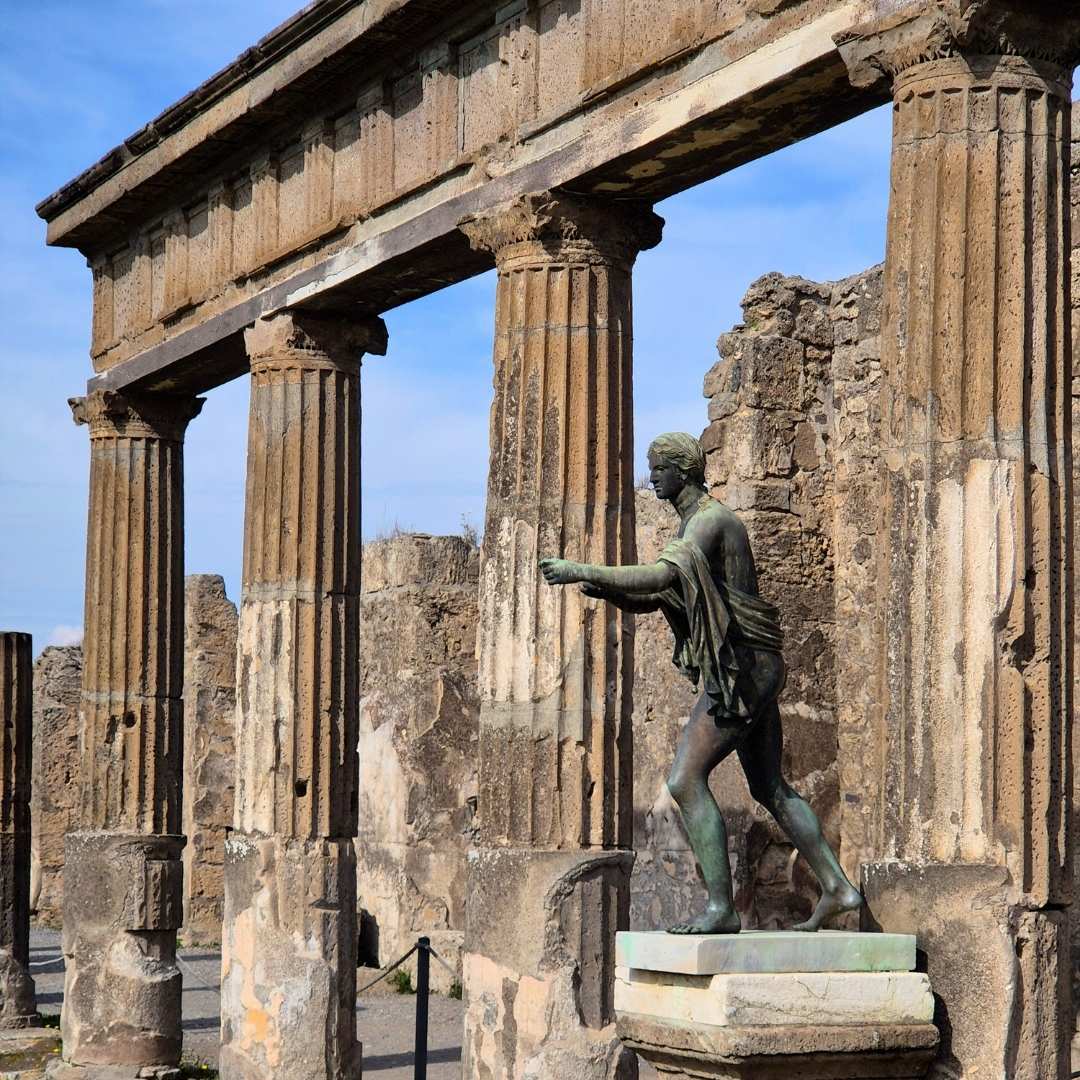
Final Verdict: Which should you visit?
So, now you know all about both Pompeii and Herculaneum, but you’ve only got the time (or the interest) for one. Which should you choose?
Pompeii is the larger and more famous of the two, with more attractions overall. Herculaneum, on the other hand, offers the better preserved ruins.
If you’ve only got time for one, choose Pompeii.
It may be the cliché answer, but Pompeii is the more famous site for a reason. It’s one of the world’s most important archaeological sites – a vast ancient city full of well-preserved homes, baths, theatres, brothels and anything else an ancient Roman needs.
Herculaneum is an amazing addition for those seeking to dive deeper into ancient Rome, but Pompeii remains the bucket list destination whether you’re a history buff or not.
Further Reading
Looking for more travel guides on Italy?
- If you’re interesting in learning more about how to visit Pompeii, check out this guide: Ultimate Guide to Visiting Pompeii in 2026.
- If you’re going to visit the historic city of Florence and want to see Italy’s most iconic Renaissance building, check out this guide: Florence Cathedral and Duomo Complex – An Essential Guide.
- While you’re in Naples, and want to explore its most historically significant castle, check out this guide: Castel Nuovo: A Guide to Naples’ Best Medieval Castle.
For more travel guides like this, visit my Destinations page.
Disclosure: This post may contain affiliate links.