History isn’t what draws most travellers to Nepal, but nestled between these mighty Himalayan peaks is a rich history that goes back thousands of years.
From its Durbar Squares, to ancient temples, to the very birthplace of the Buddha, Nepal has a lot of historical sites on offer.
In this guide, you’ll find the top 10 historical places you can visit in Nepal.
Contents
Nepal Historical Places on a Map
10 Best Historical Places in Nepal
1 | Bhaktapur
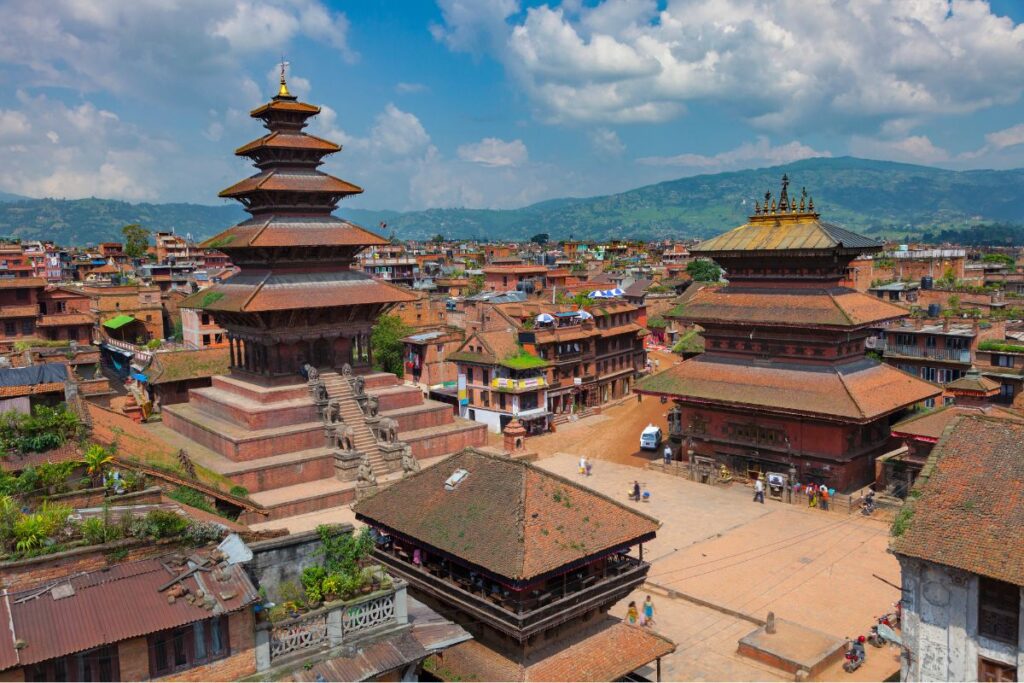
📍Bhaktapur is one of the 3 ancient cities of the Kathmandu Valley, alongside Patan and what is now central Kathmandu. It formally became the capital of Nepal during the 12th century CE, ruling over the region for 200 years.
Now it’s a UNESCO World Heritage Site and a popular tourist hotspot, drawing in visitors with its beautiful temples, royal palaces, and classic red-brick architecture.
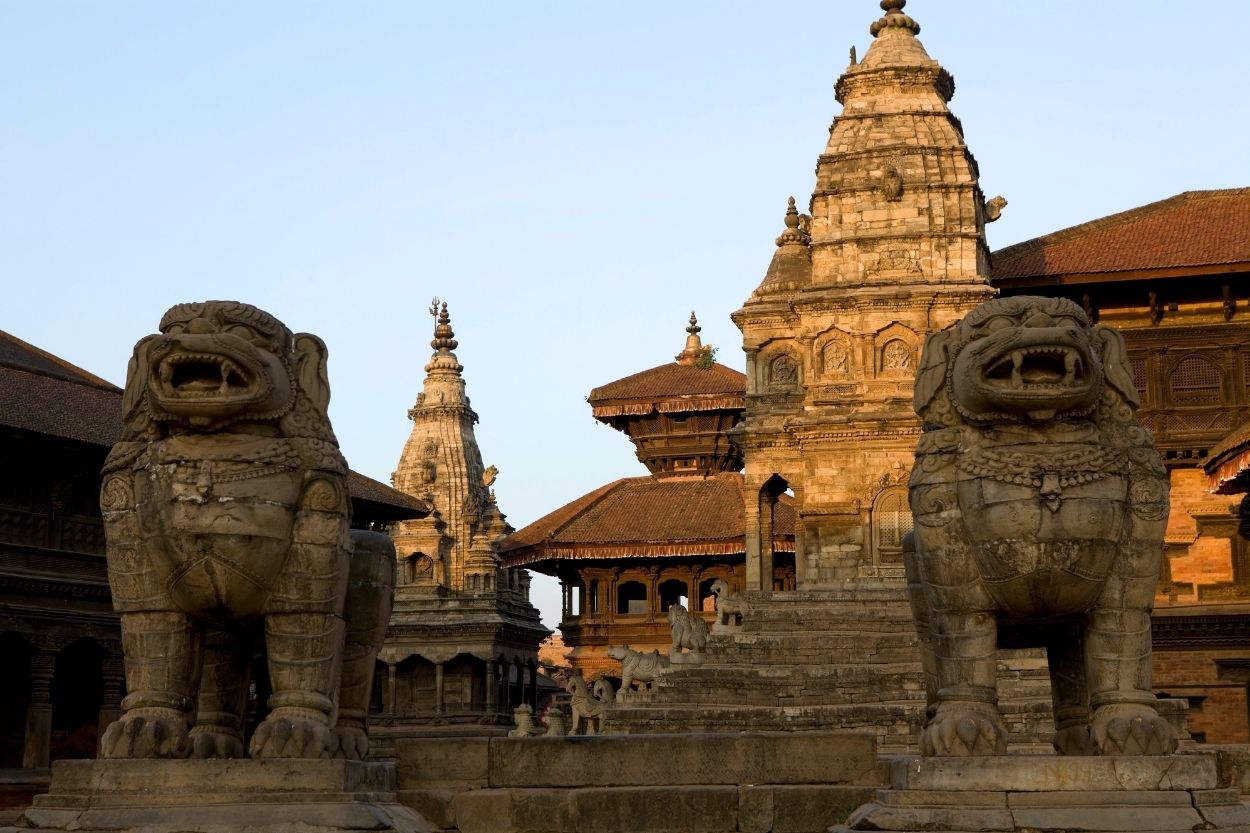
The whole area is one big walking-zone, closed off to traffic. You can stroll around its streets and explore its historical sites, which include:
- Durbar Square | The centre of Bhaktapur, and home to the 14th century royal palace.
- Dattatreya Square | A majestic 15th century Hindu Temple.
- Nyatapola temple | A towering temple, the tallest structure in Bhaktapur, built in 1701.
- Potters’ Square | A public square full of potter’s wheels and rows of clay drying in the sun. An important part of Bhaktapur’s cultural and economic history.
Located just outside the bustling metropolis of Kathmandu, Bhaktapur is best visited as a half day trip. You can easily spend the full day exploring all it has to offer, but at least allow yourself 3-4 hours.
2 | Boudhanath Stupa
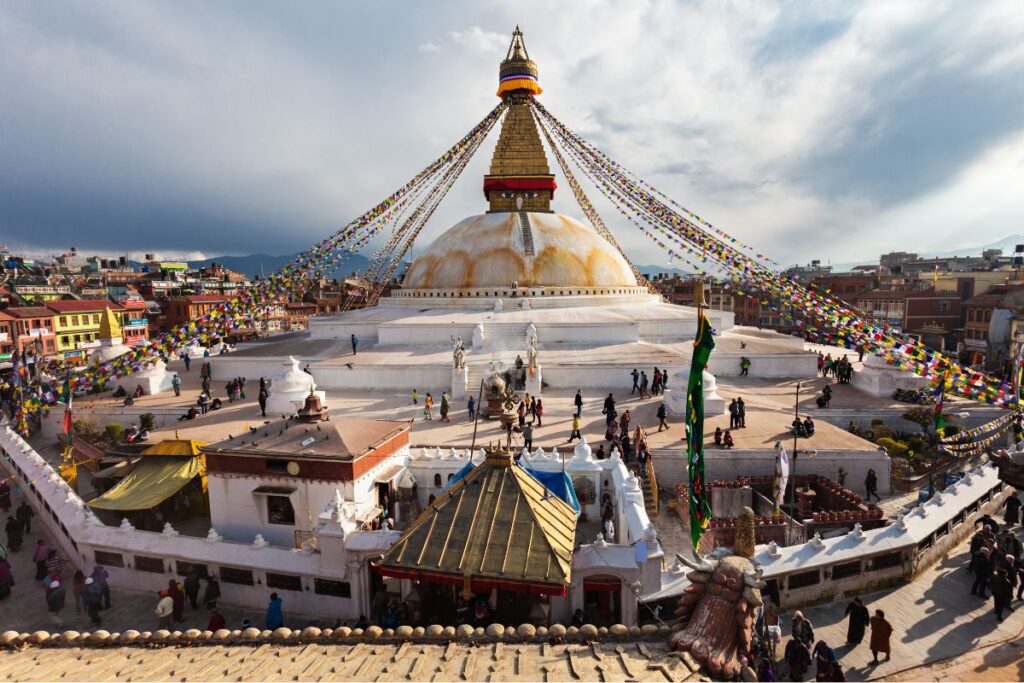
The towering📍Boudhanath Stupa, among the largest in the world, has long been considered the most important religious site in the Kathmandu Valley and is one of the most iconic historical places in Nepal.
The founding of this stupa is tied to multiple different myths & legends, and even the historical records seem to differ depending on the source, but it’s generally agreed that it was built around the year 500 CE.
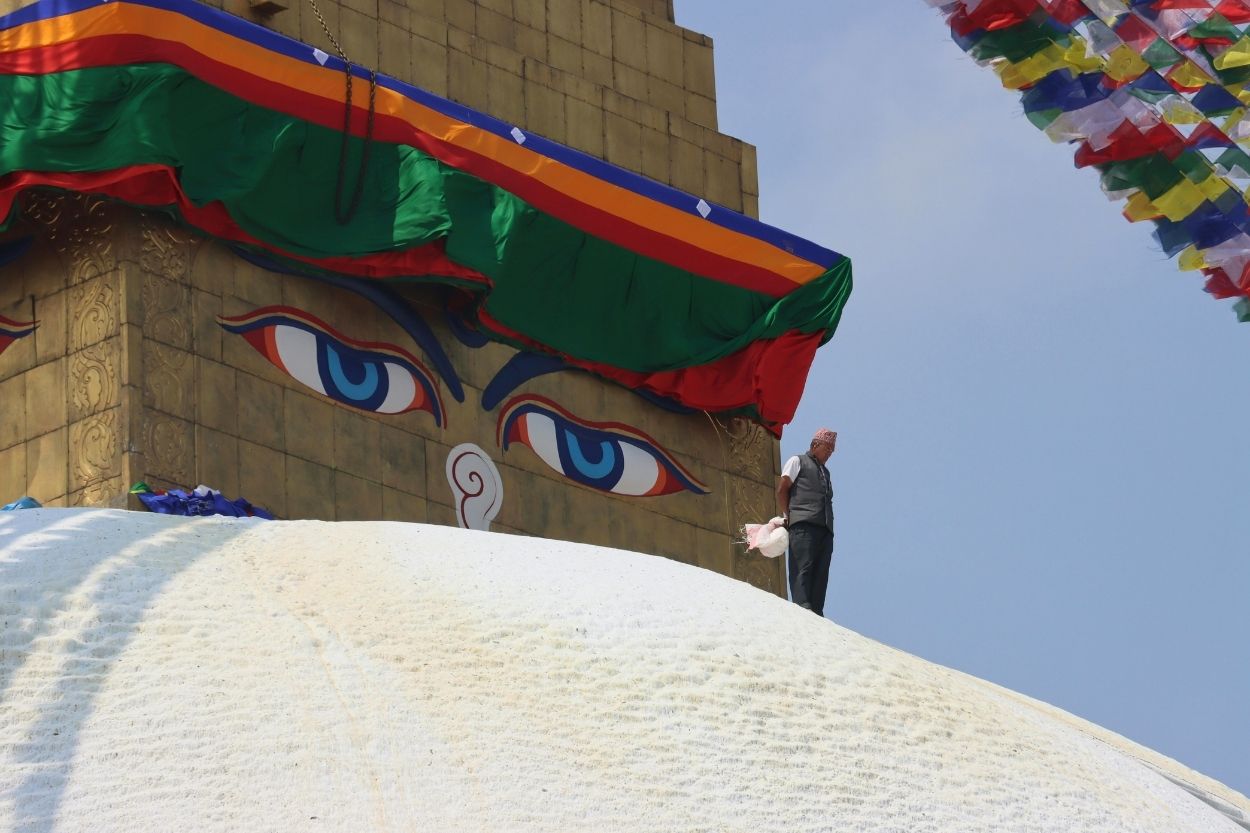
Being located on the ancient road that led from the Kathmandu Valley into Tibet, Boudhanath Stupa became popular among Tibetans. After the Tibetan uprising in the 1950s, thousands of refugees took up residence around near the stupa, and it is now the centre of a thriving Tibetan community in Kathmandu.
For a small fee, you can visit Boudhanath Stupa and walk the kora, spin the 108 prayer wheels and check out the many surrounding shrines.
3 | Patan
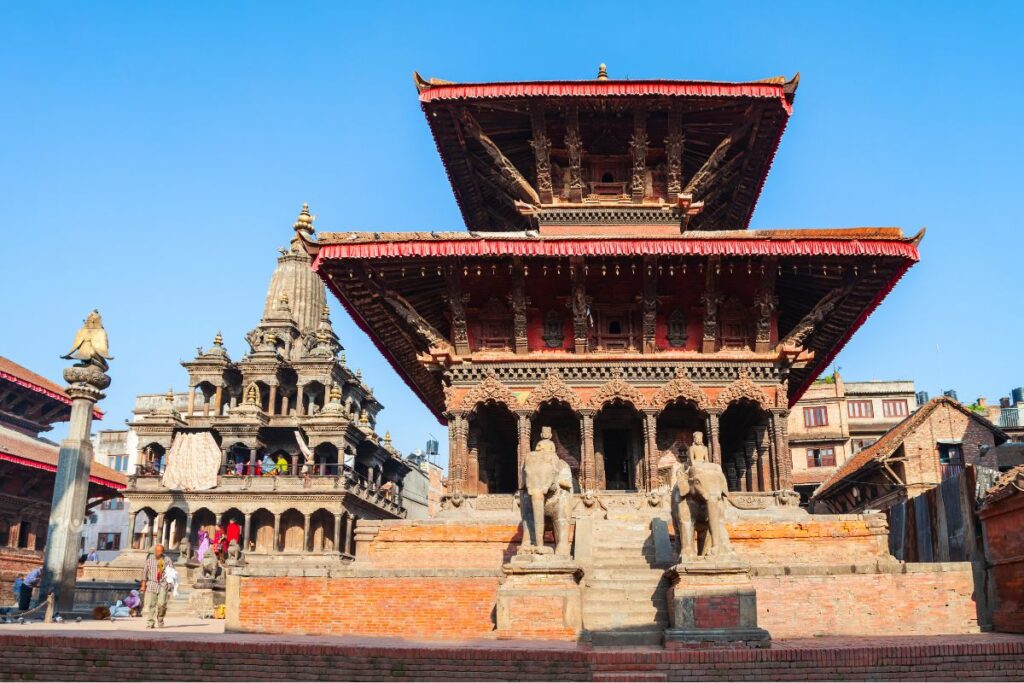
Alongside Kathmandu and Bhaktapur, the other ancient capital in the valley is 📍Patan.
Located on the southern outskirts of the City, this area ruled over the Kathmandu Valley during the Malla Dynasty from 1201 to 17799.
Like the others, its a UNESCO World Heritage Site and has a number of historical buildings to explore, including:
- Royal Palace & Museum | Former residence of the Malla kings, built in the 14th century CE, now a museum on Patan’s history.
- Krishna Mandir | The most prominent temple at Patan, dedicated to Hindu deity Krishna, built in 1637 CE.
- Golden Temple | A gold-covered Hindu temple built in the 12th century.
Like Bhaktapur, Patan can easily be visited on a full or half day trip from downtown Kathmandu.
4 | Lumbini
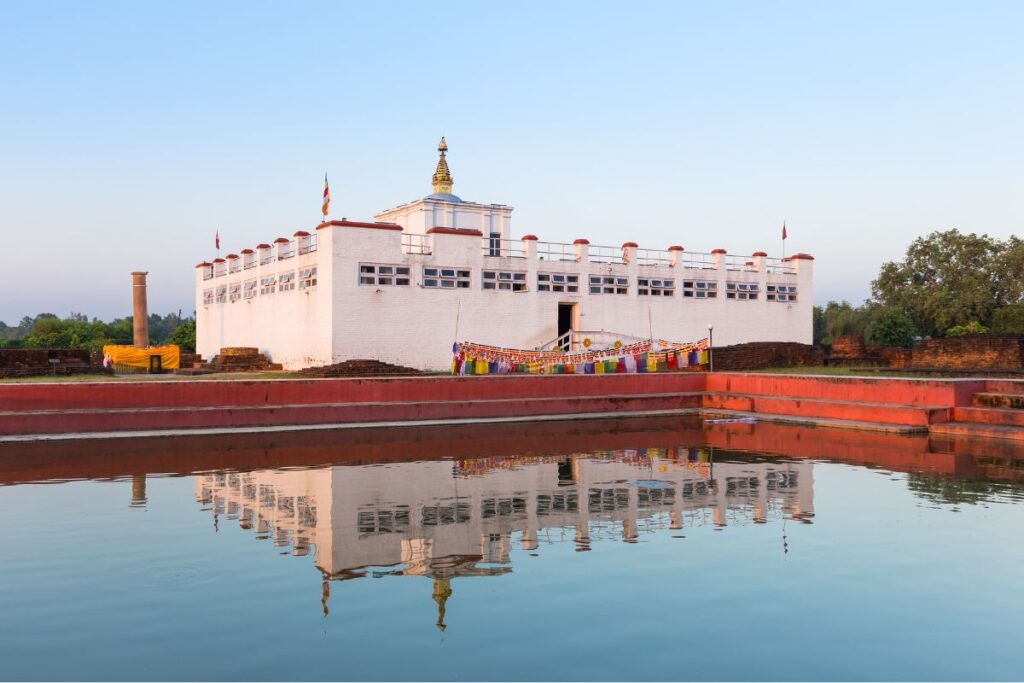
On the flat Ganges Plain of southern Nepal, down on the Indian Subcontinent, is one of the oldest Buddhist sites in the world.
📍Lumbini is the birthpalce of the Buddha. According to Buddhist tradition, Siddhartha Guatama (as he was known before becoming enlightened) was born at this very site around 623 BCE.
He would later go on to become enlightened under the Bodhi Tree in nearby Bodh Gaya in India, founding the world’s 4th largest religion.
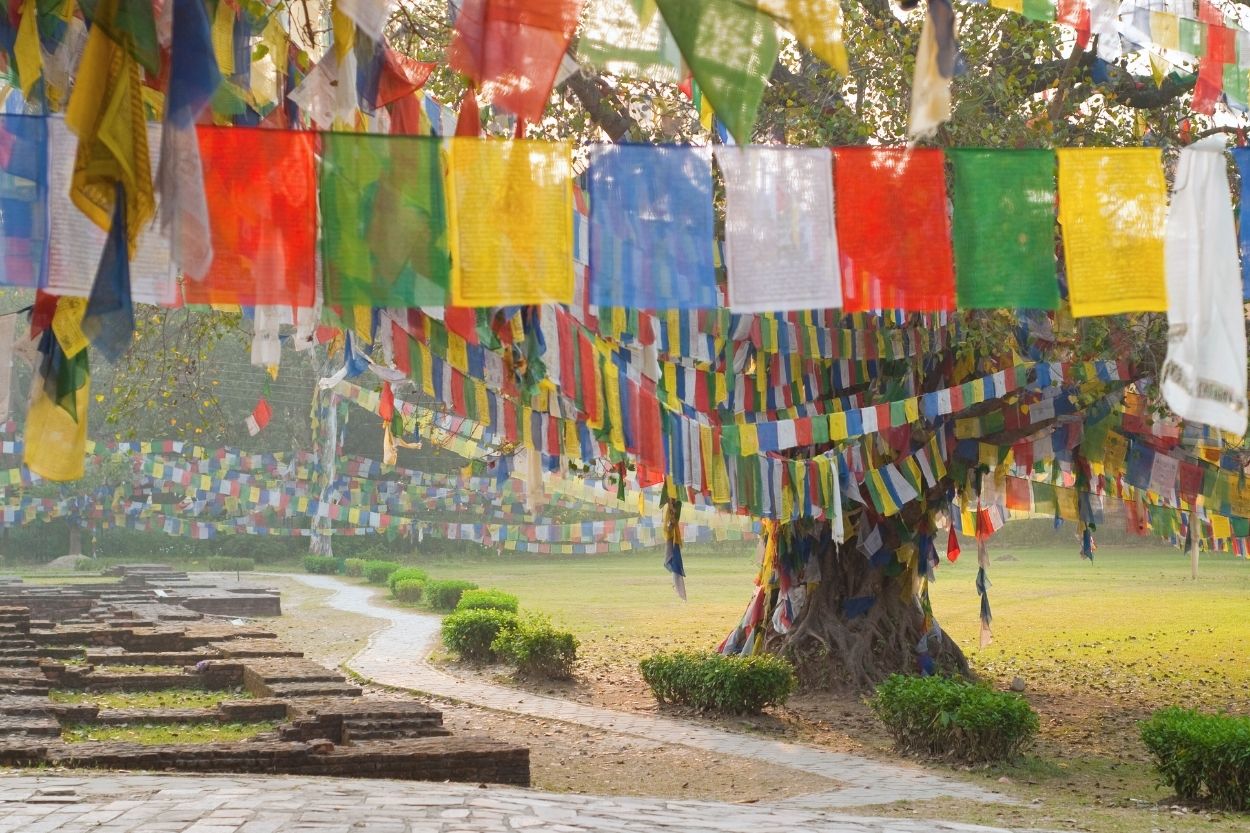
Lumbini is one of the 8 Great Places of Buddhism, centred around the site where the Buddha was born: Mayadevi Temple. Here you can also find one of the Pillars of Ashoka, and a Bodhi Tree grown from a sapling of the original tree under which the Buddha became enlightened.
Surrounding it is a massive complex in which Buddhist organisations from all over the world have built their own temples, each built in their own style of architecture.
5 | Swayambhunath Stupa
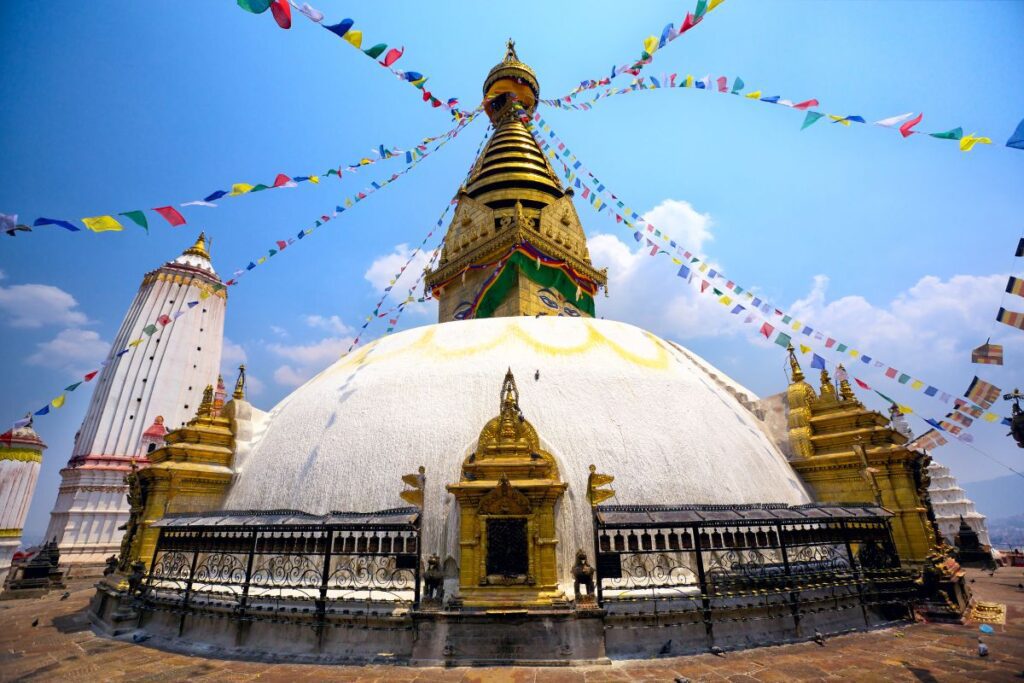
If you look out over the city of Kathmandu, it’s impossible to miss the towering stupa at 📍Swayambhunath, one of the city’s oldest religious sites.
Often called monkey temple, this hilltop has been an important religious site since at least the 5th century CE.
Some sources even claim that King Ashoka visited the site in the 3rd century and built the original temple, which was later destroyed. Regardless, Swayambhunath has been a place of worship for Buddhist for a very long time.
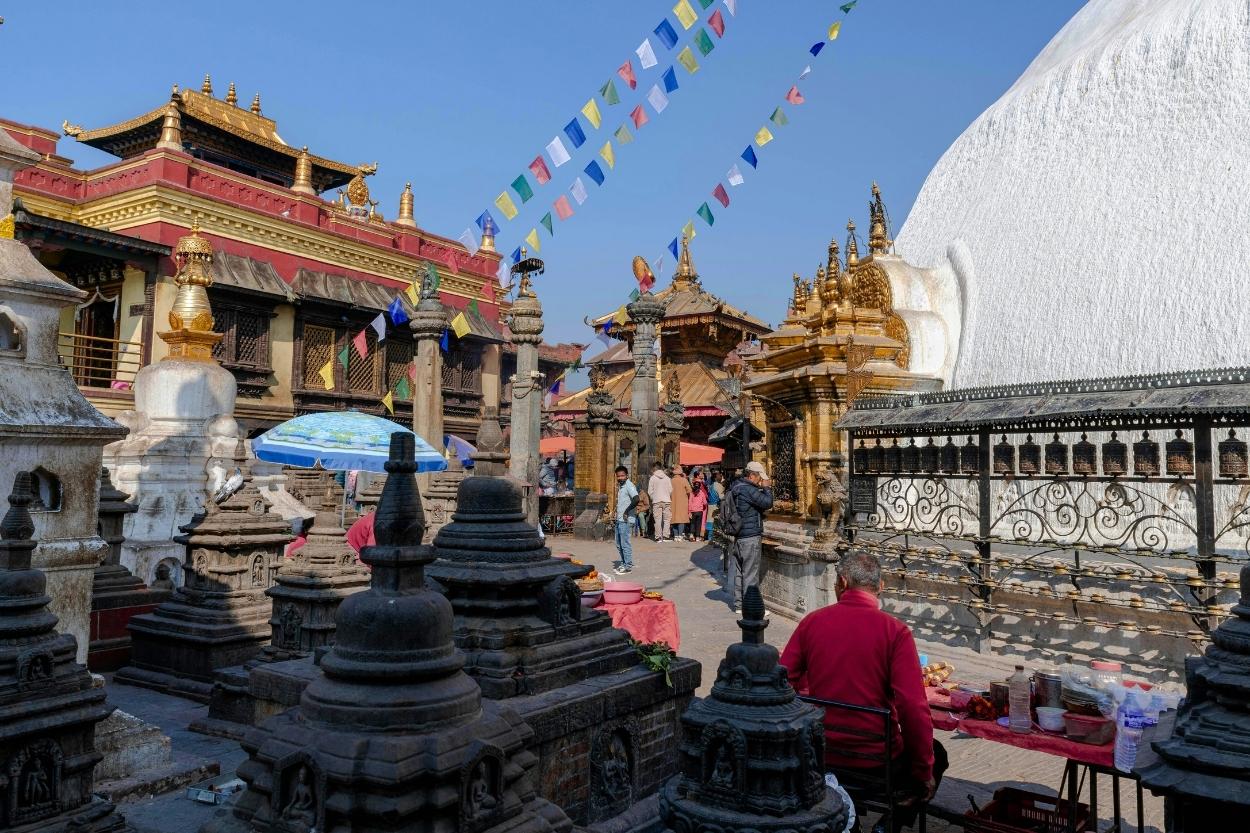
The site consists of a massive stone stupa covered in prayer flags and surrounded by small temples, prayer wheels, statues, and shrines. And of course, being a popular tourist site, there’s also some gift shops mixed in, but it doesn’t remove from Swayambhunath’s intoxicating spiritual atmosphere.
The climb to the stupa is via a long, steep staircase, overtaken by monkeys, but is worth it once you reach the summit, with one of the best views of the city.
6 | Kathmandu Durbar Square
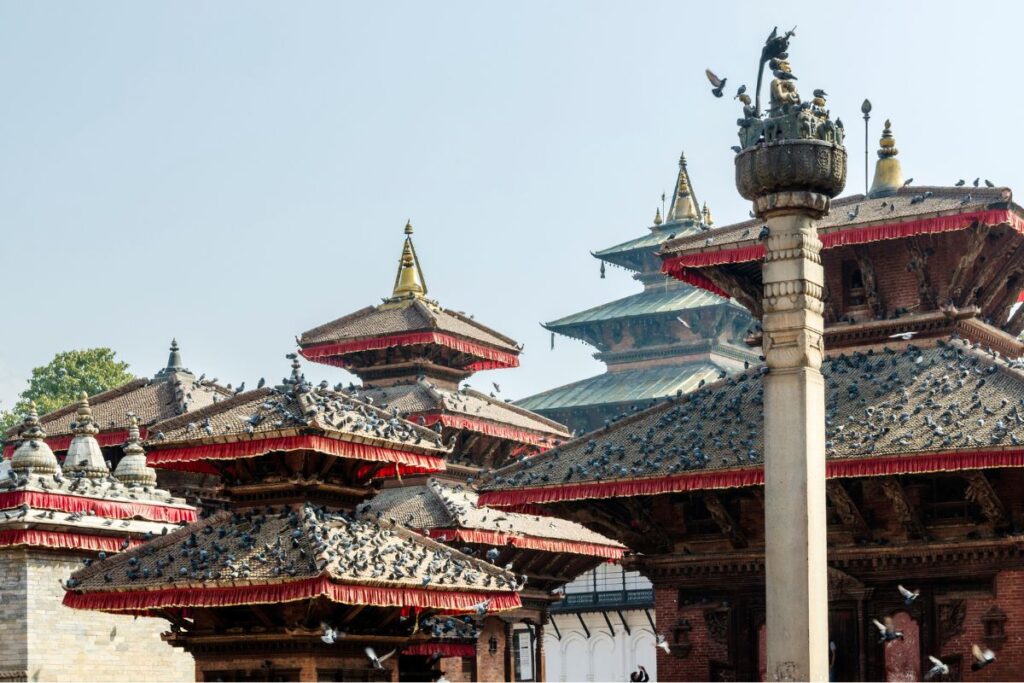
The last of the 3 durbar squares in the Valley can be found right in the middle of downtown Kathmandu.
The UNESCO-listed 📍Kathmandu Durbar Square was founded originally in the 4th century, although many of its present-day structures were built later. It was once the heart of the kingdom and contains a number of Nepals most important historical buildings, including:
- Jagannath Temple | The main temple, built in the 16th century.
- Hanuman Dhoka | The former royal palace, dating back to the 16th century.
- Kumari Ghar | An 18th century building which is home to the Kumari, a living child ‘goddess’, believed to be the reincarnation of a Hindu deity, who makes a public appearance one a day.
Kathmandu Durbar Square was hit hard by the 2015 earthquake, which devastated the country. Many of its historic buildings were heavily damaged and are gradually being rebuilt. Many of them have recently reopened again in 2025/26.
7 | Muktinath Temple
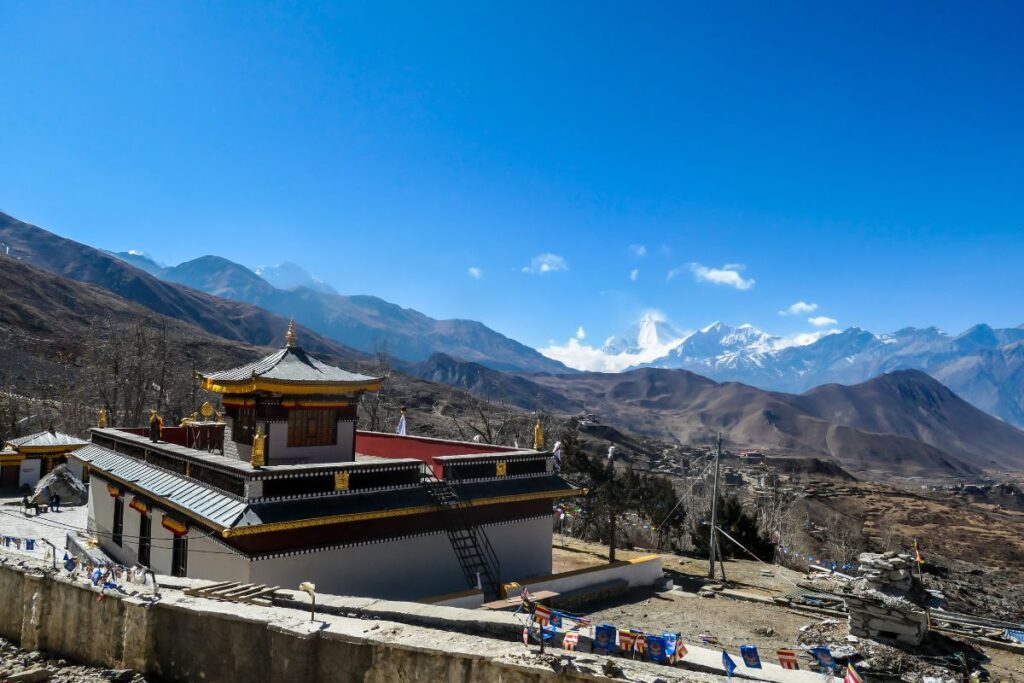
Deep in the Himalayas, at 3700m above sea level, is one of the most important religious sites for both Buddhist and Hindus.
Multiple legends and traditions surround the origins of 📍Muktinath Temple. According to Buddhists, it was built by Guru Rinpoche, the founder of Tibetan Buddhism, in the 12th century CE. Hindus, on the other hand, have it being built by the deity Lord Vishnu.
In any case, it’s been around for centuries and is an important pilgrimage site for both religions.
Muktinath Temple is located deep in the mountains north of Pokhara. But it just so happens to be along the Annapurna Circuit, one of the most popular hikes in Nepal. If you’re doing the Circuit, be sure to stop by Muktinath Temple along the way.
8 | Mustang Valley
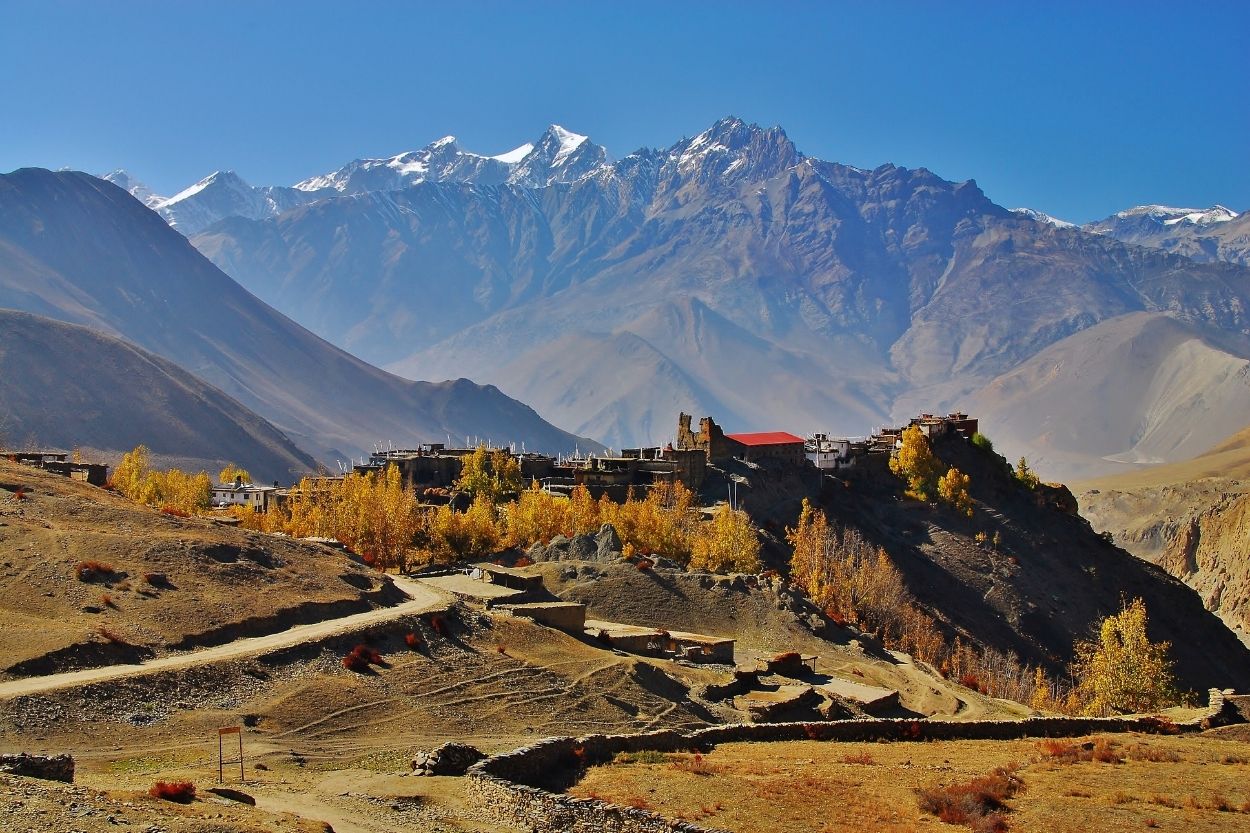
In northern Nepal, where the Himalayas begin to descend down to the Tibetan Plateau, lies the secluded 📍Mustang Valley.
This region has a unique history, existing as its own kingdom from the 14th century CE all the way to 2008. Since the 18th century it’s was a vassal of Nepal but retained its autonomy. Its last monarch, whose lineage traced back to 1380, only died in 2016.
Today, the Mustang Valley is a restricted region. Trekking here requires a permit of $50 per day and a licensed guide.
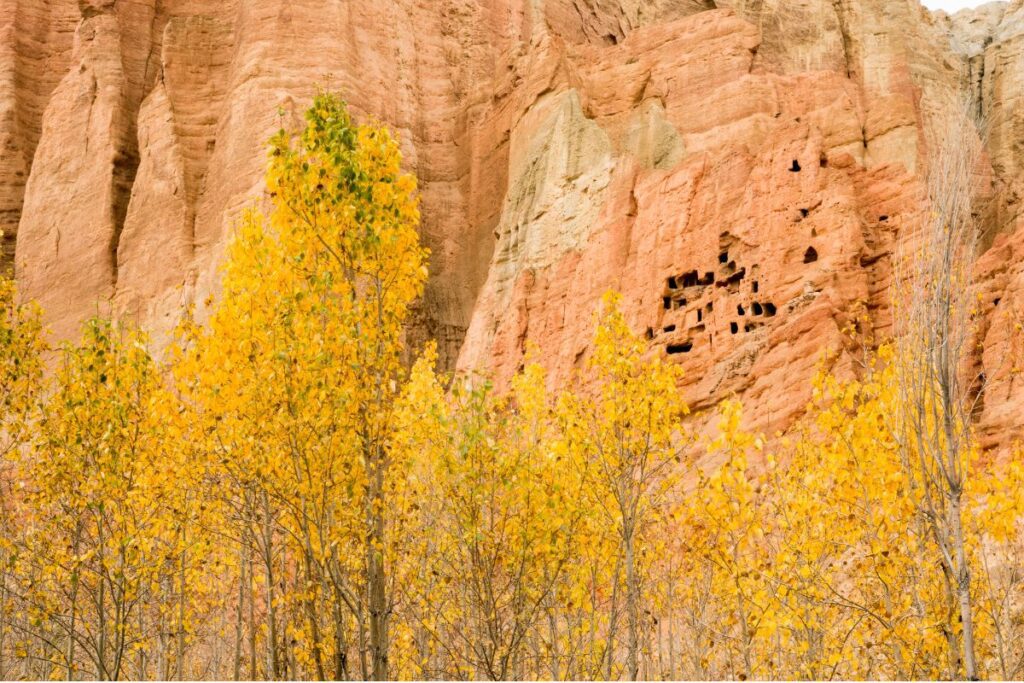
This isolation has kept its culture frozen in history. Aside from some modern day comforts, the Tibetan Buddhist culture of Mustang remains largely as it was centuries ago.
The Valley itself is a historical place, but within it you’ll also find thousands of ancient manmade caves carved into the valley cliffs. No one is quite sure how old these caves are, but mummified human remains have been found inside dating back 3000 years.
Many of these caves are unreachable, but with your guide you’ll likely have the opportunity to explore some.
9 | Narayanhiti Palace
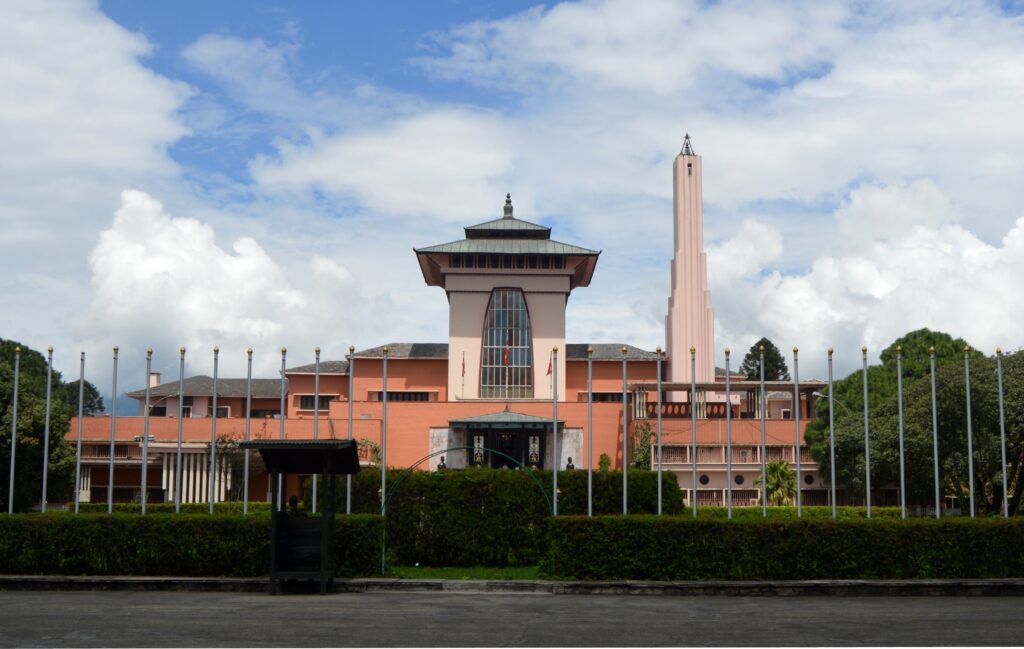
📍Narayanhiti Palace is the former residence of the Nepali royal family. Following their removal during the 2006 revolution, their former palace has been turned into a museum.
The site where the palace stands has been the royal residence for centuries, but the current palace was constructed in 1963. Since being turned into a museum, the interior has been preserved exactly as it was. Everything about it, from the furniture, to the carpet, to the memorabilia, seems to be stuck in the ’60s.
Today, visitors can the palace freely, including:
- Throne room
- Personal bedrooms
- Dining rooms
- Stables
- Garage (including a car that was gifted to them by Adolf Hitler).
You can even see the room where the 2001 masacre took place, which still has the bullet holes in the walls.
Visiting the palace is a great way to not only see what life was like for the former royal family, but learn about some very important events in Nepal’s modern history.
10 | Pashupatinath Temple
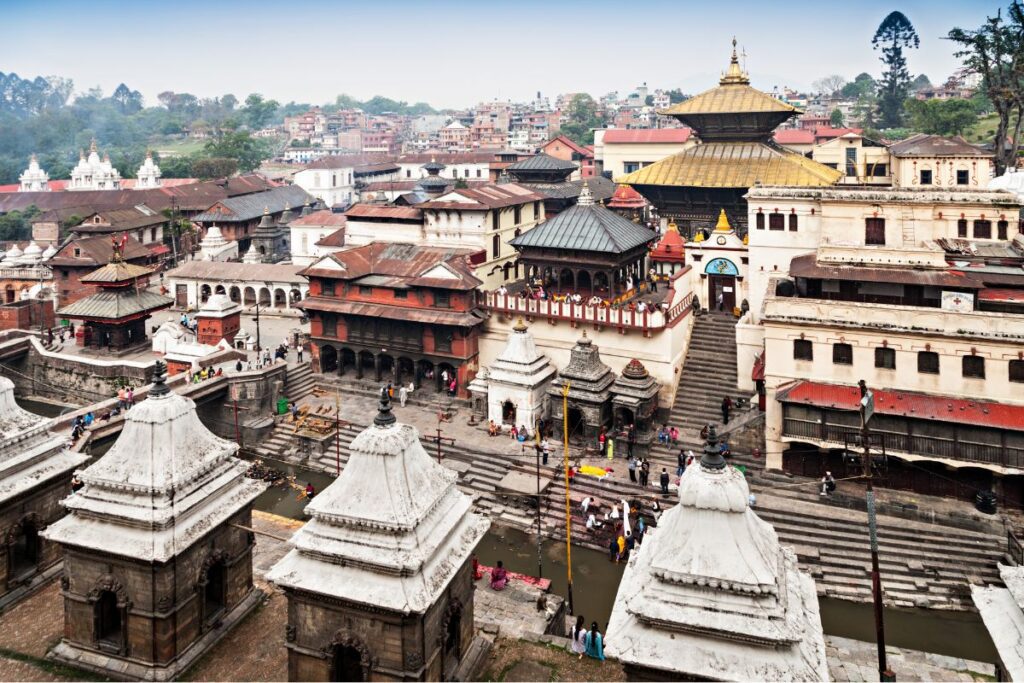
On the north-eastern outskirts of Kathmandu you’ll find 📍Pashupatinath Temple, the oldest Hindu temple in Nepal.
The origins of this UNESCO World Heritage Site are somewhat unclear, but its believed to date back to the 6th century BCE.
The temple complex, comprised of 518 temples and shrines, stretches along the Bagmati River. It is often compared to the famous Varanasi in India.
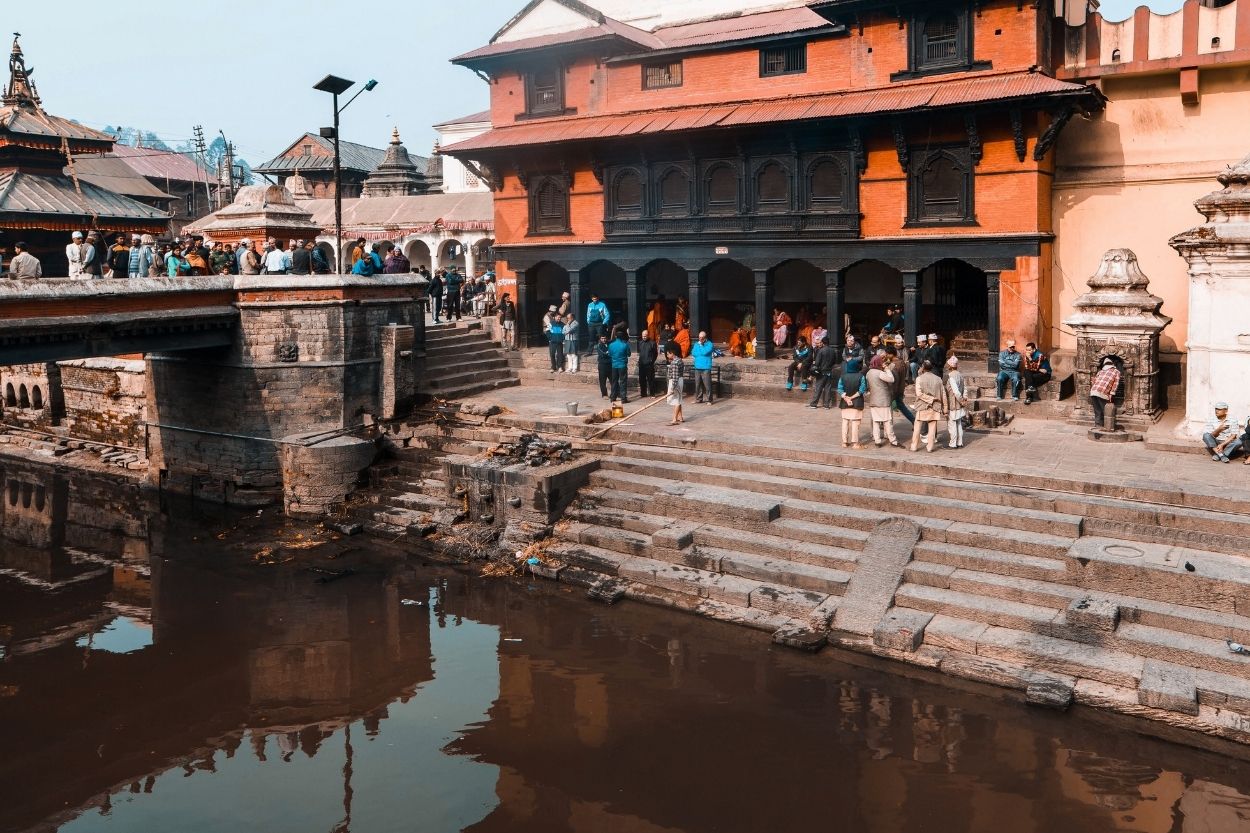
Pashupatinath is known for cremation ceremonies, which take place regularly throughout the day, which attracts visitors seeking a cultural and spiritual experience.
Watching a cremation may seem like an odd thing to want to see, but it’s a very respected tradition in Hinduism and something you’ll rarely get to witness.
The best time to visit Pashupatinath Temple is at 6:30pm for the Aarti Ceremony.