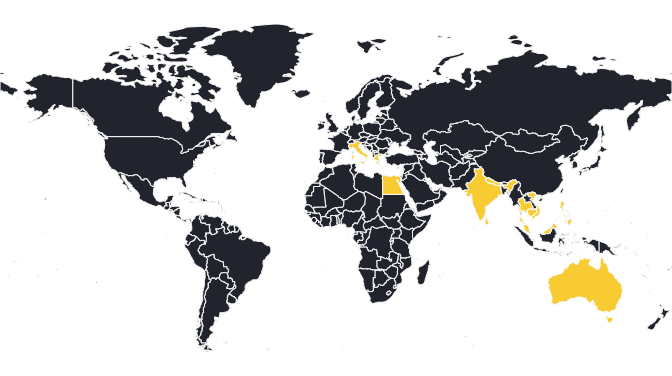
The term ‘melting pot’ is thrown around a lot to describe a multicultural place, but I can’t think anywhere that better meets that description than the Malaysian city of Melaka.
For at least 1000 years the region has been torn culturally between India and China, adopting a little of both. By the 9th century, traders all the way from Arabia brought Islam, which spread like wildfire, leaving hints of Arabic culture wherever it went. Then came the Europeans, first the Portuguese, then the Dutch, followed by the British, each leaving their mark.
Throw in a touch of some other nearby cultures, like Indonesia & Thailand, and what you end up with is the colourful city Melaka. All that rich multicultural history is alive & well today through the many historical places the city has to offer. If you’re a history buff, there is no better place in Malaysia than Melaka.
With 500-year-old ruins, European colonial-era buildings, and museums-galore, this city has a lot to offer. Here are the 12 best historical places in Melaka.
Contents
A Brief History of Melaka
Malacca City is relatively young compared with many other historical cities in Asia, having been founded around 1400 CE.
According to the Malay Annals, the city was established by a fleeing ruler from Singapore, who chose this stretch of coastline as the site of a new kingdom. Its position along the narrow strait between the Malay Peninsula and Sumatra made it an ideal port.
Within a short time, Melaka became one of the most important trading centres in South-East Asia. Ships travelling between China, India, the Middle East all passed through the Malacca Strait, turning the city into a wealthy and cosmopolitan port.
Early ties with Ming China, including visits by Zheng He, helped protect the young kingdom and allowed it to grow into the region’s dominant trading power.
That success eventually attracted European powers. The Portuguese captured Melaka in 1511 and built some of the city’s oldest surviving colonial landmarks. They were replaced by the Dutch in the 17th century, followed later by the British in the 19th century.
Because of these successive colonial periods, Melaka developed a distinctive mix of Malay, Chinese, Portuguese, Dutch, and British influences that still defines the city today.
That layered history is exactly what makes Melaka one of the most rich historical destinations in South-East Asia.
12 Amazing Historical places in Melaka
1 | A Famosa Fort
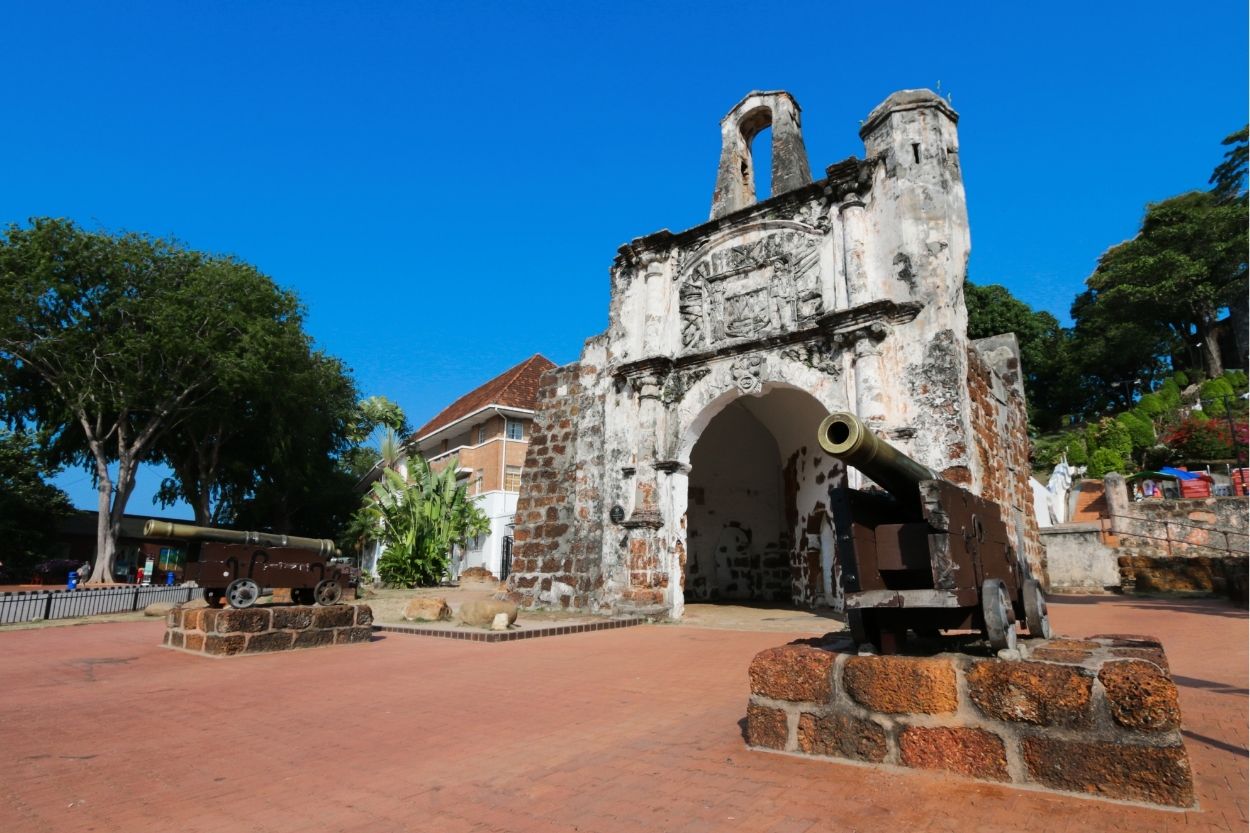
Want to see the oldest surviving European colonial structure in South-East Asia?
When the Portuguese captured Malacca City in 1511, one of their first priorities was building 📍A Famosa Fort to secure the new colony.
Built in the early 16th century, it is one of the earliest surviving European structures anywhere east of India and became the centre of Portuguese power in the region.
Originally, A Famosa was a much larger fort made up of four walls, corner towers, and internal buildings used for storage and accommodation. Over time, warfare reduced most of it, leaving mainly the old gatehouse that survives today.
Although little of the original fort remains, its age and historical importance make it one of Melaka’s most important landmarks.
2 | St Paul’s Church
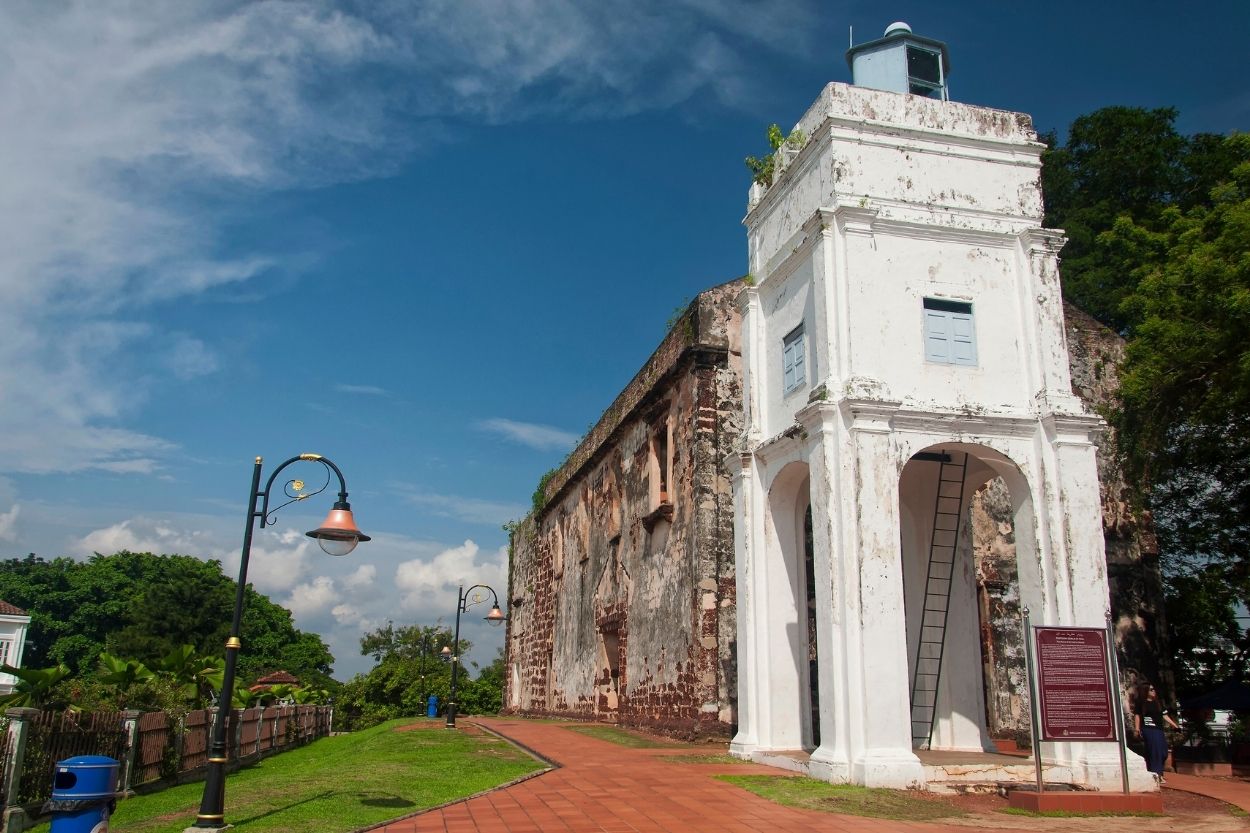
On the hill above the old centre of Malacca City stands 📍St. Paul’s Church, one of the oldest surviving churches in South-East Asia.
Built by the Portuguese in 1521, it was one of the earliest churches established after the conquest of Melaka and became an important centre for Christian missionary activity in the region.
During the Dutch period the church gradually declined in importance, and under British rule it was later used for military purposes.
Today, what remains are the stone walls of the main church hall, along with tombstones, a small tower, and the hilltop grounds around it.
The short walk up from A Famosa or from the Dutch quarter is easy, and the hill also offers some of the best views across the city.
3 | Baba Nyonya Heritage Museum
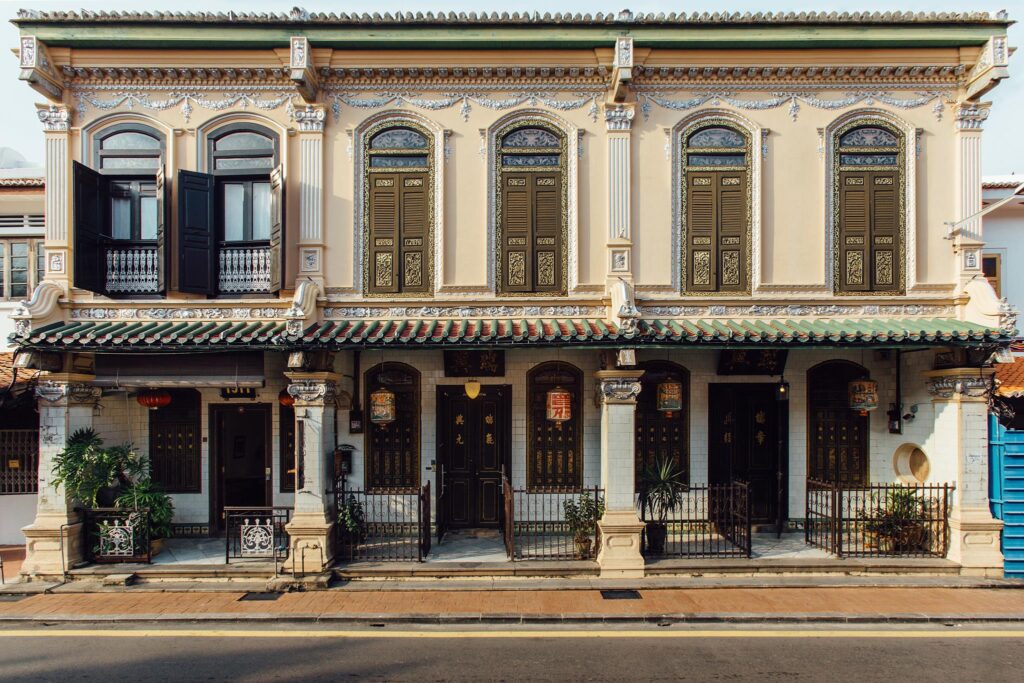
Chinese culture has played an important role in the history of Malacca for centuries.
Since Admiral Zheng He arrived in the early 1400s, Melaka and China have had a close relationship, and over the years the city has welcomed many Chinese immigrants.
The 📍Baba Nyonya Heritage Museum (Baba Nyonya is the local term for Chinese descendants) celebrates this part of Melaka history. It’s a living museum that recreates the home of the Chan family, wealthy Chinese-Malay immigrants who lived in this house from 1861 up until it was turned into a museum in 1986.
The home is re-created to match how it would have looked in the late 19th and early 20th century, complete with all the furniture and belongings that were passed down through the generations.
Visiting this museum is the closest you’ll get to time travelling to 19th century Melaka, and a great way to learn more about Chinese heritage in Melaka.
4 | Dutch Square
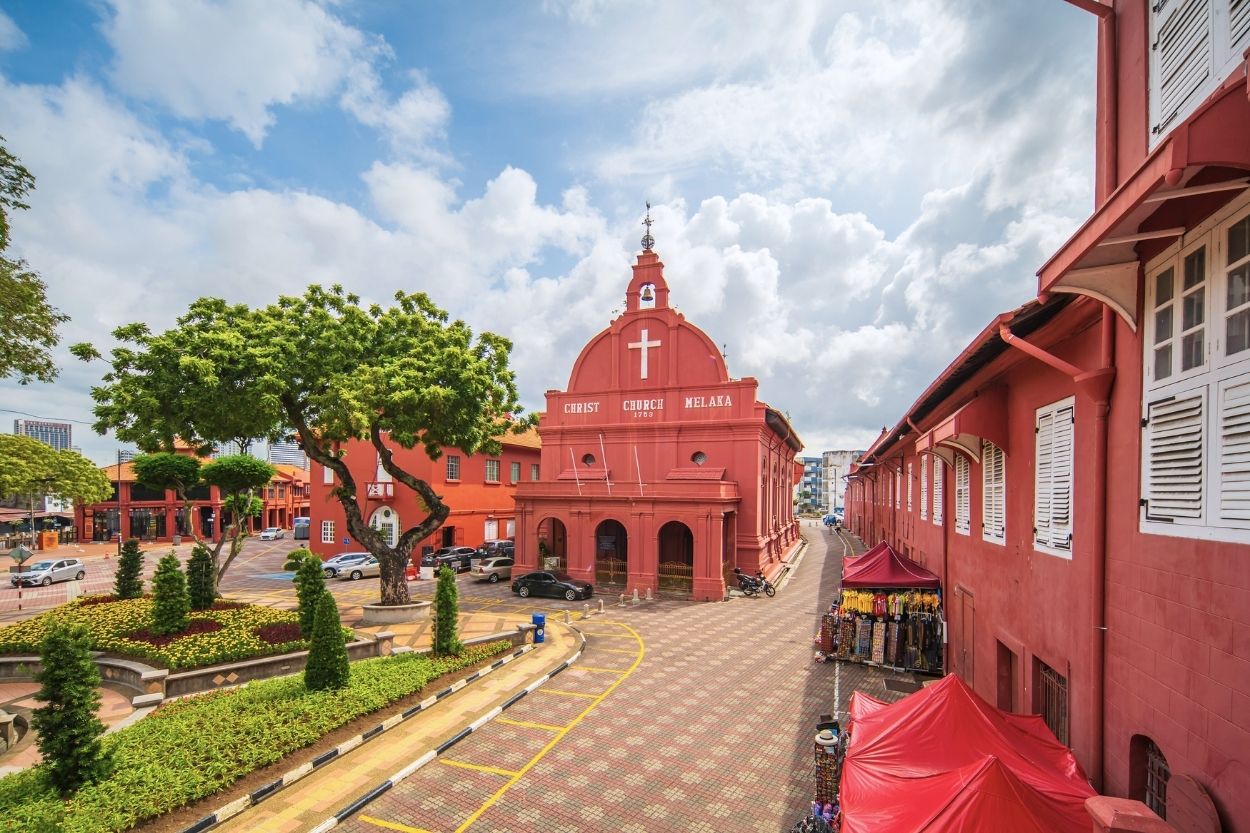
It’s hard to miss the 📍Dutch Square, with its bright red buildings standing out amongst the surrounding old town. This square, and its adjacent buildings, were the centre of the Dutch government in Malaysia and it was from here that they ruled over Melaka for longer than any other power.
There are 2 major historical buildings you can visit at the Dutch Square:
The first is the 📍Stadthuys. Built in 1650, it is the oldest Dutch building in Asia and served as their administrative capital throughout their rule. Today, the Stadthuys holds the History and Ethnography Museum, which commemorates Melaka history from before European arrival all the way until its independence in 1957.
The other historical building found at the Dutch Square is the 📍Christ Church. When the Dutch took Melaka from the Portuguese, the official religion of the city changed from Catholicism to Protestant Christianity. Christ Church was built in 1753 to replace the now redundant St Paul’s Church, and it served as the religious centre of the city for centuries after this.
5 | Maritime Museum
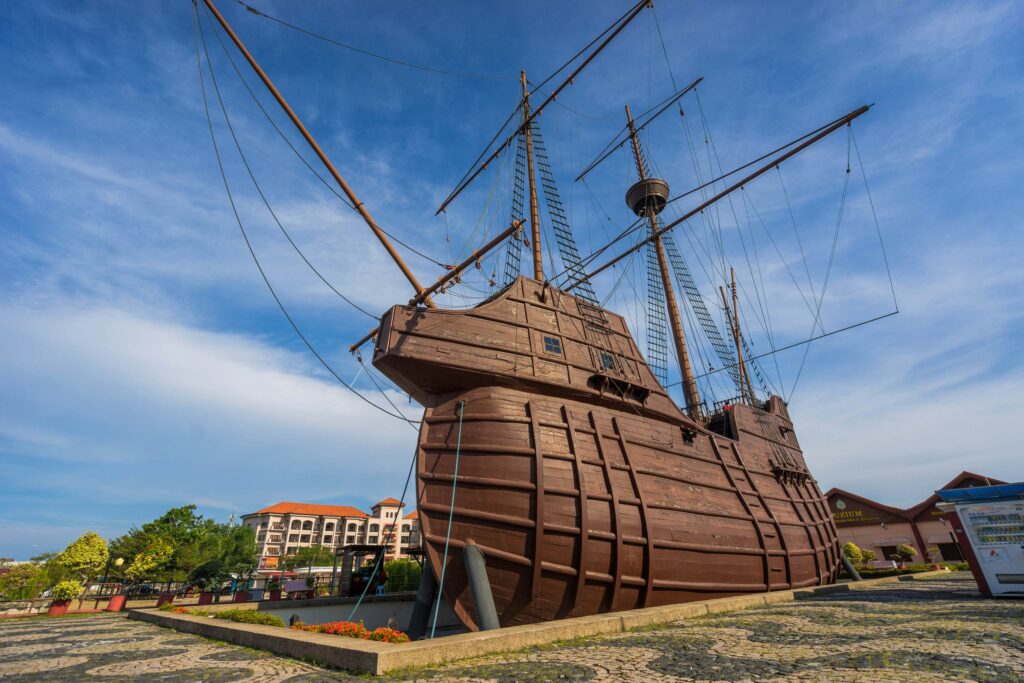
Melaka’s past is centred around maritime trade, and there’s no better way to get to know this core part of its heritage than at the 📍Maritime Museum.
It’s impossible to miss this museum as you’re exploring the old town, thanks to its main attraction: the Flor De La Mar. This majestic vessel is a replica of a 16th century Portuguese nau, one of the most important ships in the Portuguese navy as they. It took part in both the conquest of Goa and Melaka, before later sinking during a storm off the coast in 1511.
Through the exhibits inside the ship and the main building, the museum’s collection traces the evolution of the city’s maritime history, from the time of the Melaka Sultanate, through the periods of Portuguese, Dutch, and British rule.
You’ll find models of ships that sailed these waters centuries ago, artefacts recovered from shipwrecks, and historical maps and documents that illustrate the city’s strategic importance in regional trade and politics.
6 | Royal Malaysian Navy Museum
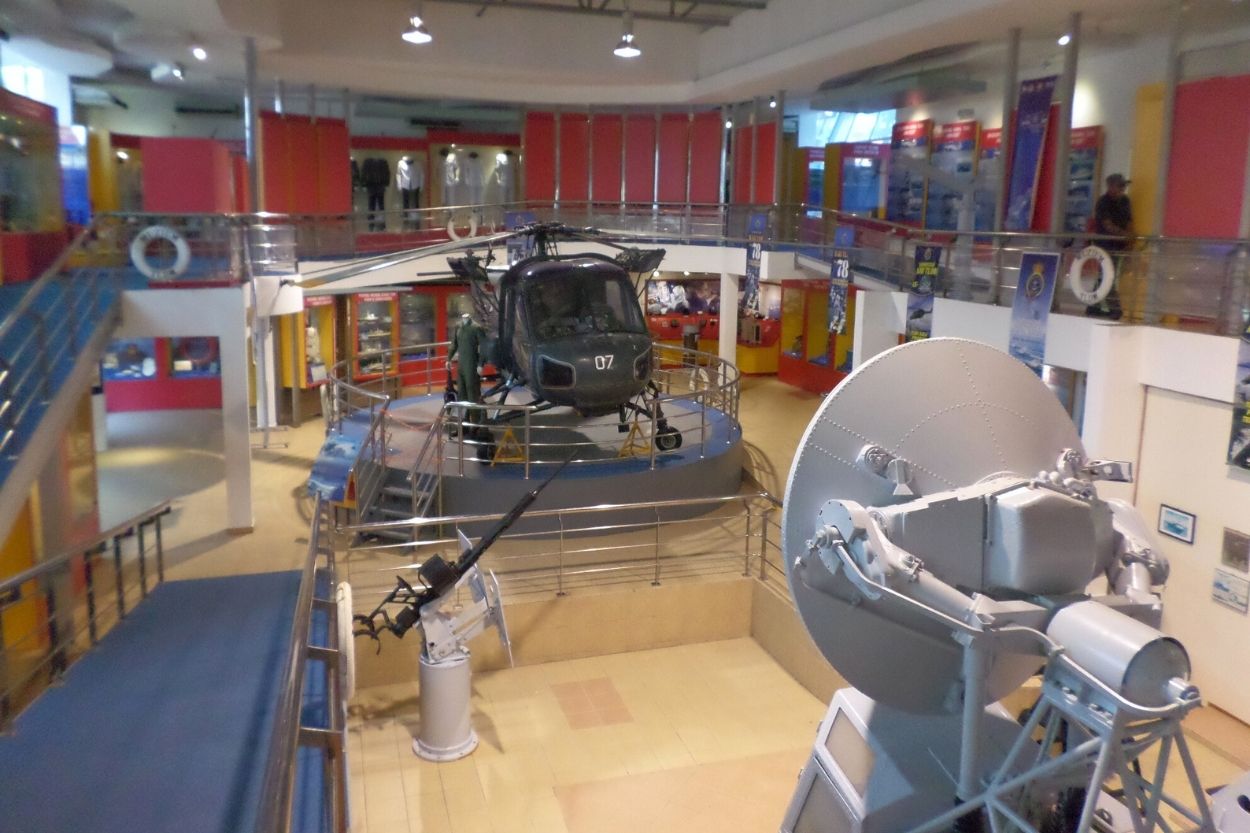
After you’ve visited the Maritime Museum, head across the road to learn about more recent naval history at the 📍Royal Malaysian Navy Museum.
This museum is dedicated not to the old wooden ships that used to sail these waters hundreds of years ago, but instead the Royal Navy, which has existed since the 1930s. Its collections are distinctly WW2 or Cold War era.
The exhibits focus on the Royal Navy’s evolution over time, including its formation from the British Navy, and its many, mostly peacetime, operations throughout South East Asia (like fighting pirates and local militas).
It features an impressive collection of hardware, including a small gunboat, an old navy helicopter, a deck cannon and machine gun, and an assortment of uniforms and other tools used by the navy.
7 | St John’s Fort
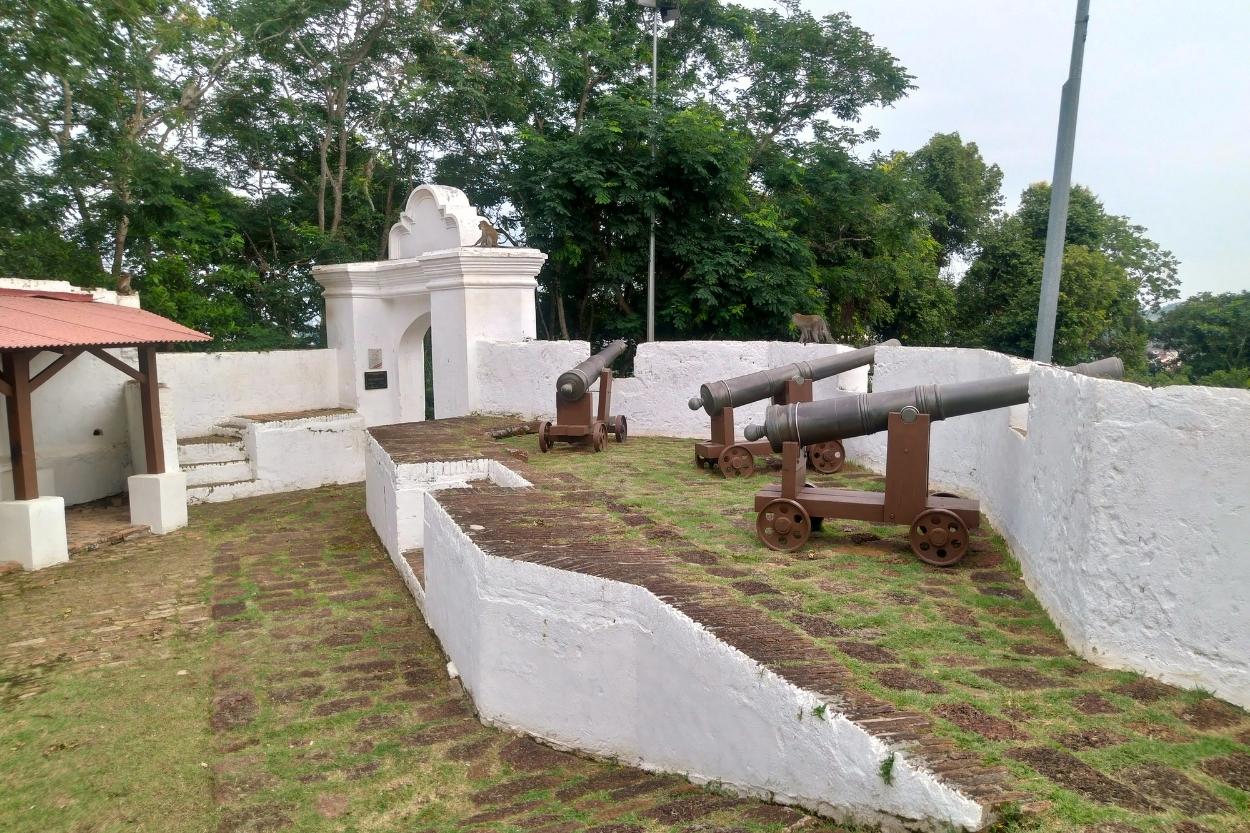
A Famosa may be the more famous of the old forts in Melaka, but it’s not the only one. Just outside the old town you can visit 📍St John’s Fort, an remnant of Dutch rule.
This historical site was originally a chapel built by the Portuguese, dedicated to St John the Baptist, from which it gets its name. The endless wars around this time led to its destruction and after the Dutch took over they built a fort on the remains of this chapel.
Exactly when the Dutch built the fort is unclear, but it was likely sometime in the late 18th century.
One thing you’ll notice here, that’s different from most coastal forts, is the cannons are predominantly facing inland. This is because the Dutch, whose fleet secured the seas, were more concerned about land attacks from the Malayan sultanates, who were not too happy about their new European neighbours.
8 | Islamic Museum
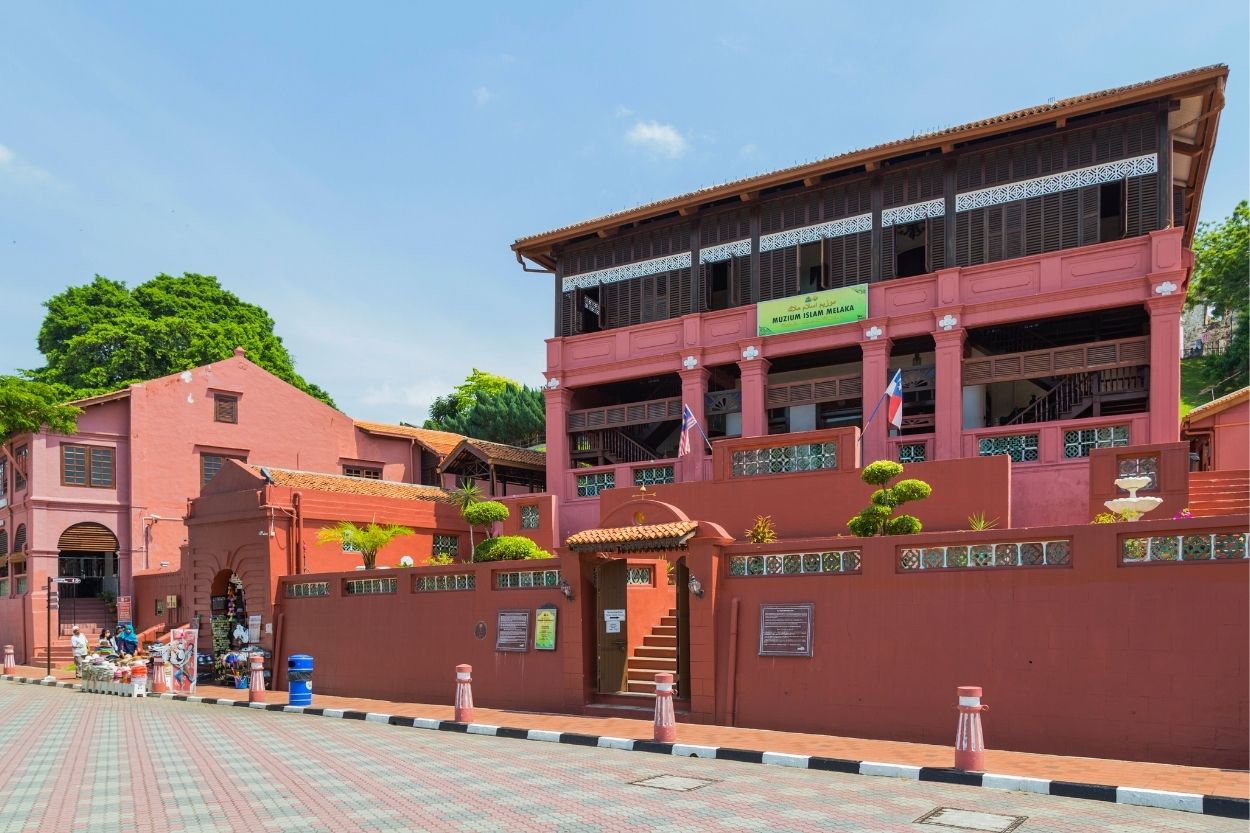
With all these Christian churches and colonial sites, it’s easy to forget that Melaka was originally an Islamic sultanate. Its origins are closely tied to Islam and there’s no better way to learn more about this than at the 📍Melaka Islamic Museum.
This little museum is located at the foot of St Pauls Hill, opposite the Historical Vehicle Park, along a stretch of road containing a collection a small museums.
Its exhibits are set up in chronological order, starting with general information on Islam, then taking you on a journey through the religion’s history in the region, from its arrival via Arabic traders, to its spread throughout South-east Asia.
Keep in mind, while this museum does have a small collection of artefacts, such as weapons, clothing and pottery, its exhibits are mostly limited to documents and information. While it may not be the most grand of museums, it’s certainly the best place to learn about this key aspect of the city’s history.
9 | Submarine Museum
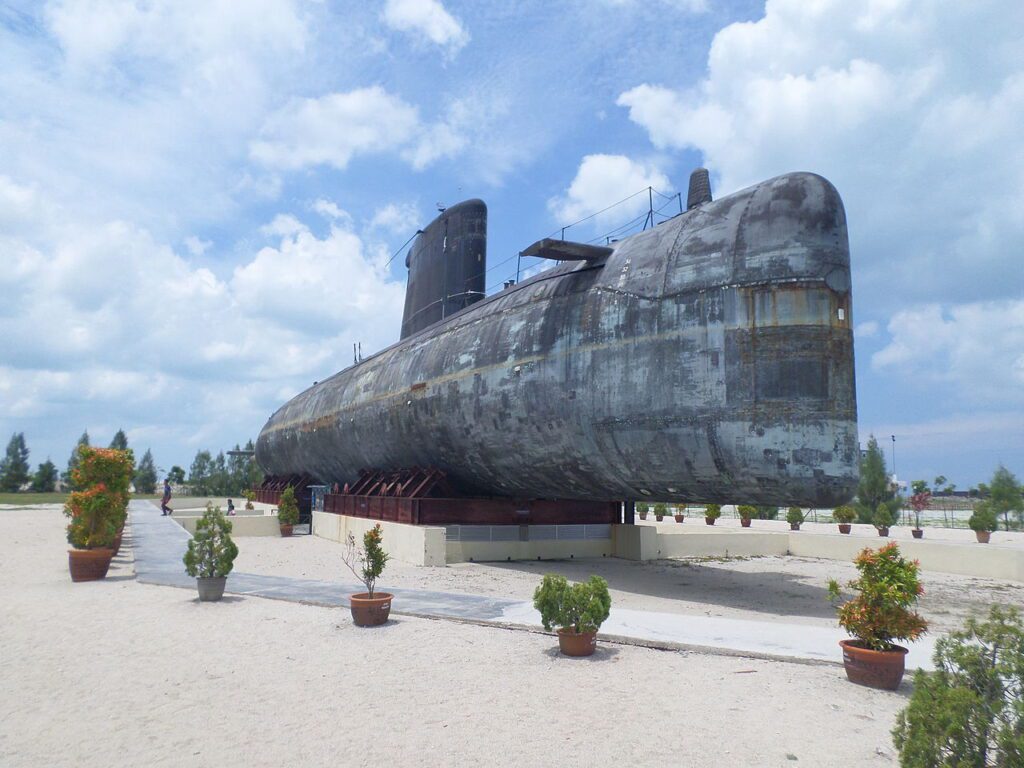
If you’re willing to get a taxi and travel outside Melaka city centre, you’ll get a chance to explore a real cold-war era submarine.
The 📍Melaka Submarine Museum is one of the most recent additions to the city’s many historical sites, only being opened in 2011. The star attraction here is the SMD Ouessant, an Agosta Class 70 submarine made by the French in 1978. This particular vessel was in active service in the French Navy up until 2001, and was then used as a training vessel for the Malaysian navy until 2009.
Now the submarine sits here on dry ground for history buff’s like yourself to enjoy. Here you can explore the interior of the vessel and get a sense of the living and working conditions of the 54 crew members.
The full interior is open for you to explore, including the sleeping quarters, kitchens, navigation centre, engine room, and torpedo launchers.
Next to the submarine you can get up close with 2 Northrop-built, 1960s-era jet fighters that were once used by the Malaysian Navy for reconnaissance.
10 | Cheng Ho Cultural Museum
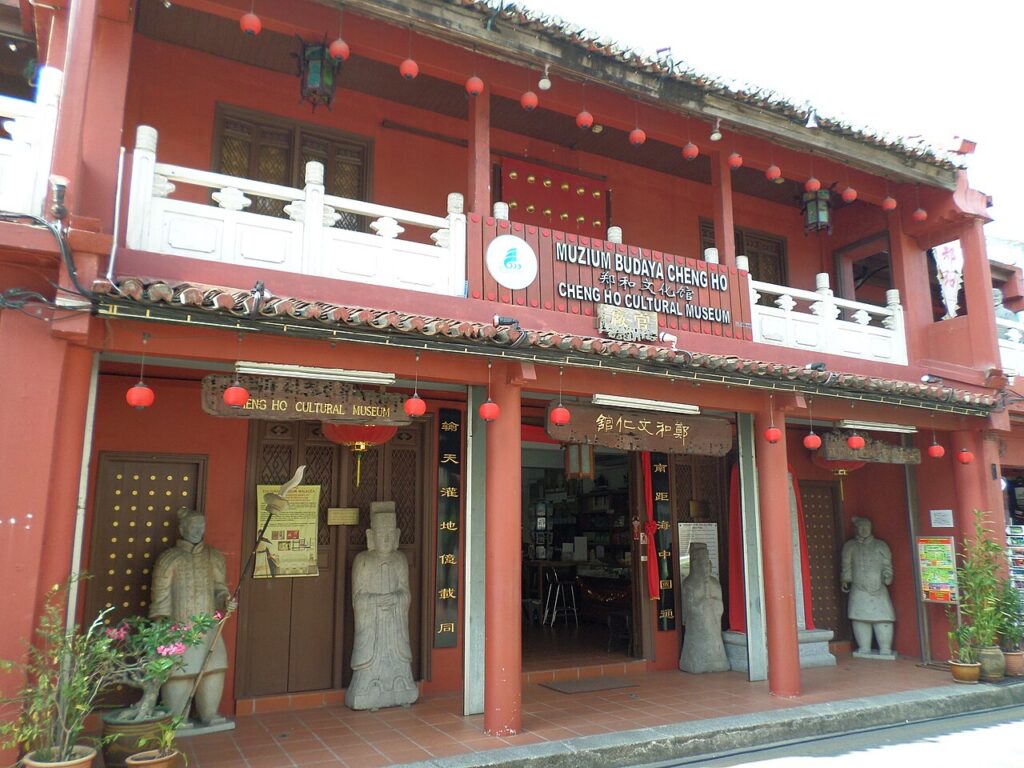
If you want to learn about the greatest maritime explorer in Chinese history, visit the 📍Cheng Ho Cultural Museum.
This museum is all about Admiran Cheng Ho; more commonly spelling Zheng He.
During the Ming Dynasty in China, Zheng He sailor led 7 expeditions as far as East Africa, which at the time was the edge of the known world for China.
His ships were said to be so large that they carried 1000 sailors and were larger than any ship in history before the 20th century. Zheng He and his fleet spread China’s influence and riches across the world and brought back with them all manner of exotic things, including a giraffe.
On many of his expeditions, Zheng He stopped in Malacca and established a strong relationship between the city and China, something which helped it thrive as a trading port.
The museum itself is inside a building that’s said to be a warehouse built by Zheng He and commemorates the life of the admiral, his visits to Melaka, and the relationship between Melaka and China. You’ll see miniatures of the treasure fleet, maps of his voyages, and countless related artefacts, from cannons to pottery.
11 | Historical Vehicle Park
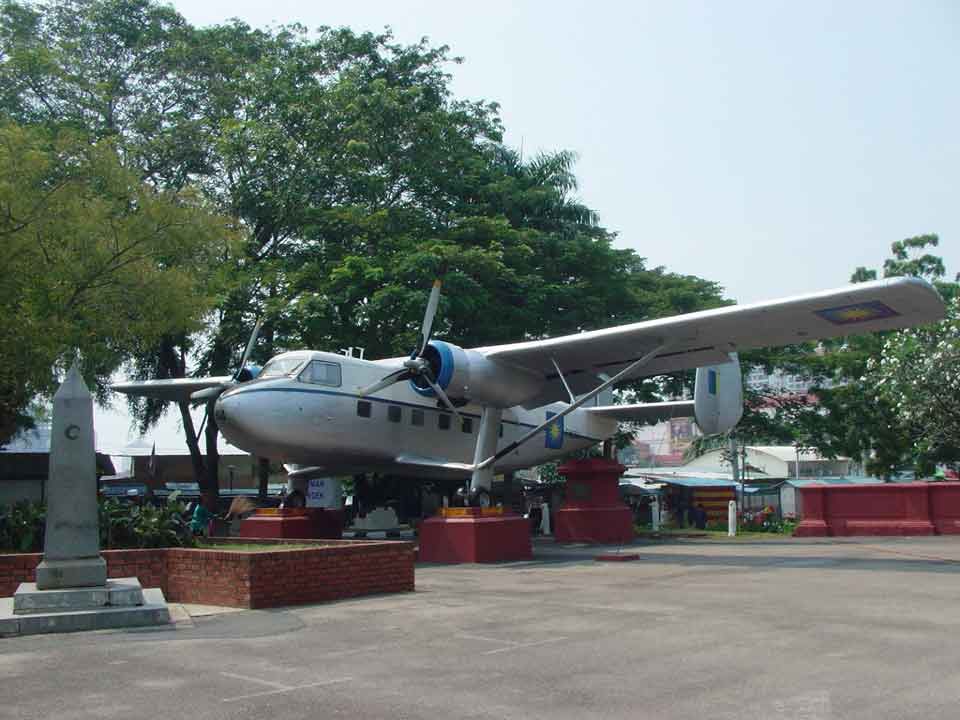
For something a little different in between the ancient forts and colonial sites, stop by the 📍Historical Vehicle Park.
It’s hard to miss as you’re passing by. An 80 year old aircraft sitting in a public park tends to stand out.
You can explore this park for free and get up close with a somewhat random selection of old vehicles, including a 1950s British aircraft, a colonial-era train carriage, and an old fire truck.
For a small fee you can even explore the interior of the aircraft and train carriage.
Why are these vehicles sitting in a public park in downtown Melaka? I can’t find an answer to that anywhere, but they are likely leftovers from British rule. Thankfully, instead of leaving them to disrepair, the Melakan government keeps them here, for the public to enjoy.
12 | Melaka Sultanate Palace Museum
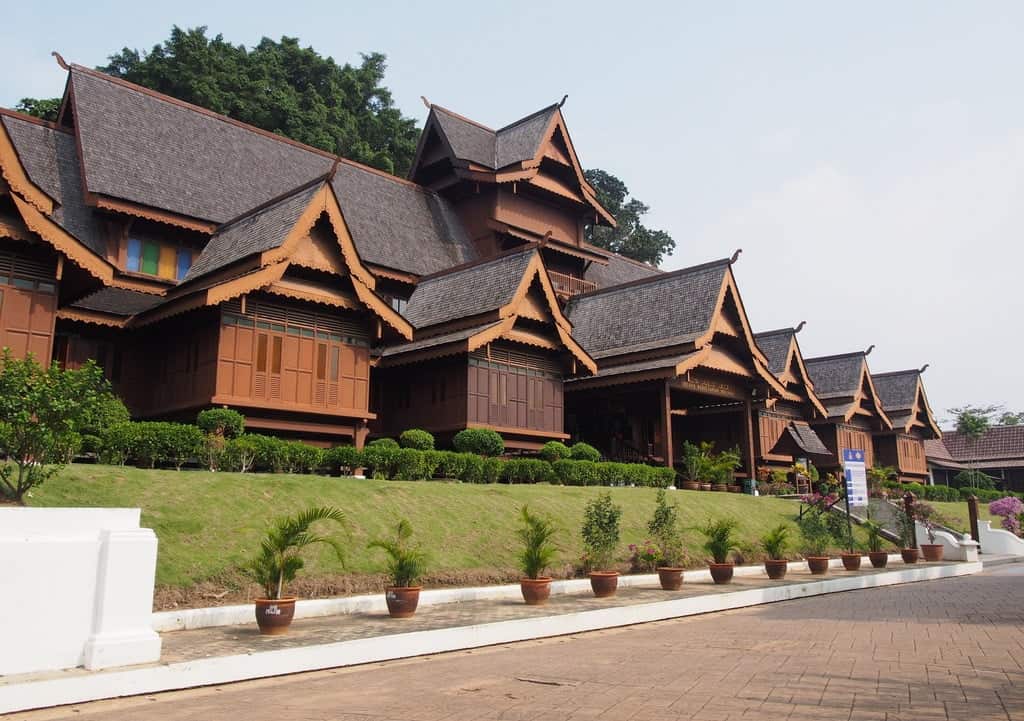
Before the Portuguese takeover, Melaka was an Islamic Sultanate, and the Sultan ruled the land from a grand palace. This palace was described in great detail in a historical text called the Malay Annals, a famous collection of documents written as far back as the 15th century.
In 1984 the Malaysian government used these descriptions to re-create that Palace in all its glory, resulting in the 📍Melaka Sultanate Palace Museum.
This majestic building was designed to look as accurate as possible to the original building, both inside and out. Many of its rooms are set up in the way they would have been during the Sultanate era.
It also features a bunch of displays, mostly using life-sized mannequins, depicting what life was like for those in the Sultan’s court.
If you want to take a glimpse into the past and see what Melaka was like before the Europeans, this is the closest you’re going to get.