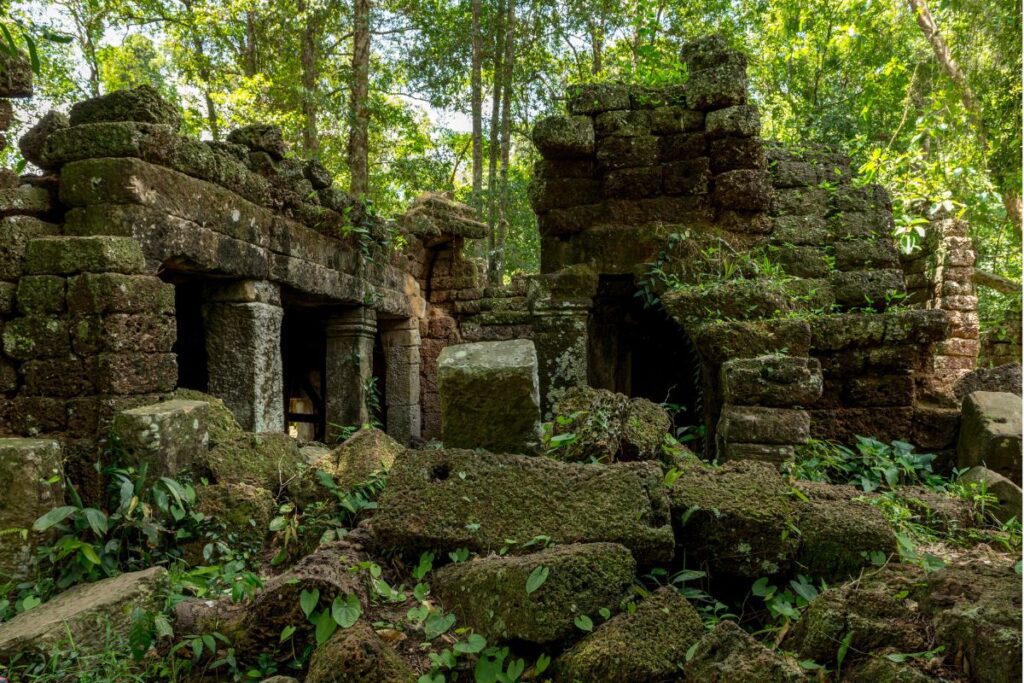
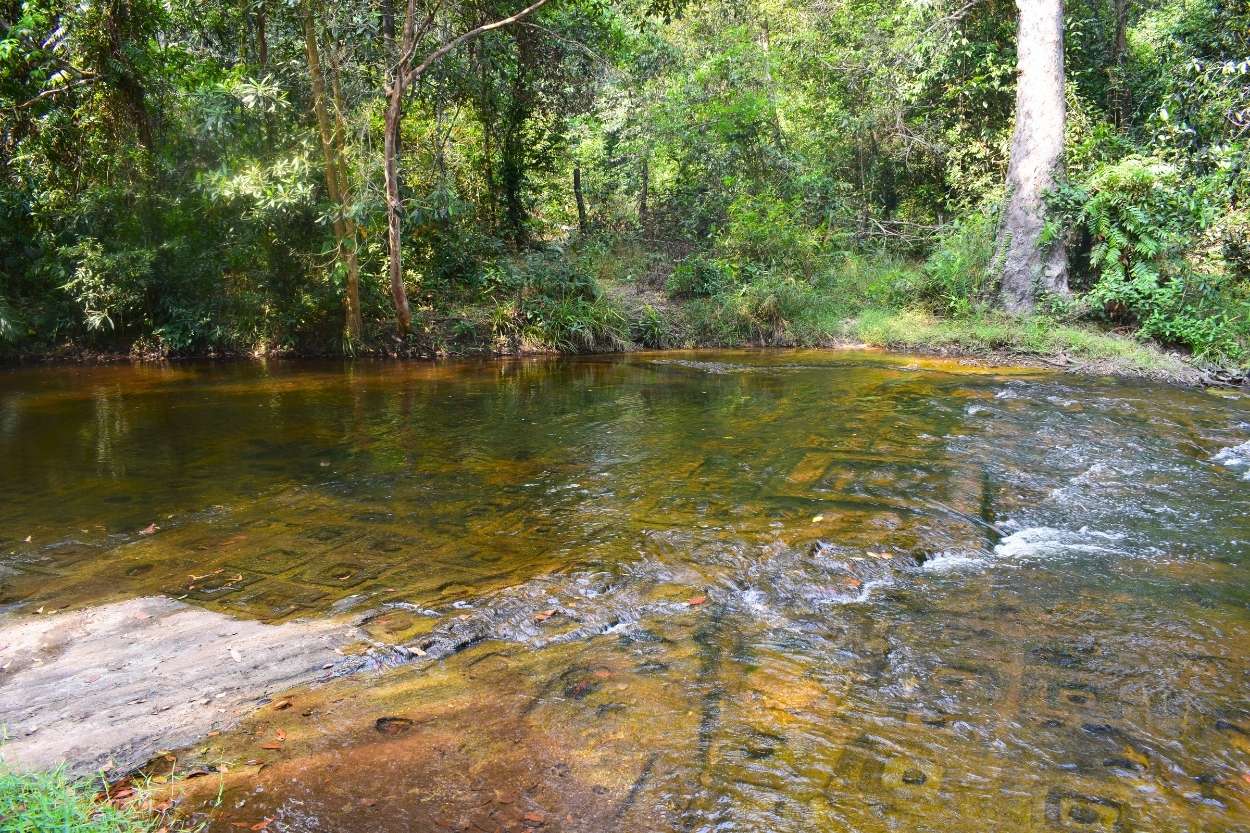
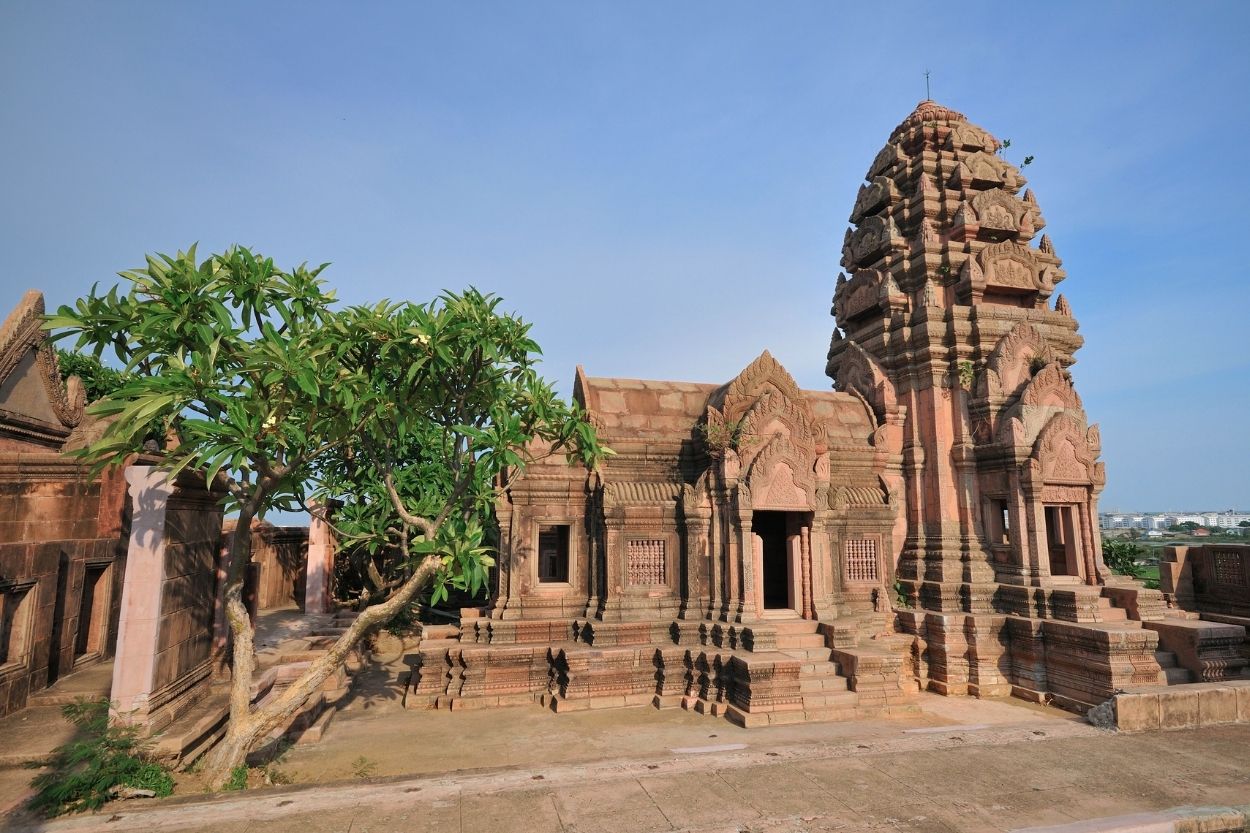
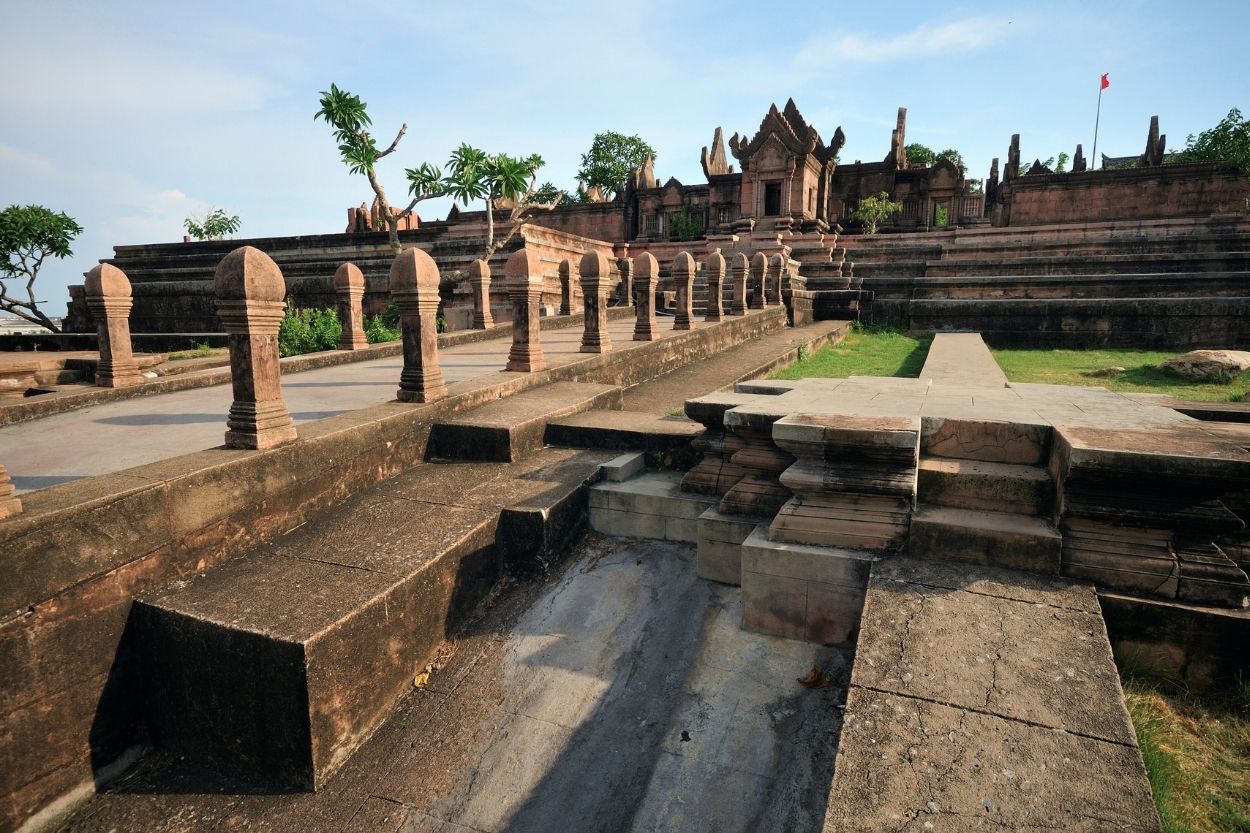
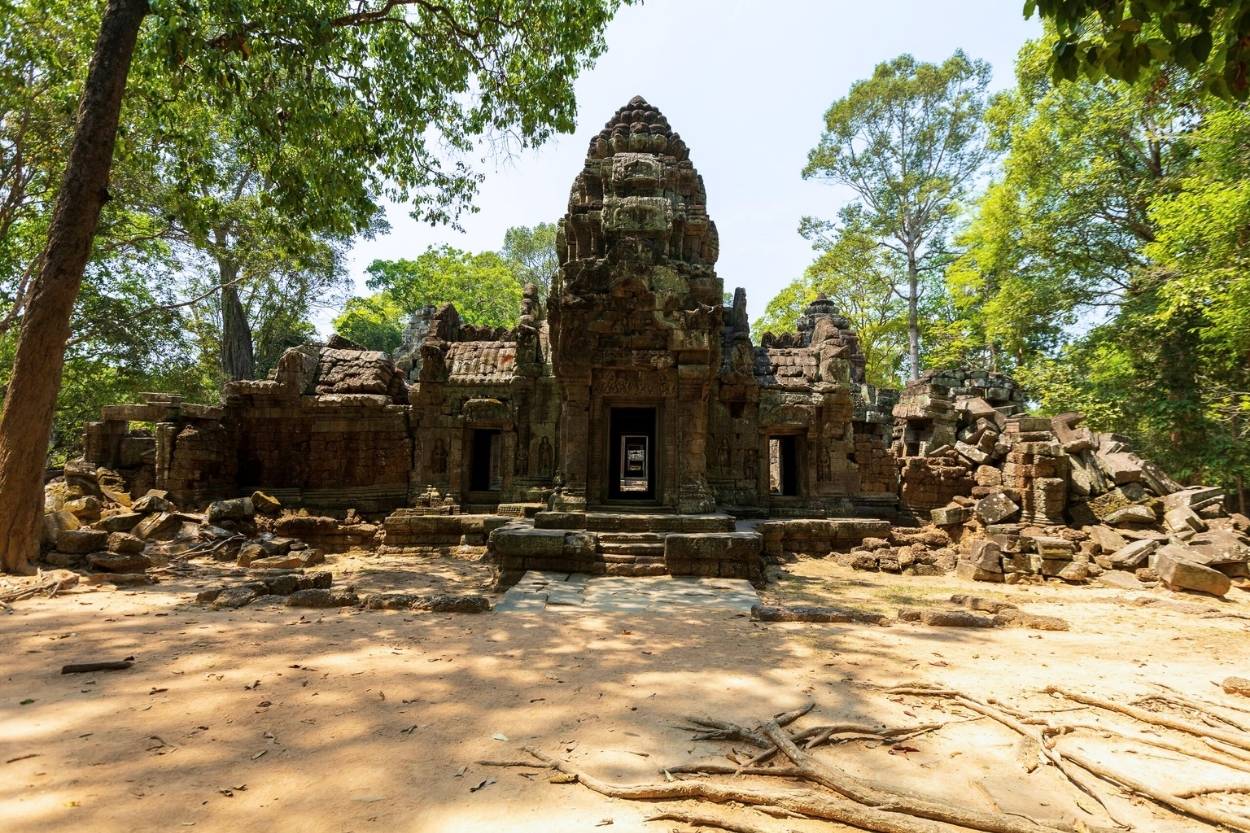
Once upon a time it was home to the mighty Khmer Empire, whose temples and ruins can be found all across the country (such as the world-famous Angkor Wat). Its modern history is just as rich, with a French heritage still alive and well, and dark tourism sites from the brutal Khmer Rouge era.
With so many historical attractions on offer, it can be hard to know where to start. So in this guide I’m giving you the 10 best historical sites in Cambodia.
Contents
A Brief History of Cambodia
Cambodia has a long and eventful history, but here’s the quick version.
Cambodia’s history really takes off in the 9th century when Jayavarman II founded the Khmer Empire. The new Empire expanded quickly and it wasn’t long before it ruled over most of SEA – from Myanmar to the Mekong, and from Phuket to Yunnan (China).
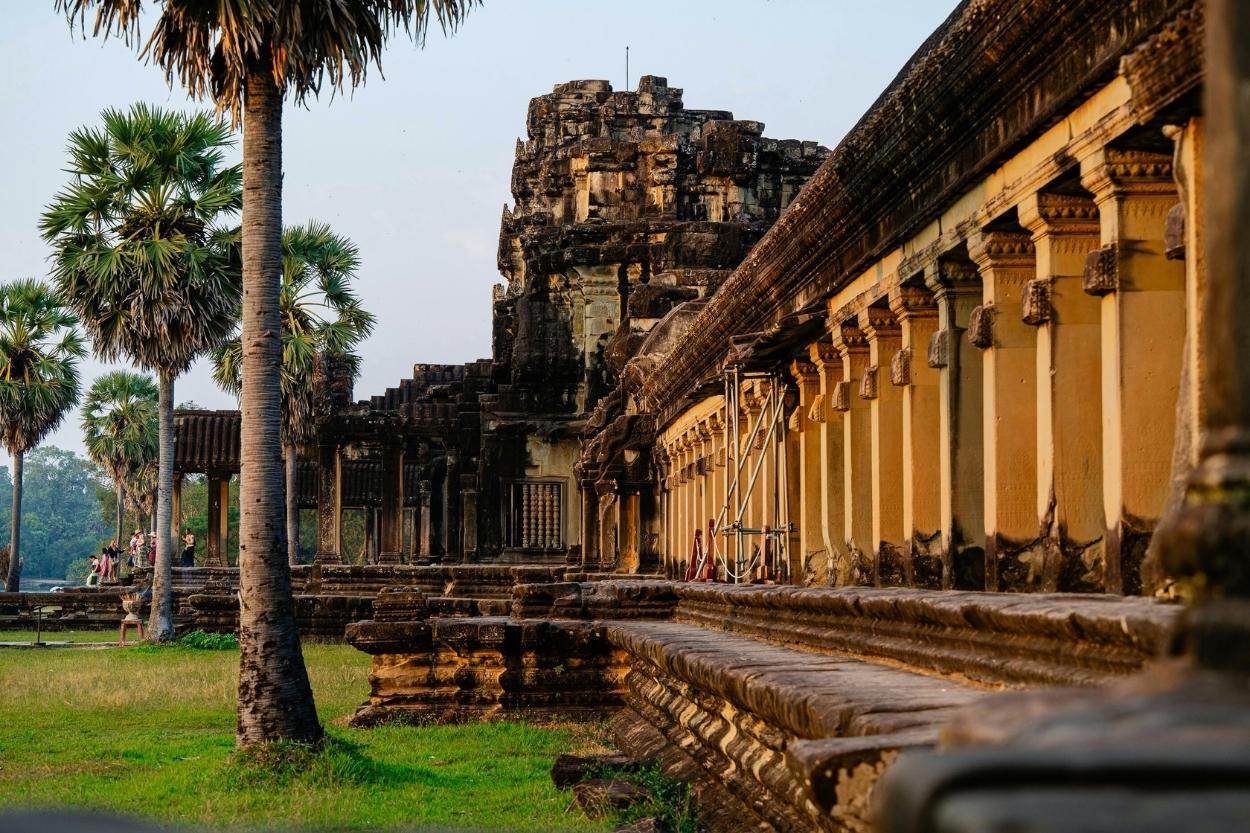
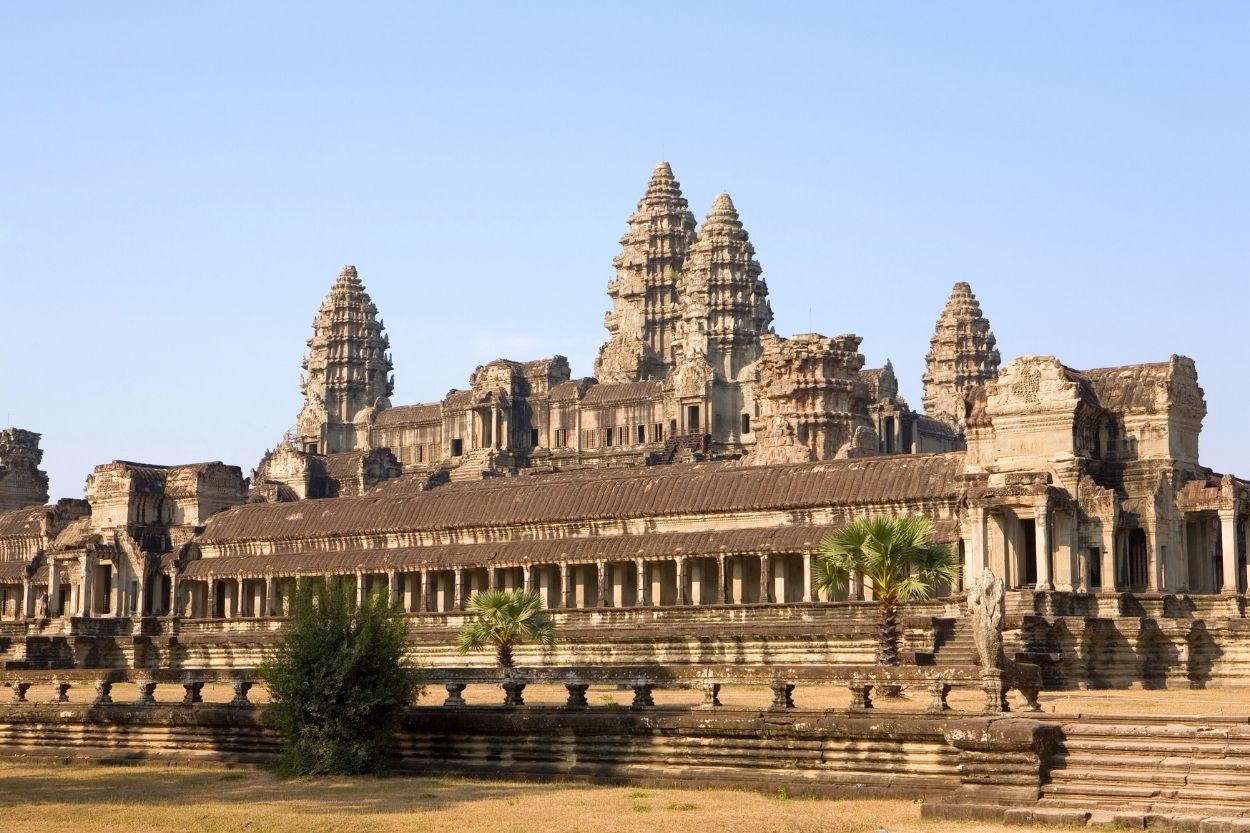
Angkor Wat
The Empire’s was centered around around the rich farmland on the north shore of Tonle Sap. Here a number of cities developed, eventually forming one large urban area that became the city of Angkor. At its peak in the 11th century, it covered a land area as large as modern Paris, and with a population of a million people.
At its centre was the temple complex of Angkor Wat, the largest religious monument in the world.
For about 5 centuries, the Khmer dominated SEA, leaving a rich legacy in much the same way Rome did in the Mediterraean. All across the region they build temples, roads, bridges, barays (manmade lakes) and extensive irrigation systems.
The Khmer Empire would gradually decline before coming to an end around the 14th century.
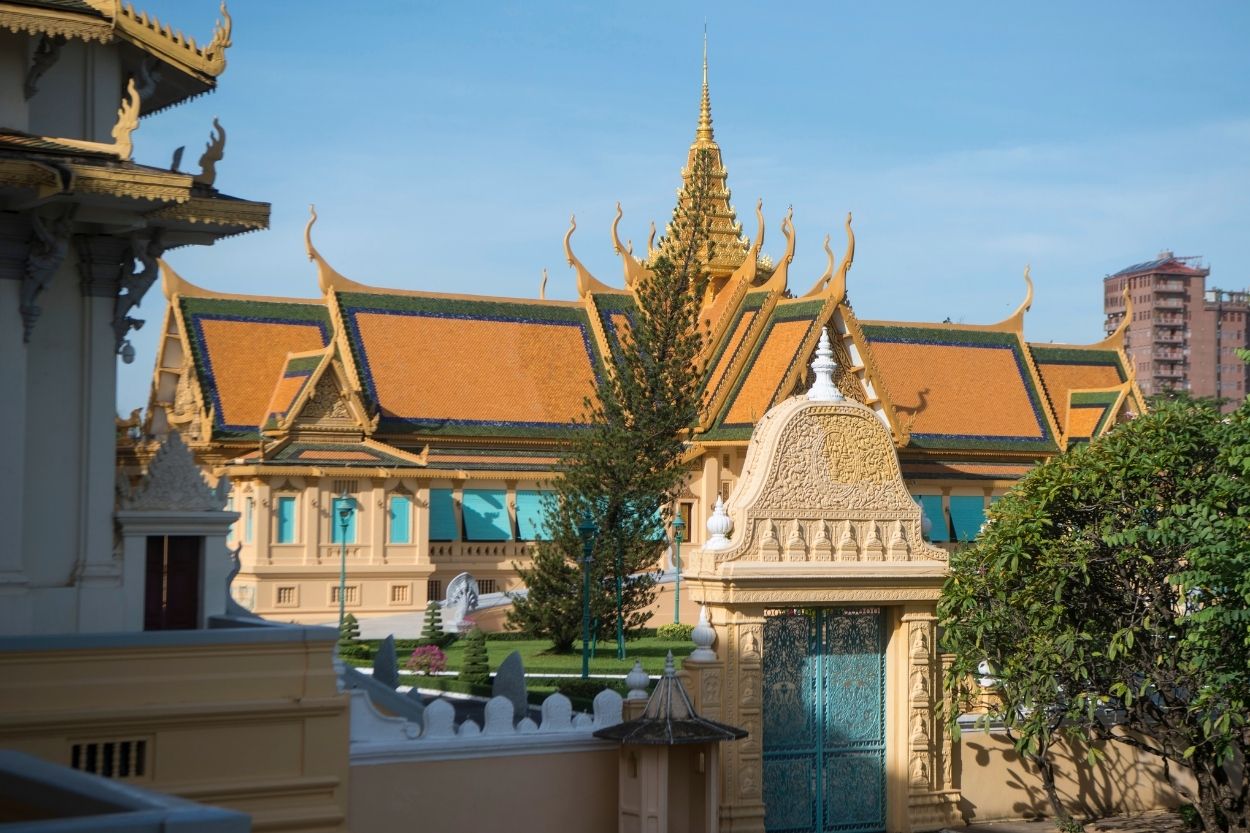
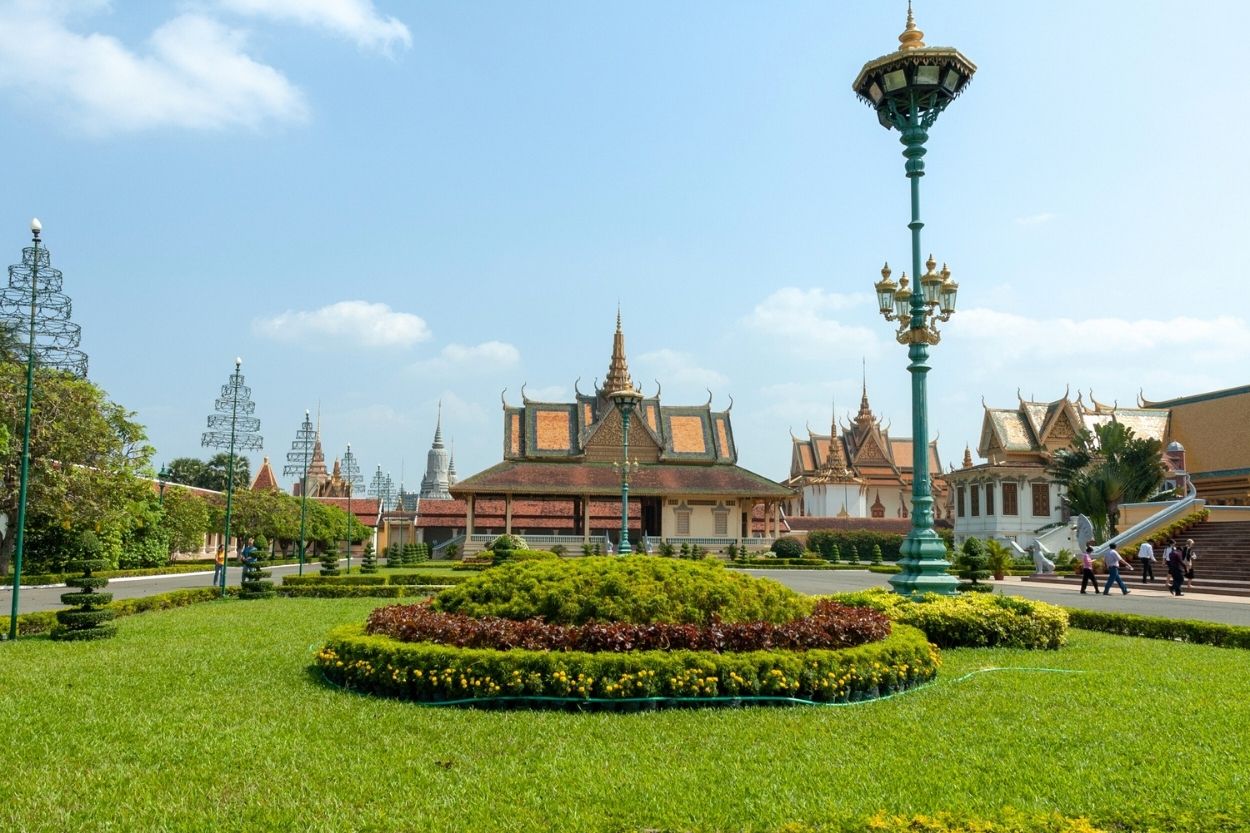
Cambodia Royal Palace
The next major even in Cambodia’s history came with the arrival of the French, who gradually absorbed SEA into their empire in the late 19th century.
France would have a major impact on Cambodia. All across Cambodia today, you can see French architecture, eat French food and hear French words.
With World War 2, the French would lose control of the colony. While they attempted to gain it back in a long and bloody conflict, they eventually let it go, making room for something much worse…
In 1975 Cambodia fell under the rule of the Khmer Rouge, a brutal regime that saught to completely remake society from the ground up.
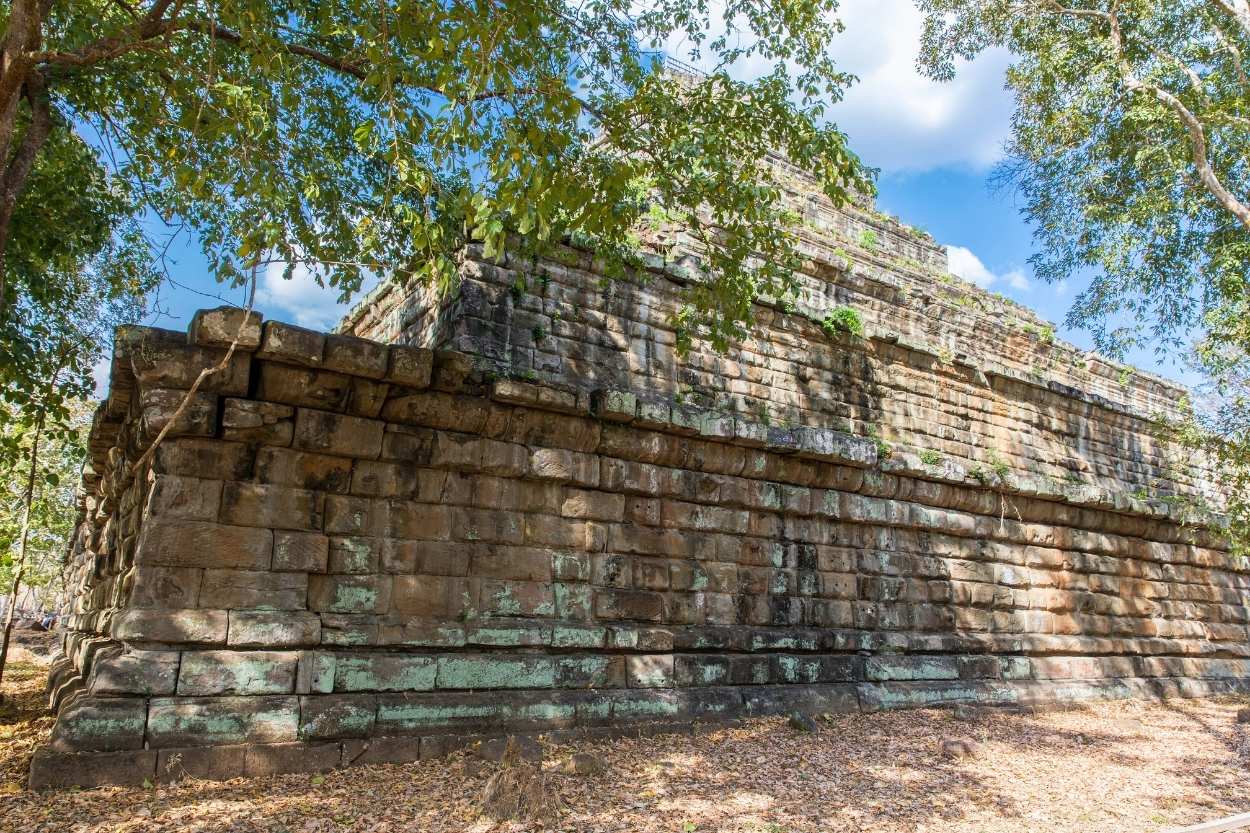
Koh Ker Pyramid
Over 4 years they, through both famine and systematic genocide, they caused the deaths of 25% of Cambodia’s population, around 2 million people. Their targets were anyone who didn’t fit their agrarian communist utopia they tried to create.
The Khmer Rouge is a very significant and eventful part of Cambodia’s modern history, and there’s too much to cover here, but you can learn more about it in the following article:
Cambodia is still recovering from the Khmer Rouge, but its come a long way. Across the country, former prisons and ‘killing fields’ have now been turned into dark tourism sites where visitors can learn more about this confronting period of Cambodia’s history.
The 400km² complex contains the remains of the former capital of the Cambodia. At its peak, this city housed up to a million people in an area larger than modern-day Paris.
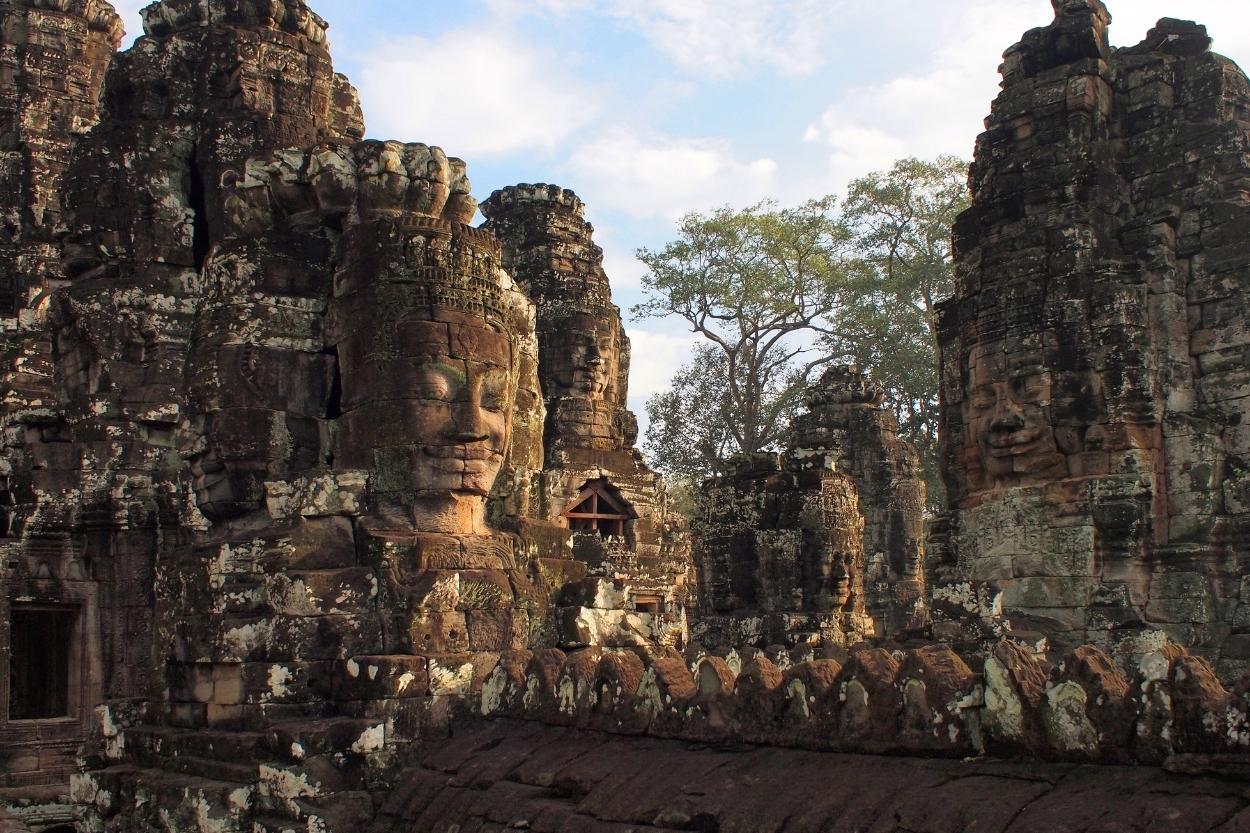
At its core is the world-famous Angkor Wat, the world’s largest religious monument that served as the religious heart of the Khmer Empire.
Bayon Temple
But the complex is much larger than just Angkor Wat. You can spend multiple days exploring all the ancient monuments Angkor has on offer, including:
Angkor is a bucket-list destination, and a must-visit when in Cambodia.
2 | S21 and Choeung Ek
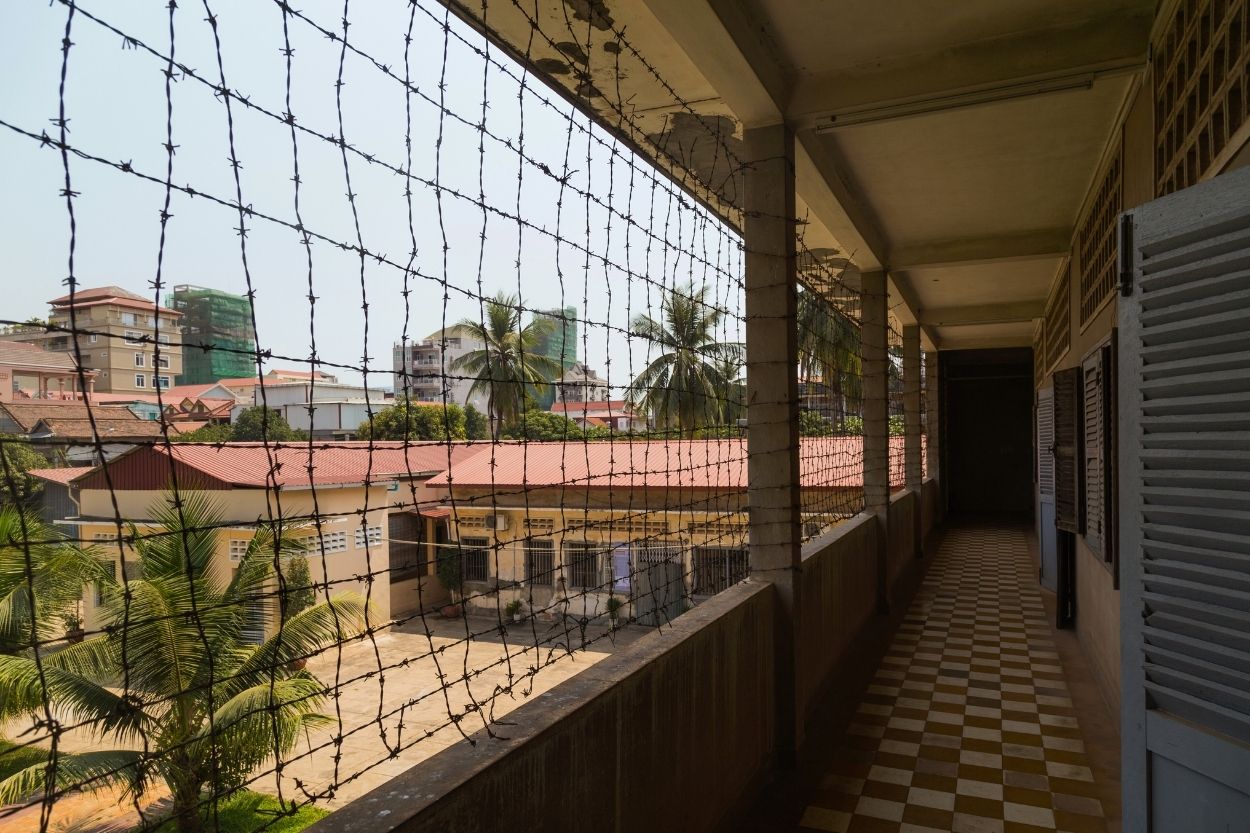
Tuol Sleng
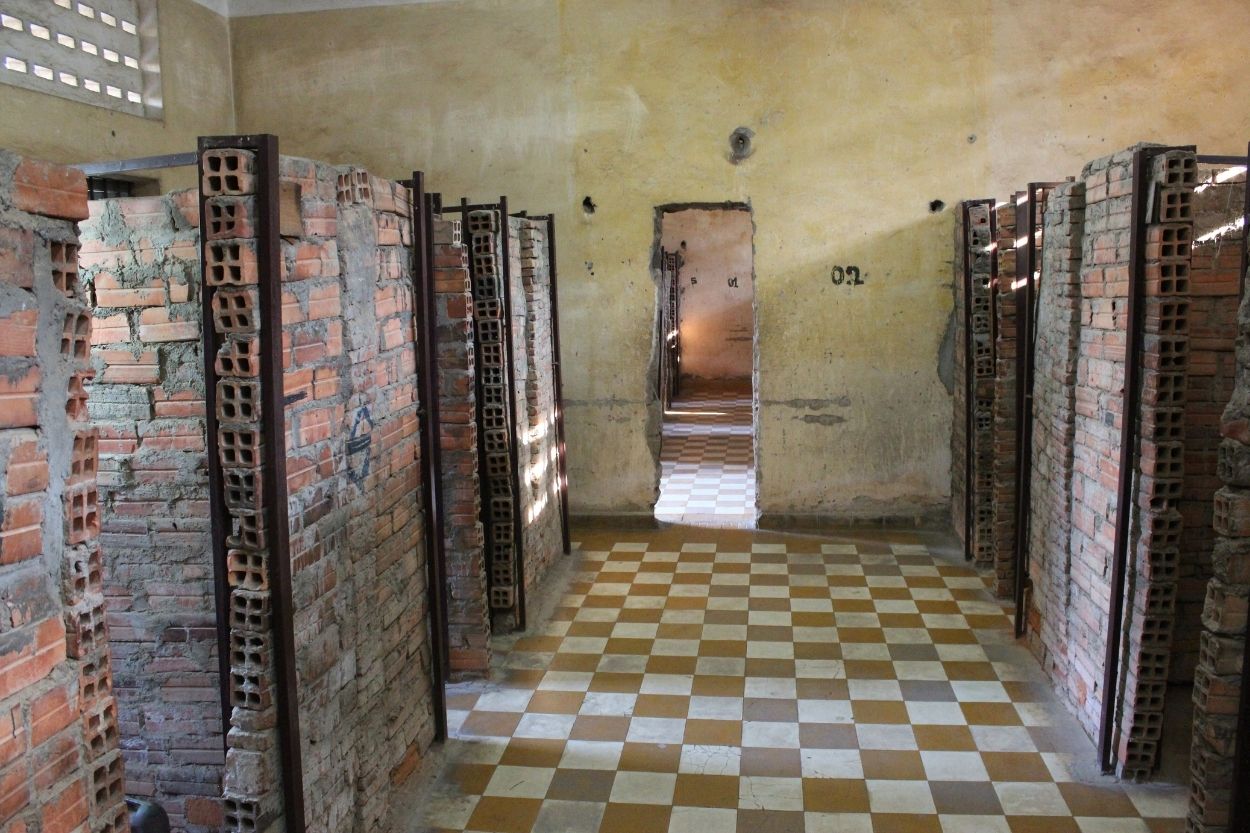
During the dark years of the Khmer Rouge, the regime ran over 100 prisons where they tortured and execute countless people. One such site is 📍Tuol Sleng. Once a school in Phnom Penh, Tuol Sleng (known as S21) saw up to 20,000 prisoners move through its walls over 4 years.
Today the prison is a museum that serves as a brutal reminder of the regime’s atrocities. Many of the rooms are kept in the exact same condition they were when it was liberated in 1979, while others hold exhibits on the things that took place here, and tell the story of many individuals who experienced it.
Tuol Sleng
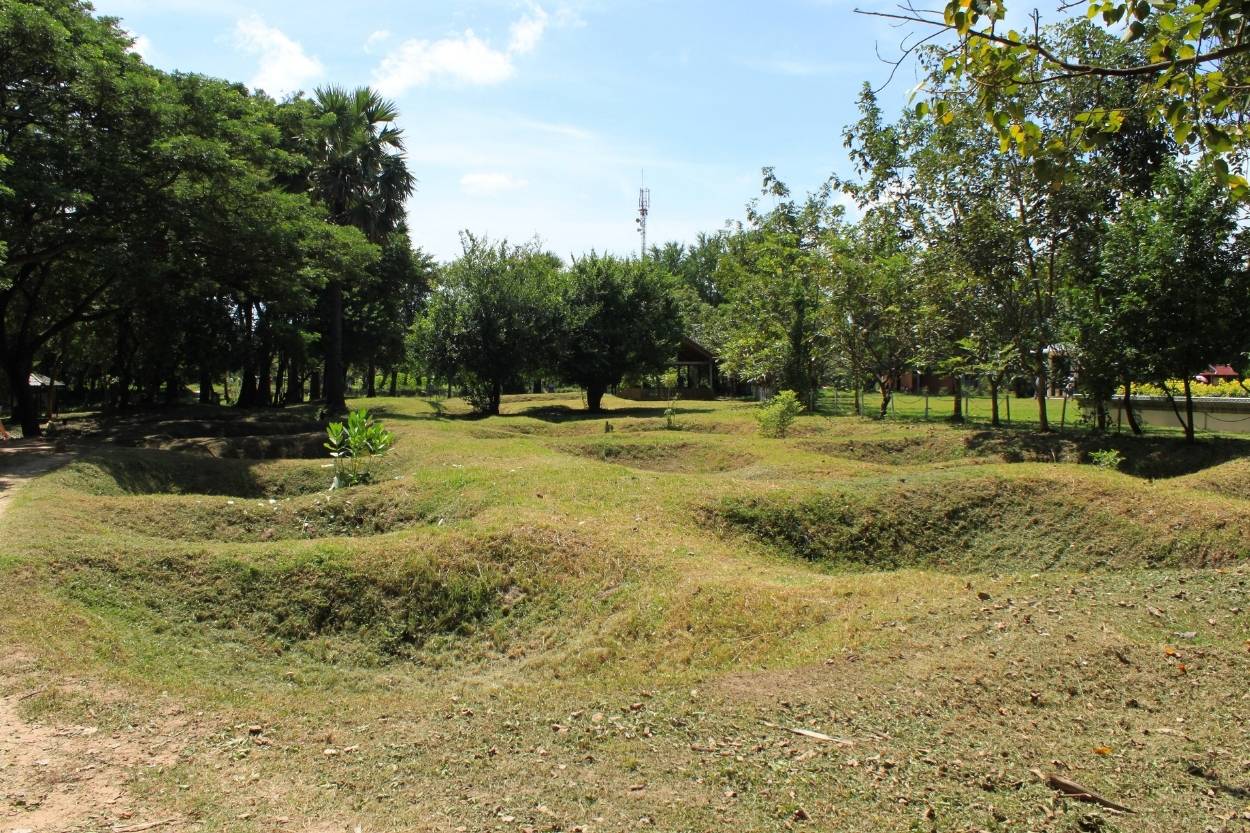
After victims suffered brutal treatment at S21, they were transported in the back of trucks to a site just outside the city where they would be executed en masse, and buried in mass Graves. This place is the 📍Choeung Ek Killing Field. One of many such former killing fields across the country.
Here you’ll walk around the former mass graves (which still contain some human bones), learn the specific & brutal details of the executions and, in the centre of the site, see a monument displaying the skulls of over 5000 of the victims.
Mass Graves at Choeung Ek
It may seem strange to consider such places ‘tourist sites’, but the Cambodians encourage foreign tourists to visit places like these and learn what happened. Tuol Sleng and Choeung Ek are confronting but essential experiences for those interested in Cambodia’s history.
🛏 Booking hotels: Trip.com and Booking.com are the best resources for finding and booking hotels in Cambodia.
🏄 Booking tours: GetYourGuide is the best resources for finding guided tours to Cambodia’s historical sites.
🚅 Booking transport:12Go is the best online resource for booking trains and buses in Cambodia, and Asia.
🏥 Travel insurance:Heymondo covers medical, theft, cancellations and more in Cambodia.
3 | Royal Palace
Cambodia’s royal family traces its origins all the way back to the 1st century CE, having seen multiple dynasties come and go.
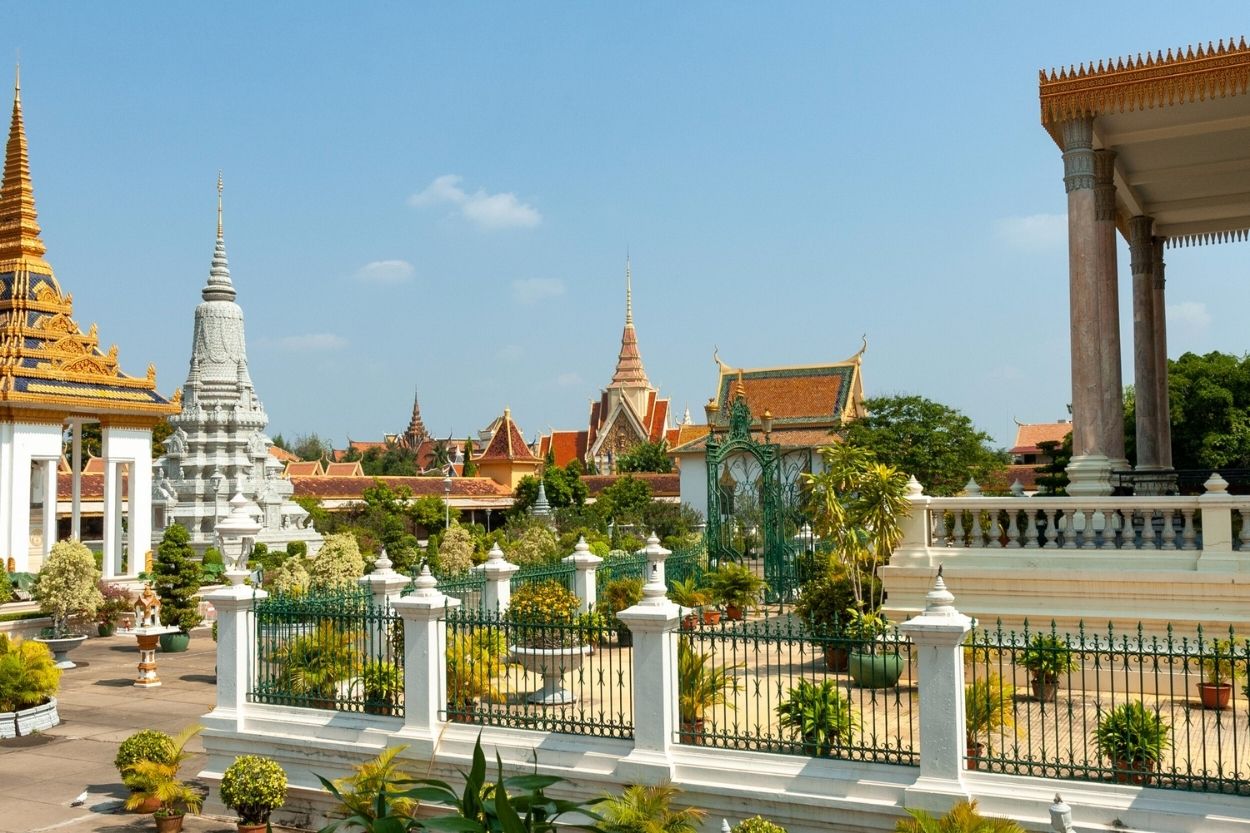
For a long time its monarchs lived at Angkor, but after the great city fell the royal family moved its capital from place to place before settling in Phnom Penh in the 19th century. In 1866 they built this 📍Royal Palace.
Located in downtown Phnom Penh, the palace comprises several temples, residences and administrative buildings around a central courtyard.
Because the palace is still used today, there are certain restrictions when visiting. It’s only open for visitors for a select few hours in the morning and afternoon, and certain areas of the grounds are off limits, but still has plenty to explore.
4 | Bokor Hill Station
📍Kampot is a popular tourist hotspot on Cambodia’s southern coast, known for its relaxed backpacker vibe and outdoor adventure, but it also has a strong French heritage.
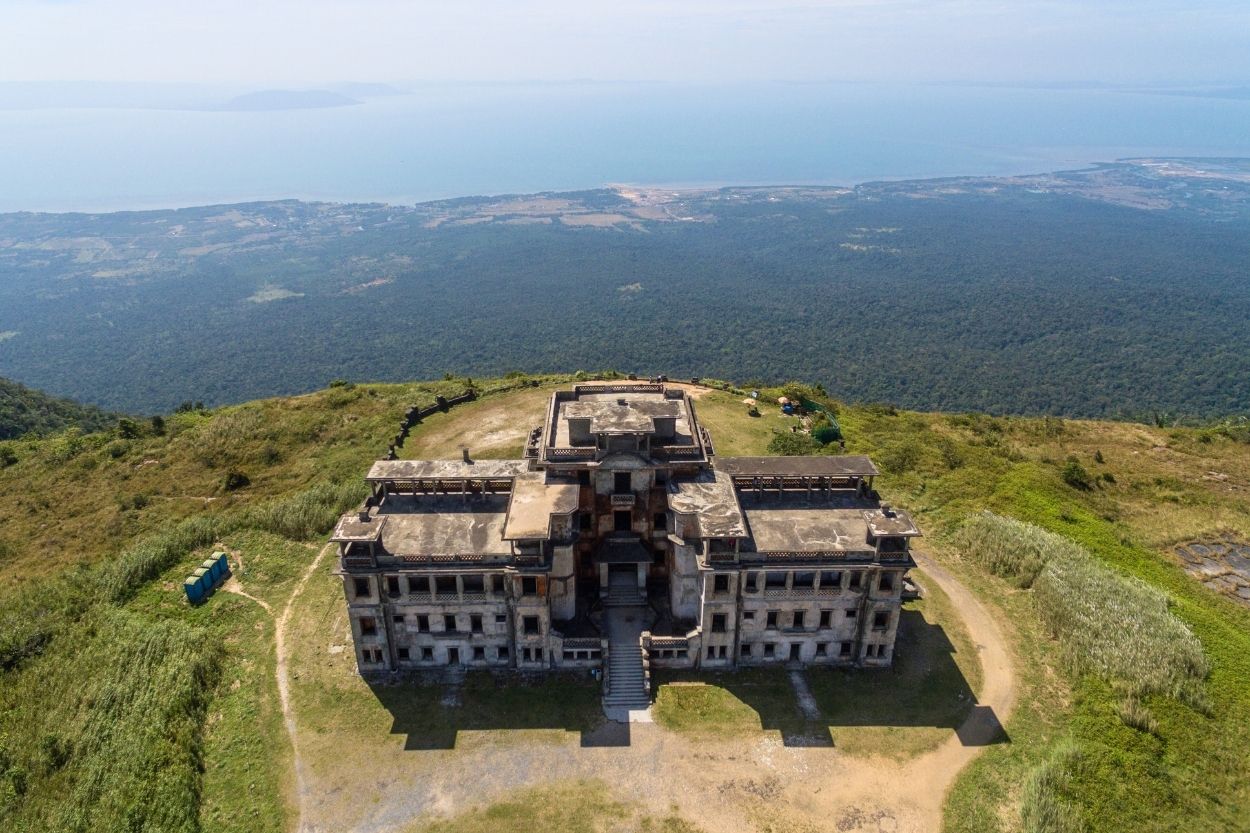
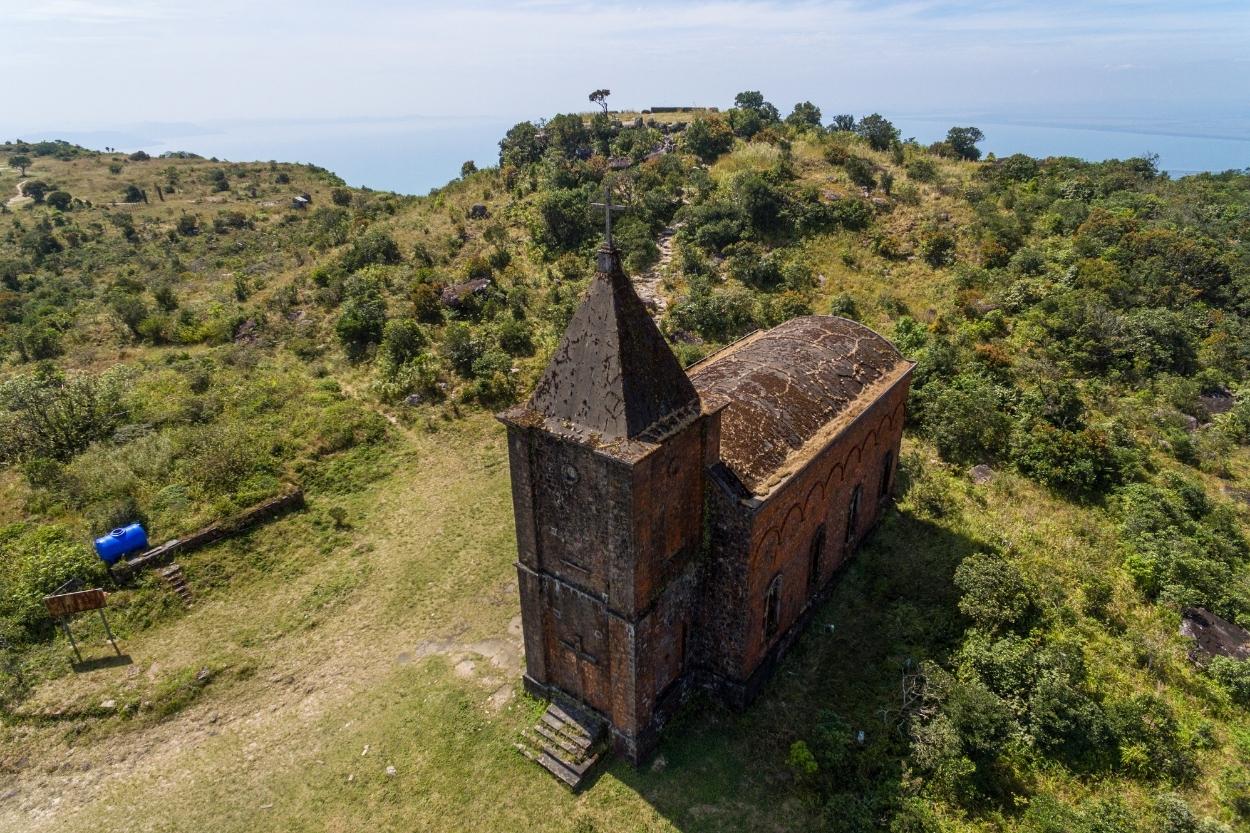
📍Bokor Hill Station, located in the hills west of Kampot and overlooking the Gulf of Thailand, was founded in 1921 as a resort for French officials. Here they they built a hotel, casino, church and post office – essentially a small town.
Once a thriving retreat for those wealthy enough to afford it, the town was abandoned in 1940 after WW2, before being restarted and abandoned again when the Khmer Rouge took power in 1972.
After the Khmer Rouge were overthrown by the Vietnamese in 1979, the last remnants of the regime took refuge at Bokor Hill Station, where they remained all the way to the 1990s.
Now, with the roads being developed, the abandoned ruins are easily accessible and are becoming a popular day trip from Kampot for those who want to see a bit of Cambodia’s French colonial history.
5 | Phnom Kulen
In 802 CE, in the mountains near modern-day Siem Reap, Jayavarman II declared the founding of the Khmer Empire. He declared this site its capital, and founded the city of Mahendraparvata.
The city was abandoned and swallowed up by the jungle, only to be rediscovered again in the 21st century inside what is now 📍Phnom Kulen National Park. Today, its a popular day trip from Siem Reap.
Within this national park you can find a collection of ruins from the ancient city, gradually being uncovered from the jungle, including:
There are no doubt many more ruins in Phnom Kulen National Park waiting to be rediscovered. Who knows what you’ll find…
6 | Prasat Preah Vihear
In the far north of Cambodia, in a disputed area, you’ll find the Khmer temple of 📍Preah Vihear.
This Hindu temple, built during the Angkor period in the 9th century CE, sits atop a 500m high cliff in the Dangrek Mountains, with amazing view over the flat plains of central Cambodia.
While still constructed in the traditional Khmer style, Prasat Preah Vihear has a unique shape, stretched out along an 800m north-south axis, with the cliff at the far end.
The temple is claimed by both Cambodia and Thailand, and has been caught in the crossfire of several border conflicts. Despite this, its still a popular tourist attraction.
Given its remote located about a 3 hour drive from Siem Reap, Preah Vihear is best visited on a guided tour, which will cover your transport to and from the site, as well as tickets and a guide.
7 | Banteay Chhmar
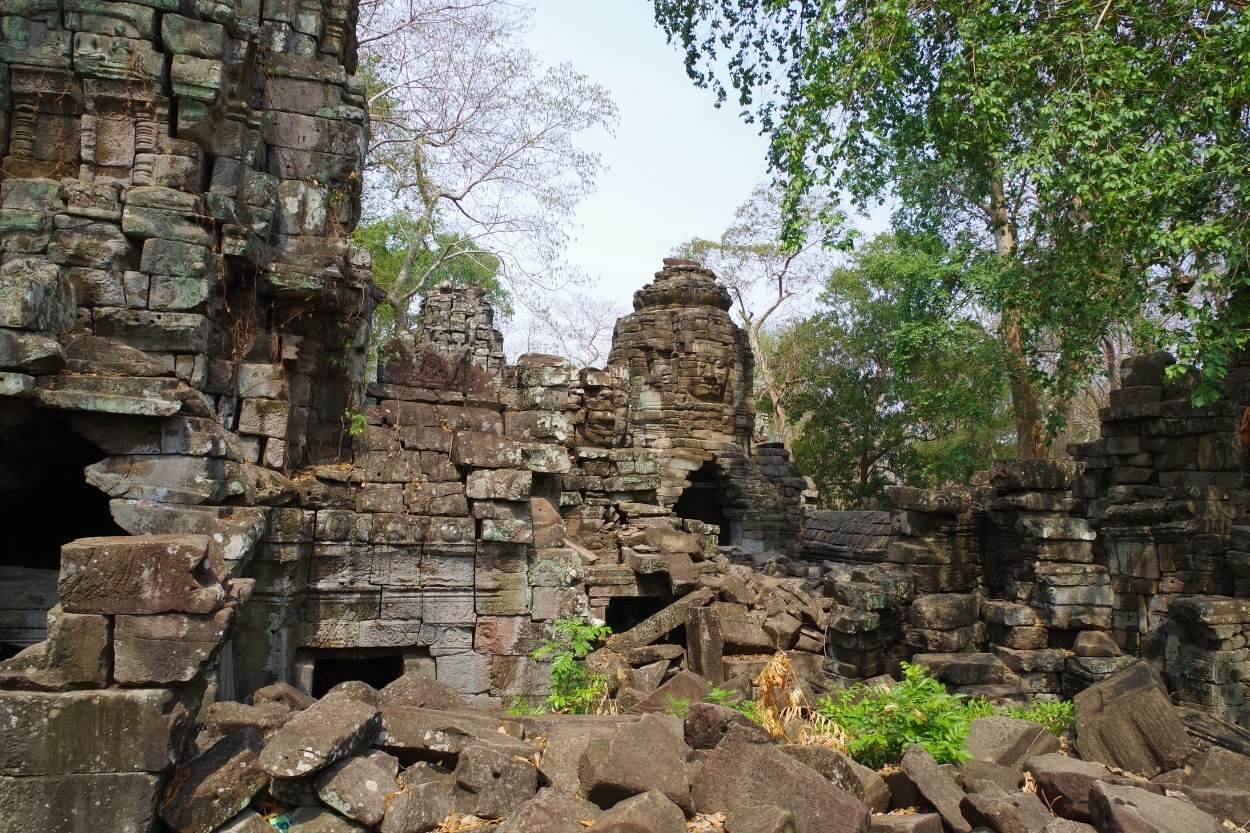
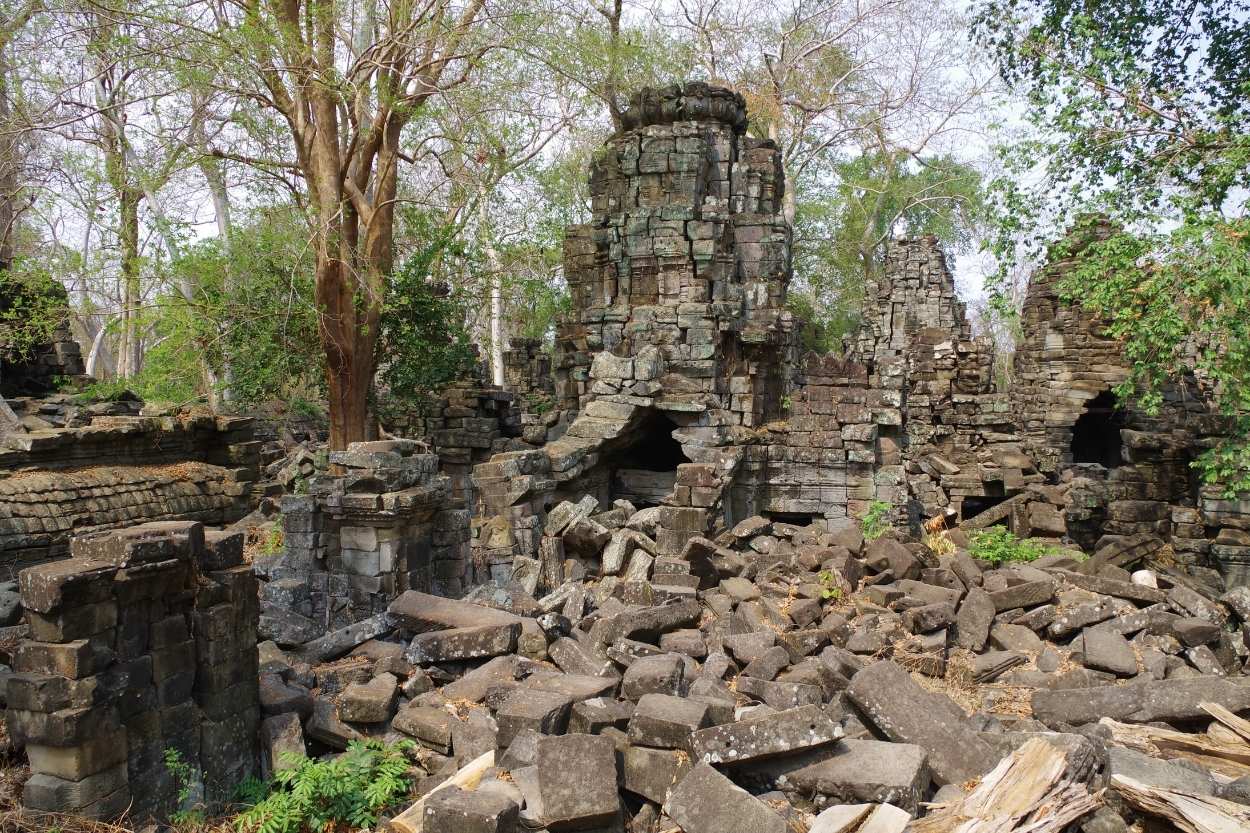
In far north-western Cambodia, near the Thai border, lies Banteay Chhmar, one of the country’s less-known Khmer temples.
A large complex, around 2 square km and surrounded by a moat, its believed to have been built in the 12th century under Jayavarmin VII. Though its still somewhat of a mystery.
Unlike the crowded Angkor Wat, Banteay Chhmar has remained largely untouched for 800 years. Many of the structures are partly collapsed and overgrown, offering a sort of ‘lost city’ experience. Despite its ruined state, there’s still plenty to explore, with multiple temples, statues, and reliefs.
Due to its location, Banteay Chhmar sees few tourists, making it somewhat of a hidden gem.
8 | Koh Ker Pyramid
There are few places in the world you can find pyramids. Egypt, Mexico…and Cambodia?
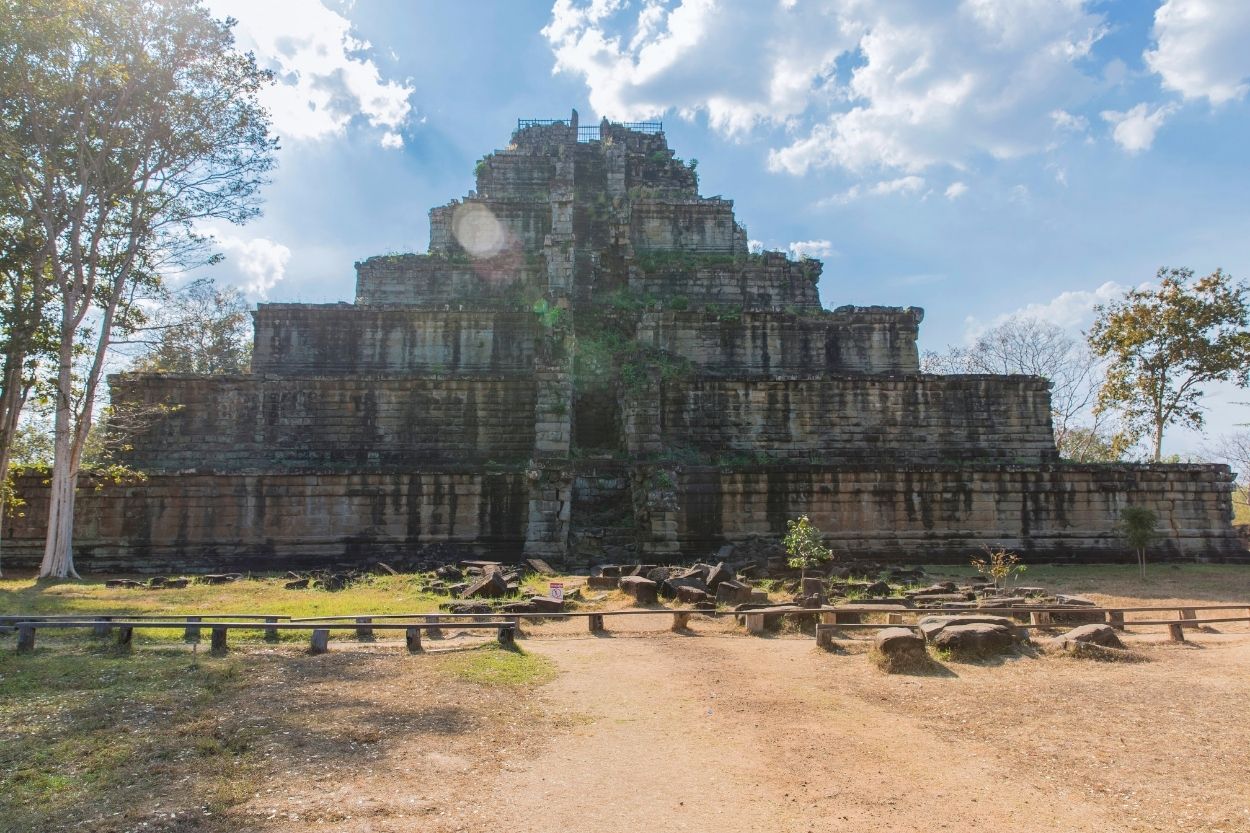
In the early days of the Khmer Empire, the capital was briefly moved from Angkor to Koh Ker. Here, around 928 CE, they built the 📍Koh Ker Pyramid.
It may not compare to the pyramids in Mexico or Egypt, but it’s the only one you’ll find in South-east Asia, making Koh Ker Pyramid one of the most unique historical sites in Cambodia.
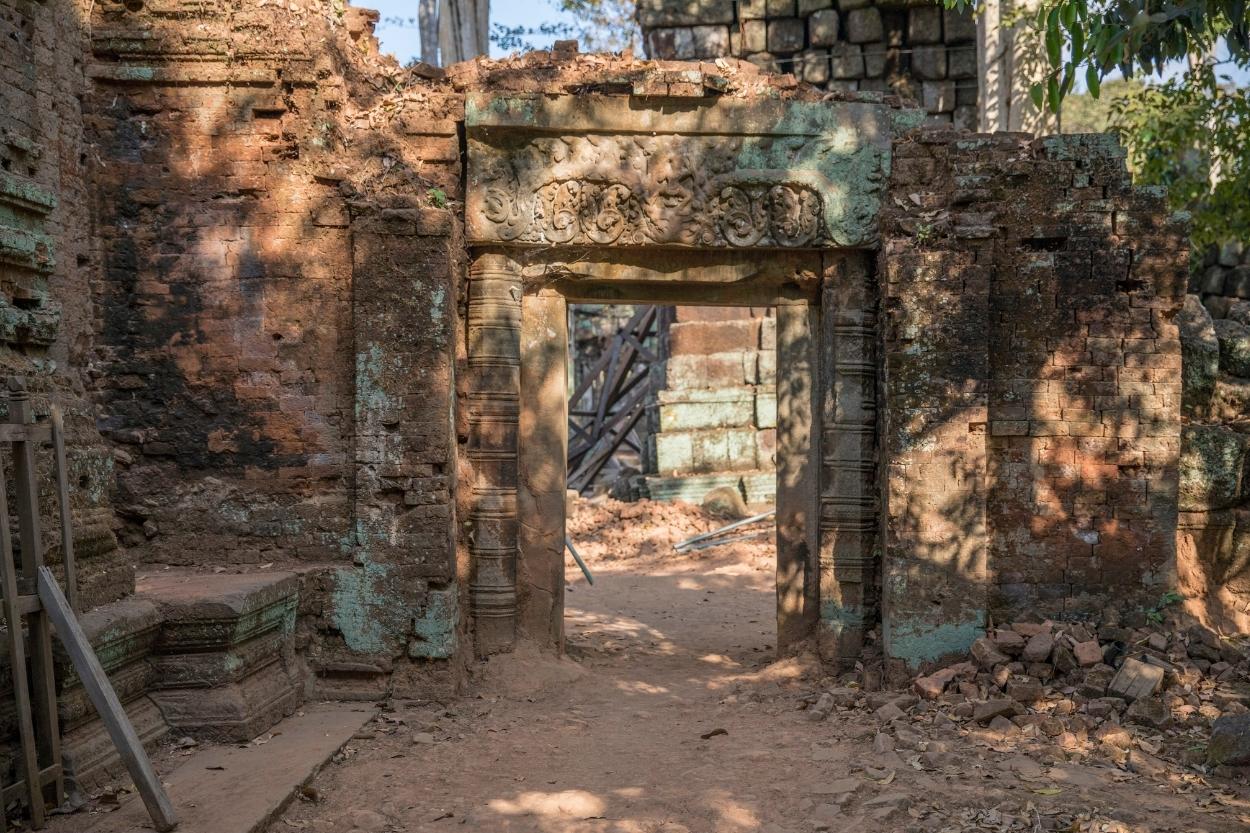
The full ruins of the ancient city at Koh Ker are spread out over a massive area of almost 81 square kms, but most of them are inaccessible, either being covered in jungle or because the area is still being de-mined. What you can explore are a collection of stone temples centred around the pyramid.
Koh Ker Pyramid is a little out of the way, being located about a 2hr drive north of Siem Reap, but there are no shortage of guided tours that can take you there on a day trip from the city.
9 | Beng Mealea
If you’re making the journey from Siep Reap to Koh Ker Pyramid, there’s another Khmer ruin you’ll want to visit along the way.
📍Beng Mealea, which means ‘Temple of the Lotus Pond’ is a Hindu Temple built presumably in the 12th century, although its exact origins remain a mystery.
While smaller than the massive Angkor Wat, this temple was among the largest that the Khmer Empire ever constructed, with a moat stretching 1.2km around its exterior.
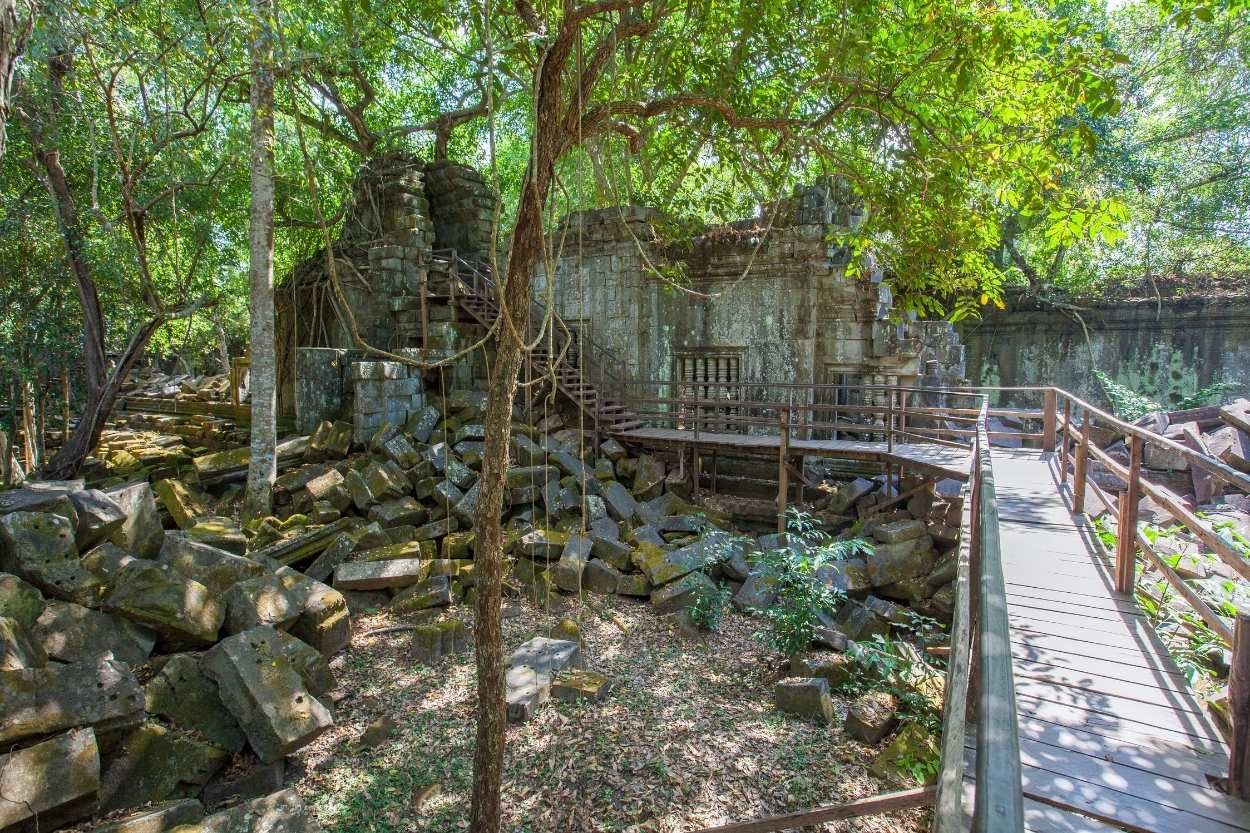
These days Beng Mealea is swallowed up by the jungle and looks exactly like a kind of ‘lost city’ you’d expect to see in an Indiana Jones movie.
It’s only recently started growing in popularity among tourists, and a wooden walkway has been built through the dilapidated ruins to make it easier to explore.
Bent Mealea is located near Phnom Kulen and is often included in guided tours from Siem Reap.
10 | Phnom Sampeau
The buddhist temples of 📍Phnom Sampeau, with their amazing views, have long been an important pilgrimage site, but beneath the surface you’ll find a stark reminder of the Khmer Rouge regime.
Along with Choeung Ek, and hundreds of other sites, Phnom Sampeau was used as a ‘killing field’ by the Khmer Rouge during their 4 year genocide between 1975 and 1979.
To save on ammunition, the regime would use the deep central shaft of the cave to throw their prisoners to almost 100m to their death.
After the fall of the regime and the site was liberated, a towering pile of bones was found at the bottom. No one knows the exact death toll, but an estimated 10,000 were executed here.
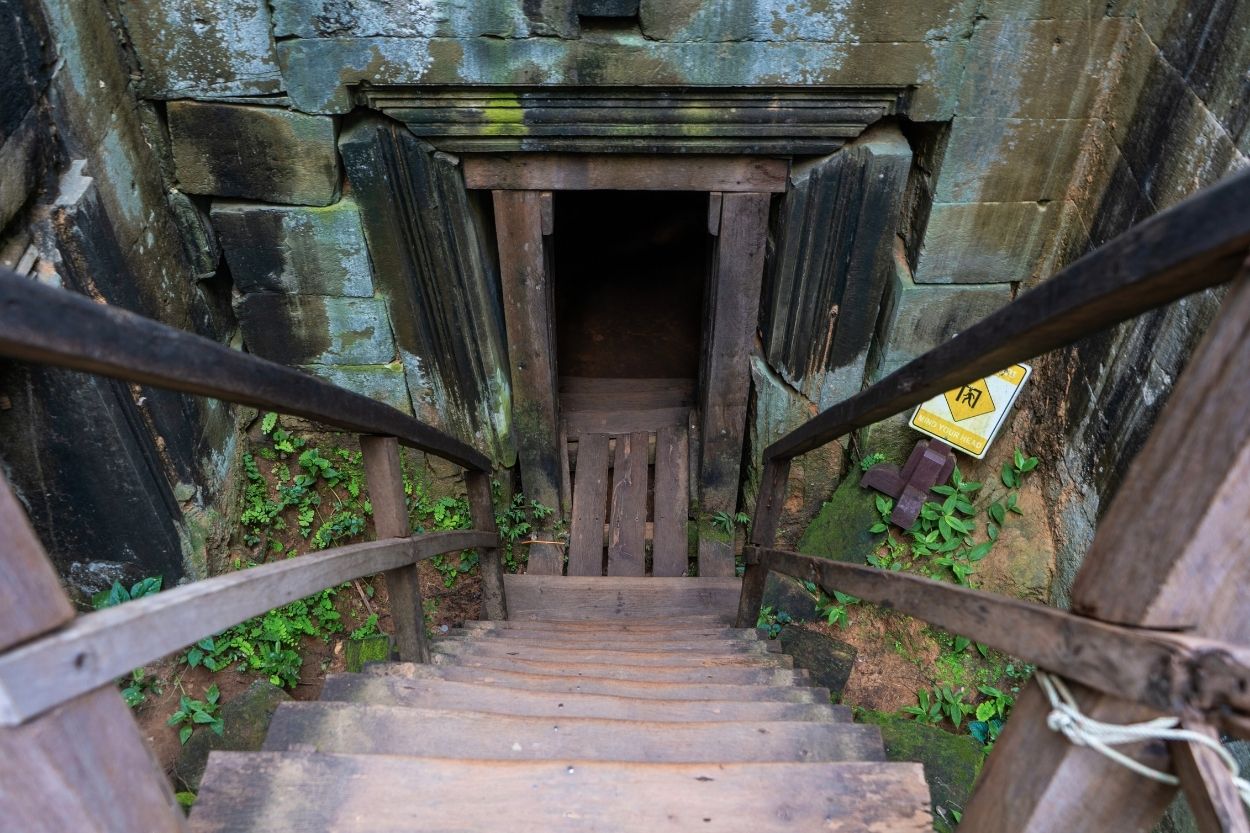
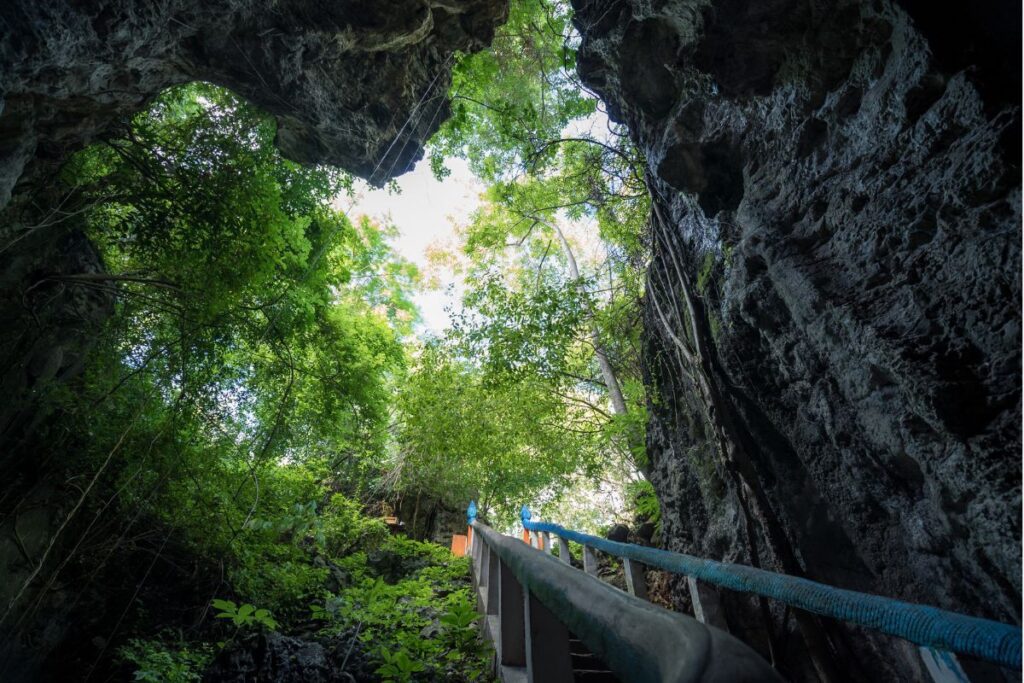
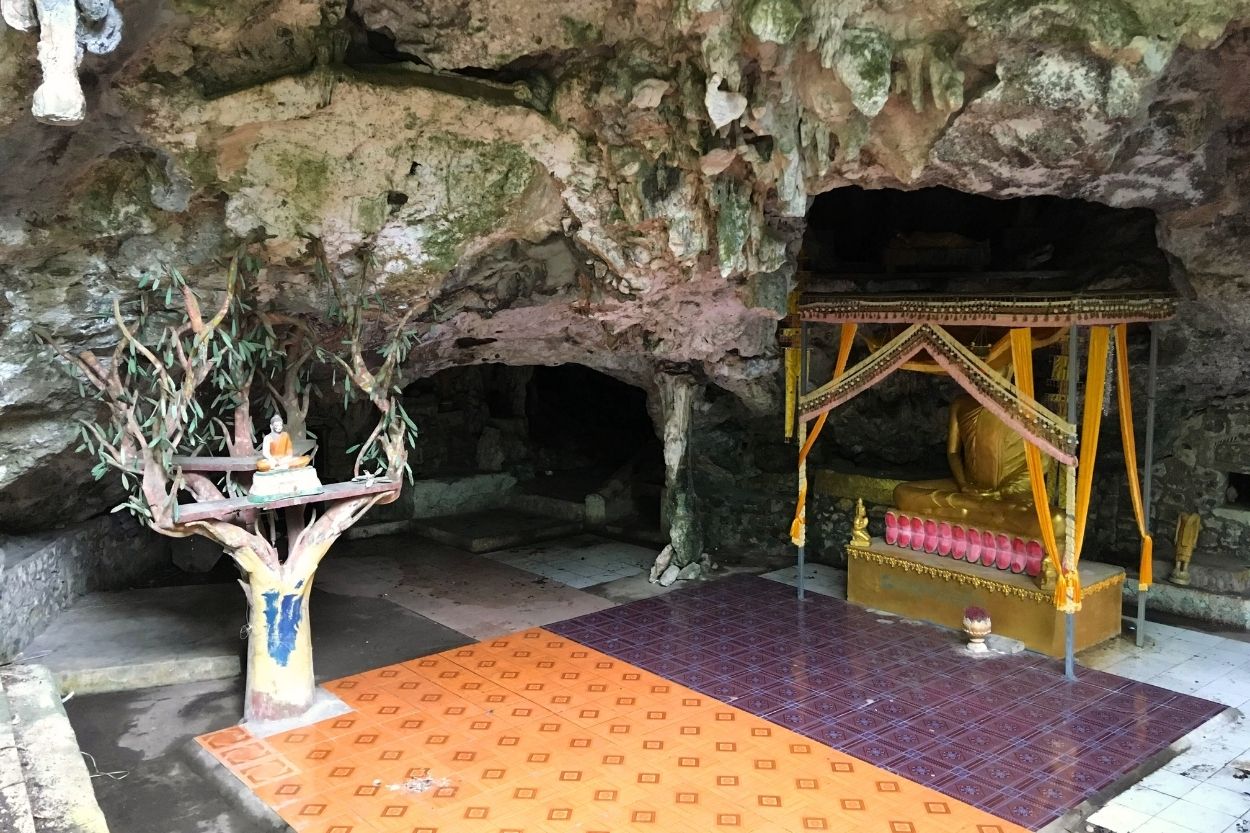
When you arrive at Phnom Sampeau, 700 stairs lead you to the temples at the summit. From here you can climb down into the caves themselves, where you’ll also find a memorial, and a temple deeper within the cave.
Like S21 and Choeung Ek, a visit to Phnom Sampeau is a confronting but essential experience to understand the events that made modern Cambodia.
Planning your trip to Cambodia
Now that you have all the information on Cambodia’s top historical sites, it’s time to start planning your trip. Here are some resources to help you get started:
✈ Flights:Trip.com and Skyscanner are the best resources for finding cheap flights to Cambodia.
🚅 Transport: 12Go is the best online platform for booking trains and buses in Cambodia, and across Asia.
🏨 Accommodation:Booking.com is the best resource for finding amazing hotels in Cambodia, while Hostelworld is the best for finding hostels.
🏥 Travel Insurance:Heymondo covers all the essentials in Cambodia, including theft, medical and cancellations.
🛜 Internet: To stay connected in Cambodia, you can use Airalo. They offer an eSIM, meaning all you need is a smartphone and and the app.
🌐 VPN: To stay connected and access service that may not be available in Cambodia, use NordVPN.
🏄 Tours & Day Trips:GetYourGuide and Viator are the top platforms for tours and activities in Cambodia.
⬤ For more historical travel guides on Cambodia, check out our Cambodia page.
Welcome
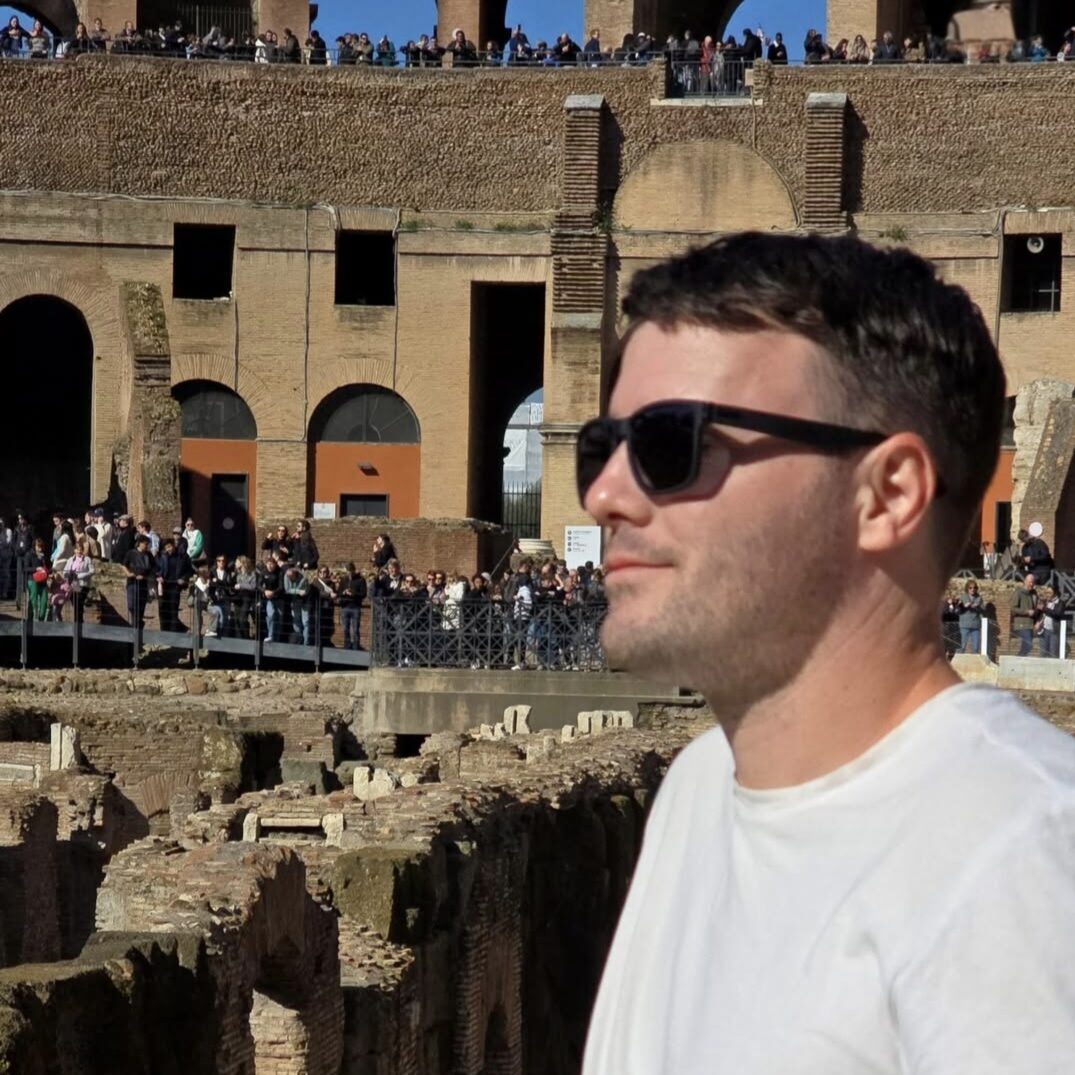
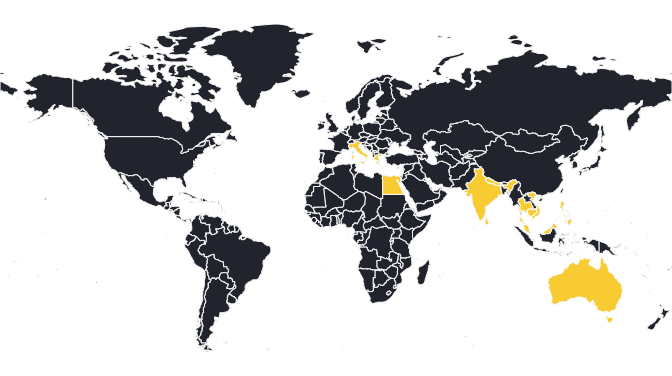
I’m Aaron, a travel blogger specialising in historical destinations. From the pyramids of Egypt, to cave temples in India, to Khmer ruins in SEA, I travel the world visiting the top historical sites and I’m here to help you do the same.