
The Ellora and Ajanta Caves are among the most underrated historical sites in the world.
Despite being relatively unknown to most outside of India, these immense rock-cut can easily be compared to other famous sites, like Petra or Abu Simbel and should be a bucket-list destination for any history lover.
Located in the state of Maharashtra, these caves, some of which date as far back as the 2nd century BCE, are somehwat off the beaten path, far from the major tourists hubs in India.
In this guide, you’ll find everything you need to visit the Ellora and Ajanta Caves, including what to see, how to get there, ticket info and more.
⭐️ THE BEST ELLORA AND AJANTA CAVES TOUR
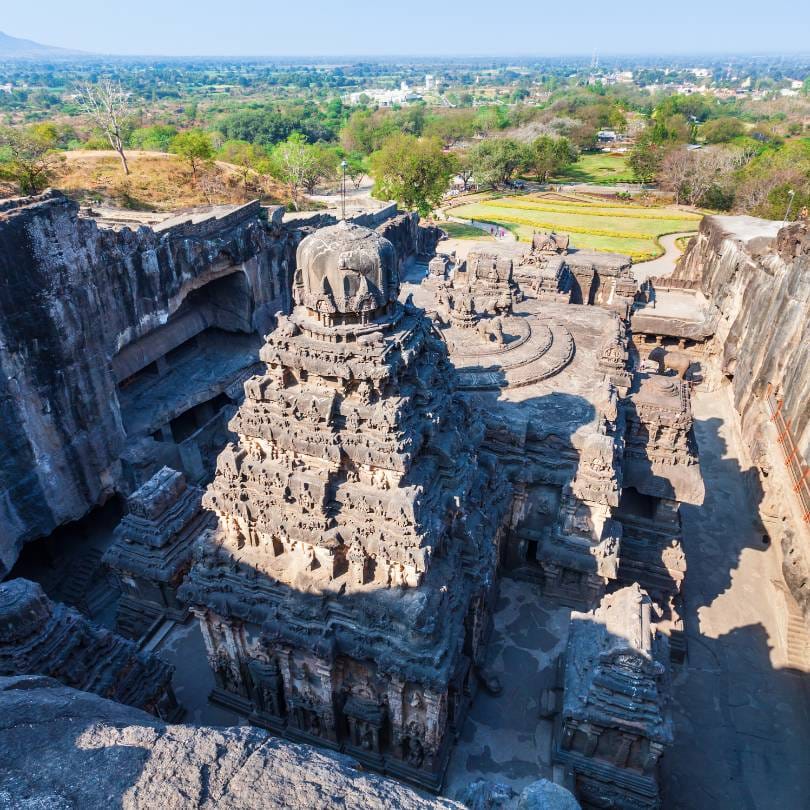
Our top pick is this 2-Day Private Ajanta and Ellora Caves Tour, which takes you to both sites in an AC private car over 2 days, and stops at other top historical sites along the way.
Contents
Brief History of the Ellora and Ajanta Caves
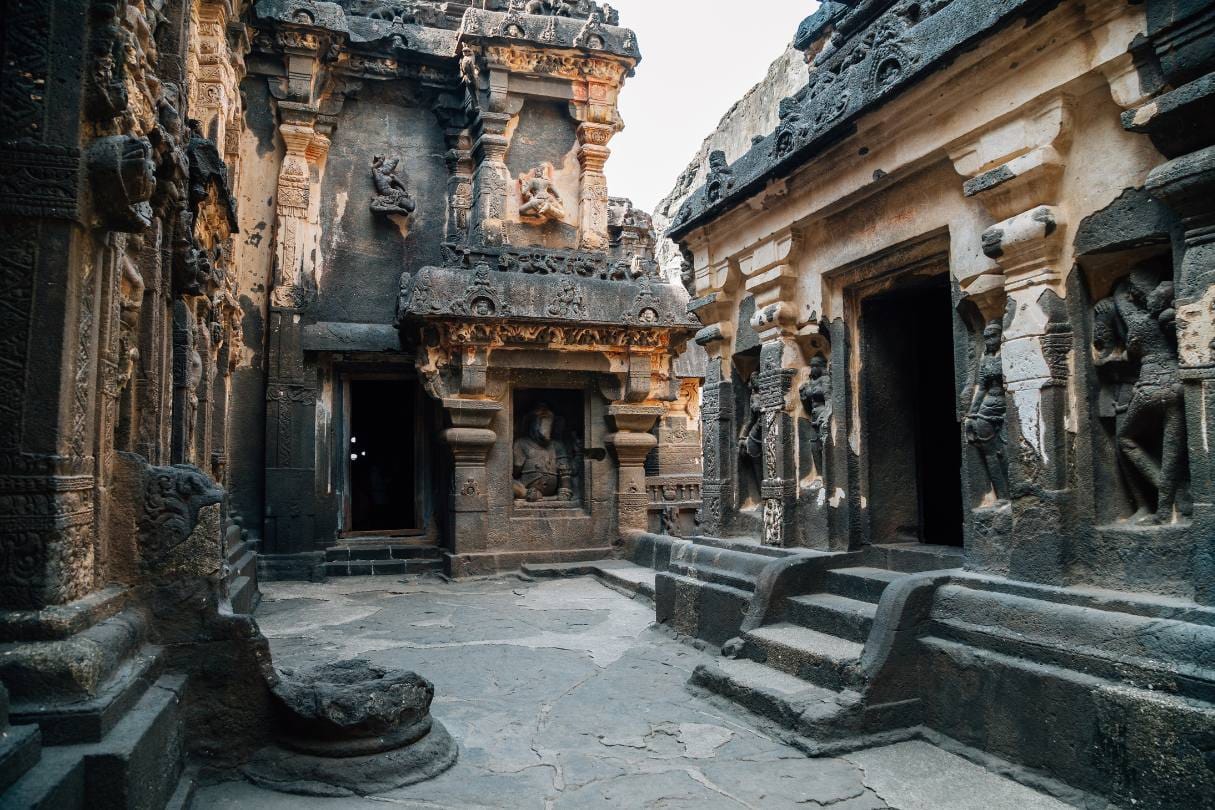
The Ellora & Ajanta Caves were built gradually over a period of about 1200 years, with the very first of these cave temples were built at Ajanta. The details are a little fuzzy, but the first temples are believed to have been carved around the 2nd century BCE and are dedicated to Buddhism.
During its heyday, the site was a thriving religious community, with temples, monasteries and living spaces, attracting Buddhist pilgrims from all over. One of the murals at Ajanta even depicts a visit from a Persian embassy.
The Ajanta caves began to decline around the 6th century CE, while at the same time the first caves at Ellora were being carved. Likely due to the changing religious landscape, the temples at Ajanta were abandoned, while those at Ellora thrived.
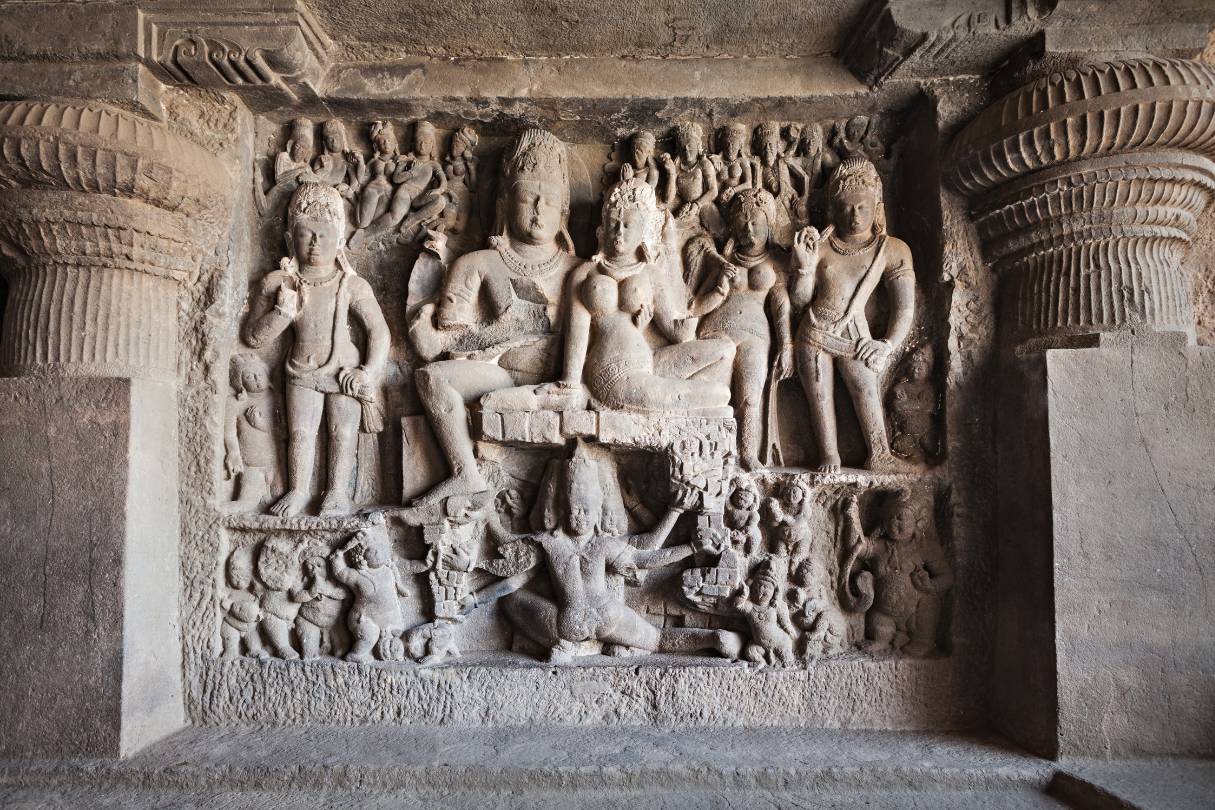
Unlike Ajanta, the temples at Ellora weren’t just limited to Buddhism. Over the centuries Hindu and Jain temples would join them, leading to a co-existing religious community.
A holy site for 3 different religions – something that would be unusual in any other part of the world, but not in India.
Ajanta was eventually uncovered from the jungle during British rule, and today both caves are UNESCO World Heritage Sites cared for by the Archeological Survey of India.
Top things to see at Ellora & Ajanta Caves
Kailasa Temple
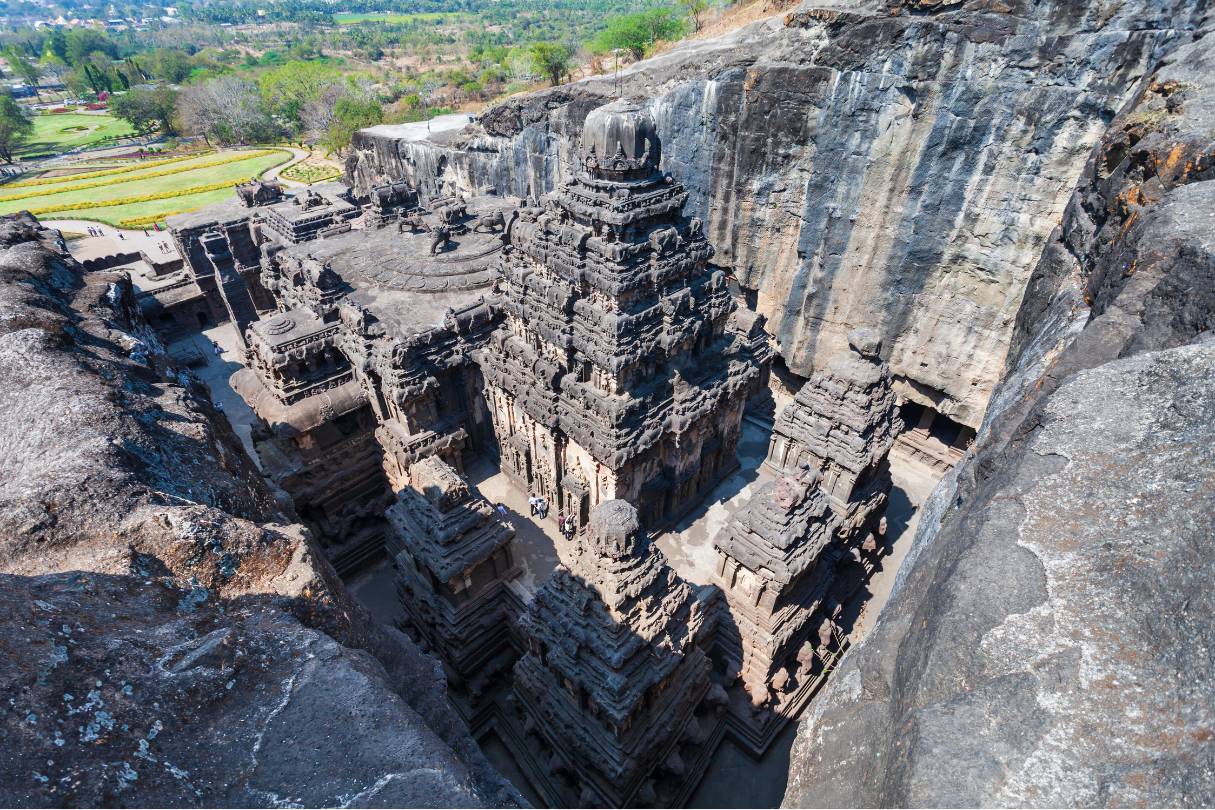
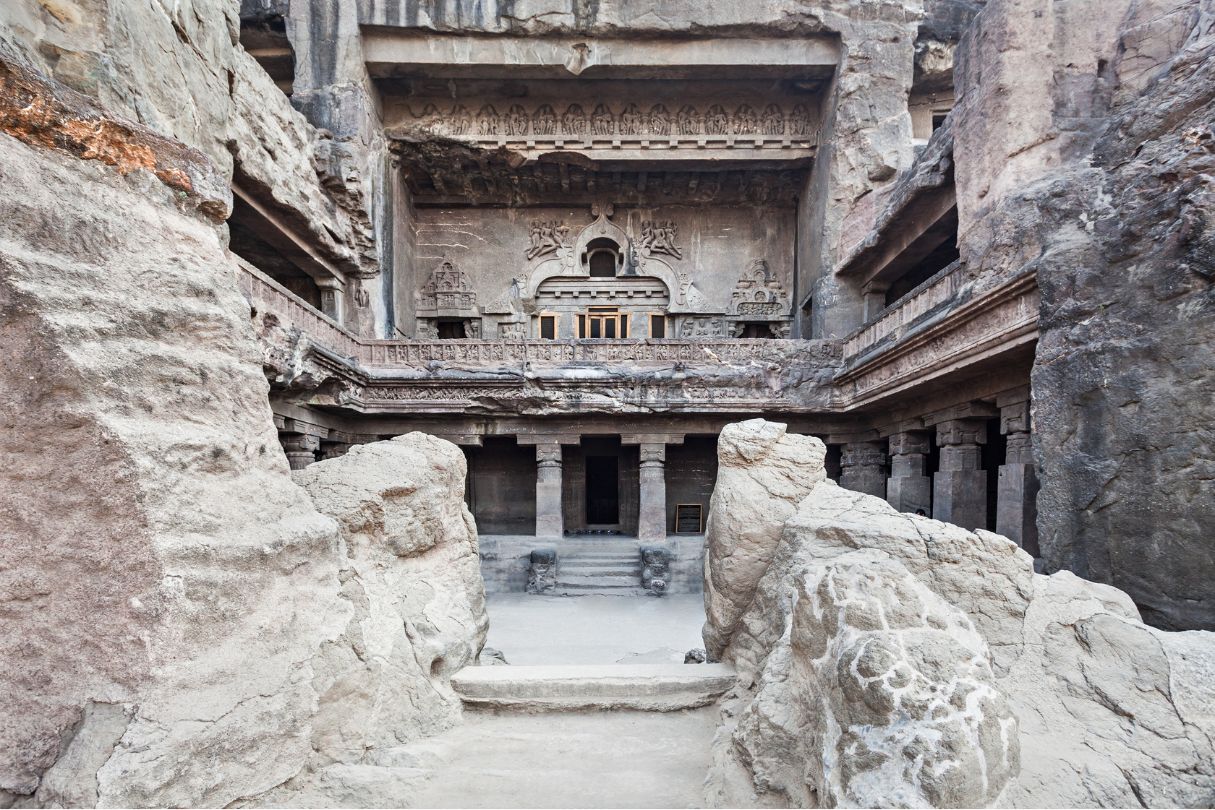
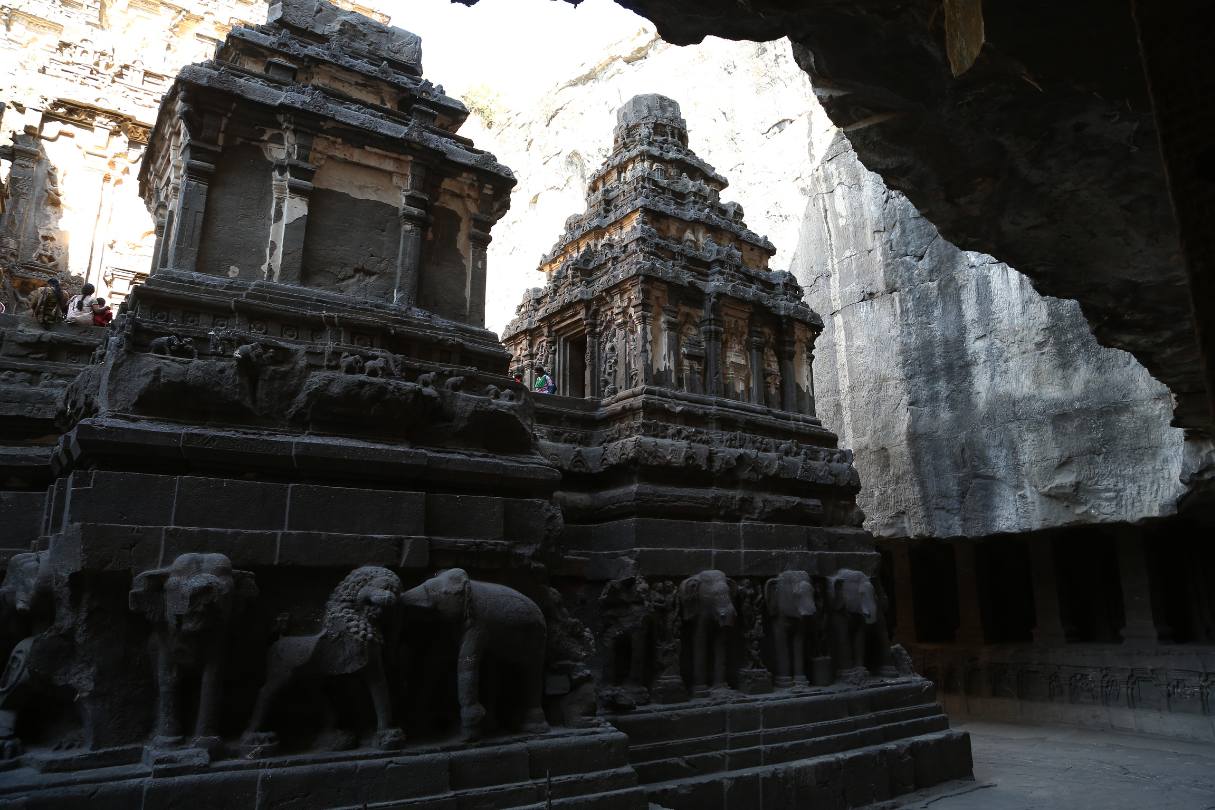
Without a doubt the most impressive structure across both sites, and arguably across India, is cave 16, also known as Kailasa Temple. The first thing you’ll see when arriving at the Ellora Caves, this glorious monolith looks like a work of fiction straight out of an Indiana Jones film, and will leave you baffled as to how humans could build such a thing with little more than a hammer & chisel.
Covering an area twice the size of the Parthenon in Athens, it is estimated that around 200,000 tonnes of stone were excavated out of the hillside in order to create the temple – a feat made even more impressive by supposedly being built in only 18 years (756-773 CE).
The Vishwakarma Cave

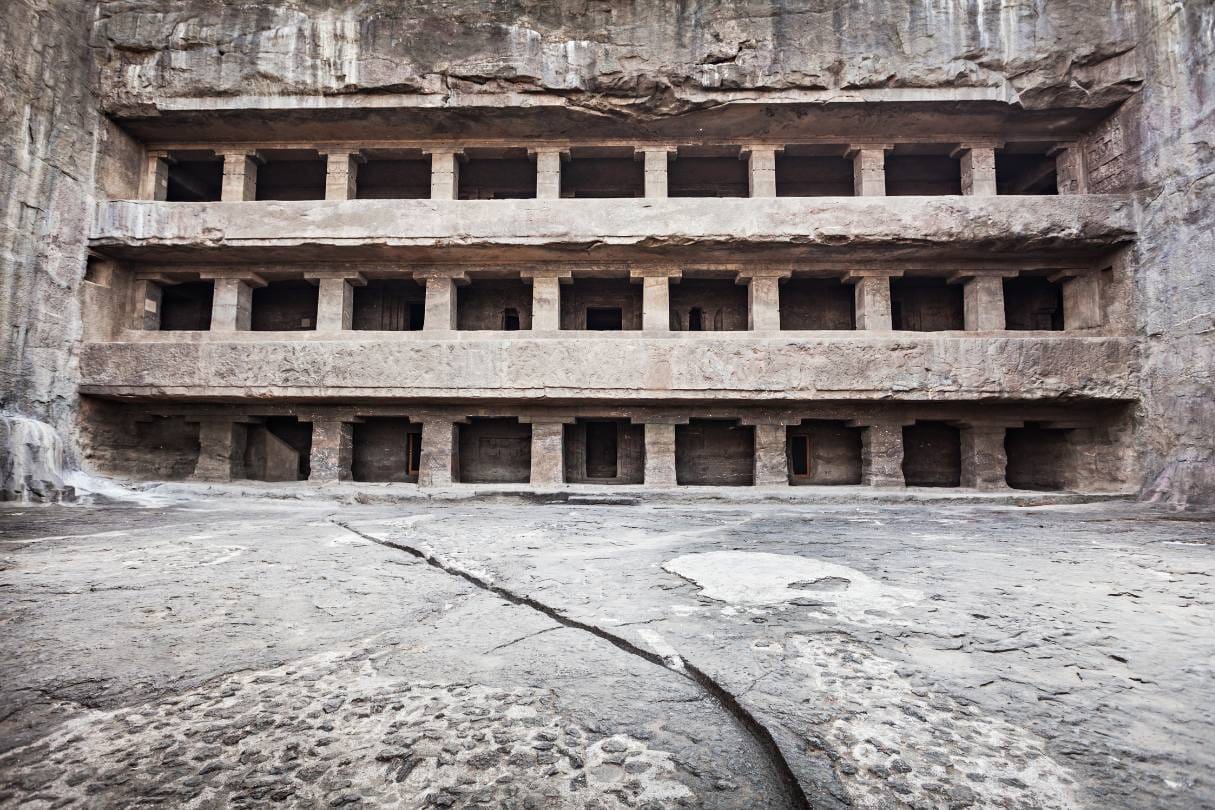
The most impressive of the Buddhist caves at Ellora is Cave 10, the Vishvakarma Cave.
This chaitya (prayer hall) was carved into the hillside sometime around 650CE and is also known as the ‘carpenter’s cave’ since the rock carvings, particularly on the ceiling, are supposedly designed to resemble wood.
This chaitya is massive, one of the biggest you’ll ever see and contains a 15 foot depiction of the Buddha on its stupa.
The Jain Caves

While the Hindu & Buddhist caves are grouped together, the Jain caves at Ellora are somewhat separate, nestled in their own part of the hillside about 500m away from the others.
Making up caves 30 to 34, the Jain Caves were excavated in the 9th & 10th centuries CE. The caves here are smaller than the others but are still some of the most impressive, with highly detailed sculptures & carvings. Cave 30 is like a miniature version of Kailasa Temple but with Jain depictions rather than Hindu.
These caves are more than just historical monuments, but rather are still holy places of worship even today. On your visit here you may see Jains using these halls for worship, which is almost like stepping back in time and witnessing these caves being used the way they were intended.
Cave 1
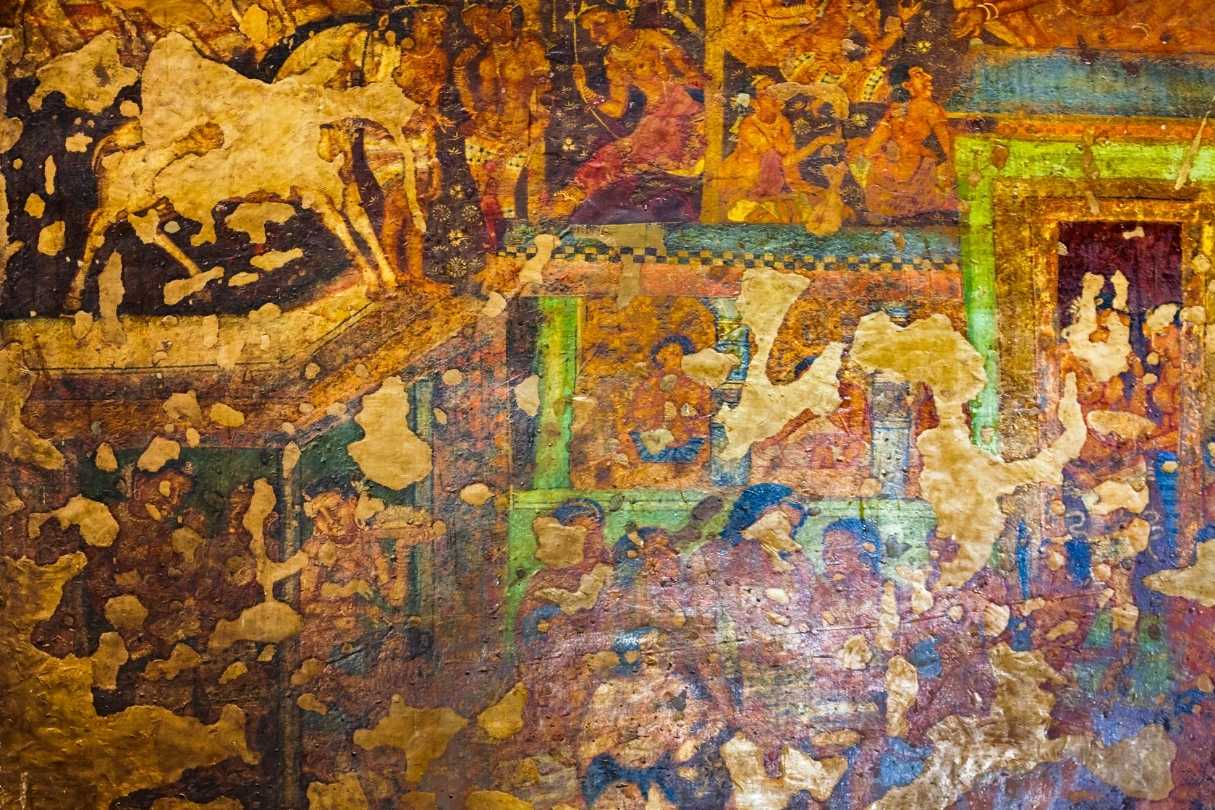
One of the best caves you’ll see at Ajanta is the first one you’ll come across, Cave 1. This vihar (living space) comprises a large central hall held up by massive pillars, and has some of the best murals of all the Ajanta caves.
Aside from religious depictions, the murals also depict a visit from foreigners all over Eurasia.
Cave 1, along with the first few numbered caves you’ll visit at Ajanta, is one of the youngest, being ‘only’ 1500 years old
Cave 26

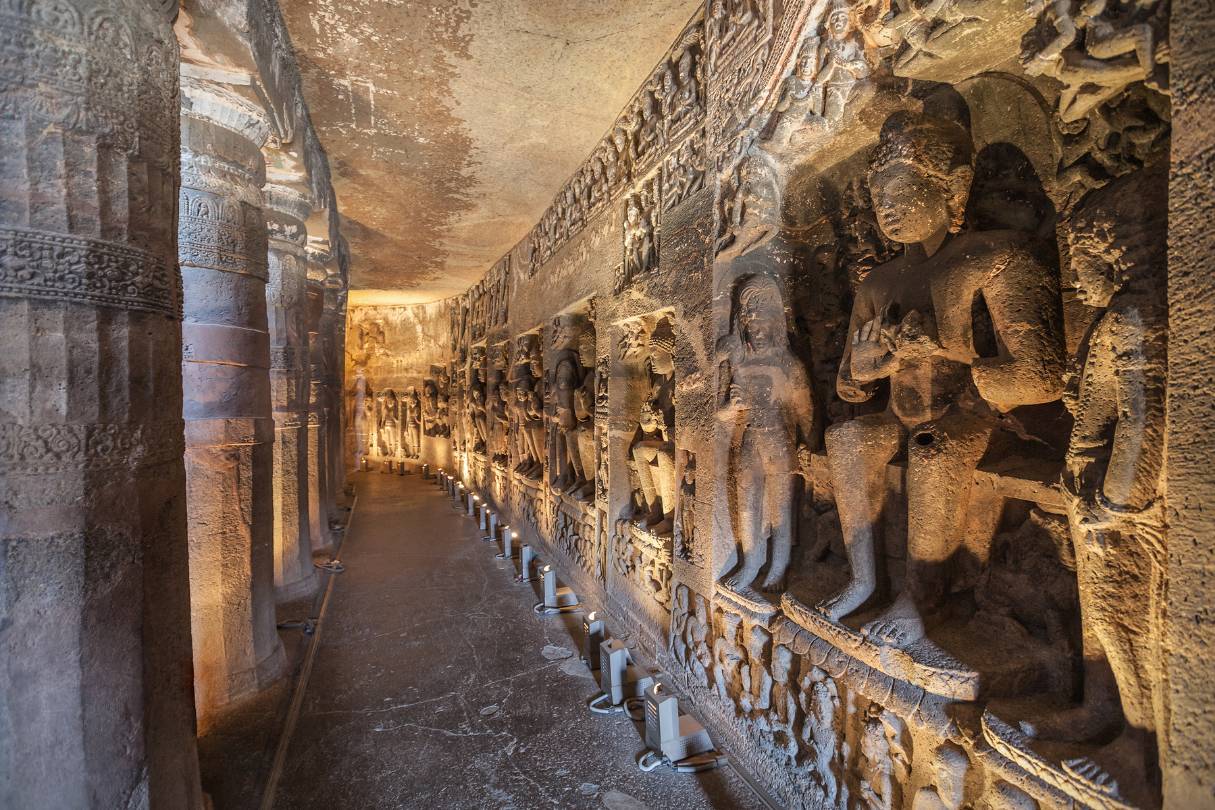
While cave 1 contains some of the best paintings, cave 26 arguably has the best sculptures at Ajanta.
A chaitya (prayer hall), this cave’s remarkable architecture is apparent even from the outside, with the entrance covered in detailed Buddha carvings. The inside is even more impressive with seemingly every square inch of the interior covered in tiny sculptures.
Similar to Cave 1, this cave is one of the youngest at the site, being built somewhere around 500 CE, after more sophisticated stone-masonry techniques were developed.
Where are the Ellora and Ajanta Caves?
The Ellora and Ajanta Caves are located in the Indian state of Maharashtra.
The closest major city is Aurangabad (recently renamed to Chhatrapati Sambhaji Nagar), which will likely be your home base as you venture out to the caves.
The caves are 2 separate sites, with the 📍Ellora Caves being closer to the city while the 📍Ajanta Caves are further away.
How to get to the Ellora & Ajanta Caves
Before you reach the Ellora and Ajanta Caves, first you need to get yourself to Aurangabad (recently renamed to Chhatrapati Sambhajinagar) which will serve as your home base.
In reaching Aurangabad, you have a few different options:
Reaching Aurangabad via Bus
Depending on where you’re coming from, a bus may be your best option. India has an extensive bus network that can take you just about anywhere you need to go.
You’ll most likely be headed to Aurangabad from Mumbai, which takes about 8 hours via bus. I recommend taking advantage of the overnight sleeper buses. This way you combine your transport with your accommodation for the night and save more time in your days.
You might also be reaching Aurangabad from Pune, which takes around 5 to 6 hours.
The best place to book your bus ticket to Aurangabad is on 12Go Asia.
Reaching Aurangabad via Train
India has an extensive railway network, and that includes Aurangabad.
Just like the bus, you can catch a train to Aurangabad from both Mumbai and Pune.
A train from Mumbai to Aurangabad will take about 7 to 8 hours. A train from Pune will take about 8 hours, which is longer than the bus because the route is less direct.
Just like with a bus, you have the option of booking an overnight sleeper ticket to save time.
The best place to book your train ticket to Aurangabad is on 12Go Asia.
Reaching Aurangabad via Flight
You also have the option of flying to Aurangabad.
The airport in Aurangabad is called Chhatrapati Sambhajinagar Airport and is located on the eastern outskirts of the city.
While this is certainly the most expensive option, its still relatively cheap. A flight from Mumbai can cost as little as $60 and will get you to Aurangabad in about 1 hour.
The best place to find cheap flights to Aurangabad is on Skyscanner.
Once you’ve reached Aurangabad, its time to venture out to the caves.
The Ellora & Ajanta Caves are 2 separate sites located in the region north of Aurangabad. The city will be your home base as you go on day trips to the caves.
The Ellora Caves are the closest, located about 30km from Aurangabad, while the Ajanta Caves are further away, about 100km out.
Reaching the Ellora & Ajanta Caves via Bus
There are public buses that run multiple times a day to both caves.
The bus to Ellora costs about 40 INR and takes about 1 hour.
The Bus to Ajanta costs about 120 INR and takes about 2 hours.
Buses leave from Aurangabad Central Bus Station. There’s no need to book in advance, you can just turn up and pay the driver in cash.
It can be tricky to know which bus to catch, thanks to the lack of signs in English. If in doubt, ask the locals. When they see a foreigner looking lost at the bus station they’ll know where you’re trying to go.
Reaching the Ellora & Ajanta Caves via Tour
Because the caves are located so far out of the city, one of the most popular ways to visit them is with a tour.
One of the most convenient things about visiting the Ellora & Ajanta Caves on a tour is that you’re picked up in an AC car with an English-speaking private driver, avoiding all the hassle of trying to catch a bus.
There are tours that take you to both sites on the same day. While it’s still a big day, it’s much easier to do with a private driver.
Then there are tours that visit the Ellora & Ajanta Caves over 2 days, allowing you to take your time in exploring each site and also stopping by Bibi ba Maqbara (mini Taj Mahal) along the way.
Then there are comprehensive 3 day tours that take you to not only the Ellora & Ajanta Caves, but also many other incredible historical sites in the region, like Daulatabad Fort (once the capital of India), Daityasudan Temple and the aforementioned mini Taj Mahal.
Ellora & Ajanta Caves Opening Hours
Finding the Ellora & Ajanta Caves opening hours can be tricky because information online often inconsistent and out of date.
According to the Aurangabad Tourism website, the opening hours are:
Ellora – 6am to 6pm, closed Tuesdays.
Ajanta – 9am to 5pm, closed Mondays.
From my own experience visiting the caves, knowing the exact opening hours isn’t very important. If you’re catching a bus to the caves (more on that below), they’ll be open when you arrive. If you’re on a tour, your guide will have this covered.
Ellora & Ajanta Caves Ticket Info
The entrance ticket price for both the Ellora and Ajanta caves is the same:
- ₹40 for Indian citizens visitors from SAARC countries
- ₹600 for Foreign tourists
There is no official ticket website for the Ellora and Ajanta Caves, but you can purchase your ticket at the entrance upon arrival.
If you want to save time by booking in advance, you can purchase your ticket online via Klook:
Can you visit both sites in 1 day?
The Ellora & Ajanta Caves are 2 separate sites north of Aurangabad, requiring a day trip from the city. So naturally you might be wondering if visiting them requires 1 or 2 day trips.
So, can you visit both sites in 1 day?
The answer is yes it’s possible to visit both in one day, but its not recommended.
Why is it not recommended?
Both the Ellora & Ajanta Caves are massive sites, especially Ellora. Each takes a few hours and a lot of walking to see properly.
The Ellora Caves is a half-day trip in itself, requiring about 4 hours to visit properly. The Ajanta Caves are a little smaller but still require 2 to 3 hours.
But not only do you need time to explore both sites before they close, you also need to cover the distance between them. The drive from one site to the other takes almost 2 hours.
If you are short on time and only have 1 day to visit both sites, the most practical way to do this is by visiting them both on a 1-day guided tour. This way you’ll have your own private driver, and avoid relying on India’s chaotic bus system.
If you want to get the most value out of your visit to each site, I recommend visiting them separately over 2 days.
Ellora vs Ajanta - which is better?
So, you’ve only got time to visit one of the sites and want to know which one is more worth it?
When I’ve asked other people who’ve been there I get mixed responses. Ellora is bigger but involves more walking. Ajanta is more scenic but is further away. Each has their merits.
However from my personal experience I can say without a doubt that the Ellora Caves are better. Not only is the site bigger with more to see, it also has the best structures, such as Kailasa Temple and the Jain Caves. Not to mention it’s also closer to Aurangabad and easier to reach.
If you can only visit one, choose the Ellora Caves.
Further reading on India
Here are more guides on India to help you plan your trip:
⬤ There are many more incredible historical sites near Aurangabad than just the Ellora & Ajanta Caves. Check out: 10 Best Historical Sites in Aurangabad.
⬤ Chances are you’re going to be reaching Aurangabad via Mumbai. Check out: 17 Best Historical Sites in Mumbai.
⬤ During your visit in India, don’t miss out on visiting one of its iconic stepwells. Check out: Complete Guide to Visiting Stepwells in India.
⬤ If you’re looking for more amazing historical sites in India, look no further than the state of Rajasthan. Check out: 2-Week Rajasthan Itinerary for History Buffs.
⬤ For more historical travel guides on India, check out our India page.
Disclosure: This post may contain affiliate links.