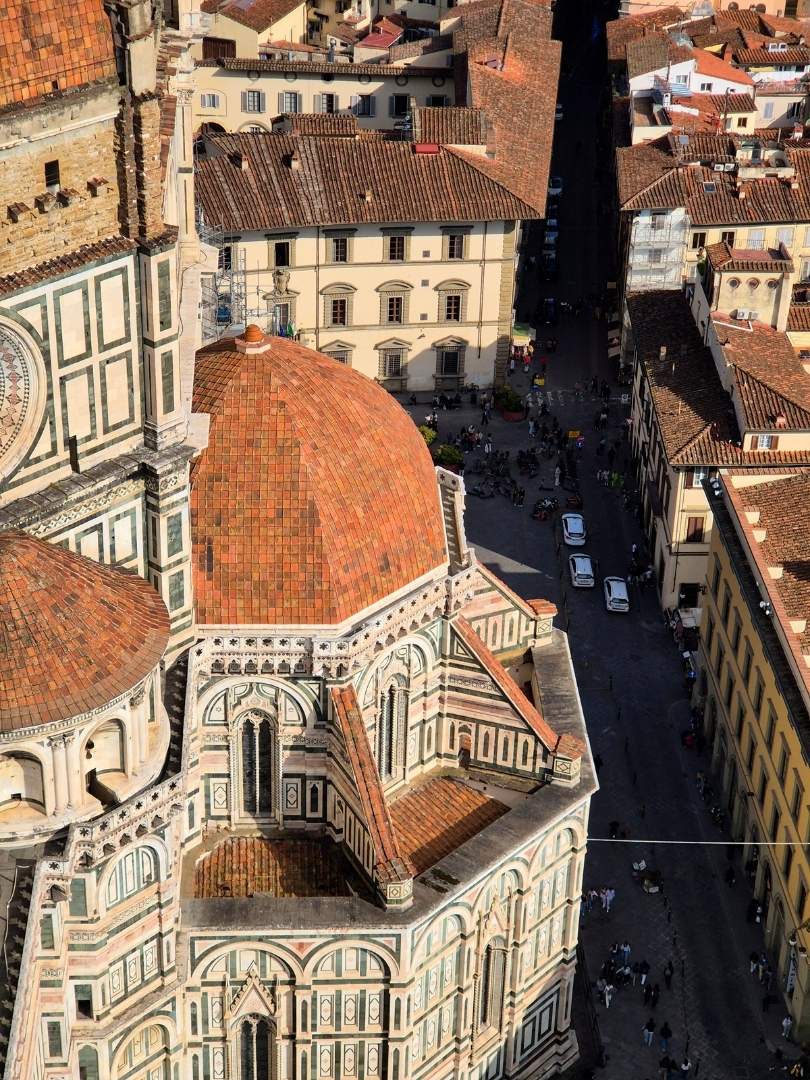
Florence, Italy, is considered the birthplace of the Renaissance, and nothing captures that legacy better than its cathedral. With its massive red-tiled dome towering above the city, the Duomo is not just Florence’s most recognisable landmark, but one of the most iconic buildings in the world.
Built over 140 years, the Florence Cathedral, officially called the Cattedrale di Santa Maria del Fiore (Cathedral of Saint Mary of the Flower), is the main building among the Duomo complex, which also includes Giotto’s Bell Tower, the Baptistery of San Giovanni and the Opera del Duomo Museum. Together, they form the heart of Florence’s historic centre and showcase the wealth and artistic ambition that defined the Renaissance.
But if you’re thinking of turning up at the Duomo during your Florence trip without any pre-planning, you may find yourself missing out. With a collection of different buildings to explore, multiple ticket types to choose from and varying opening hours, there’s a few things you need to know first.
In this guide, you’ll find everything you need to know before visiting the Florence Cathedral and Duomo complex.
Contents
Florence Duomo - Map
A Brief History of the Duomo
By the late Middle Ages the city states of Northern Italy had emerged from the post-Roman dark age, and had become one of the most prosperous regions in Europe. Fueled by trade routes across the Mediterranean and beyond, the city states had grown extremely wealthy and powerful banking families began to emerge, such as the Medici family.
The wealth of these families conflicted with their religious values, and so to make up for this they would spend large amounts on public religious works, as a sort of penance to make up for their greed and ensure their place in heaven. This ‘guilt spending’ is what funded the early Renaissance.
Since the 5th century, the site of the present cathedral had been occupied by the old church of Santa Reparata, which by the 13th century was crumbling.
In 1296 construction began on an extremely ambitious project, to build what would become the largest church in the world. The project was so immense that it would take more than a century to complete, with several architects leading the project over various stages.
The greatest challenge came towards the end of the project when it was decided that an enormous dome, the largest since Roman times, would be added to the top of the cathedral, but no one knew how to construct such a structure without it collapsing under its own weight.
For decades, the project stalled, but in the early 15th century, Florence held a competition in which the best architects presented their ideas and competed for the honour of leading the project. The winner was Filippo Brunelleschi, whom the dome is named after. Brunelleschi came up with an ingenious method of building the dome using specific brickwork patterns and hidden support rings so that it could be built without the use of scaffolding.
After 16 years, the dome was completed in 1436, marking the end of a 140 year project.
With its consecration, the Cathedral of Santa Maria del Fiore became the largest church in the world, able to hold up to 30,000 people. More than just a place of worship, it became a symbol of the wealth and artistic ambition that defined the Renaissance.
Today, it continues to serve as the city’s main cathedral while also welcoming millions of visitors each year.
The Duomo Complex - Things to see
The Florence Duomo complex isn’t just the cathedral, it’s a collection of buildings in and around the Piazza del Duomo.
At its core is the Santa Maria del Fiore Cathedral, crowned by Brunelleschi’s dome and situated atop the Crypt of Santa Reparata, but the site also includes Giotto’s Campanile (belltower), the Baptistery of San Giovanni, and the Opera del Duomo Museum.
1 | The Cathedral
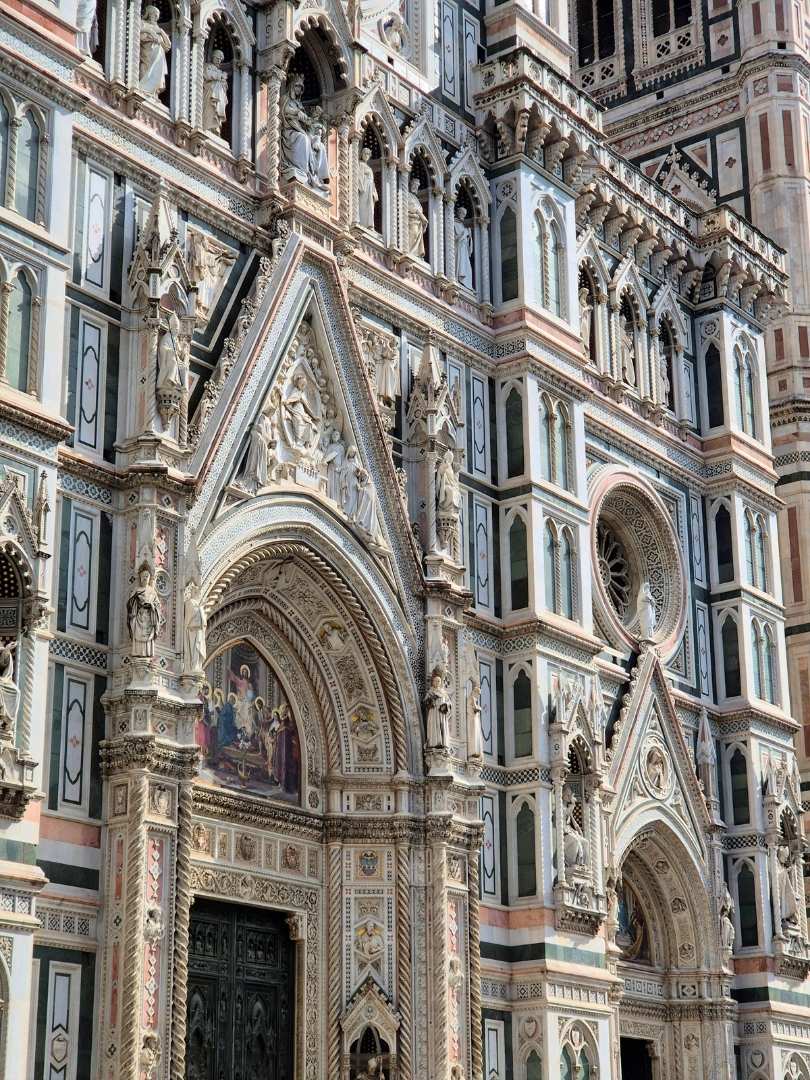
The centerpiece of the Duomo complex is the cathedral itself – the Santa Maria del Fiore. The first part of the Complex to be built, construction on the cathedral began in 1296 and lasted for 140 years, finally being commemorated in 1436 as the largest church in the world.
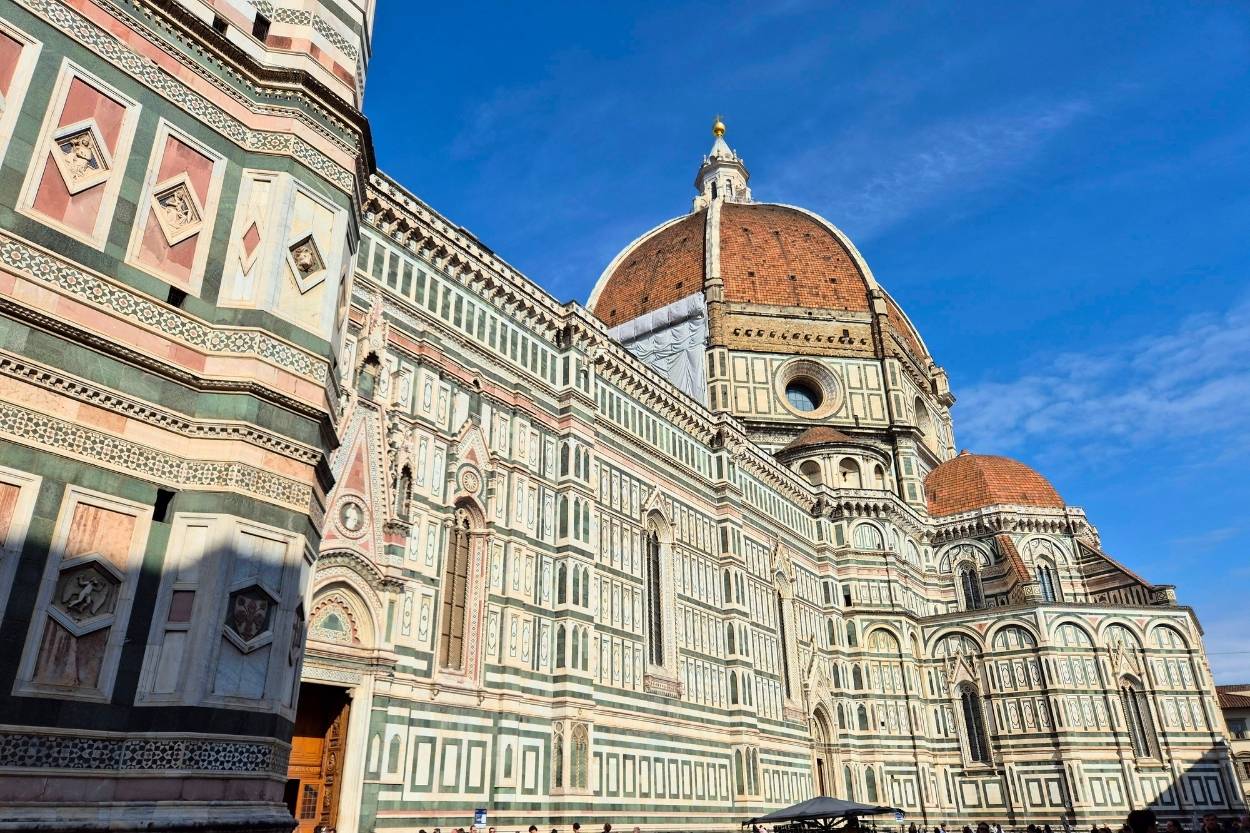
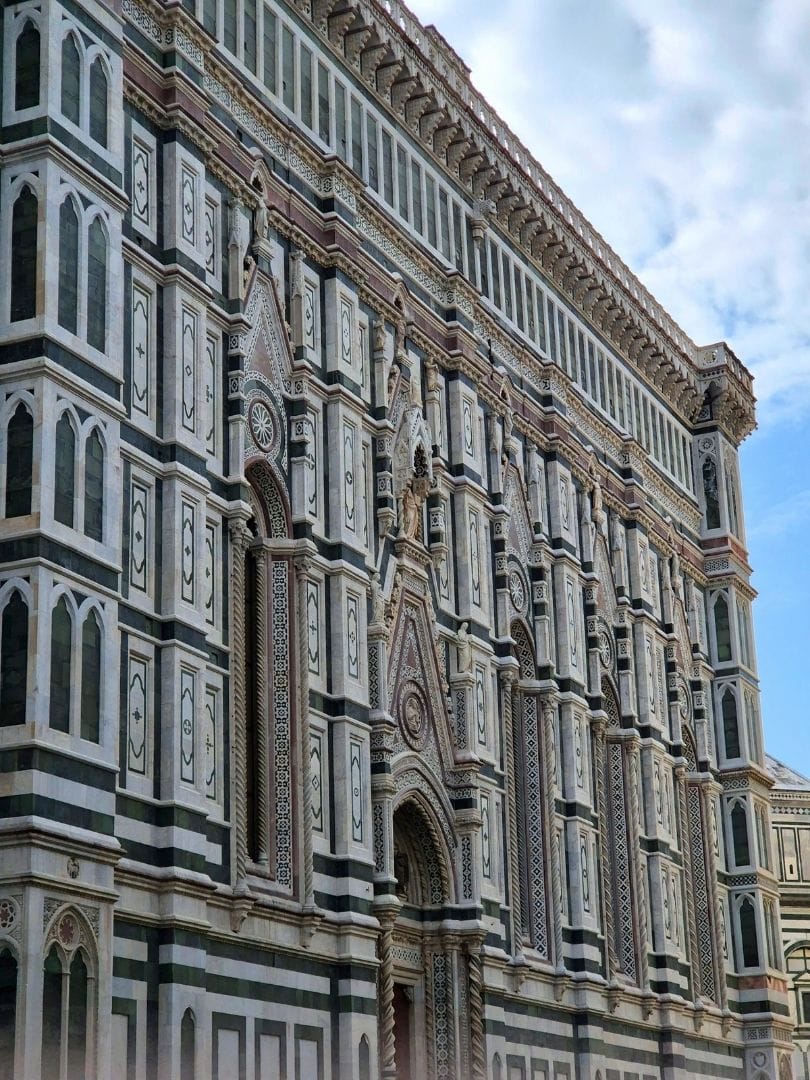
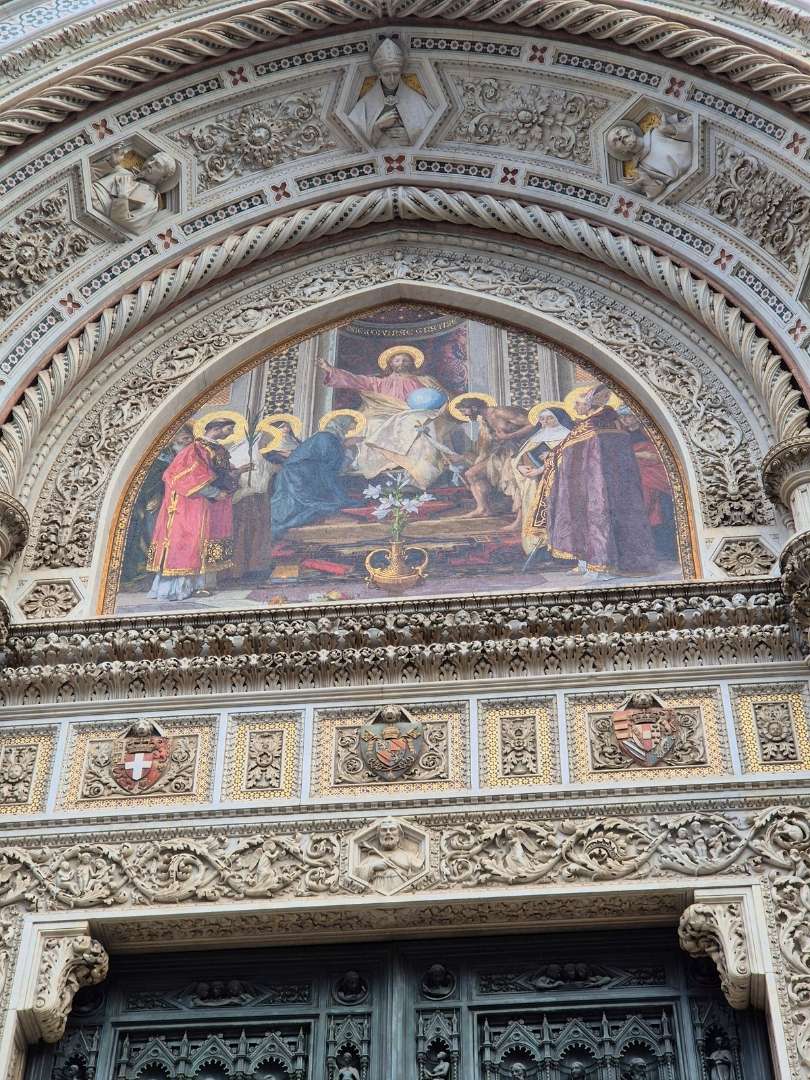
Arguably the most stunning feature of the cathedral is its facade. Clad in white marble, it’s covered with intricate carvings, statues, and mosaics depicting religious themes.
Despite being one of the most distinct parts of the structure, the facade you see today isn’t the original. When the cathedral was first built it had a wooden facade and it was only relatively recently, in the 19th century, that the modern facade was added.
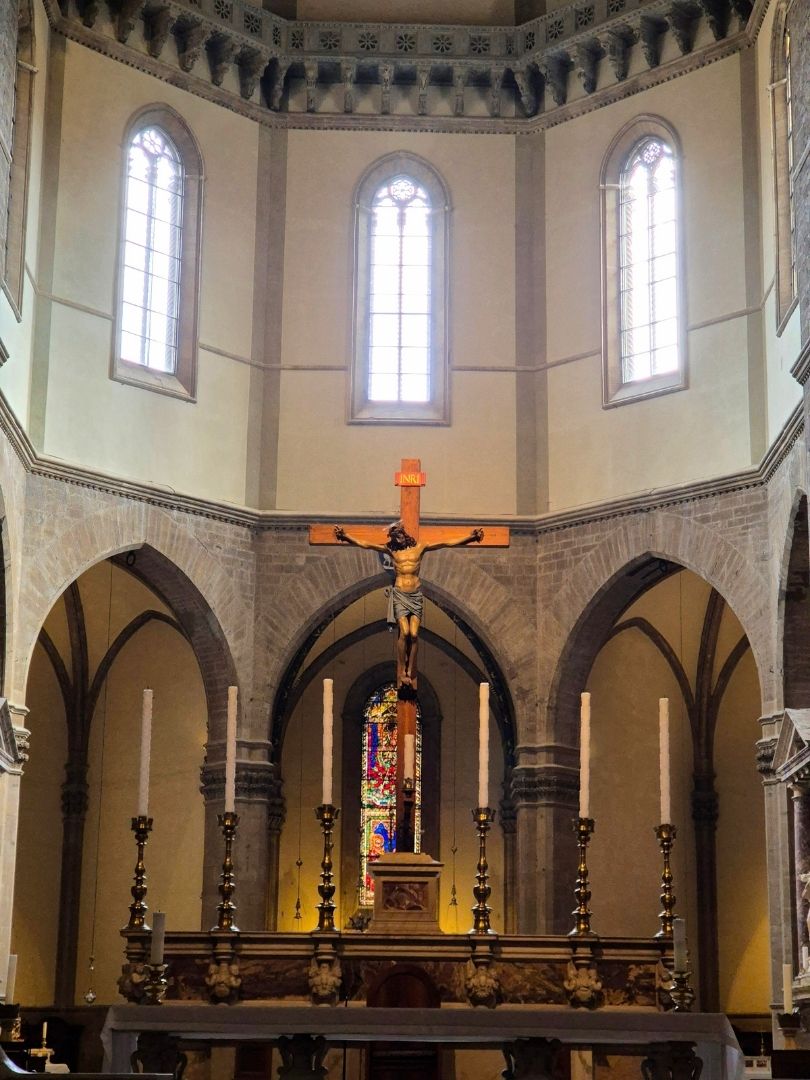
Step inside the cathedral, and you’ll find the interior rather tame relative to the elaborate exterior architecture. Aside from The Last Judgement painting on the interior of Brunelleschi’s dome (more on that below), the cathedral interior is a pretty typical church, with a lot of plain empty spaces and rows of seats.
Entry to the cathedral itself is free, while access to the dome, crypt, and the rest of the complex require a ticket.
2 | Brunelleschi's Dome
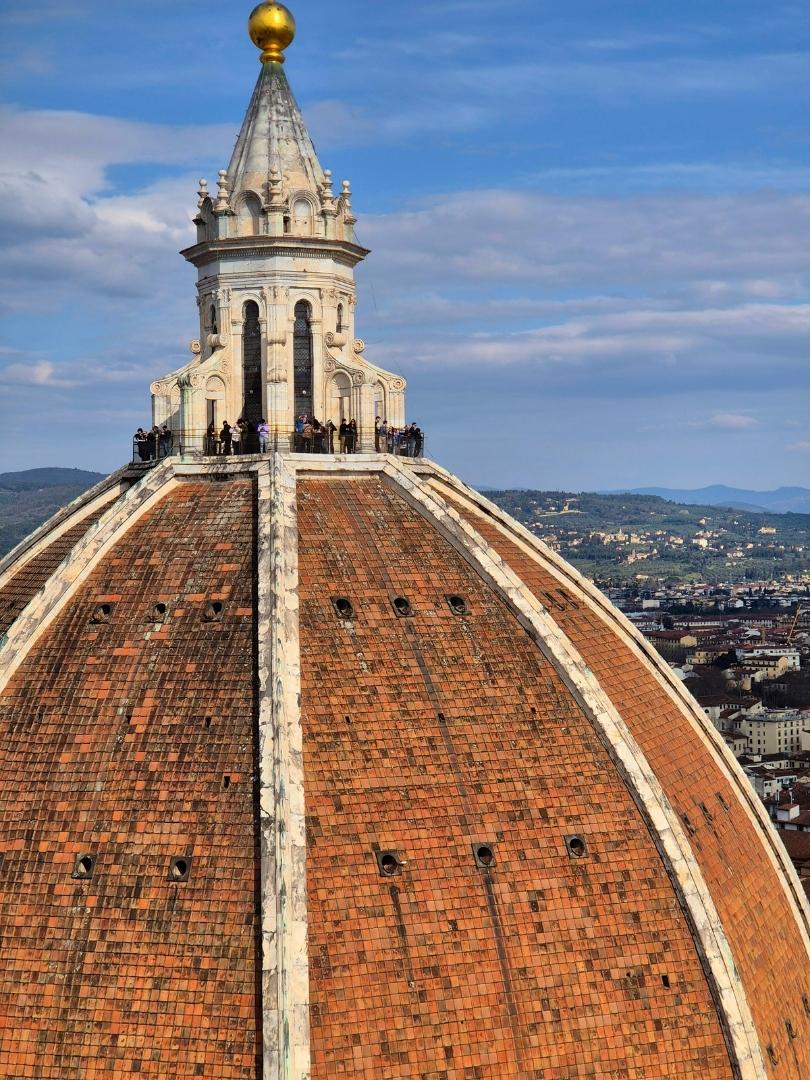
The final and most challenging part of the cathedral to be built was Brunelleschi’s Dome, completed in 1436 to mark the end of a 140 year project. At the time, no one had attempted to construct a dome of such scale since the Roman era, and the lack of technical know-how stalled the progress of the cathedral by decades.
In the end, it was Filippo Brunelleschi’s ingenious design, involving a system of interlocking bricks and hidden support rings, that brought the ambitious project to life.
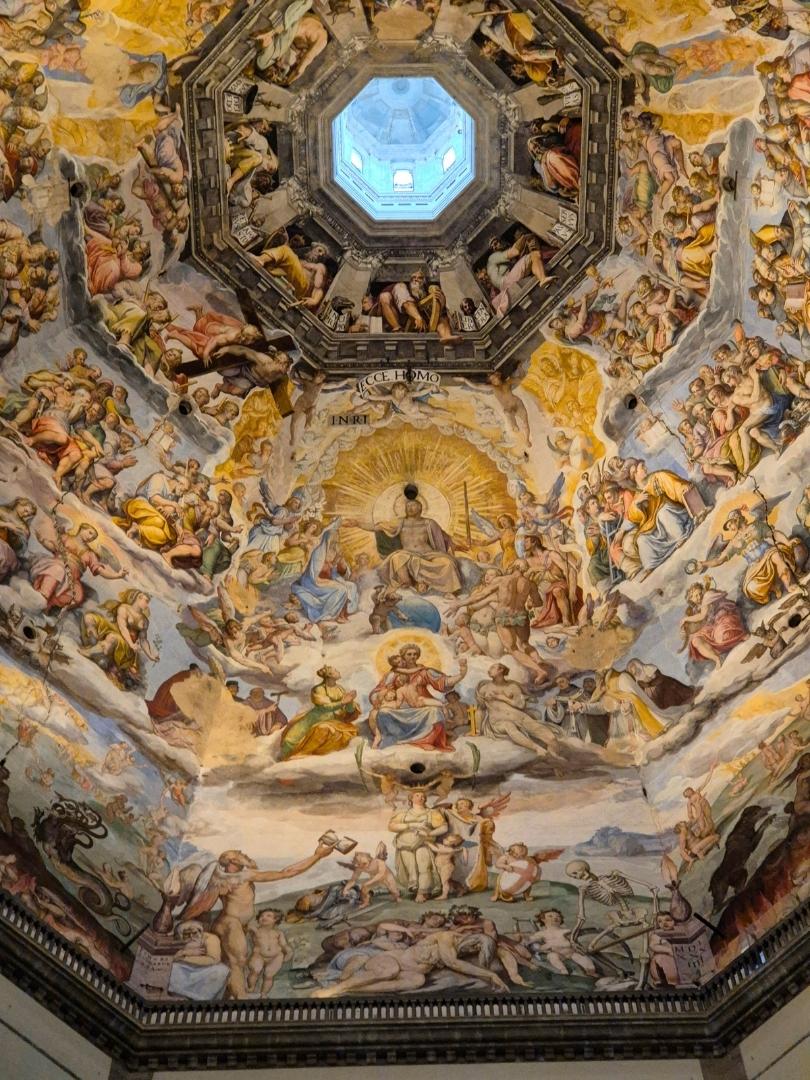
Today, the red-tiled dome dominates the Florence skyline, but its most impressive feature is actually on the inside. Here, on the interior of the dome, the immense fresco called The Last Judgment, painted by Giorgio Vasari and Federico Zuccari, depicts heaven and hell in extraordinary detail.
While entry to the cathedral is free, a ticket is required to climb the narrow staircase to the dome. From here, visitors not only get panoramic views of Florence from the exterior walkway, but can also get up close with The Last Judgment, allowing you to appreciate its incredible amount of detail and storytelling.
Planning to visit Italy soon?
🛏 Booking hotels: Trip.com and Booking.com are the best resources for finding and booking hotels in Italy.
🏄 Booking tours: Get Your Guide is the best resources for finding guided tours to Italy’s historical sites.
🚅 Booking transport: Omio is the best online resource for booking trains and buses across Italy.
🏥 Travel insurance: Heymondo covers medical, theft, cancellations and more in Italy.
3 | Giotto's Campanile
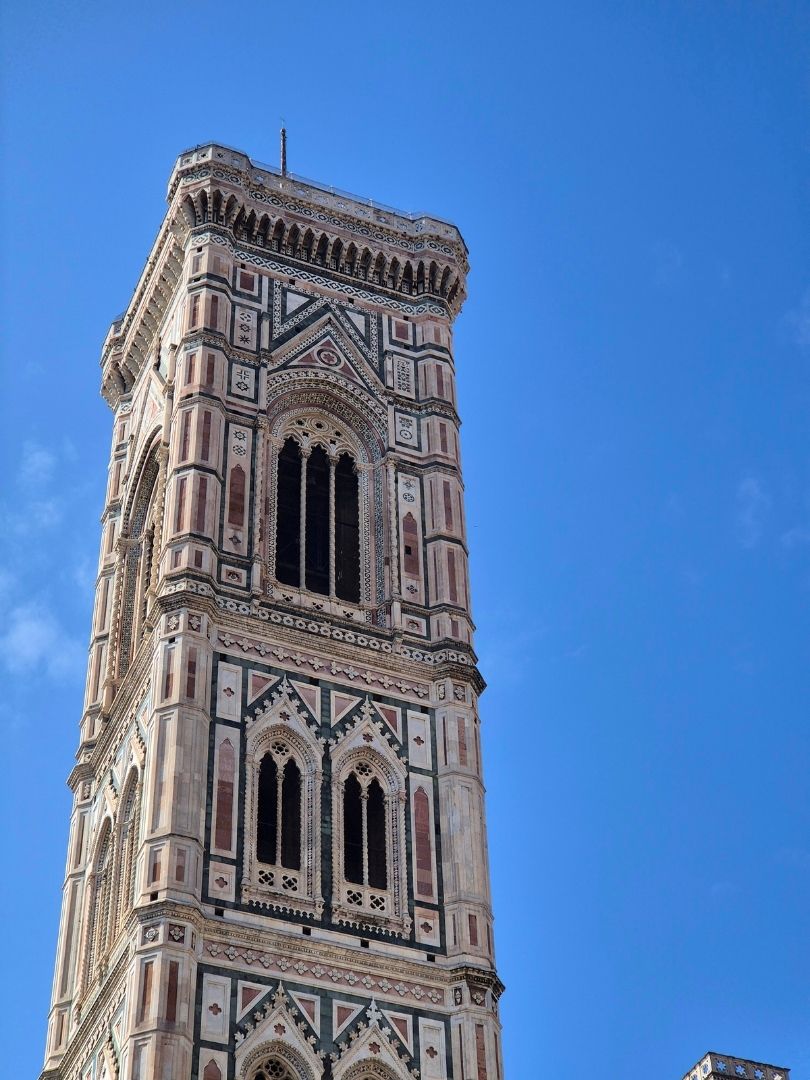
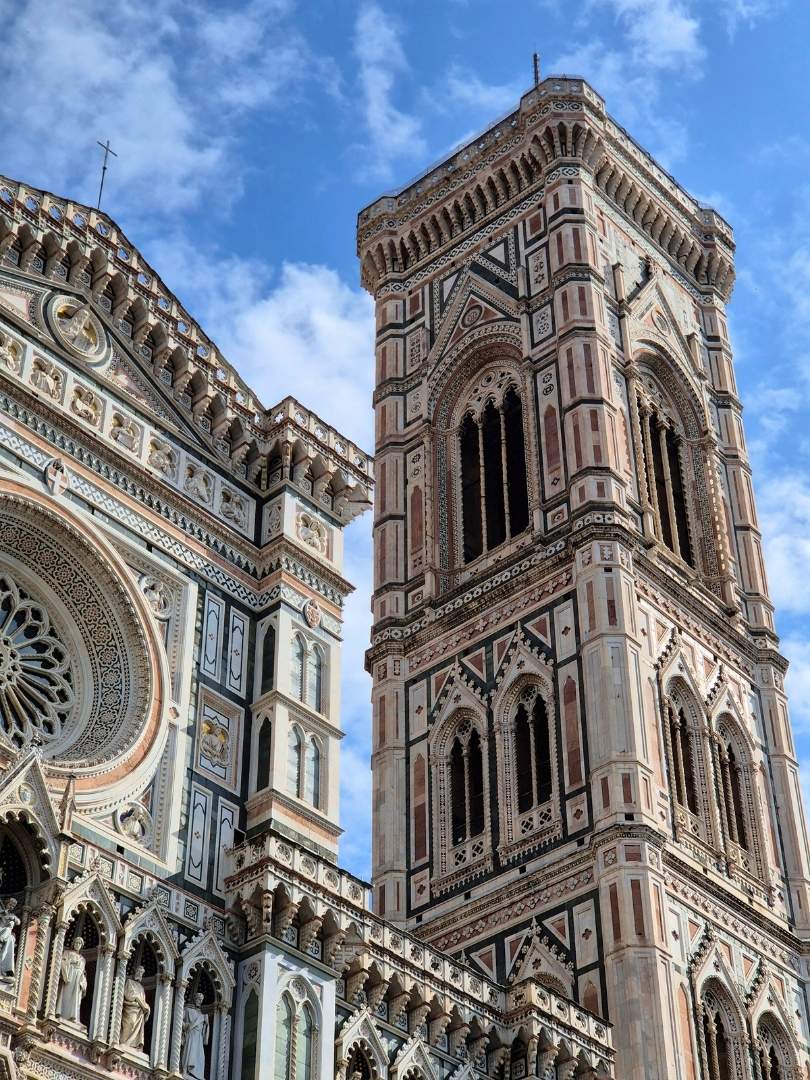
Giotto’s Campanile, or bell tower, dominates the Florence skyline alongside Brunelleschi’s Dome.
Standing at 85m high, construction on the belltower began in 1334 under the direction of the painter and architect Giotto di Bondone, though he passed away before it was completed. Work continued under Andrea Pisano and Francesco Talenti, who finished the tower in 1359, while the main cathedral building was still under construction.
Clad in white marble, the exterior of the Campanile mirrors the same Gothic style used for the cathedral, and is similarly decorated with reliefs and statues depicting biblical scenes.
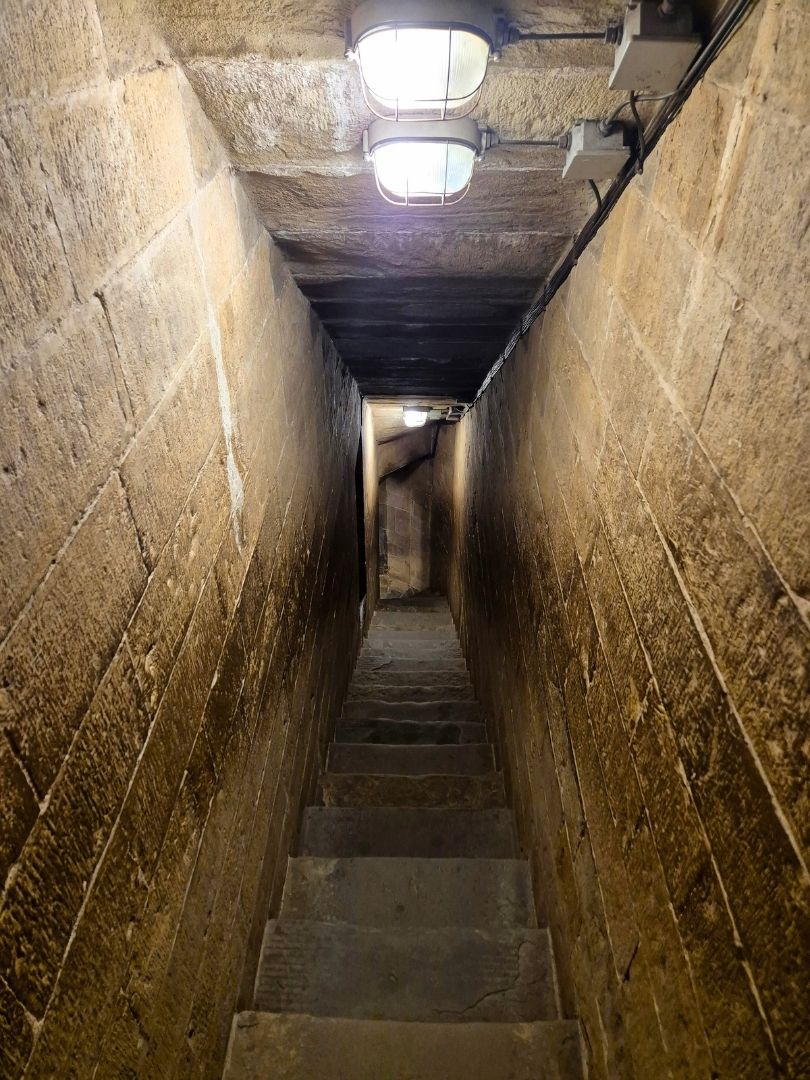
Entry to the bell tower requires a ticket, with a set entry time. The staircase to the top of the 85m high tower is extremely narrow, barely enough for one person to fit. Even with the set entry time, visitors should expect some traffic during their climb to the top.
But the climb to the top is well worth it, where visitors can circle the exterior walkway, taking in some of the best views of Florence and Brunelleschi’s Dome.
4 | Baptistery of St. John
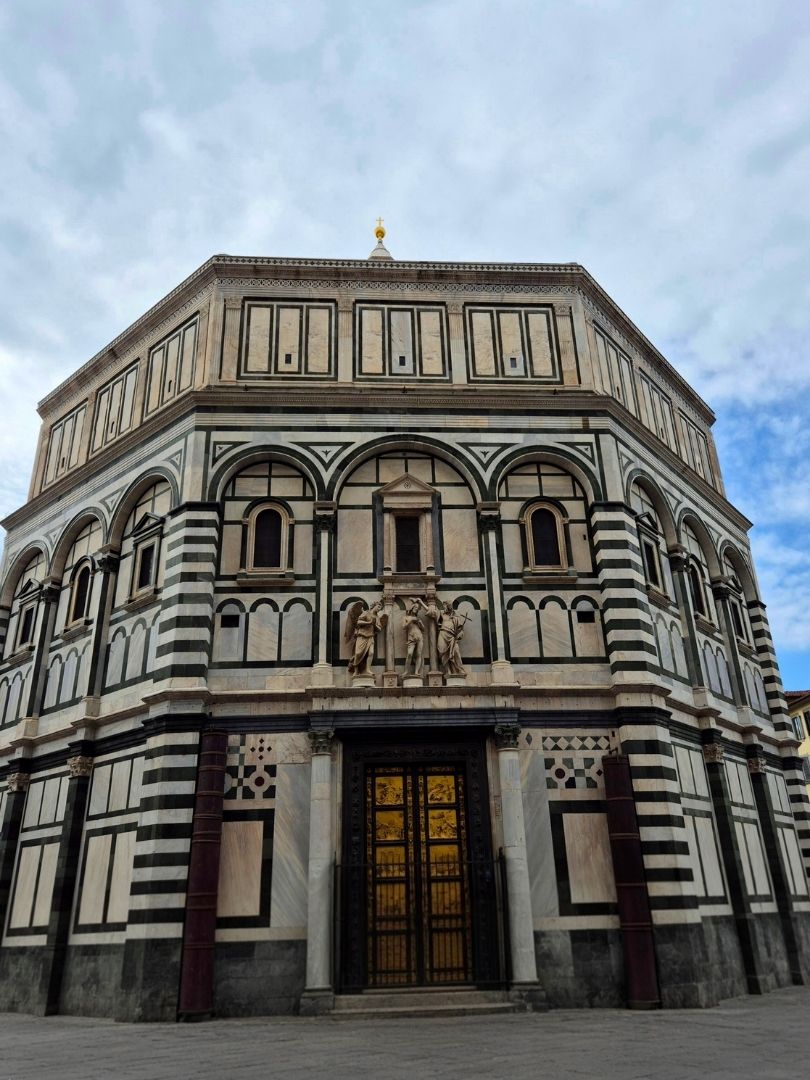
The Baptistery of San Giovanni is the oldest building in the Duomo complex, consecrated in 1059 – long before construction of the cathedral began. It’s believed that the current structure replaced an even earlier baptistery dating back to Roman times.
This Baptistery played a central role in Florentine life. Every citizen of Florence, from ordinary townsfolk to members of the rich Medici family, were baptised here in a ritual that signaled their transition from childhood to adulthood.
Following the baptism, it was then tradition for the newly baptised to make a procession walk through the Piazza del Duomo and into the cathedral, signaling their transition into Florentine religious and civic life.
Today, the Baptistery is only used for baptisms on special occasions, but remains open to visitors with the right ticket (more on that below). Inside you can explore the marble interior, including the upper matroneum (women’s gallery), where you can get a closer look at the dazzling golden mosaics on the dome.
5 | Crypt of Santa Reparata
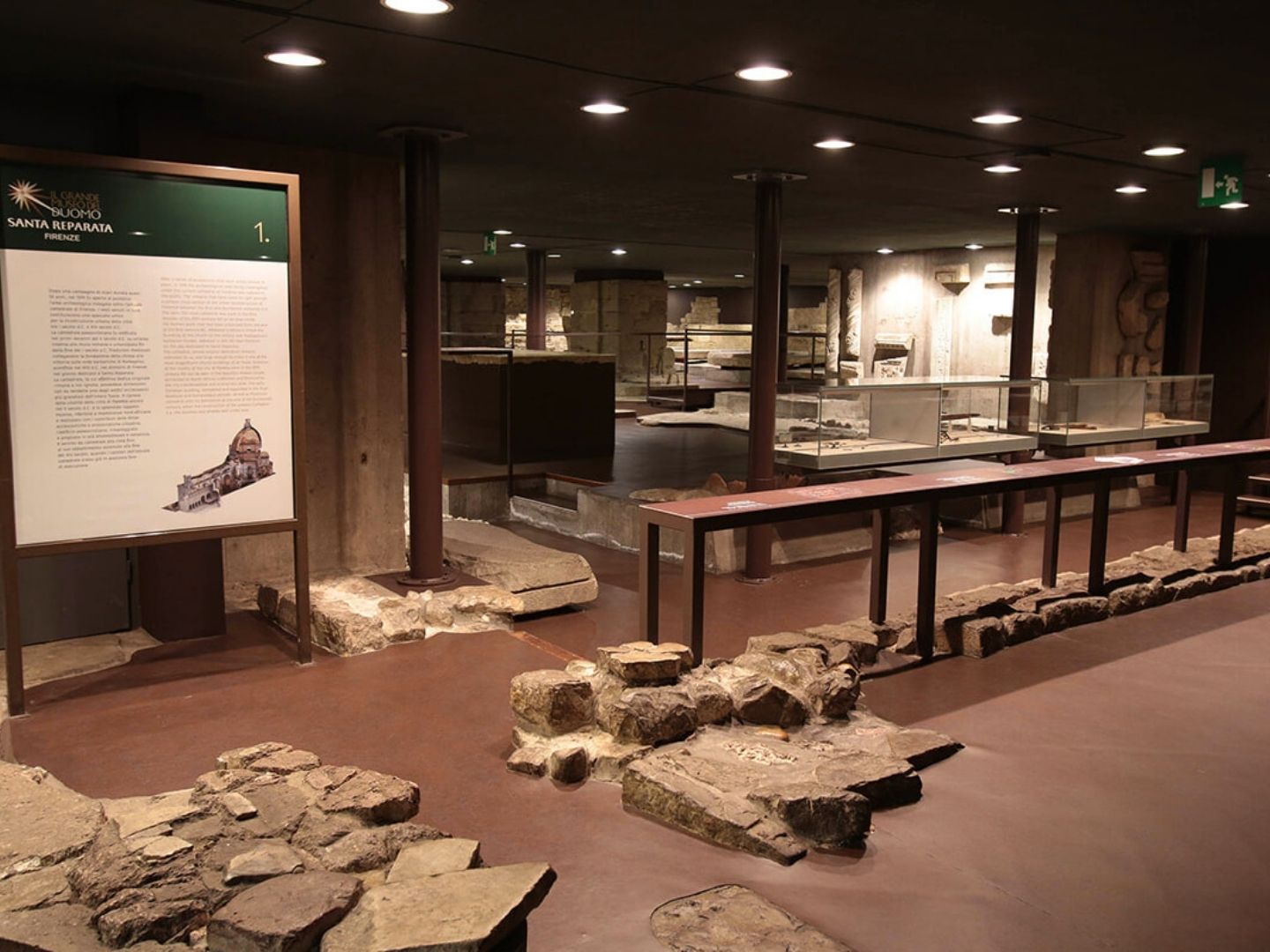
Before the Cathedral of Santa Maria del Fiore was built in the 13th century, another church stood on this site – the Basilica of Santa Reparata. The old church is assumed to have been built as far back as Roman times and, by the Middle Ages, had fallen into disrepair. By the 13th century the old church was demolished to make way for the cathedral you see today.
Very little was known about the old church before parts of it were excavated beneath the Duomo in the 1960s and 70s. Today, a staircase leads from the main cathedral hall down to what is now called the Crypt of Santa Reparata.
The area beneath the new cathedral has been turned into a museum showcasing the archeological remains of the old structure. Here, visitors can see well-preserved Roman mosaics, fragments of the old structure, and several tombs – including that of Brunelleschi, the architect behind the new cathedral’s dome.
While entry to the main cathedral is free, a ticket is required to enter the Crypt of Santa Reparata.
6 | Opera del Duomo Museum
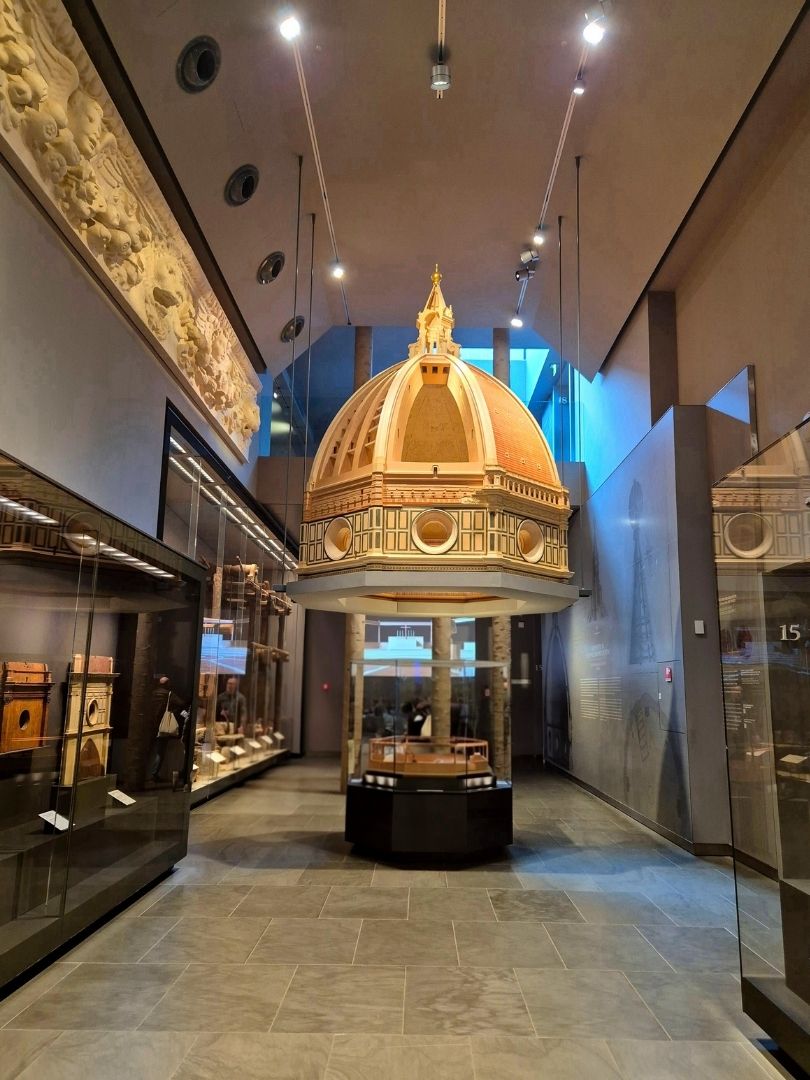
Lastly, be sure not to move on from the Florence Duomo complex before visiting the Opera Del Museum.
Located on the eastern edge of the Piazza del Duomo, this museum isn’t just a collection of forgettable artefacts and wordy plaques, it holds some of the most important artefacts relating to the Duomo, and provides a deep insight into its history and construction.
Spread across 3 floors, the museum takes you on a journey through the Duomo’s history, highlighting the incredible work that went into it, and the ingenious architects and artists that contributed to it. Along the way you’ll find original sculptures by famous artists such as Donatello and Michelangelo, the famed ‘Gates of Paradise’ that used to adorn the Baptistry, and models and tools used to construct Brunelleschi’s dome – among many other exhibits.
Entry is included in all Duomo ticket types and is an unmissable addition to your visit.
Tickets
Now that you know what there is to see at the Duomo complex, it’s important to understand how the tickets work. If you turn up without any pre-planning, you may find yourself missing out.
Exploring the Piazza del Duomo, and the main floor of the cathedral, is completely free. But everything in the complex requires a ticket.
Duomo ticket types for 2026
There are 3 ticket types to choose from, depending on how much you’d like to include.
Brunelleschi Pass:
- Dome
- Campanile
- Baptistery
- Crypt of Santa Reparata
Giotto Pass:
- Campanile
- Bapistery
- Crypt of Santa Reparata
- Museum
Ghiberti Pass:
- Baptistery
- Crypt of Santa Reparata
- Museum
Brunelleschi Pass
Giotto Pass
Ghiberti Pass
- Dome
- Campanile
- Baptistery
- Crypt of Santa Reparata
- Museum
- Giotto’s Campanile
- Baptistery
- Crypt of Santa Reparata
- Museum
- Baptistery
- Crypt of Santa Reparata
- Museum
All ticket types are valid for 3 calendar days, although entry to the Campanile and the Dome will be at a set time, which you’ll select when purchasing the ticket.
Your ticket also includes baggage storage, which can be found next to the Museum. The Campanile and the Baptistry won’t allow entry if you have a bag, so be sure to drop it off before visiting either of these sites.
For more info on Florence Cathedral and Duomo tickets, visit the official website.
Buying tickets online
If you search online for “Florence Duomo tickets,” you’ll find many results for third-party sellers offering overpriced tickets, some which are hard to distinguish from the real thing.
Don’t be misled into paying more than you need to via these websites. Instead, you can buy your Florence Duomo tickets directly via the official website.
The best way to buy is directly through the official website, where you’ll pay the standard price and avoid unnecessary markups.
Once purchased, you’ll receive an email confirmation along with a digital copy of your ticket, which can be shown on your phone upon entry.
Buying tickets in-person
Tickets can also be purchased in-person from the ticket office within the Piazza Del Duomo. While there are signs and maps, the office is a little hidden. You’ll find it directly opposite the front entrance to the Baptistery.
Keep in mind that the Campanile and Dome have set time slots. Buying tickets on the same day can be risky, as many time slots may already be sold out. To avoid the risk of missing out, it’s best to book online in advance.
Florence Duomo Opening Hours
The last thing you need to know before visiting the Florence Cathedral and Duomo Complex is the opening hours. Some parts of the complex are closed on certain days, so to avoid missing out it’s important to plan ahead.
The Cathedral is open 10:15am-3:45pm, but is closed on Sundays.
The Dome is open 8:15am – 6:45pm, but closes at 4:30pm on Saturdays. On Sundays, the Dome is only open from 12:45 – 4:30pm.
The Baptistery is open 8:30am – 7:30pm, but closes at 1:30pm on the first Sunday of every month.
The Campanile is open 8:15am – 6:45pm
The Crypt of Santa Reparata is open 10:15am – 4pm, except on Sundays when it’s only open 1:30 to 4pm.
The Opera del Duomo Museum is open 8:30am – 7pm, but closed on the first Tuesday of every month.
For more information on the opening hours, check the official website.
Planning your trip to Italy
Now that you have all the information on visiting the Florence Duomo, it’s time to start planning your trip to Italy. Here are some resources to help you get started:
✈ Flights: Trip.com and Skyscanner are the best resources for finding cheap flights to Italy.
🏨 Accommodation: Booking.com is the best resource for finding amazing hotels in Italy, while Hostelworld is the best for finding hostels.
🏥 Travel Insurance: Heymondo covers all the essentials in Italy, including theft, medical and cancellations.
🚘 Car Rental: DiscoverCars is the best online resources to find rental cars in Italy.
🛜 Internet: To stay connected in Italy, I use Airalo. They offer an eSIM, meaning all you need is a smartphone and and the app.
🌐 VPN: To stay connected and access service that may not be available in Italy, use NordVPN.
🏄 Tours & Day Trips: Get Your Guide and Viator are the top platforms for tours and activities in Italy.
Disclosure: This post may contain affiliate links.
Further Reading
Looking for more information about your trip to Italy? Here’s a collection of articles that you might find useful:
- When in Venice, you might be interested in visiting the centre of Venetian naval power. Check out: Venetian Arsenal: Complete Travel Guide.
- If you’re visiting Naples and want to visit the best preserved ancient city in the world, check out this guide: Ultimate Guide to Visiting Pompeii in 2026.
- While you’re in Naples, and want to explore its most historically significant castle, check out this guide: Castel Nuovo: A Guide to Naples’ Best Medieval Castle.
For more travel guides like this, visit my Destinations page.