
The Red Fort is a 500-year-old Mughal imperial palace located in downtown Delhi, and is one of India’s top historical attractions.
Designed by the same person who behind the famous Taj Mahal, the Red Fort is so iconic that it appears on the Indian 500 rupee note.
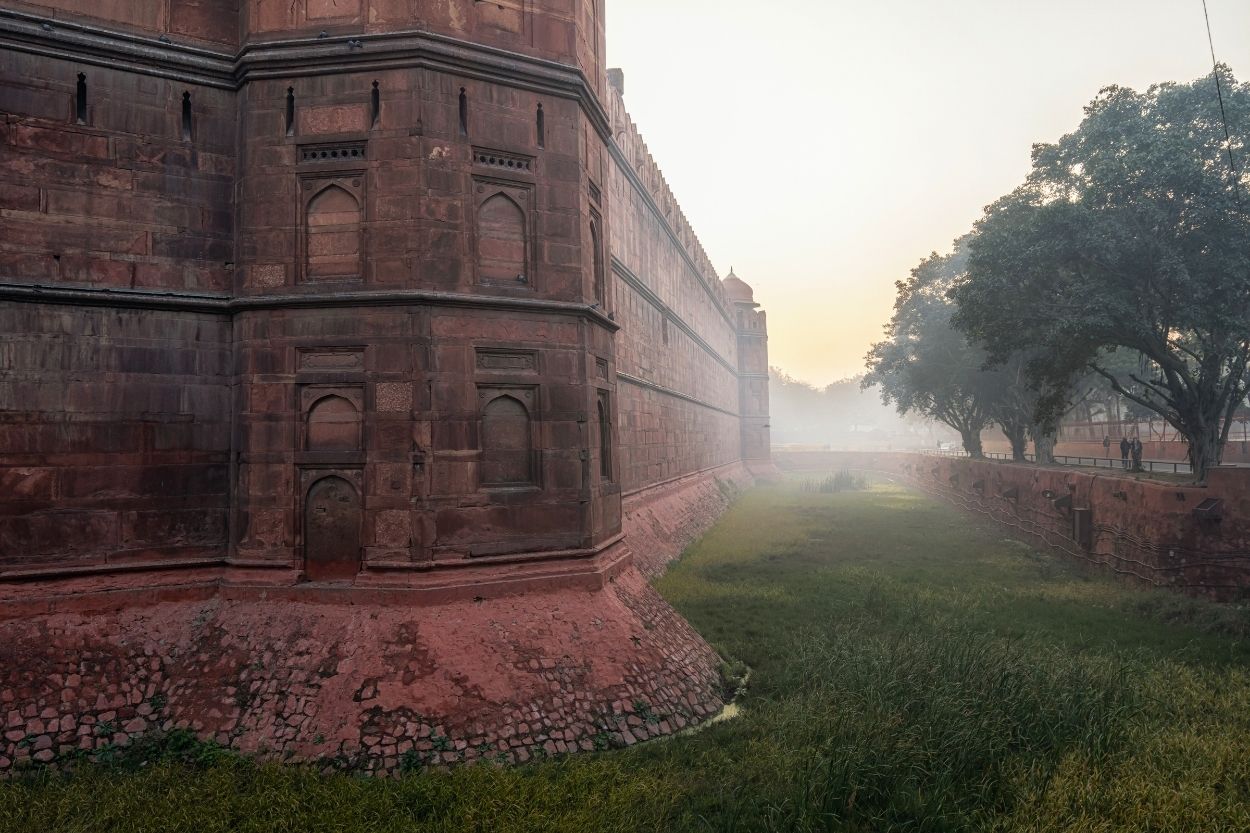
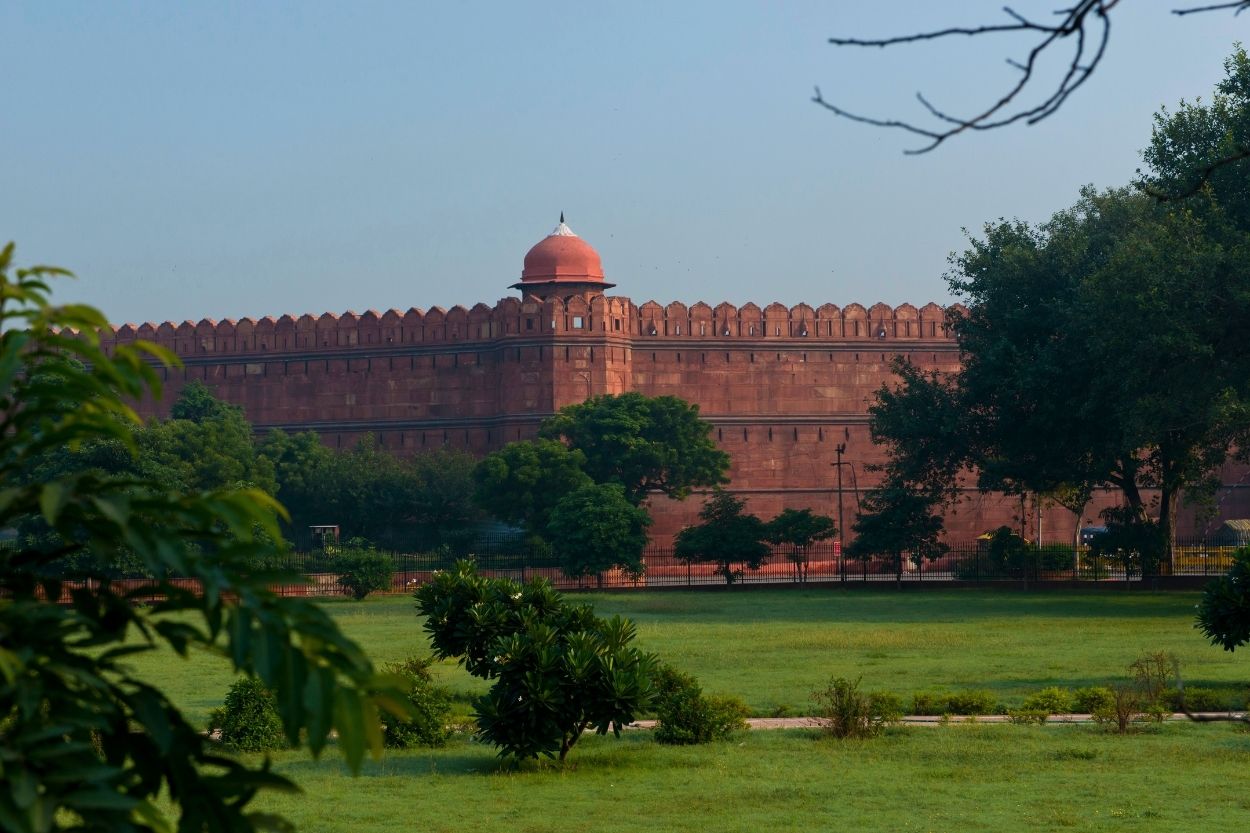
It’s easy to see why. The Red Fort is huge. Inside its towering walls, which reach as high as 80 feet, you’ll find markets, palaces, mosques, stepwells, museums and even the ruins of an older fort.
Even if you’ve seen plenty of castles and forts around the world, you’ve never seen anything like Delhi’s Red Fort. It’s an unmissable experience for anyone visiting the city.
In this guide, you’ll find everything you need to know to visit the Red Fort.
Contents
Brief History of Delhi’s Red Fort
The Red Fort was the imperial capital of the Mughal Empire, the last great Indian Empire before the British takeover.
The story of the Mughal Empire is a wild and eventful one, and far too big to cover here. But in a nutshell, the Mughals originated from Central Asia, near modern-day Uzbekistan, and were essentially Mongols. Their first ruler, Babur, is said to have descended from Gengis Khan himself.
In 1556 the Mughuls descended into the Indian Subcontinent at the front of an army, and began conquering one kingdom after another. This warfare would continue non-stop until they reached their zenith, and then sudden collapse. In this sense, the Mughal Empire was essentially one big, 200-year military campaign.
Despite the constant warfare, they still had time to build some cool stuff, and construction on the Red Fort began in 1639 after the capital was moved from Agra.
The Red Fort was designed by the same person who designed the Taj Mahal, and is a mix of both Indian and Persian architecture.
After its completion, it became one of the largest forts in the world, and by the early 18th century it was essentially the capital of the Indian subcontinent – ruling over almost 150 million people.
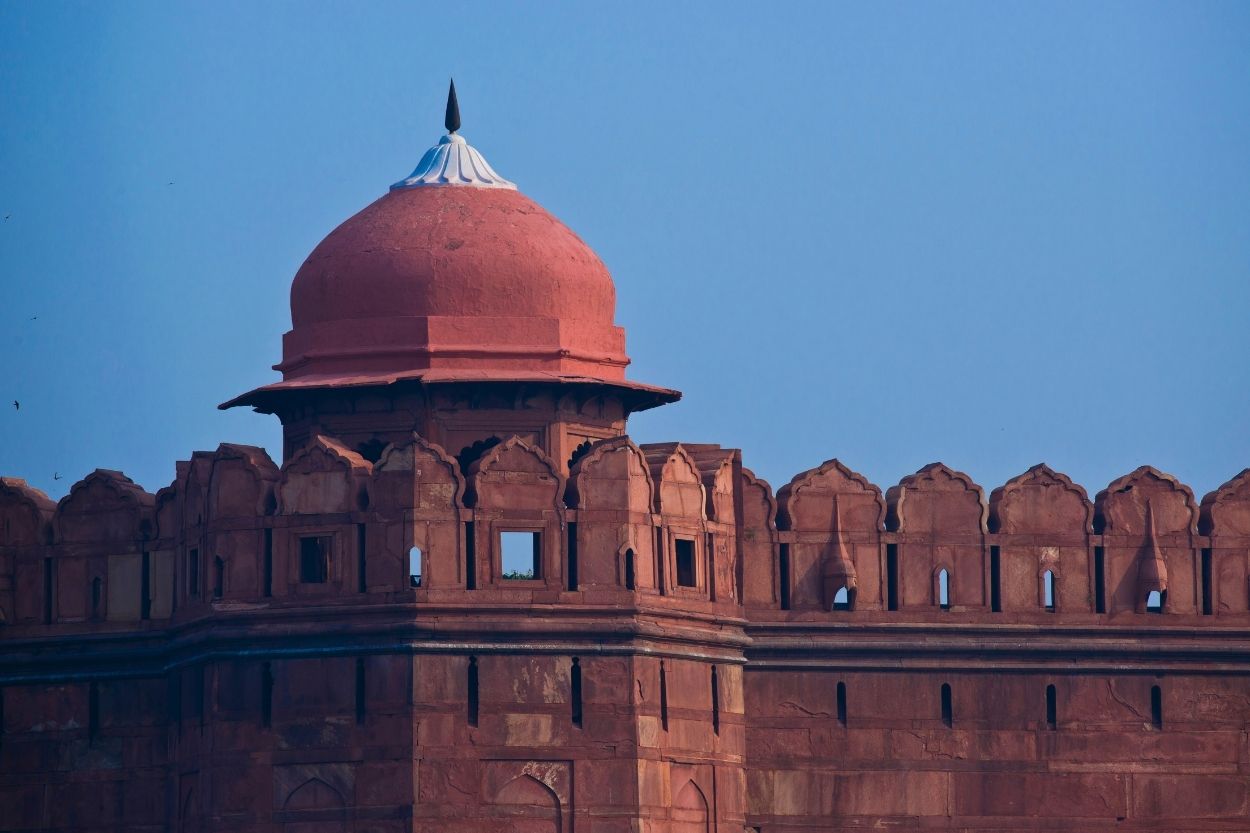
Despite being one of the largest forts in the world, the Red Fort has been sacked multiple times, and many of its best features have been destroyed or stolen. This includes the throne, and the doors to the main gate, both of which can be found in other places across northern India.
The Mughal Empire wasn’t built to last, and it fell apart as quickly as it was came. By 1803, Delhi, and the Red Fort, came under British control.
In response to the violent 1857 uprising, the British sacked the Red Fort, looting most of its artwork and furniture, and ordered the demolition of its buildings. By the time they were done, around two-thirds of its internal buildings were destroyed, and many of its artefacts sold abroad.
While many of these destroyed buildings have been restored, the Red Fort may never be as grand as it was before 1857.
However, it’s still one of the best historical attractions in India, and in 2007 it became a UNESCO World Heritage Site.
Things to see at the Red Fort
1 | Lahori Gate
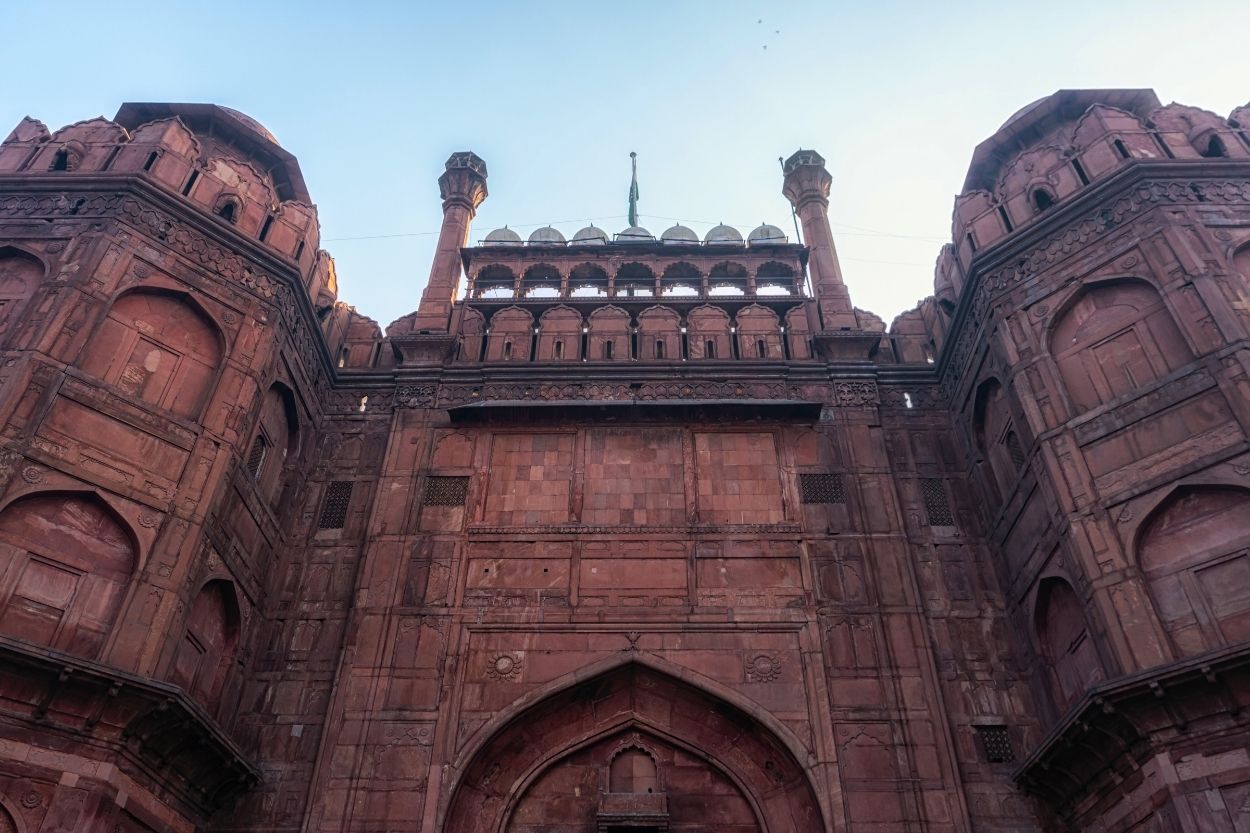
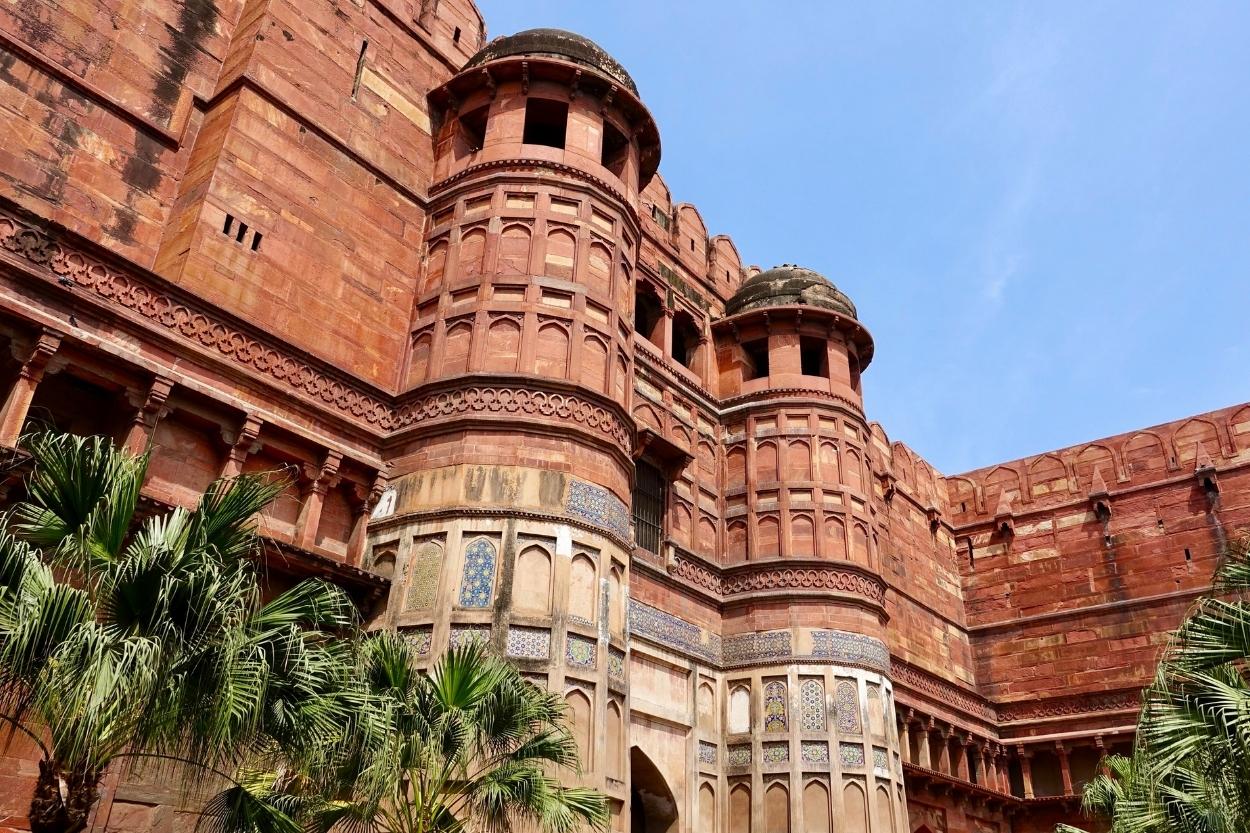
The Lahori Gate is the grand entrance to the Red Fort.
Named for its orientation towards the city of Lahore (in Pakistan), the gate is arguably the most impressive feat of architecture in the Red Fort.
Lahori Gate is such an Indian icon that its printed on the Indian 500 rupee note and every year on Independence Day the Indian President makes a speech to the nation from its ramparts.
2 | Chhatta Chowk
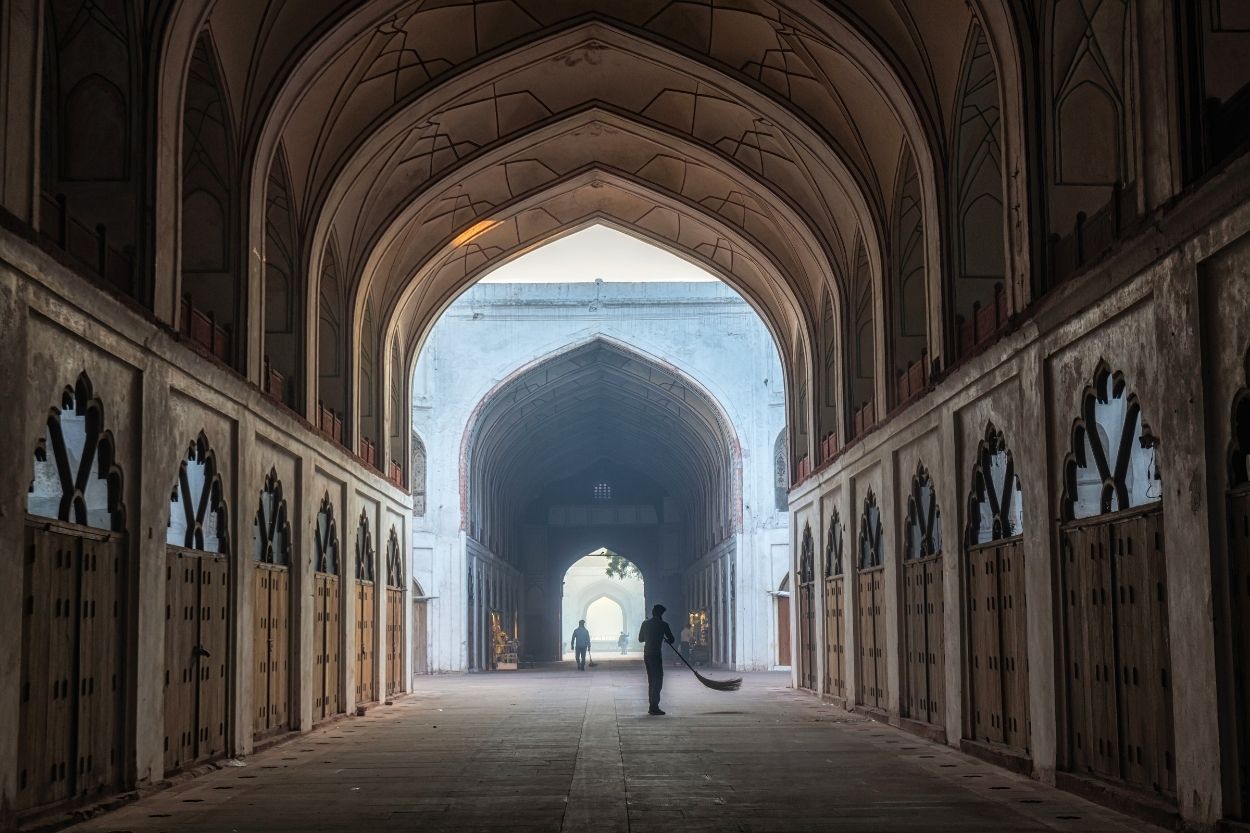
After you enter the Red Fort through Lahori Gate, you’ll immediately pass through Chhatta Chowk.
This massive arched passageway contains a bazaar (market) that traces its origins all the way back to the 17th century. After the Shah saw a roofed bazaar in Peshawar (Pakistan) he ordered a similar one be built here, inside the Fort.
Historically, the market stalls at Chhatta Chowk sold luxury items like silk, jewellery, silverware and gems, these days it’s mostly made up of souvenir stores.
Planning to visit India soon?
🛏 Booking Accommodation: Booking.com is the best resources for finding and booking hotels in India.
🏄 Booking Tours: Get Your Guide is the best resources for finding guided tours and day trips to India’s historical sites.
🚅 Booking Transport: 12Go is the best online resource for booking trains and buses across India.
🏥 Travel Insurance: Heymondo covers medical, theft, cancellations and more in India.
3 | Diwan-i-Am
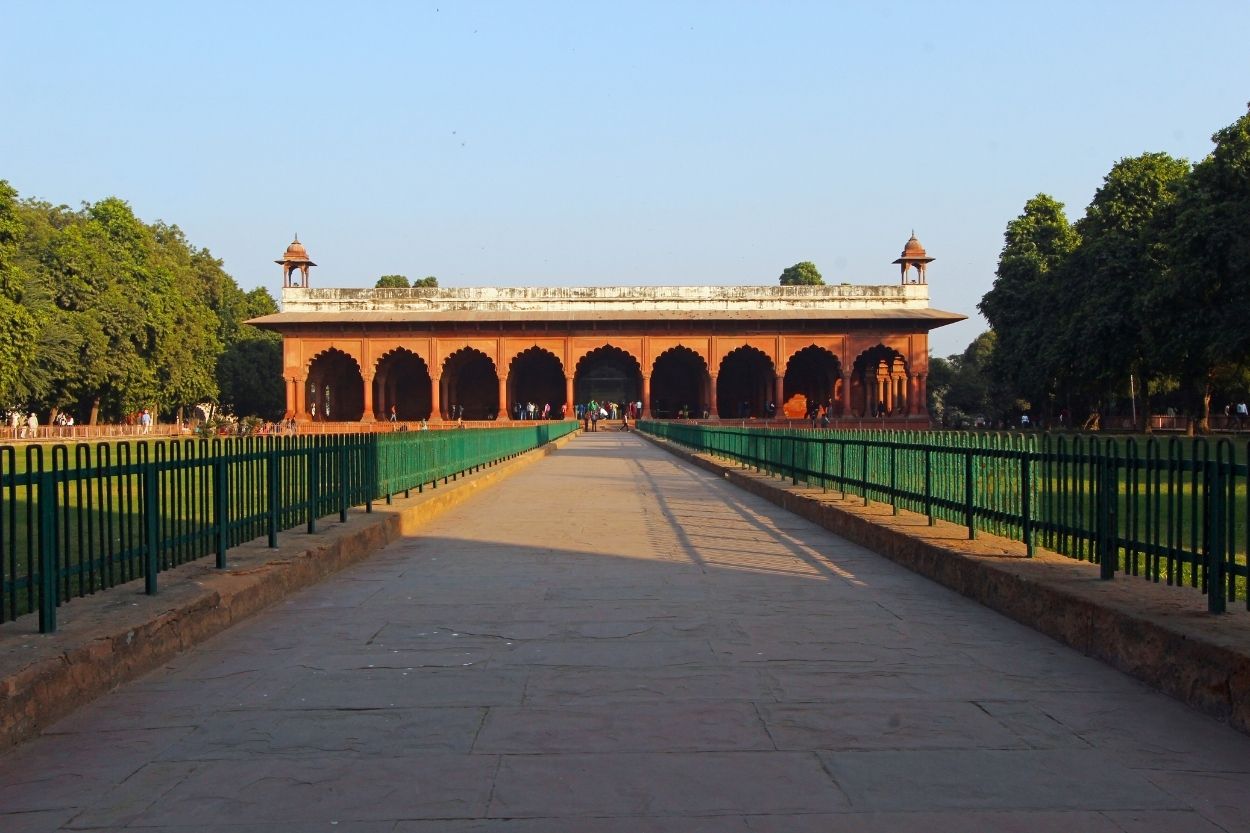
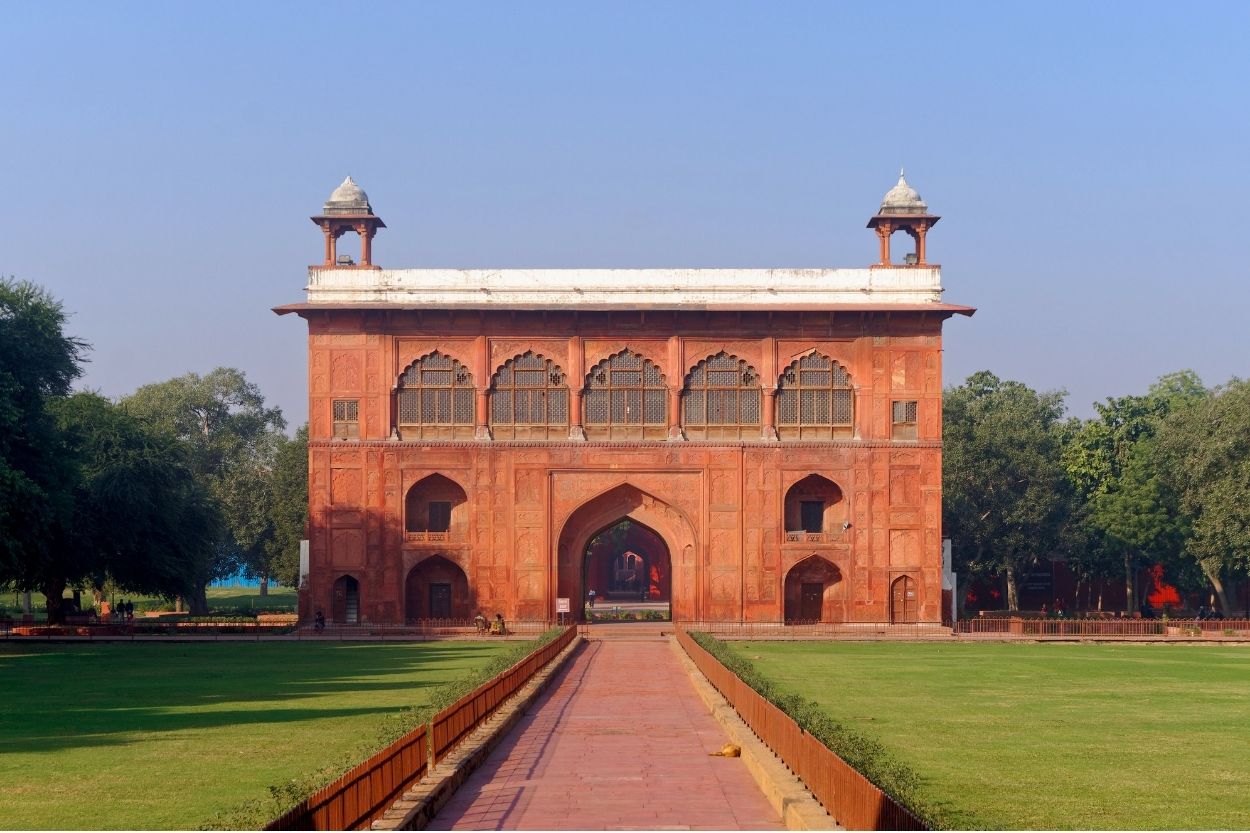
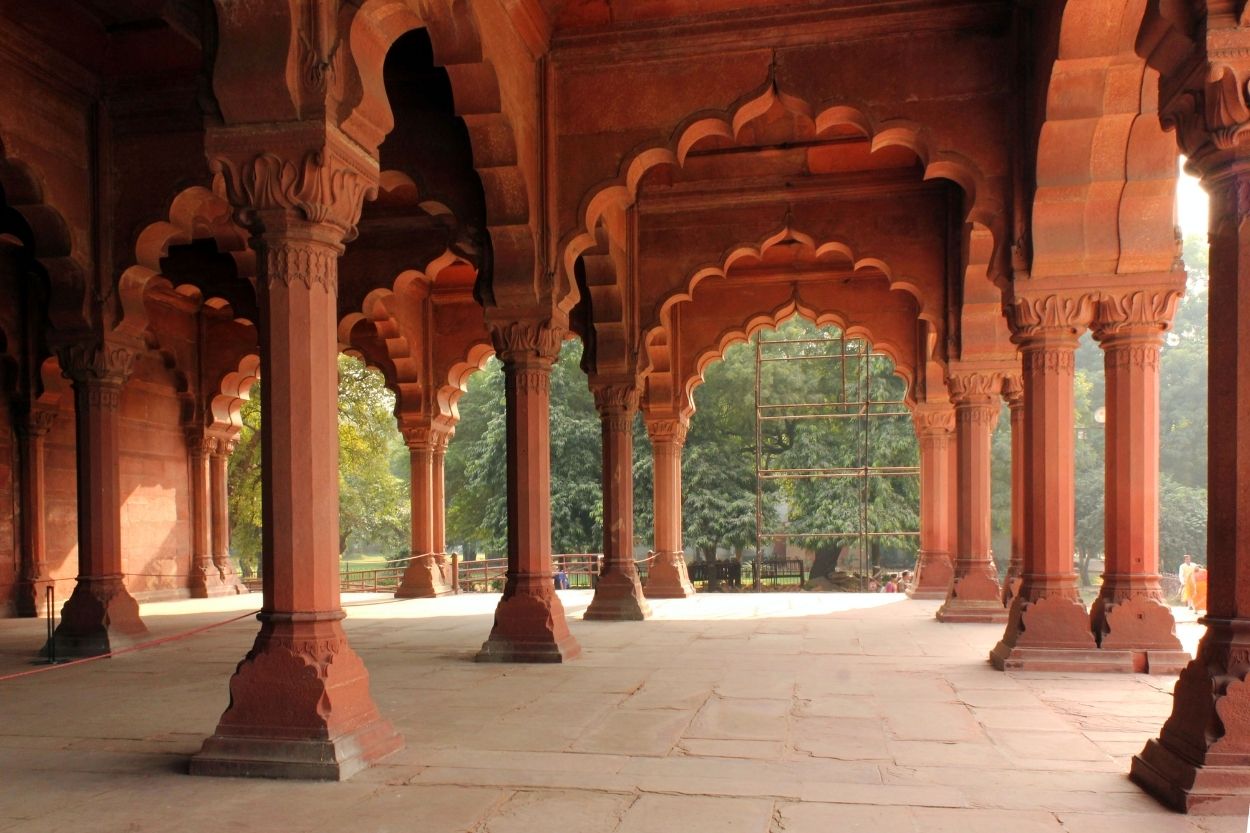
When you enter the Red Fort, the path you follow is designed so that you pass first through the Lahori Gate, then through Chhatta Chowk, then through the gardens to the Naubat Khana (waiting hall) before finishing at the Diwan-i-Am.
This majestic open-air structure was an audience hall, where the Mughal emperor would receive members of the general public. This being opposed to the Diwan-i-Khas, where he would receive other royals and nobles.
4 | Moti Masjid
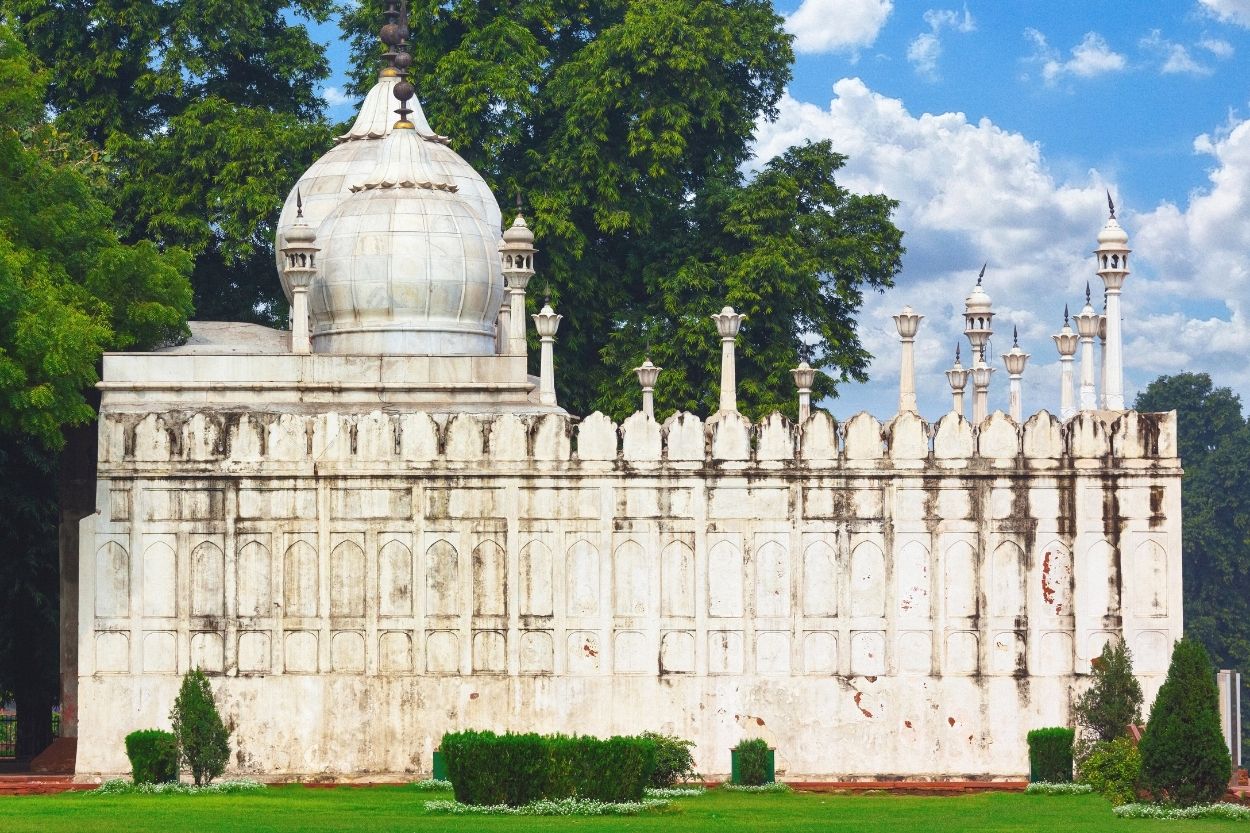
Before 1663 the Red Fort did not have its own mosque, and the emperor would instead pray at the nearby Jama Masjid.
This was until Moti Masjid was commissioned by the famous Mughal emperor Aurangzeb.
Also called the ‘Pearl Mosque’, this white marble structure is located right next door to the Khas Mahal (emperor’s living quarters) and served as his own personal place of worship. He was known to often invite royal visitors in with him to pray.
Originally, much of the exterior was made of gold and copper, but this was looted by the British, who were also responsible for restoring the stolen parts with white marble.
5 | The Boali (Stepwell)
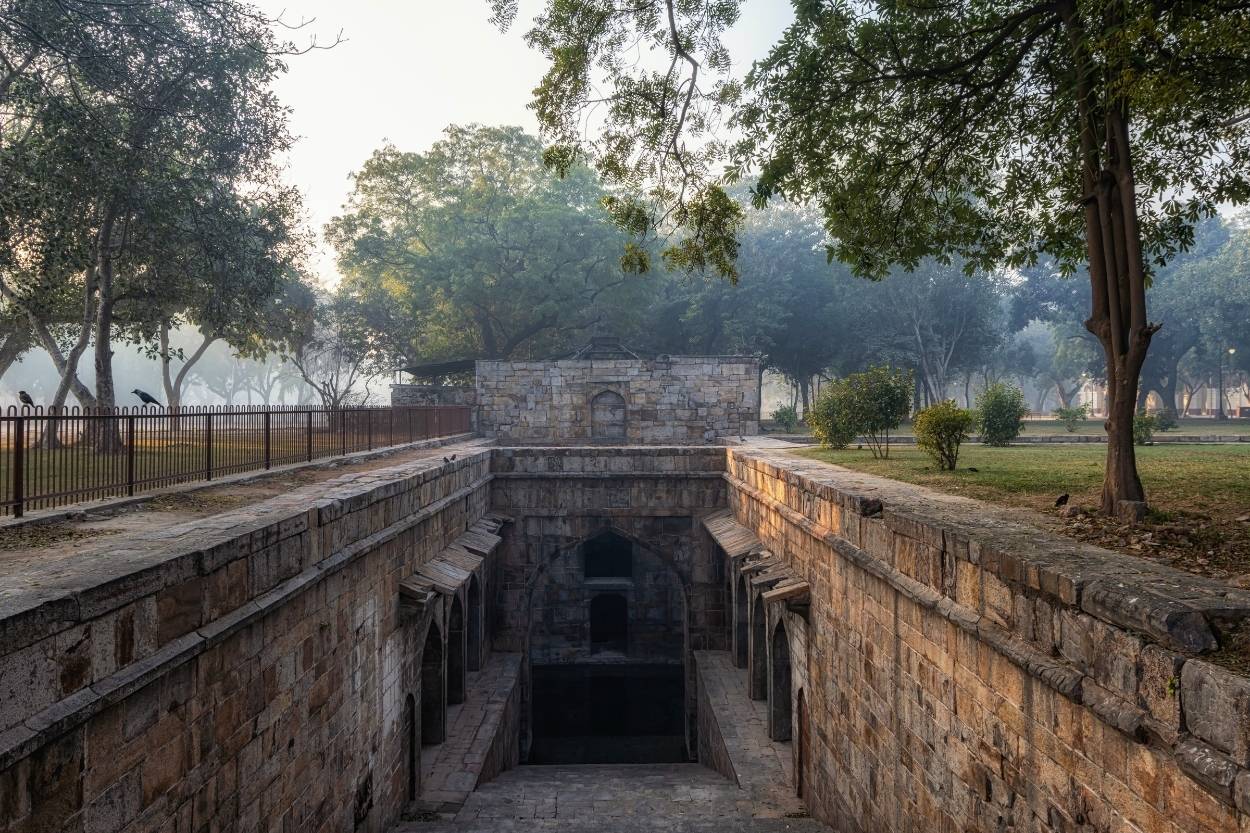
Located in the northern part of the fort’s grounds, the Boali is the royal stepwell.
Comprising 2 long staircases leading to a water basin at the bottom, stepwells like this are common across northern India and were used as a stable source of fresh groundwater.
The Boali is one of the most impressive architectural features of the Red Fort, especially if you’ve never seen a stepwell before, but it’s easy to miss unless you know where where to find it.
The Sound & Light Show
The Red Fort also offers a Sound & Light show each evening.
Through a display of vibrant lights projected onto Lahori Gate, and mesmerising sounds blasting through speakers, the show tells the story of the Red Fort and the Mughals, including their rise, their rule and eventually their downfall.
It’s like watching a loud and colourful historical documentary projected onto one of India’s most important historical sites. Some say the show is a little dated, but its still a fun experience.
There are 2 sessions every evening, except Mondays:
- 6pm – Hindi
- 7:15pm – English (Only Tuesdays to Thursdays. Friday to Sunday this show is in Hindi)
You can book your tickets to the Red Fort’s Light and Sound Show online for 500 INR (about $6 USD).
Where is the Red Fort?
The 📍Red Fort is located in Old Delhi.
Old Delhi is the original, historic area of the city of Delhi that contains most of its tourist attractions. Not to be mistaken with New Delhi, which is a different area of the city.
How to get to the Red Fort
If you’re staying in the Old Delhi district of Chandni Chowk you may be within walking distance of the Red Fort. Otherwise, you have 3 main options for getting there:
Uber
The simplest and most practical way to get to the Red Fort is to book an uber.
Uber is available in most Indian cities, and is a great option for tourists. Taxi drivers will jack up their prices for foreigners, but with uber the price is the same for all. No haggling or getting ripped off.
Rickshaw
If uber isn’t available or you’d like a more authentic experience, you can also hail a rickshaw (also called a tuk tuk – the little 3 wheeled vehicle)
Rickshaws are everywhere in Delhi, and finding one can be as simple as standing on the street and hailing one down.
Alternatively, most hotel reception staff can arrange for one to come to your accommodation and pick you up.
Speeding around the streets of Delhi in the back of a rickshaw is a lot of fun, but be sure to negotiate and confirm the price first.
Train
If you’re feeling brave enough to tackle Delhi’s public transport system, you can also catch a train to the Red Fort.
What train to catch will of course depend on where you’re coming from, but you can see a full map of Delhi’s rail network here.
The Violet Line is an underground part of Delhi’s metro that passes right by the Red Fort. You’ll want to get off at Lal Qila Station, where you’ll find yourself just across the road from the Red Fort.
Best time to visit Delhi
While the Red Fort is open all year round, the time of year you visit Delhi can make a difference.
This is because you’re going to be doing a lot of walking around the Fort, and Delhi can get extremely hot.
Daytime summer temperatures in Delhi stay consistently around 40℃, enough to make your outdoor adventures an uncomfortable experience.
The best time to visit Delhi is around winter, between November and March. While it can get a bit cold at night, the daytime winter temperatures stay around the low 20s℃.
Red Fort Opening Hours
Delhi Fort is open 9:30am – 4:30pm, Tuesday to Sunday (closed Mondays).
While I endeavour to keep this guide up to date, you can check for any updates to the opening hours on the Delhi Tourism website.
Red Fort Entrance Ticket
At the time of writing, entry tickets to the Red Fort are:
- ₹550 (Foreigners)
- ₹35 (Indians)
You can purchase your ticket from ticket booth at the front entrance, or I highly recommend booking online in advance from this website.
How long does it take to visit the Red Fort?
How much time you should plan for the Red Fort depends on you.
You could stroll through, admire most of the architecture, and be on your way in about 2 hours.
Or you could check out all the interesting historical attractions the Red Fort has to offer, including the museum, the stepwell, crossing the bridge into Salimgarh Fort, etc. – which would take 4-5 hours.
To get the most out of your visit to the Red Fort, I’d recommend allowing for half a day trip
Is the Red Fort worth visiting?
Is the Red Fort worth your time? Should you prioritise it over other sites in Delhi?
Ultimately, it depends on what you’re interested in, but here’s some info to help you decide:
If you’re interested in history, then the Red Fort should absolutely be at the top of your list when visiting Delhi. For almost 200 years, most of the Indian subcontinent was essentially run from this fort. Its become an Indian icon. Its featured on their currency, and its from the Red Fort that the president gives his annual Independence Day speech.
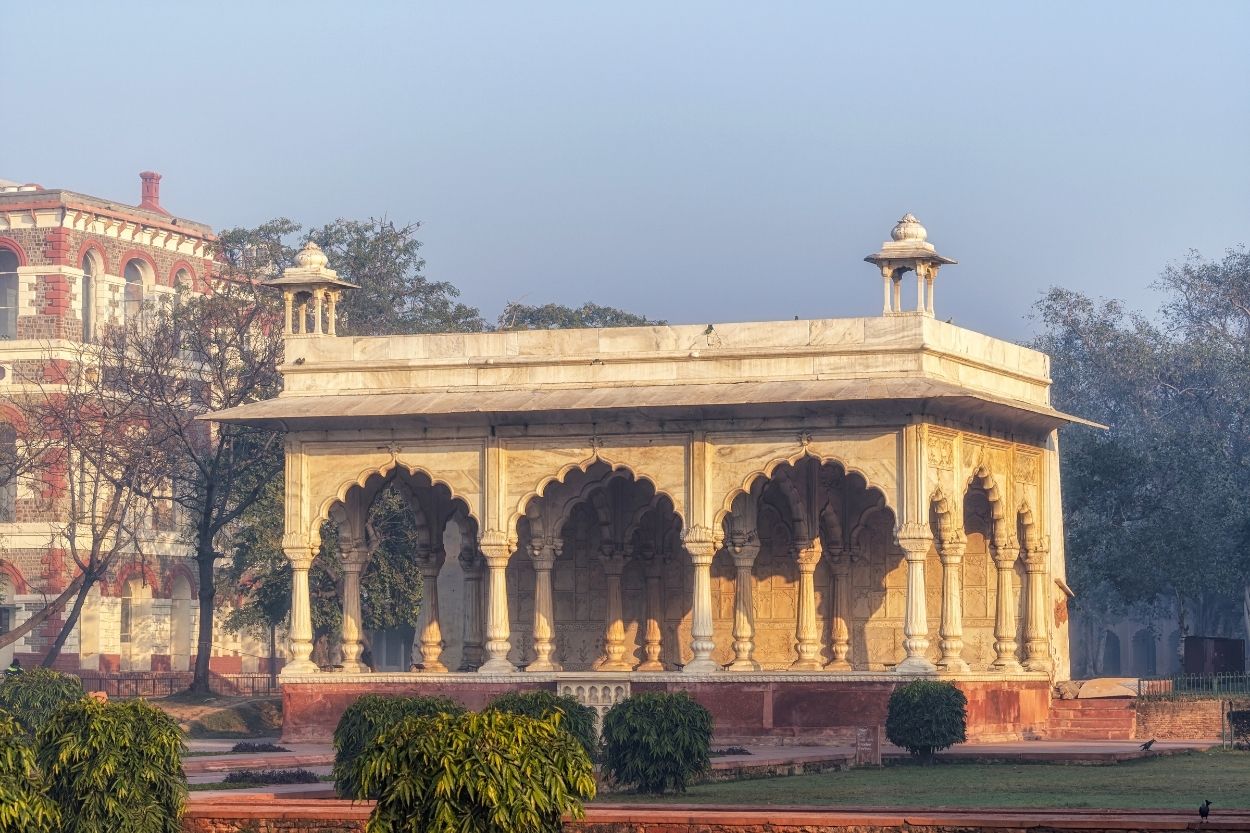
Even if you’re not much of a history buff, the Red Fort is still among the top sights in Delhi. You don’t need to know the history to appreciate the Fort’s incredible scale and architecture.
The inside of the Red Fort is also a nice break from the city chaos. Though you may need to contend with crowds when entering, once you get through the gate there’s plenty of open space, with parks and gardens to relax in.
Planning your trip to India
Now that you have all the information on visiting Delhi’s Red Fort, it’s time to start planning your trip to India. Here are some resources to help you get started:
✈ Flights: Trip.com and Skyscanner are the best resources for finding cheap flights to India.
🚅 Transport: 12Go is the best online platform for booking trains and buses in India, and across Asia.
🏨 Accommodation: Booking.com is the best resource for finding amazing hotels in India, while Hostelworld is the best for finding hostels.
🏥 Travel Insurance: Heymondo covers all the essentials in India, including theft, medical and cancellations.
🛜 Internet: To stay connected in India, you can use Airalo. They offer an eSIM, meaning all you need is a smartphone and and the app.
🌐 VPN: To stay connected and access service that may not be available in India, use NordVPN.
🏄 Tours & Day Trips: Get Your Guide and Viator are the top platforms for tours and activities in India.
🎟 Tickets: Official websites to historical sites in India rarely sell tickets online. But often you can purchase them from Klook, allowing you to save time by booking in advance.
Disclosure: This post may contain affiliate links.
Further reading on India
Here are more guides on India to help you plan your trip:
⬤ From Delhi, you’re only a short distance from the historic state of Rajasthan. Check out: 2-Week Historical Rajasthan Itinerary.
⬤ For more ancient stepwells like the one in the Red Fort, check out: Complete Guide to Visiting Stepwells in India.
⬤ For more historical travel guides on India, check out our India page.