Jodhpur is a dream destination for history lover’s travelling in India.
Known as the ‘Blue City’ for its painted buildings, Jodhpur is one of the top destinations for tourists in the Indian state of Rajasthan. It has a long history going back centuries and that legacy is alive and well through its many amazing historical sites.
With multiple royal palaces, ancient temples, hidden stepwells, the massive Mehrangarh Fort and more – there is no shortage of historical attractions to explore in Jodhpur.
This guide will walk you through the essential things to know when planning a trip to the Blue City, including what to see, how to get there, and more.
Contents
A Brief History of Jodhpur
Jodhpur traces its origins back to the 1400s and a man named Rao Jodha. Jodha was the Maharaja (ruler) of a nearby clan based out of Mandore (about 20 km north of Jodhpur).
After conquering land from the Delhi Sultanate, he founded his own new kingdom: the Marwar Kingdom (not to be mistaken for the neighbouring Mewar Kingdom, based out of Udaipur Palace).
After deciding that his home town of Mandore was too indefensible, he moved the capital a little to the south, founding a new city named after himself: Jodhpur.
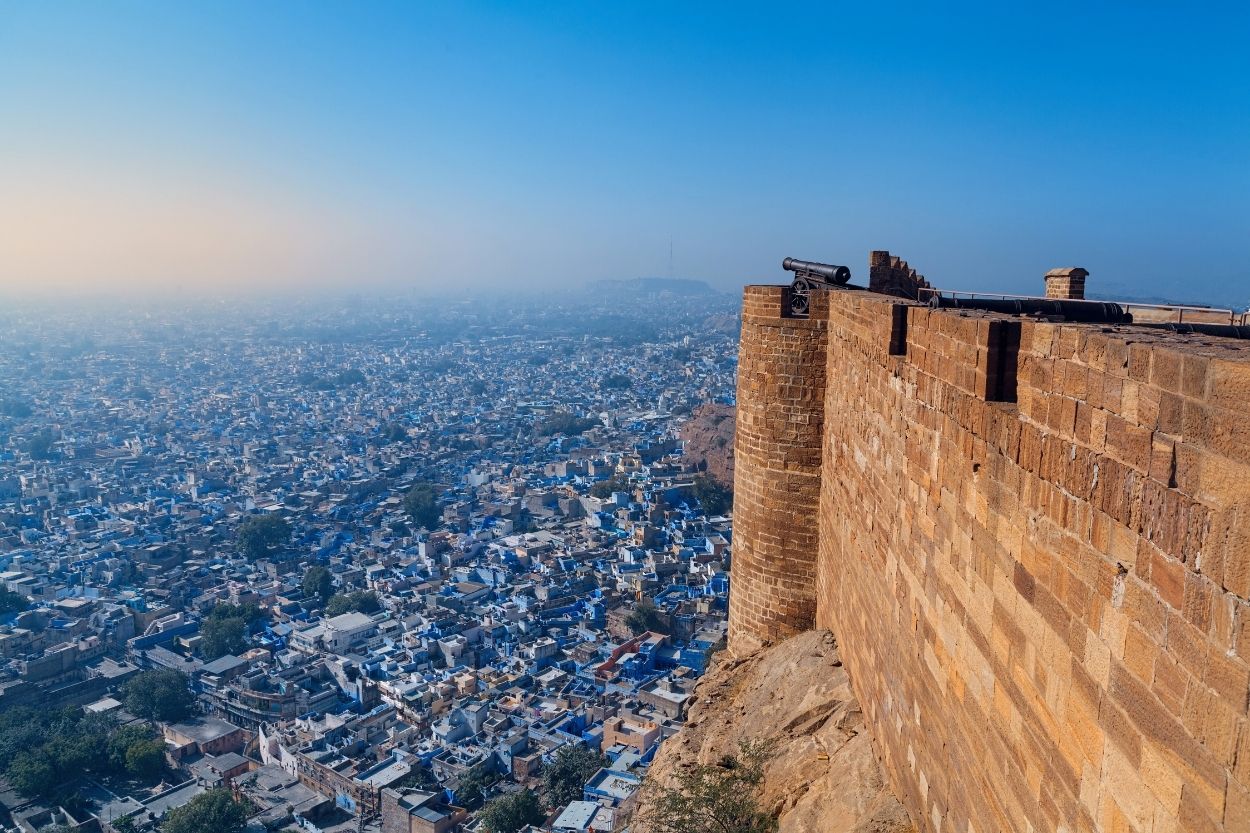
Being located on the trade route between Ahmedabad and Delhi, Jodhpur would begin to thrive. During Jodh’s lifetime, he would lay the foundations for the massive Mehrangarh Fort, which his descendants would continue to develop.
The new city grew at the base of the fort, surrounded by its own extensive wall with 8 gates. Within these walls, the population is assumed to have grown as high as 100,000.
It was during this time that Jodhpur’s iconic blue colour palette began. The blue paint was believed to help cool the houses and repel insects, and over time, it became a signature feature of the city’s identity.
For a couple of centuries, Jodhpur was the dominant power in north-west India, but this would change when the Mughuls (the same people who built the Taj Mahal and Red Fort) came from central Asia and conquered most of India.
While the Maharajas of Jodhpur would still maintain some level of autonomy, they would never again be an independent kingdom.
After the Mughals, Jodhpur would come under British rule. When India became independent in 1947, the Maharajas of Rajasthan lost their royal status.
Today Jodhpur is the 2nd largest city in Rajasthan; a thriving metropolis of over 2 million people and among the most popular tourist destinations in India.
The 8 Best historical places in Jodhpur
1 | Mehrangarh Fort
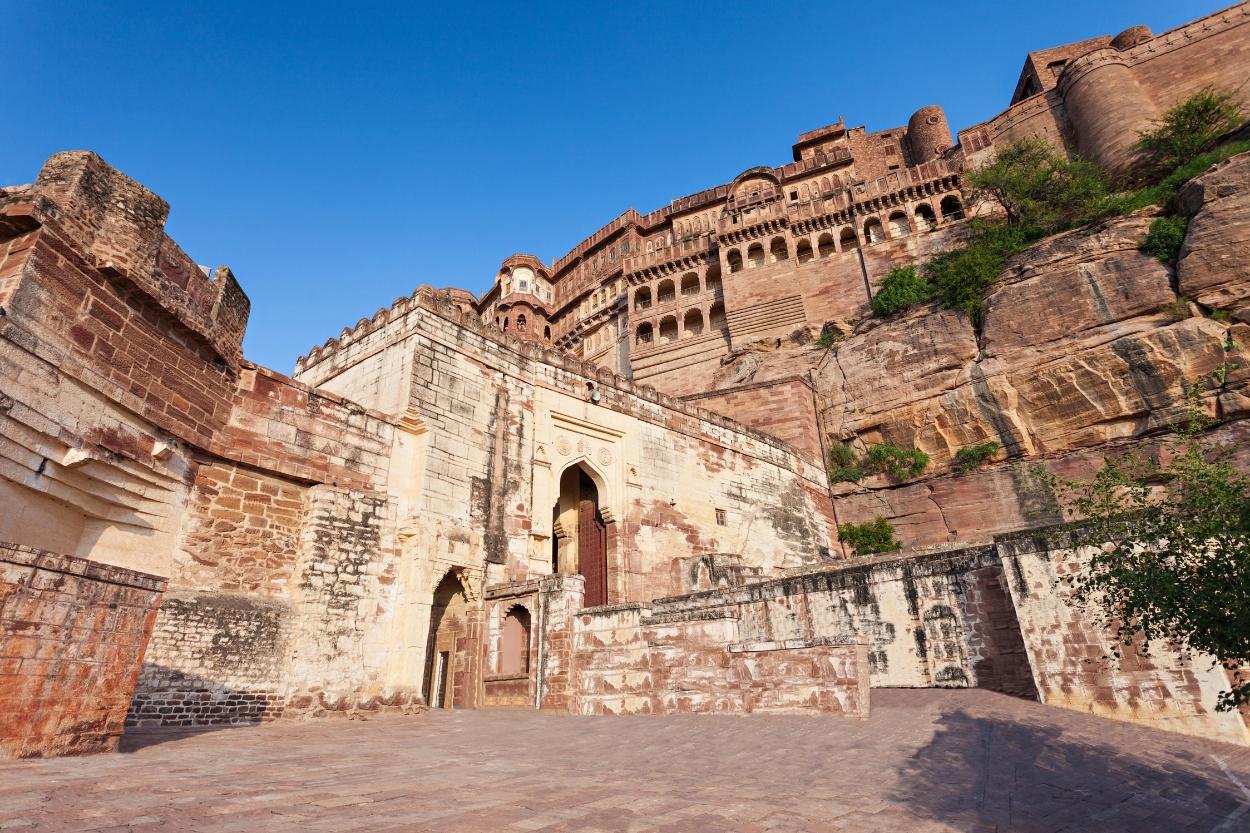
Towering above the Blue City is its top attraction: the massive 📍Mehrangarh Fort.
This fort, built from 1459 onwards, is among the largest and most well-preserved forts in all of India. For a few hundred years it ruled over a land with roughly the same size and borders of modern-day Rajasthan.
Today the fort is open to the public. Here you can explore its walls and fortifications, several grand palaces, the royal temple and a museum full of artefacts from Jodhpurs hey-day.
There’s a lot more to be said about Mehrangarh Fort, so be sure to check out the below guide to learn more.
- READ MORE – Complete Guide to Jodhpur’s Mehrangarh Fort
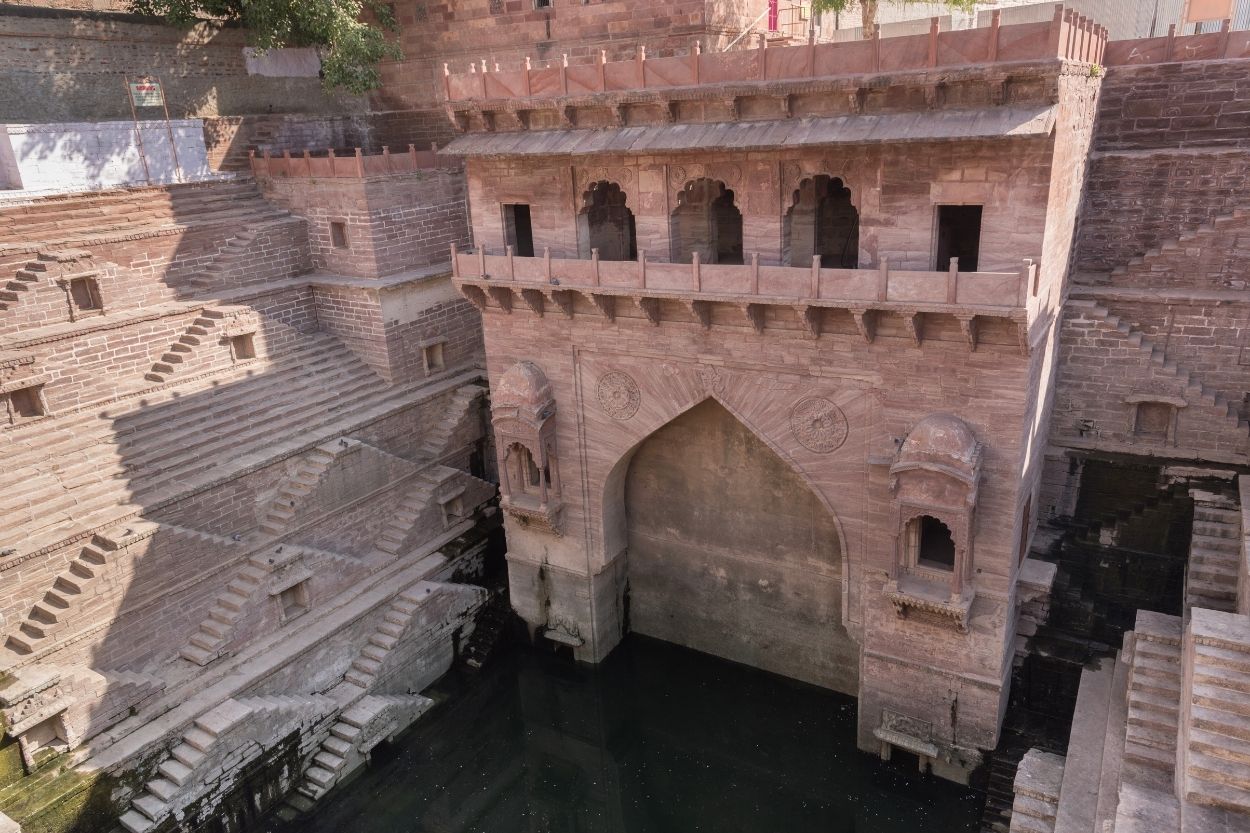
2 | Toorji Ka Jhalra
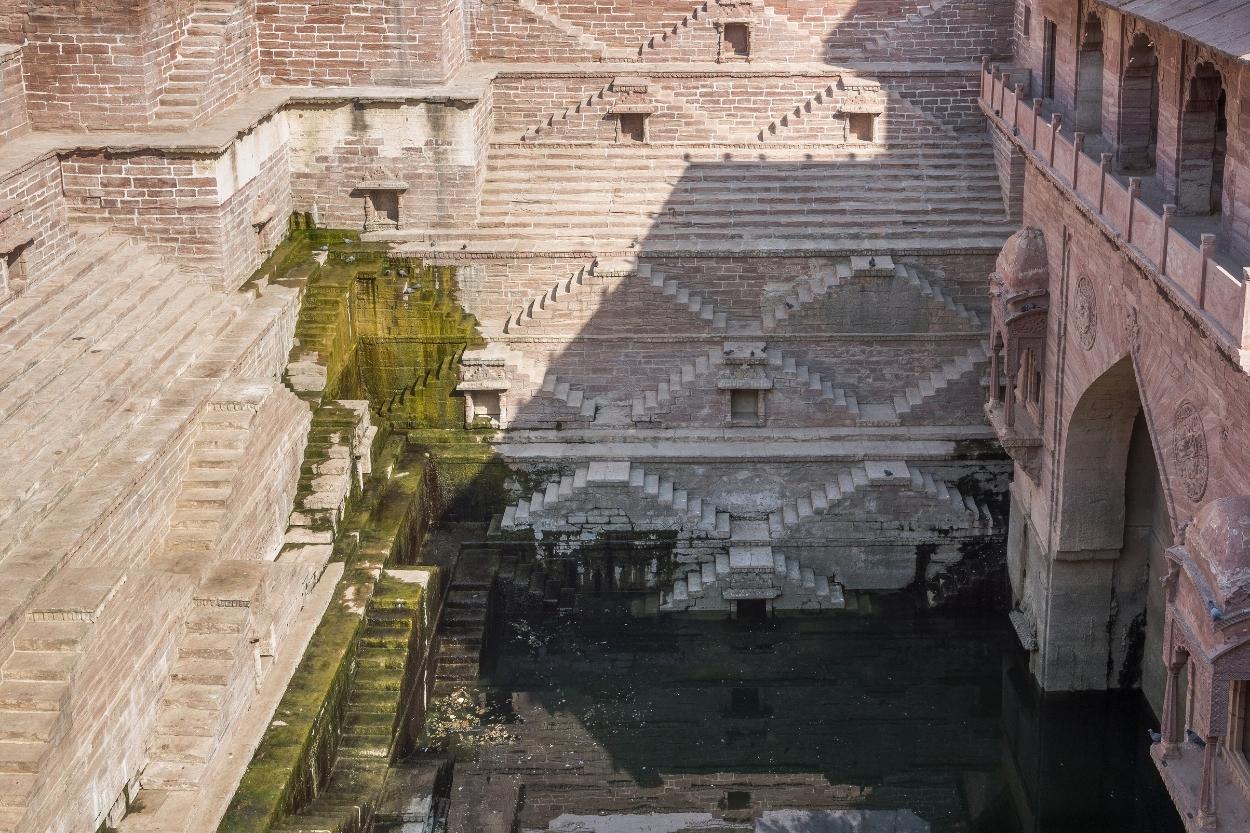
Rajasthan is known for its amazing stepwells, and a few can be found hidden among the streets of Jodhpur. The best of these is certainly 📍Toorji Ka Jhalra.
Stepwells like these became popular in this region because of the desert heat and dry climate. They provided a source of freshwater and escape from the hot sun, which led to them becoming central features in any settlement, where people would meet and hang out.
Stepwells are beautiful architectural features and something you rarely see in other parts of the world. If you’ve never seen an Indian stepwell before, make sure you add Toorji Ka Jhalra to your Jodhpur itinerary.
It’s located in the old part of town, just below the fort. Check out the map above for its exact location.
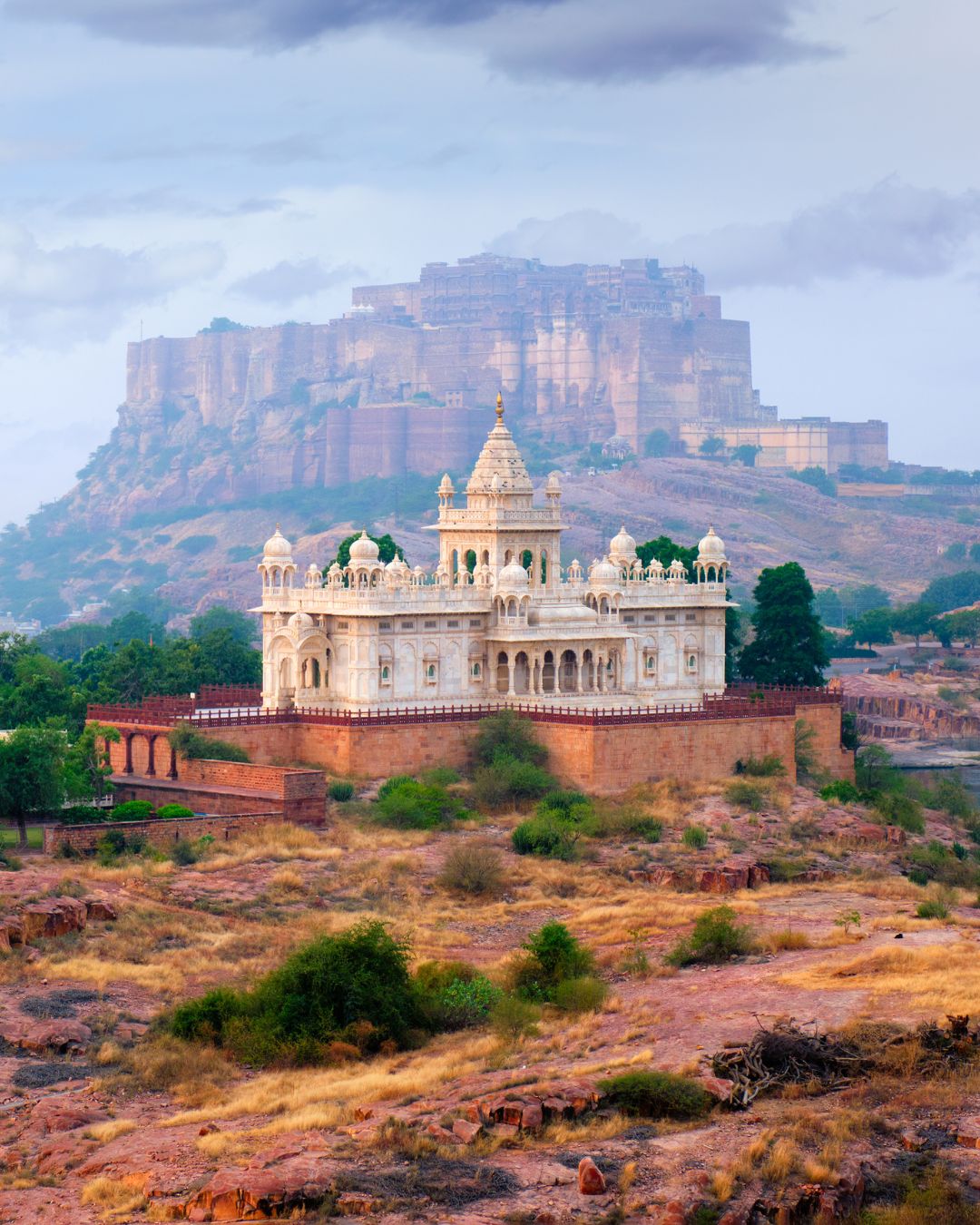
3 | Jaswant Thada
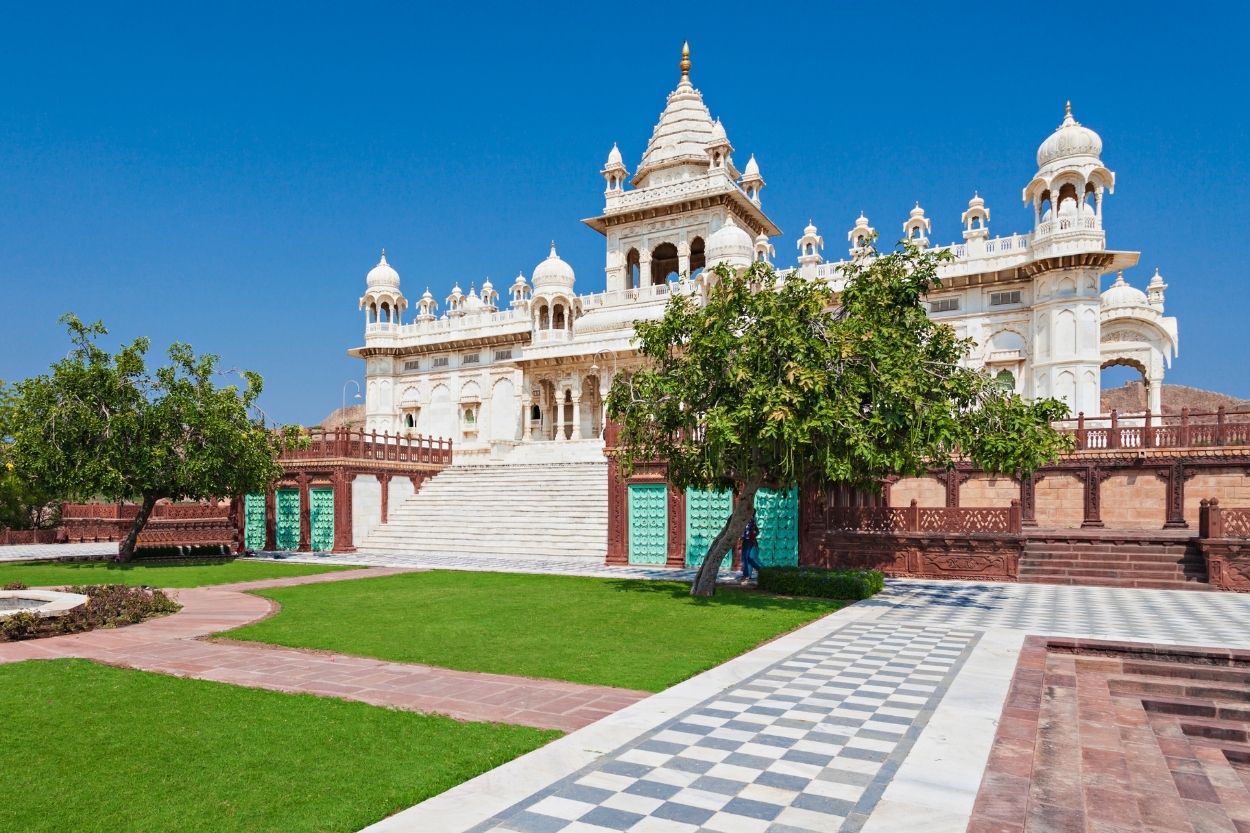
Another distinct architectural feature of Rajasthan are its cenotaphs.
Cenotaphs are essentially memorials, sometimes mausoleums, in honour of important people who have passed, and the cenotaphs of Rajasthan have a distinct and visually impressive style. There are a bunch of great cenotaphs across the state, such as those at Jaisalmer, or right here in Jodhpur at 📍Jaswant Thada.
Jaswant Thada is located near the historical part of Jodhpur, not far from the previous 2 places on this list. It’s one of the larger cenotaphs you’ll find in Rajasthan, and was built in 1899 by the ruling Maharaja at the time.
This majestic marble structure is still an important site for the former royal family of Jodhpur, and supposedly still used to cremate family members who have passed.
4 | Mandore Gardens
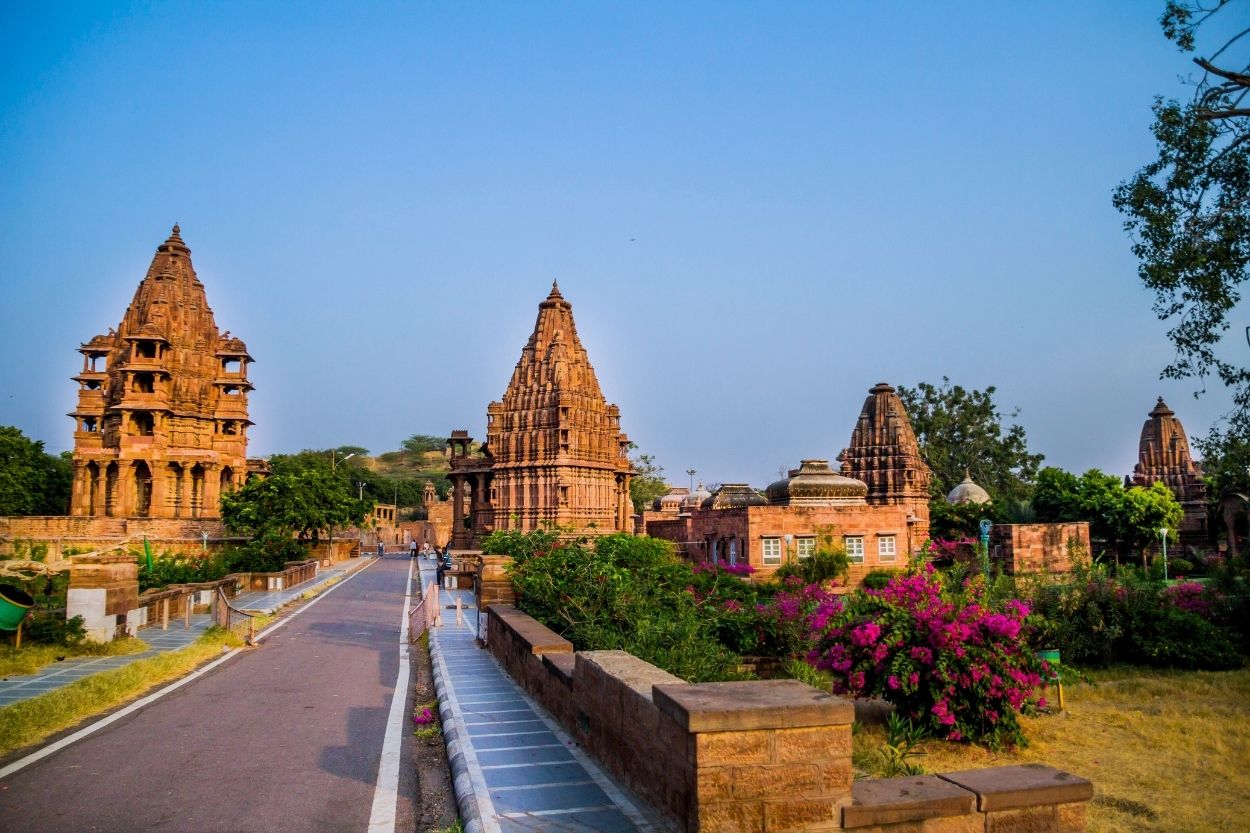
Before Jodhpur was founded, the capital of the Marwar Kingdom was located at Mandore, about 20 kms to the north (these days it’s basically a suburb of Jodhpur).
The former capital was nowhere near as large and prominent as Jodhpur, but today it still has a couple of important historical sites, such as the 📍Mandore Gardens.
The Mandore Gardens are a lush, green space filled with cenotaphs, in the distinct Rajasthani architectural style, that trace their origins back to the 18th century.
A walk through the Mandore Gardens makes for a serene break from the city chaos, and a chance to see some beautiful architecture.
5 | Ghantaghar
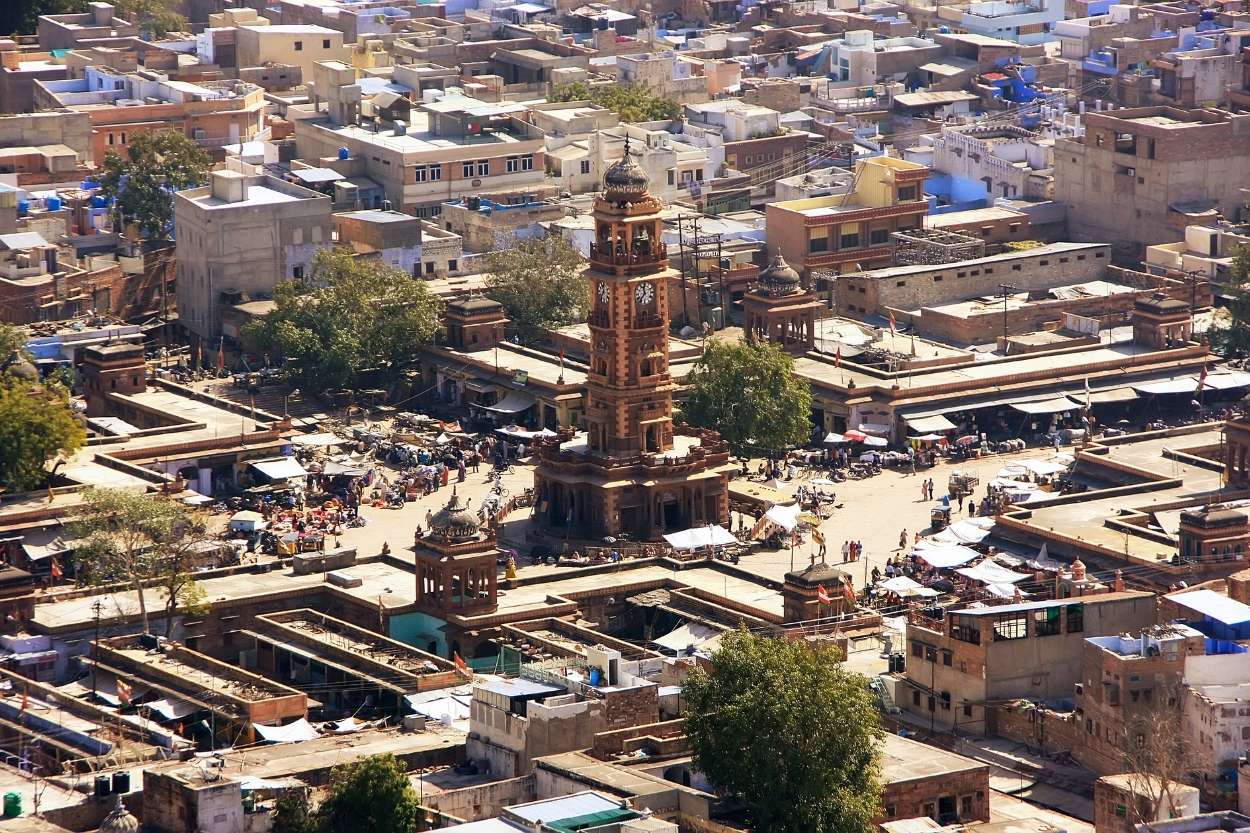
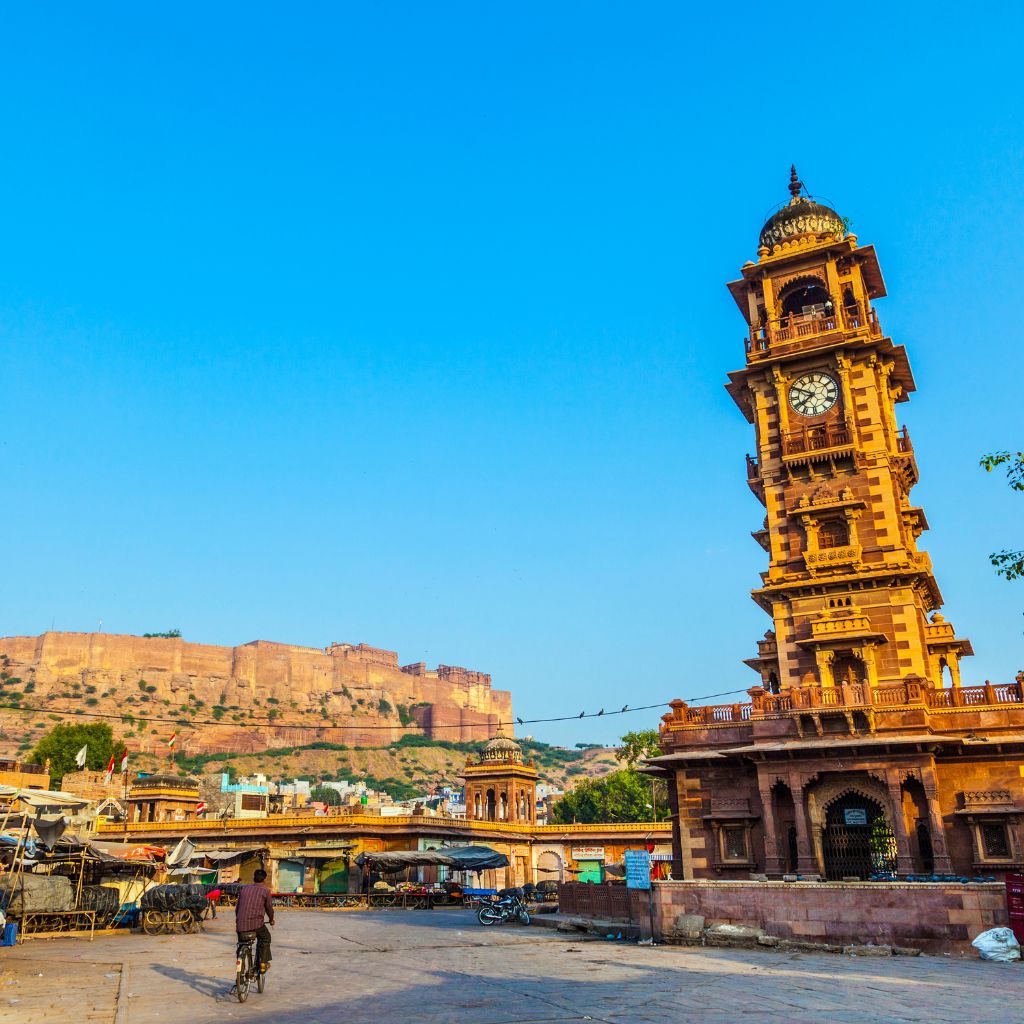
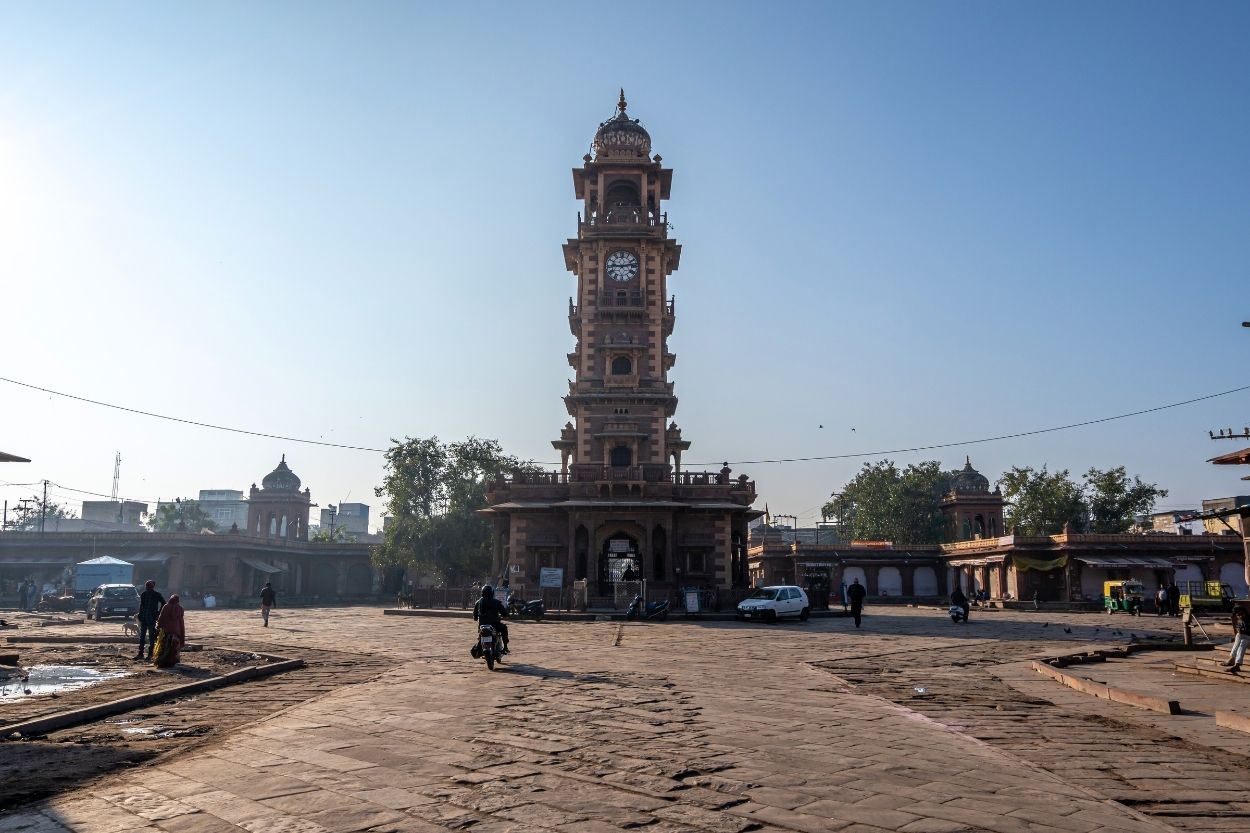
📍Ghantaghar is a clock tower located in the old town of Jodhpur, and one of the city’s most famous landmarks.
It traces its origins back to the late 19th century when Jodhpur was under British rule. Architecturally it’s a mix between Rajasthani and British architecture.
Aside from admiring its architecture, another reason to check out Ghantaghar is its location. The clock tower is located in the middle of Sandar Market, one of the oldest areas of the city.
This was the where the original city of the city was located back when it was founded, and a visit to Jodhpur isn’t complete without exploring its streets.
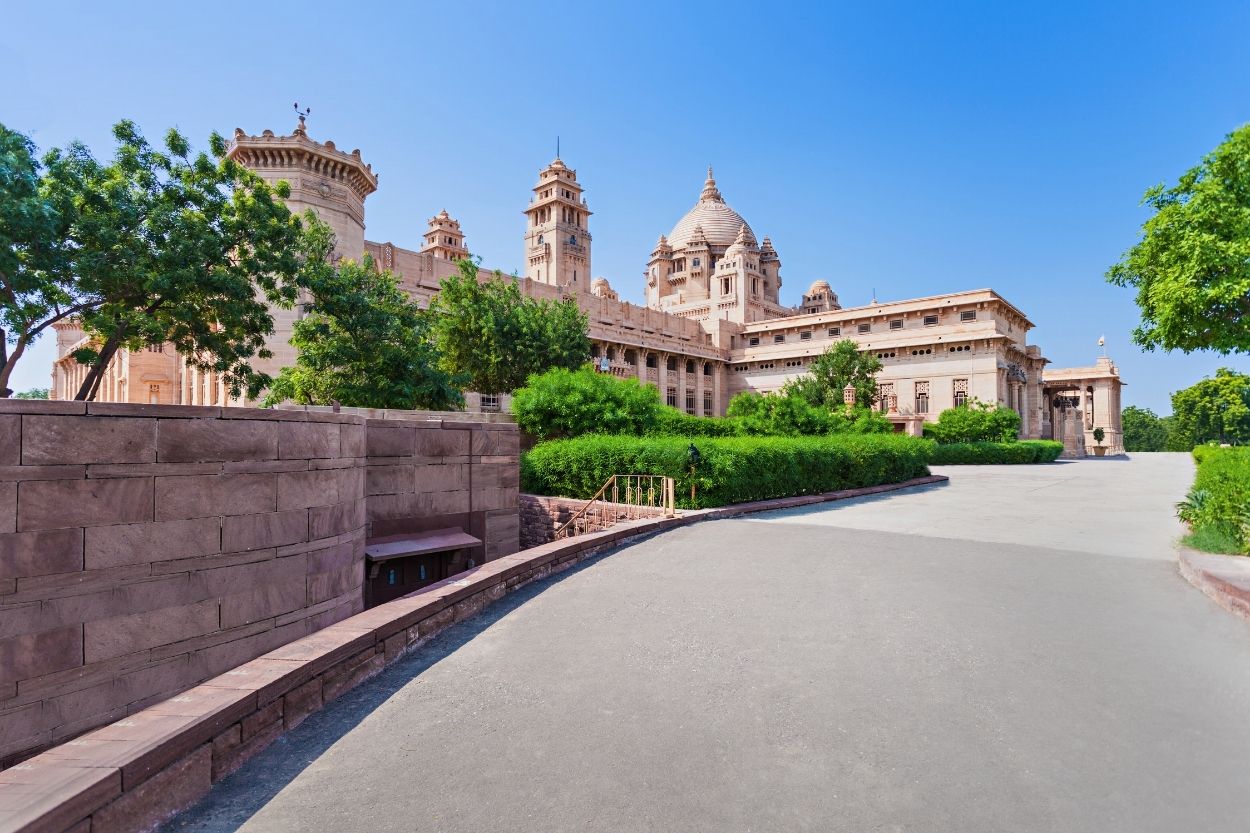
6 | Umaid Bhawan Palace
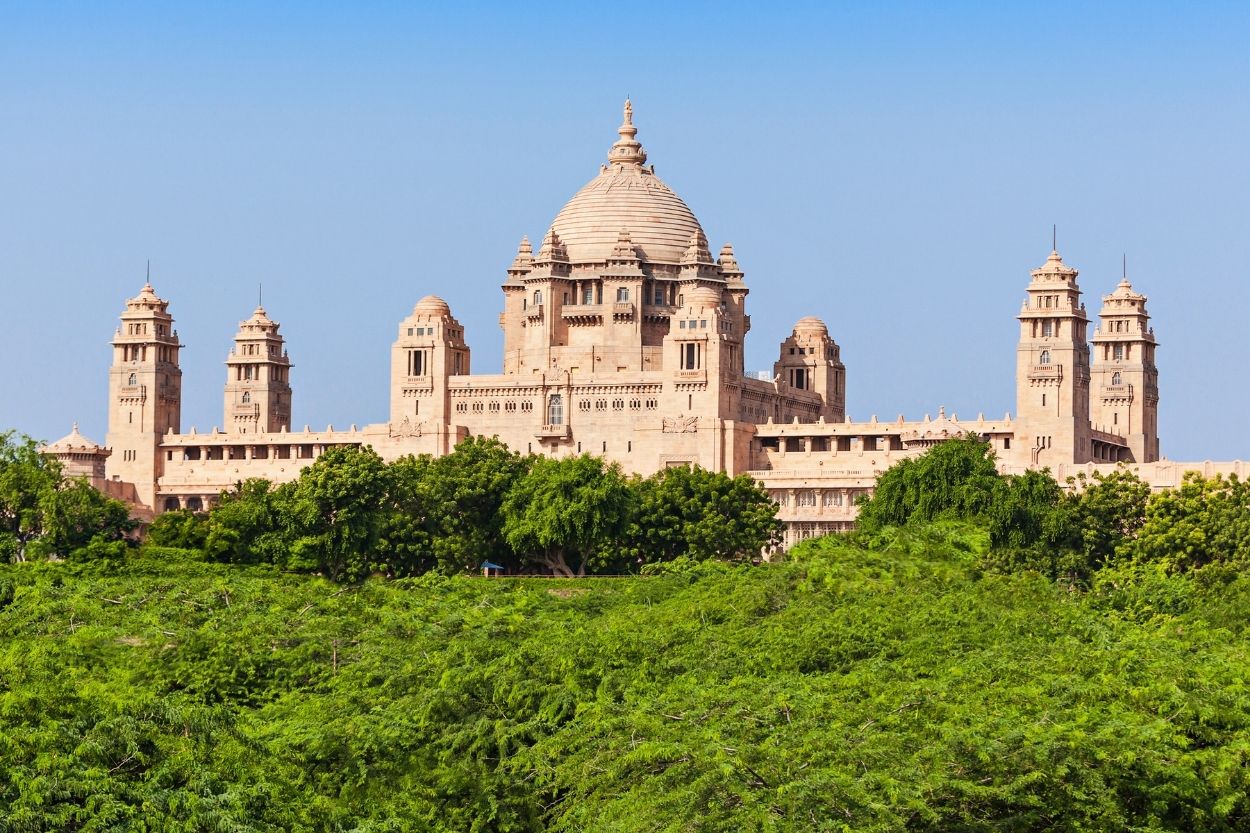
📍Umaid Bhawan Palace isn’t just the best luxury hotel in Jodhpur, it’s also one of its top historical attractions.
Under British rule, the Maharajas of Jodhpur continued to live in and rule (to a limited extent) from Mehrangarh Fort. In the 1920s, with the fort becoming dated, the Maharaja commissioned a new palace to be built.
The official story is that the palace was built to provide work to local farmers during a famine, but I would take this with a grain of salt.
It’s impossible to miss Umaid Bhawan Palace sticking out from the horizon when visiting Mehrangarh Fort because the building is massive. In fact, it’s said to be one of the largest private residences in the world.
These days, the palace is split into 3 parts: a residence for the former-royal family, a luxury hotel and a museum. With a visit to the museum, you can see a collection of artefacts from the royal family’s history, such as classic cars, vintage photos & paintings, centuries-old weaponry, and more.
8 | Mahila Bagh Zalhra
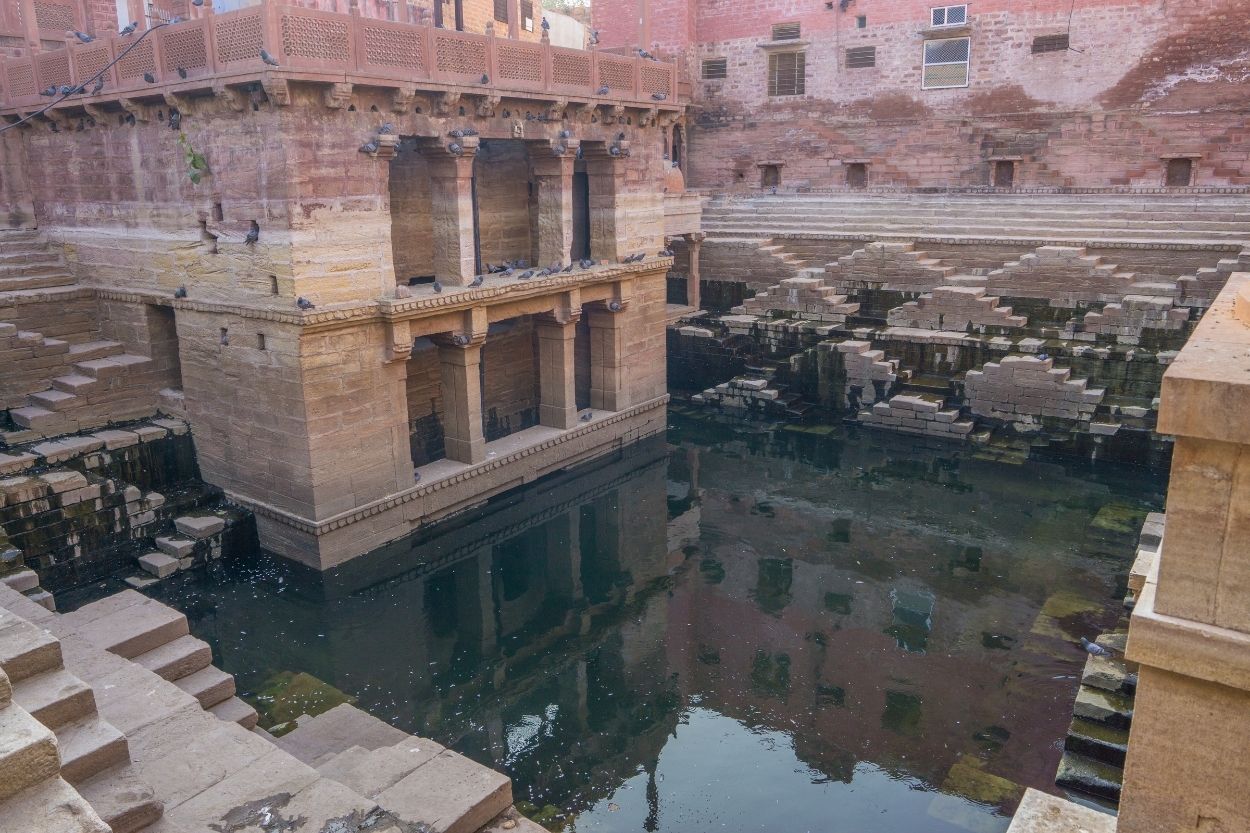
Toorji Ka Jhalra may be the most impressive stepwell in Jodhpur, but it isn’t the only one.
Only a few streets away you’ll find 📍Mahila Bagh Zalhra. Built in the 18th century, this stepwell is said to have been commissioned by the concubine of the ruling Maharaja, and was built solely for the local women.
It may be a little smaller and less maintained than the other stepwell, but it too is completely free to enter and makes for a quick stop as you explore the old town of Jodhpur.
8 | Mahavira Jain Temple
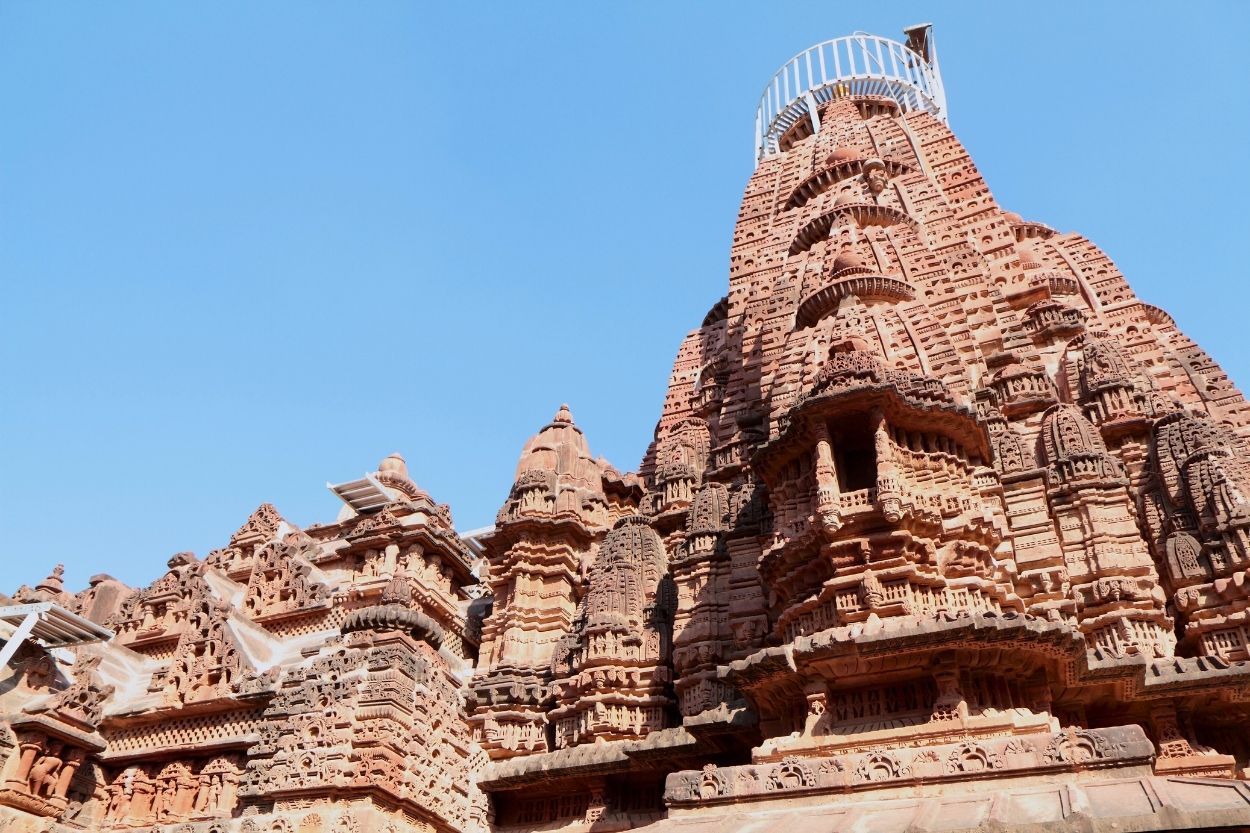
Temples in India are known for their stunning architecture, but Jain temples stand out even among these.
If you’ve never seen a Jain temple before, you won’t regret a visit to the ancient town of Osian, located about 65 kms north of Jodhpur. Dating back thousands of years, this oasis town is one of the region’s most important religious centres, and contains a collection of both Hindu and Jain temples.
One of the main attractions in Osian is 📍Mahavira Jain temple. This place is said to have been a holy site for Jainism as far back as the 5th century BCE, although the present temple was likely built much later, supposedly around the 11th century CE (although sources are a little inconsistent).
Like other Jain temples, Mahavira is made up of a sandstone structure covered wall to ceiling with intricate carvings and statues that demonstrate the remarkable craftsmanship of the time.
Best time to visit Jodhpur
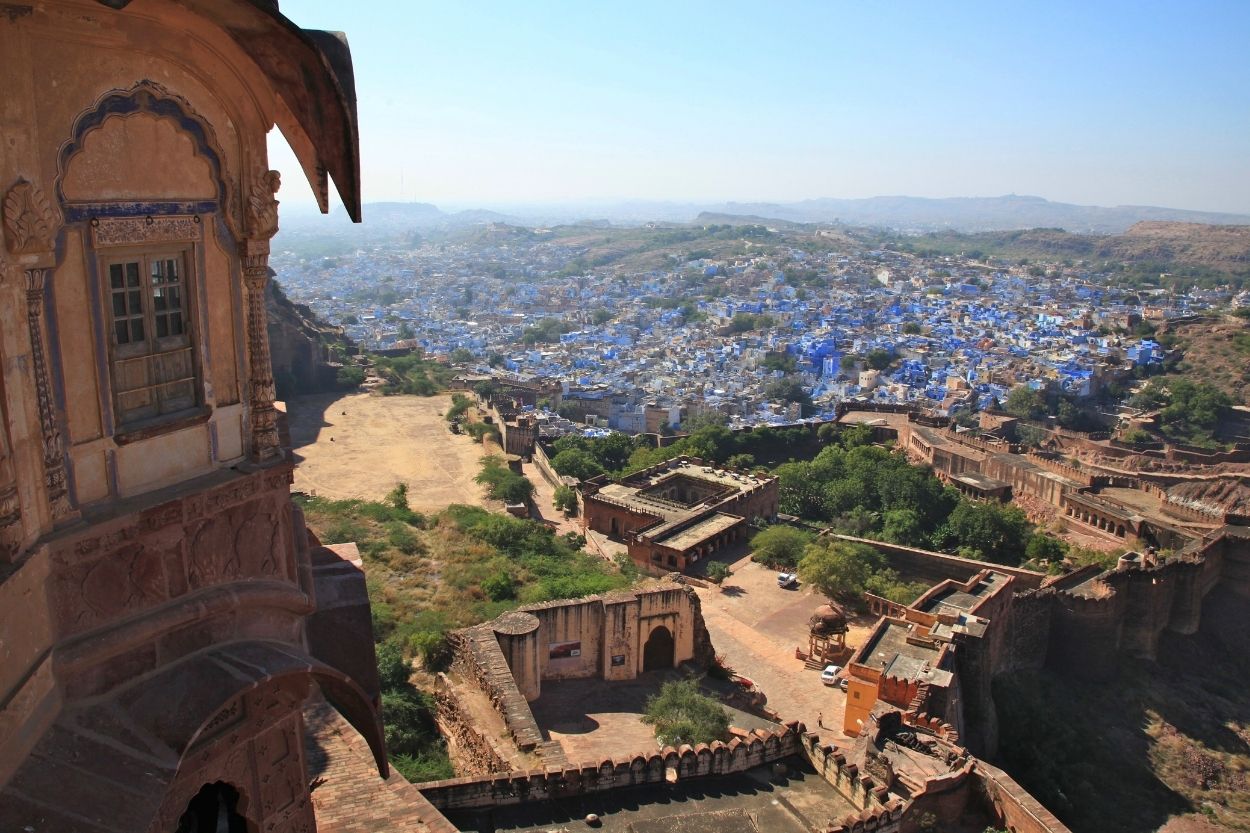
Jodhpur is located in the Thar Desert, which means the summers can get pretty hot, with temperatures often sitting above 40°C – enough to make your daytime activities an uncomfortable experience.
The best time to visit Jodhpur is during the cooler months, from October to March.
It can get a little cold at night, especially in December and January when the nighttime temperature can drop below 10℃, but during the day the temperature hangs around a much more pleasant 25℃ (give or take).
If you visit in October, not only will the temperature be much more comfortable, but you’ll also be just in time for the annual Rajasthan International Folk Festival, a 5-day celebration of Rajasthani culture which usually takes place in mid-October.
How to get to Jodhpur
Train
India has an extensive train network, and it includes Jodhpur.
Catching a train is a popular way of reaching the city, and its main railway station is located fairly close to Mehrangarh Fort and the main tourist area.
The cost of your ticket and the length of the journey will of course depend on where you’re coming from, but as an example a train from nearby Jaipur will take about 5 hours and set you back about $5 USD.
The best place to purchase your train ticket to Jodhpur is with 12Go Asia.
Bus
Depending on where you’re coming from, catching a train may not be an option. Thankfully, another great way to reach Jodhpur is by bus.
Most buses arrive at the Paota Bus Stand or Rai Ka Bagh Bus Stand, which are both centrally located and close to the main tourist area near Mehrangarh Fort.
The price of the ticket will of course depend on where you’re coming from, but as an example, an airconditioned bus from Jaipur should take around 6 hours and set you back about $6 USD.
The best place to purchase your bus ticket to Jodhpur is with 12Go Asia. Another popular resource for booking bus tickets in India is Red Bus.
Fly
The fastest way of reaching Jodhpur is to fly.
Because Jodhpur is located close to other popular tourist destinations that you’ll most likely be visiting too, flying is arguably only a suitable option if you’re coming from somewhere far away, like Mumbai, Kolkata or Bangalore.
You’d be flying into Jodhpur Airport (JDH), which is located about 5km from the main tourist area near Mehrangarh Fort.
The best place to find cheap flights to Jodhpur is with Skycanner.
Where to stay in Jodhpur
Backpacker hostels in Jodhpur
Being a popular tourist destination, there is no shortage of cheap backpacker hostels in Jodhpur.
Most backpacker hostels are found in the old town, near the base of Mehrangarh Fort, and this is exactly where you want to be. Personally I stayed at Zostel. This hostel has everything you need, multiple common areas, a small rooftop restaurant, and some of the best views of Mehrangarh Fort.
You can check out more backpacker hostels in Jodhpur on Hostelworld.
Mid-range hotels in Jodhpur
If you don’t want to stay in a hostel, but still have a limited budget, there are plenty of mid-range hostels in Jodhpur for you to choose from.
I recommend Dev Kothi. This is a heritage hotel inside a former ‘haveli’ (Rajasthani term for ‘mansion’) that offers privates rooms with all the basic luxuries you’d expect, like air-conditioning (very important in Jodhpur), wifi, airport transfers, a rooftop restaurant and some amazing views of Mehrangarh Fort.
You can check out more hotels in Jodhpur on Booking.com.
Luxury hotels in Jodhpur
For those seeking a more luxurious experience, Jodhpur is home to some of the finest hotels in Rajasthan.
Since this is a travel blog for history buffs, and we’re talking about accommodation in Jodhpur, it’s impossible not to mention Umaid Bhawan Palace.
When visiting Mehrangarh Fort it’s impossible to miss Umaid Bhawan Palace sticking out of the horizon. This massive & majestic building is one of the largest private residences in the world. While it’s only 100 years old, it looks like a traditional Rajasthani palace.
And in a sense it is, because in addition to being a museum, tourist attractions and luxury hotel, it’s also the home of the former royal family that used to inhabit Mehrangarh Fort.
If you’re looking for Maharaja (royal) treatment in Jodhpur and you’ve got room in your budget, you should definitely check out Umaid Bhawan Palace.
If you’re looking for a similar luxury experience but for half the price, consider staying at Ajit Bhawan. Located next to Umaid Bhawan Palace, this 100-year old building is another former royal residence turned into a luxury hotel.
Further reading on India
Here are more guides on India to help you plan your trip:
⬤ For more information on Jodhpur’s star attraction, check out: Complete Guide to Jodhpur’s Mehrangarh Fort.
⬤ After Jodhpur, another popular place to visit is the historic fort town of Jaisalmer. Check out: Ultimate Travel Guide to Jaisalmer.
⬤ If you’re looking for more amazing historical sites in Rajasthan, check out: 2-Week Rajasthan Itinerary for History Buffs.
⬤ For more historical travel guides on India, check out our India page.
Disclosure: This post may contain affiliate links.