
The historic city of Naples, Italy, has many great castles to check out, but perhaps the most imposing and historically significant is 📍Castel Nuovo, also known as Maschio Angioino.
Towering over the Napoli waterfront, Castel Nuovo has dominated the city’s political and military life for almost 800 years. Today it draws in visitors hoping to learn more about its history, or catch panoramic views of the city.
However, due to the lack of reliable information on Castel Nuovo, most visitors arrive with the wrong expectations and end up disappointed, or simply miss out on everything the castle has to offer. This guide is here to fix that.
Drawing from my own personal experience visiting Castel Nuovo, this guide clears up all the misinformation found online and gives you everything you need to plan a visit to Castel Nuovo, including background info, what to see, tickets, and more.
MORE NEAR NAPLES >>> Ultimate Guide to Visiting Pompeii in 2026
Contents
A Brief History of Castel Nuovo
In 1266, Charles I of Anjou conquered the Kingdom of Sicily, which at the time also included most of southern Italy. For political reasons, Charles immediately shifted the capital from Palermo (Sicily) to Naples.
Initially, the new Angevin royal family resided in the pre-existing Castel Capuano, but soon decided it was outdated and failed to project strength. So, Charles I ordered for a new castle to be built on the waterfront.
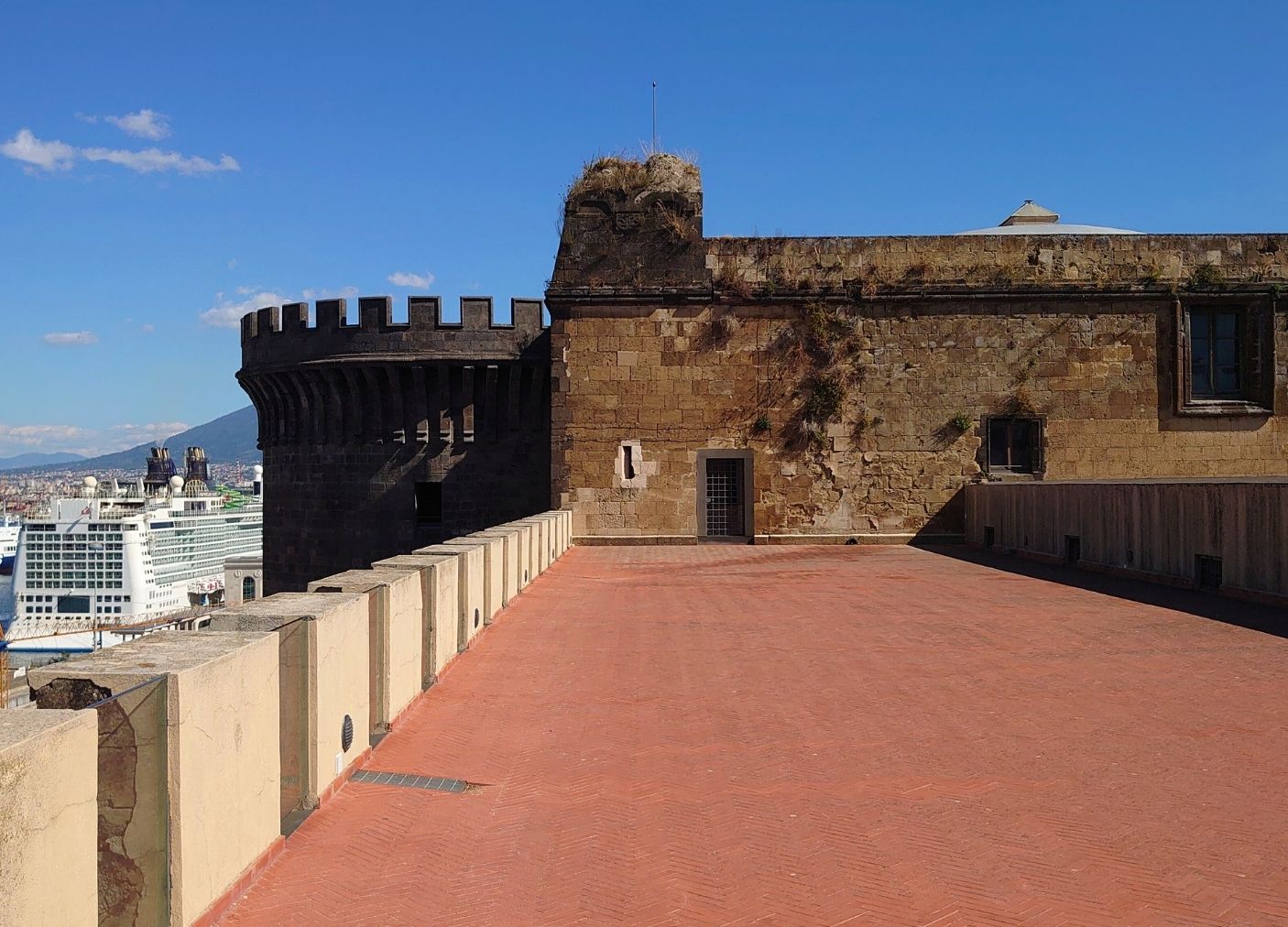
Construction on Castel Nuovo began in 1279 and was completed in a remarkably quick 3 years. With 5 massive towers, thick walls, and surrounded by a moat, the new castle was to serve as a royal residence, administrative centre, and military stronghold.
Over the centuries, Castel Nuovo has repeatedly changed hands and been renovated, expanded, and rebuilt. Its most dramatic transformation came in 1442, when Alfonso V of Aragon conquered Naples. The Aragonese rebuilt the castle almost entirely, turning it into their main seat of power in the city and giving it much of its current appearance.
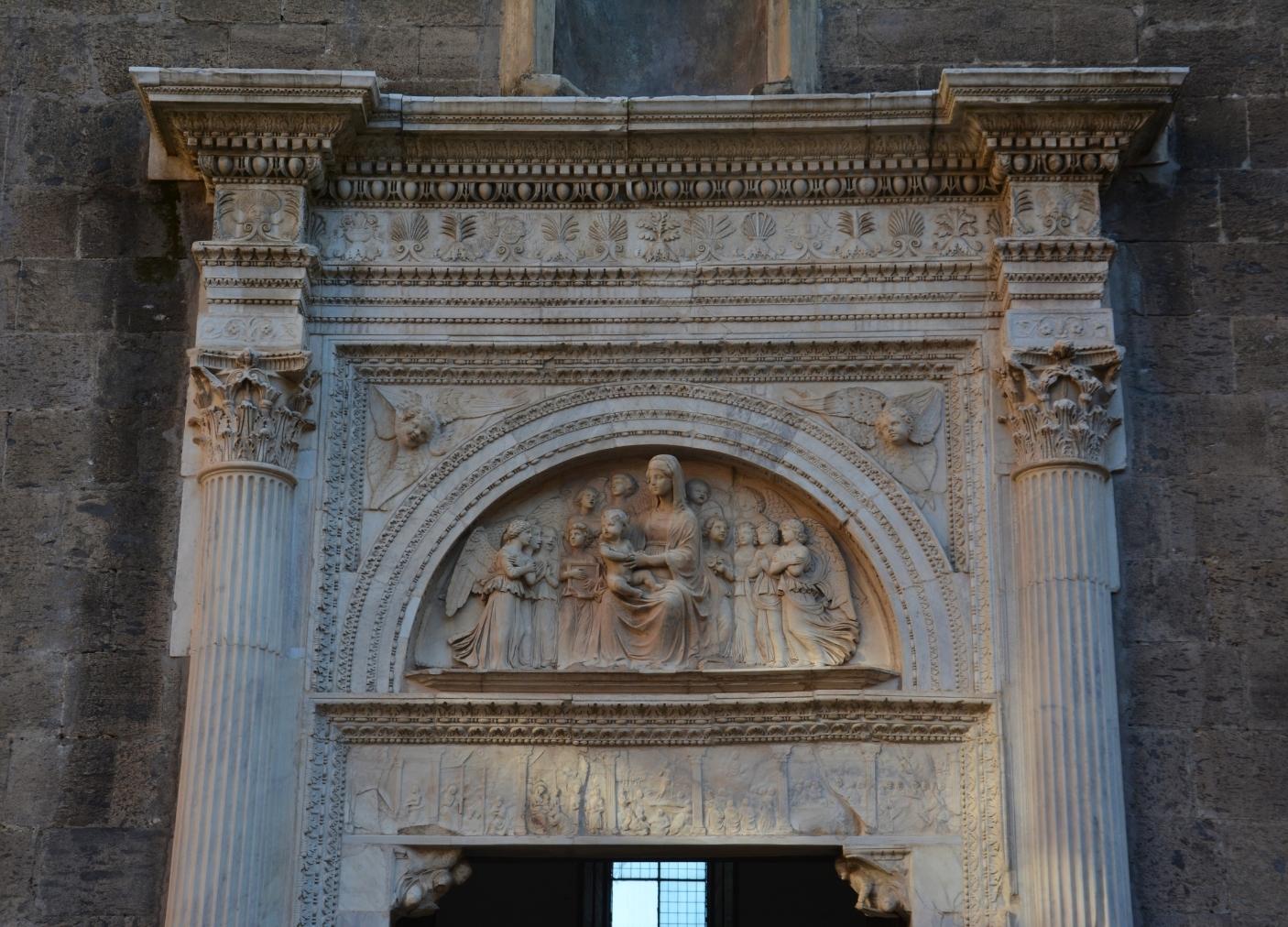
During its reconstruction, the Aragonese added a new main gate, the Triumphal Arch, a richly carved Renaissance gateway that commemorates Alfonso’s conquest of Naples.

When the Kingdom of Aragon was later absorbed into the newly formed Kingdom of Spain, Naples followed. Under Spanish rule, the castle became home to the Spanish Viceroy.
With the construction of the Royal Palace of Naples in the 17th century, Castel Nuovo’s importance declined further. It was gradually relegated to a barracks, prison, and civic administration office.
Under the Kingdom of Italy, the castle was restored, and still remains in use today, housing the Neapolitan Society of Homeland History and the Institute for the History of the Italian Risorgimento. Despite this, large portions of the castle are still open to visitors.
Over its nearly 800-year lifespan, Castel Nuovo served its purpose as a fortress, though often unsuccessfully. Most notably it was besieged and captured by Hungarian forces in 1348, then in 1442 it was again besieged and sacked by the Kingdom of Aragon. These battles left their mark on the castle, with cannonball damage still visible on the main gate and outer walls.
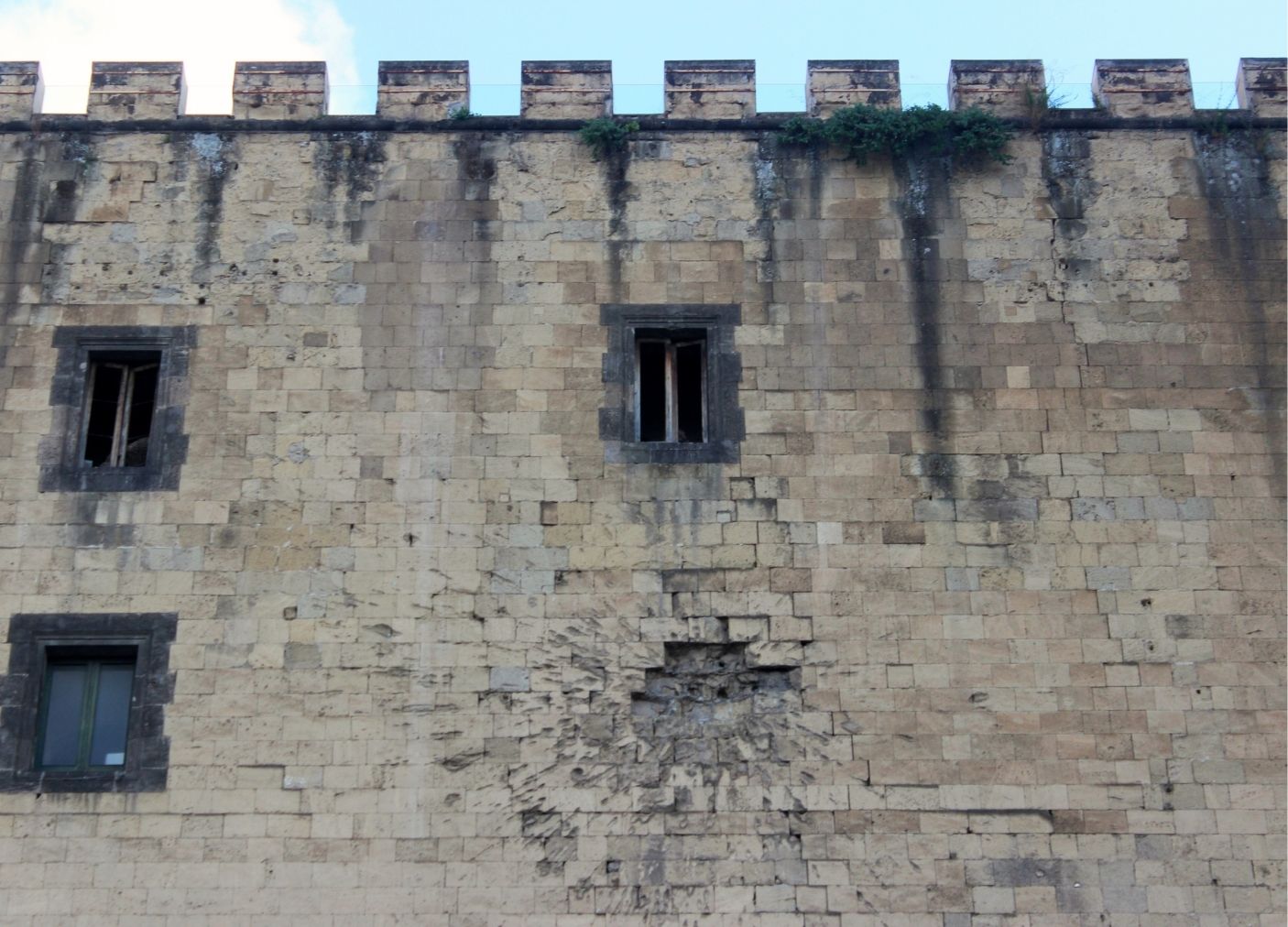
What to see at Castel Nuovo?
Castel Nuovo isn’t a massive castle, not by medieval standards. But it is dense.
Roughly half the castle is closed to the public, as it’s still actively used by Neapolitan Society of Homeland History and the Institute for the History of the Italian Risorgimento.
But there’s still plenty for visitors to see.
When you enter the castle, you’ll find yourself in the central courtyard. From here, there are a bunch of interior areas you can enter and explore.
Triumphal Arch

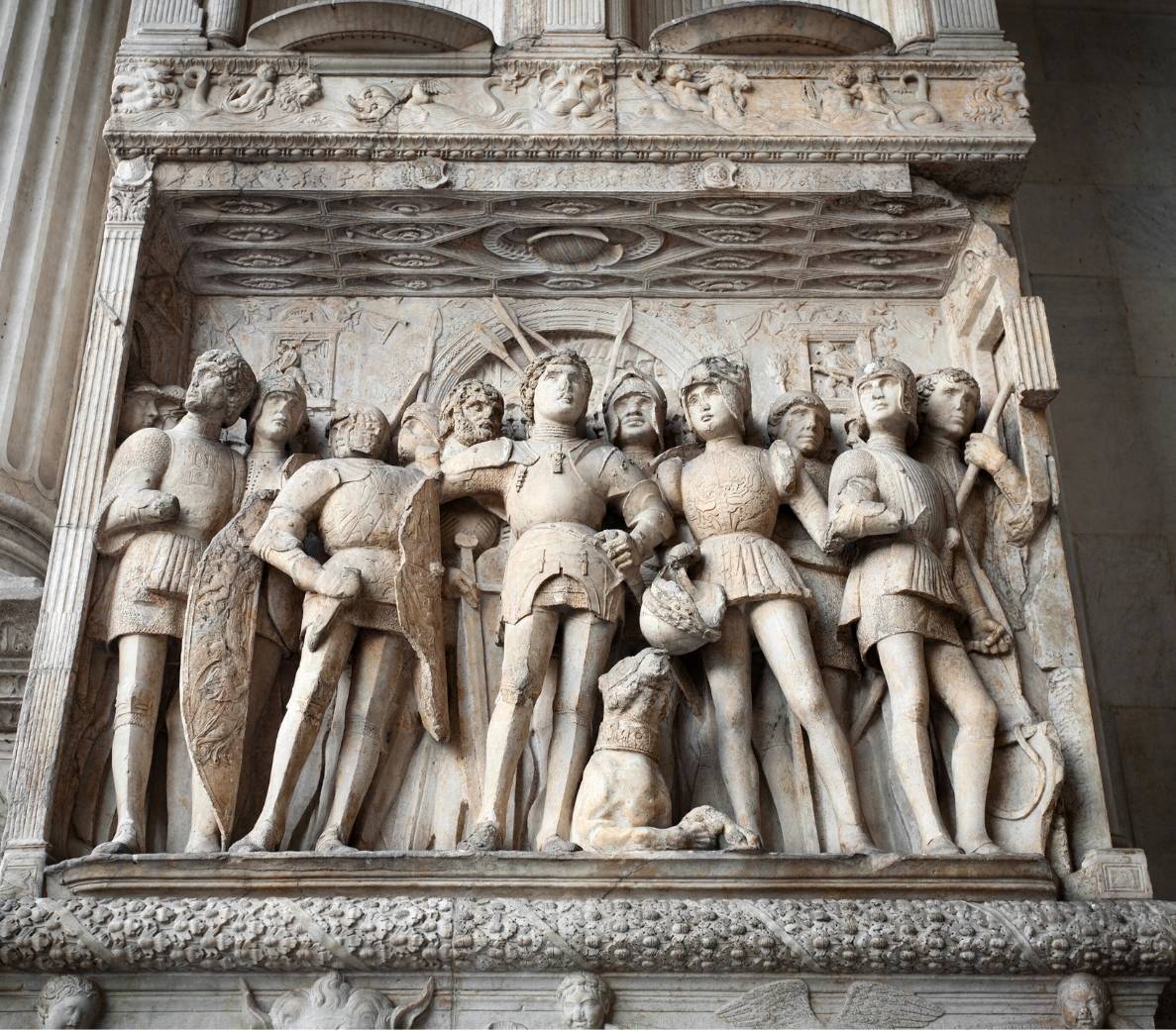
When Naples was conquered by Aragonese forces in the 15th century, they rebuilt Castel Nuovo almost from the ground up, creating the version you see today. As part of their reconstruction, they added the Triumphal Arch over the front gate, modeled after traditional Roman triumphal arches.
Made of white marble, the Arch forms the entire front side of the castle, flanked by 2 towers, and contains detailed reliefs and carvings that depict Alfonso IV’s conquest of the city.
It’s the first thing you’ll see when entering the castle, and a fine piece of renaissance artwork.
The Chapels
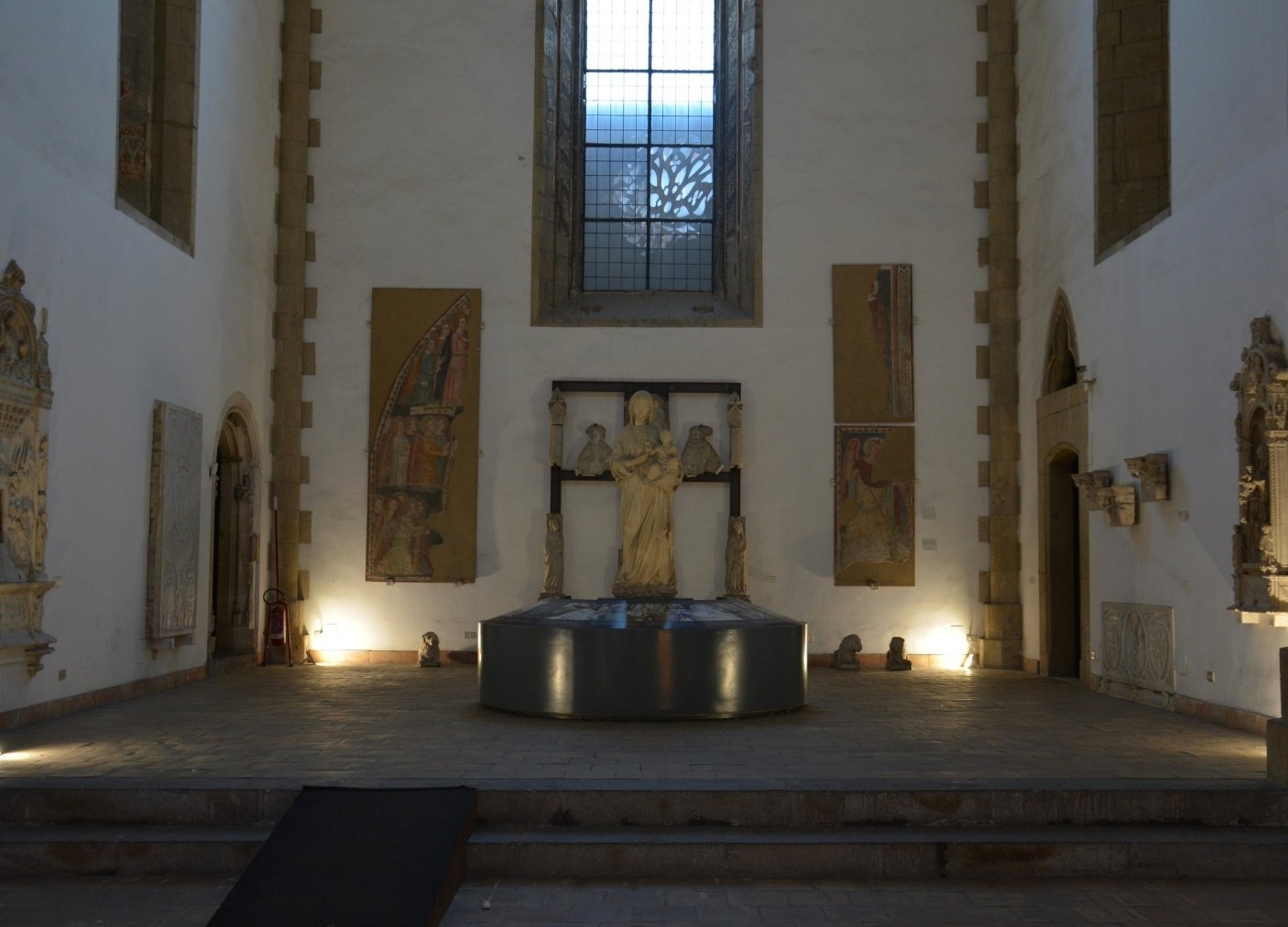
Castel Nuovo is home to 3 chapels, each reflecting a different phase in the castle’s long history.
First you have the Palatine Chapel, which is considered the only remaining part of the original castle before the Aragonese rebuilt it. Located below the Hall of the Barons, the best part of the Capella Palatina is its many paintings and frescoes, some of which were painted by famous renaissance artists, such as Giotto.
Tucked away in the corner of the courtyard is the Chapel of the Souls in Purgatory. Added later in the 16th century, this one is particularly stunning with the walls and roof covered in its own detailed frescoes and paintings.
Then there’s the Chapel of San Francesco di Paola. It’s the smallest of the 3, but this 15th century chapel has a few nice frescoes to check out as well.
Hall of the Barons
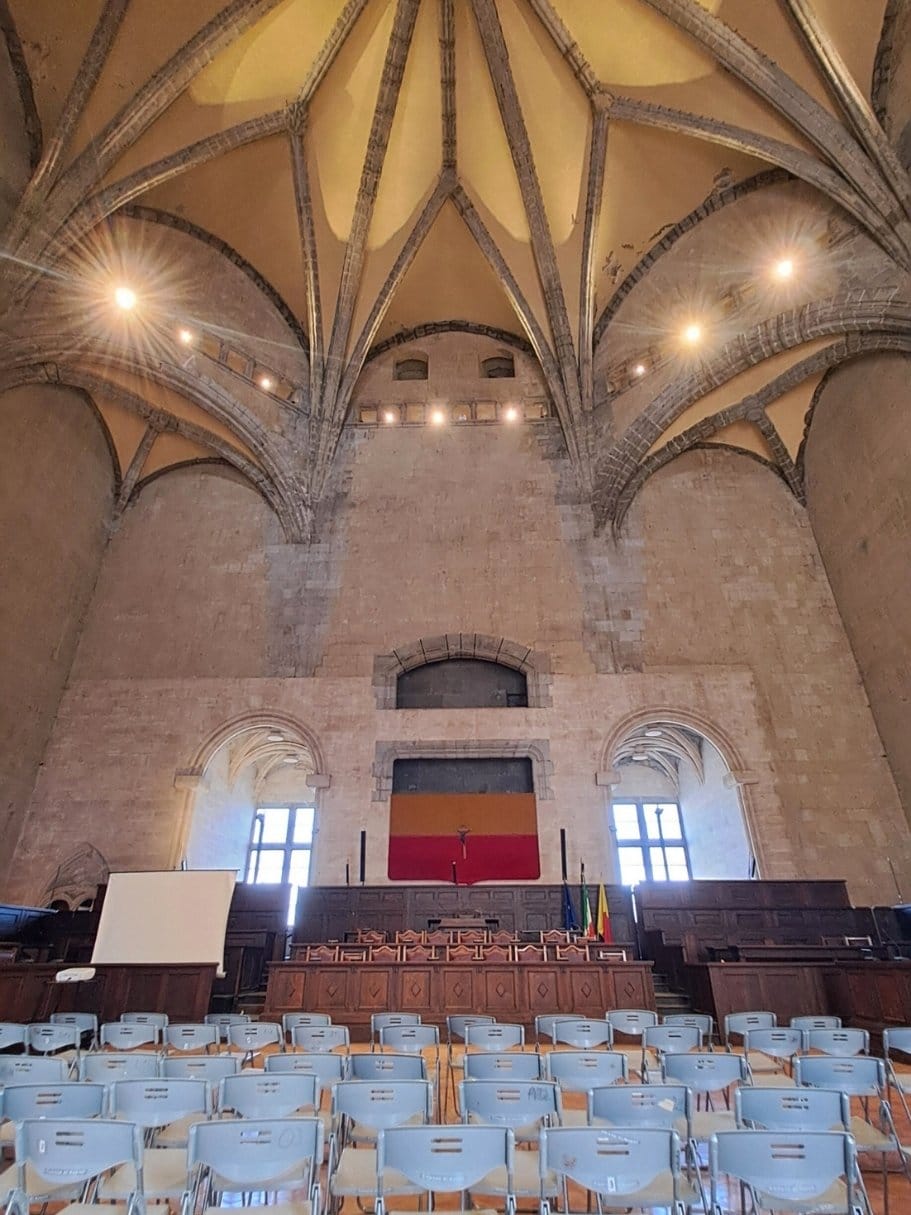
The main hall of Castel Nuovo is known as the Hall of the Barons. It once served as the throne room, back when the castle was a royal residence.
Its name comes from one of the many political intrigues that have taken place within the walls of Castel Nuovo. In this case, when Ferdinand I of Naples gathered a group of barons, who had previously conspired against him, under the pretense of a wedding, only to trap them, arrest them, and execute them.
These days the Hall is still used occasionally for far less sinister reasons, for conferences, concerts and such.
Civic Museum
One of the highlights of Castel Nuovo isn’t just the castle itself, but also the small museum that now lives within its walls.
Started in the 1990s, the museum houses a collection of interesting frescoes, paintings and other items dating from the 14th century, all the way up to the 20th century.
The museum takes up the 1st and 2nd floors of the castle’s southern wing and is included in your entry ticket – no extra cost.
Armoury Hall
Deviating from the Civic Museum path you can find a large hall that once served as an armoury – to store weapons, armour, equipment, etc.
It’s one of the more interesting parts of the castle, but not so much for the actual armoury. It does display a small collection of arms and armour, the most unique part of the Hall is what’s beneath.
During restoration work, ruins from an older Roman structure, dated to the 1st century BCE, were found beneath the floors of the armoury. Today, most of the floor is transparent glass that allows you to view what once stood here.
Where is Castel Nuovo?
Castel Nuovo is very easy to locate in downtown Naples.
It’s an imposing landmark, almost impossible to miss, that you’ll find in front of Piazza Municipio, right by the harbour.
How to get to Castel Nuovo
Castel Nuovo is very easy to reach, thanks to its central location in downtown Naples. If you’re staying in central Naples, you’ll likely be within walking distance of Castel Nuovo, but if not, reaching the castle via public transport is simple.
The closest metro stop is Municipio (Line 1), which is just a 2–3 minute walk from the castle. From the station exit, Castel Nuovo is immediately visible across Piazza Municipio.
If you’re arriving by ferry or hydrofoil, the castle is also a short walk from Molo Beverello, Naples’ main port for routes to Capri, Ischia, Procida, and the Amalfi Coast. From the terminal, it’s less than 5 minutes on foot.
Several bus routes stop around Piazza Municipio.

Castel Nuovo Opening Hours
Castel Nuovo is open Monday to Saturday from 9:00am to 6:00pm, with the last admission at 5:30pm.
It is closed on Sundays and public holidays.
Castel Nuovo Tickets
As of 2026, the ticket prices for Castel Nuovo are as follows:
Full price: €15
Reduced (for residents of Naples): €10.00
Scabec/Artecard: €5.00
Under 18s: Free
This ticket grants you access to the castle courtyard, Hall of the Barons, the 3 chapels (mentioned above), the armoury hall and the civic museum.
You’ll see many websites displaying the ticket price as €6, or free for EU residents aged 65+. This is outdated information as of the start of 2026.
Currently, tickets to Castel Nuovo cannot be purchased online in advance, and must be purchased from the ticket booth at the front gate. If you see any websites selling online tickets, these are likely scalpers who will overcharge you.
After you enter, you may be offered a guided tour for an extra €10. Other visitors say that this tour also grants you access to the underground prison/dungeon area of the castle, that’s otherwise off limits. Personally, I wasn’t offered this tour during my visit, so can’t vouch for this, but it’s something to keep in mind.
Castel Nuovo Tours
Staff at the Castel Nuovo ticket booth offer guided tours of the castle for an extra €10 (in addition to the €15 entry fee).
If you choose this additional option, you will have an experienced English or Italian speaking guide to show you around the castle and teach you the history along the way.
Again, I wasn’t offered this option during my 2025 visit, so I can’t vouch for it, but based on online reviews this guided tour seems to be quite well received. Other visitors also say that this tour grants you access to the underground prison/dungeon area of the castle that is otherwise off limits.
No external tour operators are allowed to run tours in Castel Nuovo. You can purchase self-guided audio tours online, which include the entry ticket, but these are generally more expensive than paying for a guided tour on-site.
Castel Nuovo FAQs
Is Castel Nuovo worth visiting?
While the ticket price has increased to €15 (from €6 in 2025), Castel Nuovo is still worth it for those who are interested in history. Those who are not interested in history, or are unaware that about half the castle is off-limits, might be disappointed.
Is Castel Nuovo free?
No, Castel Nuovo is not free. As of 2026, the entry ticket cost €15.
Can you visit Castel Nuovo without a guide?
Yes, you can absolutely visit Castel Nuovo without a guide. The standard entry ticket allows you to freely explore the castle courtyard, Hall of the Barons, the 3 chapels (mentioned above), the Armoury Hall and the Civic Museum. Guided tours are an additional option for an extra €10.
Further Reading
Here are more travel guides to help you plan your trip to Italy:
- If you’re going to visit the historic city of Florence and want to see Italy’s most iconic Renaissance building, check out this guide: Florence Cathedral and Duomo Complex – An Essential Guide.
- If you’re visiting Naples and want to visit the best preserved ancient city in the world, check out this guide: Ultimate Guide to Visiting Pompeii in 2026.
- Trying to decide whether to visit Pompeii or Herculaneum? Check out: Pompeii vs Herculaneum: Which should you visit?
- If you’re in Naples, be sure to visit the medieval world’s most advanced industrial yard: Venetian Arsenal: Complete Travel Guide
For more travel guides like this, visit my Destinations page.
Disclosure: This post may contain affiliate links.