
India is famous for its incredible historical architecture, but one of its most iconic contributions is the stepwell.
What began as an answer to water scarcity – built to access groundwater as seasonal rivers dried up – evolved into integral community spaces, adorned with detailed architecture and stonework.
Today, India has thousands of stepwells and they include some of the best historical sites in the country.
If you’re travelling in India, visiting a stepwell is a must, and this guide will give you everything you need to plan your trip. It covers background info on stepwells, where to find them, which are the best, and much more.
After you’ve read this guide, you’ll know everything you need to visit stepwells in India.
Stepwells in India - Map
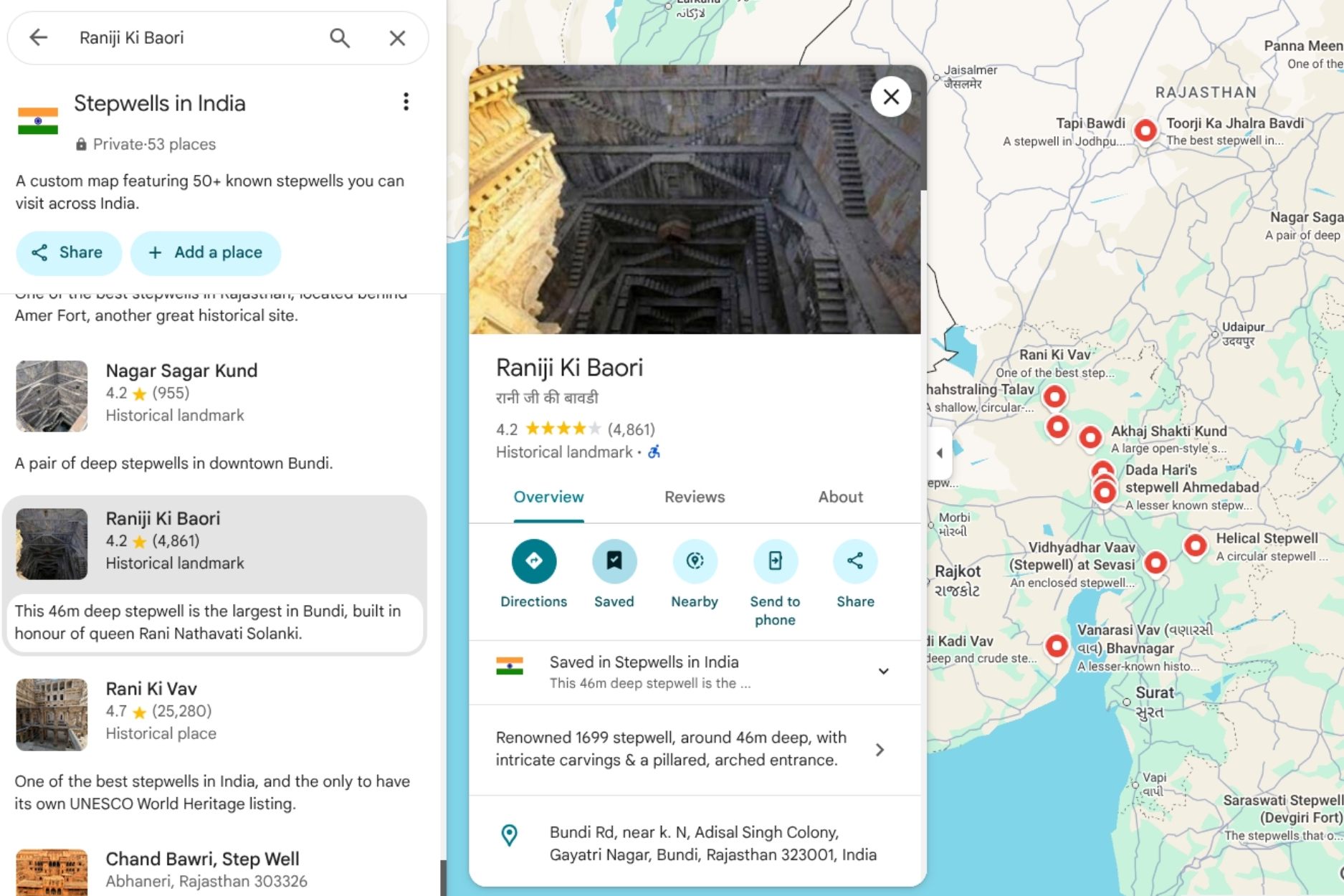
Click the button below to download a custom Google Map featuring 50+ of the best stepwells you can visit across India.
It doesn’t contain all of the stepwells in India. There are estimated to be over 3,300 stepwells in India alone, but most are small, poorly kept, and not worth visiting.
This map features the stepwells that are worth visiting, either due to their impressive or unique architecture, or because they’re in popular locations you will likely be visiting anyway.
Page will open in Google Maps
About the Stepwells in India
History of Stepwells in India
Stepwells originated to solve a problem. While the Eastern and Southern regions of the Indian subcontinent boast large rivers and plentiful water, much of Western India is dry and arid.
To solve this, people dug wells to access groundwater, which could continue to supply fresh water even when seasonal rivers dried up.
The earliest known stepwells were built by the Indus Valley Civilization and are centred around the Indus River Valley. The oldest known example in India is found at the archaeological site of Dholavira in Gujarat, built around 3000 BCE. These early stepwells were simple in design with little architectural detail.
Over time, stepwells became important public spaces. They were not only places to access water, but also social hubs where people gathered to talk, trade goods, rest, or escape the heat. In many settlements, the stepwell was the focal point of daily life.
These wells were generally commissioned by wealthy patrons or royal families, and many are named after their benefactors or include plaques and inscriptions mentioning them.
Because of their important role in society, the design of stepwells became increasingly elaborate. They were no longer just holes in the ground, but impressive works of architecture, often built at scale and decorated with intricate carvings and reliefs.
Due to their central role in community life, many stepwells also took on a religious significance. They were often adorned with detailed religious iconography carved into their walls and pillars, and some even functioned as temples.
Stepwells continued to be built across India until more modern water systems were introduced under the British Raj in the 19th century. While many fell out of use, some are still used today by local communities.
Today, there are estimated to be over 3,300 stepwells in India alone, by far the most of any country in the world.
Types of Stepwells in India
There isn’t just one type of stepwell in India. While they all serve the same basic purpose, there is a surprising amount of variety in their design.
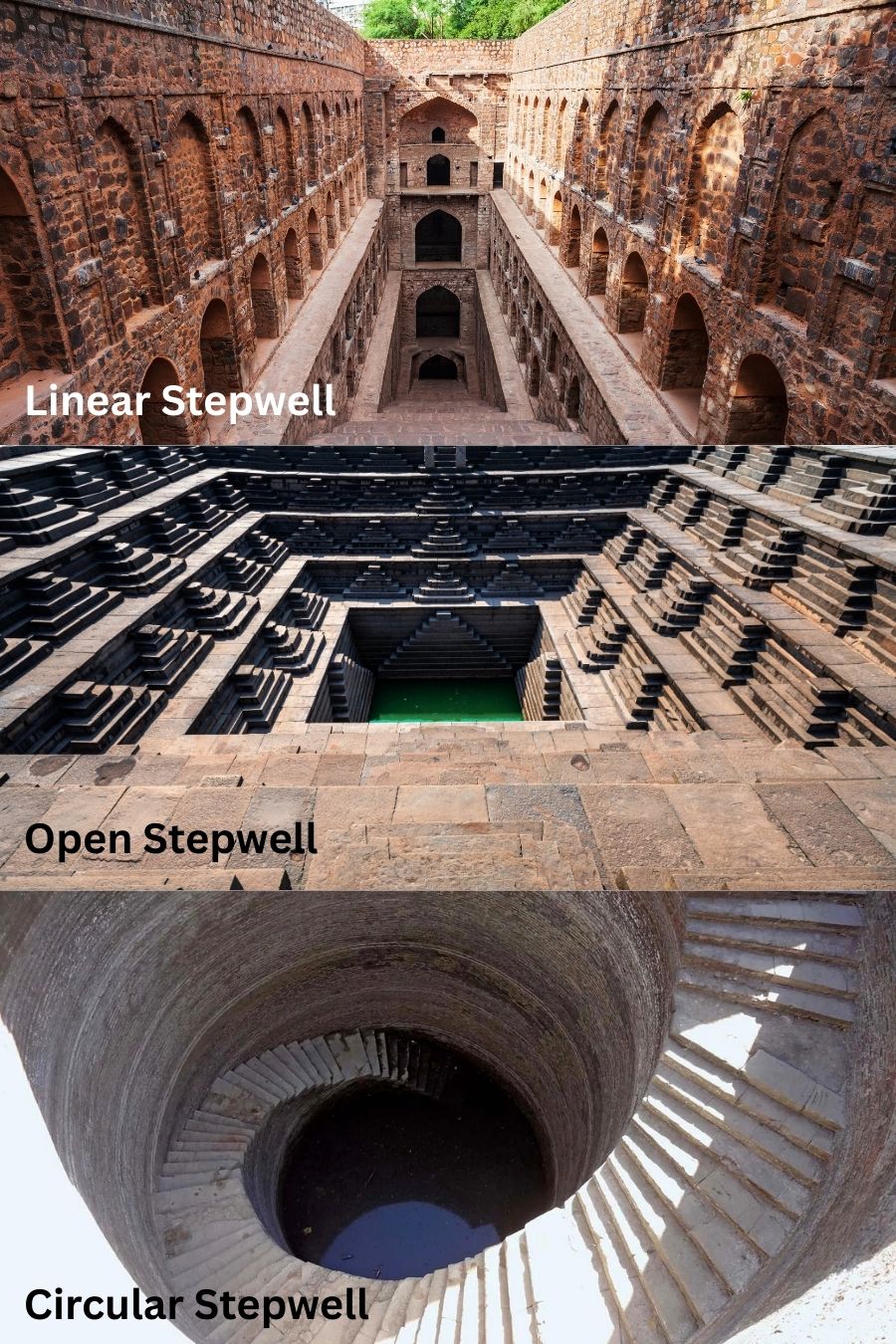
Broadly speaking, there are 3 main types:
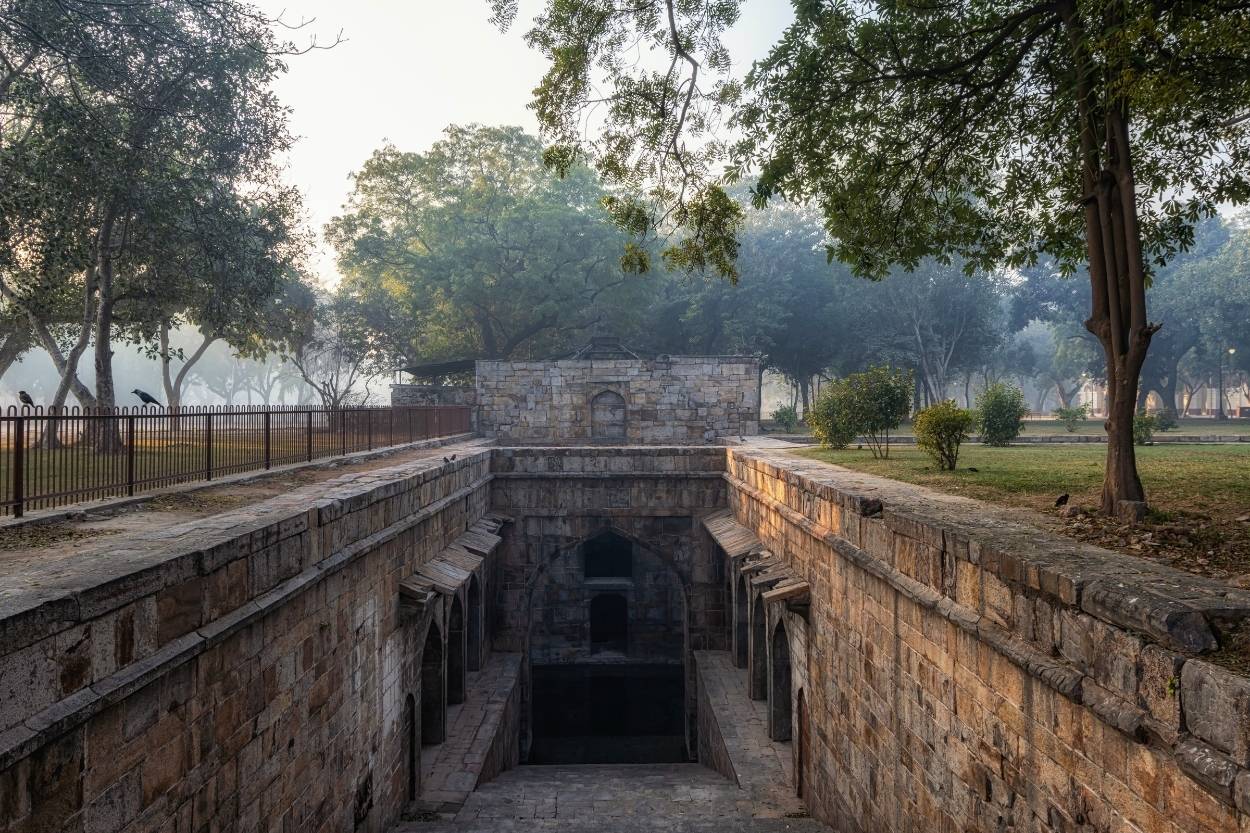
Linear Stepwells – One of the most recognisable and common forms of stepwells in India. These are long, straight stairways that descend down to the water source at the bottom of a cylindrical well. Across Northern India, this type is typically referred to as a baori (or one of its many regional variations), while in Gujarat it is known as a vav.
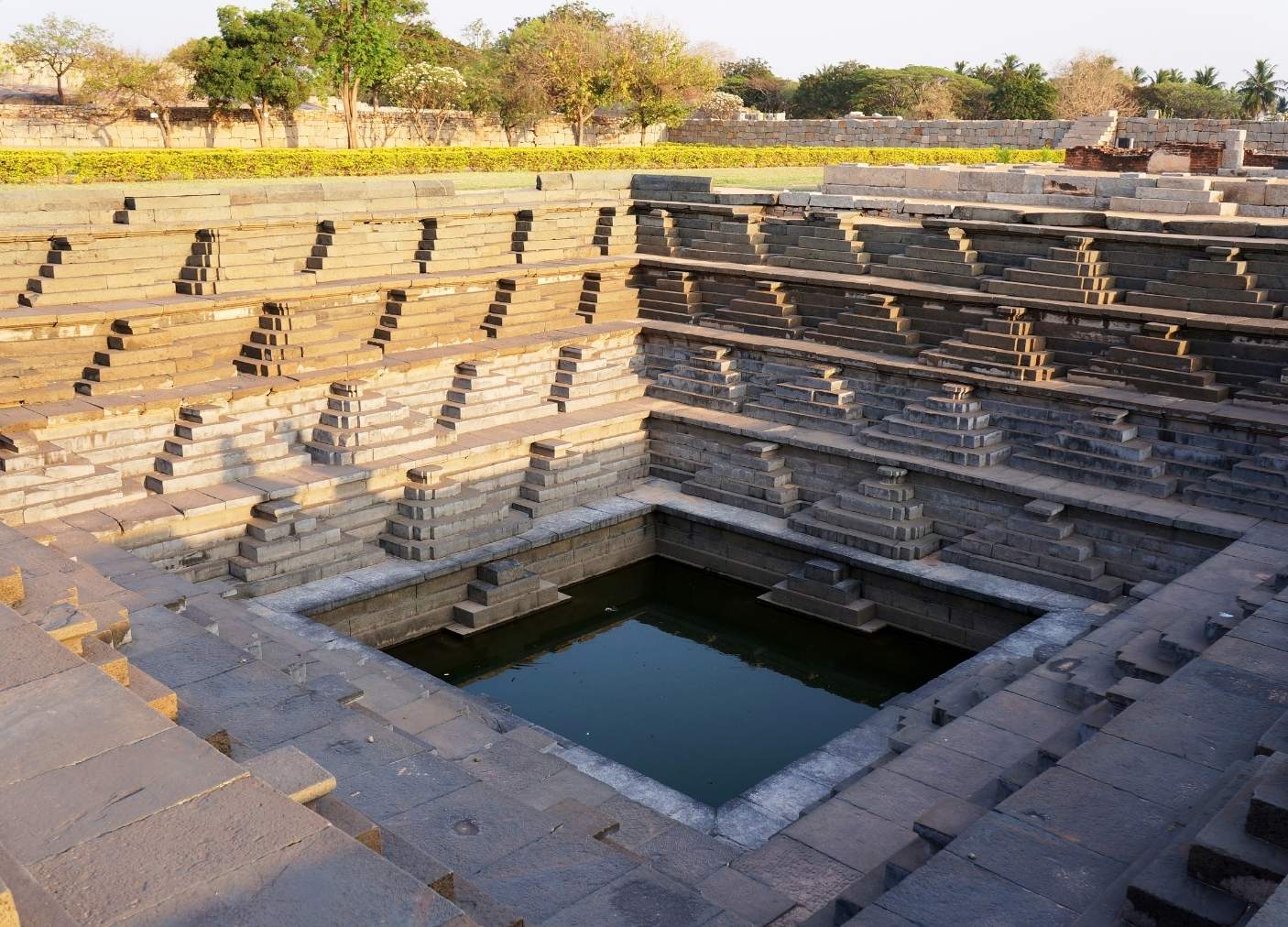
Open Stepwells – Rather than an enclosed stairway, these stepwells are typically square or rectangular open-air designs, with stairs on multiple sides leading down to the water. In Northern India, these are most often referred to as kunds.
Circular Stepwells – Less common than the other types, these range from relatively simple structures to complex, kaleidoscopic designs. Also known as Helical Stepwells.
Names for Stepwells in India
There are many different names for stepwells across India.
Much of the variation comes from the way the different regional languages describe the structures. For example, some names stem from the old Sanskrit word for ‘lake’ or ‘pond’, while others come from Sanskrit terms for ‘bowl’ or ‘sacred’.
Other variations are simply the result of transcribing spoken Indian languages into English (e.g. baori vs baoli).
Some common names for stepwells across India include:
- Baori, Baoli, Bawari, Bavdi, Bavi or Bawdi – Mainly used across Northern and Western India.
- Vav – The most common term used in Gujarat.
- Kuvo – Sometimes used in Gujarat.
- Talav – Rarer, but sometimes used across Northern and Western India.
- Kund – Typically used for open-air, square/rectangular stepwells in Northern India.
- Kalyani – Mainly used in Karnataka.
- Pushkarini – Mainly used in the South of India.
All of these are correct, and their usage largely depends on the region you’re in.
In this guide, we’ll try to stick to the local regional name as much as possible.
Where to see Stepwells in India
India is a big country, so where should you go to see the best stepwells?
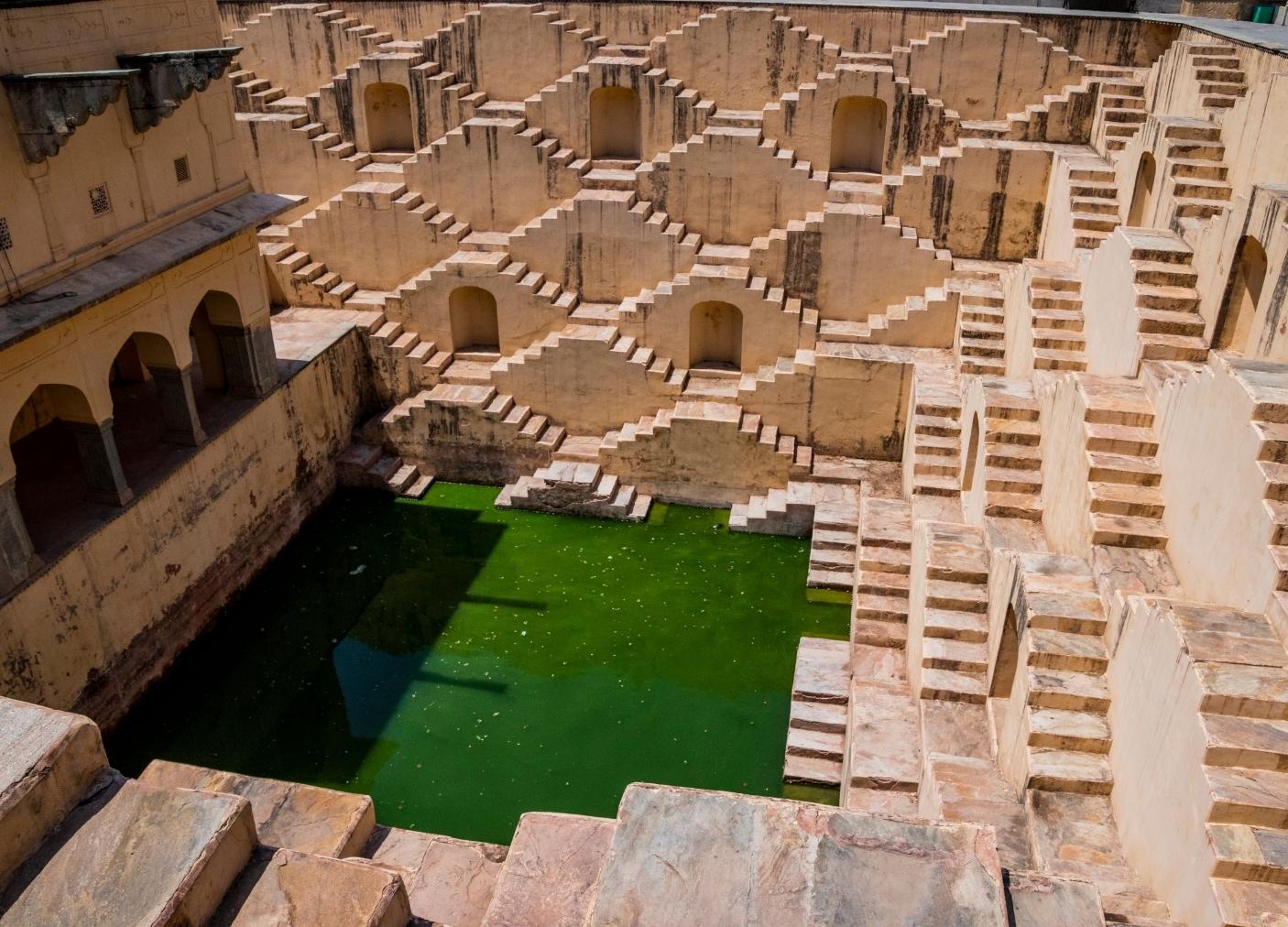
The first thing you should know is that stepwells are found mainly across the Western half of the country. The further East you travel, the fewer stepwells. The state of West Bengal, for example, has only 1 known stepwell while the state of Maharashtra has over 1,000.
The best and most popular stepwells are found in the states of Gujarat and Rajasthan, which should form the core of any stepwell-focused itinerary.
In Gujarat, the cities of Ahmedabad and Patan are the two best bases for exploring stepwells. The two cities are relatively close to each other, and if you go on a day trip from Ahmedabad to Patan, you’ll pass by most of the state’s top stepwells along the way.
In Rajasthan, there are several excellent locations to focus on. The city of Bundi, best known for its massive Taragarh Fort, also has a couple of impressive stepwells within easy reach of the town.
Around Jaipur, you can find some of the most iconic stepwells in India. Panna Meena ka Kund is located near Amer Fort just outside the city, while Chand Baori, one of the largest stepwells in the world, is located in Abhaneri, about a two-hour drive away on the road toward Delhi.
Delhi itself is another top destination for stepwells. Several well-preserved stepwells can be found within the city, including Agrasen ki Baoli and Rajon ki Baoli, both of which are easy to visit.
If you’re interested in seeing some of the oldest stepwells in the world, consider a visit to the Dholavira archaeological site in Gujarat. It’s a bit out of the way, but here you can explore the ruins of an ancient Harappan city, which includes some of the world’s oldest stepped water reservoirs.

Top 5 Stepwells in India
India is home to a lot of stepwells. With over 3,300 recorded examples across the country, there are a lot to choose from.
The above map covers a lot of the top stepwells across the country, but you probably aren’t planning to include more than a couple in your itinerary.
If I were forced to narrow it down to the absolute best stepwells in India, it would be the following:
1 - Chand Baori
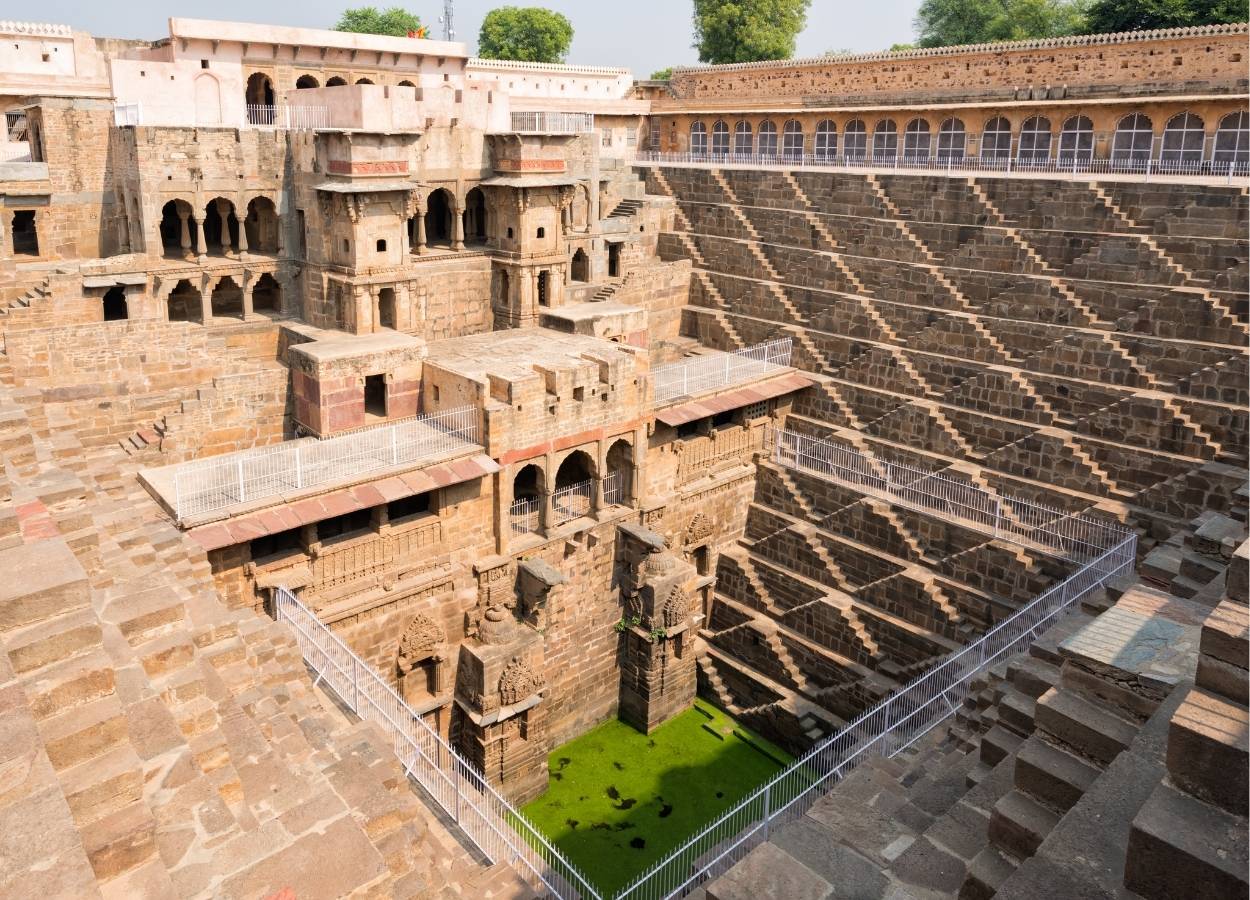
📍Chand Baori is a stepwell hidden away in the small village of Abhaneri, Rajasthan. Despite its remote setting, it is one of the largest and most spectacular stepwells in India.
The structure is around 30 metres deep, built as a square with four sides. Three sides feature roughly 3,500 tightly packed steps, while the fourth contains a small shrine.
Chand Baori is generally dated to the 8th century CE, built under the Pratihara Dynasty by a local raja. This makes it one of the oldest surviving stepwells in India, predating most other stepwells which are generally built from the 11th century onwards.
Located about a 2 hour drive from Jaipur, Chand Baori is an easy day trip or a convenient stop between Jaipur and Delhi.
2 - Rani ki Vav
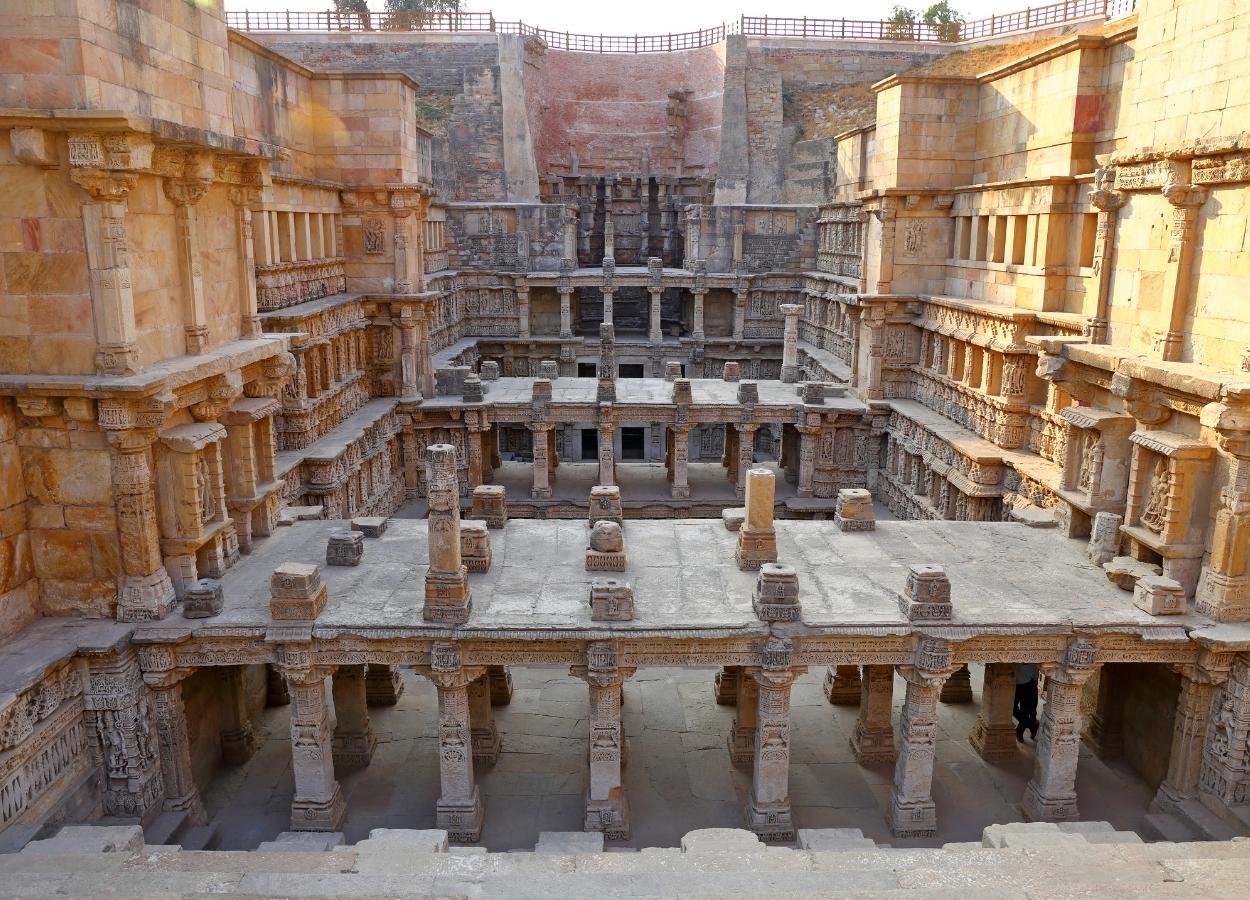
The city of Patan in Gujarat is one of the best destinations in India for stepwells, and the best it has to offer is 📍Rani ki Vav. It is not only one of the largest and most picturesque stepwells in India, but also the only stepwell in the country with its own UNESCO World Heritage listing.
According to historical texts, Rani ki Vav was commissioned in 1063 CE under the Chaulukya dynasty and took 20 years to build. It is often described as an “inverted temple”.
For centuries, the stepwell lay buried beneath mud and silt from the nearby Saraswati River. It was rediscovered in the 1940s and only fully excavated and restored in the 1980s.
The stepwell is immense, one of the biggest in India, and every inch of its walls and pillars is covered in intricate carvings of Hindu iconography.
Rani ki Vav is an impressive historical site, and the best stepwell in Gujarat.
3 - Adalaj Vav
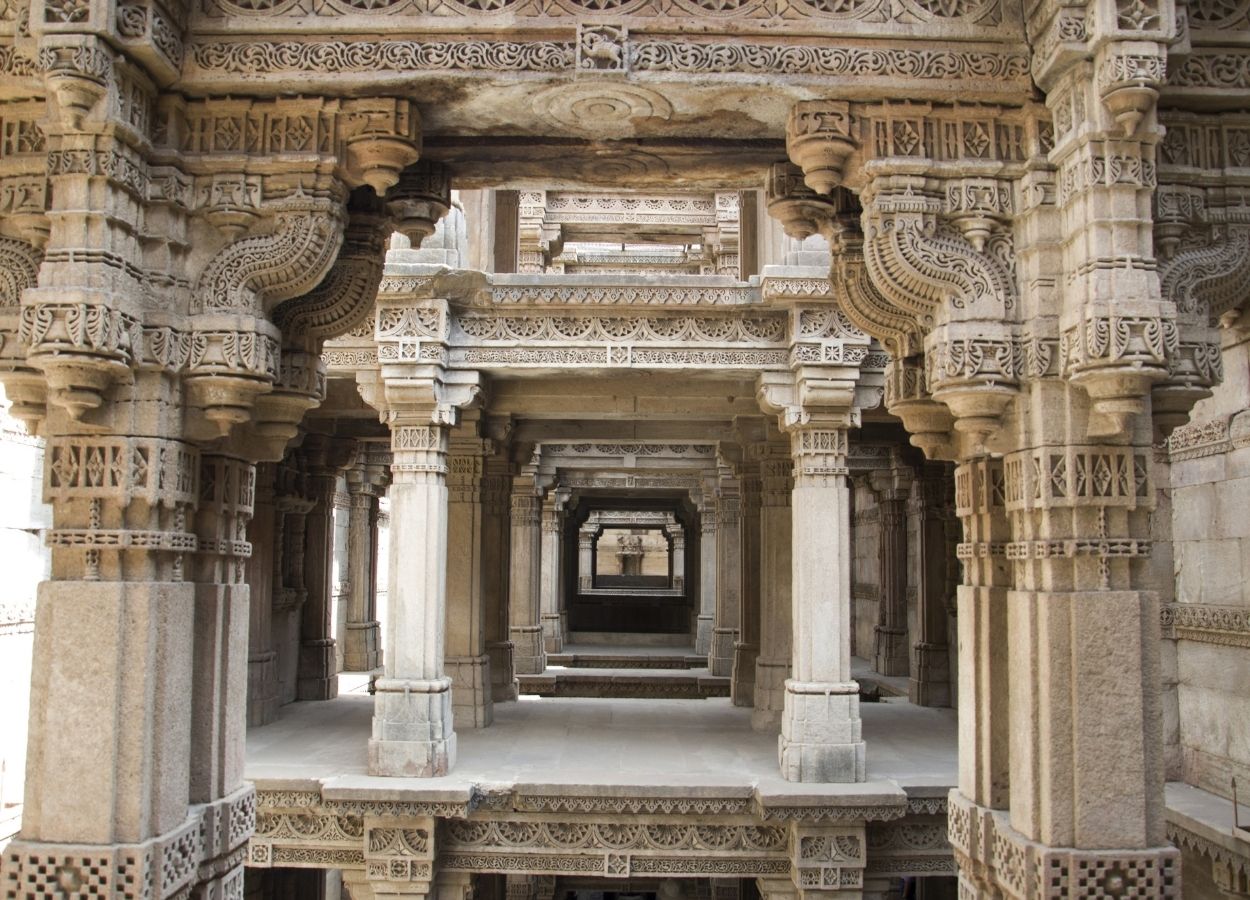
📍Adalaj Vav is the most popular stepwell in Ahmedabad and one of the easiest to visit in Gujarat. It is located in the town of Adalaj, on the northern outskirts of the city.
This five-storey stepwell is known for its tragic backstory, recorded in inscriptions on its walls. They say that the stepwell was originally commissioned by a local king who was killed by an invading ruler before construction was completed. The king’s widow agreed to marry the conqueror in exchange for finishing the stepwell, but once it was complete, she refused and took her own life by jumping into the well.
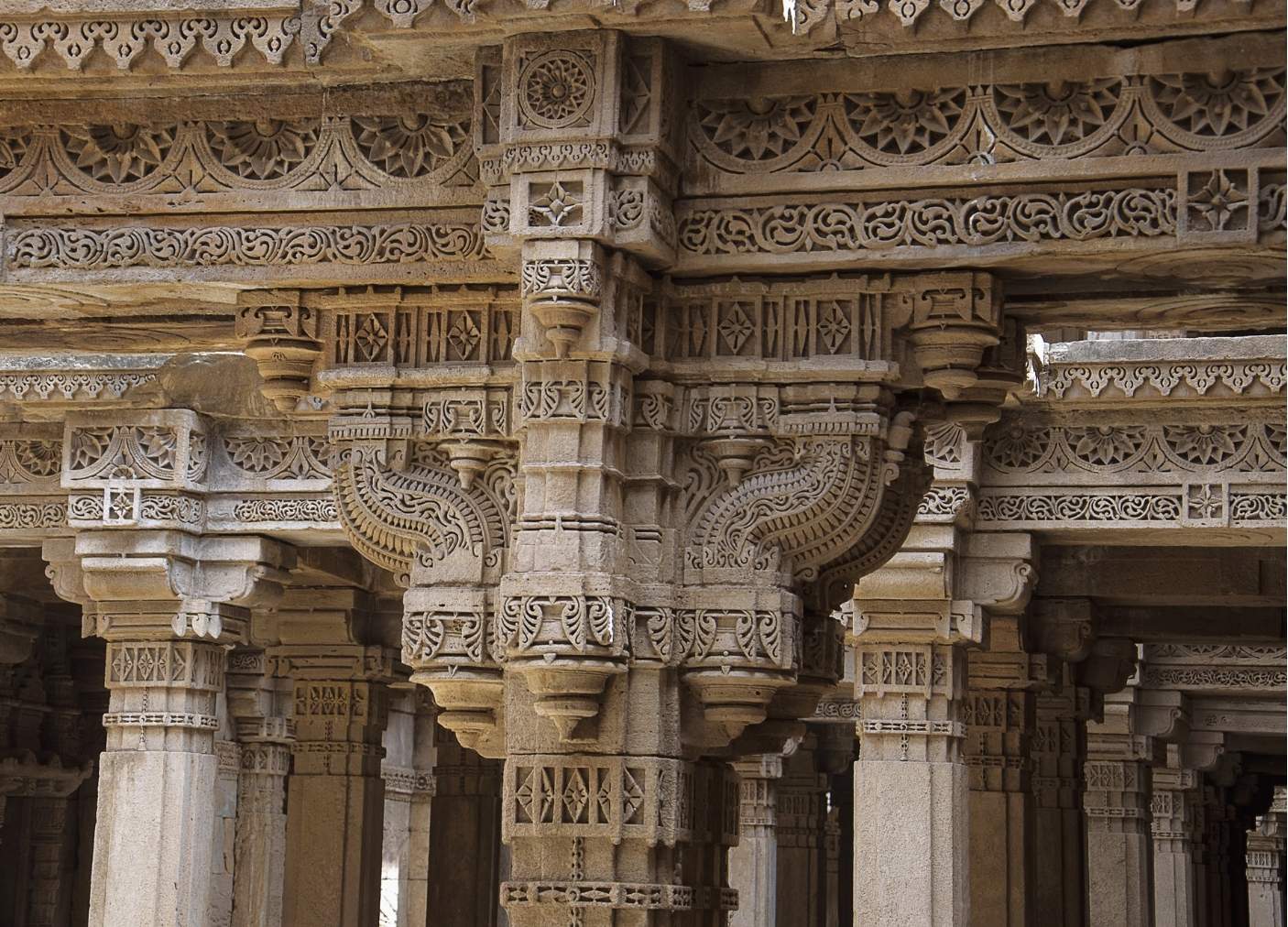
Perhaps this explains why Adalaj Vav, unlike most other stepwells, is fitted with metal safety barriers, which slightly detract from its appearance. Even so, its intricate carvings and stonework make it a must-see near Ahmedabad.
4 - Dada Harir Vav
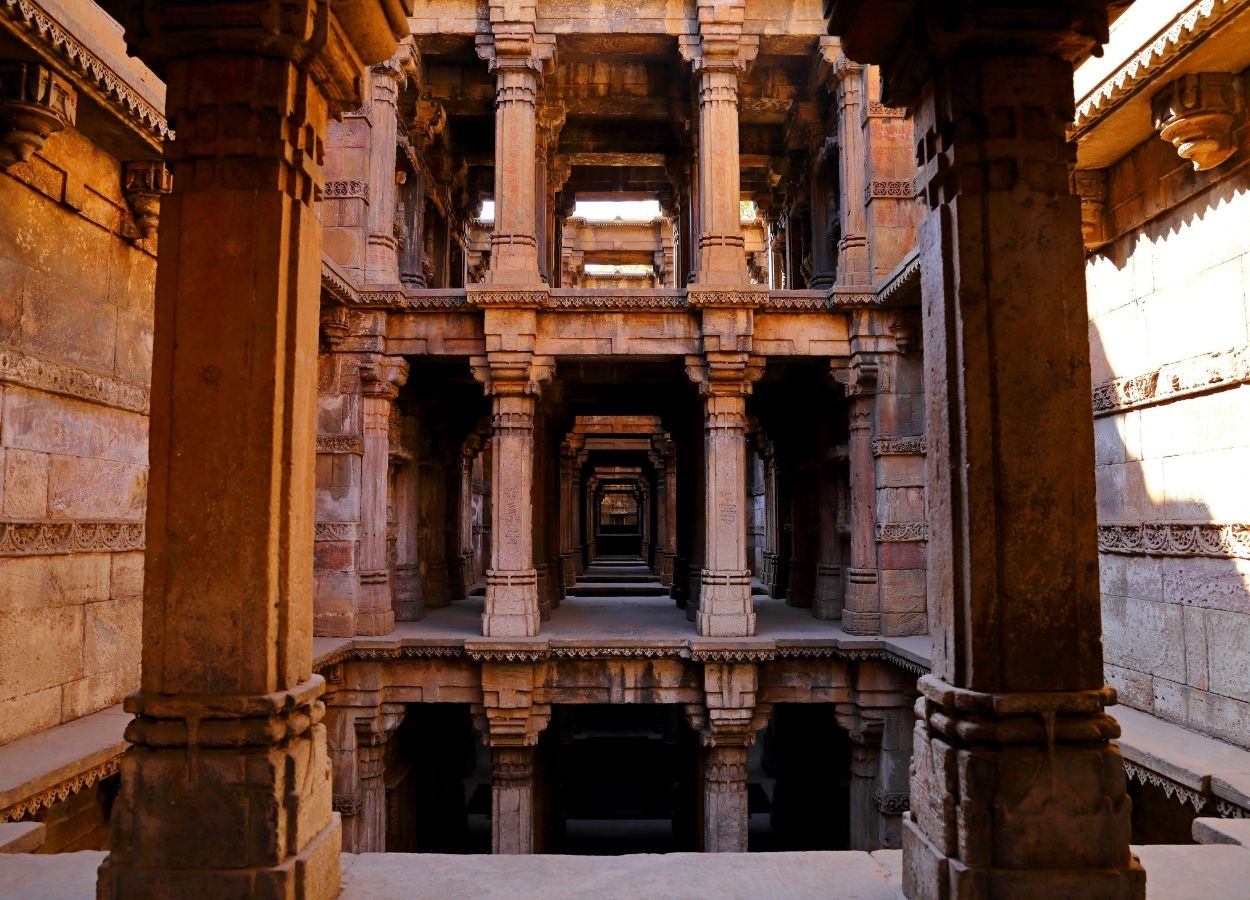
Adalaj Vav may be the most popular stepwell near Ahmedabad, but it isn’t the only one worth visiting. 📍Dada Harir Vav, located in the inner eastern part of the city, is something of a hidden gem, though it has become more popular in recent years.
According to inscriptions, this five-storey stepwell was built in 1499 CE. Architecturally, it is almost identical to Adalaj Vav, but without the intrusive metal safety barriers, allowing visitors to freely explore the structure – at their own risk.
The stepwell was built in honour of Dhai Harir, superintendent of the royal harem under Sultan Mahmud Begada of the Gujarat Sultanate, and the site also includes her mausoleum and a mosque. Quieter than Adalaj, it is one of Ahmedabad’s best stepwells.
5 - Surya Kund
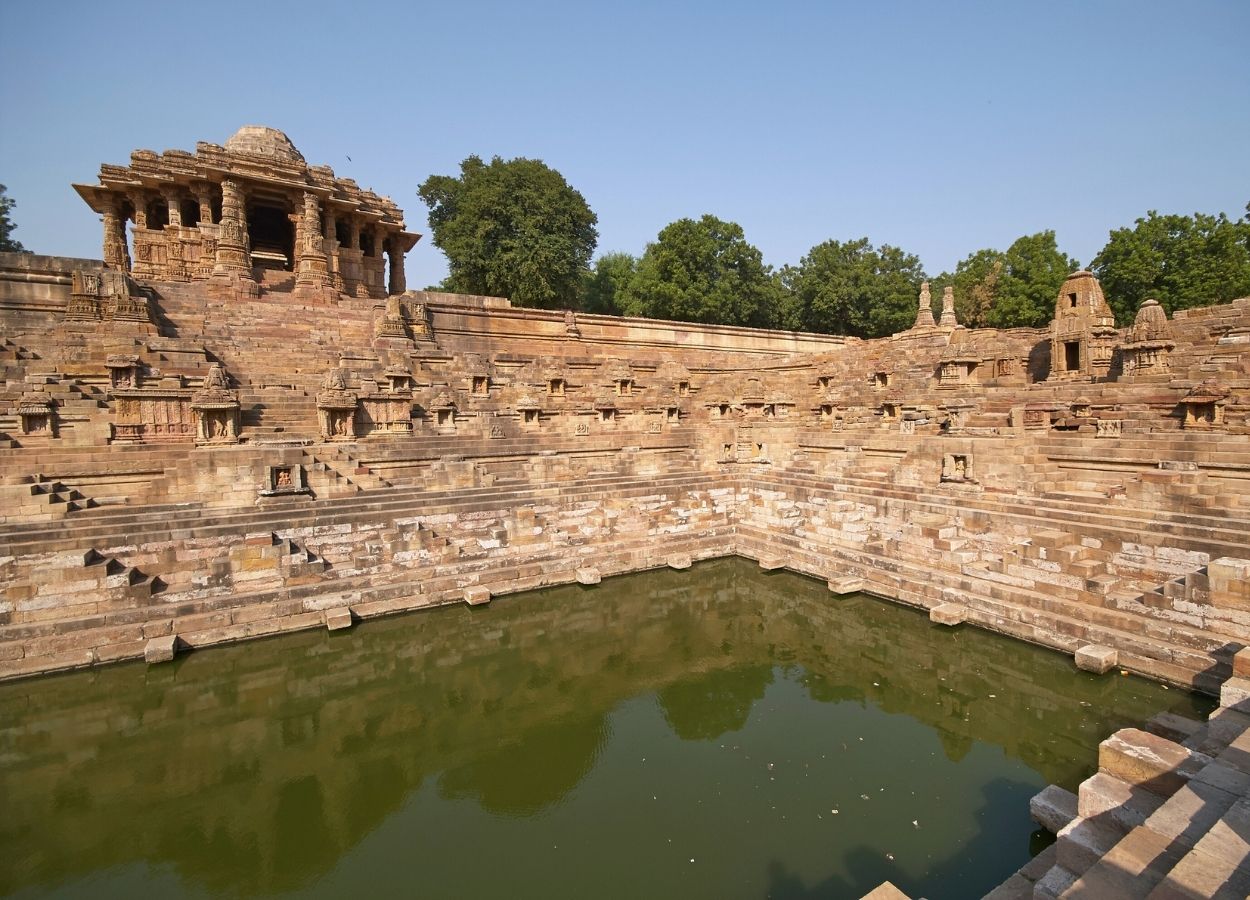
Surya Kund is the stepped reservoir that forms part of the 📍Modhera Sun Temple complex, located in the village of Modhera.
Constructed in 1027 CE, the temple is dedicated to the Hindu deity Surya, the sun god, so naturally this stepwell has a wide and open design.
The symmetrical stairways that lead down to the water make this one of the most picturesque stepwells in India. Perhaps even better are the shrine and assembly hall, both situated right next to the stepwell, which are covered top to bottom in intricate carvings and reliefs.
Modhera lies between Ahmedabad and Patan. It’s often included in stepwell tours from Ahmedabad, along with Rani ki Vav.
India Stepwells FAQs
How many stepwells are there in India?
There are over 3,300 stepwells across India, by far the most of any country in the world.
Which is the biggest stepwell in India?
In terms of volume, the largest stepwell in India is likely Chand Baori, in Abhaneri.
Which is the oldest stepwell in India?
The oldest stepwells were built by the Harappan Civilization. Most of them are found in Pakistan, but some can be found in India at the Dholavira archaeological site.
After the fall of the Harappan Civilization, the next oldest stepwells in India are believed to be the rock-carved wells inside Uparkot Fort, in Junagadh.
Further reading on India
Here are more guides on India to help you plan your trip:
⬤ Perhaps the single best city for stepwells is the historic city of Ahmedabad. Check out: Complete Guide to Stepwells in Ahmedabad.
⬤ Most of India’s best stepwells are in the historic state of Rajasthan. Check out: 2-Week Rajasthan Itinerary for History Buffs.
⬤ You can find a great stepwell inside the iconic Red Fort in Delhi. Check out: Red Fort – Complete Guide to Delhi’s Mughul Fortress.
⬤ For more historical travel guides on India, check out our India page.
Disclosure: This post may contain affiliate links.