Crete is a paradise for history lovers.
The island was once home to the Minoan civilization, considered the first developed society in Europe. Known for their elaborate palaces, the remains of this ancient culture are scattered across Crete, but none are as impressive as the Palace of Knossos.
Widely regarded as Europe’s first city, Knossos was the political and cultural heart of Minoan Crete nearly 5,000 years ago. Its palace was the centerpiece of Minoan civilization, famous for its coloruful frescoes and labyrinthine architecture.
Knossos had a lasting influence on Greek culture, and subsequently western culture, and inspired legends such as the story of Theseus and the minotaur.
Located just outside Heraklion, Crete’s lively capital, the Palace of Knossos is not only the best historical site on the island, but also the most accessible of all the Minoan palaces.
In this guide, you’ll find everything you need to visit the Palace of Knossos, including some background info, how to plan your visit and what to see once you’re there.
Best Palace of Knossos Tours
I’ve done the research so you don’t have to. Here are the top Palace of Knossos tours depending on what you’re looking for…
⭐ Palace of Knossos Self-Guided Audio Tour
⭐ Palace of Knossos + Heraklion Old Town & Heraklion Archaelogical Museum
⭐ Palace of Knossos + Cave of Zeus, Vidiani Monastery, Olive Mill Farm & more
Contents
The History of the Palace of Knossos
Around 3000 BCE, advanced societies were concentrated in a few regions—Egypt, Mesopotamia, Peru, the Indus and Yellow Rivers. One of the first places civilization spread beyond these cradles was Crete. Its culture, the Minoans, is considered Europe’s first civilization.
Minoan civilization really began to take off around 2000 BCE, as Crete’s population was booming and large settlements were forming.
With the growing population came an established political and social hierarchy, with an elite upper class at the top. These Minoan elites began constructing elaborate palaces in major settlements like Phaistos, Malia, and Zakros, but the largest of all was the Palace of Knossos.
Historians aren’t certain whether the Minoans were one unified kingdom or a collection of city states, but it’s clear that Knossos was the political centre of the island. If there was a capital, it was Knossos.
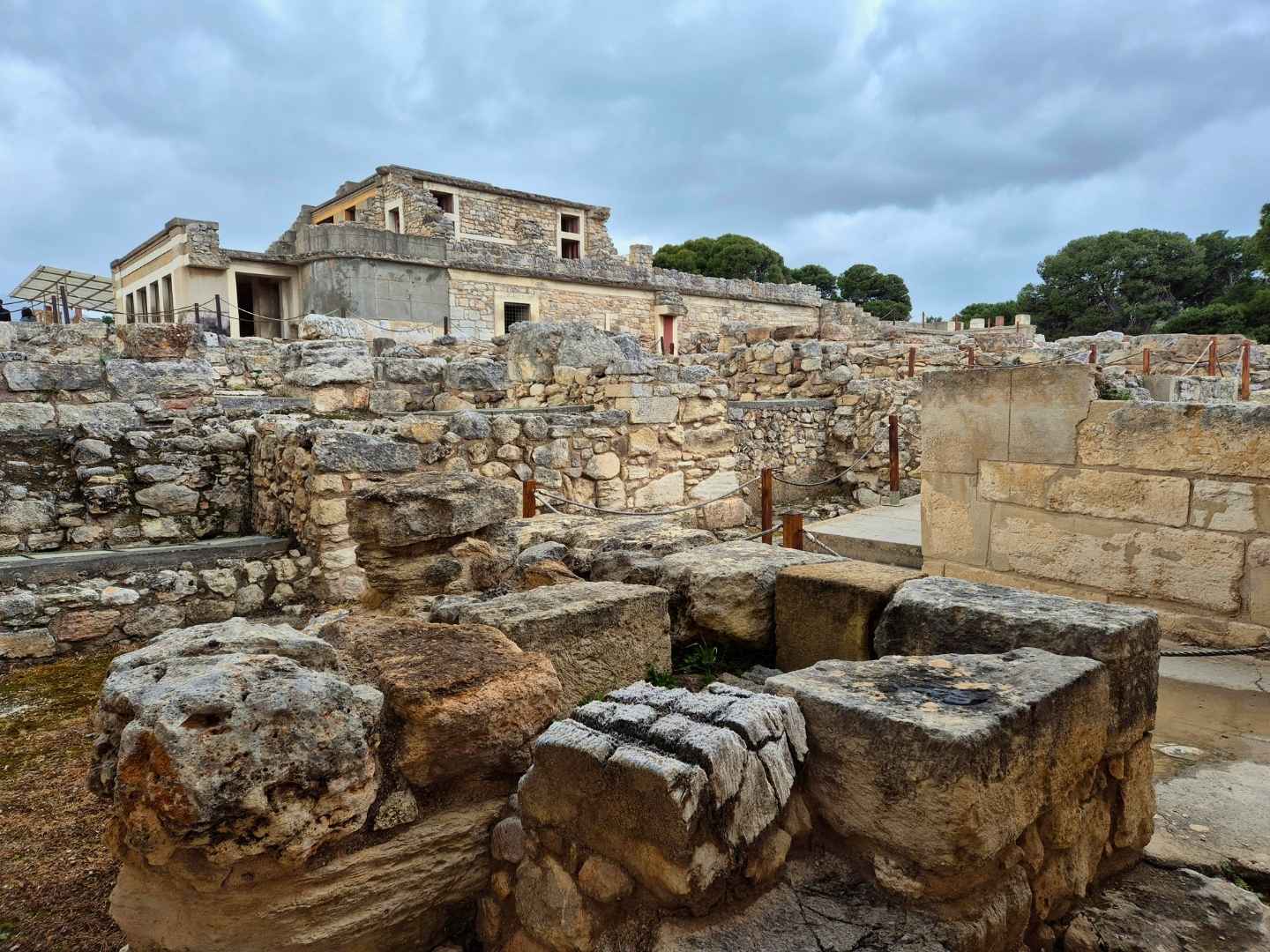
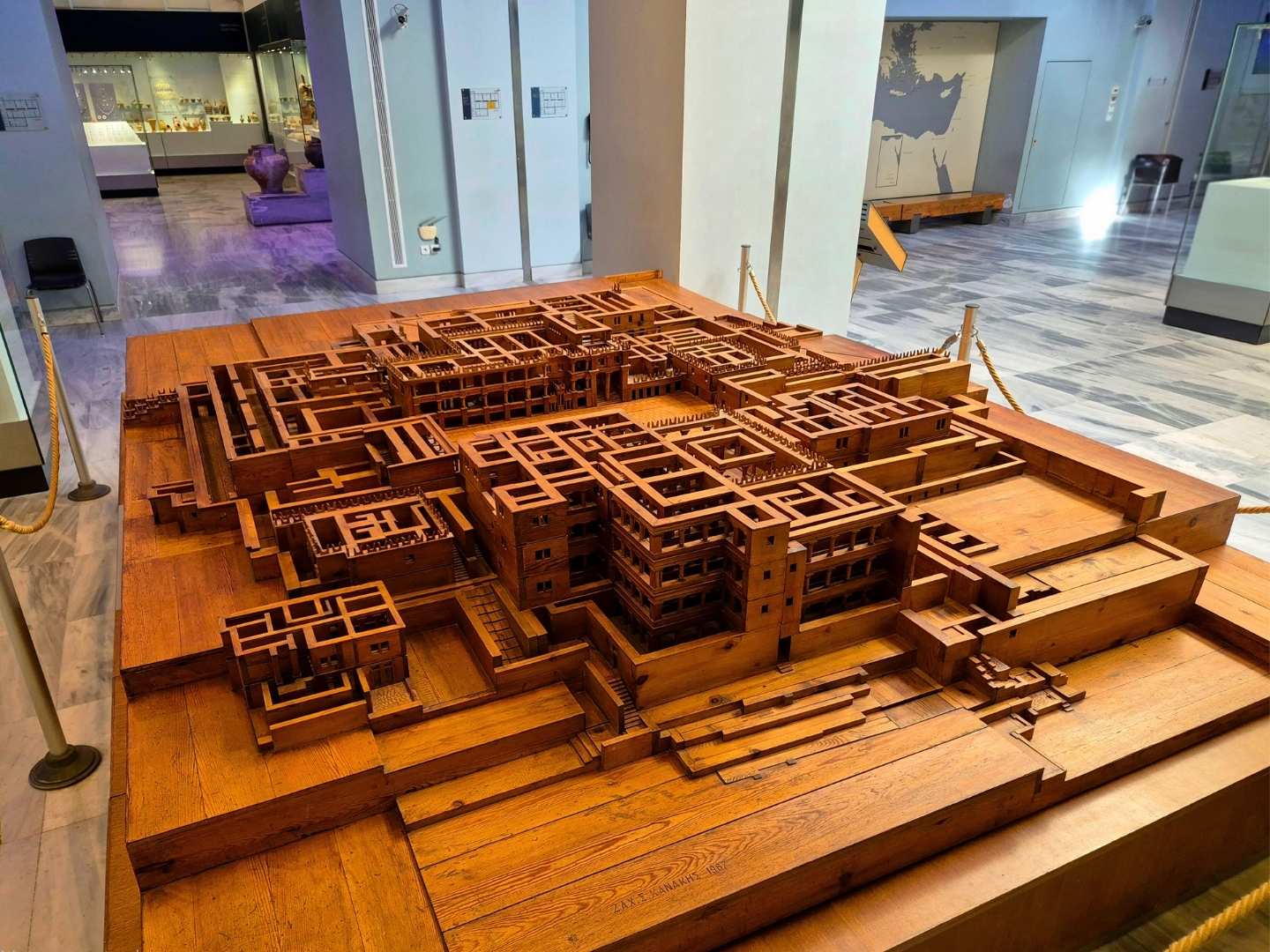
At its peak, the Palace of Knossos was the pinnacle of Minoan architecture. The main building alone spanned about 3 hectares, while the full palace complex covered around 5.
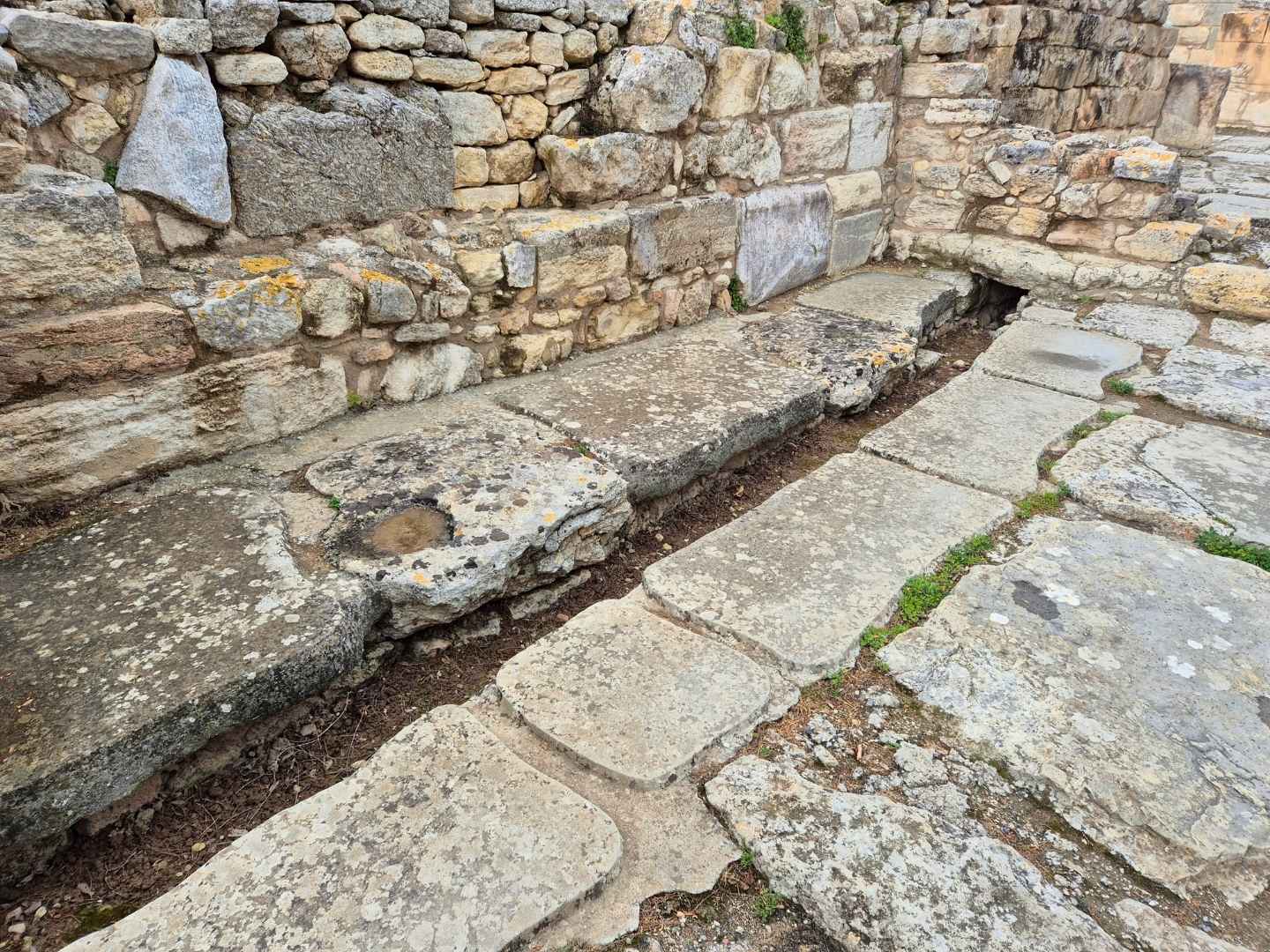
Its layout, which comprised many relatively small rooms, was so intricate that it inspired the term labyrinth. These rooms included a throne room, living quarters, shrines, storerooms, and bathrooms, which were connected to a drainage system that ran throughout the palace.
These interconnected rooms were centered around a large, open-air courtyard, the beating heart of any Minoan palace, where ceremonies and festivals would be held.
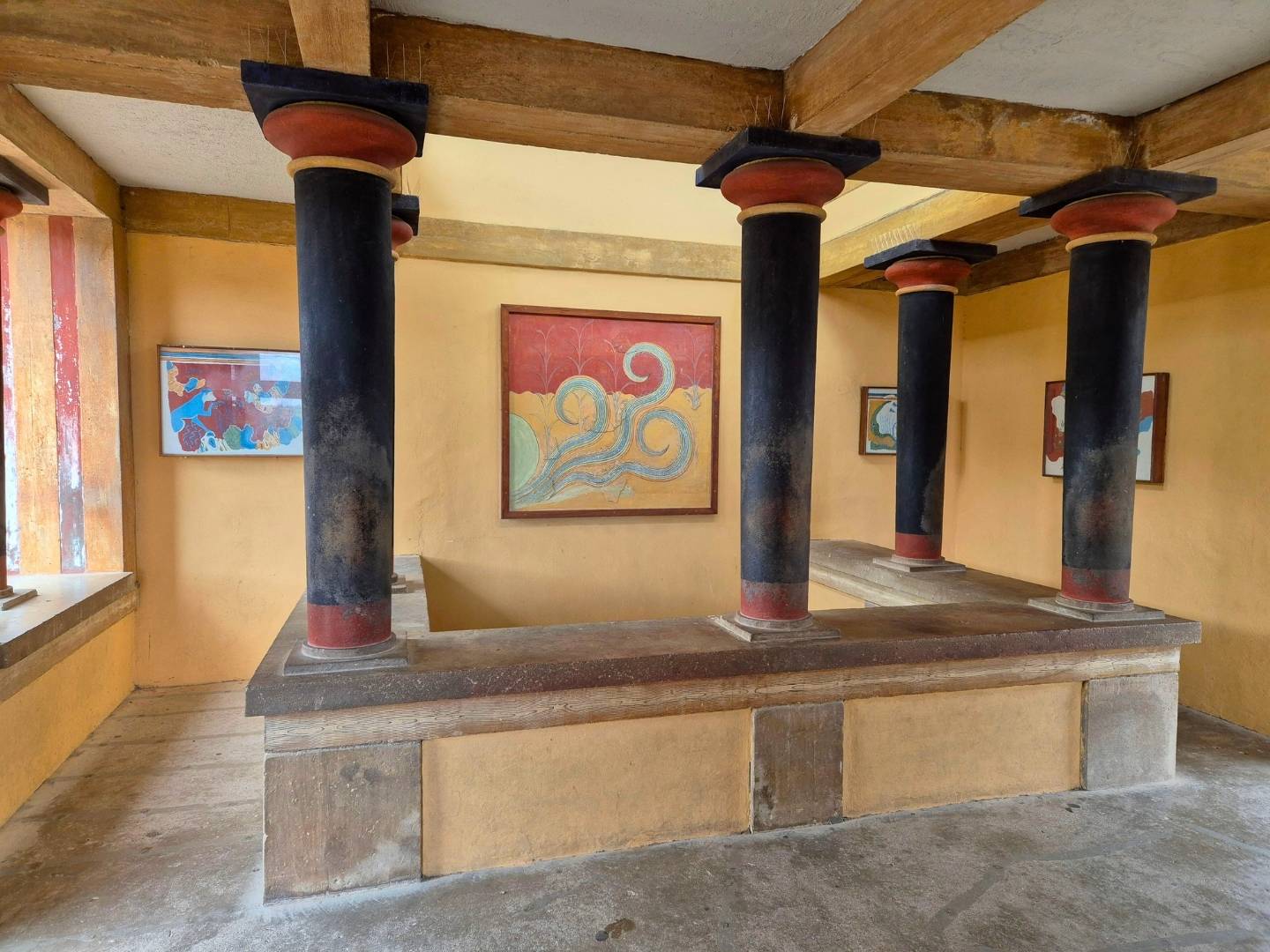
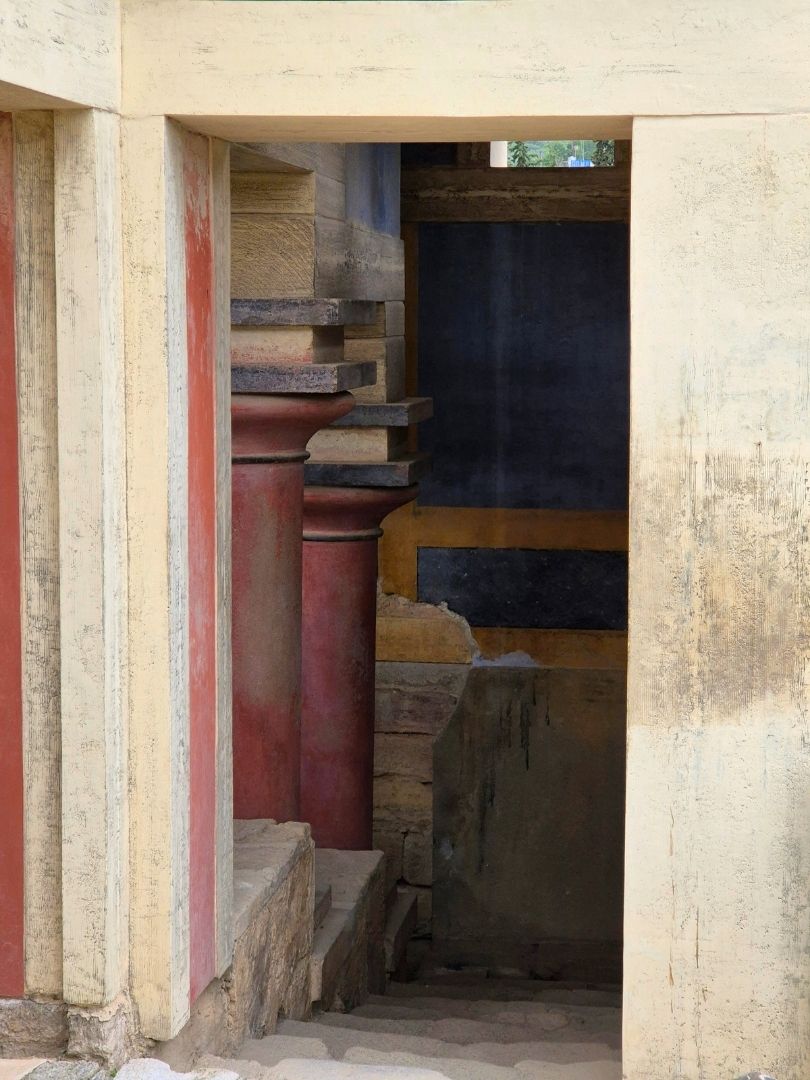
Perhaps the most defining feature of Minoan architecture were its colourful frescoes, which adorned the walls inside the palace. These reliefs often depicted nature, such as olive trees, dolphins, monkeys, bulls, and the Minoan sport of bull-leaping.
Surrounding the palace was a bustling city of perhaps tens of thousands of people (estimates vary).
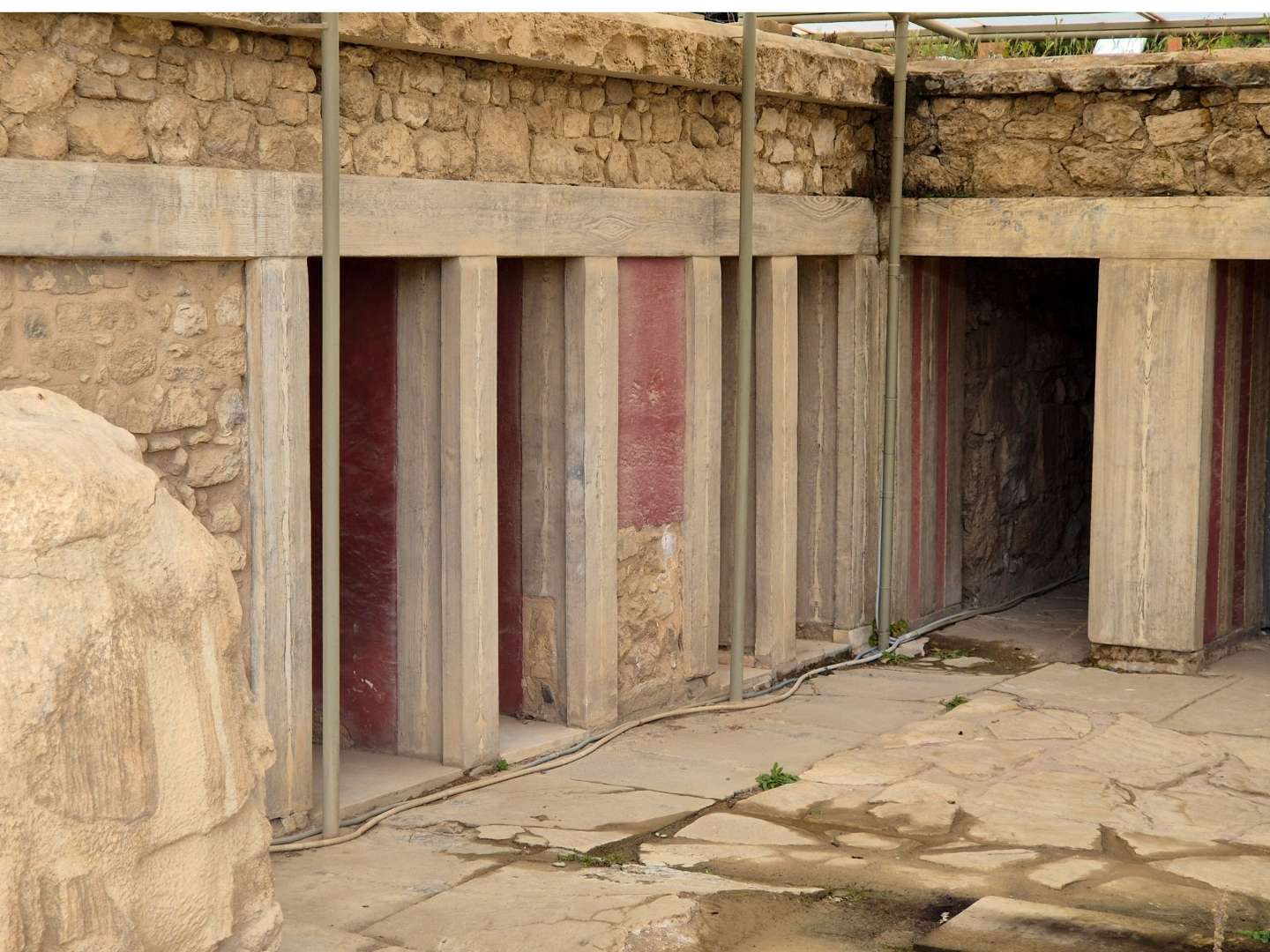
Knossos dominated Crete for nearly 500 years until about 1450 BCE. Its decline is still debated, but the leading theory is that it was caused by the Thera eruption on Santorini followed by a Mycenaean invasion. Power in Greece then shifted to Mycenae, and Minoan palaces fell into ruin.
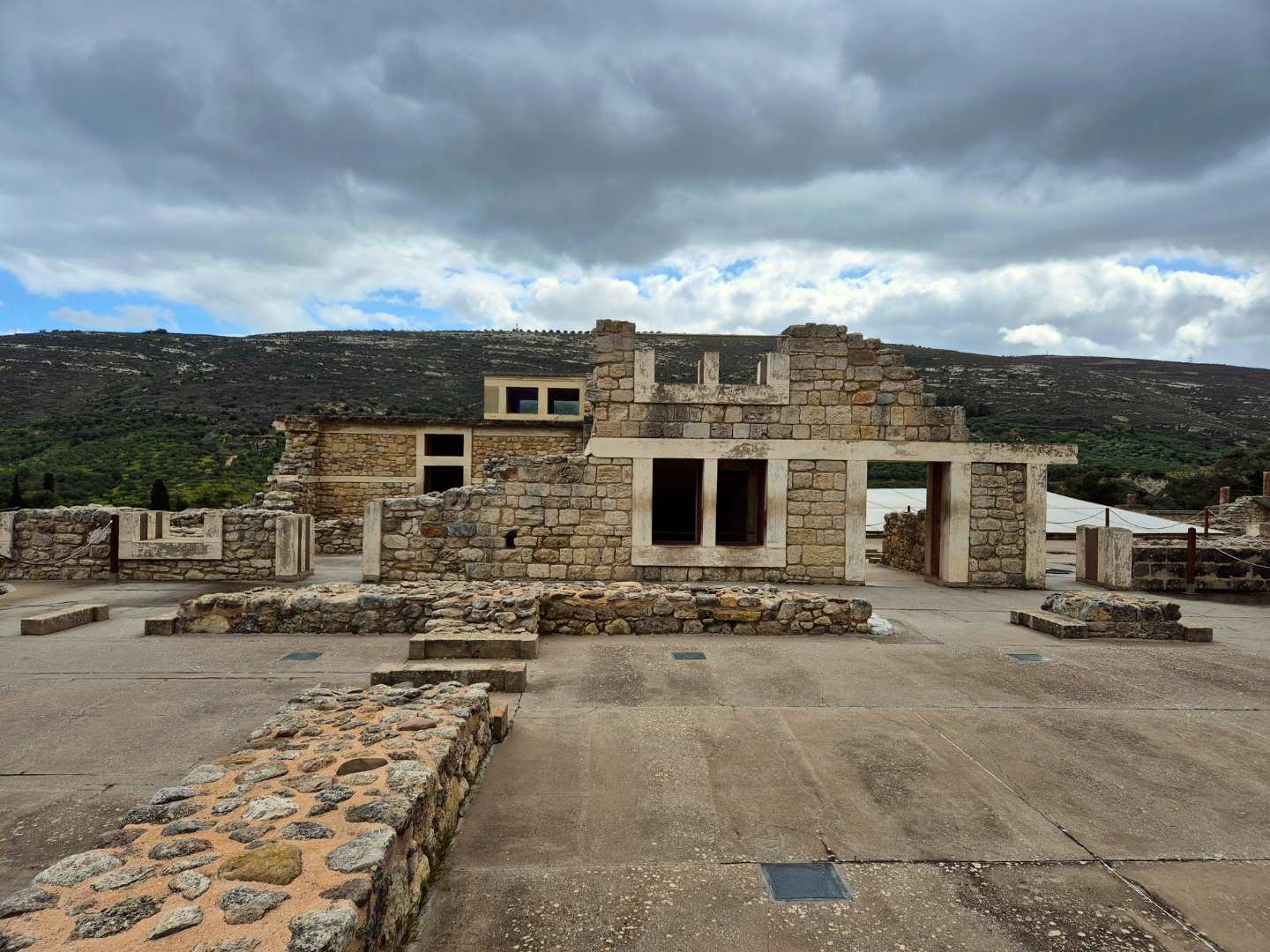
Knossos remained buried until excavations began in the late 19th century under Minos Kalokairinos. In the early 20th century, Arthur Evans controversially reconstructed parts of the site, essentially making an educated guess on how it should look.
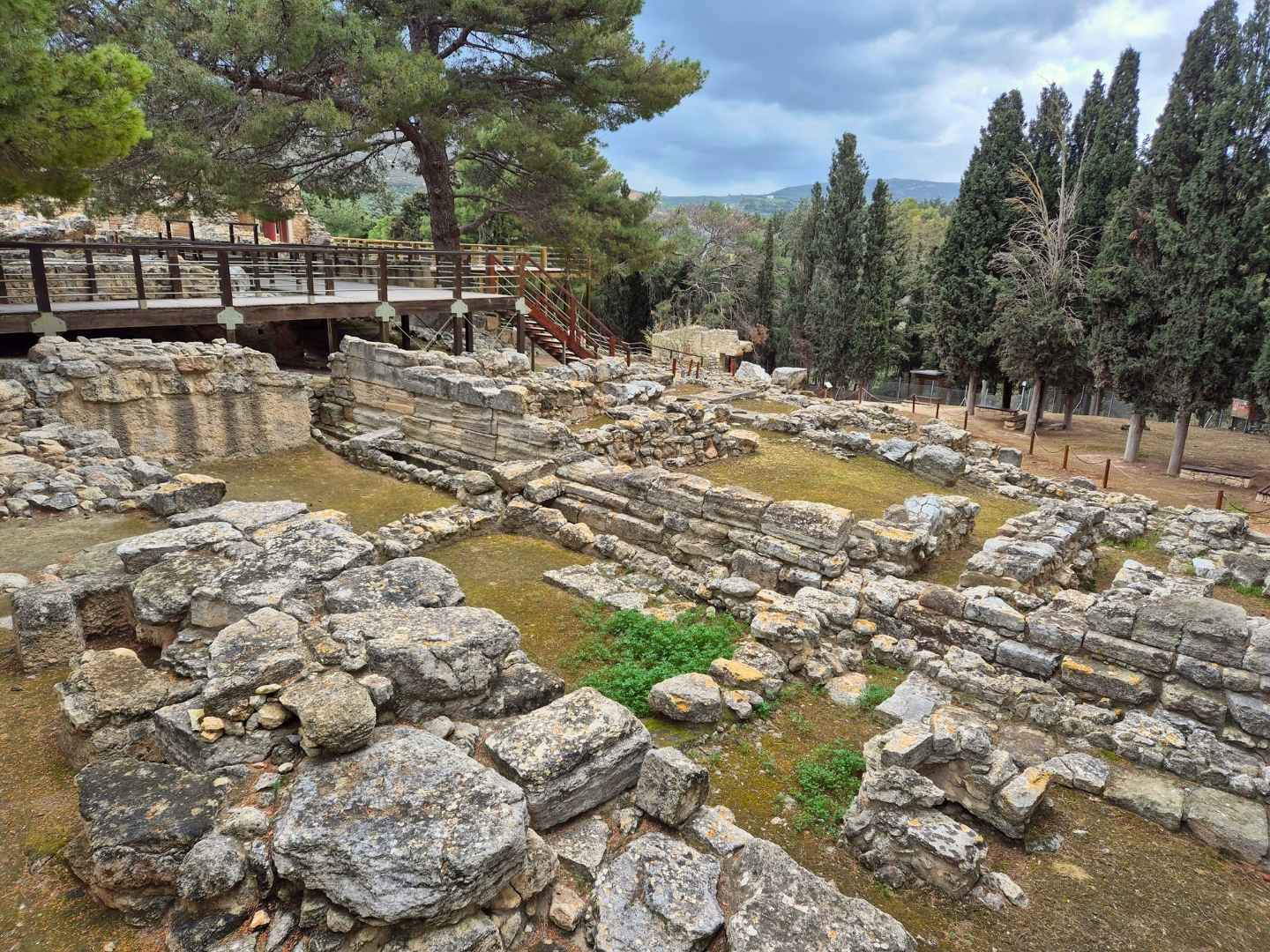
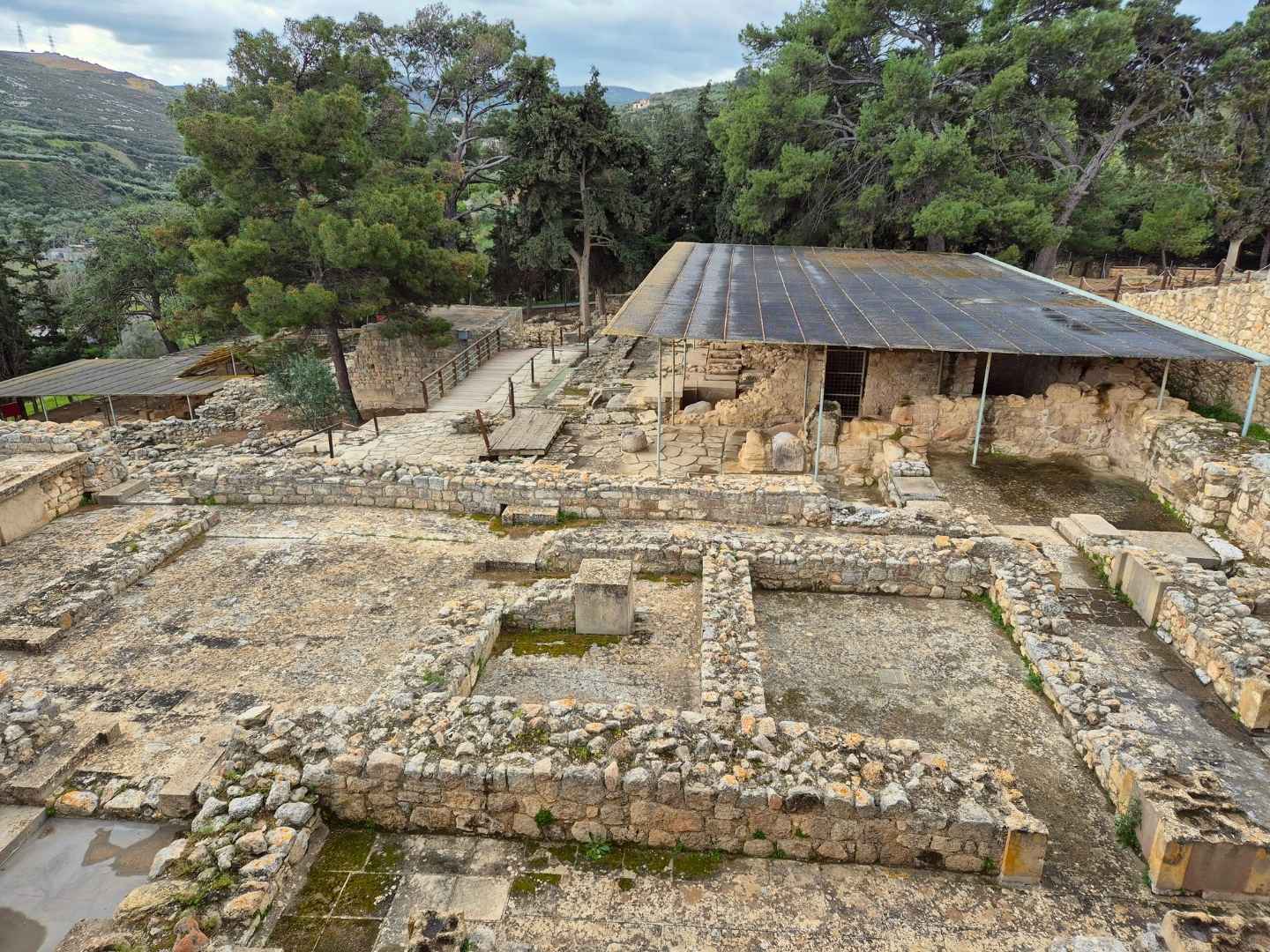
Only small sections of the palace were reconstructed, and the majority of what you see today are the remains of the original structure.
Where is the Palace of Knossos?
The Palace of Knossos is located just south of Heraklion, only about 5km from the city centre.
No more than a 15min drive from Crete’s main city, the Palace of Knossos is the most easily accessible of all the Minoan palaces.
Best time to visit the Palace of Knossos
The Palace of Knossos is open all year-round, but the time of your visit can make a big difference to both the weather and the crowds.
Crete’s peak tourist season runs from June to August, with July and August being the busiest months. During this time, expect large crowds, long lines, and large tour groups at the Palace.
These months are also Crete’s summer. While that can be great for the beach, the hot temperatures can make your daytime activities uncomfortable.
The best time to visit Knossos (and Crete in general) is during the shoulder seasons – April to June and September to October – when the weather is still pleasant and the crowds a lot lighter.
If you visit between November and March, the Palace of Knossos still remains open, but many other sites, activities and transport options in Crete close down for the winter off-season.
How long to spend at the Palace of Knossos
Knossos was once the largest city of Minoan Crete, but the archeological site today consists only of the palace building, and doesn’t take very long to explore.
Expect to spend about 1.5 to 2 hours at Knossos. That’s enough time to explore the site at a relaxed pace, read all the plaques, and see everything the site has to offer.
Thanks to its location just outside Heraklion, getting to the Palace from the city is quick and easy, and your full trip to the site shouldn’t take more than 3 hours of your day – an easy half-day trip.
How to get to the Palace of Knossos
The Palace of Knossos is located about 5km south of Heraklion, making it one of the most accessible Minoan sites in Crete. The island may not have a train network, but you’ve got several easy ways to get there.
Bus
The simplest and cheapest way to reach the Palace of Knossos is by catching a local bus.
Bus number 2 runs regularly between Heraklion Central Bus Station (near the port) and the Palace of Knossos, with departures throughout the day – even in the off-season.
The ride takes around 15 minutes from downtown Heraklion. You don’t always have to go to the Central Station because the bus stops at several points along the route before reaching Knossos.
To return, simply catch the same bus back to Heraklion, which departs from the car park next to Knossos. Tickets are cheap and can be purchased directly from the bus attendant or from kiosks at the Central Bus Station.
(While I aim to keep this guide up to date, this information is open to change at any time, so it’s worth checking the latest schedule before your trip. I find the most reliable source for bus schedules to be this website.)
Tour
Another convenient way to reach the Palace of Knossos is by joining a guided tour. These come in many forms:
- The most basic tours merely include an entry ticket and an audio guide, without the transport. So be sure to double check this before booking.
- Most tours to Knossos include hotel pickup and drop-off from Heraklion, and sometimes from nearby towns like Rethymno and Malia. If you’re not located in Heraklion, be sure to double check that your location includes pickup.
- Some Palace of Knossos tours also include a tour of the top sights in Heraklion, making it a full day trip.
If you prefer everything to be organised for you, and enjoy having a knowledgeable guide to teach you about the site along the way, guided tours are a great option. You’ll find plenty of Palace of Knossos guided tours to choose from on Get Your Guide.
Car
One of the most convenient and popular ways to get around Crete is by renting a car, allowing you the freedom to explore every corner of Crete at your own pace and on your own terms.
Not only will this cover your transport to the Palace of Knossos, but it’s also the best way to visit the 5 other Minoan palaces around the island.
There are multiple car rental companies in Crete, most situated next to Heraklion Airport. Some companies also offer one-way rentals, allowing you to pick up your car in Heraklion and drop it off in another location like Chania.
You can search for and compare the best car rental deals on DiscoverCars.
Palace of Knossos ticket information
Tickets for the Palace of Knossos are simple. There’s only one ticket type, and it gives you access to the entire archaeological site.
- Ticket price: €20
- Free entry: EU citizens under 25, and all visitors under 18.
- Where to buy: Tickets can be purchased at the ticket booth at the site or online in advance.
If you search for Palace of Knossos tickets online, you’ll find no shortage of 3rd-party sites selling you tickets at inflated prices. I recommend avoiding these sites, and only booking via one of the 2 following government websites:
When buying online, keep in mind that tickets come with a 1-hour entry slot. You must enter the site during this slot, but once inside you’re free to explore at your own pace.
Palace of Knossos opening hours
During the summer months, the Palace of Knossos is open until late:
- April 1 – August 31: 8:00am – 8:00pm
But as winter approaches, the opening hours are gradually reduced:
- September 1 – 15: 8:00am – 7:30pm
- September 16 – 30: 8:00am – 7:00pm
- October 1 – 15: 8:00am – 6:30pm
- October 16 – 31: 8:00am – 6:00pm
- November 1 – March 31: 8:00am – 5:00pm
The site is open daily, except on public holidays. Final entry is allowed up to 30 minutes before closing time.
What to see at the Palace of Knossos
While much of the Palace of Knossos survives only as ruins, there’s still plenty to see here.
Visitors follow a loosely guided path that starts from one end of the palace, and exits from another. Along the way you’ll have plenty of room to explore the open courtyards and surrounding chambers at your own pace before making your way out.
Informative signs are dotted throughout, helping you understand what you’re looking at, and whether it’s original or one of Arthur Evans’ reconstructions.
Below are some of the highlights you can explore as you wander through the palace ruins, listed roughly in the order you’ll see them.
1 | West Court and Koulourai
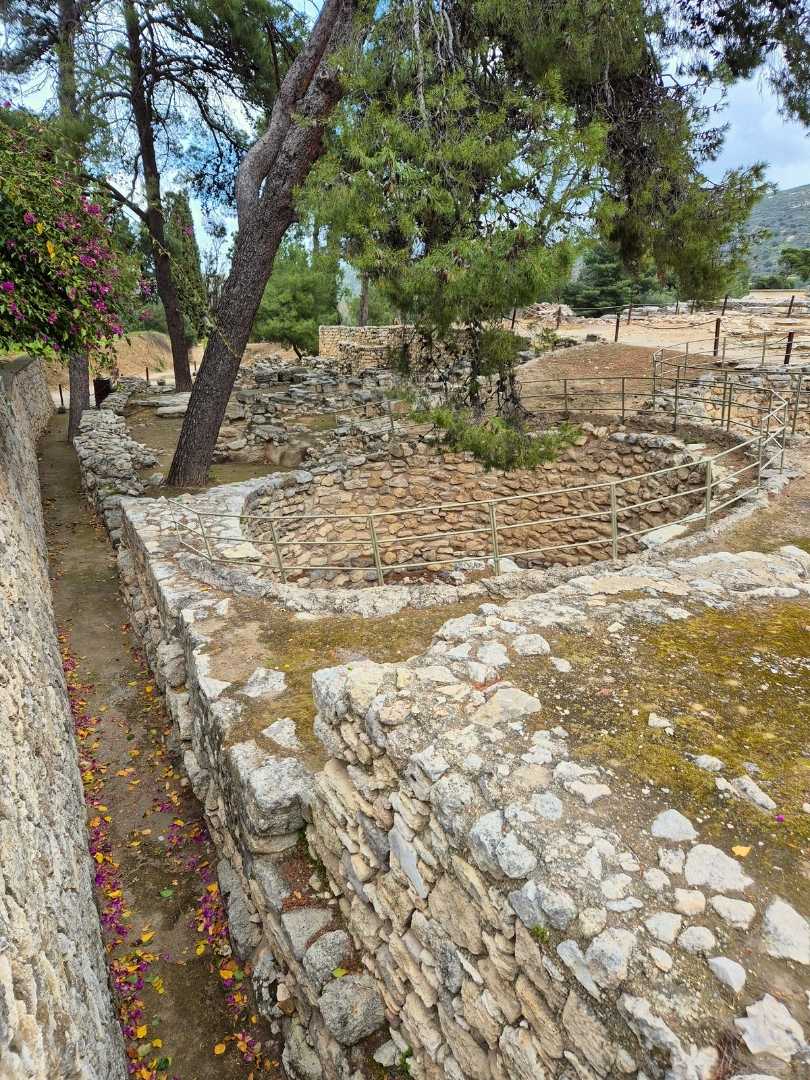
The first thing you’ll encounter after entering the Palace of Knossos is the West Court – one of the main entrances used by visitors thousands of years ago.
This open area was thought to serve as a kind of public forecourt, possibly a market or gathering place where the palace connected with the surrounding city.
Here you’ll also notice 3 large circular pits, up to 3m deep, known as Koulourai. Their purpose is still unclear, but it’s believed they were either cisterns, granaries or possibly even a form of rubbish pit.
From here, you’ll walk down the Corridor of Procession toward the grand southern entrance: the South Propylaeum.
2 | South Propylaeum & Piano Nobile
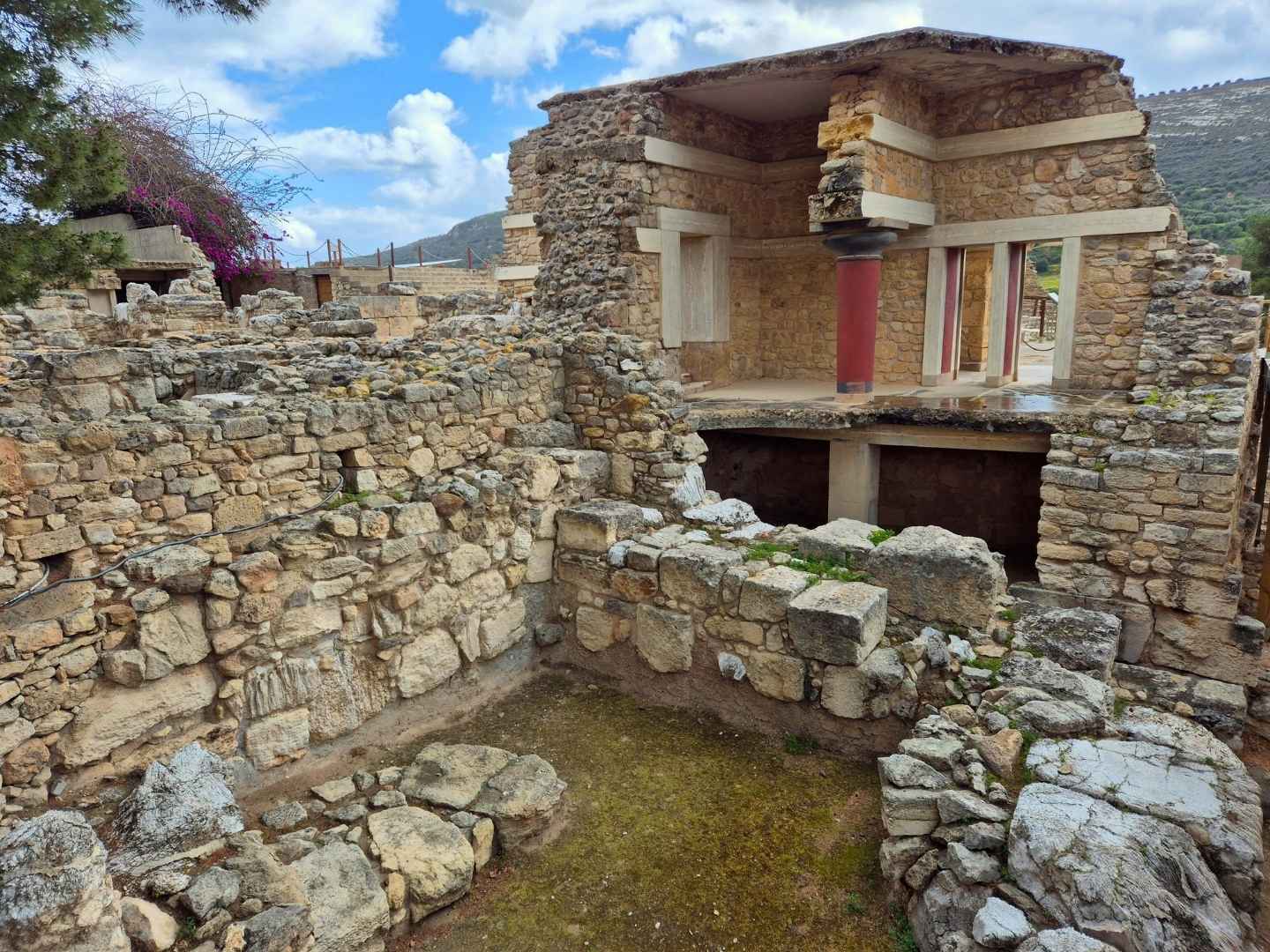
The South Propylaeum served as a grand entrance into the palace. Ancient visitors would have ascended a wide, pillared staircase, entering through this imposing gateway into the Upper Propylaeum.
Arthur Evans, the British archaeologist who first excavated Knossos, partially reconstructed this area and dubbed it the Piano Nobile, named after the reception area of Italian palazzi, believing it to have served a similar purpose.
Though little of it remains today, Evans’ reconstructions help visitors imagine this grand stairway being used for processions and ceremonies.
3 | Central Court
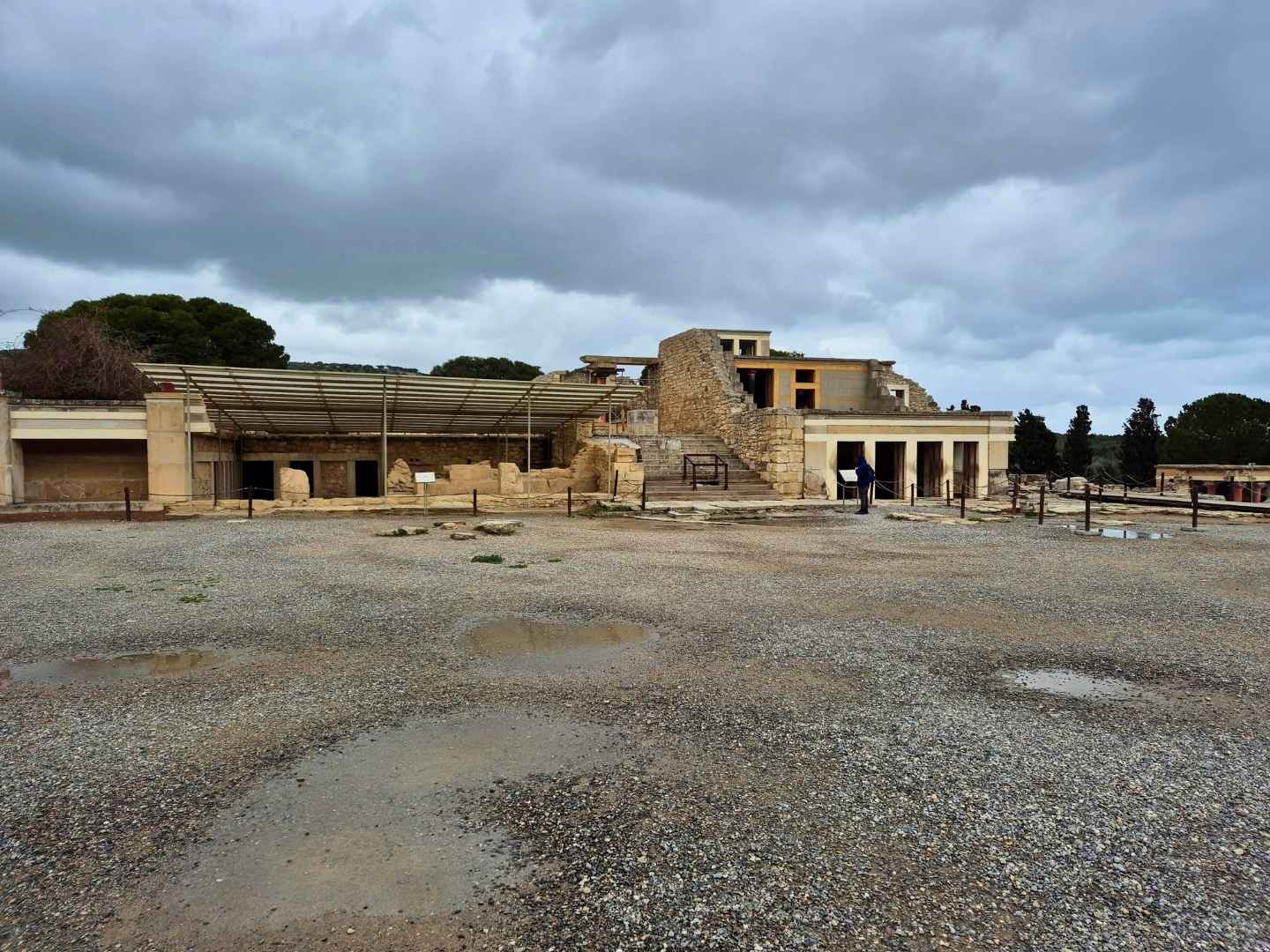
At the very heart of Knossos lies the Central Court, the most important feature of any Minoan palace. Measuring about 50 metres long, this open courtyard was the setting for royal ceremonies, religious festivals, and social gatherings – the beating heart of Minoan cultural and political life.
All of the palace’s key rooms, such as the Throne Room and Royal Apartments, are arranged around this central space. Standing here, aided by Evans’ reconstructions, it’s not hard for visitors to imagine the bustling palace life that once filled this courtyard.
4 | Throne Room
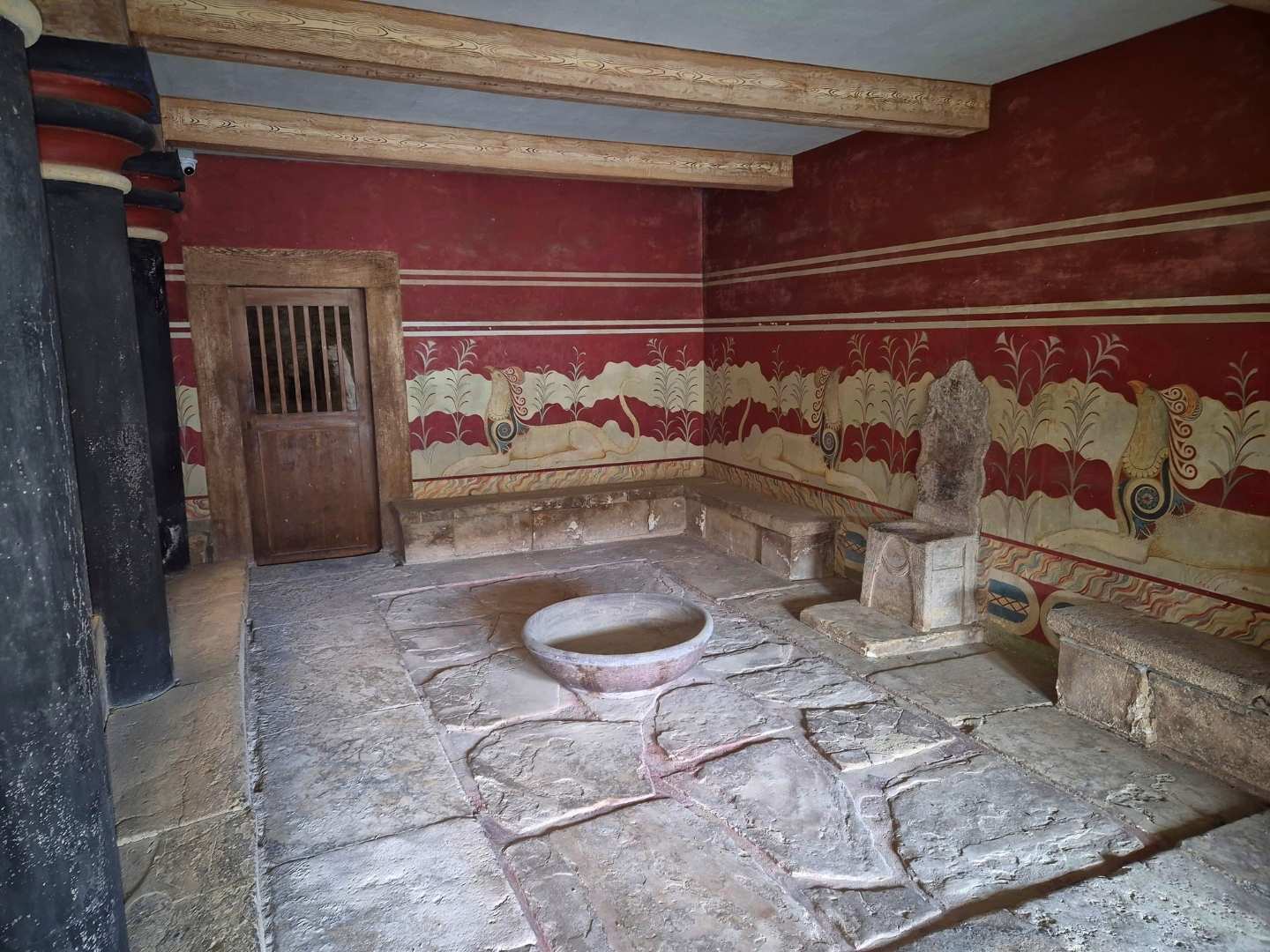
From the Central Court, visitors can peer inside the closed-off Throne Room.
As far as throne rooms go, this one is quite unsuspecting. If it wasn’t for the sign saying otherwise, one might assume this to be any ordinary room. But this small room, adorned with colourful frescoes, was where Minoan rulers, from the stone chair you see today, held court, and is considered the oldest throne in Europe.
The room also contains a basin, which may have been used for ritual purification, and benches along the walls for attendants. Another area completely reconstructed by Evans, the throne room offers a fascinating glimpse into Minoan political life.
5 | Royal Apartments
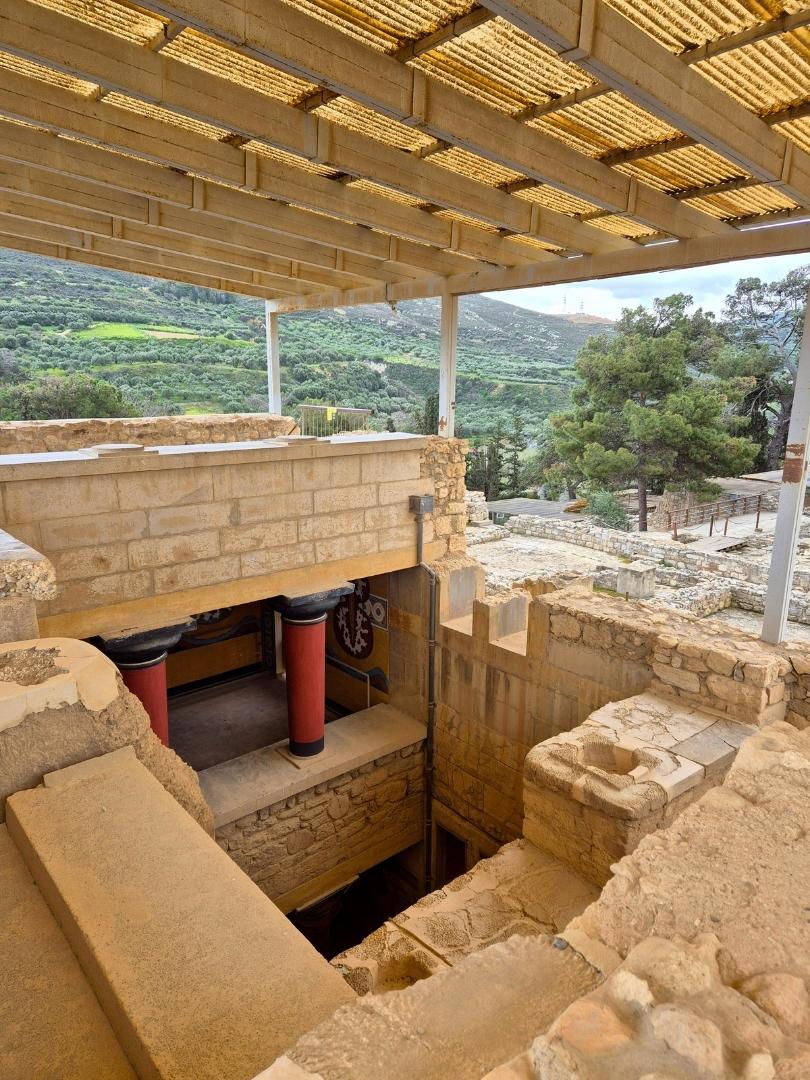
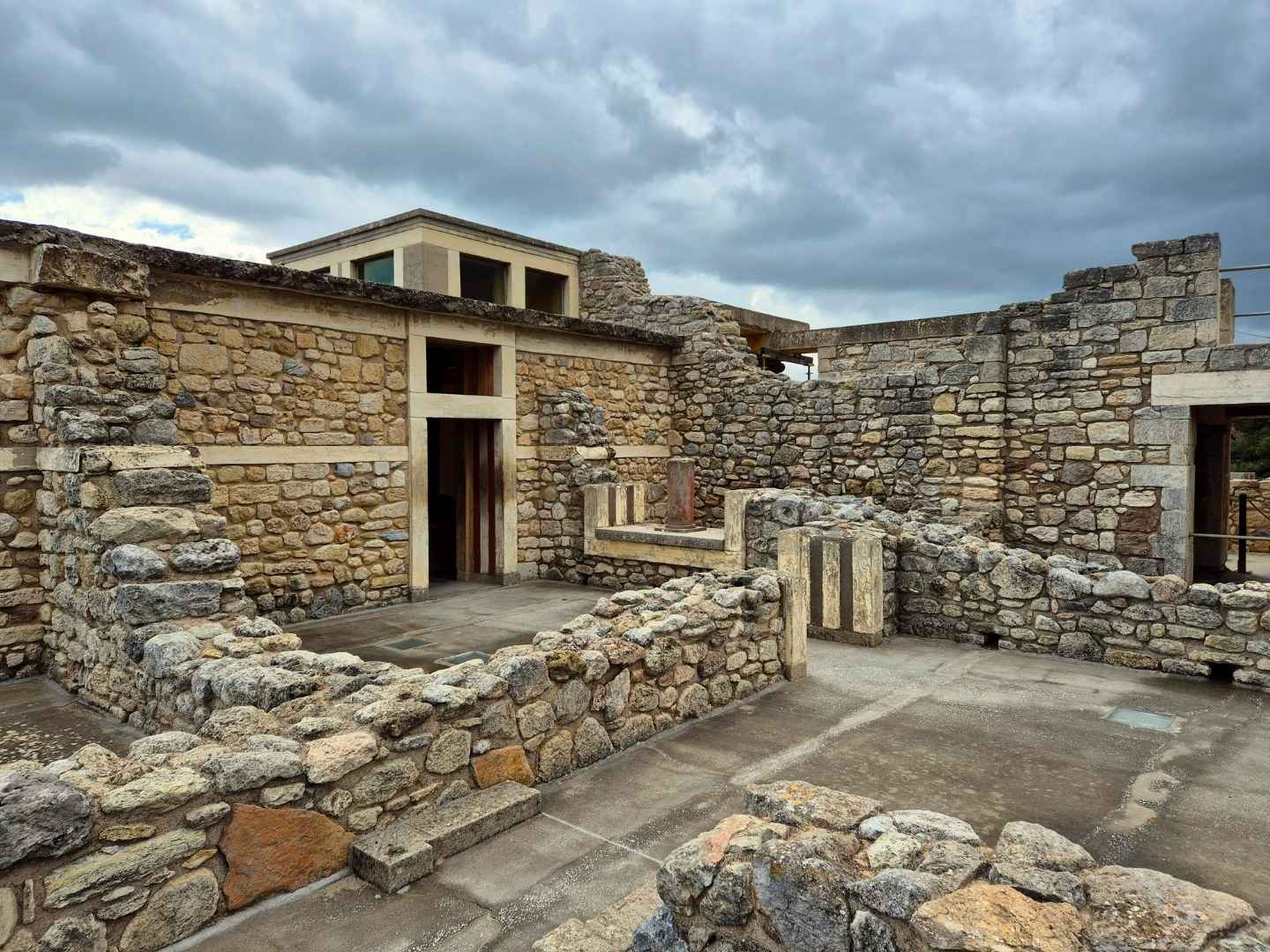
Across the Central Court, directly opposite the Throne Room, are the Royal Apartments, thought to have housed the Minoan royal family. This area contains some of Evan’s most extensive reconstructions.
From the Central Court, visitors can look down into the so-called Queen’s Megaron, decorated with replicas of the famous Dolphin frescoes (the originals being in the Heraklion Archeological Museum), as well as parts of the Hall of Double Axes, possibly a royal audience chamber.
6 | Theatre & Royal Road
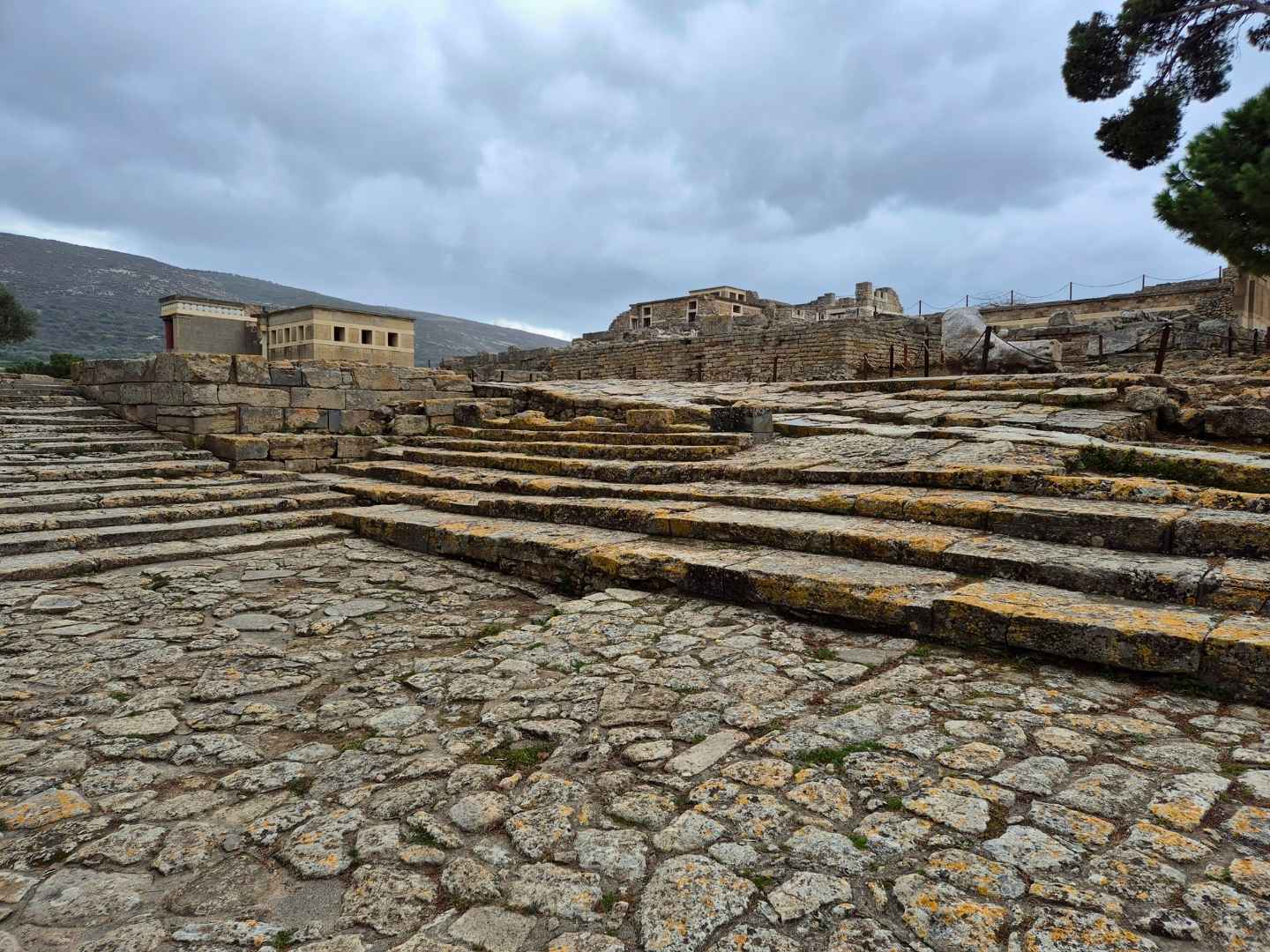
At the north-east edge of the palace lies the Theatre area, your final stop before exiting.
The series of shallow stairs here has led archeologists to believe this area served as a kind of open-air theatre, seating up to 500 people. Its connection to the Royal Road, however, suggests it was more of a ceremonial reception area where royal guests were welcomed to the palace.
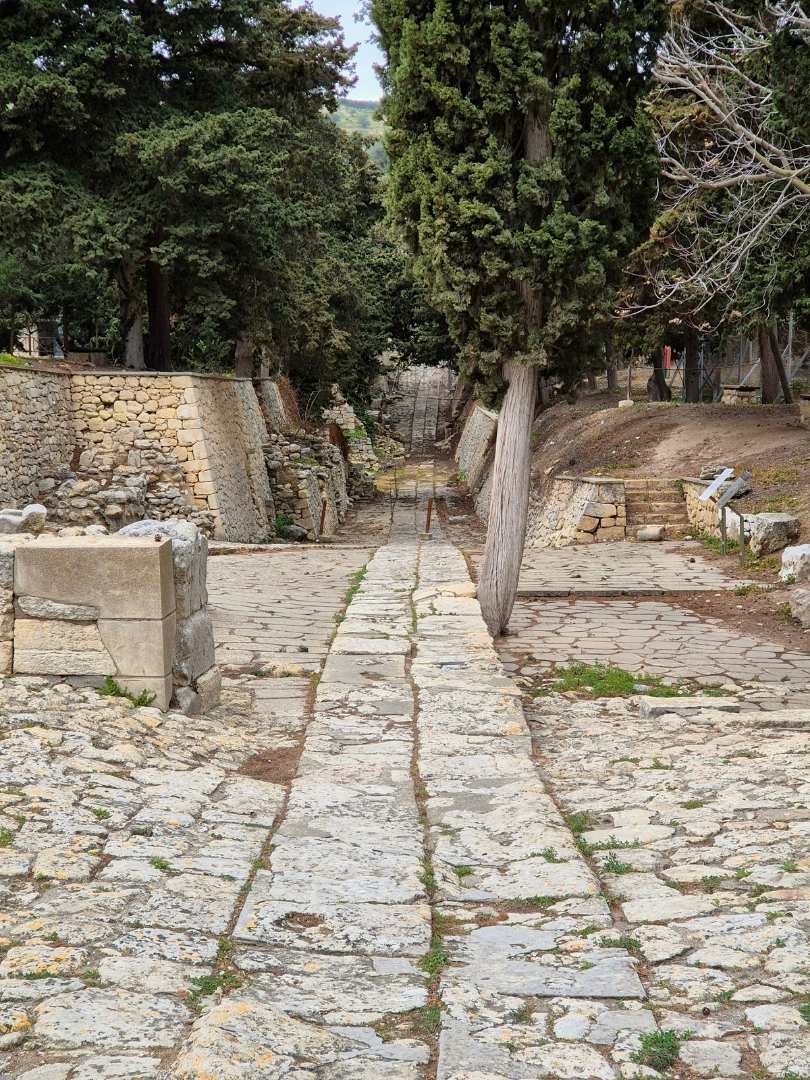
The Royal Road, one of the oldest paved roads in Europe, is the main path leading up to the palace. It once led through the wider city of Knossos, where it was lined with houses and workshops.
Other things to see near the Palace of Knossos
1 | Heraklion Archeological Museum
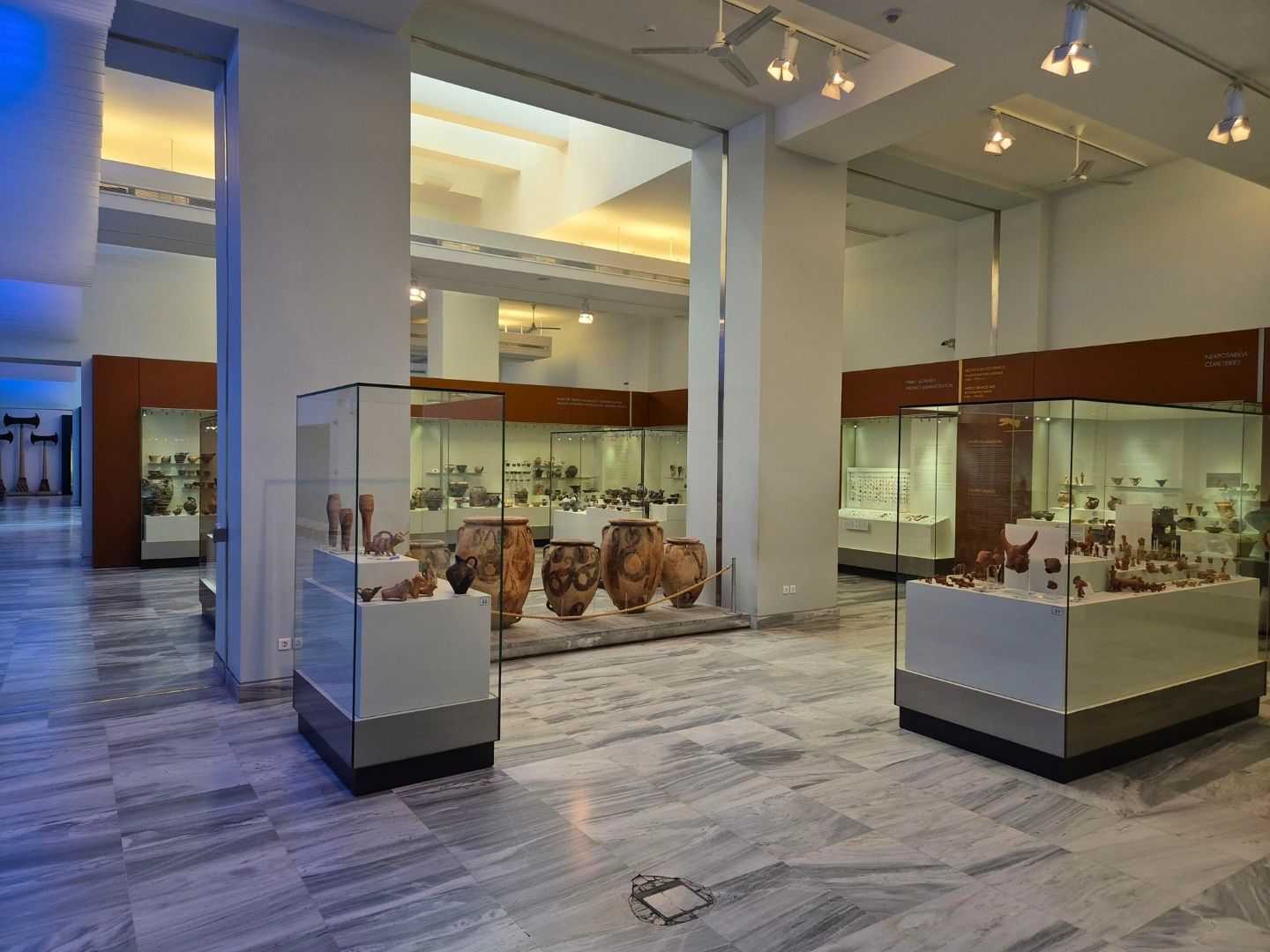
A visit to the Palace of Knossos isn’t complete without also stopping by the Heraklion Archaeological Museum.
This museum is the go-to place for Minoan artefacts, housing the bulk of the artefacts uncovered at Knossos and other Minoan sites across Crete. Inside you’ll find the famous Bull-Leaping Fresco, the Prince of the Lilies Fresco, the Snake Goddess figurines, the Phaistos Disc, as well as pottery, jewelry, tools, and sculptures spanning thousands of years of Cretan history.
Because most of what remains at Knossos today, aside from Arthur Evans’ controversial reconstructions, is little more than the foundations and lower walls, it can sometimes be hard to imagine what the palace once looked like. That’s why visiting the Archaeological Museum first is so valuable. The reconstructions, artifacts, and detailed displays will give you the context to better understand what you’re seeing as you explore the Palace of Knossos.
2 | Phaistos
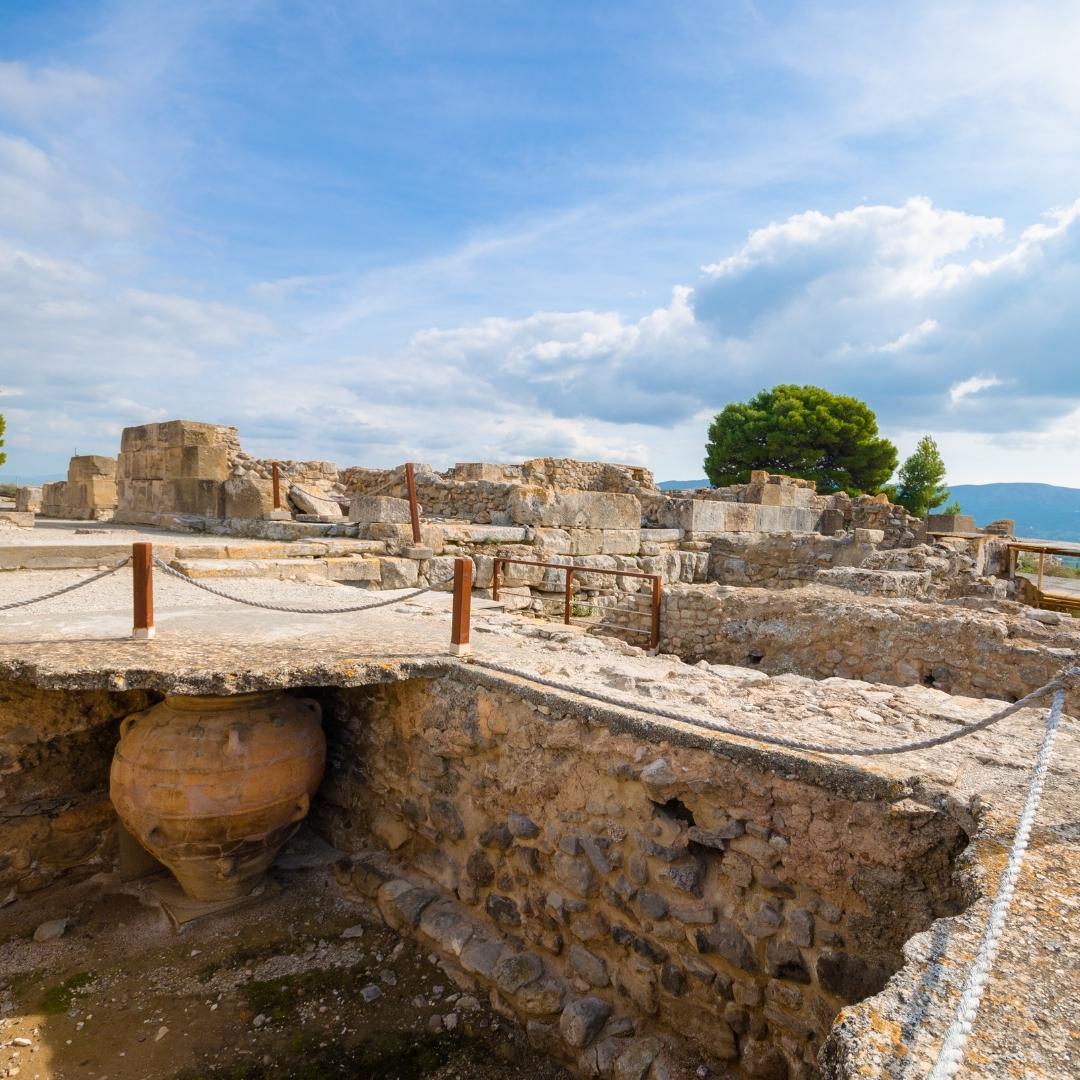
If your visit to Knossos sparks an interest in exploring more Minoan palaces, there are 4 other ‘palatial centres’ across the island that you can visit. The closest one to Knossos is the Palace of Phaistos, located on the Messara Plain in southern Crete.
Phaistos was one of the most important Minoan cities and a powerful rival to Knossos, and similarly had a large palace building.
Unlike Knossos, none of Phaistos has been reconstructed, meaning what you see is original and untampered. This may make it less visually appealing than Knossos, but also more authentic.
Phaistos is typically visited as a day trip from Heraklion, or from the nearby tourist town of Matala.
3 | Malia
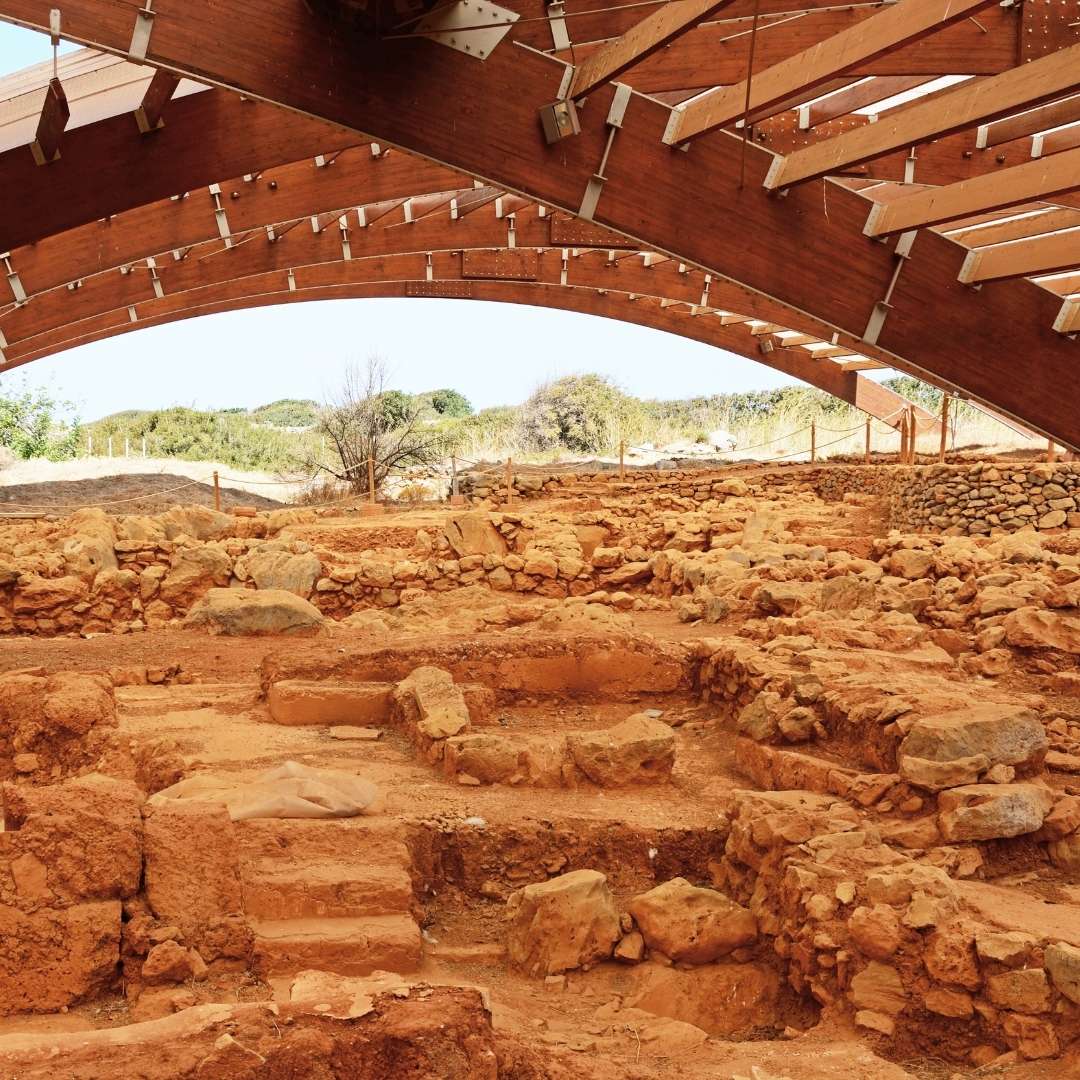
Another nearby Minoan palace you can visit is Malia, east of Heraklion along Crete’s northern coast.
While Knossos and Phaistos comprise only of the palace structure, Malia is unique in that a sizable portion of the surrounding town has also been uncovered. As you explore the remains of houses, workshops and public buildings, you gain a glimpse into the daily life of the Minoan people.
The palace at Malia is an easy stop if you’re heading east along the island towards Agios Nikolaos or Elounda. Alternatively, you can catch a bus to the site from Heraklion.
4 | Koules Fort
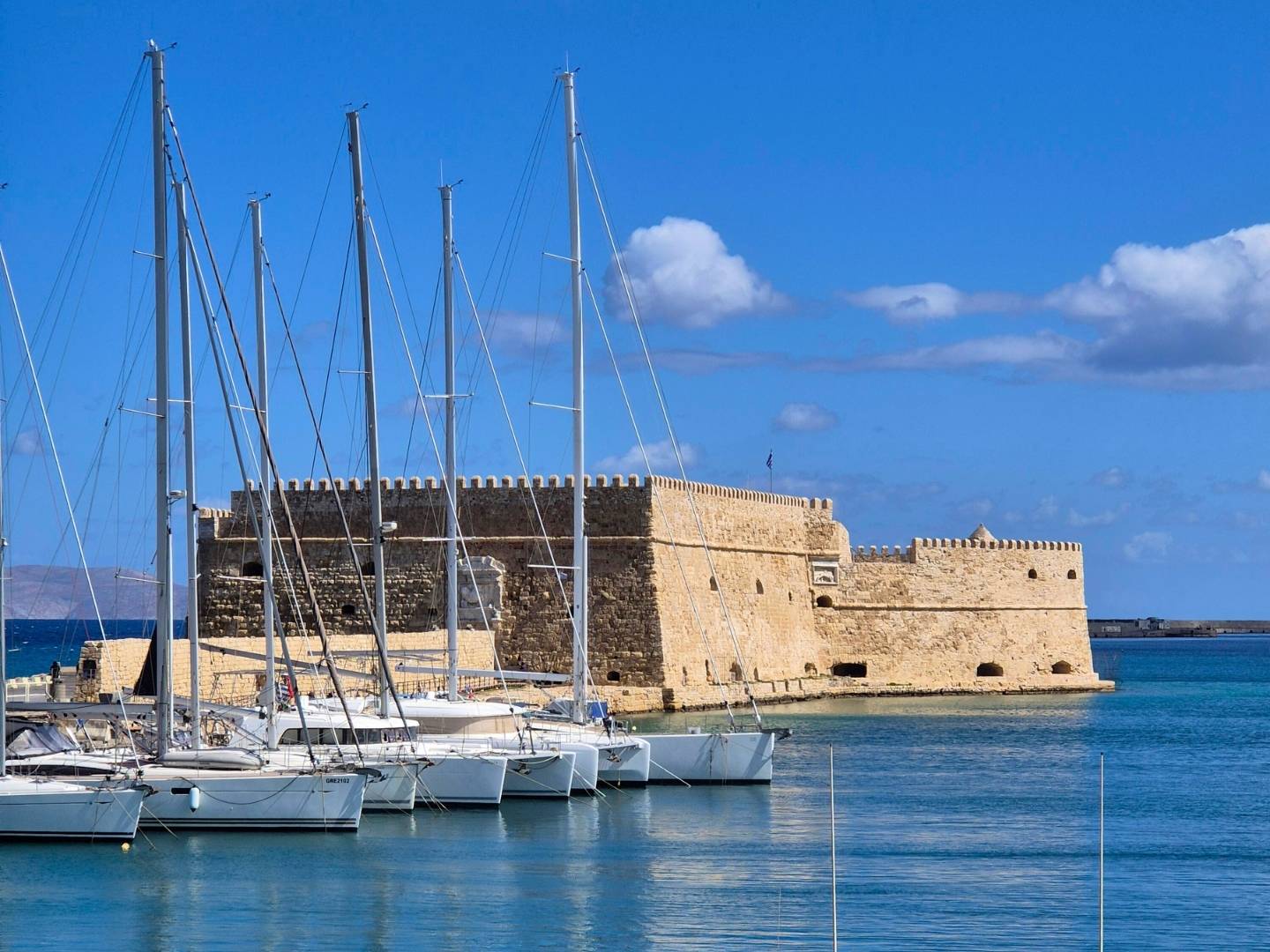
If you’re visiting Crete, you’ll no doubt spend some time in Heraklion. The island’s largest city was a Venetian settlement for centuries, and today has plenty of great historical sites to explore.
One such sight is Koules Fort (also known as Rocca a Mare), a 16th century Venetian sea fort that guards the entrance to Heraklion’s old harbour.
Kouless Fort is easy to reach as you’re exploring downtown Heraklion, and for a small fee you can explore its interior, see exhibits on maritime history, and climb up to the battlements for a great view of the harbour.
5 | Venetian Walls
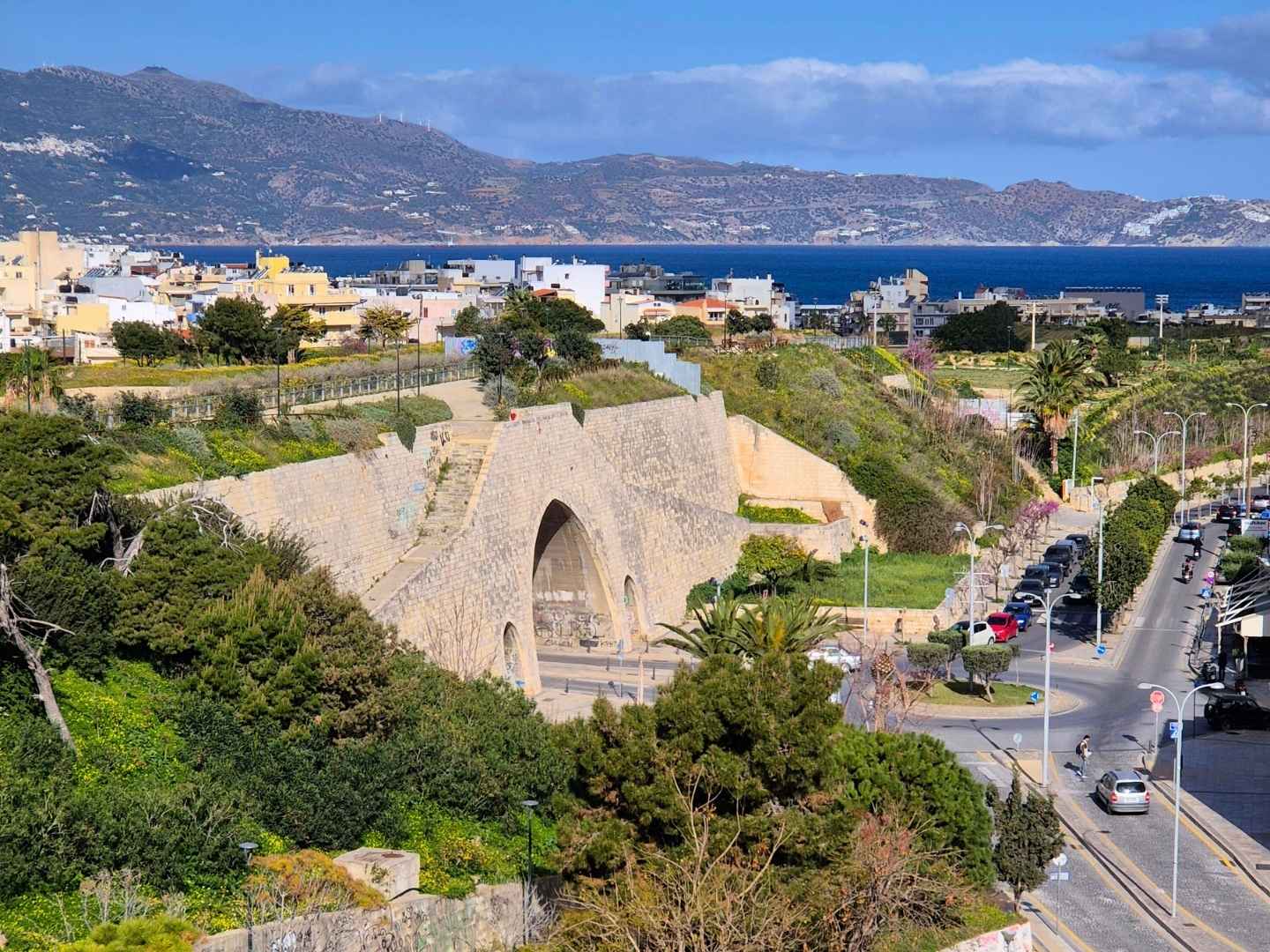
The Venetians also encircled Heraklion with massive star-shaped fortifications, making it one of the strongest fortified cities in the Mediterranean during the middle ages. Much of the Venetian Walls still remain today, and are another popular historical attraction you can visit in Heraklion.
Many areas of the old walls have been turned into public spaces, with parks and walking paths on top. The southern section of the wall, near the Nikos Kazantzakis Memorial (dedicated to Crete’s most famous writer), is one of the best stretches to stroll along the fortifications.
Palace of Knossos FAQs
Is the Palace of Knossos worth visiting?
The Palace of Knossos is not only the most important of the Minoan sites in Crete, but also the island’s most popular historical attraction. Widely regarded as Europe’s first city, it was the political & cultural epicentre of the continent’s first civilization, and the inspiration behind famous Greek myths such as Theseus & the Minotaur.
So yes, the Palace of Knossos is absolutely worth visiting.
Can you visit the Palace of Knossos without a guide?
There are plenty of signs throughout the site that explain what you’re looking at, so it’s not necessary to have a guide when visiting Knossos. However, having a knowledgeable tour guide can enhance the experience, providing context & insight, and help bring the ancient palace to life.
You can check out the best Palace of Knossos tours on Get Your Guide.
Are there toilet facilities at the Palace of Knossos?
Yes, there are restrooms near the entrance/exit, but none within the ruins themselves.
Is there food or drink available at the Palace of Knossos?
There’s a small café and kiosk near the entrance/exit, as well as some small cafes & restaurants across the road. However, these may be closed during the off-season (November to April).
Is the Palace of Knossos wheelchair/stroller accessible?
Much of the site has uneven ground, steps, and narrow passageways, making accessibility limited. The central court area is more manageable, but full access will be challenging for those with mobility issues or strollers/prams.
Best Palace of Knossos Tours
I’ve done the research so you don’t have to. Here are the top Palace of Knossos tours depending on what you’re looking for…
⭐ Palace of Knossos Self-Guided Audio Tour
⭐ Palace of Knossos + Heraklion Old Town & Heraklion Archaelogical Museum
⭐ Palace of Knossos + Cave of Zeus, Vidiani Monastery, Olive Mill Farm & more
Further reading on Greece
⬤ If you want to explore more Minoan palaces in Crete, check out: Complete Guide to the Minoan Palaces in Crete.
⬤ After the fall of the Palace of Knossos, the centre of power in Greece moved to Mycenae. You can visit this site too: Ancient Mycenae – Complete Guide to the Archaeological Site.
⬤ For more travel guides, visit my Destinations page.
Disclosure: This post may contain affiliate links.