Greece is full of ruins from antiquity, but there are a few places you can visit that are even older. One such site is the citadel of Mycenae, a centre of power in the late Bronze Age that had a major influence over the Aegean.
Mycenae has been renowned for millennia, immortalised by Homer in his Iliad and Odyssey as the home of King Agamemnon, leader of the Greek forces in the legendary Trojan War.
Today, you can visit the remains of the ancient citadel of Mycenae and check out some of the most impressive bronze age structures in Greece, such as the Lion Gate and the Treasury of Atreus.
In this guide, you’ll find everything you need to plan a visit to the Mycenae Archaeological Site – including how to get there, what to see and other historical sites to visit in the area.
Best Mycenae Tours
I’ve done the research so you don’t have to. The top Mycenae tours are day trips from Athens that also include the historical town of Nafplio and the ancient theatre at Epidaurus. There are many to choose from, but I can say from experience that the following is great value for money…
Contents
Brief History of Mycenae
The Mycenaeans are among the oldest civilisations in Europe, and the first major civilization on the European mainland.
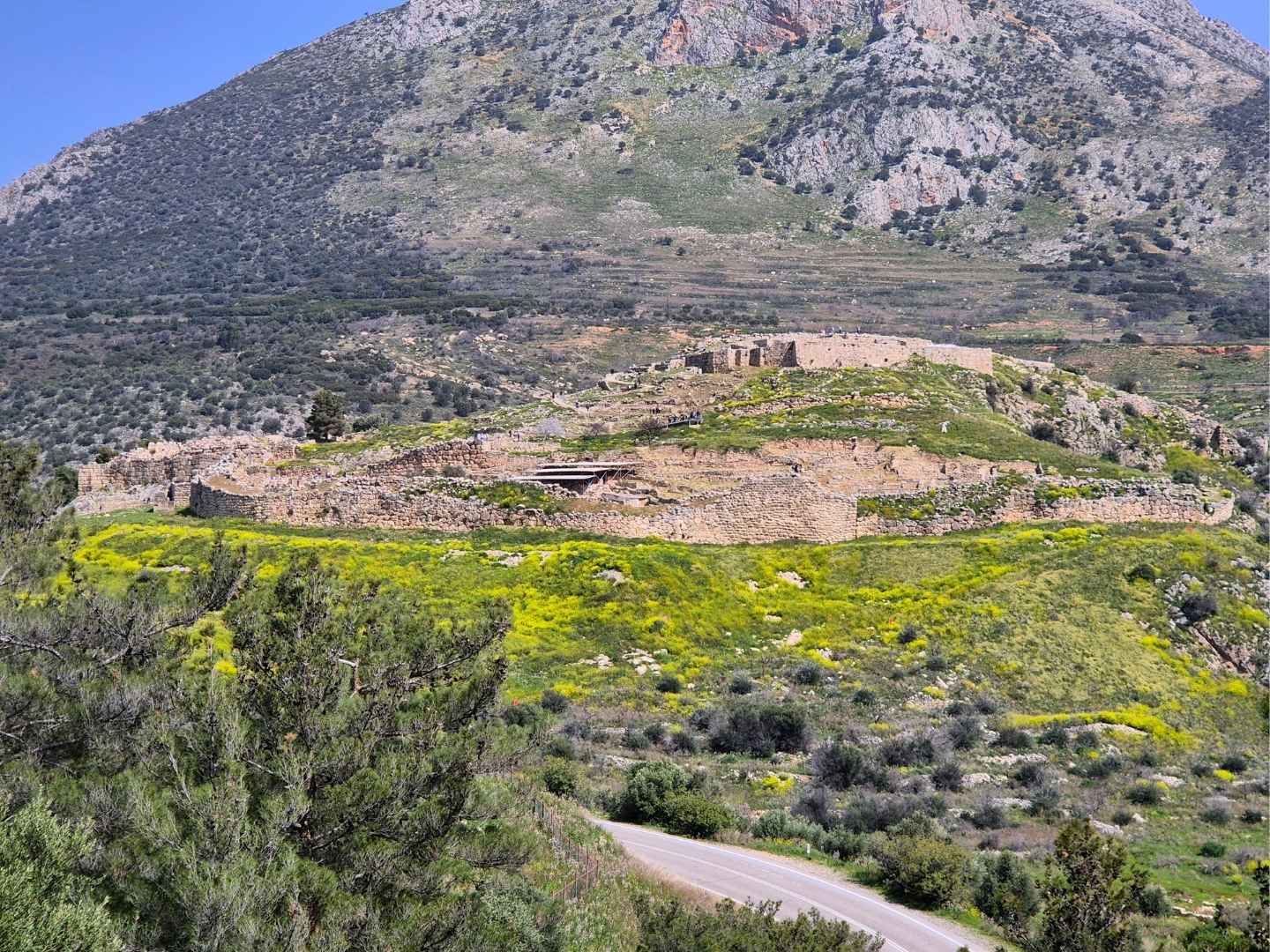
The citadel at Mycenae is located in what Homer called “a nook in Argos” – and it’s easy to see why. Perched on a hilltop, the site is naturally fortified, surrounded on three sides by ravines and jagged hills, with only a single approach from the west. Its location was not only defensible but also strategic, situated by the coast and near enough to the Isthmus of Corinth to control the main land route to and from the Peloponnese.
In other words, Mycenae was in a prime position to succeed.
A settlement at Mycenae likely existed for centuries, but it rose to prominence after the fall of the Minoan Civilization in Crete. Many historians even believe that the Mycenaeans may have invaded the island and were responsible for the destruction of the Palace of Knossos.
Thus began Mycenae’s reign as the hegemon over the emerging Greek city states, which lasted for around 250 years. During this time the palace and citadel were built, and the surrounding township may have grown to as many as 30,000 people.
Mycenae’s influence spread across the Aegean and beyond, with settlements reaching Cyprus and Mycenaean goods being discovered as far away as Egypt and Syria.
The Mycenaean culture left a lasting impact on the rest of Greece, and many of the attributes of classical Greek culture can be traced back to it, including the earliest forms of Greek language (Linear B script).
While the site was only excavated from the 19th century, Mycenae has been renowned for millenia thanks to the works of Homer, who featured it in his Iliad and Odyssey.
In the Iliad, Mycenae plays a key role in the legend of Troy, in which Homer describes Mycenae as the ‘golden’ and ‘broad-streeted’ political centre of Greece, and whose King Agamemnon led an invasion force to sack Troy.
Despite its victory against Troy, Mycenae’s dominance over Greece would soon come to an end, along with many civilisations, during the Bronze Age Collapse. The exact cause is unknown, although a Dorian invasion is the leading theory.
While its time as hegemon ended, Mycenae survived as a city state well into classical Greece. Mycenaean soldiers even fought at the famed Battle of Thermopylae in 480 BCE, alongside the ‘300’ Spartans. However, during these Persian Wars, the nearby city-state of Argos invaded Mycenae, burning it to the ground.
The citadel briefly reoccupied again during the Hellenistic era, but by the time the Greek traveler Pausanias visited the site in 160 CE it was all but ruins. Along with nearby Tyrrins, Mycenae Archaeological Site became a UNESCO World Heritage Site in 1999.
Things to see at Mycenae
1 | Lion Gate
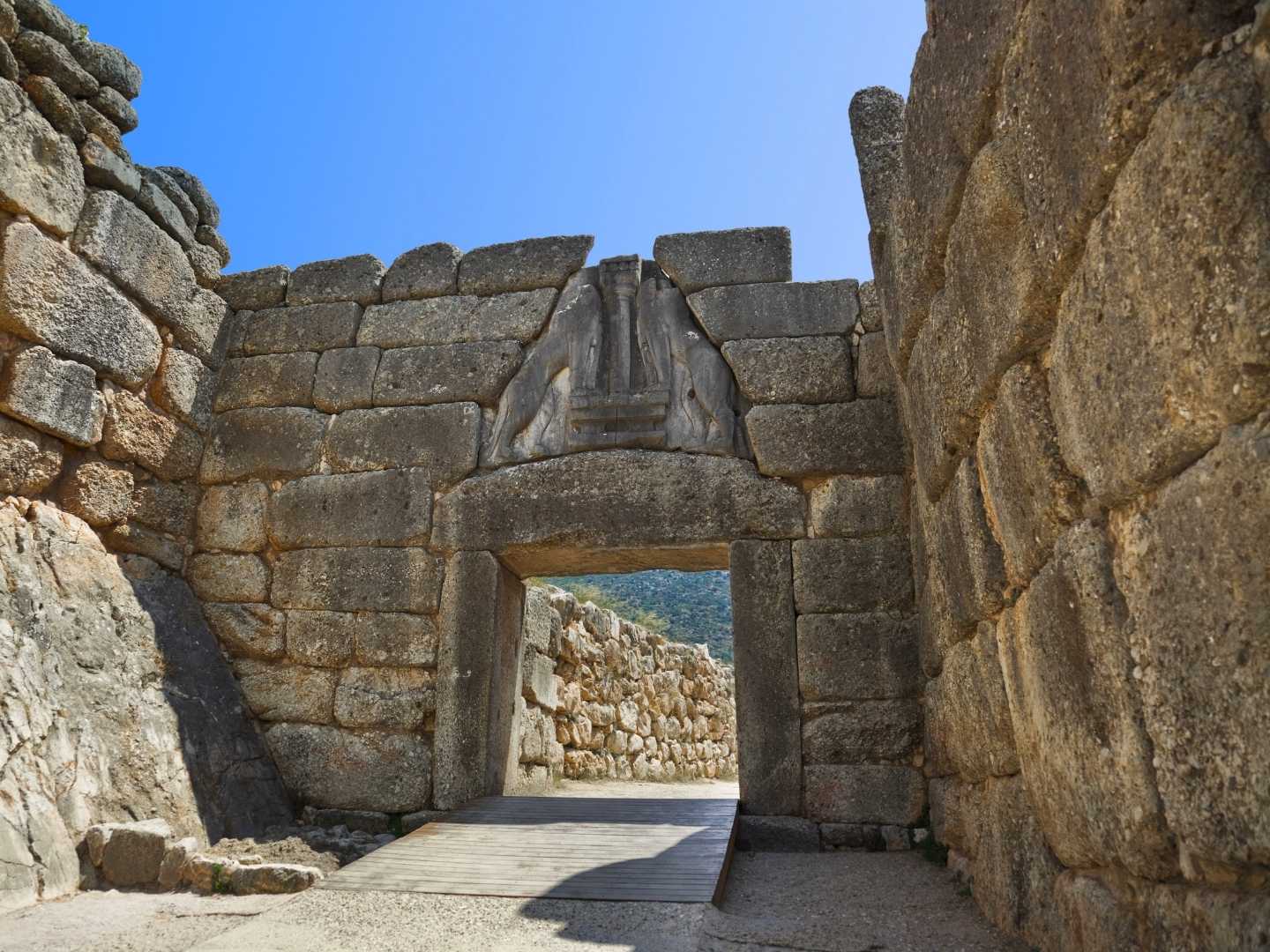
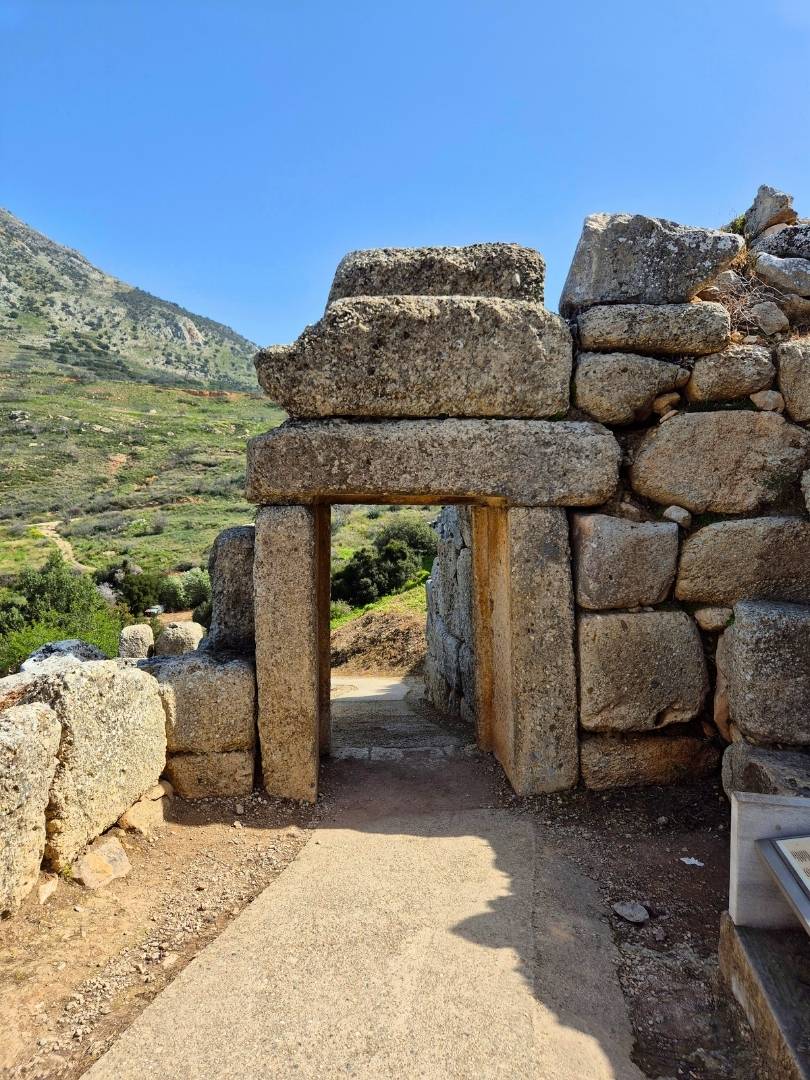
Perhaps the most iconic structure at the Mycenae Archaeological Site is the Lion Gate, the main entrance to the citadel and one of the first structures you’ll come across when you arrive. It takes its name from the 2 lions carved into the stone above the gate – created at a time when lions still roamed wild in Greece.
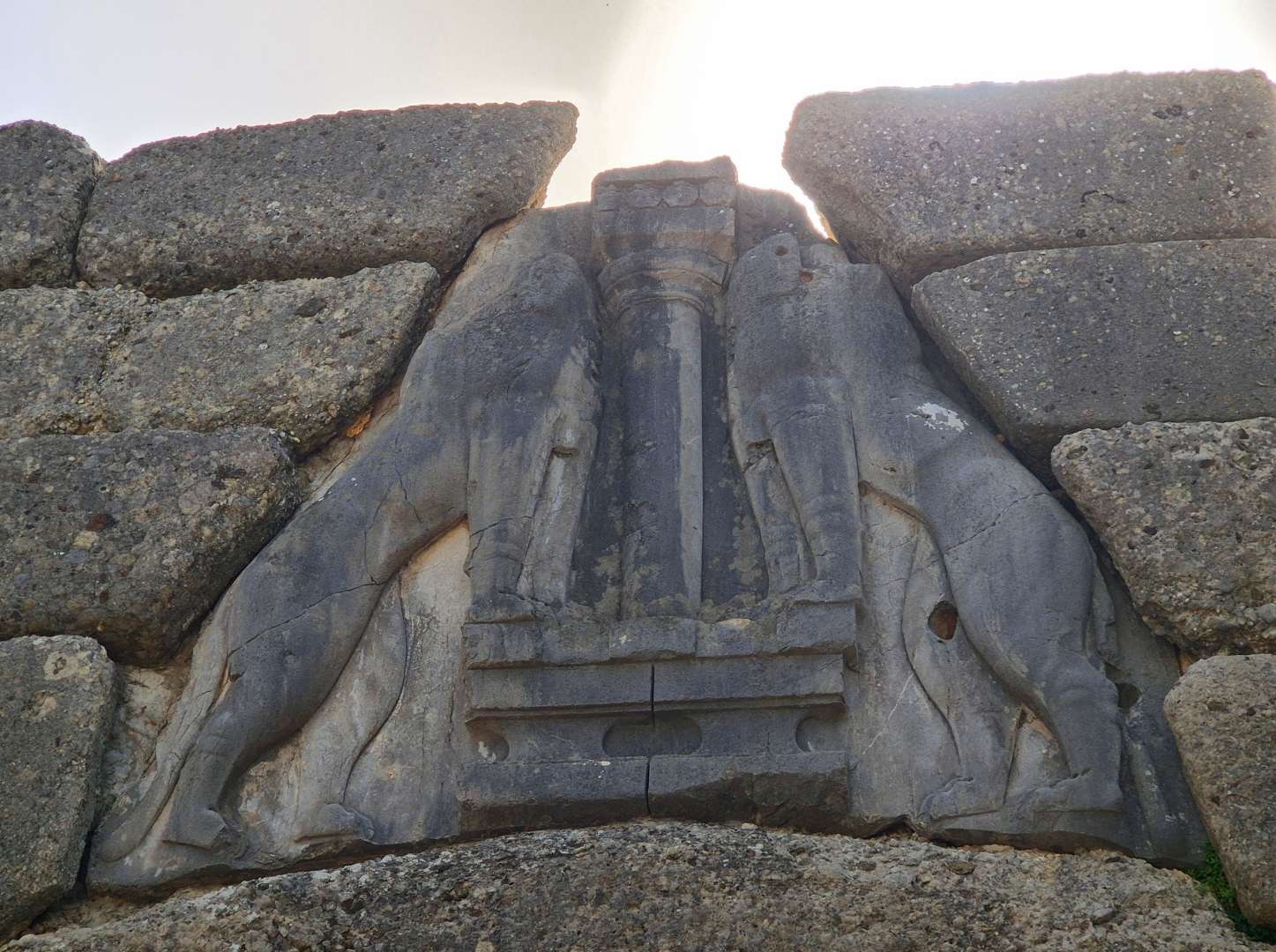
What makes the Lion Gate special is its preservation. While much of Mycenae is little more than ruins, the gate stands largely as it did 3,400 years ago, and the lion relief remains the largest surviving sculpture from the Greek Bronze Age.
2 | Treasury of Atreus
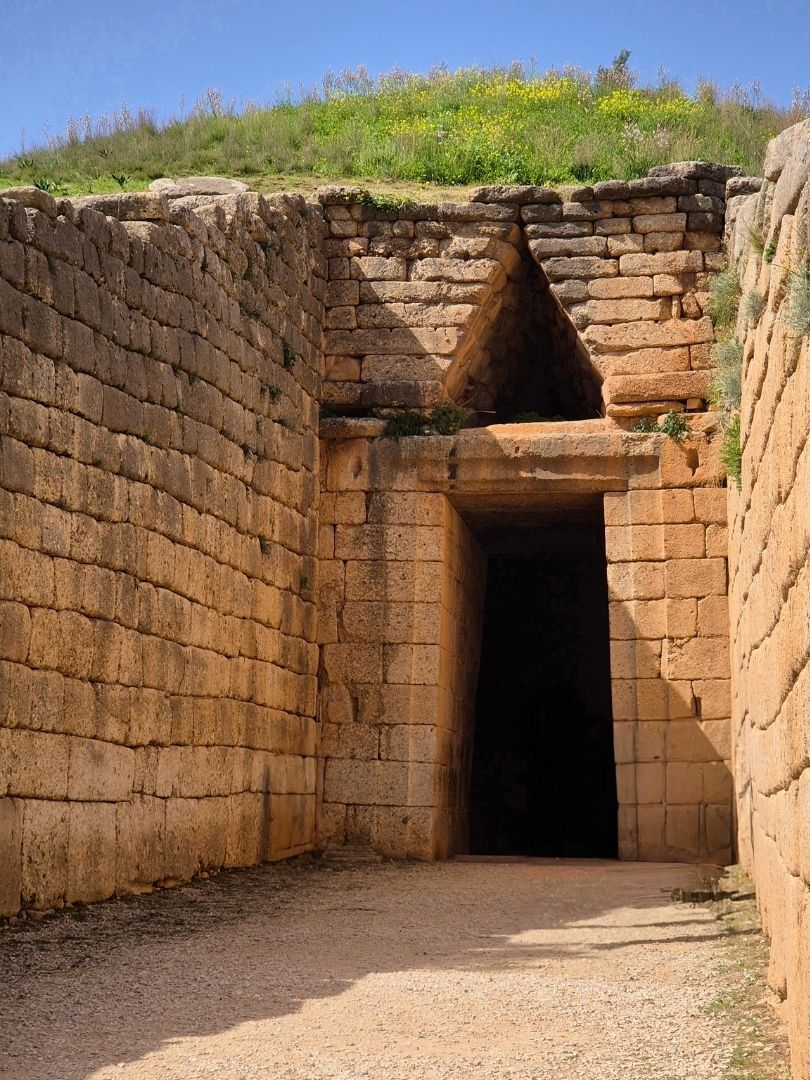
Just outside the citadel, along the road leading up to the main site, lies the largest and best preserved example of a Greek tholos tomb.
Originally, the Mycenaeans buried their rulers in ‘shaft’ tombs, like those found in the Grave Circles (more on them below). But as their power grew, so too did their burial techniques, and they began constructing large beehive-shaped chambers as the final resting places of their kings.
The Treasury of Atreus is the largest known tholos tomb, and was the largest dome in the world before Roman times.
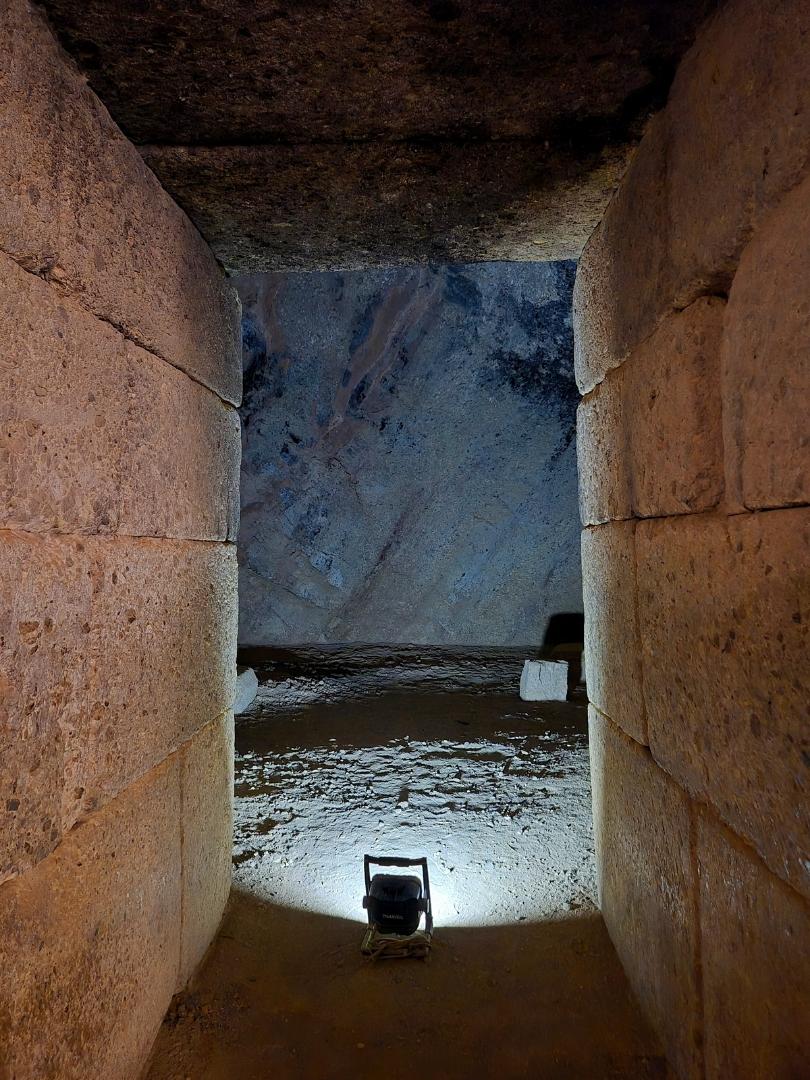
Despite its name, it is neither a treasury nor has any relation to Atreus (a mythological Greek figure). It’s also often referred to as the Tomb of Agamemnon, but, while it was no doubt made for a king, there’s no evidence that Mycenae’s most famous ruler was ever buried here.
The tomb consists of a long entrance way, once cased in marble, which leads into the large, 13m-high central chamber. There’s also a smaller adjacent chamber, but this is closed off to visitors.
3 | The Cyclopean Walls
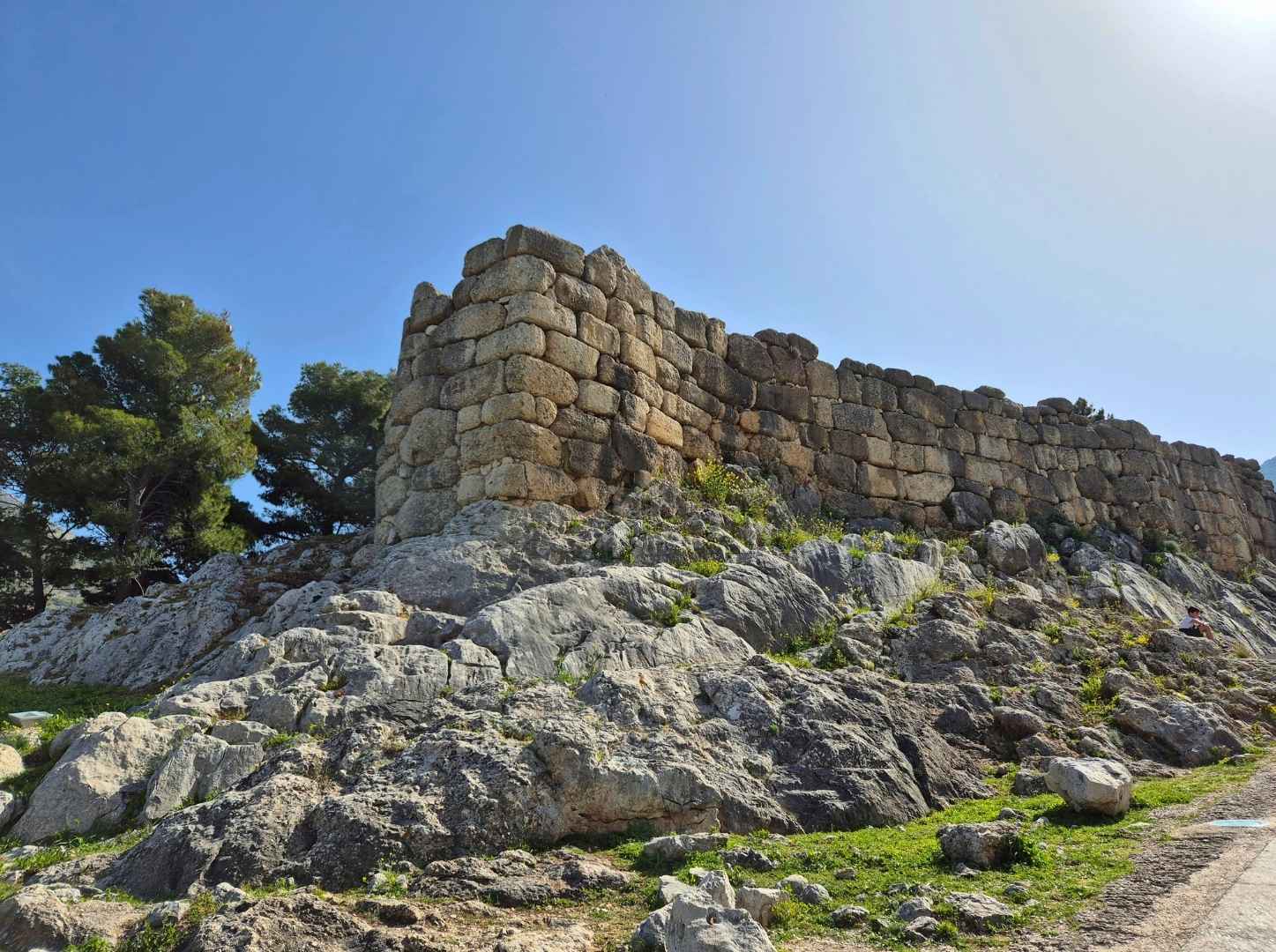
One of Mycenae’s most defining features is its walls, some of which still stand today, albeit a bit dilapidated.
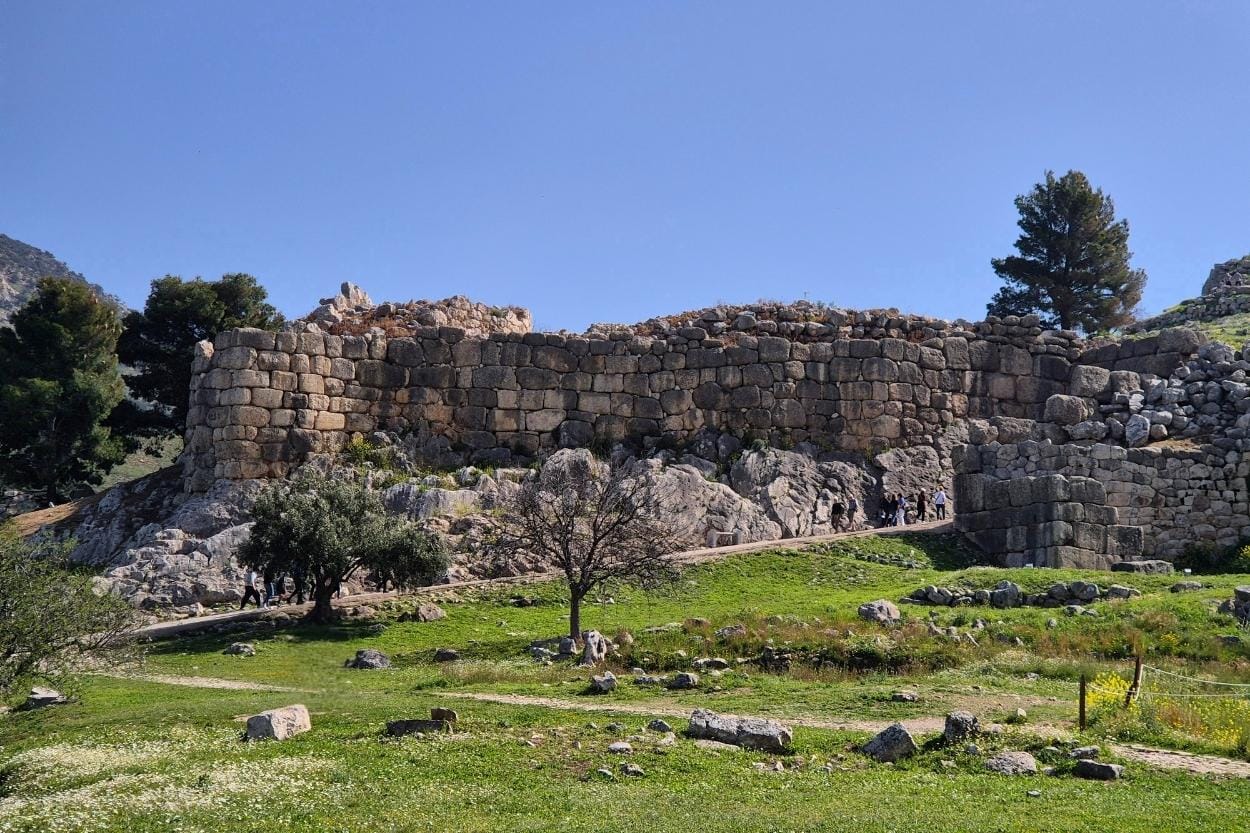
The walls of Mycenae were constructed using a unique form of masonry in which massive limestone boulders, of varying sizes, are perfectly fitted together without mortar – not so different to the famous Incan walls of Cusco.
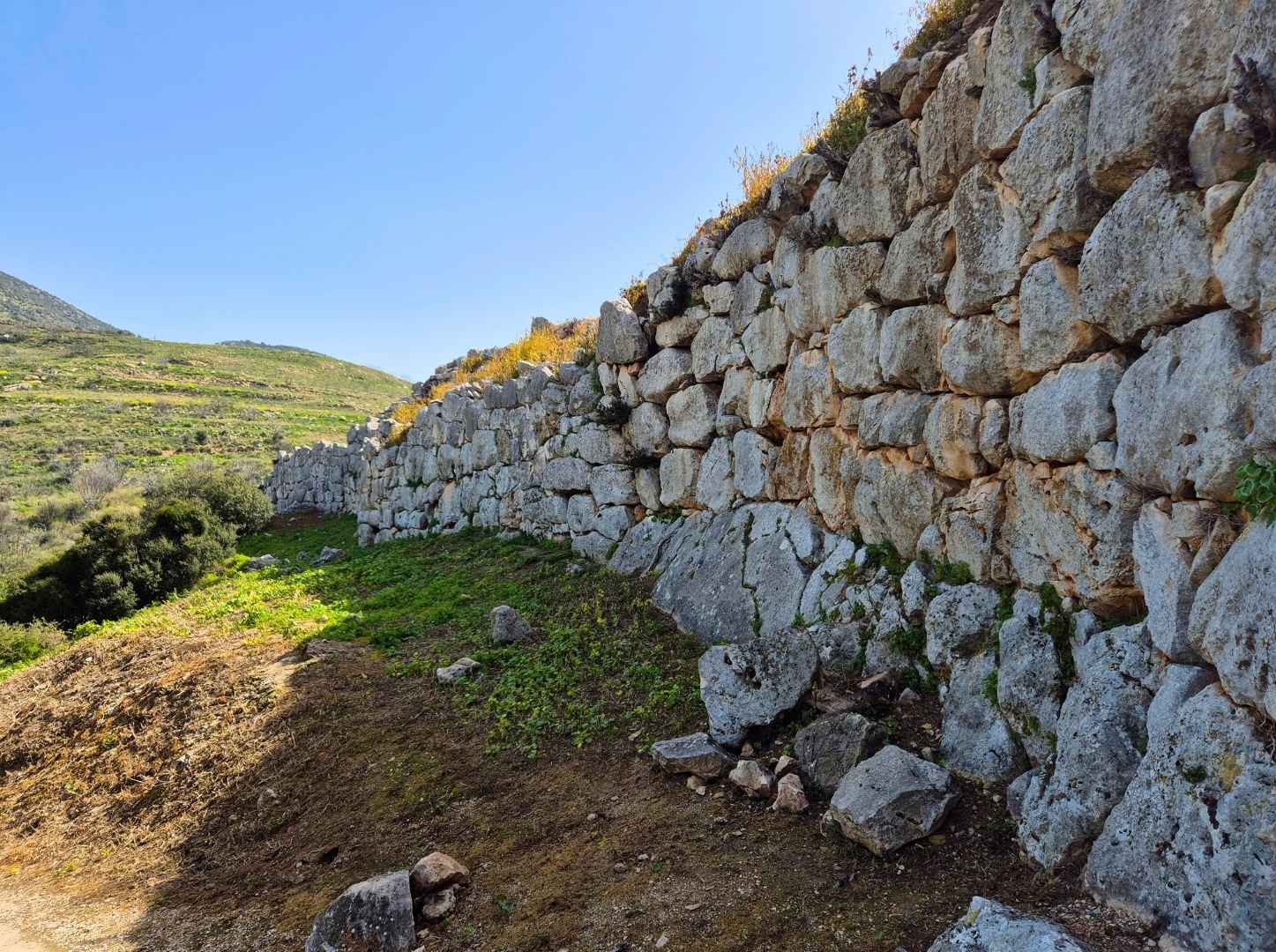
The size of the boulders, and the impressive precision in which they were placed, led later generations to believe they must have been the works of the Cyclopes, mythical one-eyed giants.
In the words of 2nd century explorer Pausanias:
“There still remain, however, parts of the city wall [of Mycenae]…These, too, are said to be the work of the Cyclopes”
Even today, it’s hard to believe that such large stones could be placed so precisely using the technology available 3,400 years ago.
4 | The Grave Circles
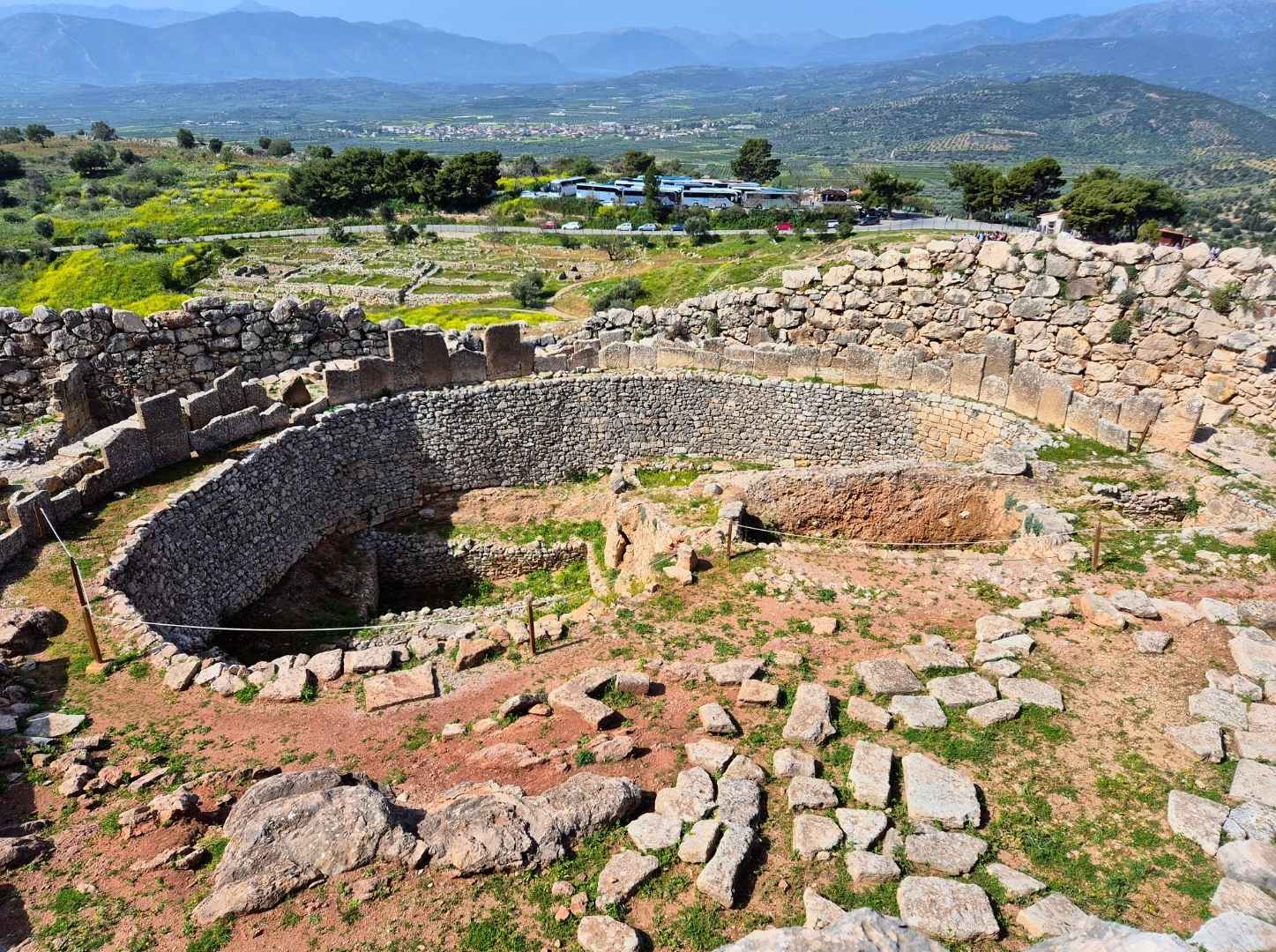
Before the Mycenaeans began building tholos tombs, they buried their rulers in grave circles.
These grave circles were circular-shaped cemeteries containing several ‘shaft’ tombs, some as deep as 4 metres. In these shafts they would bury their royalty, along with valuables such as masks, jewellery and weapons.
Mycenae Archaeological Site has two grave circles, but the larger and more significant is Grave Circle A, located within the citadel walls near the Lion Gate. It was in this grave circle that many of Mycenae’s most important artefacts were uncovered, like the funerary Mask of Agamemnon.
5 | The Palace
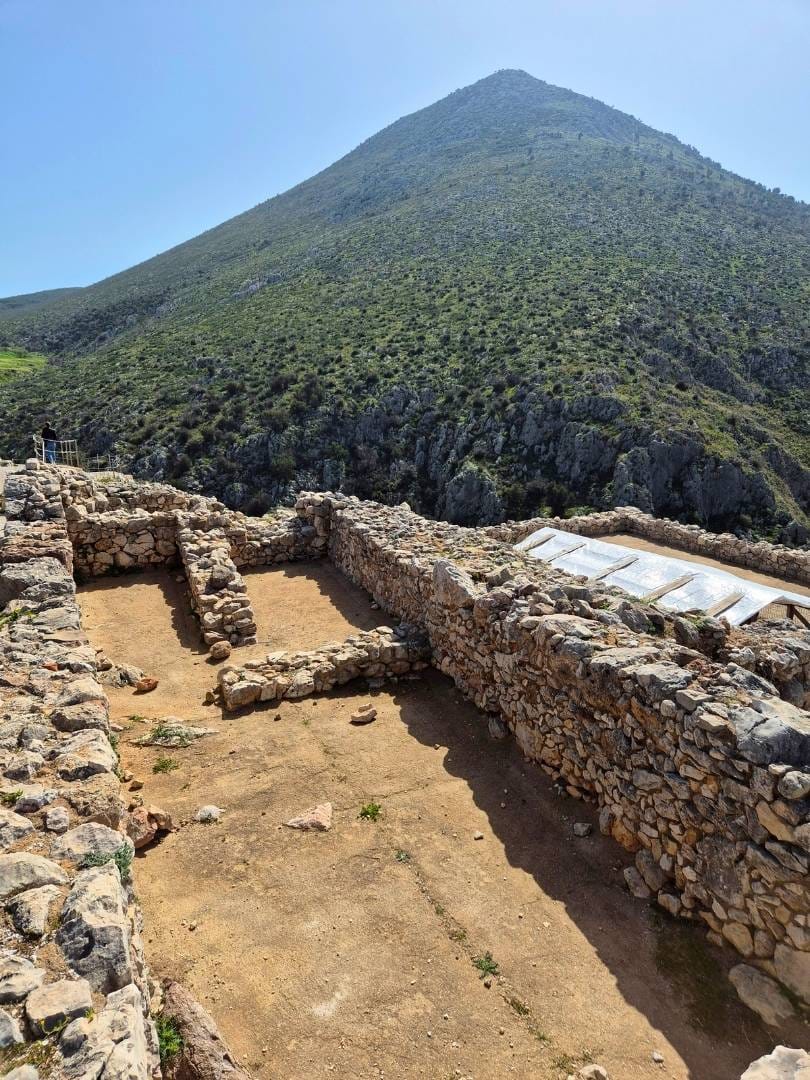
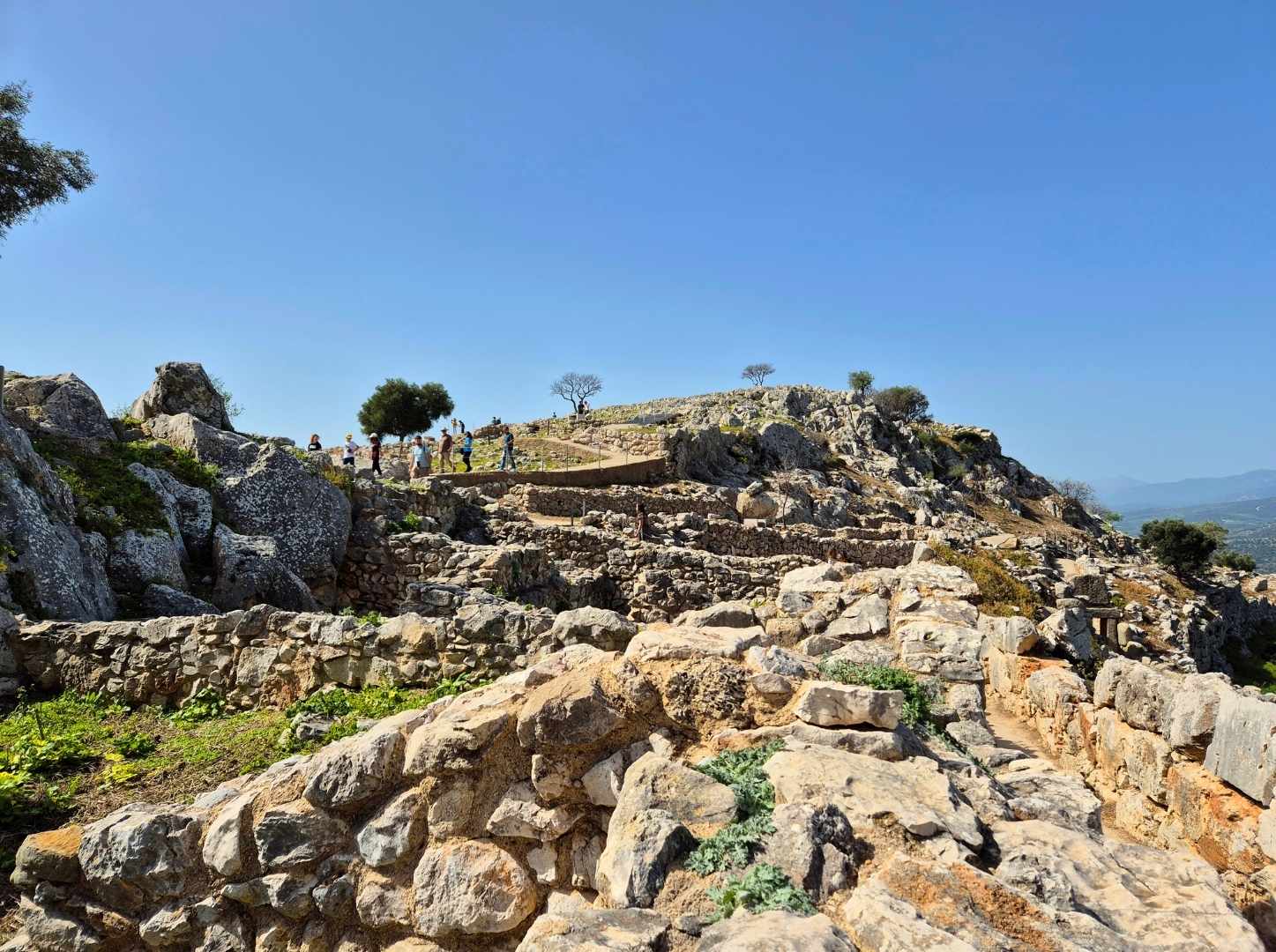
After passing through Lion Gate, and by Grave Circle A, visitors to the ancient citadel follow the road up to the summit of the hill where they would reach the royal palace – the political and military centre of Greece at that time.
Mycenae’s palace was a typical Bronze Age Greek palace, not so dissimilar to Minoan palaces. It comprised various residential, storage and administrative rooms centred around a ‘megaron’, a large central wall where the king would hold court and ceremonies.
Although little remains of the palace today, visitors can still explore the foundations of it and get a sense of the layout.
6 | The Cistern
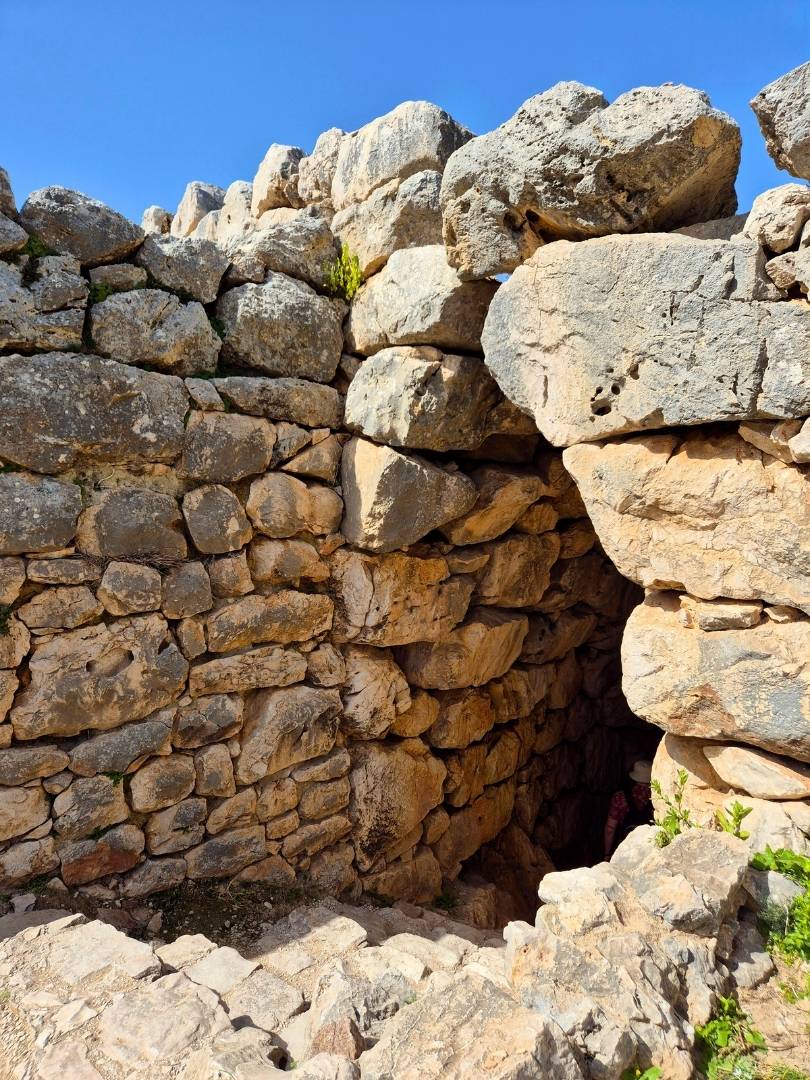
The Mycenae citadel has another unique architectural feature that’s often overlooked: its water system.
Like any settlement, Mycenae relied on a nearby water source – in this case being a natural spring beyond the city walls. What makes Mycenae unique is how the water was stored once it reached the city.
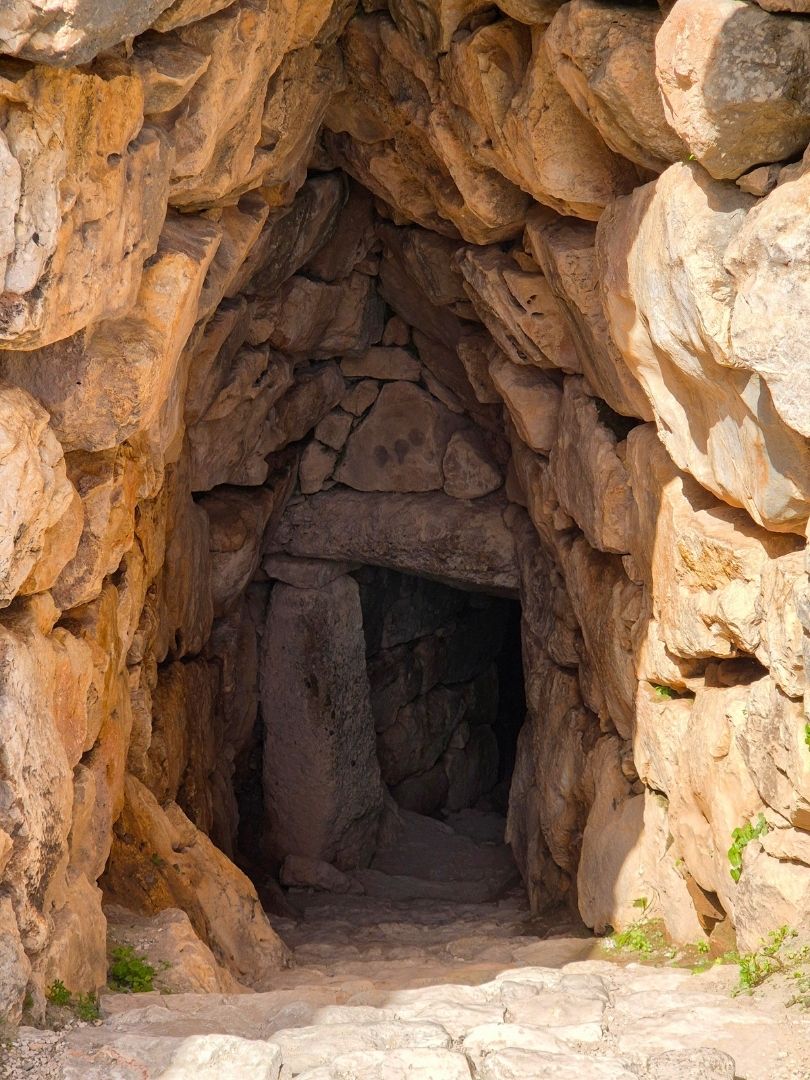
Rather than storing using an open tank or well outside the city walls, the Mycenaeans built a subterranean reservoir within the city walls. This way, if the city ever faced a siege, they could continue to access fresh water without needing to venture beyond the safety of the Cyclopean walls.
Visitors can descend the narrow, dark staircase into the cistern, although much of it is now closed off behind a gate.
7 | The Museum
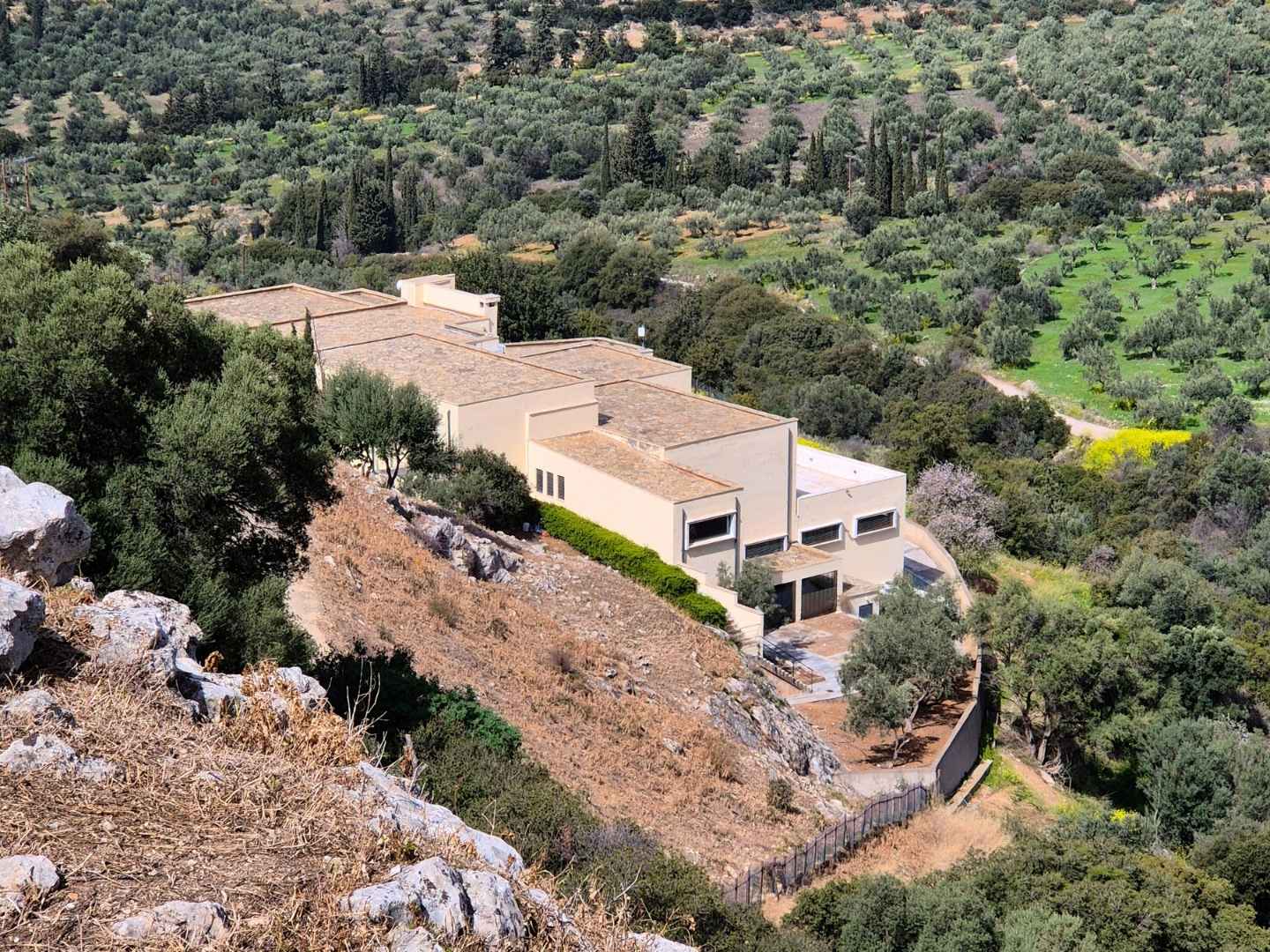
Lastly, before leaving the Mycenae Archaeological Site, be sure to visit the Archaeological Museum.
All kinds of artefacts have been discovered at Mycenae, particularly from its grave circles. While many of the best artefacts are housed in the National Archaeological Museum in Athens, such as the funerary Mask of Agamemnon, this small museum contains exact replicas, alongside a range of other artefacts such as pottery, weapons, jewellery and tablets.
Located along the path leading towards the exit, the Mycenae Archeological Museum is a great way to learn more about the ancient city before you leave.
Where is Mycenae?
The 📍Mycenae Archaeological Site is located in the Argolis region of Greece, in the north-eastern Peloponnese, around 120 kilometres west of Athens.
How to get to Mycenae
Mycenae is most often visited as a day trip from Athens, with several options for getting there.
Guided Tour
The most convenient way to visit Mycenae is on a guided day trip from Athens. Several tour operators run day trips from Athens that not only include the Mycenae Archaeological Site but also stop at the nearby historic town of Nafplion and the ancient theatre of Epidaurus, as well as a quick stop at the Corinth Canal along the way.
Most tours provide hotel pick-up in Athens or from a designated meeting point, round-trip transport, a professional guide, and entry tickets to the sites—though some allow you to purchase tickets separately if you prefer.
Personally I visited Mycenae on ⭐ this tour, which was excellent, but there are many others to choose from on Get Your Guide.
Bus
KTEL, Greece’s national bus company, operates routes to Mycenae from Nafplion, Argos and Athens.
If you’re leaving from Athens, you’ll need to catch the bus from the Kifissos Intercity Bus Terminal. There are no buses direct to the archaeological site. Instead, you’ll need to catch the bus to the town of Fichti, from where you can either walk the remaining 4km to the site or catch a taxi. This should take about 90min to 2 hours in total.
For times and more info, check out the KTEL website.
Rent a Car
Another way to reach Mycenae is to simply rent a car and drive there yourself. This gives you the flexibility to visit other nearby sites along the way.
The best way to find a rental car is to use an online platform like DiscoverCars. Here you’ll find no shortage of options in Athens and other major cities.
From Athens, the drive to Mycenae Archaeological Site takes about 1.5 to 2 hours one way.
Tickets & Opening Hours
The Mycenae opening hours depend on the time of year:
- April – 8am to 7pm
- Summer (May to October) – 8am to 8pm.
- Winter (November to March) – 8am to 3pm
Mycenae ticket prices:
- Full price – €20
- Reduced – €10 (EU citizens 65+, and parents/teachers accompanying school visits)
- Free – For specific people (see this website for details)
Entry to Mycenae Archaeological site is also free on the following days:
- October 28th
- March 6th
- April 18th
- May 18th
- June 5th
- The last weekend of September
- The first Sunday of every month from November 1st to March 31st.
For more information on Mycenae tickets and opening hours, check out the official website.
Other places to visit near Mycenae
1 | Tiryns
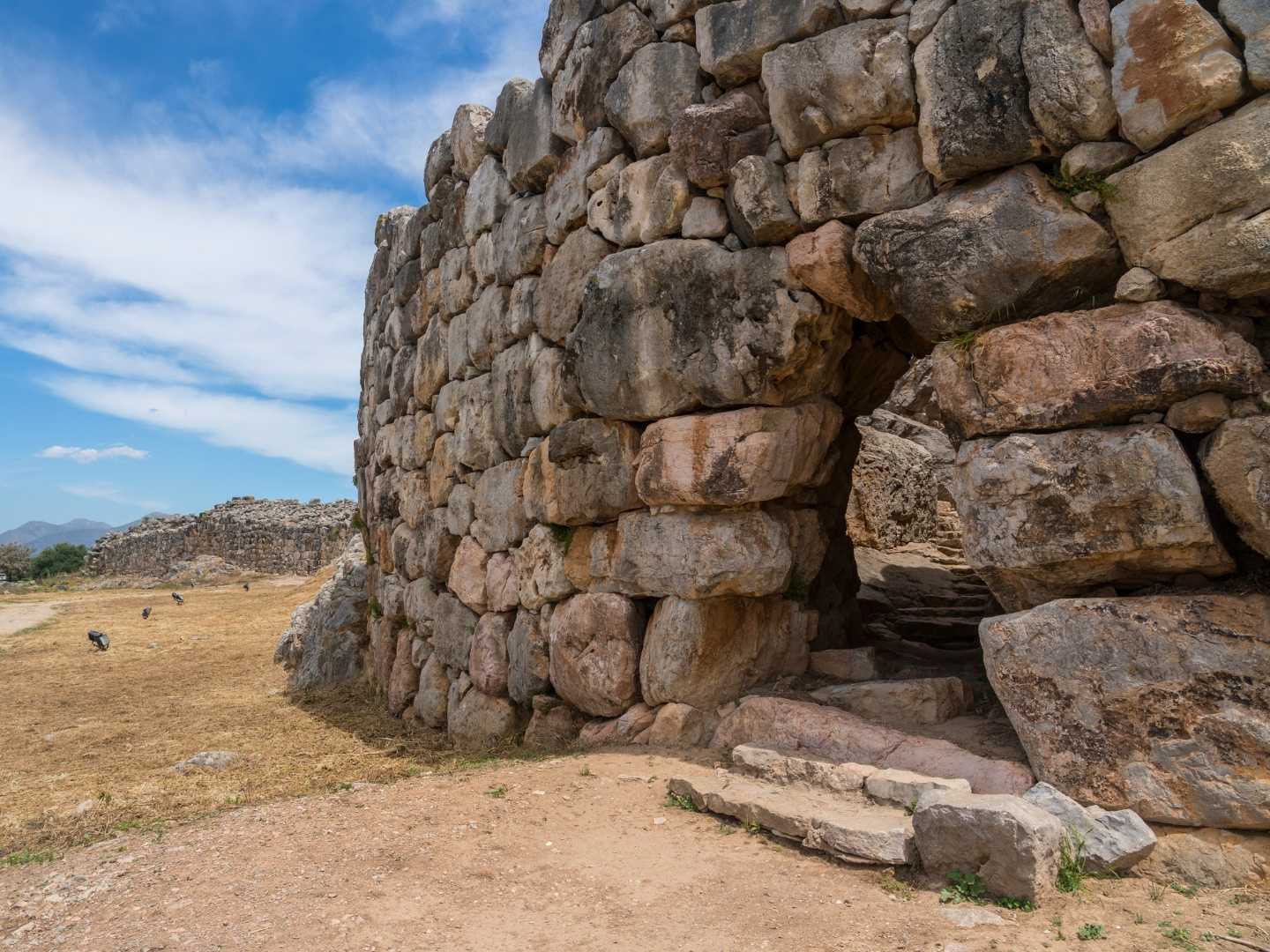
If you’re in the area and want to explore another Mycenaean site, the ancient citadel of Tiryns is just 20km away.
Situated in a low-lying area south-east of Mycenae, Tiryns forms the other half of the UNESCO World Heritage Site. Alongside its neighbour, it played a major role during the Mycenaean age of Greek history.
Although situated in a less strategic (and scenic) location, the citadel of Tiryns is no less impressive. Much of its walls still remain, some of which extend as high as 7m, giving new meaning to ‘cyclopean’ and leading Homer to describe it as ‘mighty walled Tiryns’.
While smaller than and subordinate to Mycenae, Tiryns still left its mark on history. In addition to being mentioned in Homer’s Iliad and Odyssey, Tiryns is also the mythical home of Hercules, where he was said to be the cousin of the king and received his 12 labours.
Despite its location, most tours from Athens – including those to Mycenae – don’t stop at Tiryns, so you may need to arrange your own transport if you plan on visiting the ancient citadel.
2 | Nafplion
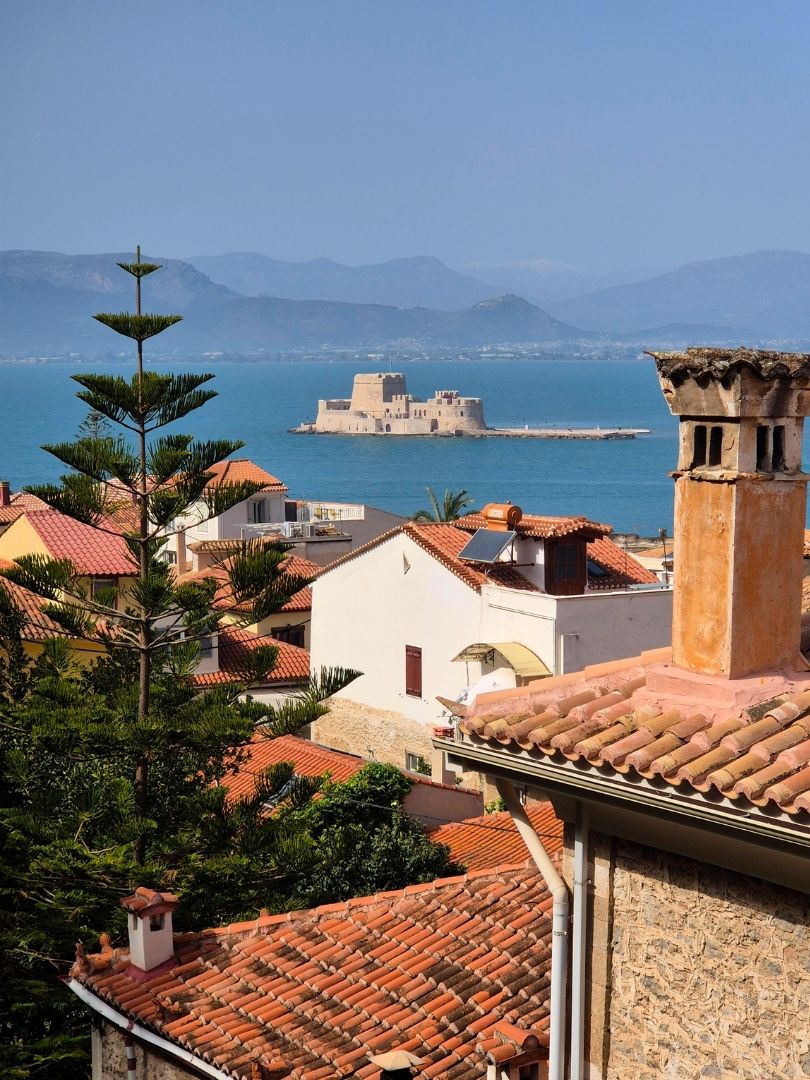
Most guided tours from Athens to Mycenae also include a stop in the historic town of Nafplion (also spelled Nafplio).
Located on Argolic Gulf, just 20km from Mycenae, Nafplion is one of the most beautiful and idyllic towns in Greece. It served as an important seaport for millenia, and has seen multiple great powers come and go, such as the Byzantines, the Franks, the Venetians and the Ottomans.
The town itself is a historical site, but within it there are 2 main attractions you don’t want to miss. In the middle of the bay you’ll find Bourtzi Castle, a Venetian fort built in 1471. Then, towering over the port, you can’t miss the Venetian fort of Palamidi, built in 1714 during their second occupation.
If you’re on a tour, you likely won’t have much time to explore Nafplion properly. So if you’re interested in visiting either of its Venetian forts, consider booking accommodation and spending a night or two in town.
3 | Epidaurus Theatre
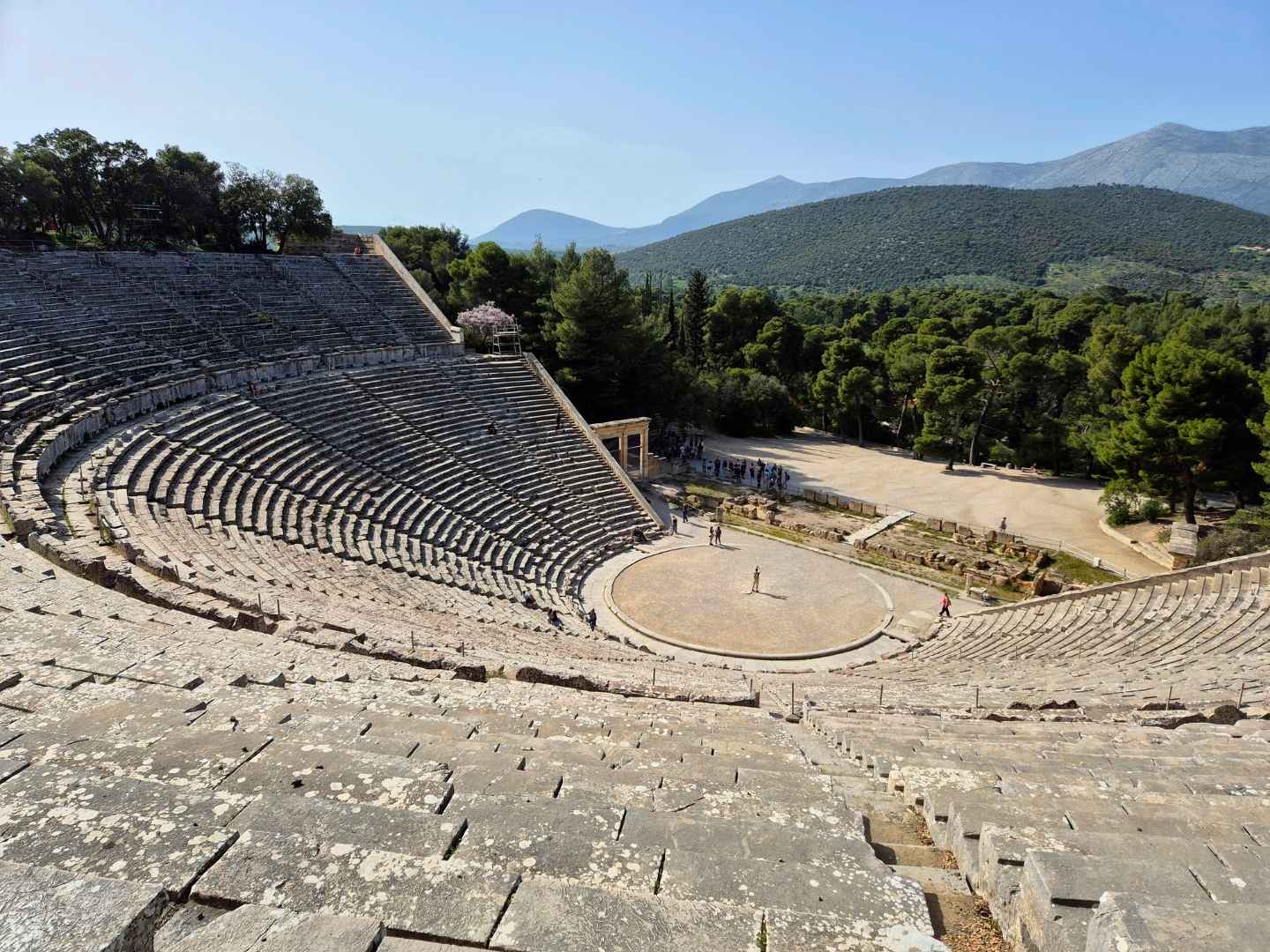
Before leaving Argolis, there’s one more site you won’t want to miss: the ancient theatre of Epidaurus, located about 50 km east of Mycenae
Built in the 4th century BCE, the theatre was a part of a sanctuary dedicated to Asclepius, the Greek god of medicine. With a capacity of up to 14,000 spectators, it once hosted music, singing and plays. The theatre is still in use today, hosting recreations of ancient Greek dramas during the annual Epidaurus Festival.
After seeing the theatre, you can also explore the ruins of the Temple of Asclepius, although little of it remains.
Along with Nafplion, the Epidaurus Theatre is often included as part of guided day tours to Mycenae from Athens.
Best Mycenae Tours
I’ve done the research so you don’t have to. The top Mycenae tours are day trips from Athens that also include the historical town of Nafplio and the ancient theatre at Epidaurus. There are many to choose from, but I can say from experience that the following is great value for money…
Further reading on Greece
⬤ Before Mycenae, the centre of power in Greece was at Knossos. Check out: Palace of Knossos | Complete Guide to Europe’s Oldest City.
⬤ If you want to explore more Minoan palaces in Crete, check out: Complete Guide to the Minoan Palaces in Crete.
⬤ For more travel guides, visit my Destinations page.
Disclosure: This post may contain affiliate links.